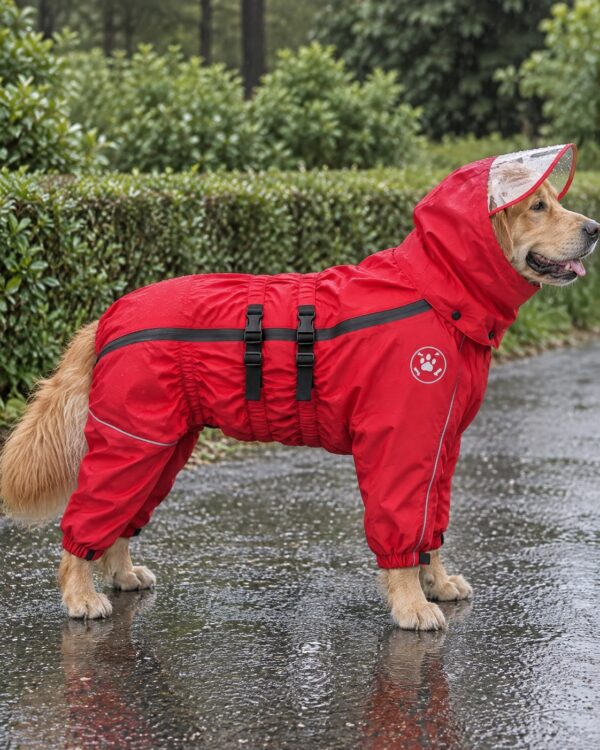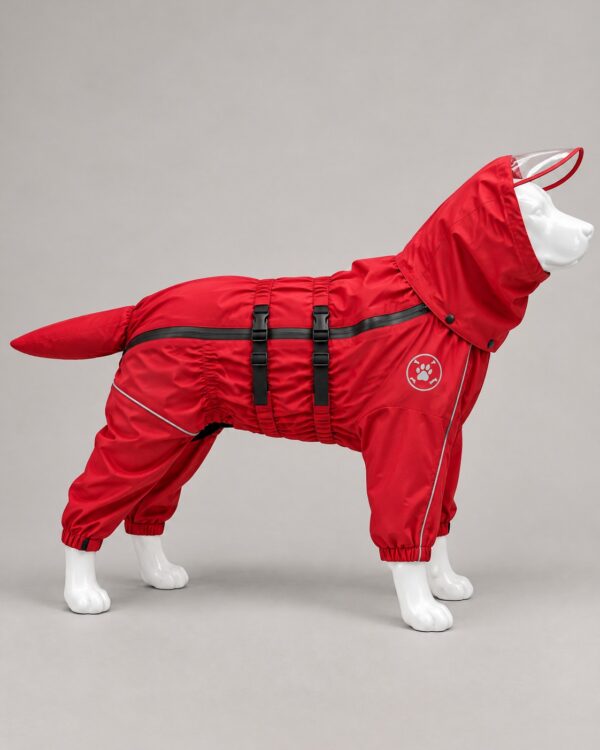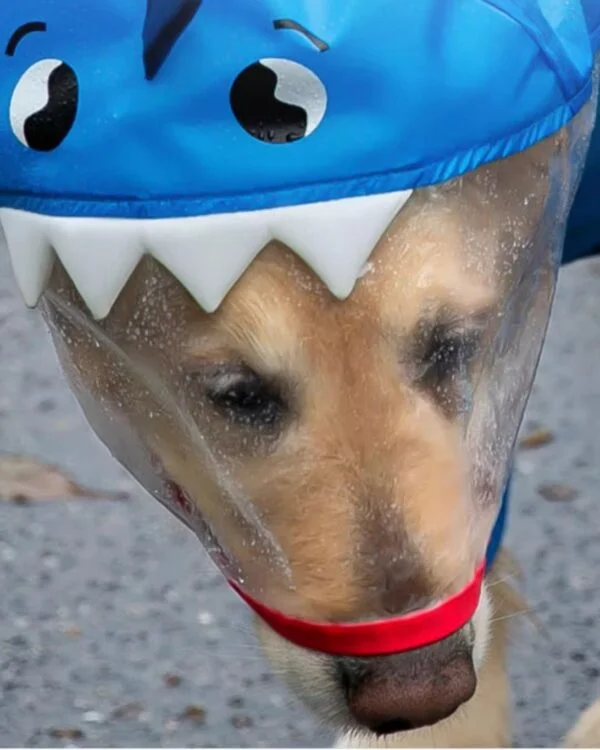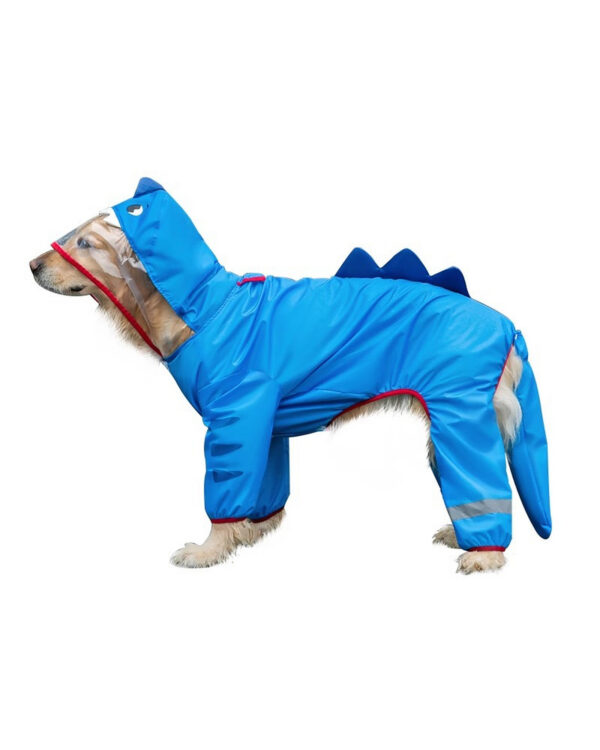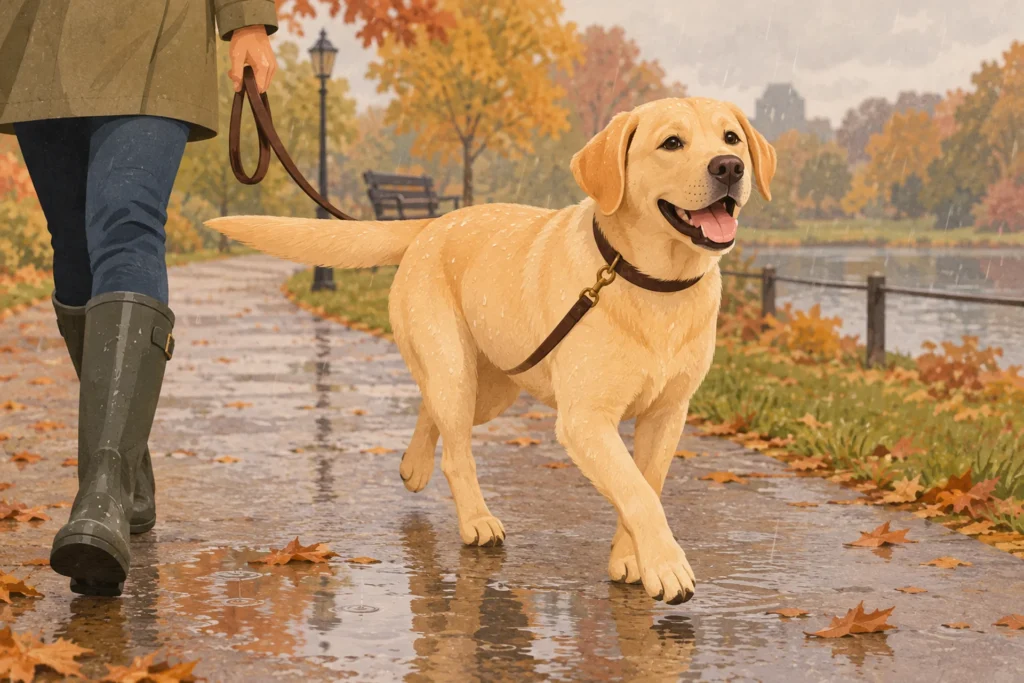
Most Labradors don’t need a raincoat. Of all the breeds people argue about, this is the one where “it’s a water dog” is closest to the whole truth. The official AKC breed standard calls the coat “short, straight and very dense” over “a soft, weather-resistant undercoat that provides protection from water, cold and all types of ground cover.” A healthy adult Lab on an ordinary rainy walk is wearing the gear it was bred with.
A raincoat starts to make sense in a narrower set of cases: an older Lab out in cold, windy rain; long wet days where that dense undercoat soaks through and stays wet for hours; and Labs who already get hot spots or ear trouble after getting wet. In those cases the coat isn’t doing anything wrong. It just takes a long time to dry, and the Merck Veterinary Manual notes that a coat keeps a dog warm by trapping air, which “requires that the hairs be dry and waterproof.”
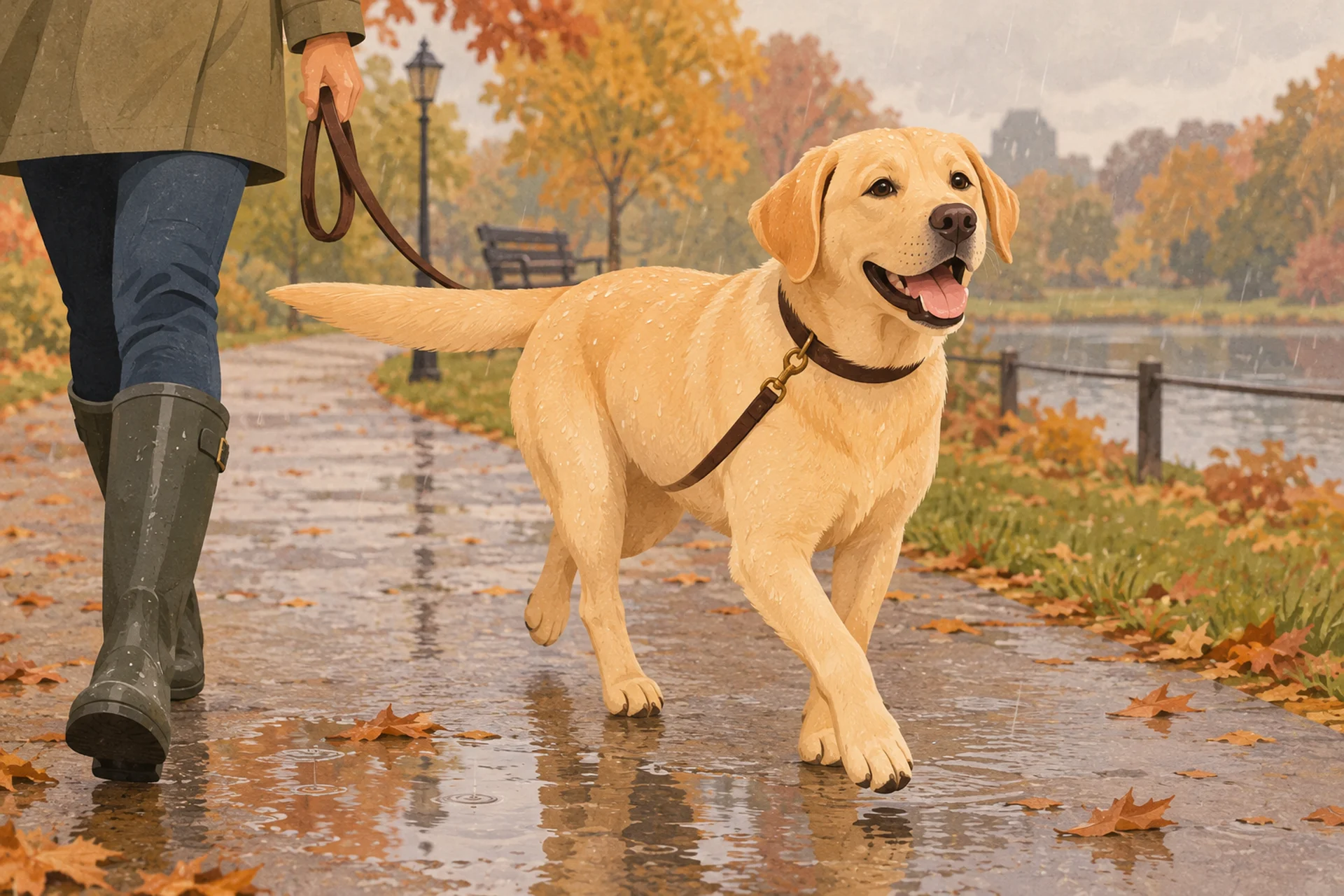
The water-dog objection is mostly right
Post a Lab in a raincoat anywhere public and someone will point out that the breed retrieves ducks out of cold water for a living. That is fair. The breed standard describes the Lab as “bred primarily as a working gun dog” and calls the coat “a distinctive feature of the Labrador Retriever.” Cornell’s veterinary college says short and thinly coated breeds will not tolerate the cold as well as thick, double-coats, and a Lab sits on the thick-coat side of that line.
A Lab is also different from the other retriever people dress for rain. A Golden has long feathering on the legs and belly that sits in the splash zone and soaks up mud, which is why we said in what to look for in a Golden Retriever raincoat that the underside is the part worth covering. A Lab has no feathering; the standard even asks for a tail “free from feathering,” and says “woolly coats, soft silky coats, and sparse slick coats” should be severely penalized. What you get is a short, hard coat that sheds mud and water well. So the cleanup argument is weaker for a Lab, too.
If you only want to know whether a wet walk will make your Lab ill, the answer for a healthy adult is almost always no. We cover that question for all dogs in can dogs get sick from rain?
Where the argument stops working
The objection is about how the coat behaves in an hour of rain. Three things happen after that hour.
A soaked undercoat takes a long time to dry
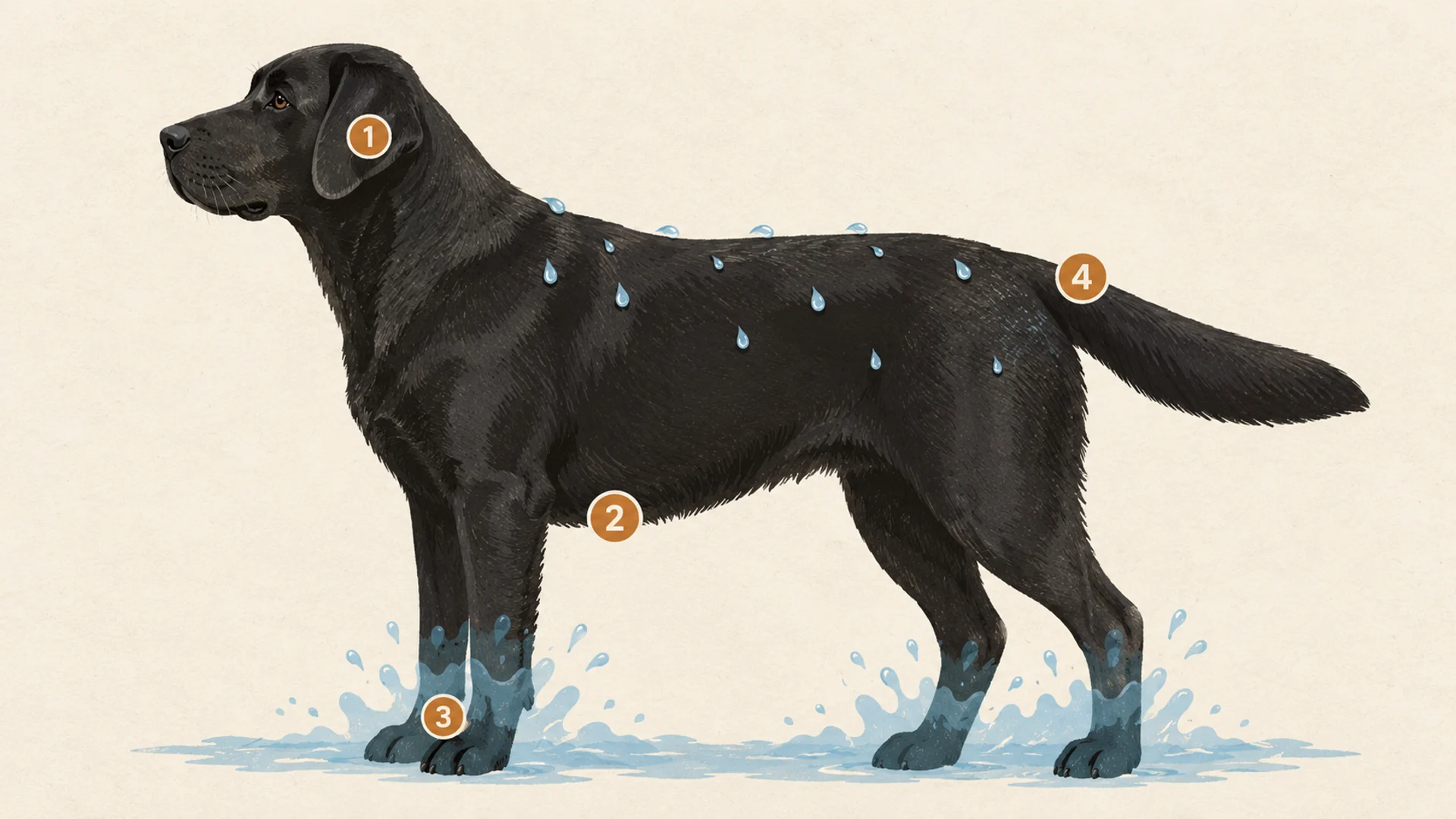
Short doesn’t mean thin. A Lab’s undercoat is dense, and once a long walk, a swim or a downpour pushes water through to the skin, that coat holds it there. The AKC says dogs that are frequently wet from swimming, bathing, or inclement weather are more prone to developing hot spots because of the moisture their coats hold against the skin. It lists Labrador Retrievers among the breeds whose thicker coats make them prone, and says to make sure the coat is thoroughly dry after each session. Cornell puts it the same way: a dog that swims or gets rained on is prone to hot spots if they have a thick coat that does not dry fully.
For most Labs a towel and a warm room deal with this. A raincoat helps a different dog: one that gets wet every day for weeks, or that has already had hot spots, where the useful thing is simply less water reaching the skin in the first place. It won’t stop hot spots. Allergies and fleas cause plenty of them, and those need your vet. Cornell advises a vet visit for any sore that is more than 24 hours old. If you’ve noticed a crusty patch rather than a raw one, see can dogs get rain rot?
Lab ears hold water
Cornell’s page on itchy ears says swimming in lakes, rivers and streams is a common cause of ear infections, and that this is “a bigger problem for dogs with drop ears, like Labradors and Golden Retrievers.” Its suggestion is to gently dry the ear and wipe out the canal with a cotton ball after swimming. A rainy walk is not a swim. But for a Lab who already has ear trouble, a hood is the honest reason to choose one raincoat over another. The AKC’s raincoat guide says hoods can be “particularly useful in preventing water from getting in your dog’s ears and causing infections.” Head shaking, a smell or discharge is a vet visit, not a gear problem. We go further in can rain cause ear infections in dogs?
Cold plus wet plus age
A wet Lab at 60°F is a damp dog. A wet Lab near freezing, in wind, is losing heat. The coat protects against cold because it traps air, and a soaked coat traps much less. The AKC says small dogs, senior dogs, puppies, and short-coated dogs lose body heat faster. Cornell adds older animals, underweight animals and those with other medical conditions. A ten-year-old Lab with stiff hips on a cold, rainy November walk is not the dog the breed standard was written about. For more on how age changes this, see do older dogs get cold more easily?
Cornell’s signs that a dog is too cold are shivering, whining or barking, a tucked tail or hunched posture, lifting paws off the ground, reluctance to walk, and sudden anxiety. If you see them, head home and get the dog warm and dry. If you think your dog may be hypothermic, the AKC’s advice is to bring them somewhere warm and contact your vet immediately.
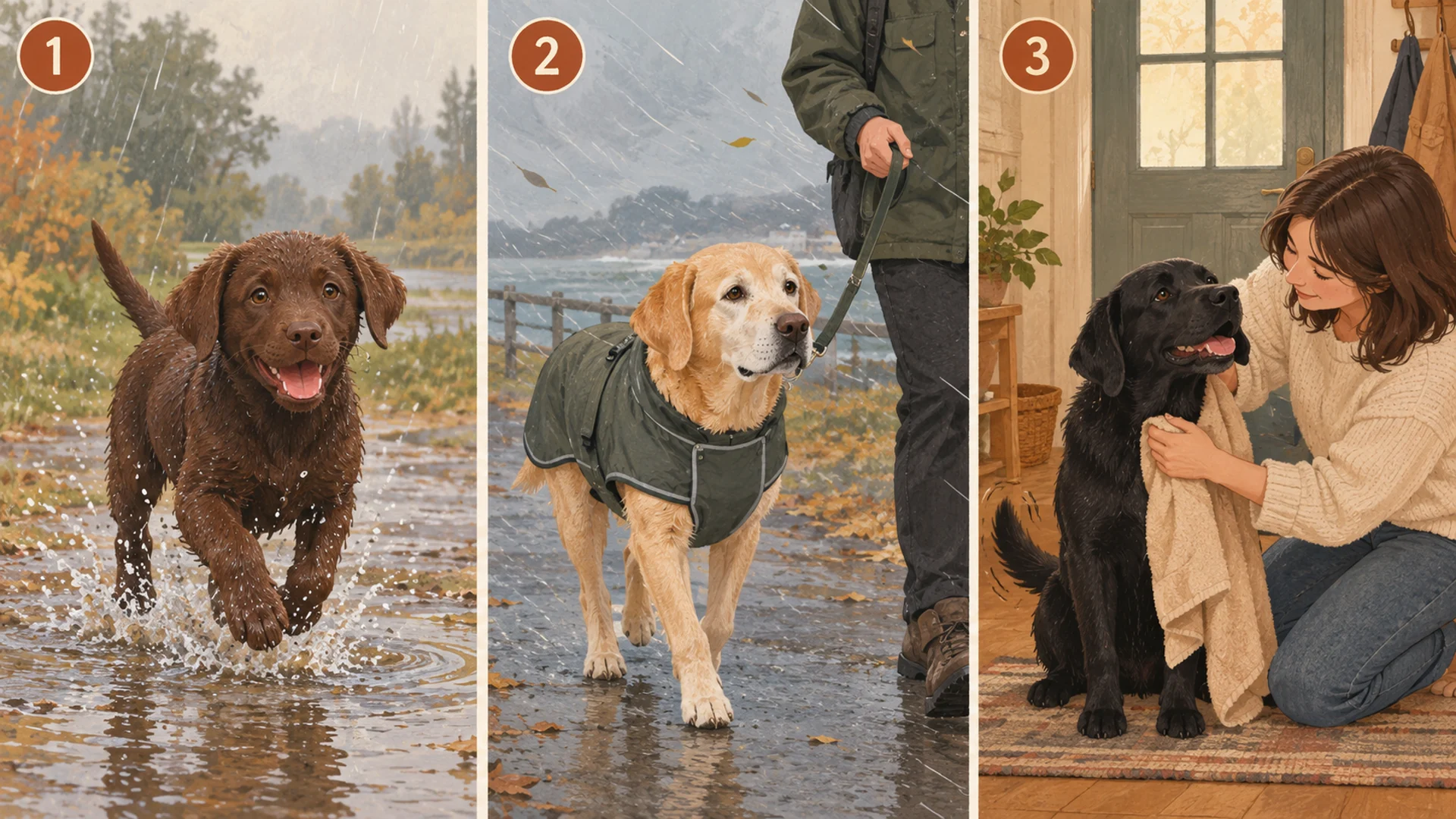
Does your Lab need one? A quick decision table
| Your Lab and your walk | Raincoat? | Why |
|---|---|---|
| Healthy adult, mild rain, normal walk | No | The breed standard describes a coat built for water and cold. A towel at the door is enough. |
| Healthy adult, swimming or splashing on a mild day | No | That is what the coat is for. Dry the ears afterward, as Cornell suggests. |
| Senior, thin, or unwell Lab in cold, windy rain | Often worth it | Older and unwell dogs lose heat faster, and a soaked coat insulates less. |
| Daily long wet walks for weeks | Sometimes | The dense undercoat may never fully dry between walks. |
| Lab with recurring hot spots or ear infections | Ask your vet, then consider one with a hood | Moisture is one factor, but allergies and parasites are common causes too. |
| Any Lab, warm humid day, active walk | No | A shell adds heat. See do dogs overheat in coats. |
Leptospirosis and puddles: what a raincoat doesn’t change
Plenty of Labs head straight for puddles, so it’s worth being clear about the one rain-season risk that has nothing to do with coats. The CDC explains that leptospirosis bacteria spread through the urine of infected animals and “can survive in contaminated water or soil for weeks to months.” Dogs are on its list of animals that carry it, and it notes that risk often goes up after floods. A raincoat does nothing about this. What helps is keeping your dog out of standing water and floodwater when you can, and asking your vet about leptospirosis risk and vaccination where you live. We go through puddle drinking in my dog drank puddle water.
If you do buy one: fitting a Lab
The breed standard gives Labs as 22½ to 24½ inches at the withers and about 65 to 80 pounds for males, and 21½ to 23½ inches and 55 to 70 pounds for females, in working condition. That tells you where to start on a size chart, not which size to buy. Two Labs of the same weight can have very different chests.
- Measure the chest first. The AKC raincoat guide says to measure around the neck, chest and stomach with a soft tape, and from the neck to the base of the tail. The standard asks for “good spring of ribs” and a brisket that reaches the elbows, so a coat that fits the neck can still be tight around the ribs. Our full method is in how to measure your dog for clothes.
- Length to the tail base, with room for the tail. The standard calls it the “otter” tail and says it should be “very thick at the base.” A coat that ends in a tight band right at the tail sits on the thickest part, and a Lab’s tail rarely stops wagging.
- Do the two-finger test. With the coat on, you should be able to slide two fingers under the straps, as the AKC guide describes. Too tight limits movement. Too loose lets rain in under the coat.
- A shell, not insulation, for an active dog. A young Lab working hard in mild rain runs warm. Save lined coats for older dogs and cold days.
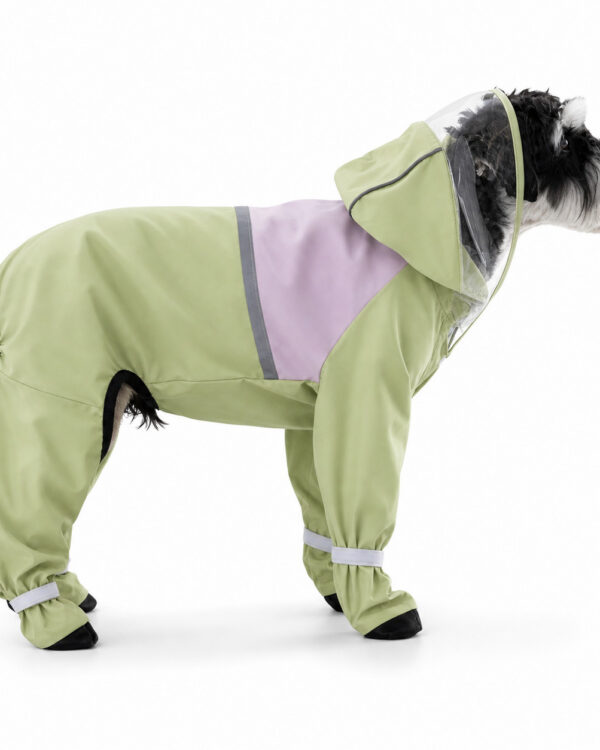
- A hood only if it helps. If your Lab has ear trouble, a hood that sits on the head and clears the eyes is worth having. If your dog hates it, take it off. Our page on hood or no hood covers why some dogs refuse them.
- Leash access. If you walk your Lab on a harness, check how the leash reaches it before you buy; see harness holes on large dog raincoats.
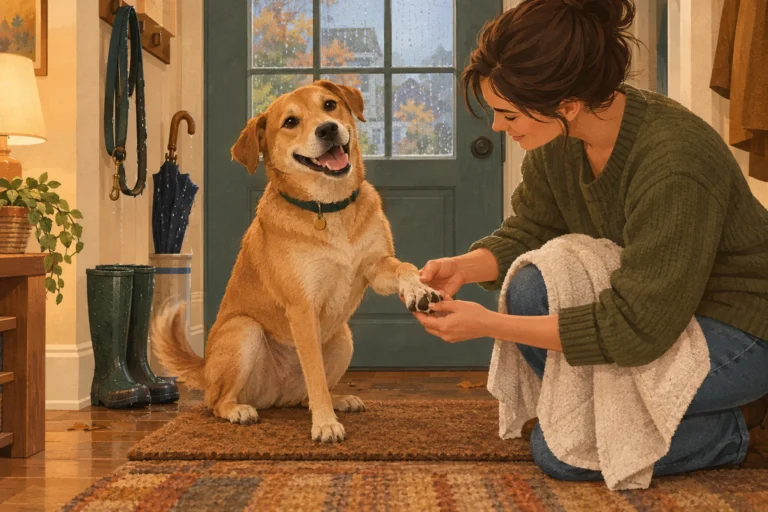
- Off as soon as you’re inside. A damp coat left on works against you. Dry the ears, chest, belly and paws, the places in Figure 2.
Labrador raincoat FAQ
Do Labradors need raincoats?
Usually not. The AKC breed standard describes a short, very dense coat over a weather-resistant undercoat that protects from water and cold. A raincoat is worth it for older, thin or unwell Labs in cold, windy rain, and sometimes for Labs who stay wet for hours every day.
Are Labradors’ coats waterproof?
Water-resistant is the accurate word. The breed standard says weather-resistant, not waterproof. Rain beads on the outer coat on a normal walk. Long exposure or swimming soaks through to the dense undercoat, which then takes a long time to dry.
Do Labs need coats in winter?
A healthy adult Lab usually handles ordinary winter walks without one. Cornell names puppies, older and underweight dogs, and dogs with medical conditions as the ones who struggle to stay warm. If your Lab shivers, lifts its paws or doesn’t want to keep walking, it’s too cold for that dog. For temperatures, see what temperature a dog needs a coat.
Should I dry my Lab after a walk in the rain?
Yes, and do it well. The AKC links frequent wetness to hot spots and lists Labs among prone breeds, and Cornell suggests drying drop ears after swimming. Towel the chest, belly, ears and paws. Whether a quick towel is enough or the dog needs more is covered in is it OK to let your dog air dry?
Do Lab puppies need raincoats?
Puppies are the exception to the breed rule. Cornell says puppies cannot properly regulate their body temperature. A short potty trip in the rain is fine. For longer outings in cold rain, keep the walk short or use a light layer, and dry the puppy as soon as you’re in. If your puppy won’t go outside in the rain at all, see dog won’t go potty in the rain.
What size raincoat does a Labrador wear?
There’s no single size. Measure neck, chest, stomach and neck-to-tail length, then compare your numbers with the size chart on the product page. Don’t go by the breed name or weight range alone. Allow for the thick base of the tail, and check fit with two fingers under the straps.
A Lab’s coat was built for rain. Raincoats are for older Labs and long wet days.
For a healthy adult Lab, the water-dog argument is right: the coat sheds rain and handles cold. Where it falls short is the hours after a long soaking, a cold windy day for an older dog, and the ears. Dry the ears, chest, paws and belly every time. Keep a raincoat for the older Lab, the cold wet day, or a dog your vet says should stay drier.
Sources
- American Kennel Club — Official Standard of the Labrador Retriever (coat, tail, size) (checked 2026-10-24)
- Merck Veterinary Manual — Structure of the Skin in Dogs (checked 2026-10-24)
- American Kennel Club — Hot Spots on Dogs (checked 2026-10-24)
- Cornell University College of Veterinary Medicine, Riney Canine Health Center — Hot spots (checked 2026-10-24)
- Cornell University College of Veterinary Medicine, Riney Canine Health Center — Itchy ear problems (checked 2026-10-24)
- Cornell University College of Veterinary Medicine, Riney Canine Health Center — Winter safety tips (checked 2026-10-24)
- American Kennel Club — Hypothermia in Dogs: How Cold Is Too Cold? (checked 2026-10-24)
- American Kennel Club — Does Your Dog Need a Raincoat? (checked 2026-10-24)
- Centers for Disease Control and Prevention — About Leptospirosis (checked 2026-10-24)
Veterinary guidance is updated from time to time. Check the official pages, and ask your own veterinarian about your dog’s skin, ears and vaccinations. Nothing here is a diagnosis. Product sizes vary by maker, so always check the size chart on the product page.