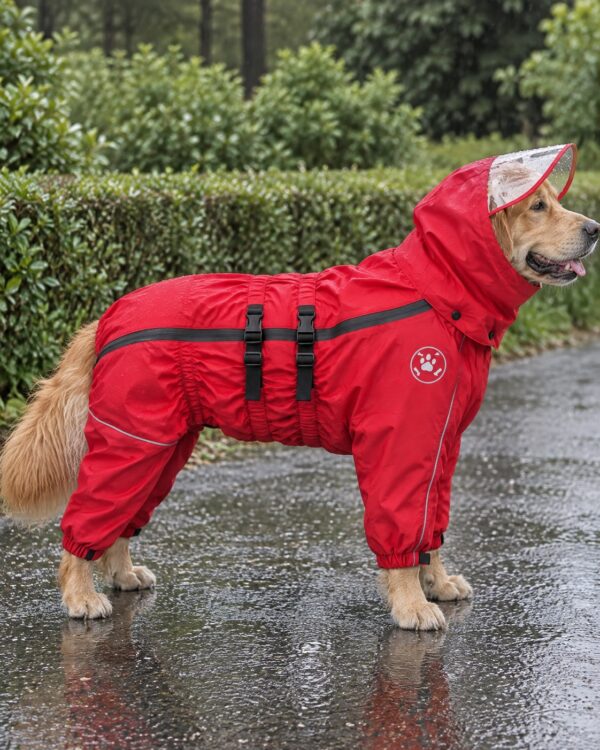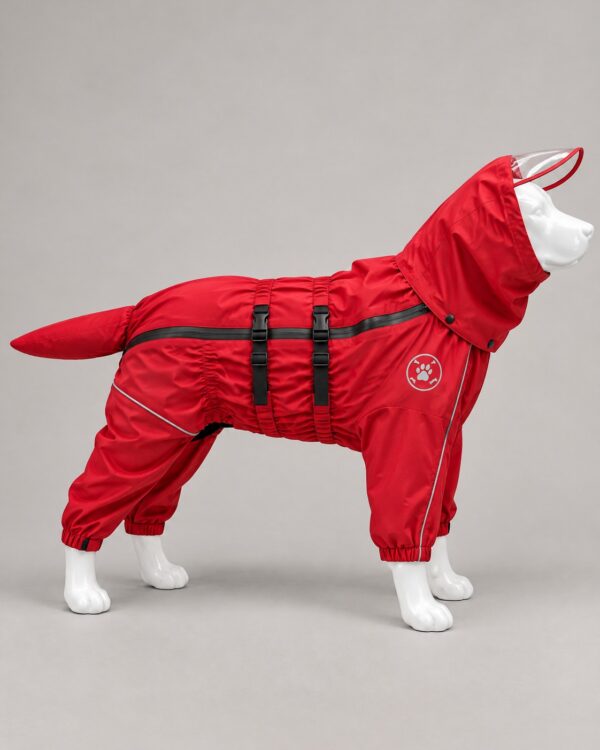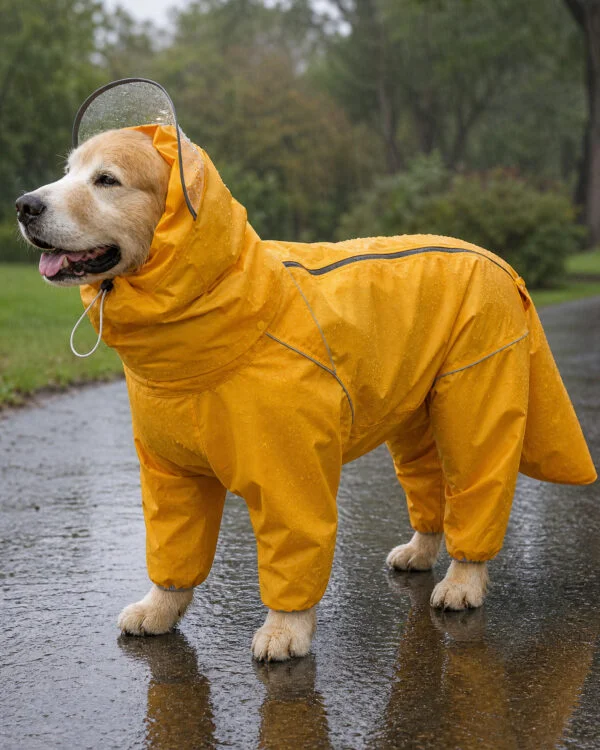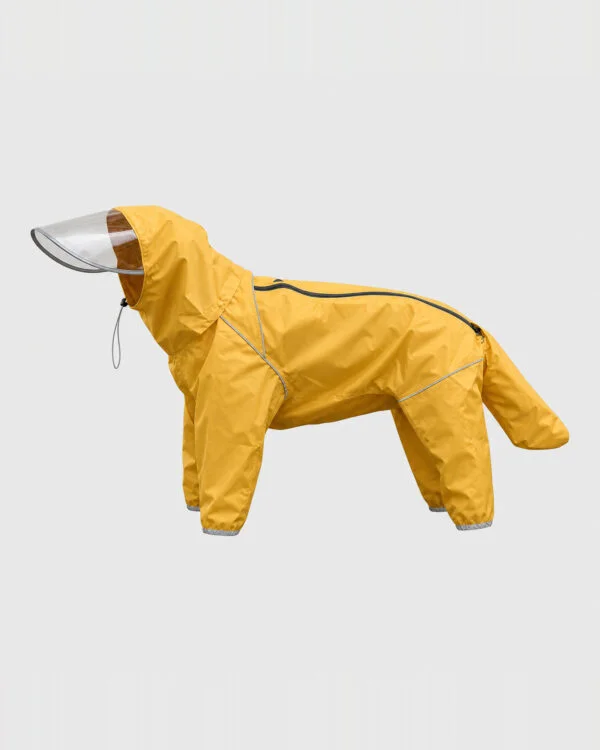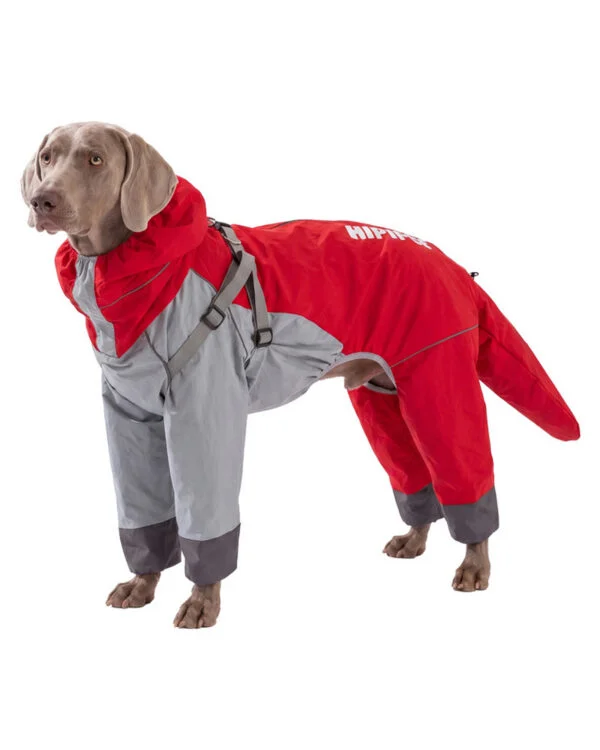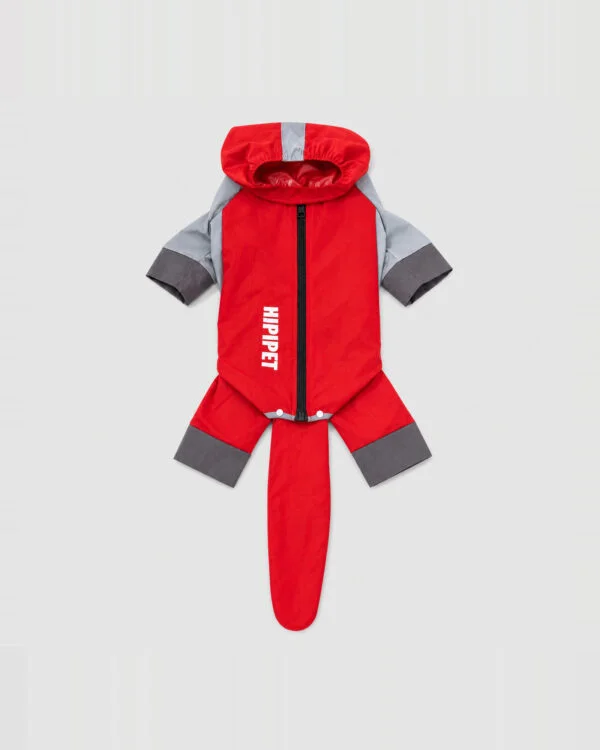
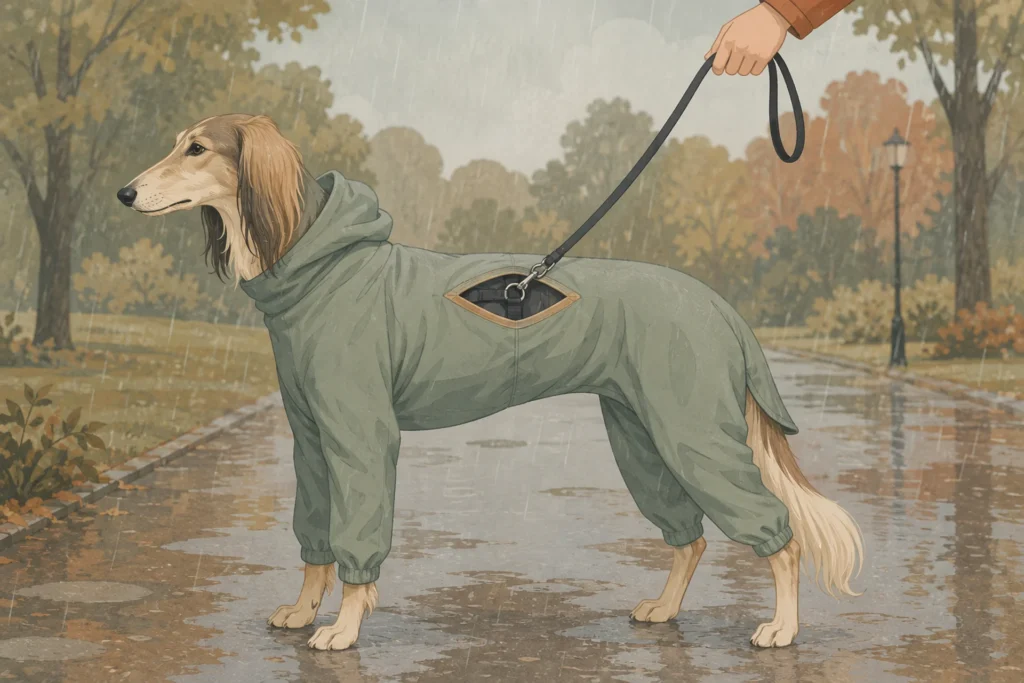
Two different things get sold as a “harness hole”. One is a pass-through port — an opening that lets you clip your own leash to the harness or collar your dog already wears underneath. The other is a ring built onto the coat itself, where the leash clips to the raincoat and there is nothing underneath at all.
On a small dog the difference barely shows. On a large dog it decides where the pulling force lands: on a harness built to take it, or on the seams of a wet fabric shell. If your dog wears a harness because you need the control, buy the pass-through port. Save the built-in ring for dogs who walk on a loose lead.
Harness under the coat, not over it, is the arrangement worth designing for. The AKC’s winter coat guide names a built-in hole for the harness leash attachment as a feature to look for, so the coat can go over a back-clip harness. Front-clip harnesses are the exception, and they’re covered below.
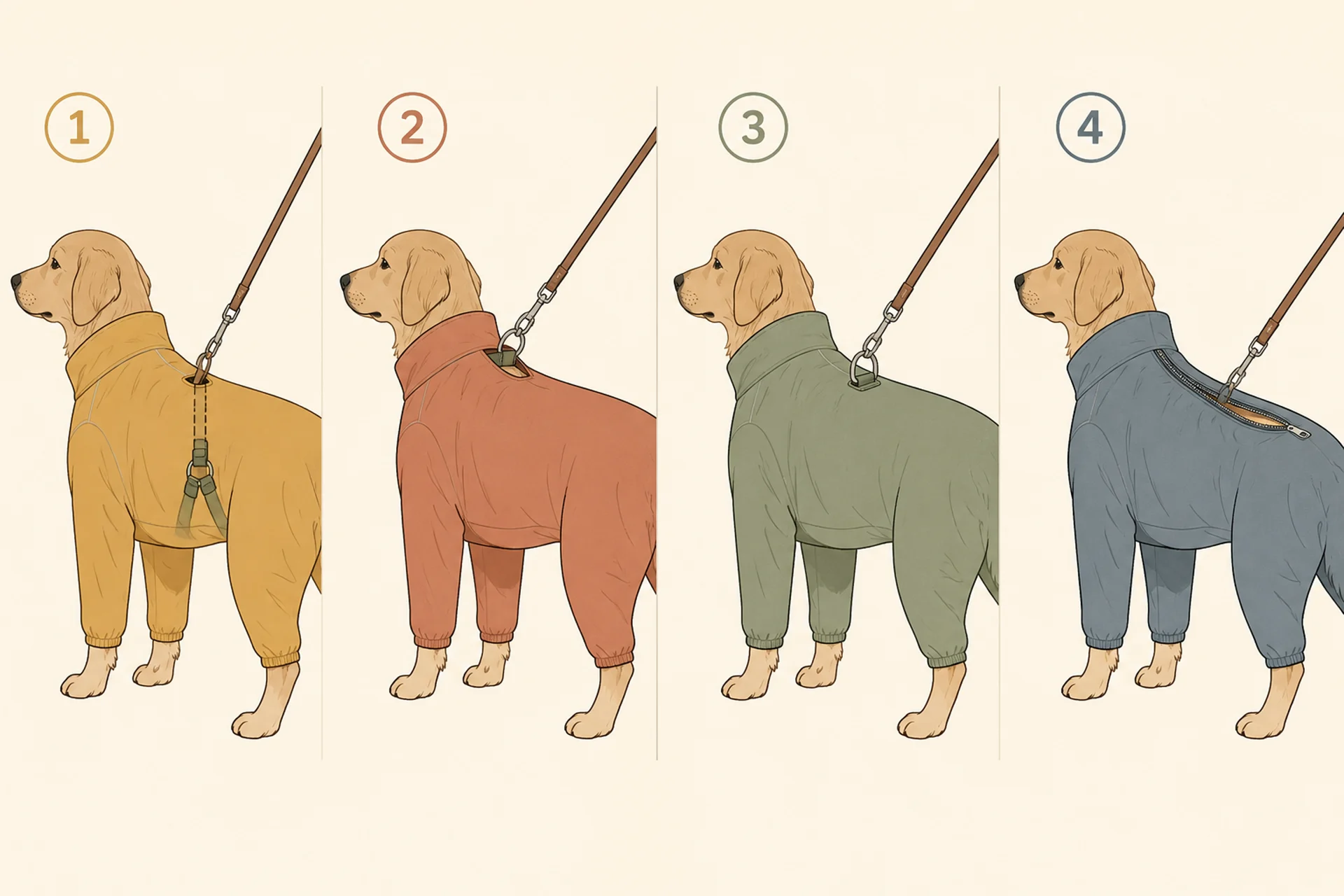
Four things get called a harness hole
Search for one and you will be shown at least four different mechanisms, all described with the same three words. They are not interchangeable, and the listing photo usually will not tell you which one you are looking at.
| What it is | The leash clips to | Works well when | Watch for |
|---|---|---|---|
| Pass-through port in the back panel | Your own harness or collar, worn underneath | Your dog already walks in a harness and you want to keep that setup | The port has to sit where your harness ring sits |
| Port through the collar | A collar worn underneath, at the neck | Your dog walks on a collar rather than a harness | Neck-level attachment on a dog who pulls is a separate decision |
| A ring on the shell or on a strap | The coat itself — nothing underneath | Loose-lead walkers, quick trips out, dogs who resent a second layer | Whether the ring sits on load-bearing webbing or on fabric alone |
| A back zip left open a notch | Whatever you can reach through the gap | You already own the coat and want it to work | An open gap is a gap — rain gets in where the leash goes out |
Why this matters more on a large dog
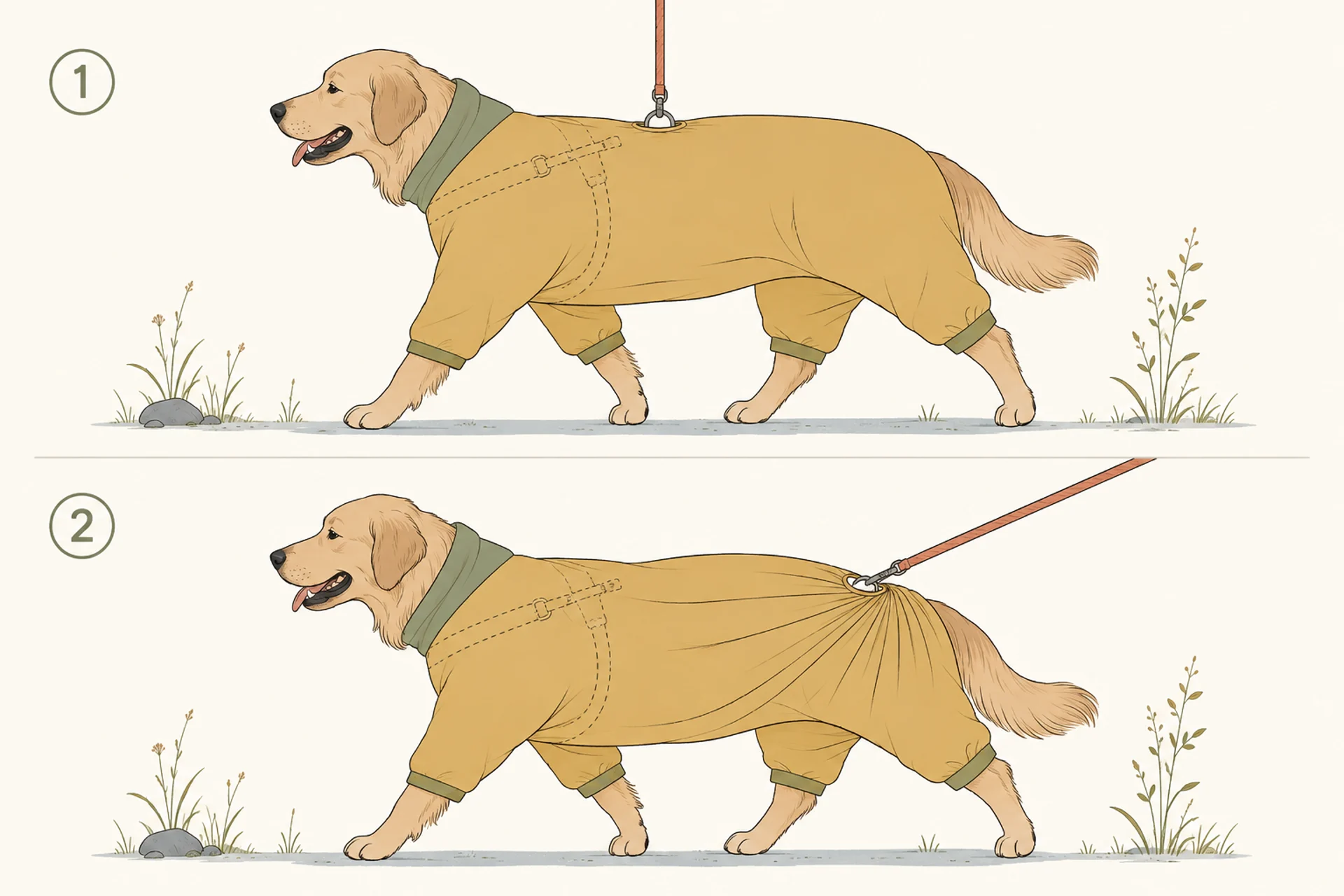
A harness on a big dog is not decoration. Tufts University’s veterinary school says that well-fitted harnesses are much preferable to collars for leash walking, because a dog pulling on a collar puts pressure on the sensitive tissue of the neck and throat. A harness gives you control while reducing that risk. Every extra pound of dog multiplies whatever the leash is attached to, and a raincoat is the least structural garment your dog owns: a thin shell with a zip down the middle of it.
So the question is not “does this coat have a hole”. It is what is on the other side of the hole. A pass-through port sends the force to the harness and leaves the coat doing the one job it is good at. A ring on the shell sends the force into the shell.
That does not make built-in rings a mistake — it makes them a different product for a different dog. A ring mounted on a webbing chest strap carries load through webbing rather than through raincoat fabric, and for a dog who walks calmly beside you that is a genuinely faster way out of the door. A ring stitched through the shell panel alone is the one to look at hardest, and to leave alone if your dog pulls.
Where the opening should sit
This is the detail that turns a good coat into one you stop using, and almost no listing addresses it. A pass-through port only works if it lands above the ring on the harness your dog actually owns.
- Most walking harnesses put their back ring over or just behind the shoulder blades. On a back-clip harness, the AKC places the clip close to the middle of the shoulder blades. A port cut mid-back, or further toward the hips, means the leash crosses the coat diagonally every time it goes tight — which drags the coat sideways, bunches the fabric at one shoulder, and works the port wider than it was cut.
- Front-clip harnesses are largely incompatible with a back-panel port. If that is your setup, look for a chest-mounted ring instead, or clip outside the coat and accept it.
- A port at the collar sidesteps the alignment problem by putting the opening at a fixed landmark — but only helps if your dog walks on a collar, and the collar underneath still needs to fit. Humane World for Animals’ rule of thumb is that you can slide two fingers comfortably underneath.
- Check the port is bound or reinforced. A raw slit in a shell fabric is a tear waiting for a reason.
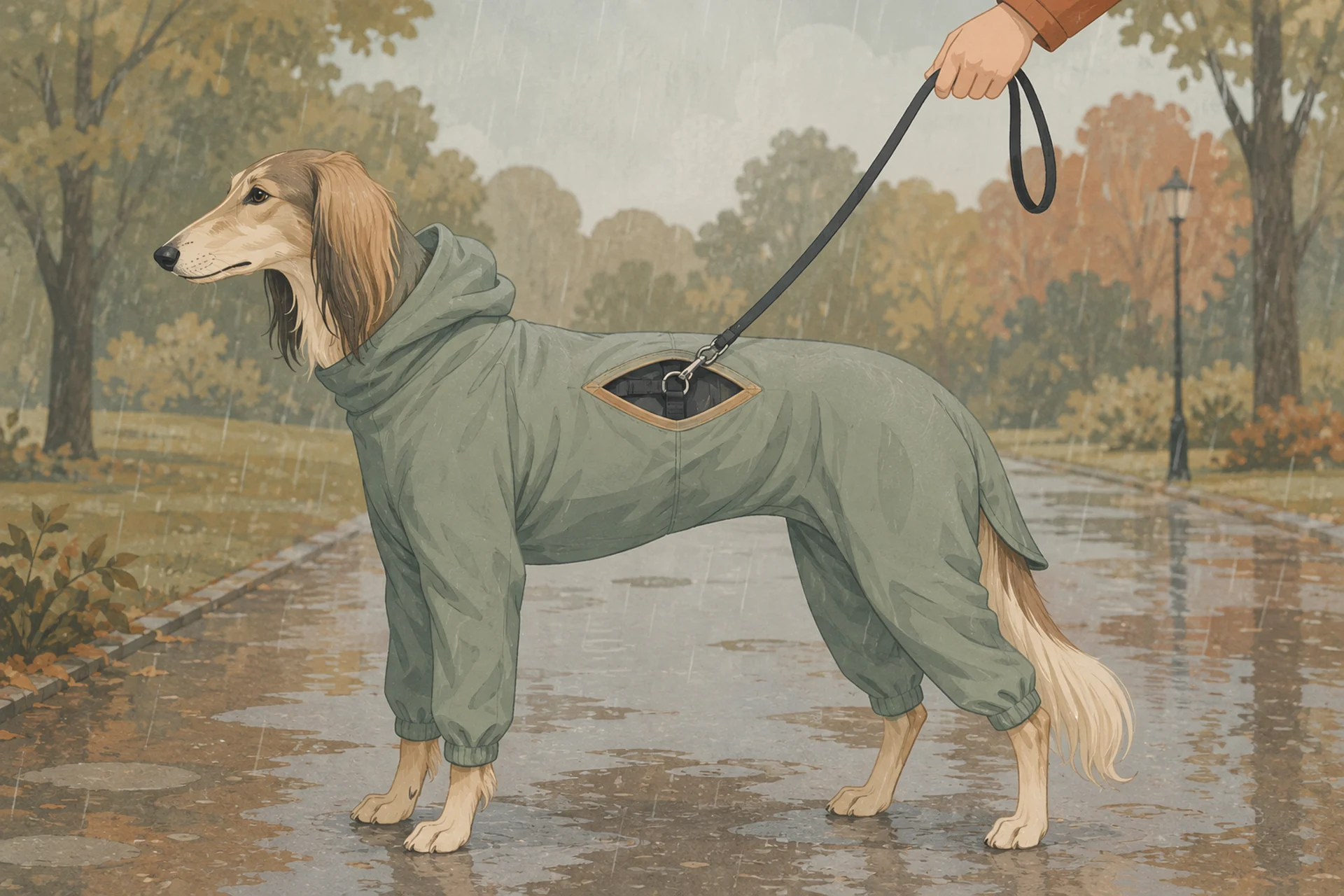
Harness over or under the coat?
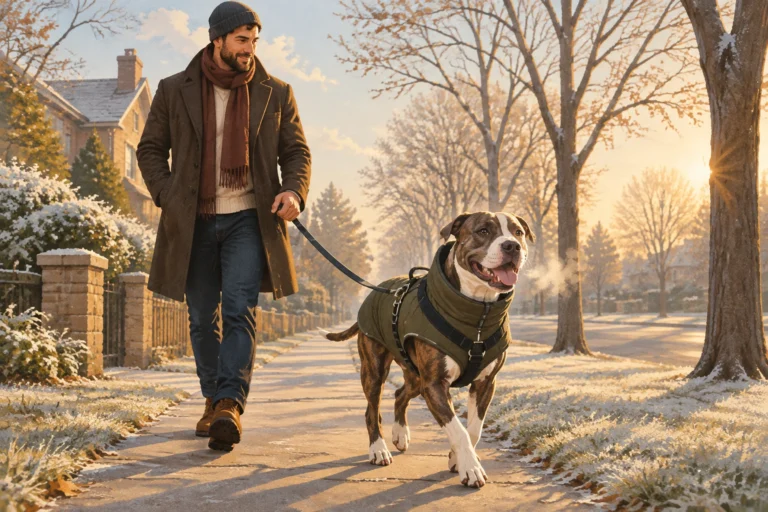
Under, if the coat has a port that lines up. The harness then stays dry, the coat lies flat, and the leash goes from your hand straight to the harness. Over works with any coat, but the harness gets soaked, its straps press the coat out of shape, and you’ll be refitting a harness over a wet suit at the door.
If you go under, the order matters:
- Fit the harness on its own first, with no coat. The AKC’s fitting guidance is that you should be able to slip two fingers under any strap, and that the harness shouldn’t come off over your dog’s head when you pull. A veterinarian quoted in the AKC’s harness guide goes further: you should have to squeeze two fingers in, not slide them in easily.
- Put the coat on over it and find the port with your fingers before you close the coat up.
- Pull the harness ring up through the port and clip the leash to the ring, not to the coat fabric around it.
- Walk a few steps and look again. The coat shouldn’t drag the harness sideways, and the port should sit straight over the ring.
Then check where the harness touches the skin. A layer over the top can hide rubbing, and the AKC warns that a badly fitted harness can leave fur and skin rubbed raw. The girth strap shouldn’t sit behind the rib cage or squeeze into the elbows. After a wet walk, take both off and let the harness dry separately before the next outing.
What if your dog wears a front-clip harness?
This is the setup a back-panel port can’t solve. Front-clip harnesses are often chosen for strong dogs. The AKC’s harness guide explains that they are helpful if your dog tends to pull, because forward pressure turns the dog back toward you, and that back-clip harnesses suit well-trained dogs. The front clip sits under the chest, where a full rain suit covers it.
You have three honest options:
- Harness over the coat. The simplest answer for a front-clip harness. Accept a wet harness and dry it afterwards.
- A dual-clip harness. The same AKC guide describes harnesses with both a front and a back clip. The AKC’s suggestion is to start on the front clip for control and move to the back clip as your dog improves. Once you’re there, the back ring is the one a port can reach on wet days.
- A coat that leaves the chest open, such as a cape or back-only raincoat, so the front ring stays reachable. You lose belly and leg coverage, which is the trade-off.
If your dog pulls hard, the harness choice matters more than the raincoat. Settle the harness first, then choose a coat that works with it.
Raincoats with a harness built in
Search results also show raincoats “with a harness built in” or “attached”. That’s a different design from a port or a ring. The coat has its own harness straps sewn into it, and you clip your leash to them. Nothing goes underneath, so getting out of the door is quick.
The catch is that the coat now is the harness, so judge it as one. Apply the same fit checks the AKC gives for any harness: two snug fingers under each strap, no slipping out backwards over the head, and a girth strap that doesn’t sit behind the rib cage or squeeze into the elbows. If a built-in harness can’t be adjusted tightly enough to pass those checks on your dog, it’s a raincoat with straps, not a harness. Back it up with your usual harness underneath, or keep it for a dog who doesn’t pull.
The same thinking applies to winter coats, sweaters and vests sold “with a harness hole”: check what’s on the other side of the opening, and whether it lines up. For when a winter coat is worth it in the first place, see what temperature a dog needs a coat.
Checking before you buy
- Find out which mechanism it is. If the listing says “harness hole” and nothing else, assume nothing. Read the description for port, opening, D-ring or ring — they mean different things.
- Measure your dog’s harness ring position, from the base of the neck along the spine, and compare it to the coat’s photographed opening.
- Decide whether the harness goes under or over. Over always works and always looks it: the harness gets soaked, and the coat rides up under the straps. Under is the reason to buy a port in the first place.
- Check the belly opening too. A full-body suit that has to come off for a bathroom break will not stay in rotation, whatever its leash arrangement.
- Size for the dog, not the label. Big-dog size runs vary enormously between brands. Measure back length and chest girth against the size chart on the individual product page.
Which arrangement for which dog
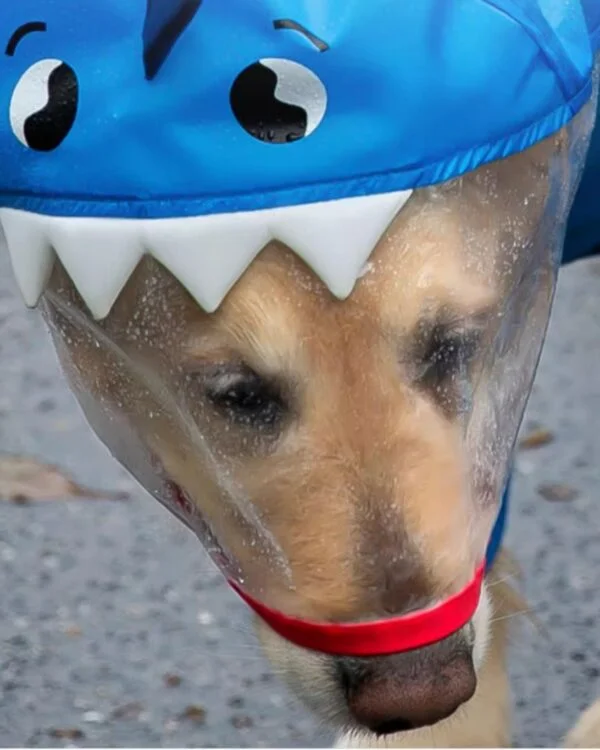
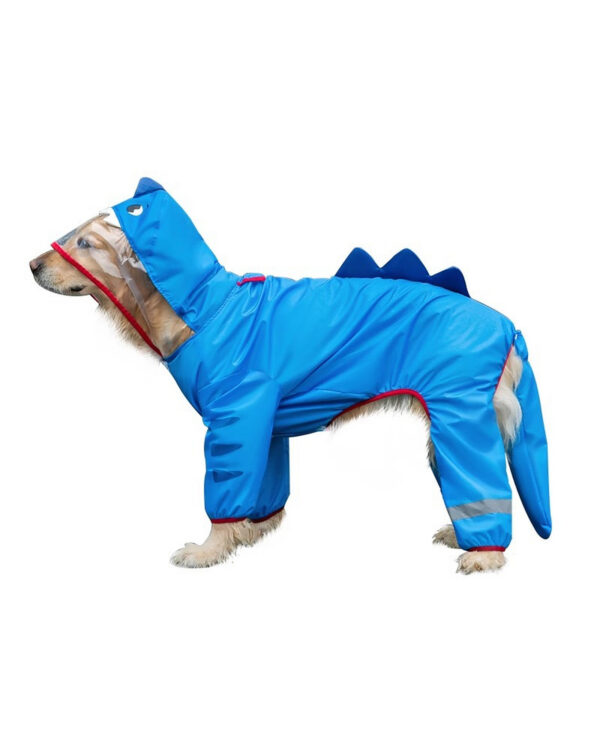
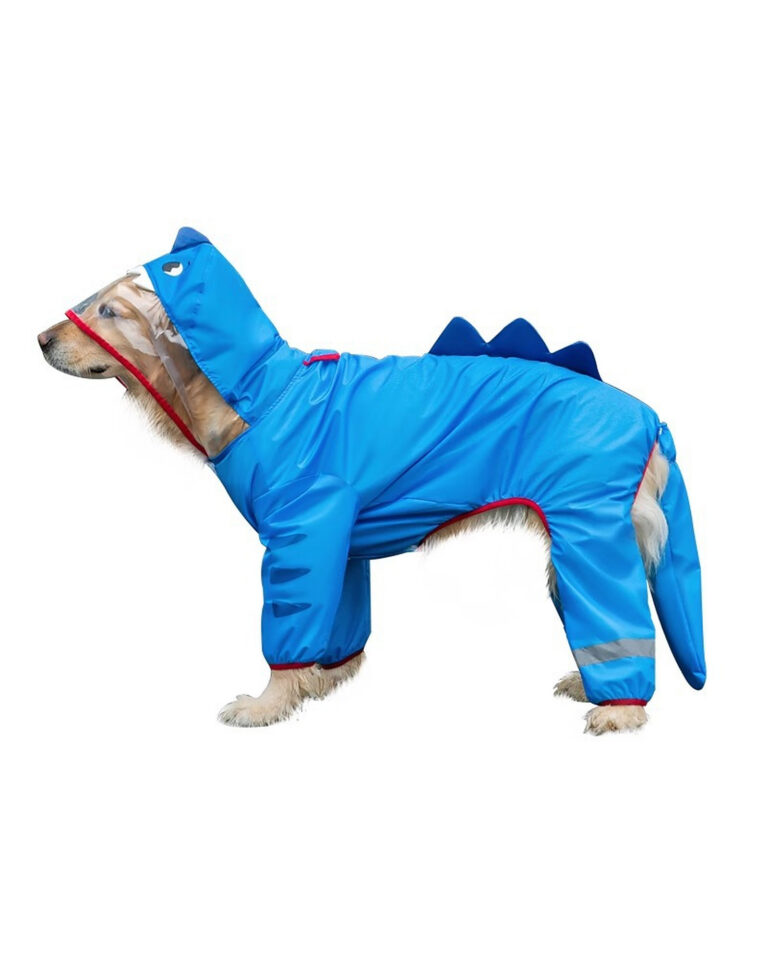
Your dog’s harness or collar stays on, under the coat. The Trail Stretch-Fit Seam-Sealed Large-Dog Rain Suit has a reinforced opening in the back panel so your own leash clips through to the collar underneath, and its hood and tail sleeve both lift off. The Trail Shark-Hood Large-Dog Rain Suit takes the same approach with a bound back-panel opening and a clear face visor.
Your dog walks on a collar. The Trail Boy-or-Girl Cut Large-Dog Rain Suit runs its leash port through the collar rather than the back panel, sidestepping the alignment question entirely. It also comes in two cuts so the relief opening sits where your dog needs it — check the size chart before choosing.
Nothing underneath, out the door faster. The Trail Back-Zip Large-Dog Rain Suit puts its metal ring on a chest webbing strap closed by a single side-release buckle, so the load sits on webbing rather than on the shell. The Trail Leash-Ring Four-Leg Dog Rain Suit stitches a D-ring through the upper back for the same no-second-layer routine. Both suit dogs who walk without leaning into the lead. The rest of the range is in Protection.
Large dog raincoat harness hole FAQ
What is a harness hole on a dog raincoat?
Usually an opening in the coat’s back panel that lets you clip a leash to the harness or collar underneath without taking the coat off. Confusingly, the same phrase is also used for a D-ring built onto the outside of the coat, where the leash attaches to the coat itself and no harness is involved.
Can my dog wear a harness under a rain suit?
Yes, and for a large dog it is usually the better arrangement — the harness handles the pulling and the coat handles the rain. It only works comfortably if the coat’s port lines up with the harness ring; otherwise the leash pulls the coat diagonally every time it tightens.
Should the leash clip to the raincoat or to a harness underneath?
To a harness underneath, if your dog pulls at all. A raincoat is a light shell, and every attachment on it transmits force into that shell. Coats that mount their ring on load-bearing webbing rather than on fabric alone are the sturdier version of the built-in approach — but a proper harness is still what a strong dog should be walked from.
Can I put the harness on over the raincoat instead?
You can, and plenty of people do. The costs: the harness gets soaked and needs drying too, the straps compress the coat and work it out of position, and refitting a harness over a bulky suit in the rain is exactly the friction that makes people leave the coat at home.
Does a leash port let rain in?
A little — it is an opening in a garment whose whole purpose is not having them, and water finds it. A bound port high on the back sheds far more than a zip left gaping, which is why the improvised-gap approach is a workaround rather than a design. In heavy weather, expect a damp patch there and dry that spot first.
Is a raincoat with a built-in harness safe for a dog who pulls?
Only if the built-in straps fit like a proper harness. That means two snug fingers under each strap, no way to back out over the head, and a girth strap that doesn’t sit behind the rib cage. Many raincoat straps are made to hold the coat in place rather than to take a strong dog’s pull. If you’re unsure, keep your usual harness underneath and use the coat for rain only.
Does a dog sweater or winter coat with a harness hole work the same way?
Yes. The same questions apply: is the opening a port to the harness underneath or a ring on the garment itself, and does it sit over your harness ring? A knit sweater stretches more than a raincoat shell, so the opening can drift. Check it after a few minutes of walking.
What if my dog uses a front-clip harness?
A back-panel port will not reach it. Put the harness on over the coat and dry it afterwards, use a dual-clip harness and clip to the back ring through the port on wet days, or choose a coat that leaves the chest open. If you are rethinking the lead itself, our guide to when a retractable leash helps covers the length question.
Sources
- American Kennel Club — Does My Dog Need a Winter Coat? (updated Nov 14, 2025; checked 2026-10-01). Recommends looking for a built-in hole for the harness leash attachment, so a jacket can go over a back-clip harness; jackets should not restrict walking or be loose enough to tangle.
- American Kennel Club — How to Find the Right Dog Harness for Your Dog (Nandini Maharaj, updated Apr 23, 2026; checked 2026-10-01). Front-clip harnesses help dogs who pull, but the clip sits under the chest; back-clip harnesses suit well-trained dogs, with the clip near the middle of the shoulder blades; dual-clip harnesses let you start on the front clip and move to the back; a veterinarian advises you should have to squeeze two fingers under the harness; watch for rubbing and chafing.
- American Kennel Club — How to Put on a Dog Harness (Katherine Ripley, updated Feb 18, 2026; checked 2026-10-01). You should be able to slip two fingers under any strap; try to pull the harness over the dog’s head to check it is secure.
- American Kennel Club — Dog Harness Sizes: The Importance of a Well-Fitting Dog Harness (checked 2026-10-01). A poorly fitted harness can leave fur and skin rubbed raw; the girth strap should not sit behind the rib cage or squeeze into the elbows.
- Cummings School of Veterinary Medicine at Tufts University — Dog Collars and Harnesses (Nov 22, 2022; checked 2026-10-01). Well-fitted harnesses are much preferable to collars for leash walking; pulling on a collar risks the sensitive neck tissue and can impair breathing in brachycephalic dogs; harnesses give control while reducing that risk.
- Humane World for Animals — Which type of dog collar is best for your dog? (checked 2026-10-01). A flat collar should not be so tight it chokes or so loose the dog can slip out; you should be able to slide two fingers comfortably underneath.
Product details on this page come from each product’s own page. Check the size chart and the leash-opening description on the product page before you order.
Ask what is on the other side of the hole.
For a large dog, a port that reaches the harness underneath is the arrangement worth paying for: the harness takes the force, the coat takes the rain, and neither does the other’s job. Check the opening lands where your harness ring sits before you check anything else — and if you are still deciding how much of the dog to cover, start with our guide to rain suits with the legs and paws covered. Long-backed dogs run into a different problem before they get to openings at all — see sizing a raincoat for a long body.