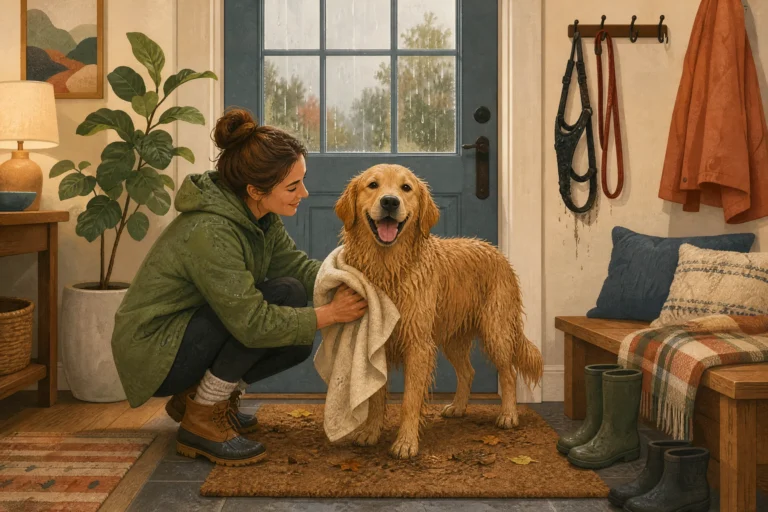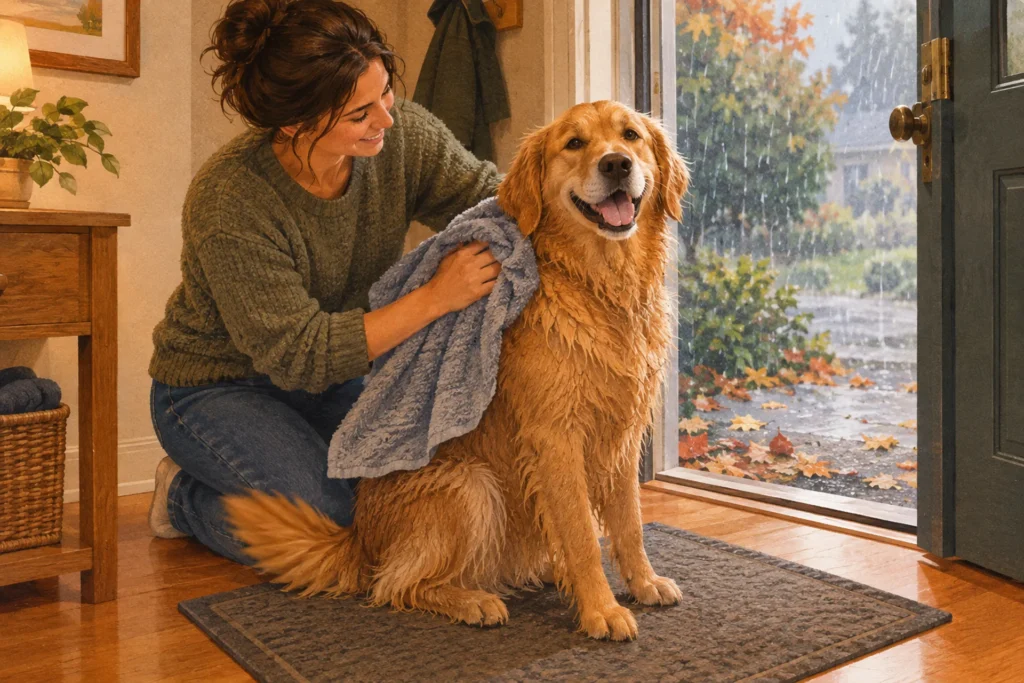
For a short-coated dog in a warm house, yes. Air drying after a rainy walk is fine. Most dogs that get rained on, shake off and dry on their own never have a problem from it. The dogs worth a few extra minutes are the ones with long, thick, double or matted coats, because those coats can look dry on top while staying damp at the skin for hours.
That lingering damp is the part that matters. Cornell’s Riney Canine Health Center says a dog that is swimming, wading “or even just out enjoying a warm summer rain is prone to developing hot spots” if it has a thick coat that does not dry fully. So the useful question is not whether air drying is good or bad. It is how long does this dog’s skin stay wet, and for some dogs the honest answer is “too long without help.”
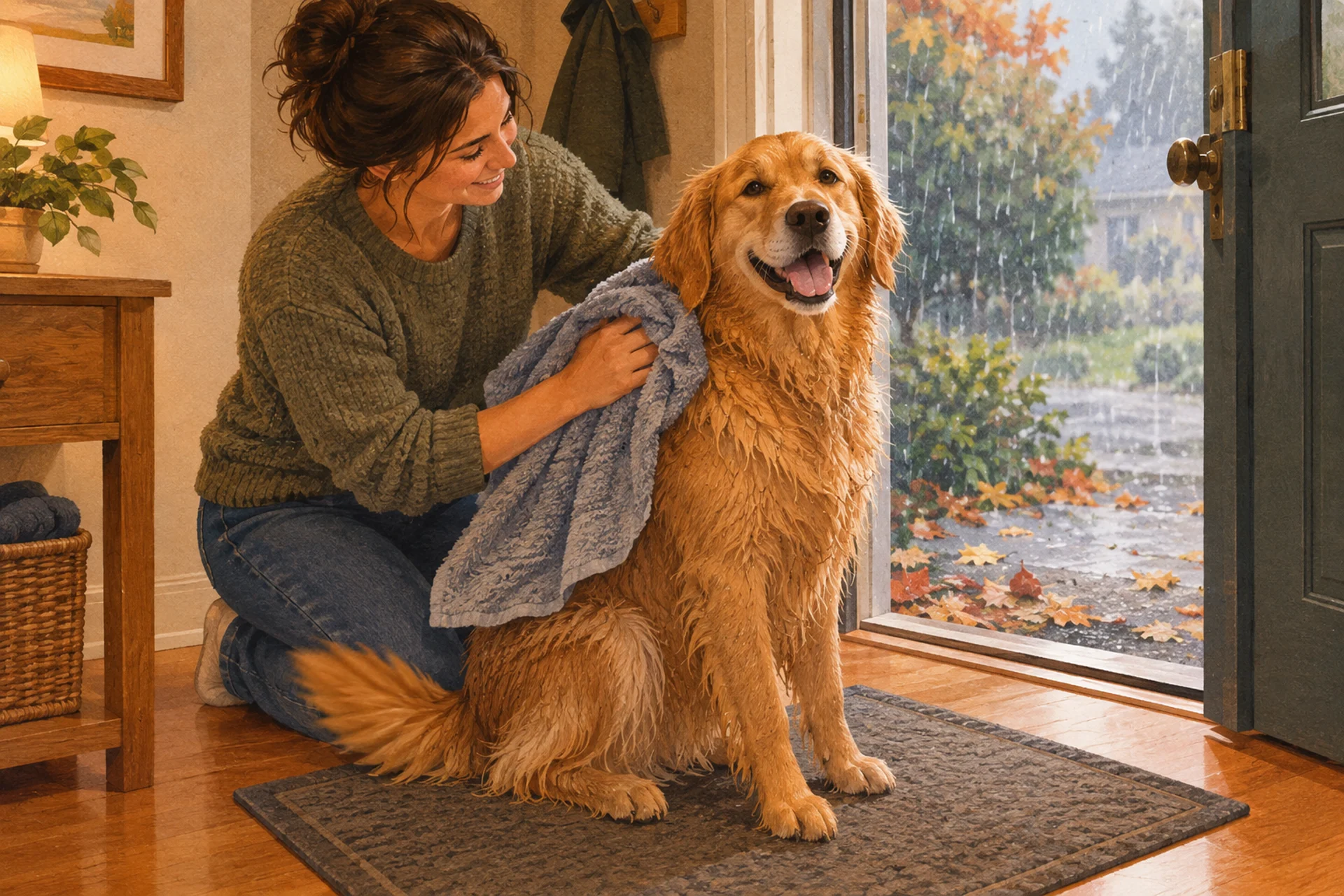
Why “just let them dry” works for some dogs and not others
Healthy dog skin is normally dry, and that dryness is part of how it keeps bacteria in check. The Merck Veterinary Manual puts it plainly: any condition that changes “the normally dry environment of the skin to a more moist one” can predispose a dog to overgrowth of the bacteria that already live there. It also notes that warm, moist areas such as lip folds, facial folds, neck folds, the armpits and the spaces between the toes carry higher bacterial counts and are at greater risk of infection.
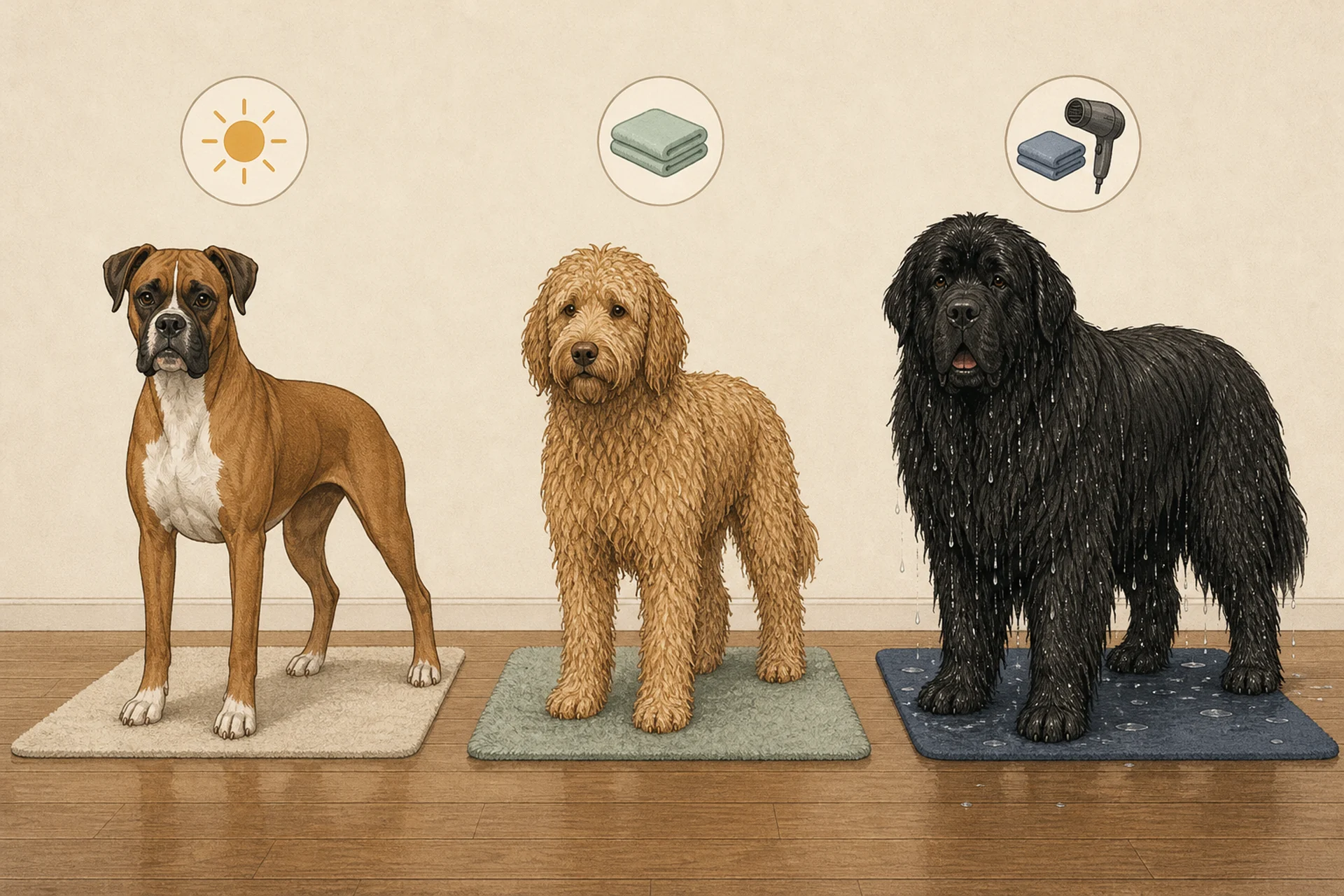
A sleek coat on a boxer or a pointer dries in the time it takes you to hang up the leash. There is no long wet period, so there is nothing to solve. A golden retriever, a Newfoundland, a doodle with a few tangles behind the ears is a different object. The outer coat sheds the worst of the rain, the undercoat or the tangles soak up the rest, and the skin underneath sits in a warm, damp layer that air barely reaches.
Mats make this worse than coat length alone. VCA Animal Hospitals explains that matted fur prevents air from reaching the skin and retains water after a dog swims or gets caught in the rain, “which ensures that the skin stays wet, creating a perfect environment for a hot spot.”
| Your dog’s coat | Is air drying OK after rain? | What actually helps |
|---|---|---|
| Short, smooth, single coat | Usually yes, in a warm room | Wipe the feet and belly; a quick towel if the house is cool |
| Medium coat, no undercoat to speak of | Mostly; give the damp spots a hand | Towel the belly, armpits, ears and feet |
| Long, curly or easily tangled coat | Not on its own | Towel by pressing, then brush out so tangles don’t set while damp |
| Thick or double coat | Not on its own, especially if soaked through | Towel down to the skin; a dryer on low or no heat if the undercoat is wet |
| Any coat with mats, skin folds, or a history of hot spots or ear trouble | No | Dry thoroughly every time, and ask your vet about the underlying cause |
What a hot spot is, and how much rain has to do with it
A hot spot (vets call it acute moist dermatitis) is a patch of inflamed, infected skin that appears fast. VCA describes them as painful, itchy, smelly sores that “can dramatically increase in size in a very short period” and that may be hidden under matted fur. They usually start with the dog itself: the American Kennel Club says hot spots are often triggered by scratching, licking or chewing at one area.
It is worth being accurate about cause here, because the internet tends to blame the towel you didn’t use. Cornell names allergies and external parasites such as fleas as the primary causes. Damp skin is the setting that lets a small itch turn into a sore. The AKC’s wording is that dogs “frequently wet from swimming, bathing, or inclement weather are more prone” to them, and it lists thicker-coated breeds as predisposed. Cornell says they are most common in dogs with long or thick coats, and names Newfoundlands, German Shepherd Dogs and Golden Retrievers.
So one air-dried rainy walk does not give a healthy dog a skin infection. A thick-coated, itchy or allergy-prone dog that stays damp at the skin walk after walk through a wet autumn is the realistic risk, and that is the dog the towel is for.
If what you are looking at is a crusty or matted patch rather than a red, oozing one, you may have seen the term “rain rot.” It is real but rare in dogs; see can dogs get rain rot? for what it usually turns out to be.
The spots that stay wet after the back feels dry
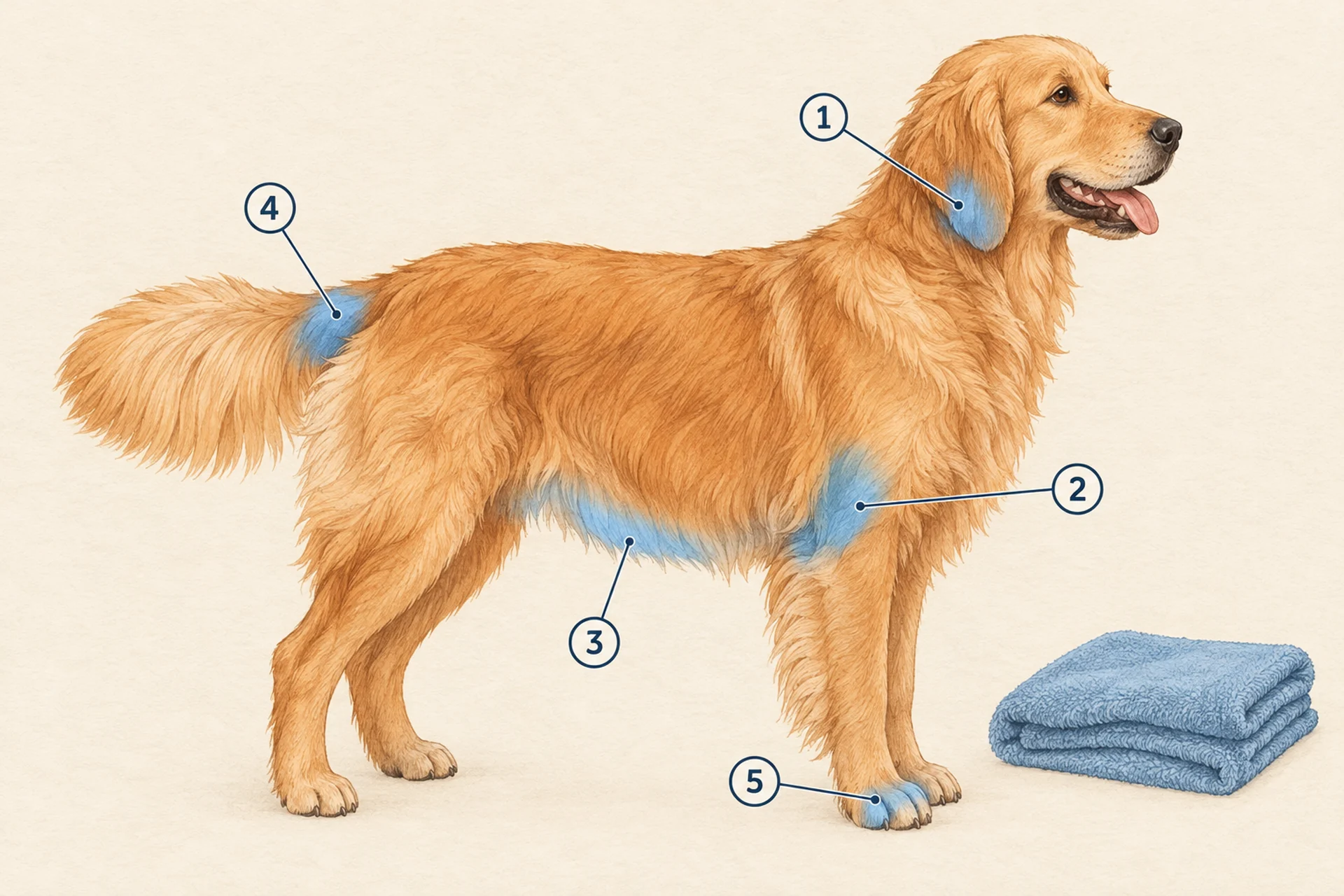
Running a hand along your dog’s back tells you very little. The top line dries first. Check these instead:
- Under and behind the ears. Cornell notes that wet ears can lead to ear infections, which in turn can lead to hot spots under the ear. The Merck Veterinary Manual’s prevention advice is to keep ear canals dry and well ventilated. Dry the flap and the outside only; don’t push anything into the canal. For the full picture on wet ears, see can rain cause ear infections in dogs.
- Armpits and groin. Thin skin, little airflow, and the coat rubs against itself there.
- Belly and chest. These catch the splash from the ground and are the last to dry on a low-slung dog.
- Tail base and rump. Dense coat, and an easy place for a dog to reach and chew.
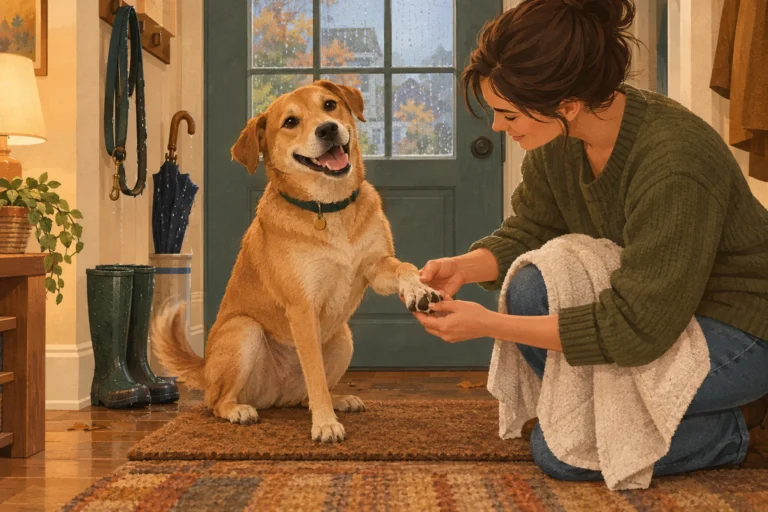
- Between the toes. Merck lists the spaces between the toes among the warm, moist areas at higher risk. Our guide to cleaning dog paws after a walk covers that step.
- Under the collar and harness. A soaked strap holds water against one strip of coat. Take both off to dry.
If you are going to help, do it the way that doesn’t make tangles
You don’t need a grooming session. The AKC’s guidance on drying a dog properly applies to a walk in damp weather as much as to a bath, and it comes down to three things:
- Press, don’t scrub. The AKC warns that rubbing a towel vigorously can cause tangles and mats to form, and recommends pressing the towel gently into the fur instead. On a long coat that matters twice, because mats are what hold the next rain against the skin.
- Brush a long or double coat once it’s towelled. Cornell notes that a towel may suffice for a short-coated dog, but a dog with a long or double coat may require brushing as well. Brushing opens the coat so air can reach the skin.
- If you use a dryer, use air, not heat. The AKC points out that it is the airflow that dries the coat, and advises avoiding heat because it can burn the skin. Start on a low setting from a distance and keep it away from the face and ears.
Then let the dog finish drying somewhere warm. In cold weather the chill matters as much as the skin: a wet coat insulates poorly, which is the subject of whether dogs can get sick from rain. And if what you actually mind is the smell, the full door routine is in wet dog smell after rain.
What about drying outside? On a warm, dry, breezy afternoon a short-coated dog will dry quickly in the yard. In cool, damp or still air a thick coat dries slowly outdoors, and the dog gets cold while it waits. In autumn and winter, dry indoors.
What to watch for over the next few days
Most of the time there will be nothing to see. These are the things that mean the skin or ears are not coping, and none of them is a home-treatment job:
- A red, moist, raw-looking patch, or a clump of fur that is wet and sticky when the rest of the coat is dry
- Your dog licking, chewing or scratching at one spot over and over
- A sour or foul smell from one area rather than the general wet-dog smell
- Head shaking, ear scratching, redness, swelling, discharge or a bad smell from an ear, the signs Merck lists for outer ear inflammation
- Redness or swelling between the toes, or limping
Cornell’s guidance is that if a sore is more than 24 hours old, an infection is likely and a trip to the veterinarian is in order. VCA adds a warning that is easy to miss: check with your veterinarian before using any medication intended for humans, because many are toxic to dogs. If your dog gets hot spots or ear infections repeatedly, the wet walks are probably not the whole story. Ask your vet about allergies and parasite control, which are the usual drivers.
Air drying a dog after rain: FAQ
Is it bad to let a dog air dry?
Not for most short-coated dogs in a warm room. It is a poor plan for long, thick, double or matted coats, which can stay damp at the skin long after the surface feels dry. Cornell’s canine health center notes that thick-coated dogs whose coats don’t dry fully are prone to hot spots.
Should I dry my dog after a walk in the rain?
A quick towel is worth it for any dog, and it matters most for thick or long coats and in cold weather. The AKC says that when a dog is wet from a bath, a swim or a walk in damp weather, it is important to dry them thoroughly. Press the towel into the coat, then check the ears, armpits, belly and feet.
Can a dog get hot spots from being wet?
Dampness alone is rarely the cause. Hot spots usually begin with itching from allergies or fleas, and the dog’s own licking and scratching. Skin that stays wet under a thick or matted coat is the setting that lets one develop, which is why the AKC says dogs that are frequently wet are more prone to them.
Can I let my dog air dry outside?
On a warm, dry day, a short-coated dog will dry fine outside. In cool or damp weather a thick coat dries slowly outdoors and the dog can get chilled while it waits, so bring them in, towel them and let them finish in a warm room.
Can I use my hair dryer on my dog?
The AKC advises avoiding heat because it can burn a dog’s skin, and notes that airflow is what dries the coat. If you use a dryer, start on a low setting from a distance and keep it away from the face and ears.
Does a raincoat mean I can skip the towel?
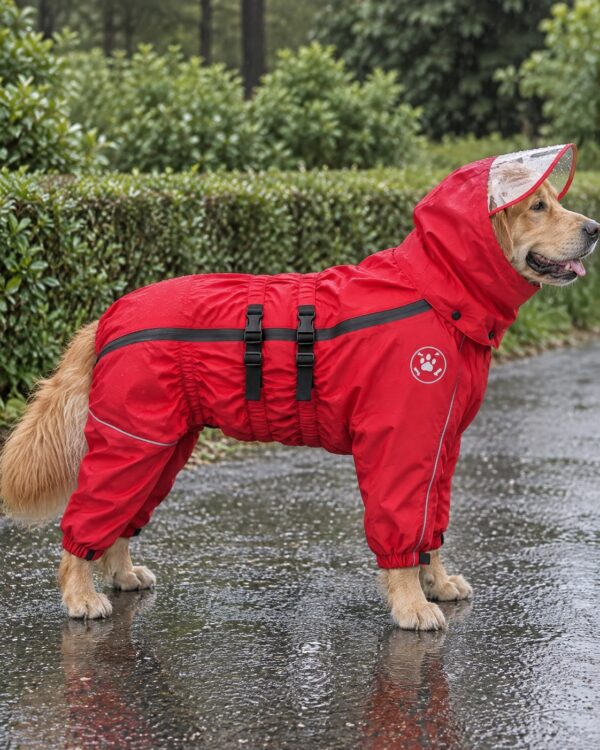
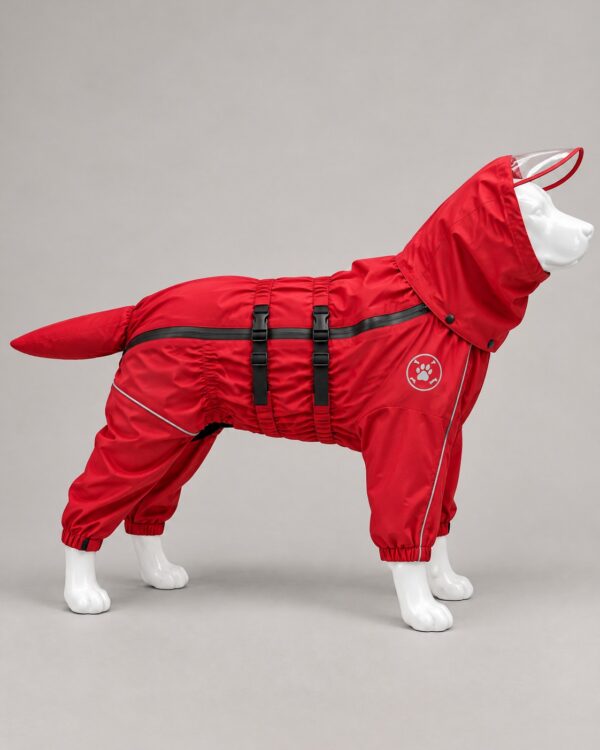
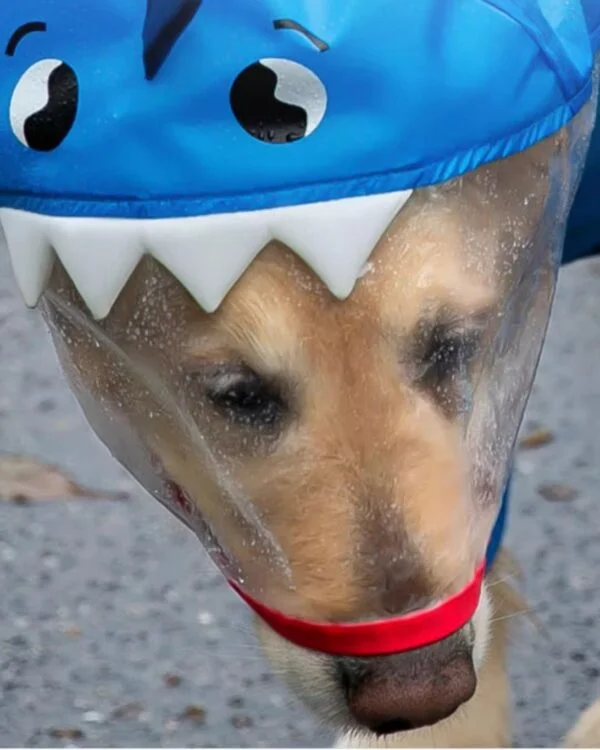
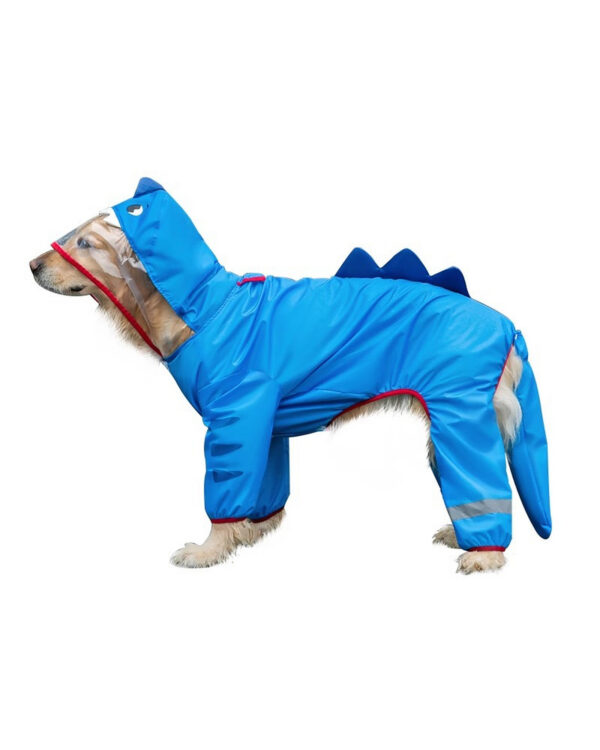
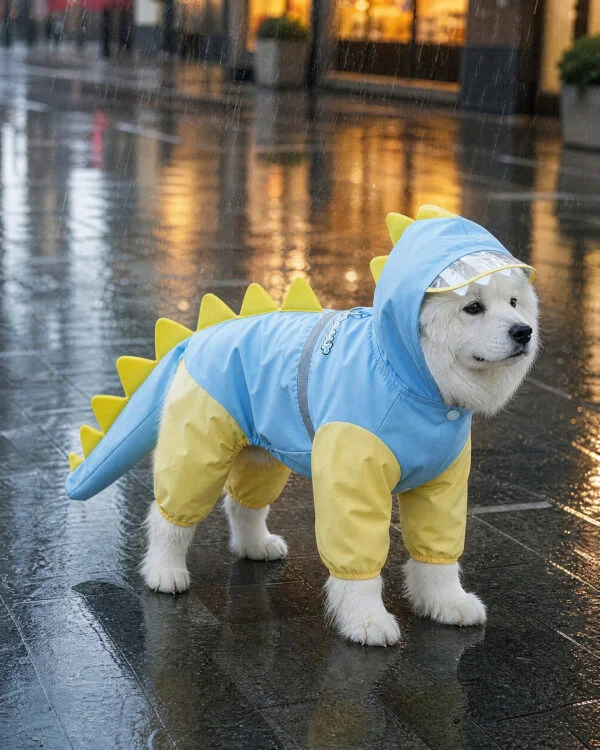
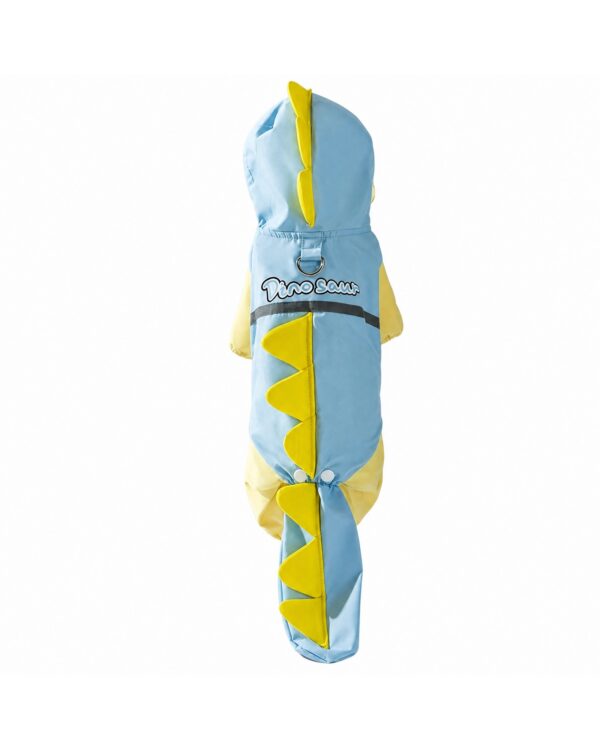
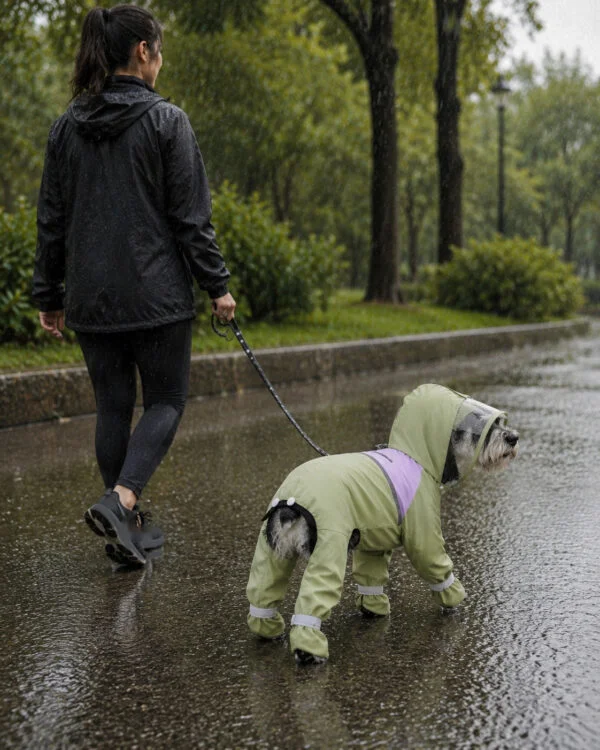
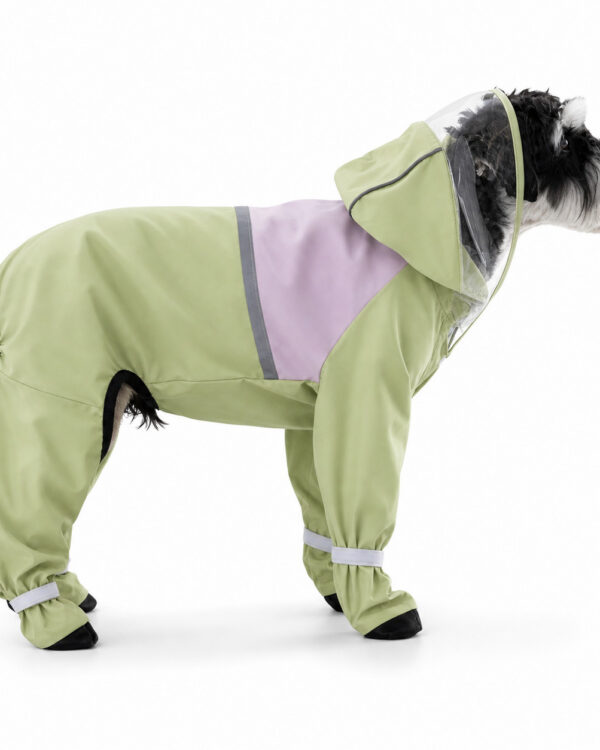
It means there is less coat to dry, which helps most on a thick-coated dog. The feet, lower legs, head and ears still get wet, and anything damp under the coat still needs air. A raincoat doesn’t treat or prevent skin disease; it just shortens the drying job. See whether double-coated dogs need raincoats.
Sources
- Cornell University Riney Canine Health Center — Hot spots (checked 2026-10-13)
- VCA Animal Hospitals — Hot Spots in Dogs (checked 2026-10-13)
- American Kennel Club — Hot Spots on Dogs: Signs, Treatment, and Prevention (checked 2026-10-13)
- American Kennel Club — How to Dry Your Dog Properly and Why It’s Important (checked 2026-10-13)
- Merck Veterinary Manual — Pyoderma in Dogs and Cats (checked 2026-10-13)
- Merck Veterinary Manual — Ear Infections and Otitis Externa in Dogs (checked 2026-10-13)
This is general care information, not a diagnosis. Skin sores, ear problems and anything that is getting worse should be seen by your veterinarian.
Air dry the short coats. Help the thick ones.
Most dogs dry off after rain without anyone’s help. If your dog has a long, thick or tangled coat, two minutes with a towel pressed into the ears, armpits, belly and feet is what keeps the skin from sitting damp all evening. Anything red, raw, smelly or sore after that is a question for your vet.