Rain itself does not give a dog a cold. The coughs and sniffles people blame on a wet walk are caused by viruses and bacteria that pass from dog to dog — the Merck Veterinary Manual describes kennel cough as spreading “rapidly among susceptible dogs housed in close confinement,” not among dogs that got rained on.
But “rain can’t make them sick” is not quite right either, and that is why the question keeps getting asked. Three things that travel with rain can: cold on a wet coat in small, short-coated, very young or old dogs; what’s in the standing water afterwards; and lightning. For a healthy adult dog on an ordinary rainy day, the walk is fine. The decision changes with temperature and wind, with your particular dog, and with whether you can hear thunder.
So: walk in the rain, keep it shorter when it is cold, steer around puddles, dry your dog properly when you get home, and go inside when it thunders. The rest of this page is about when each of those matters.
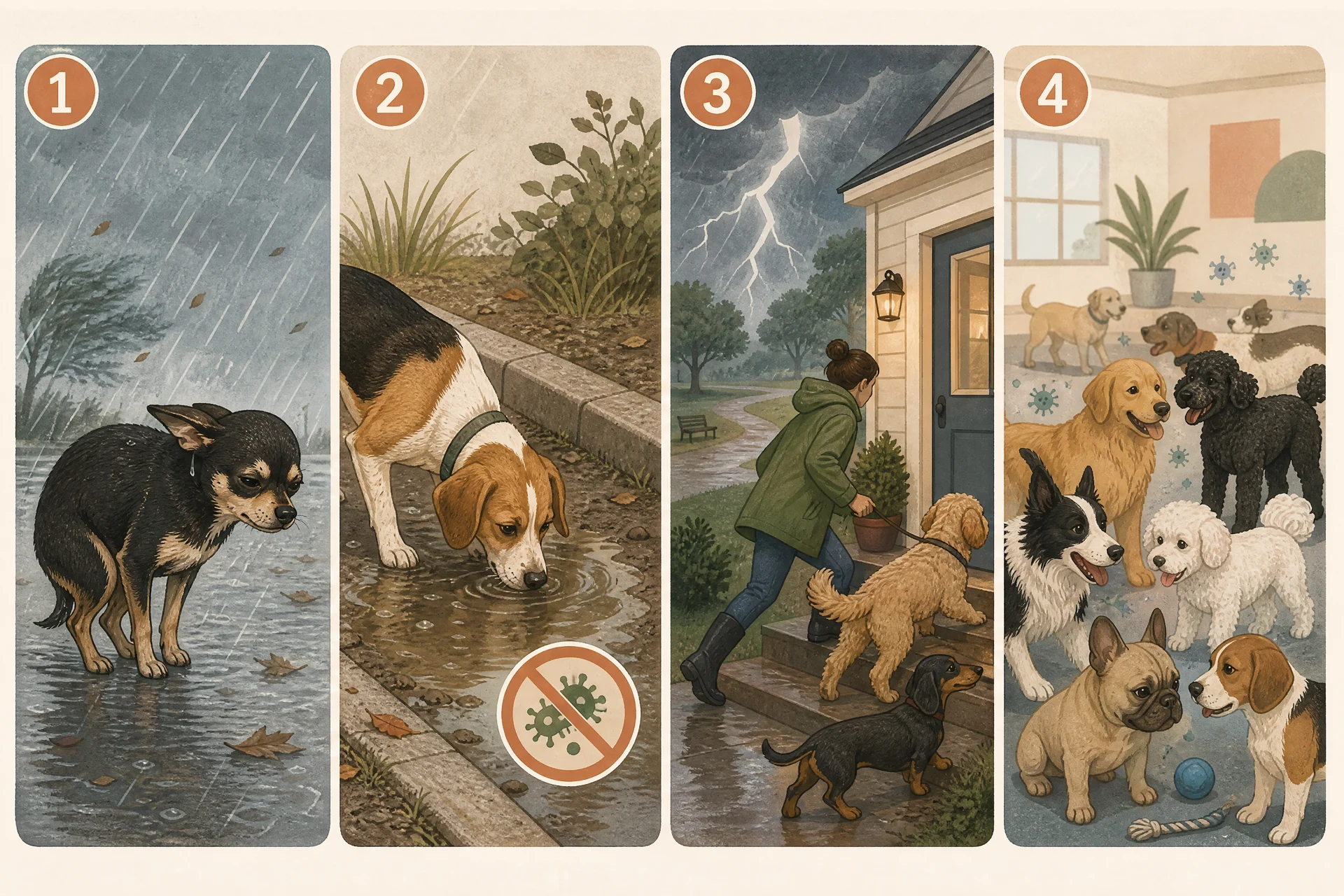
Why a wet walk doesn’t cause a cough (and the half-truth in the old idea)
The belief is old and it is understandable: a dog goes out in a downpour, and a few days later is coughing. But the list of causes vets give for kennel cough is a list of organisms. Merck names distemper, parainfluenza, canine adenovirus-2 and Bordetella bronchiseptica, and says the illness spreads among dogs kept close together, “such as veterinary hospitals or kennels.” The rainy-week cough is far more often the boarding stay, the daycare, or the crowded indoor class that rainy weeks push people towards.
Here is the half that the old idea gets right. The same Merck page says “stress and environmental changes such as extremes of ventilation, temperature, and humidity appear to increase the dog’s susceptibility to disease as well as its severity.” Being chilled doesn’t create the infection, but a dog that is cold and stressed may cope with one worse. It is also why the manual singles out puppies and “weakened, ill, or aged dogs” as the ones in whom a cough can progress. If your dog is in one of those groups, a long cold soaking is worth avoiding for that reason as well as the next one.
A cough that lasts more than a few days, or comes with fever, a runny nose, low energy or loss of appetite, is a call to your vet regardless of the weather that preceded it.
The real risk: cold on a wet coat
A dry coat insulates because it traps air. A soaked coat stops doing that, and wind on wet fur pulls heat away quickly. The American Veterinary Medical Association’s cold-weather guidance makes the point about clothing directly: “Wet sweaters or coats can actually make your dog colder,” which is why it suggests keeping several on hand so the dog goes out in a dry one each time.
How much this matters depends almost entirely on the dog. The AVMA says cold tolerance varies “based on their coat, body fat stores, activity level, and health,” and adds two groups people miss: short-haired pets “feel the cold faster,” and short-legged pets “may become cold faster because their bellies and bodies are more likely to come into contact” with cold ground. It also lists pets with diabetes, heart disease, kidney disease or hormonal conditions, and “very young and very old pets,” as having a harder time regulating body temperature. The American Kennel Club puts it in one line: “Small dogs, senior dogs, puppies, and short-coated dogs are at a higher risk of rapid loss of body heat.”
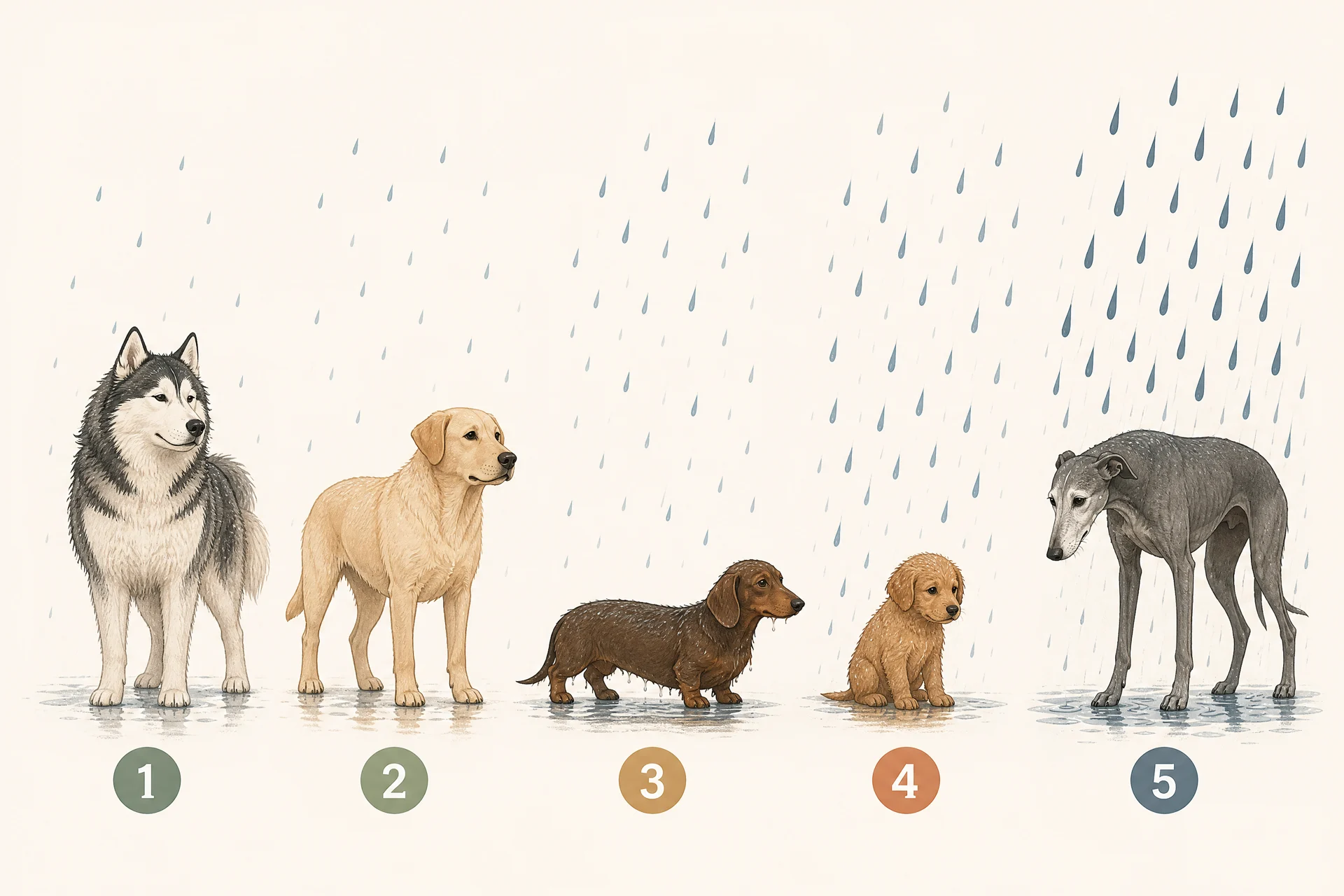
| Your dog | Warm rain, light wind | Cold rain or wind |
|---|---|---|
| Healthy adult, thick or double coat | Normal walk | Normal walk for most; dry them well afterwards |
| Healthy adult, medium coat | Normal walk | Walk, but keep moving and head home if they slow down |
| Small, short-coated, or short-legged | Usually fine | Shorter outings; a dry layer helps; watch closely |
| Puppy, senior, or a dog with a chronic illness | Short and sensible | Brief toilet trips; ask your vet where their limits are |
There is no reliable temperature at which rain becomes a problem for every dog, and anyone who gives you one number for all dogs is guessing. The AVMA’s advice is to learn your own dog’s tolerance and, “if you need help determining your pet’s temperature limits, consult your veterinarian.”
What getting too cold looks like
The AVMA lists the signs to act on: if your dog “is whining, shivering, seems anxious, slows down or stops moving, seems weak, or starts looking for warm places to burrow, get them back inside quickly.” Don’t wait for shivering alone: Merck’s first-aid guidance notes that shivering is not a reliable sign of hypothermia in animals, and that more serious cases show as a slow pulse, shallow breathing, confusion or collapse. It also says that a wet animal should be dried first, then warmed gently rather than with anything hot. A dog that is weak, confused or unusually quiet after being out in cold rain needs a vet now, not a nap by the heater.
What’s in the water after the rain
Rain washes things into puddles, and some of them matter. The CDC explains that leptospirosis bacteria spread through the urine of infected animals, that “animal urine in the soil and other surfaces can get into floodwater or rainwater,” and that the bacteria “can survive in contaminated water or soil for weeks to months.” It notes that risk often rises after a hurricane or flood. Dogs are infected the same way people are, through contact with contaminated water or soil.
The practical rule is simple: walking through a wet street is not the problem, drinking from or lying in standing water is. Carry water so your dog is not thirsty enough to go for the gutter, and steer around puddles on trails and verges where wildlife moves. Kerbside puddles near parked cars carry a separate chemical risk. We cover both, with what to do if your dog already drank, in what to do if your dog drank puddle water. Whether the leptospirosis vaccine makes sense for your dog depends on where you live and how you walk, which is a good question for your next vet visit.
Thunder changes the answer
Rain is a comfort question. Lightning is a safety one, for you and the dog alike. The National Weather Service is unambiguous: “There is no safe place outside when thunderstorms are in the area,” and its rule of thumb is “When Thunder Roars, Go Indoors.” Its lightning safety guidance also reminds owners not to forget pets during storms and to give them proper shelter.
So if you can hear thunder, the walk becomes a quick toilet trip close to the door, or it waits. A dog that is already frightened of storms will not get much from a walk in one anyway — and a frightened dog on a lead in the dark, next to traffic, is its own hazard. If you do have to be out as the light fades, our notes on walking your dog in the dark cover being seen by drivers.
Drying off is the part that actually prevents problems
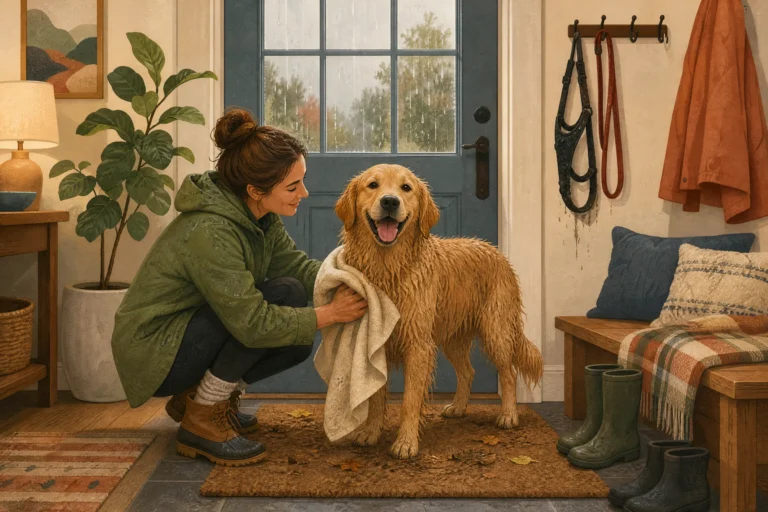
Most of the good a sensible rainy walk does can be undone by putting a soaked dog in a cool room. Towel the coat properly — against the grain as well as with it, down to the skin on thick coats — and pay attention to the parts that stay wet longest: the belly, the armpits, between the toes, and the ears on floppy-eared dogs. The National Weather Service’s pet safety tips say to thoroughly wipe off your dog’s legs and stomach when they come in from sleet, snow or ice, and the AVMA gives the same advice for feet, legs and belly, because road chemicals picked up outside get licked off later.
Then give your dog a warm, dry, draught-free place to settle. A dog that goes straight from a wet walk to a dry bed rarely has anything to show for it the next day. If the part you actually dread is the smell, why wet dogs smell and how to stop it goes through the drying routine spot by spot.
Does a raincoat help?
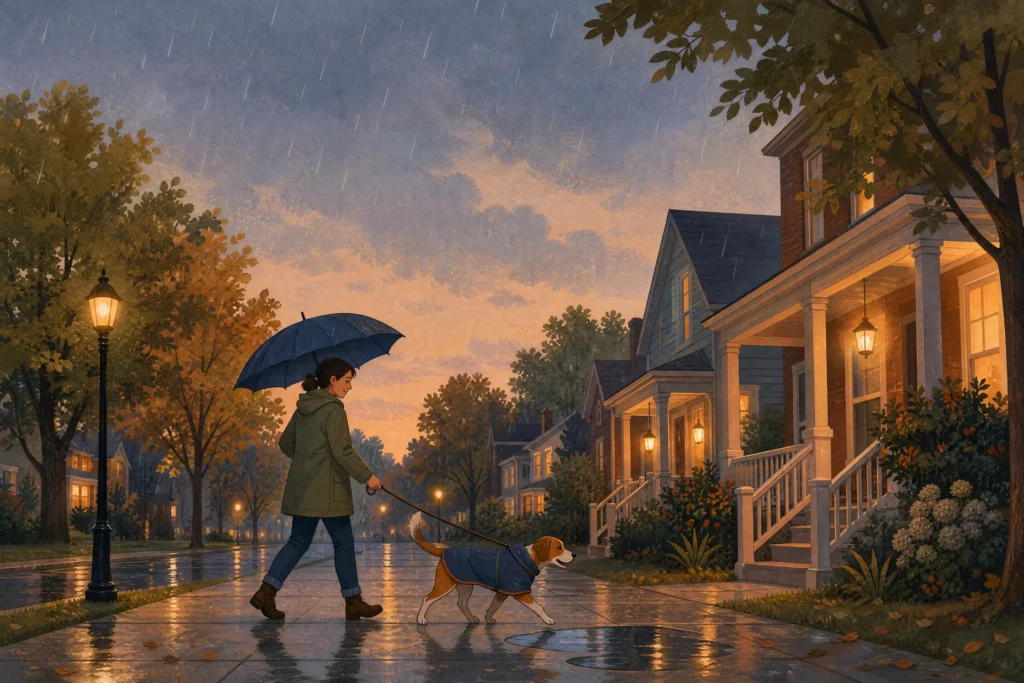
For some dogs, yes, and for others it is mostly about keeping your sofa dry. A waterproof layer’s real job is to keep the insulating coat underneath dry, which matters for exactly the dogs in the bottom rows of the table above: small, short-coated, low to the ground, very young or old. For a healthy dog with a dense double coat on a mild day, it is a convenience rather than a health measure. We went through that argument in detail, including the downside of overheating, in do double-coated dogs need raincoats? If a coat does make sense for your dog, the one rule from the AVMA still applies: it has to go out dry, so a wet one from the morning walk should not go back on for the evening one. Our weather protection shelf has the rain suits we carry.
Before the next rainy walk
- Check the forecast for thunder, not just rain. If you can hear it, keep it to a quick trip by the door.
- Decide the length of the walk by the temperature and wind and by your dog, not by habit.
- Bring water so your dog isn’t tempted by puddles, and steer around standing water, especially on trails and after flooding.
- Keep a towel by the door and dry the belly, armpits, paws and ears as well as the back.
- If your dog wears a coat, have a dry one ready for each outing.
- Watch for slowing down, whining, trying to burrow or seeming weak, and head home when you see them.
- For a puppy, a senior, or a dog with a heart, kidney, hormonal or other chronic condition, ask your vet what their weather limits should be.
Dogs and rain FAQ
Can dogs get sick from walking in the rain?
Not from the rain itself. Respiratory illness like kennel cough is caused by viruses and bacteria spread between dogs. What rainy weather can do is chill a wet dog, which matters most for small, short-coated, very young, old or unwell dogs, and leave behind puddles that can carry bacteria such as leptospira. A healthy adult dog walked in ordinary rain and dried afterwards is very unlikely to have any problem.
Should I still walk my dog in the rain?
Usually yes, adjusted for the conditions. Most dogs still need the exercise and the toilet break. Shorten the walk when it is cold or windy or your dog is in a vulnerable group, skip it or keep it to the doorstep when there is thunder, and dry your dog properly afterwards.
Can puppies get sick from rain?
Puppies lose body heat faster than adult dogs, and Merck notes that respiratory infections can be more serious in them, so the same caution applies more strongly: short outings, a quick dry-off, and a warm place to rest. Puppies who are not fully vaccinated also have their own limits on where they can walk, which your vet will give you.
Should I dry my dog after rain?
Yes. A wet coat insulates poorly, and the belly, armpits and paws stay damp longest. Towel them down to the skin, wipe the legs and stomach to remove anything picked up from the road, and give them a warm, dry spot to settle.
Can a dog get hypothermia from rain?
It can happen when a wet dog stays out in cold, windy weather, especially a small, short-coated, young, old or unwell dog. Signs include whining, shivering, slowing down, seeming weak and looking for somewhere warm, and in serious cases confusion or collapse. Get the dog inside and dry, and contact your vet if they seem weak, confused or unusually quiet.
Is it cruel not to walk my dog when it’s pouring?
No. Skipping or shortening a walk in a storm is sensible, especially with thunder about. Give your dog a quick toilet break, then make up for the missing walk indoors with a game, a puzzle feeder or some training. If your dog refuses to go out at all in the wet, our guide to a dog that won’t potty in the rain can help.
Rain is rarely the problem. Cold, puddles and thunder are.
Walk your dog, pay attention to the temperature and to your particular dog, keep them out of the standing water, go indoors when it thunders, and dry them properly at the door. Do those things and a rainy day is just a wetter version of a normal one. For anything that looks like illness afterwards, your vet is the right call, not the forecast.
Sources
- Merck Veterinary Manual — Tracheobronchitis (Bronchitis) in Dogs (checked 2026-09-26)
- Merck Veterinary Manual — Emergency Care for Dogs and Cats (checked 2026-09-26)
- American Veterinary Medical Association — Cold weather animal safety (checked 2026-09-26)
- American Kennel Club — Hypothermia in dogs: how cold is too cold? (checked 2026-09-26)
- Centers for Disease Control and Prevention — About leptospirosis (checked 2026-09-26)
- National Weather Service — Lightning safety (checked 2026-09-26)
- National Weather Service Paducah — Lightning Safety Awareness Week (checked 2026-09-26)
- National Weather Service Marquette — Pet safety (checked 2026-09-26)
This page is general information, not veterinary advice. If your dog seems unwell after being out in the weather, contact your veterinarian.