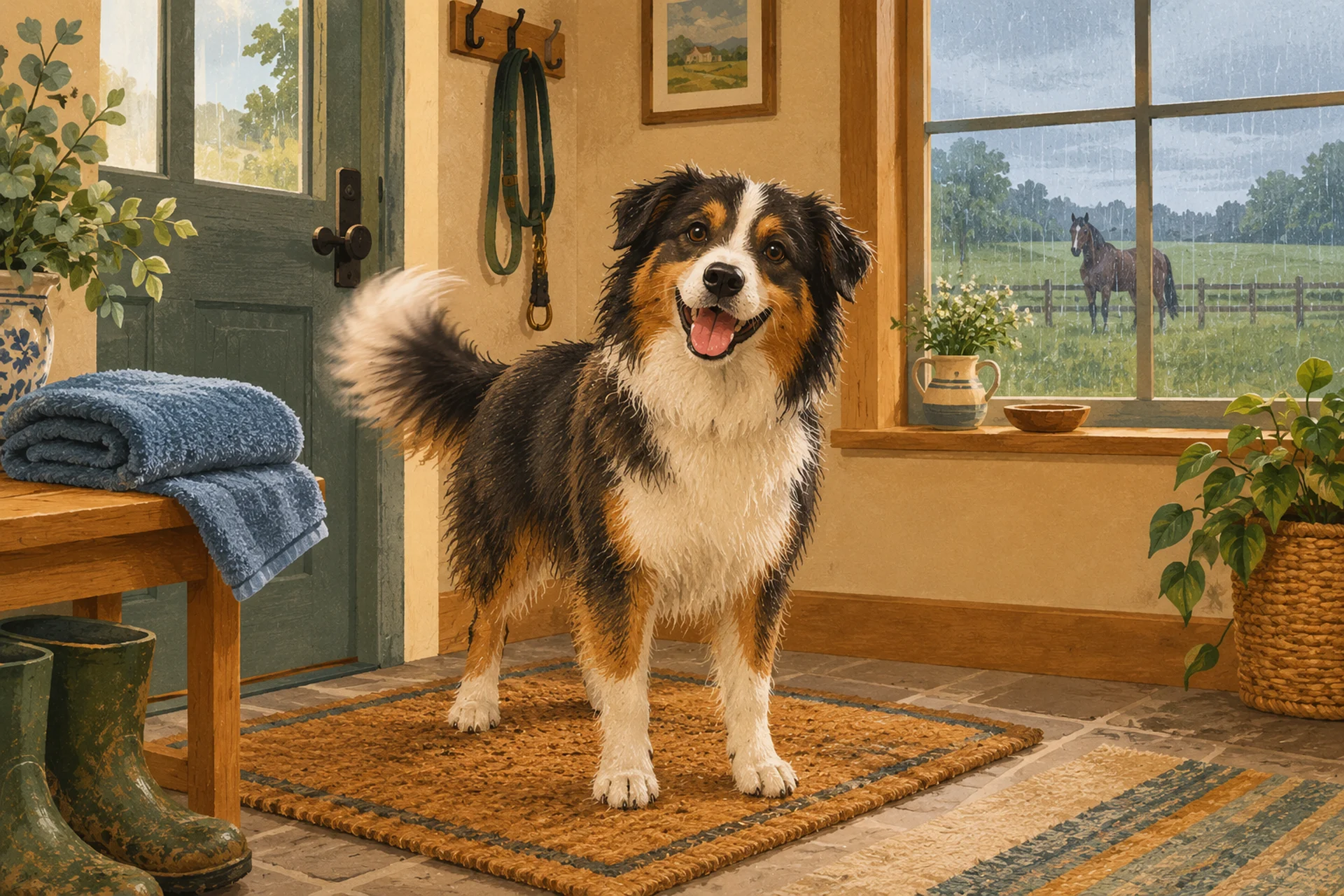
Technically yes, but it is rare. “Rain rot” (also called rain scald) is a skin infection caused by a bacterium named Dermatophilus congolensis, and it is mostly a problem in horses, cattle, sheep and goats that stand out in wet weather. The Merck Veterinary Manual’s owner page on dermatophilosis in dogs says plainly that “dogs and cats rarely have this disease.”
So if your dog has a crusty, matted or sore patch after a wet week, rain rot is possible but it is not the likely answer. Far more often it is a hot spot, a bacterial skin infection, ringworm or something else that a damp coat made worse. They look alike from the outside and they are not treated the same way. A vet can tell them apart with a quick look under the microscope or a lab test, and that is the step a search for home treatment would skip.
What rain rot actually is
The name describes the weather, not the germ. Rain rot is dermatophilosis, a bacterial skin infection. It is not a fungus, even though some pages online mix it up with ringworm. The Merck Veterinary Manual’s professional chapter lists cattle, sheep, goats and horses as the animals most often affected, with “pigs, dogs, and cats rarely” affected.
The bacteria can sit on the skin without causing trouble. What lets them take hold is skin that has lost its normal barrier, and the main thing that does that is water. Iowa State University’s Center for Food Security and Public Health names “prolonged wetting by rain, high humidity, and high temperature” as the factors that let the bacteria spread. Merck’s owner page adds that outbreaks “often occur during rainy seasons,” because wetness helps the bacteria grow and release the spores that spread the infection.
The spread itself is mostly by contact. Merck says dermatophilosis is believed to be spread by direct contact between animals, and also lists contaminated surroundings and possibly biting insects. The Iowa State sheet names flies and ticks.
Why dogs so rarely get it
Look at the animals who do get it: livestock and horses that spend days and nights outside in the rain, often in herds that touch each other, often bitten by flies and ticks, and often standing in wet pens. The Iowa State sheet notes that horses and cattle can develop it on the lower legs “from standing in water or wet pens.”
A pet dog who goes out for walks in the rain and then comes inside to a dry house does not have that kind of exposure. The skin gets wet, then has a chance to dry. That is the main reason the condition is a footnote in dogs. The sources above don’t give a number for how often it happens in dogs. They only say it is rare, so we won’t guess at one either.
The situations that come closest for a dog are the ones that look like a farm animal’s life. A dog kept outdoors in wet weather, a dog with a thick coat that rarely dries out, or a dog that lives or works around horses or cattle with the condition.
| What you’re seeing | What it could be | What to do |
|---|---|---|
| Small tufts of matted hair, “paintbrush” clumps, crusts underneath | Rain rot is one possibility; so are bacterial skin infection and ringworm | Book a vet visit. These look alike and need a test to tell apart |
| A red, wet, oozing patch that appeared fast and the dog won’t leave alone | Most often a hot spot (acute moist dermatitis) | Call your vet the same day. Hot spots can grow quickly |
| Bald, scaly patches with broken hairs | Ringworm (a fungus) is one possibility | Vet visit. Ringworm spreads to people easily |
| Damp, smelly coat with no sore or crust | A coat that hasn’t dried properly | Towel and dry it; see a vet if a sore or redness appears |
| Crusts plus a dog that seems unwell, off food, or in pain | Anything more serious | Go to the vet promptly |
What a crusty patch on a wet dog usually is instead
Hot spots. This is the one most people mean when they say their dog “got something from the rain.” VCA Animal Hospitals describes hot spots as red, inflamed skin lesions that appear quickly, ooze, and may contain pus. Its explanation of the wet-weather link is specific: matted fur prevents air from reaching the skin and retains water after a dog swims or gets caught in the rain, which keeps the skin wet. The American Kennel Club says dogs that are frequently wet “from swimming, bathing, or inclement weather are more prone” to them, and names thick-coated breeds such as Golden Retrievers, German Shepherd Dogs, Labrador Retrievers, St. Bernards and Rottweilers as predisposed.
Ringworm. Despite the name, it’s a fungus. The Merck owner page on ringworm in dogs describes bald, scaly patches with broken hairs, notes that people can easily be infected, and says fungal culture of hairs and skin scrapings is the most accurate way to diagnose it. Ringworm is the condition most often confused with rain rot online, and the two are treated differently.
Other bacterial skin infections. Merck lists other skin fungus infections among the conditions vets have to rule out when they suspect dermatophilosis. In practice, your vet will also be thinking about allergies, parasites and everyday bacterial infections, because those are common in dogs and rain rot is not.
Why “rain rot in dogs treatment at home” is the wrong search
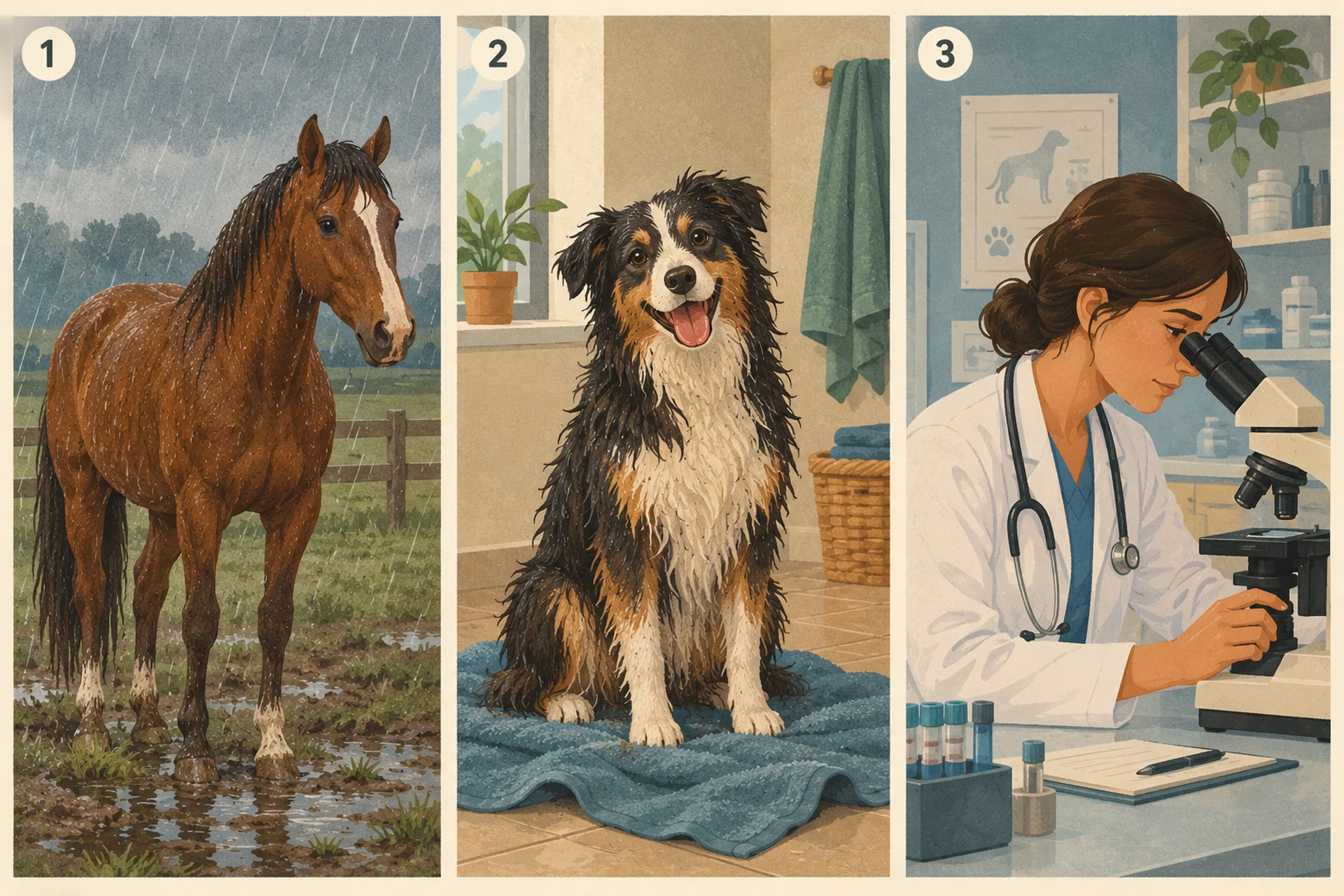
That phrase is one of the most common things people type after “rain rot in dogs,” and it is understandable. But the hard part isn’t the treatment. It’s knowing which condition you’re dealing with. Merck says dermatophilosis is diagnosed with laboratory tests on samples taken from the skin, and that the most practical test is looking at fresh crusts under a microscope. Ringworm needs a fungal culture. A hot spot needs its own approach. Treating a guess can mean treating the wrong thing while the real one spreads.
There is some reassuring news if your vet does confirm rain rot. Merck’s owner page says that in most short-term infections the skin heals on its own in 2 to 3 weeks, usually without scarring, and that “treatment is often not required,” though antibiotics can be used in painful or severe cases. That decision belongs to your vet. Keeping the animal dry is part of every version of the plan; Merck’s professional chapter says that keeping animals dry is important.
We won’t list creams, washes or medicines here. Products made for people can be harmful to dogs, and VCA specifically advises asking your vet before using any human medication on a hot spot.
Can you catch it from your dog?
It is possible, but uncommon. Merck notes that the few reported human cases have usually been linked to handling diseased animals, and advises wearing gloves and washing your hands after contact. The Iowa State sheet describes the human form as small, painless pustules on the hands and arms after direct contact with an infected animal, and says to see your own doctor if you’re concerned. Ringworm, the common look-alike, spreads to people more readily, which is one more reason to get the patch identified rather than assume.
What actually reduces the risk on wet days
None of this means a rainy walk is dangerous. Most dogs get wet, shake off, dry and never have a skin problem. The goal is just to keep skin from staying soaked for long stretches, because that is the condition every source above points at.
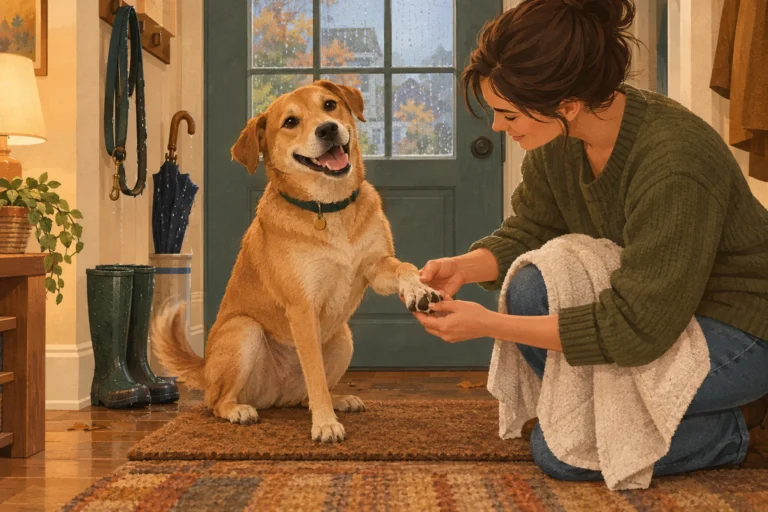
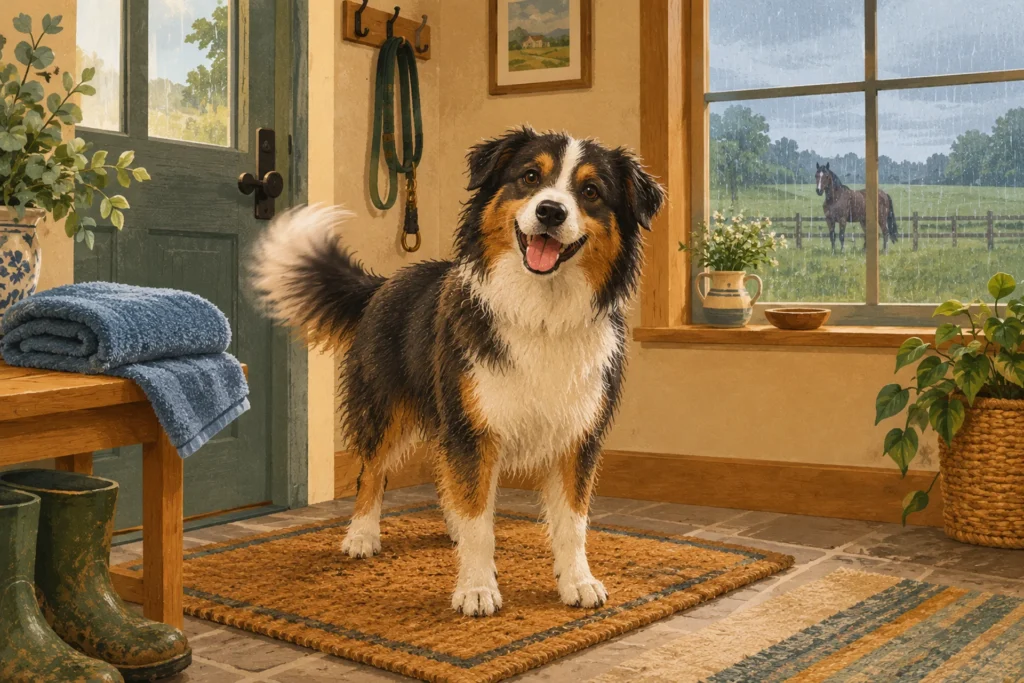
- Dry the coat down to the skin on thick-coated dogs. The AKC’s advice for dogs that are often wet is to make sure the coat is thoroughly dry each time. Our guide to whether it’s OK to let your dog air dry covers which coats need help and which spots stay damp longest.
- Brush out tangles. VCA explains that matted fur keeps water against the skin. Brushing after the coat is dry stops small tangles from turning into wet pockets.
- Take off wet harnesses and collars. A soaked strap holds water against one strip of skin for hours.
- Don’t leave a dog outdoors in the rain for long stretches. Long exposure to wet weather is exactly what the livestock pattern looks like.
- Keep your dog away from livestock with skin sores. Merck and Iowa State both describe direct animal contact as the main route of spread.
- Look at the skin, not just the coat. Part the fur over the back, rump and legs once in a while in wet seasons. Crusts and mats are easy to miss under a thick coat.
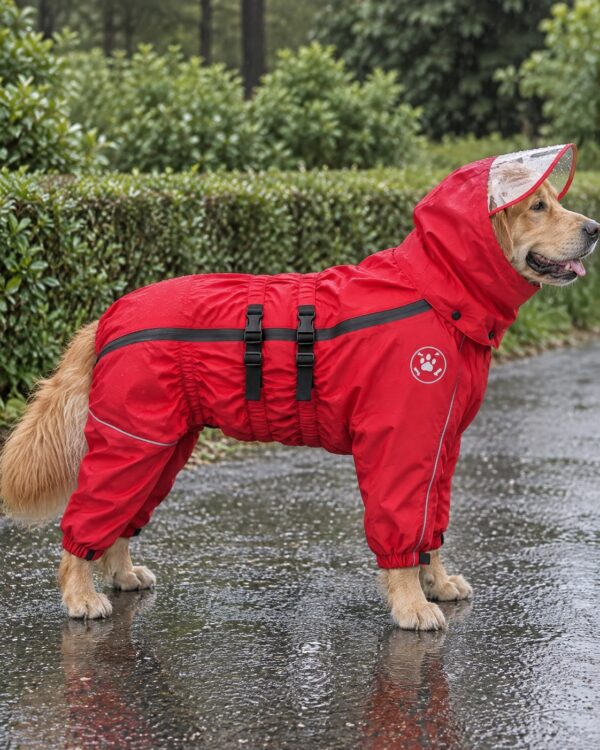
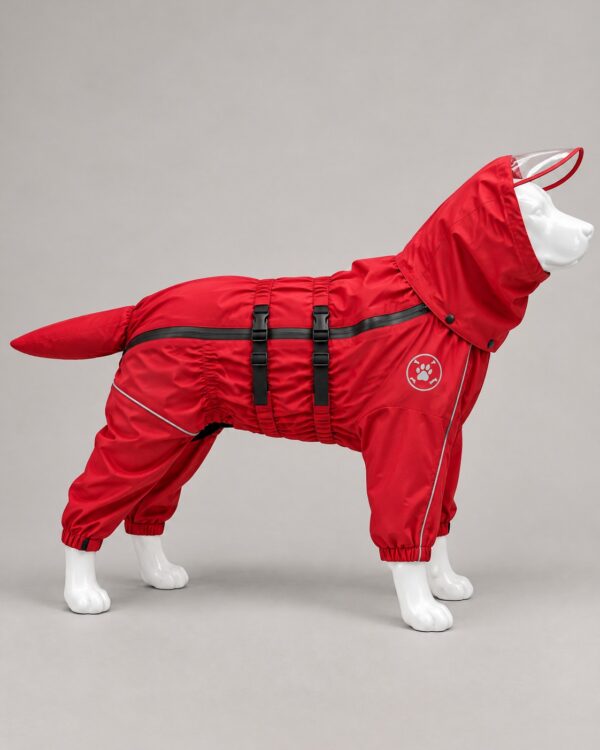
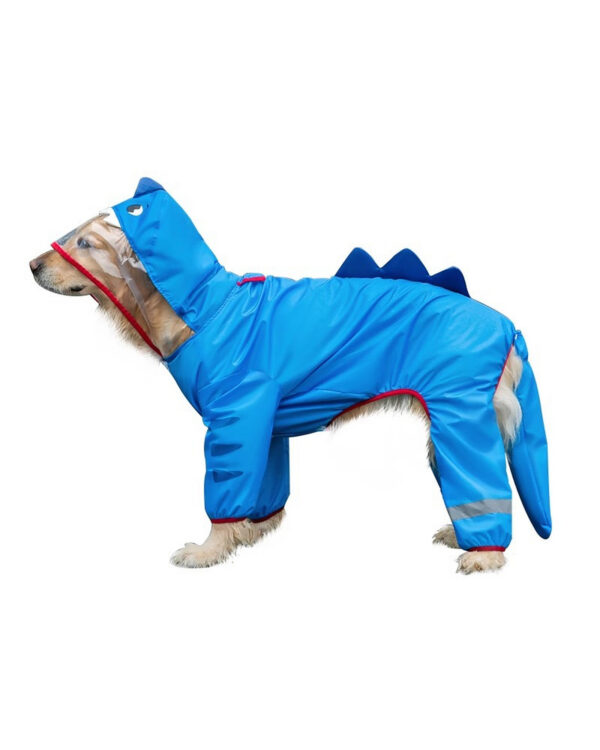
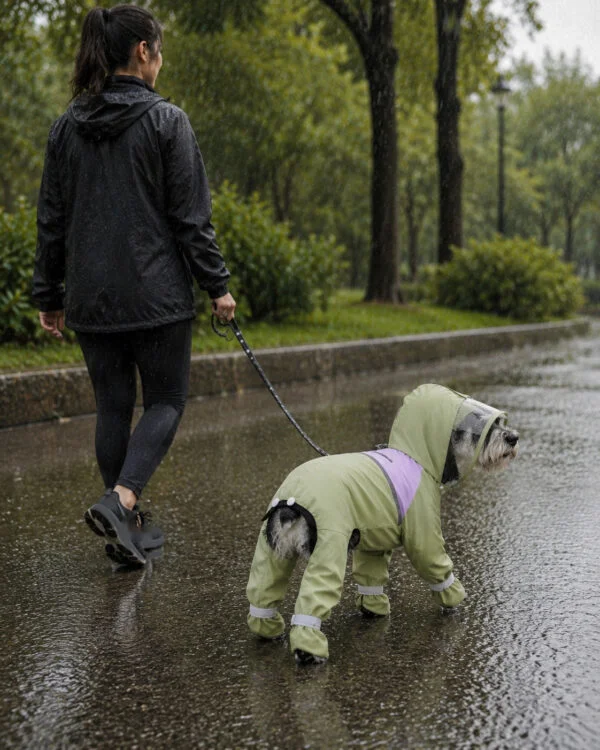
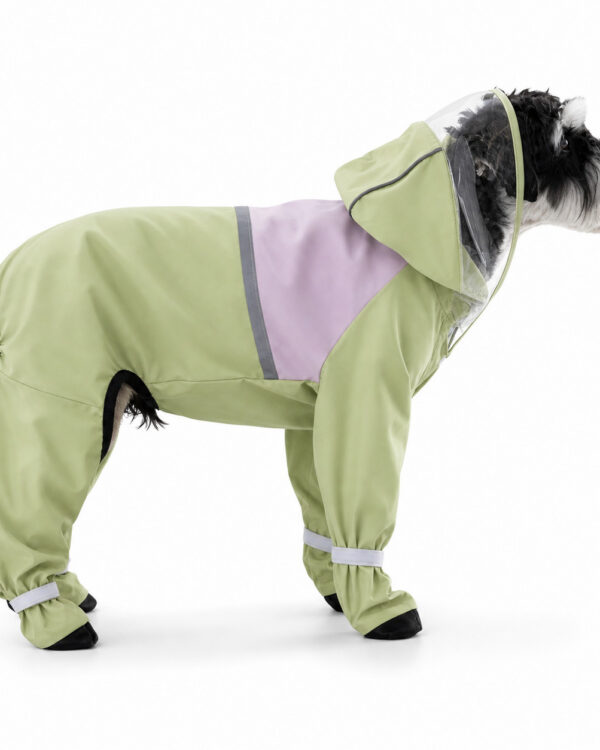
A raincoat can shorten the drying job on a thick-coated dog because less of the coat gets soaked, and the AKC’s view is that keeping thick coats dry matters. It is not a treatment or a guarantee against any skin disease. If your dog wears one, take it off once you’re home so the coat underneath can breathe. See whether double-coated dogs need raincoats for the case for and against.
When to see the vet
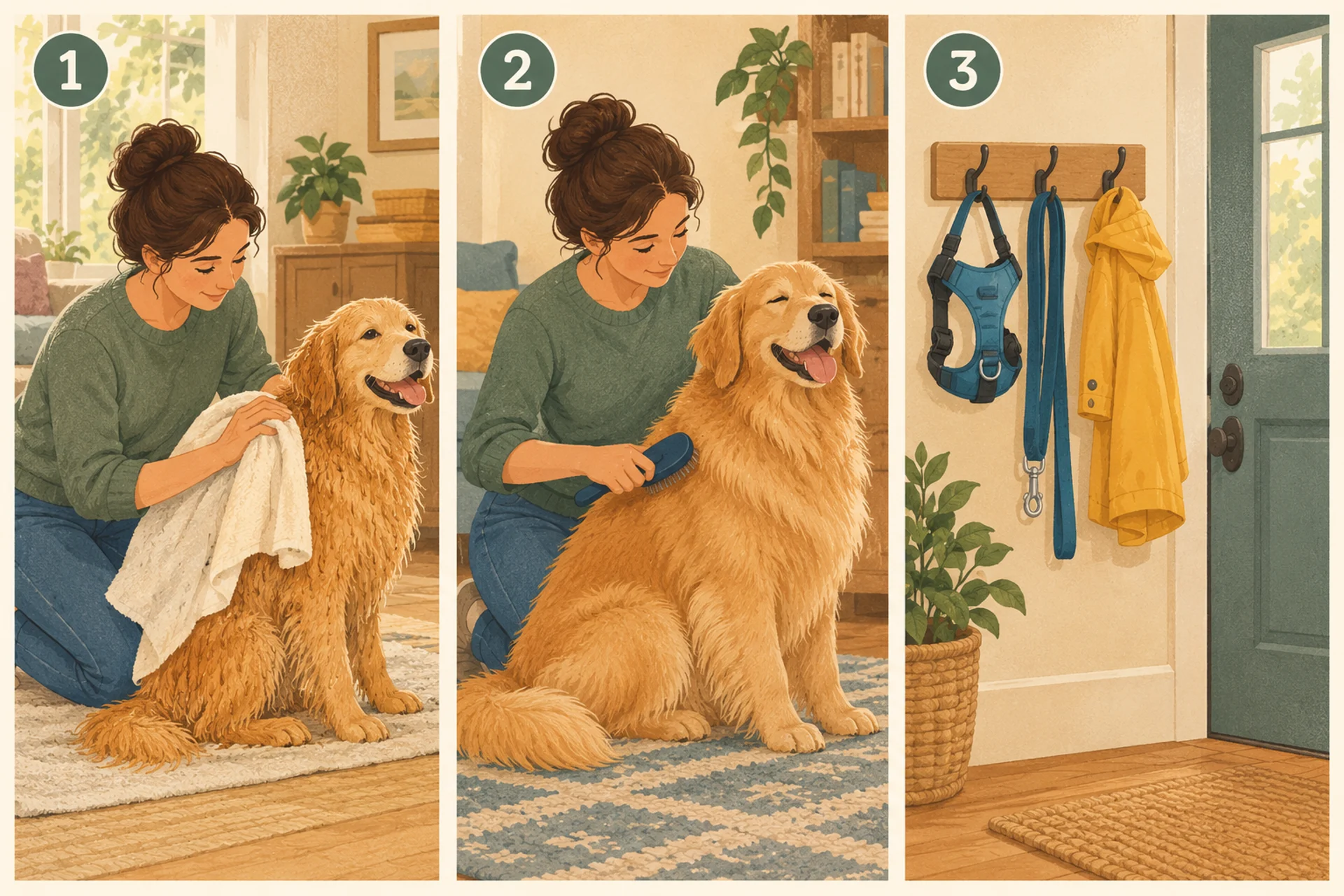
Book a visit if you notice any of these, and ask your vet rather than relying on photos online:
- Crusts, scabs or tufts of matted hair that peel off and leave raw or pink skin underneath
- A red, wet or oozing patch, especially one that is growing
- Bald or scaly patches, or patches on more than one dog or person in the house
- Your dog licking, chewing or scratching one spot over and over
- Any sore that smells, hurts when touched, or comes with your dog being quieter or off their food
Your vet will take it from there. The specific diagnosis and treatment are their decision, not ours or the internet’s.
Rain rot in dogs FAQ
Can dogs get rain rot like horses?
It’s the same bacterium, Dermatophilus congolensis, but it is far less common in dogs. The Merck Veterinary Manual lists horses, cattle, sheep and goats as most often affected and says dogs and cats rarely get it.
Can my dog get rain rot from our horse?
Merck and Iowa State both say the infection spreads mainly by direct contact between animals, plus contaminated surroundings and possibly biting insects. It’s sensible to keep your dog away from a horse with active sores and wash your hands after handling it. If your dog develops crusts after contact with an affected horse, tell your vet about the horse.
What does rain rot look like on a dog?
The Iowa State fact sheet describes matted hair with a “paintbrush” look, leading to scabs or crusts that may have pus underneath. Bacterial skin infections and ringworm can look very similar, so only a vet’s test tells you which it is.
Is rain rot the same as rain scald?
Yes. Rain rot and rain scald are two everyday names for dermatophilosis, the same bacterial skin infection.
Is rain rot a fungus?
No. It’s caused by a bacterium. Ringworm, which is often confused with it, is the fungal one. That difference is why a test matters before any treatment.
Will it go away on its own?
In confirmed cases, Merck says most short-term infections heal on their own in 2 to 3 weeks and treatment is often not required, though antibiotics may be used in painful or severe cases. Without a diagnosis you don’t know it is rain rot, so have your vet look first.
Sources
- Merck Veterinary Manual — Dermatophilosis in Dogs (owner version) (checked 2026-10-17)
- Merck Veterinary Manual — Dermatophilosis in Animals (professional version) (checked 2026-10-17)
- Iowa State University Center for Food Security and Public Health — Dermatophilosis fact sheet (checked 2026-10-17)
- VCA Animal Hospitals — Hot Spots in Dogs (checked 2026-10-17)
- American Kennel Club — Hot Spot Treatments and Prevention on Dogs (checked 2026-10-17)
- Merck Veterinary Manual — Ringworm (Dermatophytosis) in Dogs (checked 2026-10-17)
This is general information, not a diagnosis. Any crust, sore or patch of hair loss on your dog should be looked at by your veterinarian.
Rare in dogs. Get the patch identified.
Rain rot belongs mostly to horses and livestock that live out in the wet. On a pet dog, a crusty patch after a rainy spell is more often a hot spot, ringworm or another skin infection, and they need a vet’s test to tell apart. Dry thick coats to the skin, brush out tangles, and let your vet name anything that doesn’t look right.