Rain on its own is not a cause, but wet ears are a risk factor. Veterinary sources describe ear infections as bacteria, yeast or both taking hold in the ear canal, usually because something else set the stage. The Merck Veterinary Manual’s professional chapter on otitis externa lists “excessive moisture in the ears (from the environment or swimming)” as a predisposing factor, and the American Kennel Club says frequent exposure to water or humid climates “can allow moisture and heat to become trapped in the ear.”
In plain terms: one damp walk does not give most dogs an ear infection. Ears that stay wet again and again, in a dog whose ears are already prone to trouble, are a different story. None of the sources we checked gives a rate for infections after rain, so we won’t guess at one. This article is about what to dry, what to leave alone, and which signs mean a vet visit. It is general information, and your veterinarian makes the call for your dog.
Why a wet ear is a problem at all
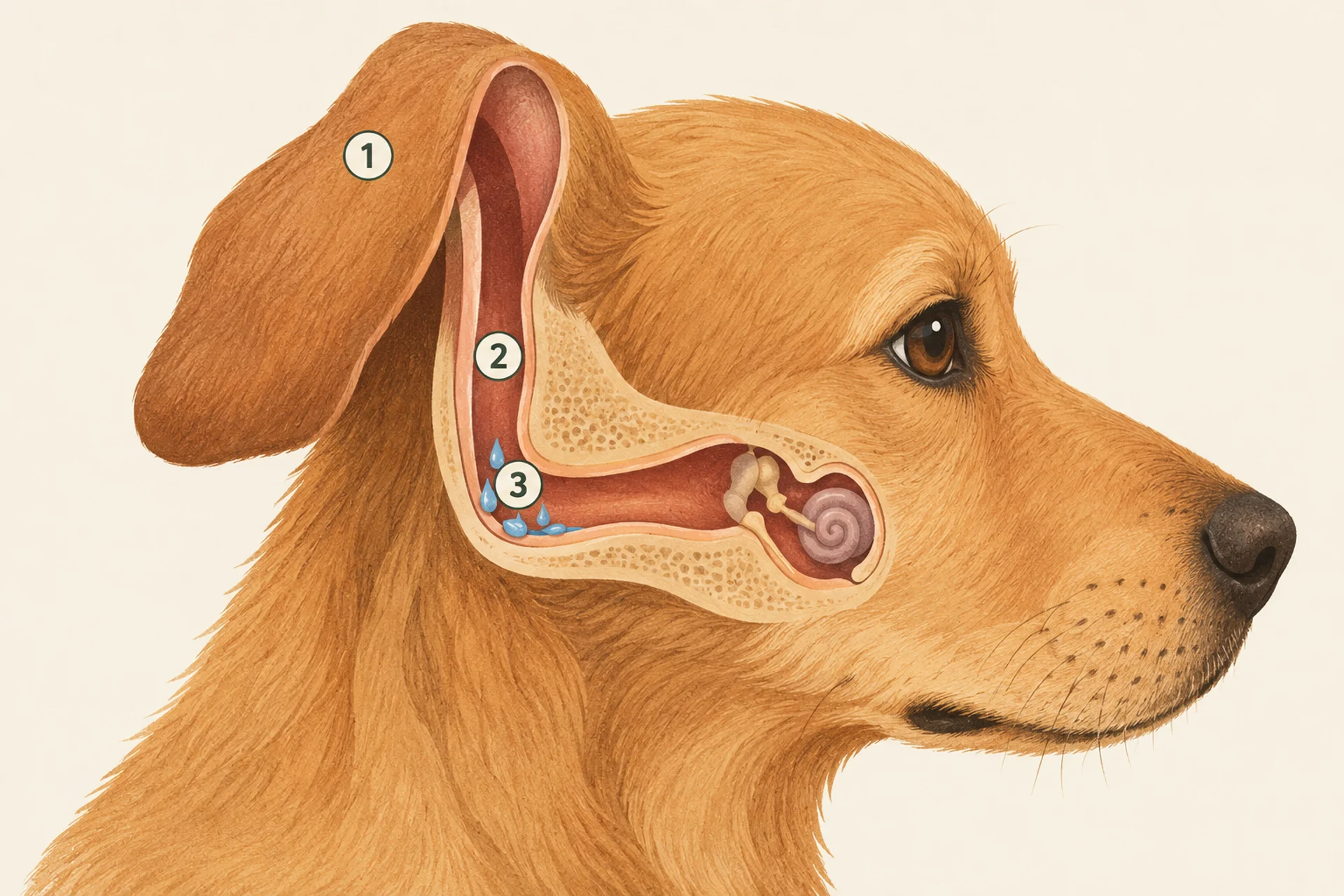
The shape of the ear does most of the work. The AKC explains that because of its L-shape, “a dog’s ear canal tends to retain fluid.” Water that gets in does not simply run back out the way it went in; it has a bend to get around. That is why a dog can shake its head hard and still keep some moisture inside.
Moisture and warmth then give bacteria and yeast something to work with. The AKC says excess moisture “can provide a breeding ground for bacteria and yeast.” Merck’s wording is more careful, and worth keeping: it treats moisture as something that makes an ear more likely to get inflamed, not as the disease itself.
Which dogs are more likely to have trouble
VCA Animal Hospitals says dogs with “large, floppy, or hairy ears are more prone to ear infections,” and adds that infections can happen in any breed. The Merck Veterinary Manual’s owner page agrees that the shape of the ear flap or canal can make some dogs more likely to get otitis externa, the medical name for an outer-ear infection.
The other group worth knowing about is dogs with allergies. The AKC notes that in many dogs, recurrent ear infections are the first or only sign of a food or environmental allergy. If your dog gets ear trouble again and again, rainy walks are probably not the whole story. They may just be the day it shows up. If that sounds familiar, our piece on letting a dog air dry after rain covers the same “wet is rarely the only cause” point for skin.
| Your dog | What the sources suggest | Sensible habit after a wet walk |
|---|---|---|
| Floppy or heavy ears | More prone to infection (VCA, AKC) | Pat the ear flaps and the outer ear dry every time |
| Hairy ears or hair at the canal opening | Hairy ears are listed as a risk by VCA | Dry thoroughly; ask your vet before trimming or plucking |
| Prick ears, short coat | Any breed can get infections (VCA) | A quick towel-off is plenty |
| Ear problems more than once | May point to allergies or another underlying cause (AKC, Merck) | Tell your vet the pattern, including wet-weather days |
| Currently treated for an ear problem | Treatment has to run its course (Merck) | Ask your vet before getting the ears wet at all |
What to do after a wet walk
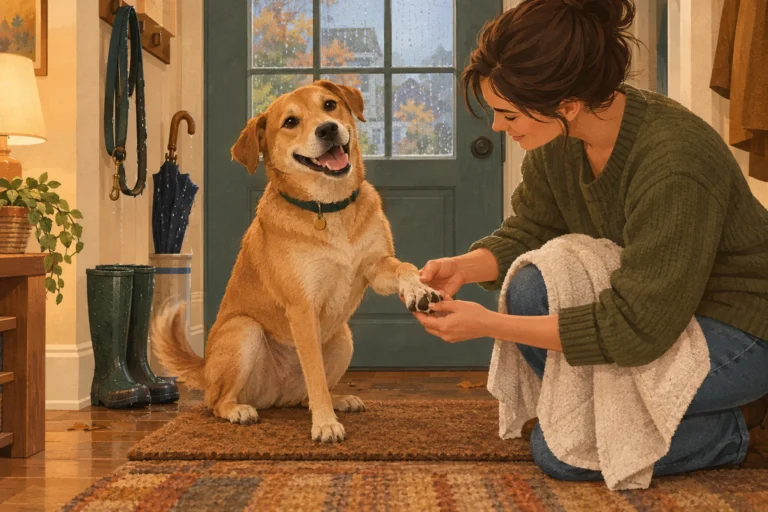
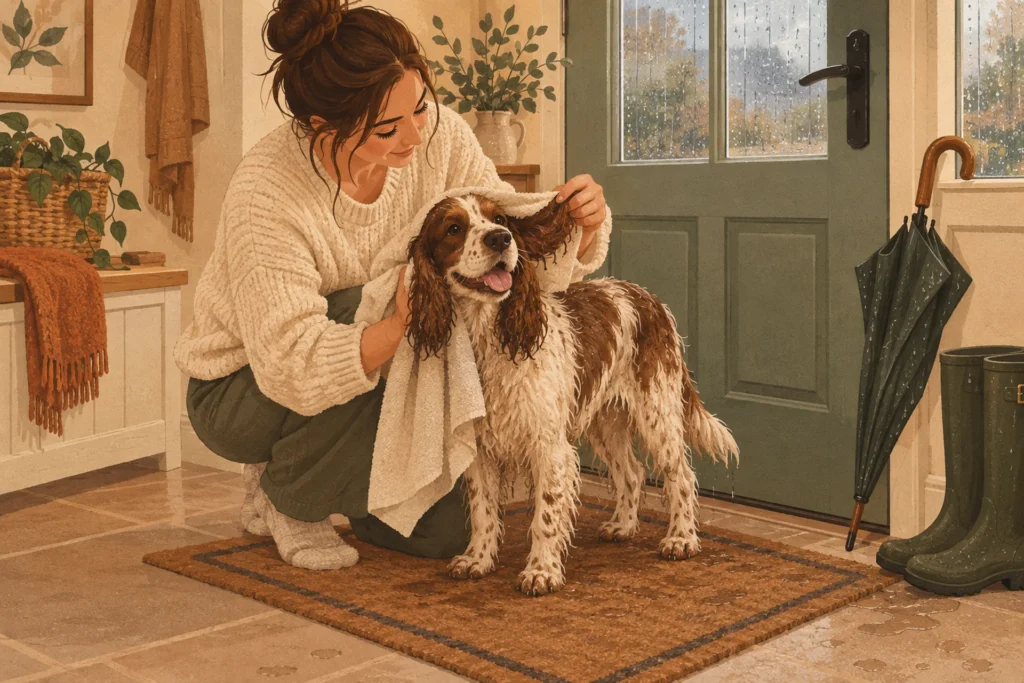
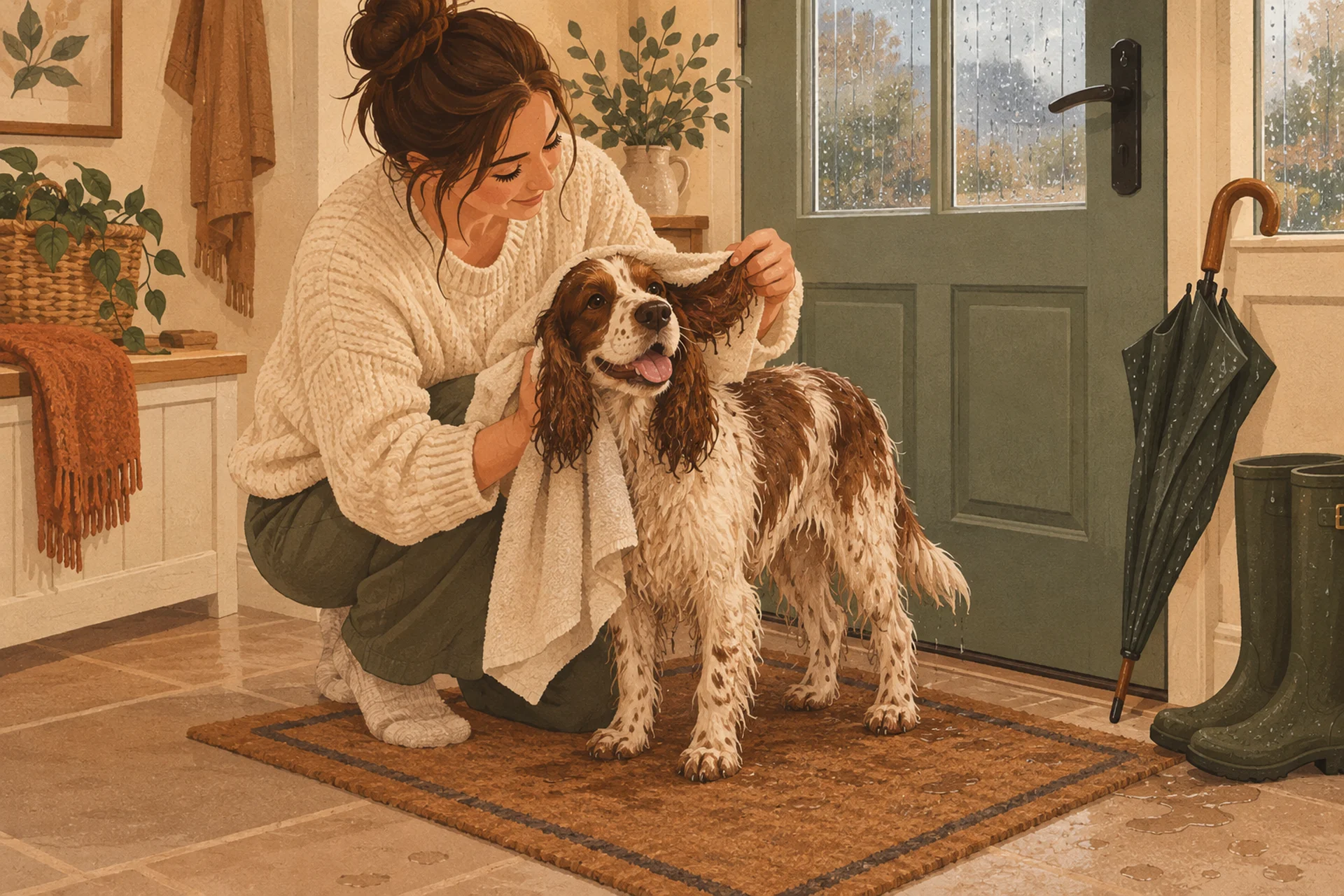
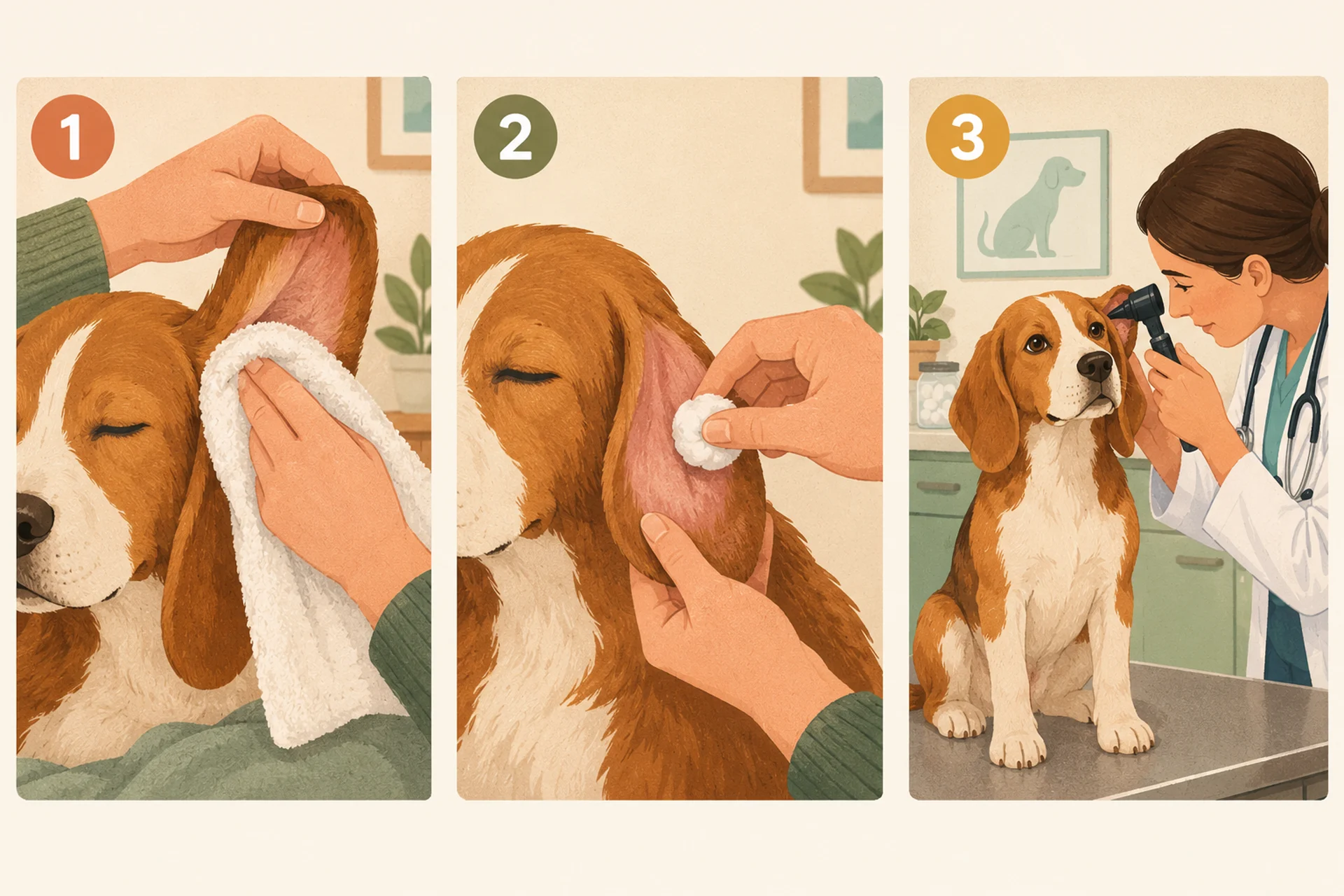
The AKC’s prevention advice is simple: dry your dog’s ears thoroughly after baths or swimming, and take extra care with floppy-eared dogs. A rainy walk is closer to a damp coat than a swim, but the same logic holds for the ear flaps. A soft towel is enough. Lift the flap, pat the inside surface and the base of the ear dry, and let the dog shake.
What to avoid matters just as much, because well-meant ear care is a common way to make things worse:
- Don’t push anything into the canal. The AKC says swabs are fine for cleaning the flap but to “avoid cotton swabs down the canal,” and Merck says to avoid anything that pushes debris deeper.
- Skip home remedies. Merck warns that irritating home remedies, with vinegar mixtures as its example, can worsen swelling and secretions.
- Don’t reach for over-the-counter drops to treat a problem. VCA is direct that a veterinarian has to diagnose the exact cause, and that the medication choice depends on what a microscope shows. Merck notes that over-the-counter wax removers should only be used if your vet approves.
- Keep water out of the ears during baths. Merck advises this, and for frequent swimmers it mentions vet-recommended drying agents; ask your vet whether that applies to your dog.
Signs it is more than a damp ear
The sources are consistent on what an infected ear looks like. The Merck owner page lists head shaking, foul odor, redness, swelling, scratching, discharge and scaly skin, and says the ear may be painful or itchy, in one ear or both. VCA describes red, inflamed ears that may smell bad and may have black or yellowish discharge, and notes that ear mites cause similar signs. The AKC adds crusting or scabs.
The AKC advises seeing a vet as soon as you notice these signs, and says untreated infections can lead to hearing loss. VCA warns that an untreated infection can lead to an aural hematoma, a swollen ear flap that needs surgery, and that if the eardrum has ruptured, certain medications can cause hearing loss. That second point is the reason you shouldn’t pour something in the ear to see if it helps.
Because the signs overlap with mites, allergies and objects stuck in the canal, you can’t sort out the cause by looking. A vet looks in the canal with an otoscope and usually checks a sample under a microscope. If the diagnosis is a bacterial or yeast infection, Merck says rechecks over two to four weeks are common and that treatment needs to continue until the infection has fully cleared. Stopping early is a common reason the problem comes back.
Where gear fits in
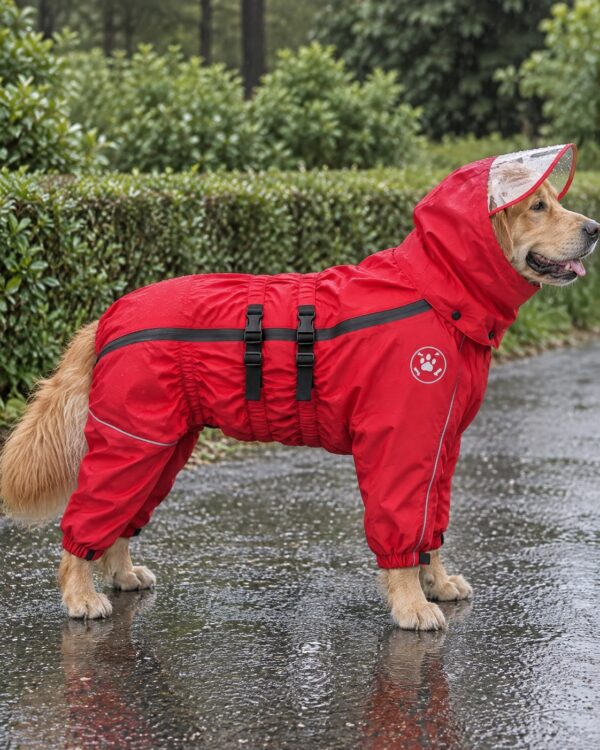
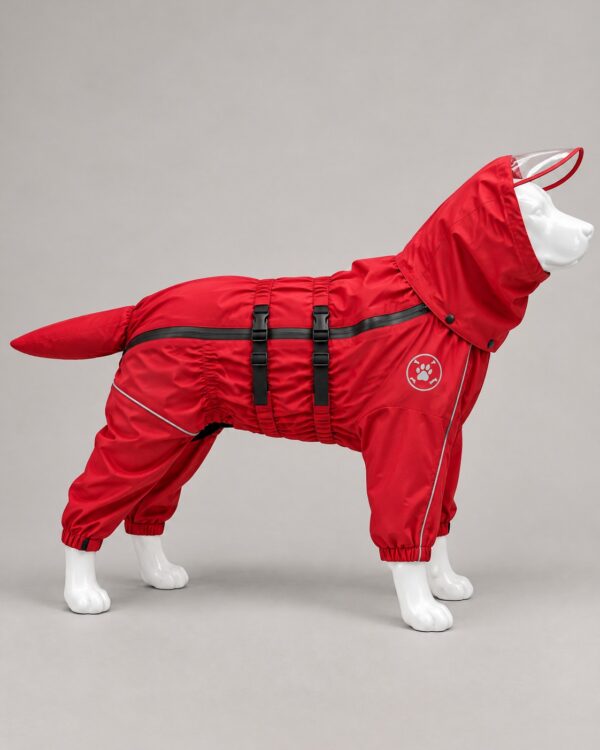
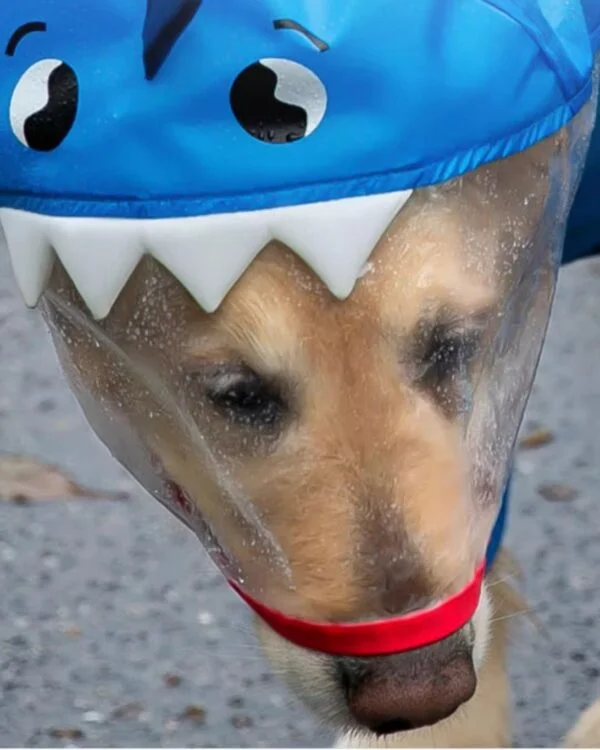
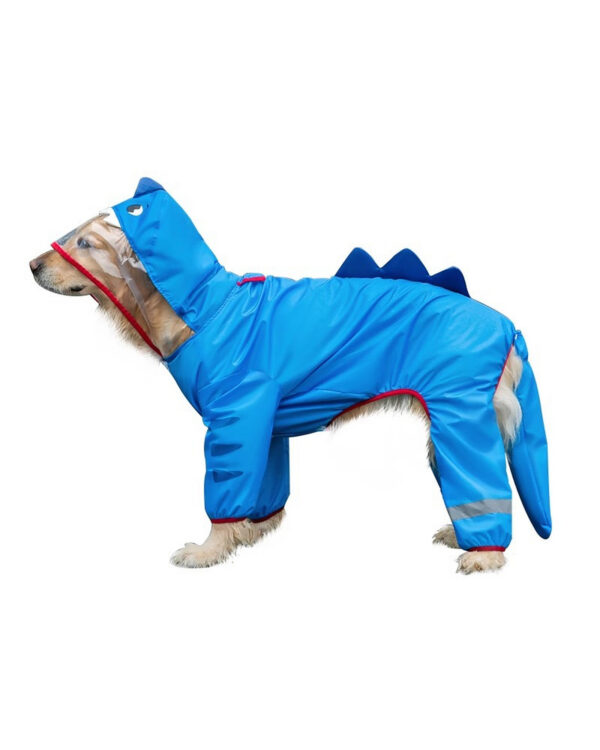
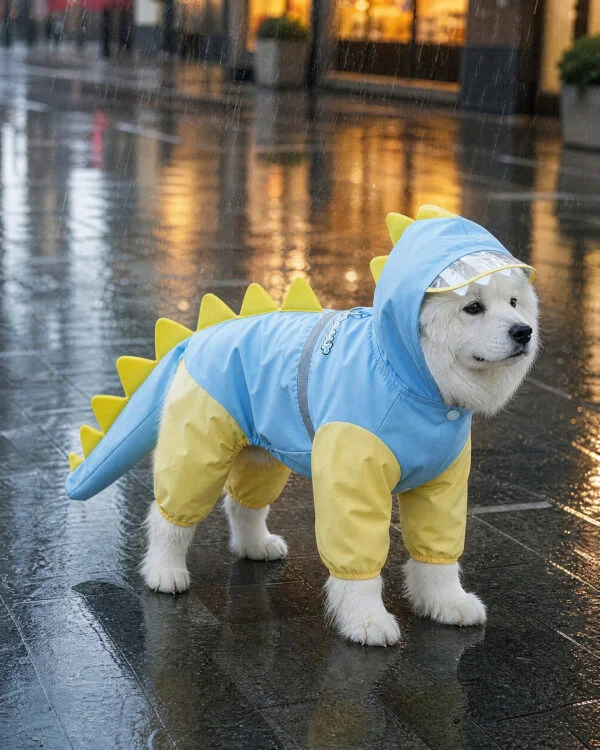
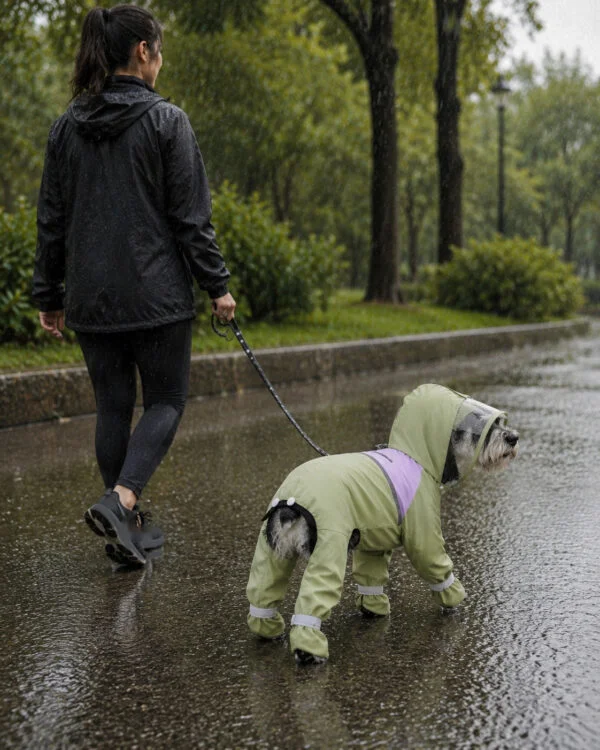
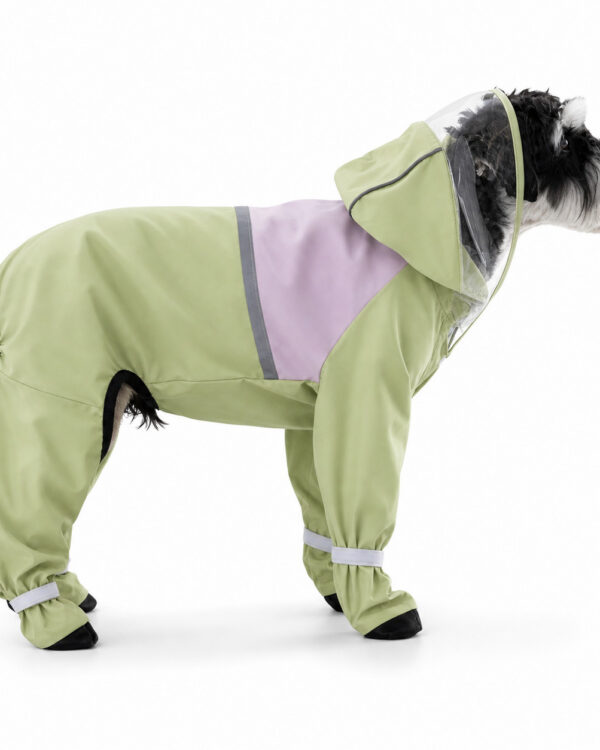
Raincoats and hoods are not an ear treatment and they do not prevent infections. If your dog already tolerates one, a hood is simply one way to keep rain off the ear flaps on the way out; see whether a dog raincoat needs a hood for the trade-offs, including dogs who dislike anything over their head. The drying habit after the walk matters more than anything the dog wears during it.
For the wider picture on wet dogs, see can dogs get sick from rain, why a dog smells after rain and what that crusty patch usually is.
FAQ
Can rain cause an ear infection in dogs?
Not directly. Veterinary sources name moisture as a factor that makes ear infections more likely, along with ear shape, allergies and other causes. A single rainy walk is unlikely to be the whole explanation, especially in a dog with a history of ear trouble.
Why does my dog shake its head after getting wet?
Shaking is how dogs clear water from their ears and coat. Head shaking is also one of the listed signs of an ear infection, so it is the repeated, persistent kind, or shaking with scratching, odor or redness, that is worth a vet’s look.
Should I clean my dog’s ears after rain?
Drying the flaps and the visible outer ear is enough for most dogs. If your vet has recommended a cleaner for your dog, follow their directions. Merck says to avoid cotton swabs and irritating home remedies.
Can I use vinegar or over-the-counter drops?
Merck warns that vinegar mixtures can worsen swelling and secretions, and VCA says a vet has to find the exact cause to pick the right medication. Ask your vet before putting anything in the ear.
Which dogs are most at risk?
VCA lists dogs with large, floppy or hairy ears. Dogs with allergies also show up often, since the AKC notes recurrent ear infections can be an early sign.
When should I see a vet?
When you see head shaking that doesn’t settle, scratching, odor, redness, swelling or discharge, when the ear seems painful, or when infections keep coming back. The AKC says to go as soon as possible because untreated infections can cause hearing loss.
Sources
- Merck Veterinary Manual — Ear Infections and Otitis Externa in Dogs (owner version) (checked 2026-10-21)
- Merck Veterinary Manual — Otitis Externa in Animals (professional version) (checked 2026-10-21)
- American Kennel Club — Dog Ear Infections (checked 2026-10-21)
- VCA Animal Hospitals — Ear Infections in Dogs (Otitis Externa) (checked 2026-10-21)
This is general information, not a diagnosis. Any ear that is red, smelly, painful or discharging should be looked at by your veterinarian, who decides what is right for your dog.
Dry the flaps, leave the canal alone.
Rain doesn’t give dogs ear infections, but ears that stay wet are easier to infect, especially floppy, hairy or allergy-prone ones. Pat the ears dry after wet walks, don’t push anything into the canal, and let your vet look at anything that smells, hurts or keeps coming back.