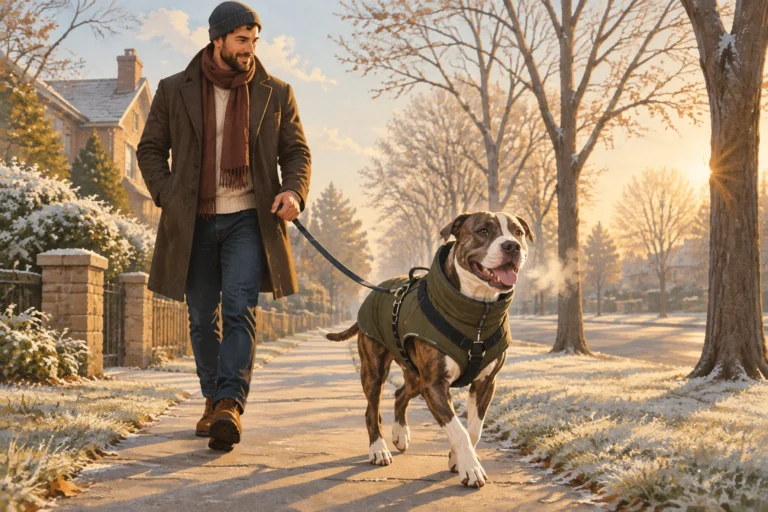
Yes, usually. The American Animal Hospital Association says plainly that senior cats and dogs are usually more cold-sensitive, and the American Kennel Club notes that very young and very old dogs have a hard time regulating body temperature. On top of age itself, the conditions that tend to arrive with it, arthritis above all, make cold days harder.
The good news is that the fixes are small and ordinary: a warm bed out of drafts, shorter walks at the warmest part of the day, a fitted sweater or coat if your dog seems bothered, a towel by the door, and a vet check before winter. None of it means wrapping an old dog up indoors all season.
Why older dogs feel the cold more
No single source we checked pins it on one cause, and we won’t guess at one. What the veterinary guidance does agree on is the pattern:
- Age itself. The AVMA’s cold-weather guidance groups very young and very old pets with those that may have a harder time regulating body temperature. Cornell’s Riney Canine Health Center says older, underweight and medically affected dogs may have difficulty staying warm in the cold.
- The conditions that come with age. AAHA lists arthritis, diabetes and dental disease among the conditions aging pets are more prone to. The AVMA names diabetes, heart disease, kidney disease and hormonal imbalances such as Cushing’s disease as conditions that can make temperature regulation harder.
- Joints. AAHA says cold weather can exacerbate age-related conditions such as arthritis, and the AVMA says the same in its own words: cold weather may worsen some medical conditions such as arthritis.
- Footing. The AVMA notes that arthritic and elderly pets may have more difficulty walking on snow and ice and may be more prone to slipping and falling. Cornell describes the same instability on slippery ground.
So an old dog that seems to mind the cold more than it did at five isn’t being fussy. That matches what the vets describe.
When does a dog count as “older”?
There is no birthday that flips the switch. AAHA’s guidance is that no specific chronological age defines a pet as senior. The term generally covers the last 25% of a pet’s expected life span. Size matters a lot: AAHA says a large dog can reach senior status as early as 7 to 8 years old, while smaller breeds may not be considered seniors until around 12. Dogs with chronic health problems may age earlier than their peers.
In practice, that means a 7-year-old Great Dane and a 12-year-old Chihuahua are in the same stage of life, even though one sounds much “older” than the other.
| What changes with age | What it means on a cold day | What helps |
|---|---|---|
| Harder to regulate body temperature | Gets chilly sooner than it used to on the same walk | Shorter walks, warmer time of day, a layer if it seems bothered |
| Arthritis and stiff joints | Slower to warm up, sore after cold outings | A warm, padded bed; a pre-winter vet check about pain |
| Less steady on its feet | More likely to slip on ice and packed snow | Cleared paths, grit, boots if it accepts them |
| Health conditions such as diabetes, heart or kidney disease | May cope with temperature extremes less well | Ask your vet what limits make sense for your dog |
Signs your senior dog is cold
They’re the same signs as in any dog, but an older dog may show them sooner. AAHA’s advice for senior walks is to watch for shivering or reluctance to move, which could mean it’s time to head inside. Cornell’s list adds whining or barking, a tucked tail or hunched posture, lifting paws off the ground and sudden anxiety.
With an old dog, “reluctance to move” is the one to take seriously. It is easy to read it as stiffness or age. It might be, but on a cold morning it is also a dog telling you it’s had enough. Our guide on how to tell if your dog is cold goes through each sign, indoors and out.
Watch for the serious end too. The AVMA lists whining, shivering, seeming anxious, slowing down or stopping moving, seeming weak, or looking for warm places to burrow as signs of hypothermia, and says to get the dog back inside quickly and call your veterinarian if you suspect hypothermia or frostbite.
Keeping an old dog warm at night
Most of what helps an older dog in winter happens at home, not on the walk.
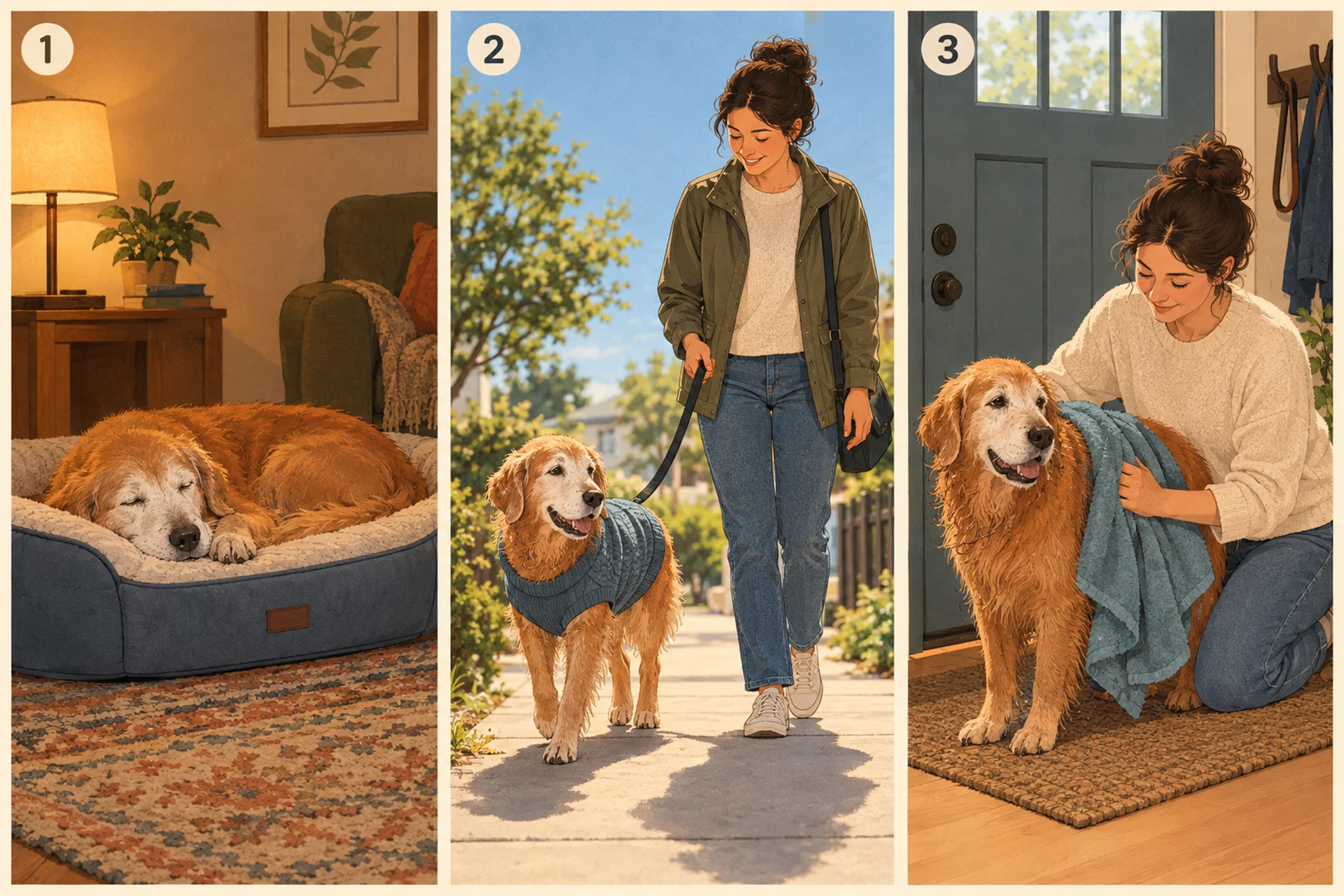
- A warm bed in a draft-free spot. AAHA’s advice is a well-insulated, comfy bed in a draft-free, cozy spot. If your dog likes lying on hard floors, AAHA suggests putting down rugs or mats.
- Give it choices. The AVMA points out that pets may change where they sleep depending on whether they want more or less warmth, and suggests giving them a few safe options. An old dog that can move from a warm bed to a cooler spot is less likely to end up too hot or too cold.
- Heated beds: helpful, with care. The AKC says a heated bed can be helpful for senior dogs, particularly if they suffer from arthritis. It also warns that a dog with mobility problems could overheat or get burned if it can’t get up easily. Its advice is to supervise use, look for an automatic shutoff and a chew-resistant cord, and consider a self-warming bed with no power source for dogs that have trouble changing position. AAHA likewise says to make sure heated beds and pads are pet-safe, won’t overheat, and are used under supervision.
- Careful with space heaters. The AVMA warns that space heaters can burn pets or be knocked over and start a fire.
A sweater at night is rarely the first fix. Our guide to whether a dog should wear a sweater indoors or to bed covers when a layer helps and when the bed is the better answer.
Walks: shorter, warmer, drier
AAHA is clear that fresh air and exercise still matter for senior pets in winter. The change is in how you do it: shorten outdoor walks and head out during warmer times of the day. The AVMA agrees you’ll probably need to shorten walks in very cold weather.
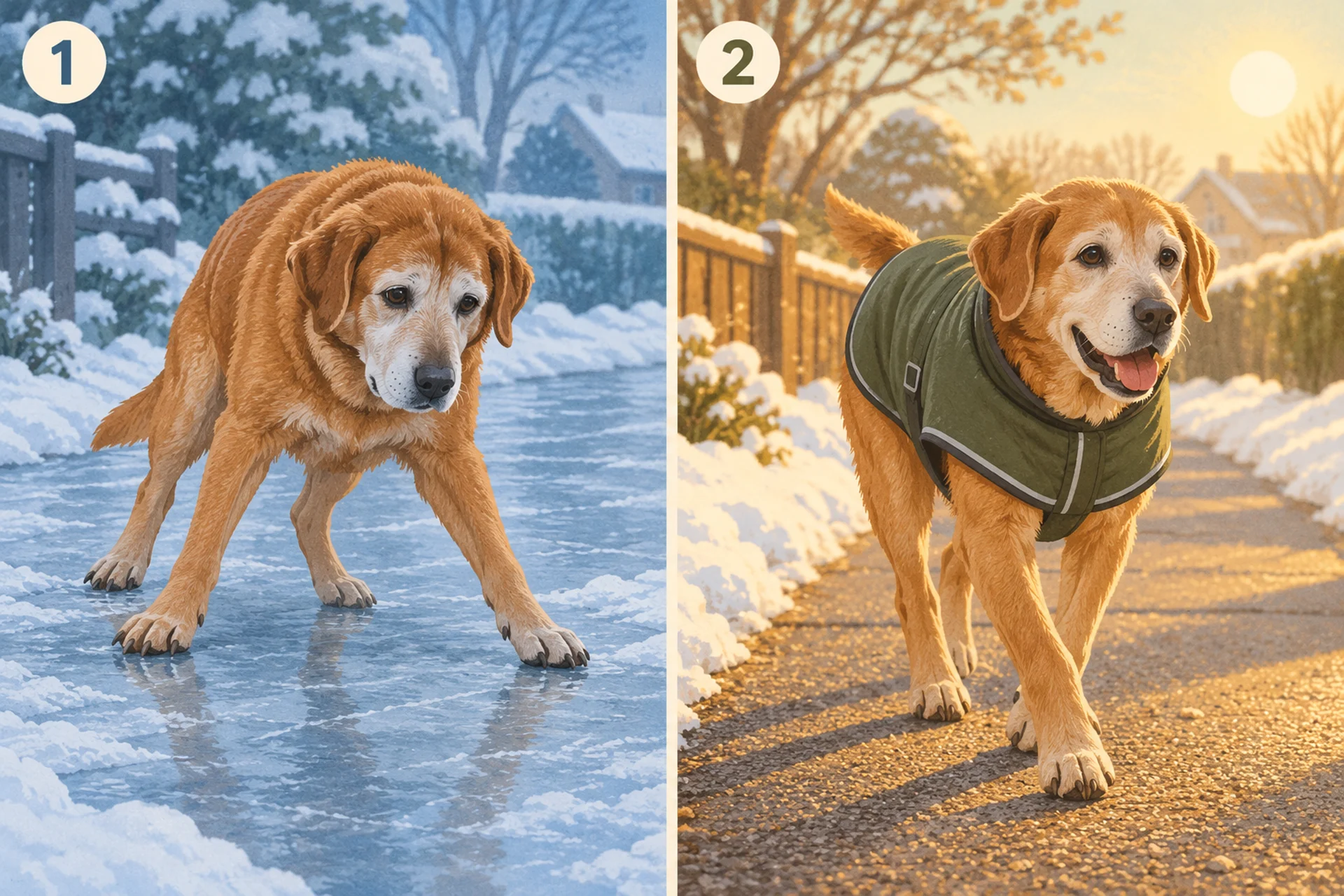
- Go at midday or early afternoon when it’s warmest, rather than at first light.
- Pick your route for footing. Cleared, gritted paths beat a shortcut across ice. If your dog also slides around indoors, see dog slipping on hardwood floors.
- Two short walks instead of one long one if your dog stiffens up or tires partway round.
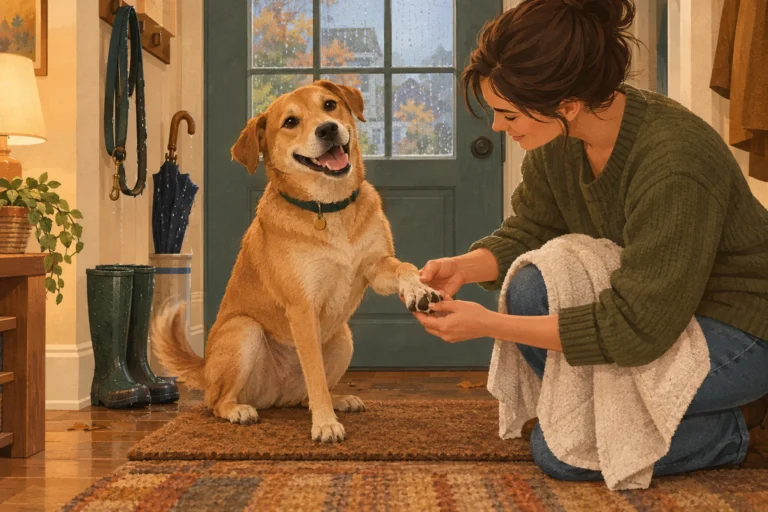
- Dry your dog when you get in. AAHA recommends drying your dog’s fur after an outing to help prevent chills.
- Wipe paws with a warm, damp cloth. AAHA notes that ice, snow and road salt can irritate paws, and salt can be toxic if licked off. More on that in does ice melt hurt dog paws.
- Boots only if your dog accepts them. AAHA suggests booties for dogs that tolerate them. The AVMA adds that they need to fit properly.
Do senior dogs need a coat or sweater?
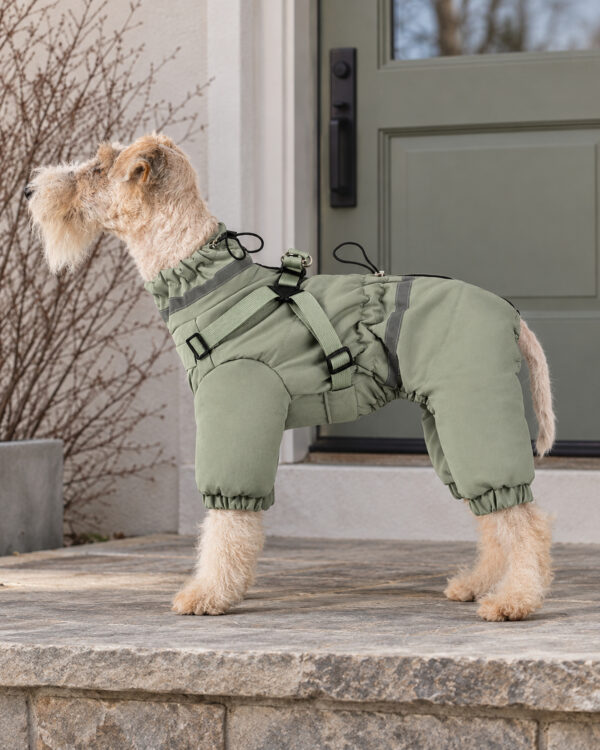
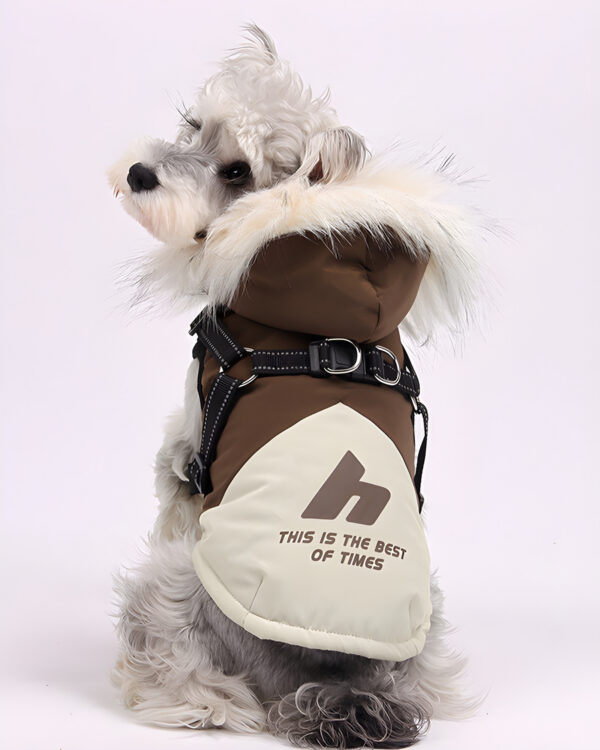
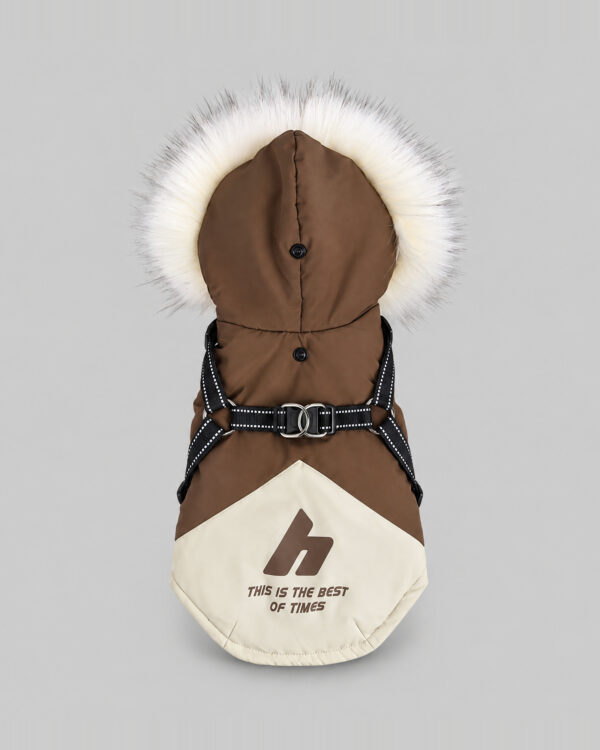
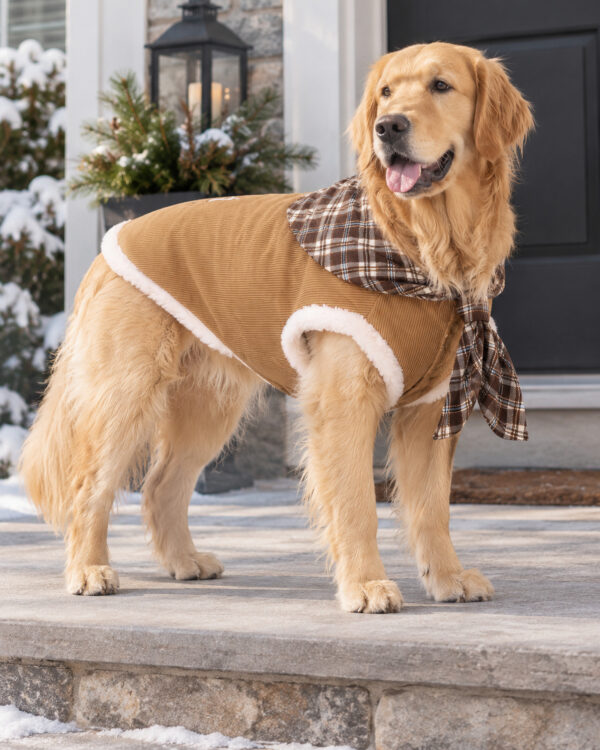
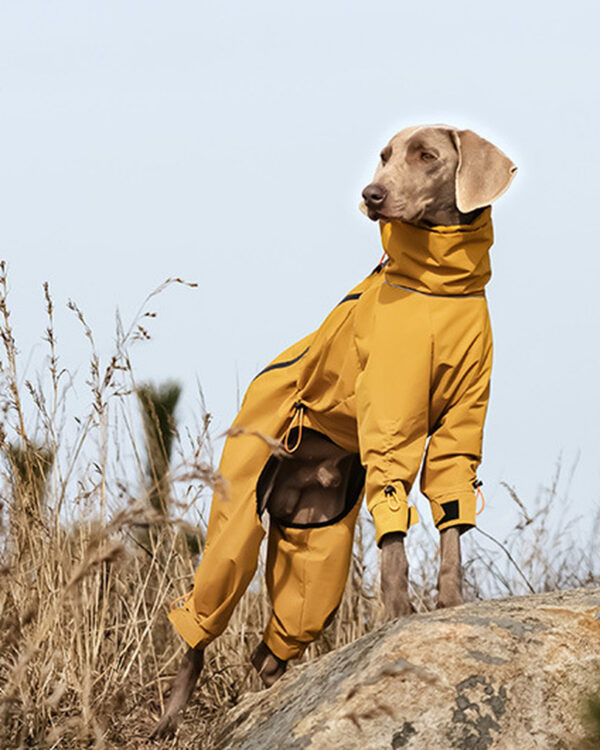
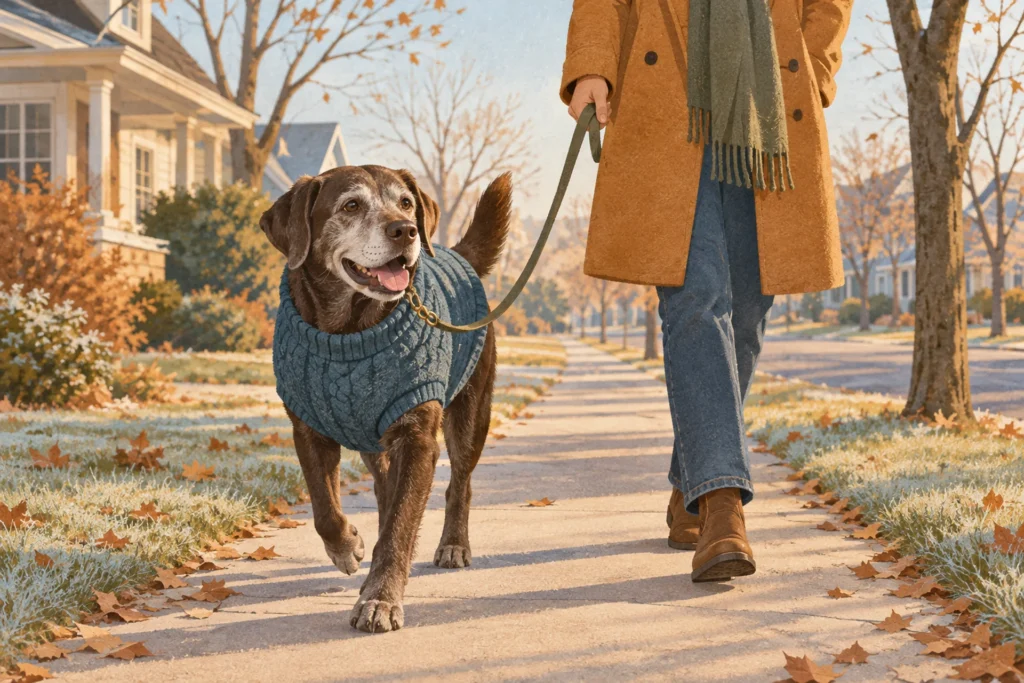
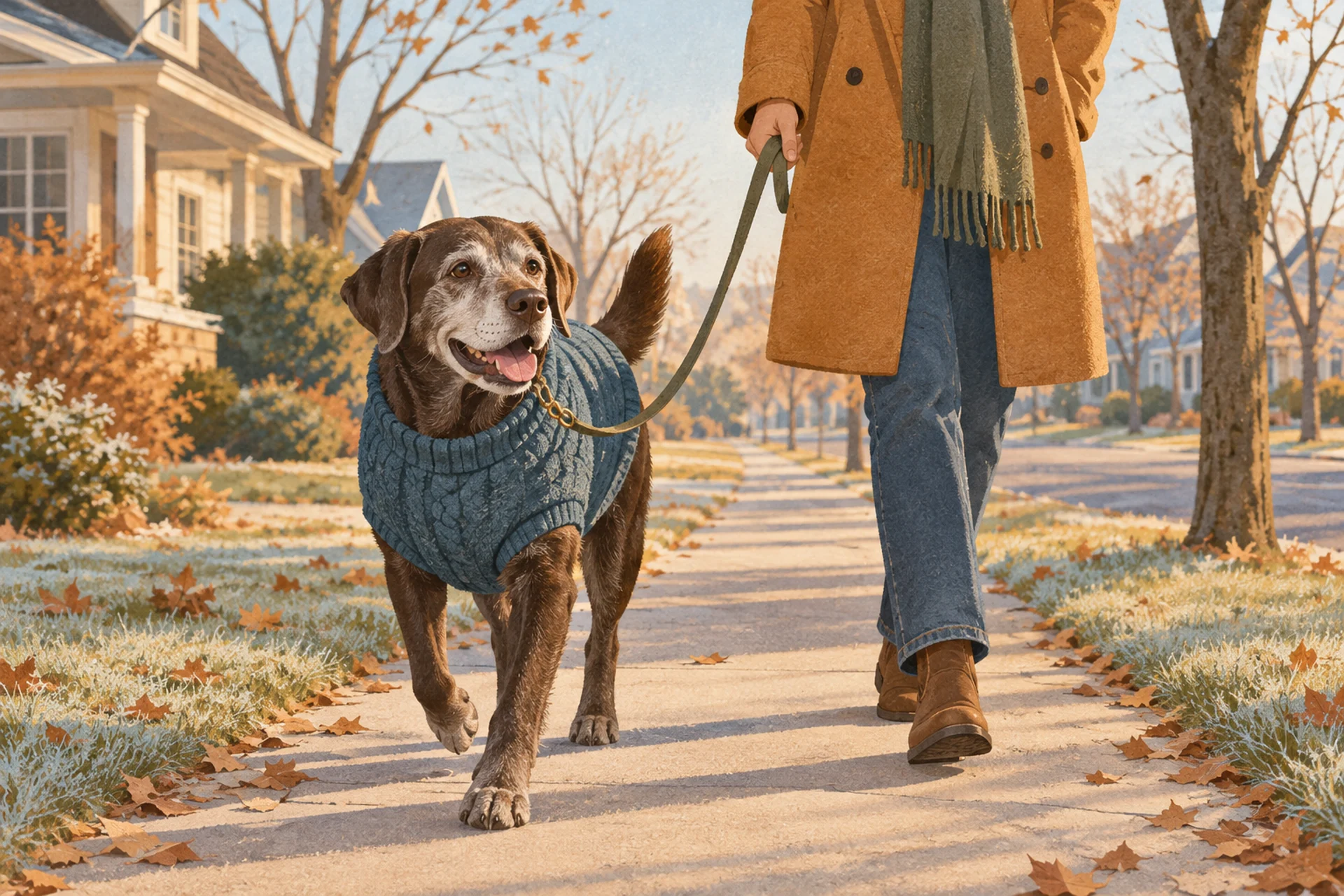
Not every older dog, but many benefit. Cornell says that, especially for smaller breeds, older dogs or those with a thin coat, a jacket or sweater will help keep them warm. AAHA recommends a snuggly sweater or coat on walks, and adds the condition that matters most for an old dog: make sure the garment fits properly and doesn’t rub or pinch.
The AVMA’s rule is to consider a sweater or coat if your dog has a short coat or seems bothered by the cold, and to keep a dry one for each trip out, because wet sweaters or coats can actually make your dog colder.
A few practical points for older dogs in particular:
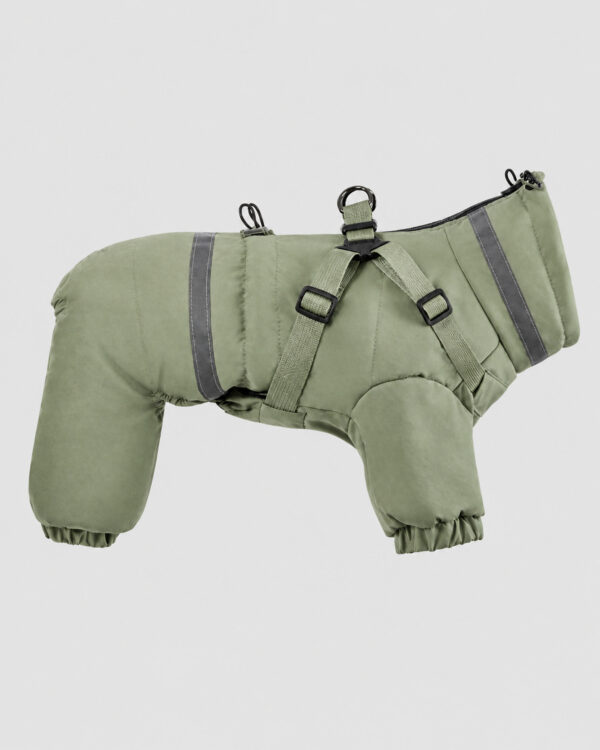
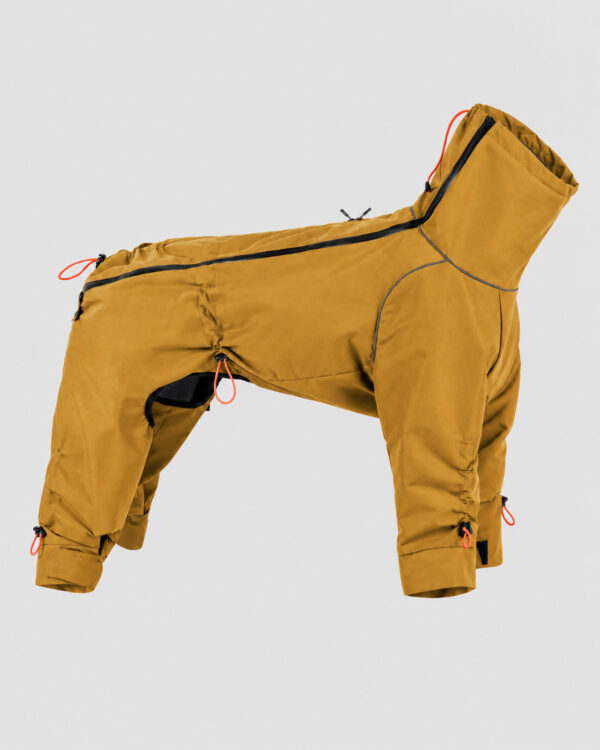
- Think about getting it on. A stiff dog may not enjoy having its legs lifted or a tight neck opening pulled over its head. A design that’s easy to put on matters more at 13 than at 3. See dog coats that don’t go over the head.
- Check the fit again. Older dogs often change shape as they lose or gain weight, so last year’s coat may not fit the same way. Our guide to how a dog coat should fit has the checks.
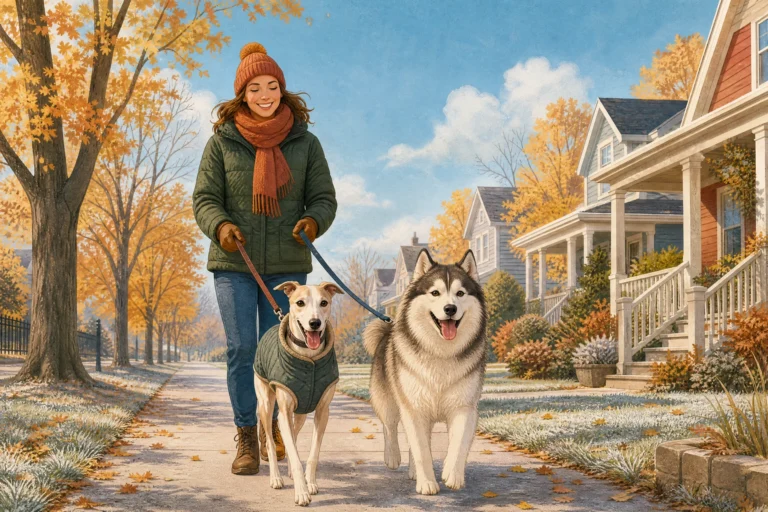
- Thick-coated dogs may still not need one. The AVMA says long-haired and thick-coated breeds tend to tolerate cold better, though they’re still at risk. Age doesn’t automatically mean a Husky needs a jacket. Watch the dog.
- Take it off indoors unless your house is genuinely cold, and watch for panting. Our page on whether dogs overheat in coats covers the warning signs.
For the temperature side of the question, see what temperature a dog needs a coat.
Book a vet check before winter
This is the step people skip, and both AAHA and the AVMA recommend it. AAHA suggests scheduling a senior wellness check so your vet can decide whether your dog needs anything for stiff, achy joints before the cold sets in. The AVMA recommends a veterinary exam at least once a year and calls the run-up to winter as good a time as any.
It’s also worth knowing that older dogs often hide discomfort. AAHA notes that many pets show only subtle pain signs, such as personality changes or unusual habits. If your dog has stopped wanting to go out in the cold, gets up stiffly after a walk, or seems cold indoors when it never used to, mention it at the visit rather than putting it down to old age.
Call your vet sooner, not at the next checkup, if your dog seems weak, slows right down or stops moving after being out in the cold, or if skin on the ears, paws or tail looks white or blue, which the AKC lists as a sign of frostbite. The AVMA says to consult your veterinarian immediately if you suspect hypothermia or frostbite. This page is general information to help you know what to watch for. It isn’t a diagnosis, and decisions about pain relief, supplements or limits for your dog are your vet’s to make.
Older dogs and cold weather FAQ
Do older dogs get cold more easily?
Usually, yes. AAHA says senior dogs are usually more cold-sensitive, and the AKC and AVMA both say very old dogs can have a harder time regulating body temperature. Arthritis and other age-related conditions can make cold days harder still.
Do old dogs need coats in winter?
Many do, especially small, thin-coated or underweight older dogs. Cornell says a jacket or sweater helps older dogs stay warm, and AAHA recommends one on walks as long as it fits without rubbing or pinching. A thick-coated senior may still be fine without one. Watch for shivering or reluctance to keep walking.
How do I keep my old dog warm at night?
AAHA’s advice is a well-insulated bed in a draft-free spot, with rugs or mats over hard floors. A heated bed can help arthritic dogs, but the AKC says to supervise it and choose one with an auto-shutoff, or use a self-warming bed if your dog has trouble getting up and moving.
Is arthritis worse in cold weather for dogs?
Both AAHA and the AVMA say cold weather can make arthritis worse. Cornell adds that arthritic dogs often struggle on slippery winter ground. A vet check before winter is the place to talk about pain relief. Don’t start any medication or supplement without your vet.
How long should I walk my senior dog in winter?
There’s no set number of minutes. AAHA recommends shortening outdoor walks and going at warmer times of the day, and heading in if your dog shivers or doesn’t want to move. Two short walks are often easier than one long one.
At what age is a dog a senior?
AAHA says there’s no fixed age. Senior status generally covers the last quarter of a dog’s expected life span: as early as 7 to 8 years for large dogs, and around 12 for smaller breeds.
Sources
- American Animal Hospital Association — Grey muzzles make cozy companions: Tips to care for your senior pet in the winter (checked 2026-10-22)
- American Animal Hospital Association — Senior Status? Understanding Your Senior Pet’s Life Stage (checked 2026-10-22)
- American Veterinary Medical Association — Cold weather animal safety (checked 2026-10-22)
- Cornell University College of Veterinary Medicine, Riney Canine Health Center — Winter safety tips (checked 2026-10-22)
- American Kennel Club — How to Keep Your Dog Warm in Winter (checked 2026-10-22)
- American Kennel Club — Heated Dog Beds: Safety and Choosing the Right One (checked 2026-10-22)
This is general information, not veterinary advice. If your older dog shows signs of hypothermia, frostbite or pain, contact your veterinarian.
Old dogs feel the cold more. Small changes cover most of it.
A warm bed out of drafts, shorter walks in the sunny part of the day, a coat that fits if your dog seems bothered, a towel by the door, and a vet visit before winter. Watch for shivering or a dog that doesn’t want to keep going, and head home when you see it.