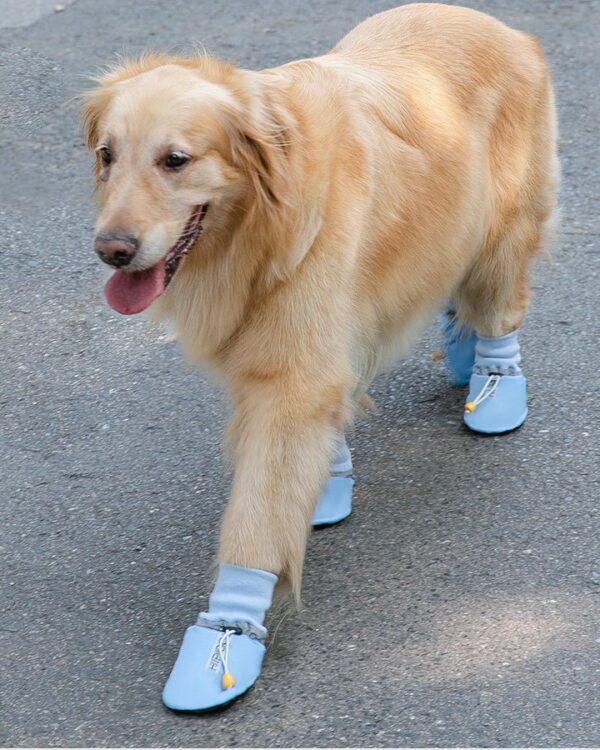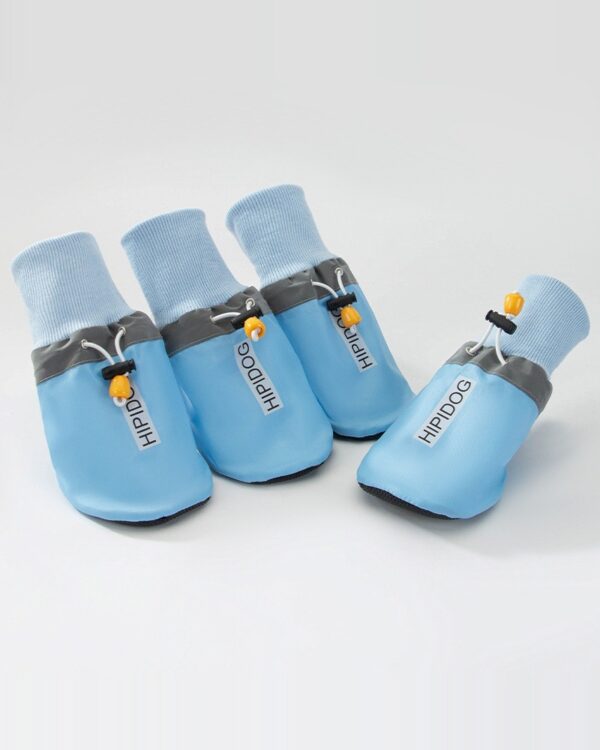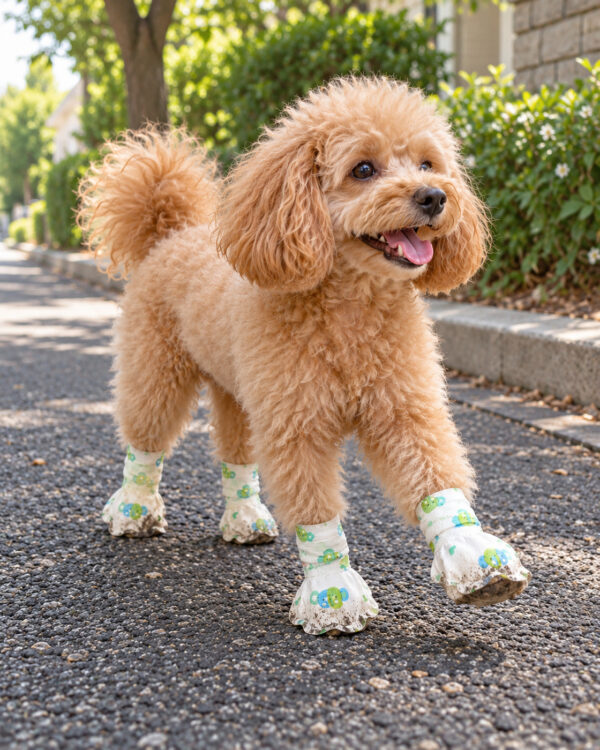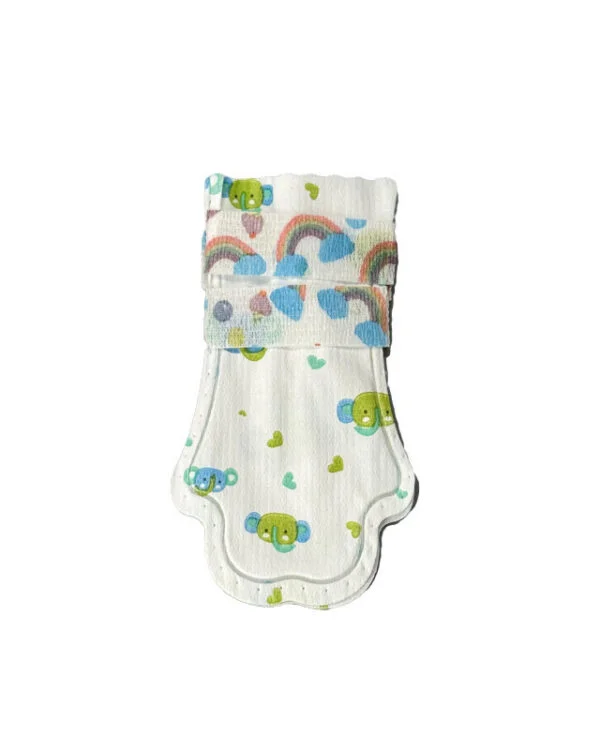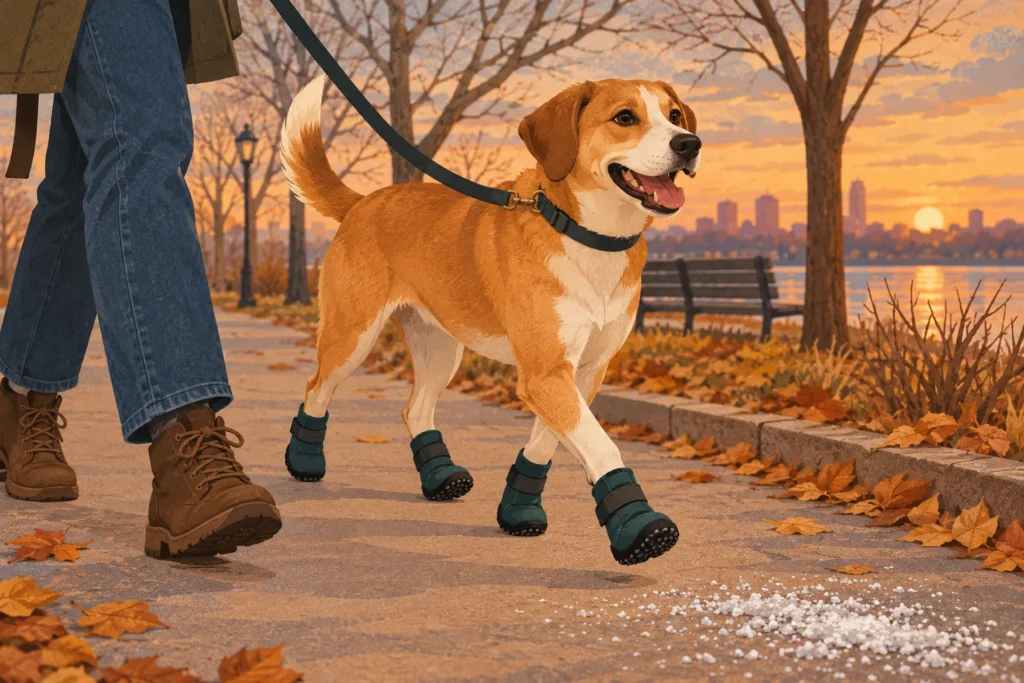
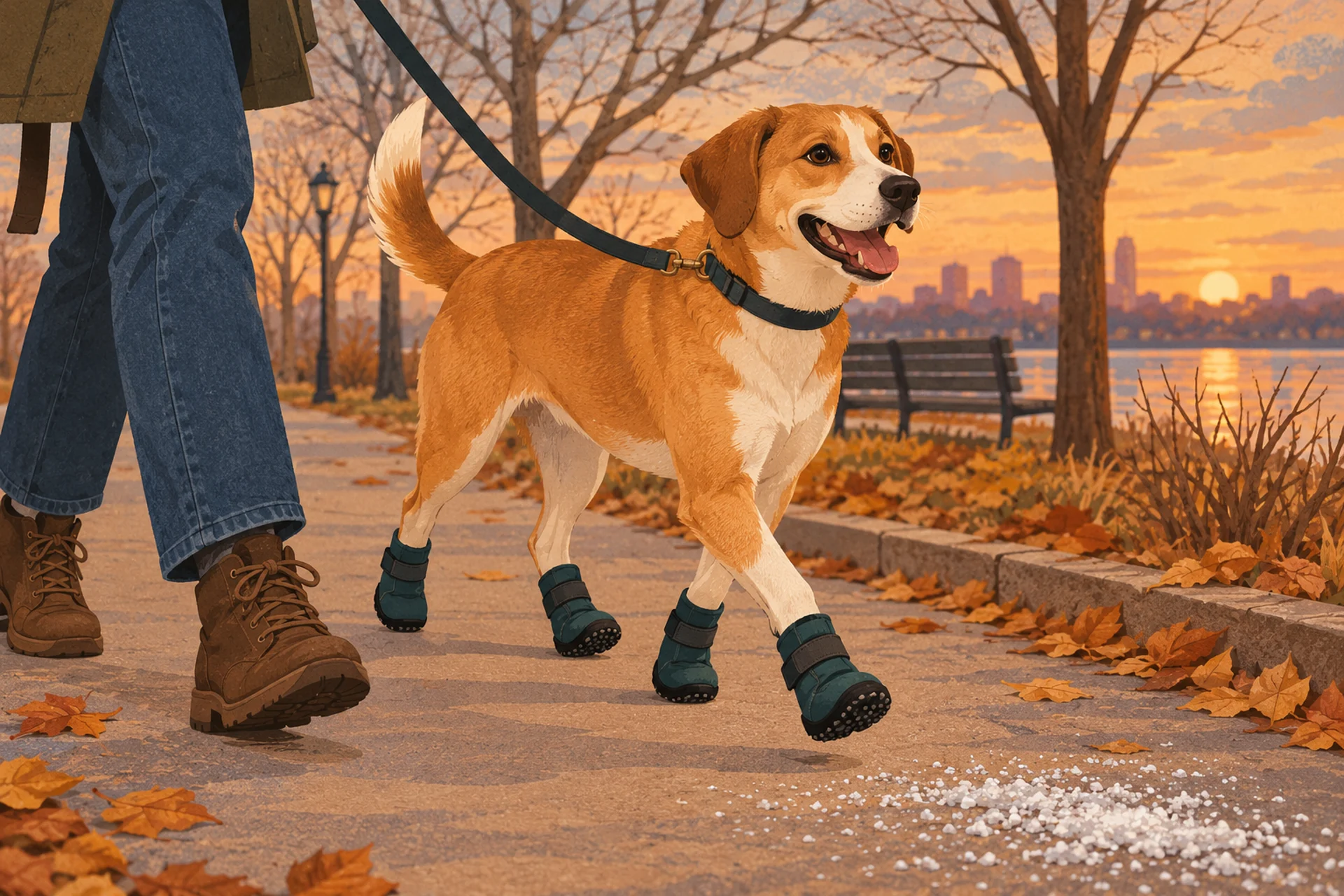
No, not when they fit, match the conditions and come off when the job is done. Vet and breed-club guidance treats boots as a tool: Cornell’s vet school suggests training a dog to wear well-fitting booties to protect their paws from ice and salt, and the ASPCA says booties can prevent sand and salt from getting lodged between bare toes.
But the worry isn’t silly either. The two small lab studies that have measured it found that boots do change how a dog’s feet hit the ground, and that wearing a single boot changed things the most. So the honest version is: boots are fine for a job, they’re not something to leave on all day, and how you put them on matters as much as whether you do.
Why people think boots are bad for dogs
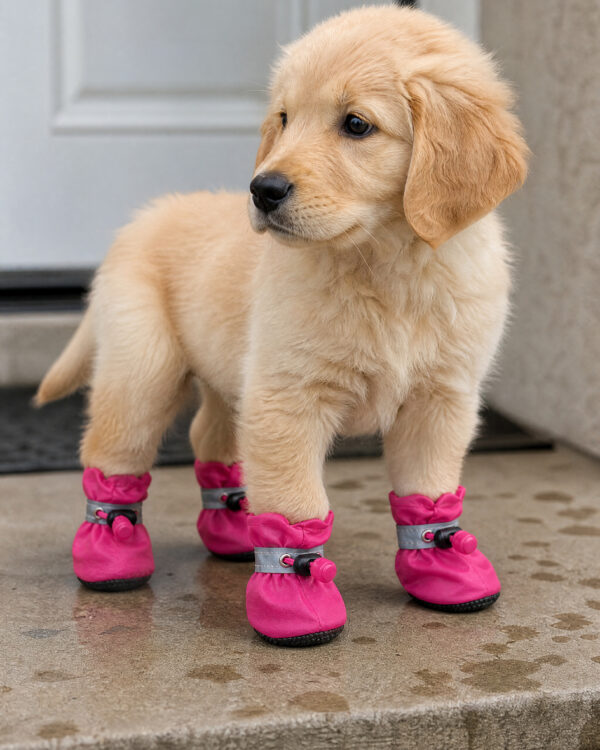
The worry usually comes from watching a dog’s first minutes in boots. High-stepping, flinging a paw, walking like the floor is hot. It looks like the boots hurt. Most of the time that’s novelty, not pain. A dog’s feet are suddenly wrapped and the ground feels different, so the dog moves differently until it gets used to it. The American Kennel Club says boots are often the most difficult item for dogs to get used to wearing, which matches what most owners see.
There are also three real concerns behind the question, and each is worth a straight answer:
- Gait. Do boots change how a dog walks, and could that strain joints?
- Moisture and skin. Can a boot trap wet against the pads and between the toes?
- Fit and rubbing. Can a strap or a bad size rub the leg raw, or let the dog slip?
What the gait studies actually found
Only a couple of studies have measured this directly, and both are small, so read them as early signals rather than settled science.
In 2019, researchers trotted six healthy beagles over a force plate, barefoot and in boots. Most measures didn’t change: how long each foot stayed on the ground, the peak force and the total impulse were all similar. One did change. The rate at which force loaded onto the foot was significantly higher in boots. The authors wrote that this suggests a change in foot strike that may result in overloading of musculoskeletal structures, and that caution is needed to allow an adequate adjustment period when a dog starts wearing them.
In 2022, a team at the University of Veterinary Medicine Vienna walked and trotted five Labrador Retrievers over a pressure platform in rubber boots, after giving the dogs at least a week to get used to them at home. They tested five set-ups: all four feet, both fronts, both hinds, one front, and one hind. The biggest change came from a single boot on one front leg, which shifted load toward the opposite hind leg. Every set-up changed some of the pressure measures, and the authors saw signs of reduced stability between paw and ground in the front legs. They also noted that the boot maker warns against unsupervised and prolonged wear, and that nobody yet knows whether long-term boot use affects joint health.
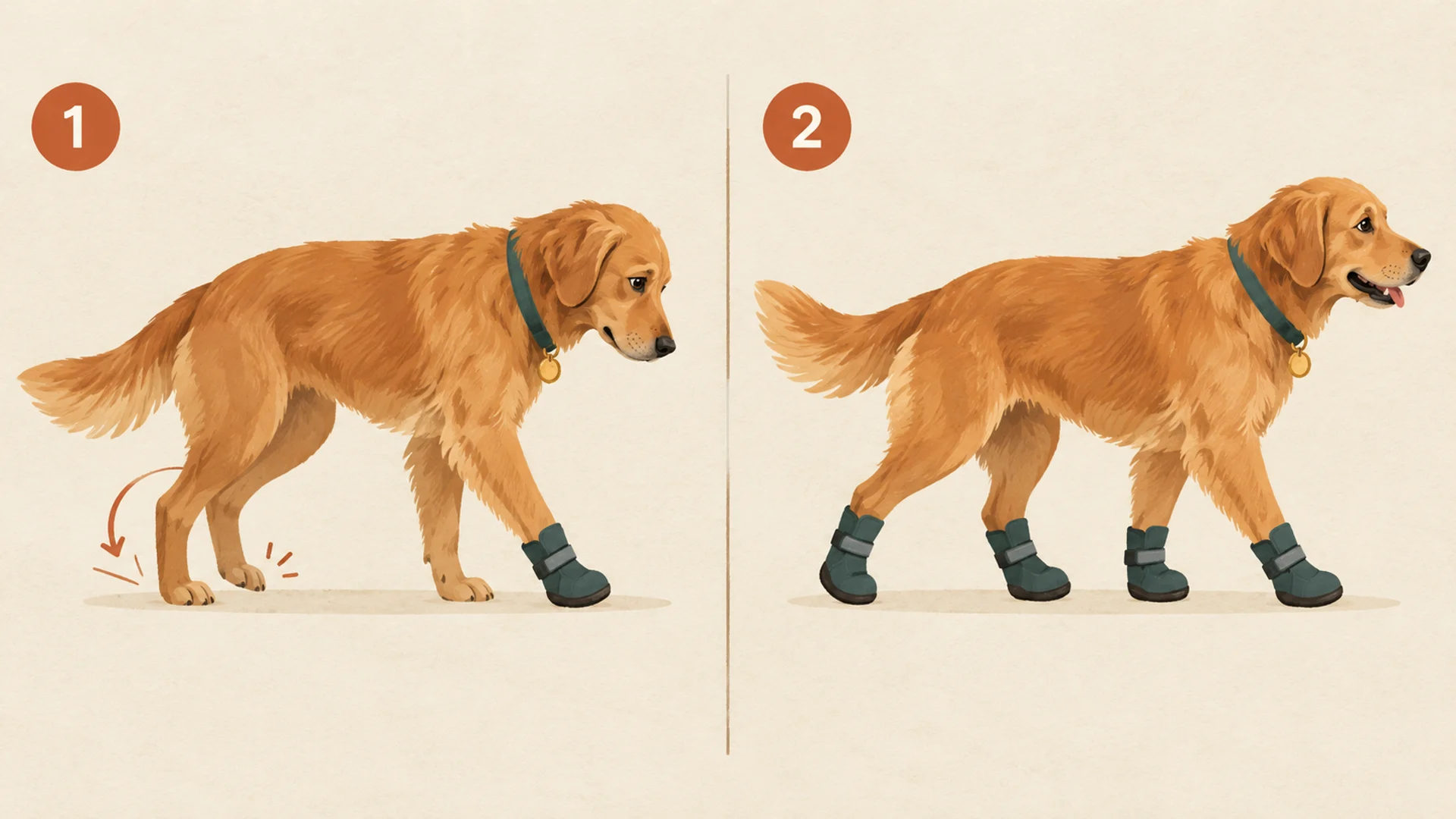
Put together, that’s the useful takeaway. Boots aren’t neutral, so don’t put them on for no reason. Give the dog an adjustment period instead of a long first walk. And be careful with the single-boot habit, which is common when people protect one sore paw. The studies didn’t look at dogs with existing joint problems, so for an older or arthritic dog, ask your vet before making boots a daily thing.
When boots help more than they cost
The case for boots is about the ground, not the temperature. A boot is worth the change in gait when the surface itself is the problem:
| Situation | Boots? | Why |
|---|---|---|
| Salted or chemically de-iced sidewalks | Usually worth it | The ASPCA says booties give more coverage and keep salt from lodging between the toes. A paw wax plus a wash afterwards is the alternative. See does ice melt hurt dog paws |
| Ice, or a dog that keeps slipping outside | Often | Cornell notes that well-fitting booties may help with balance to avoid slips and falls. Fit matters, because a loose boot slides too |
| Hot pavement, sand or metal in summer | Yes, or change the time of day | The AKC says dog shoes or all-terrain boots offer protection from hot surfaces. Its test: if you can’t hold your hand on the ground for ten seconds, it’s too hot for paws |
| Pads that are already cracked or sore | Ask your vet first | Cornell lists cracks and cuts from ice and salt as common. A vet should look at a sore paw before you cover it up |
| Plain cold, dry snow, grass, a healthy dog | Usually not needed | Healthy paws handle ordinary cold well. We go through the details in do dogs need boots in winter |
| Slippery floors indoors | Usually not the first fix | Rugs, trimmed nails and paw fur usually come first. See dog slipping on hardwood floors |
Moisture, rubbing and fit: the real ways boots cause trouble
When boots do cause a problem, it’s almost always one of these, and each one can be prevented.
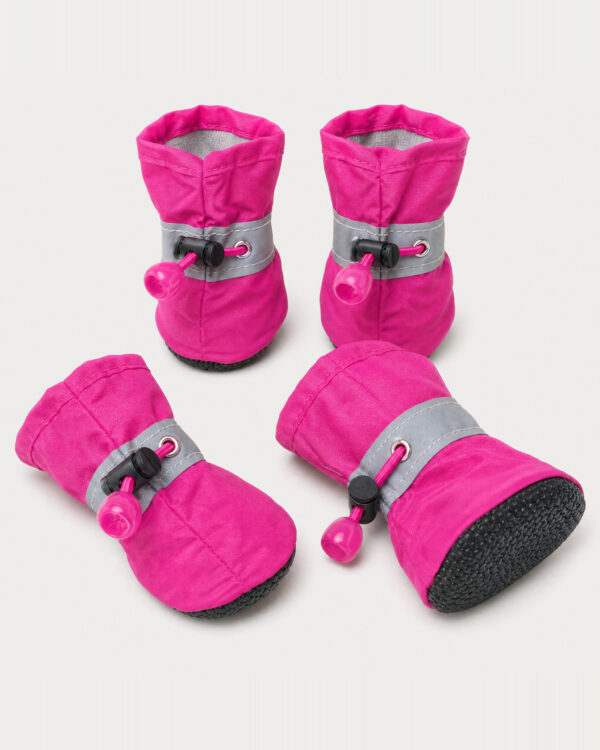
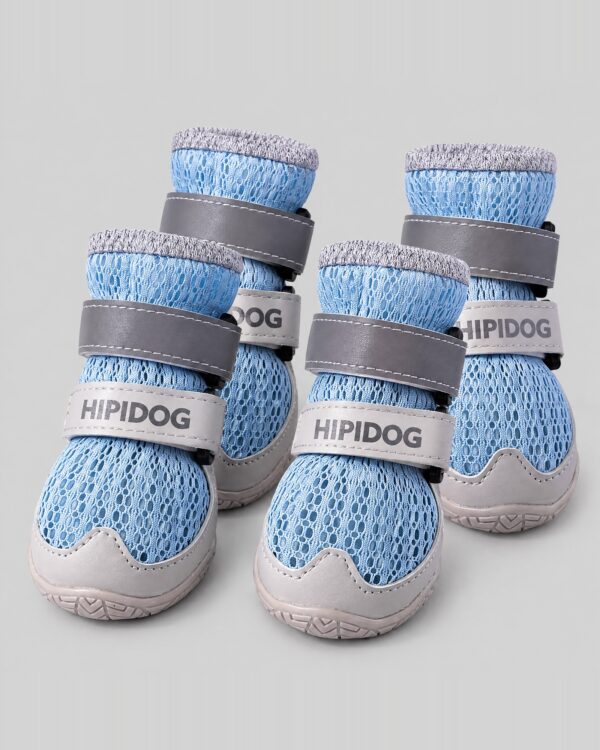
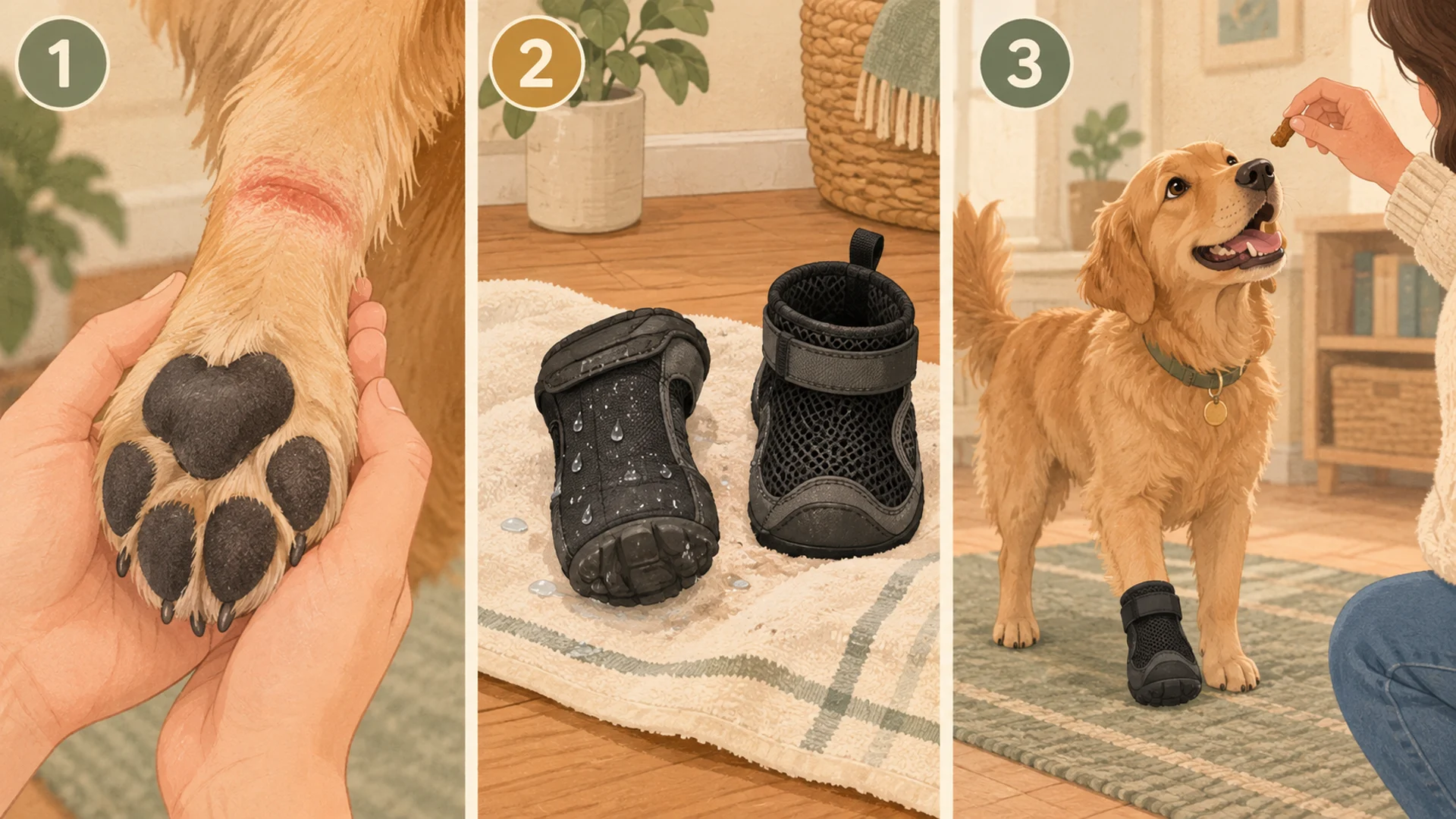
Trapped moisture. The AKC’s buying advice is direct: you don’t want a boot that traps water, because moisture between the toe pads can lead to yeast infections. It suggests boots with a mesh that lets the feet breathe, to help prevent cracked pads, flakiness and bacterial buildup. In practice that means taking boots off when you get home, drying the feet, and letting wet boots dry fully before the next walk. A fully sealed rubber boot is a tool for slush and salt, not something to wear around the house.
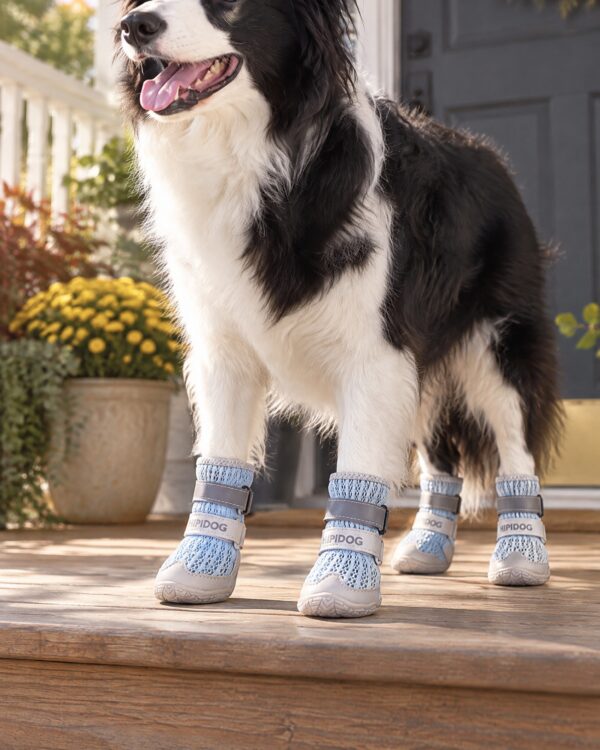
Rubbing. A strap that’s too tight, or a boot that twists, rubs the skin at the top of the boot or behind the dewclaw. The AKC’s fit rule for hot-weather boots is snug, but not too tight and not too loose, with wrap-around closures and full-foot grips. Check the leg every time the boots come off. Redness or hair rubbed away means change the fit before the next walk.
The wrong size. A boot that’s too big slides, twists and comes off. One that’s too small squeezes. The AKC’s method is to trace the paw on paper and measure across the widest part, and to size differently if the paw doesn’t fit securely. Measure front and back paws separately. Our guide to dog boots that keep falling off goes through the measurement most people get wrong.
How to make boots work instead of fighting them
- Start indoors, one boot at a time. The AKC’s method is to start with having your dog wear one boot, indoors, for short periods, and lengthen the time with each session. This is short training at home, not a walk in one boot.
- Give it an adjustment period. Both gait studies point the same way: the way a dog moves changes in boots, so build up over days. The 2022 study gave its dogs at least a week at home first.
- Put all four on for walks. Once the dog is comfortable, walk in a matched set, not one or two.
- Watch the dog, not the clock. The AKC says to monitor for signs of discomfort or stress. A dog that keeps trying to pull them off needs shorter sessions.
- Take them off at the door. Dry the feet, look at the pads and the top of the leg, and let the boots dry.
- Have a no-boot plan. Some dogs never accept them. A paw wax before the walk and a wash afterwards, which the ASPCA describes, covers salt for many dogs. Our full method for getting dogs used to gear is in how to get your dog used to wearing clothes.
Are dog boots bad for dogs? FAQ
Do dog boots hurt dogs?
Well-fitting boots used for a specific job shouldn’t hurt. Hurting usually comes from a bad fit: a strap that rubs, a boot that twists, or a boot that traps moisture. The awkward high-stepping most dogs do at first is them getting used to the feel, not a sign of pain. If a dog limps, keeps chewing at one boot, or you find redness or sores when the boots come off, stop and check the fit, and ask your vet if it doesn’t clear up.
Are dog boots safe to wear all day?
Not as a habit. The boot maker in the 2022 study warns against unsupervised and prolonged wear, and the AKC warns against boots that trap water. Put boots on for the walk and take them off when you get home.
Why does my dog walk funny in boots?
Because the feet feel different. Studies show boots measurably change how force lands on the foot, so some odd steps at first are expected. It usually settles with short, rewarded sessions over several days. If it doesn’t, the size or fit is the first thing to check.
Is it OK to put a boot on just one paw?
For a quick indoor training session, yes, that’s how the AKC suggests starting. For walking, the 2022 study found that one boot on one front leg changed the dog’s weight distribution the most of any set-up it tested. If one paw needs protecting outdoors, for example after an injury, ask your vet how best to cover it.
Are boots or paw wax better for winter salt?
Both are reasonable. The ASPCA lists petroleum jelly or vet-approved paw protectants massaged into the pads before a walk, and notes that booties give more coverage and keep salt out from between the toes. Whichever you use, wash and dry the feet after the walk.
My older dog has arthritis. Should they wear boots?
Ask your vet first. Boots can help with grip on ice, and Cornell notes that well-fitting booties may help with balance. But the gait studies used young, healthy dogs and didn’t test dogs with joint problems, so this is a decision to make with someone who has examined your dog.
Boots aren’t bad. Boots worn all day, in the wrong size or on one foot can be.
Use them for a surface that’s actually a problem, like salt, ice, hot pavement or rough ground. Fit them snug, start indoors one boot at a time, walk in all four, and take them off at the door. If your dog has sore paws or stiff joints, ask your vet before you start.
Sources
- Bieber B, Reicher B, Tichy A, Bockstahler B. Changes in Ground Reaction Forces and Center of Pressure Parameters of Paws When Wearing Dog Boots in Dogs. Frontiers in Veterinary Science, 2022 (five Labrador Retrievers, rubber boots, five set-ups; a single front boot changed loading the most; all set-ups changed some measures; small sample; manufacturer warns against unsupervised and prolonged wear; long-term effects unknown) (checked 2026-10-23)
- Shorter K, Brown W. Ground Force Kinetic Adaptations Associated with Canine Boots. Biologia Futura 70(2):128–133, 2019, doi:10.1556/019.70.2019.16 (six beagles at a trot; loading rate higher in boots, other measures unchanged; adjustment period advised) (checked 2026-10-23)
- American Kennel Club — Best Dog Boots for Any Weather (avoid boots that trap water; mesh for breathability; measuring the paw; start with one boot indoors; watch for discomfort) (checked 2026-10-23)
- American Kennel Club — Dog Paws and Hot Pavement (boots protect from hot surfaces; snug but not too tight or loose; ten-second hand test) (checked 2026-10-23)
- American Kennel Club — How to Teach Your Dog to Wear Winter Clothes (boots are often the hardest item to get used to) (checked 2026-10-23)
- ASPCA — Cold Weather Safety Tips (paw protectants; booties give more coverage and keep sand and salt from between the toes; wash and dry feet after walks; check for cracks) (checked 2026-10-23)
- Cornell University College of Veterinary Medicine — Winter Safety Tips (well-fitting booties protect paws and may help balance; cracks and cuts from ice and salt) (checked 2026-10-23)
Research on dog boots is limited and guidance is updated over time. Confirm on the original pages, and ask your own veterinarian about your dog, especially if it has sore paws or joint problems.