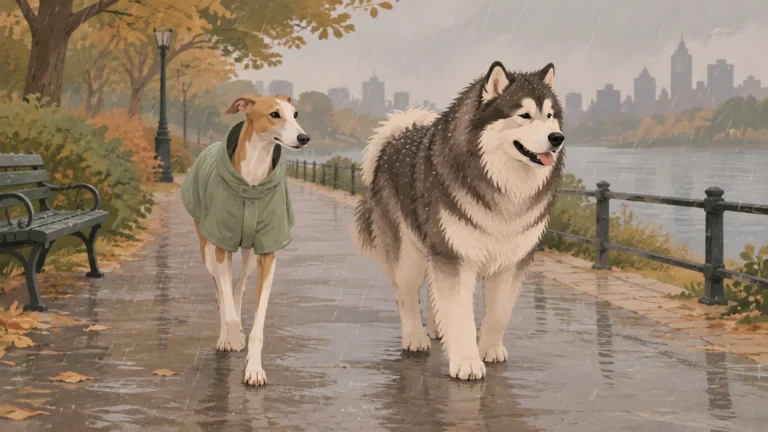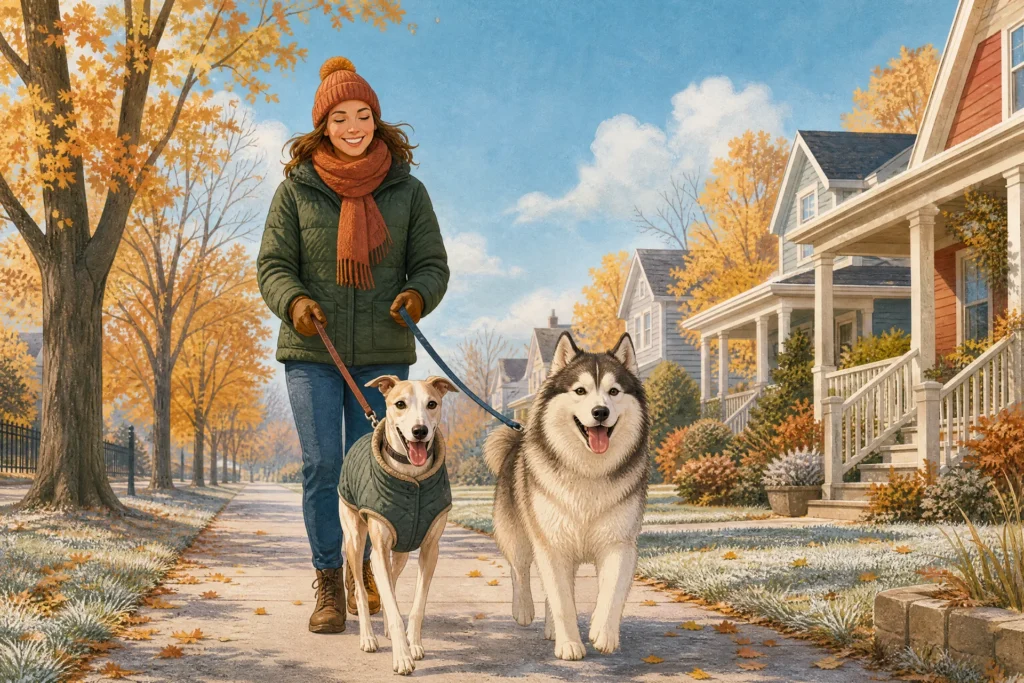
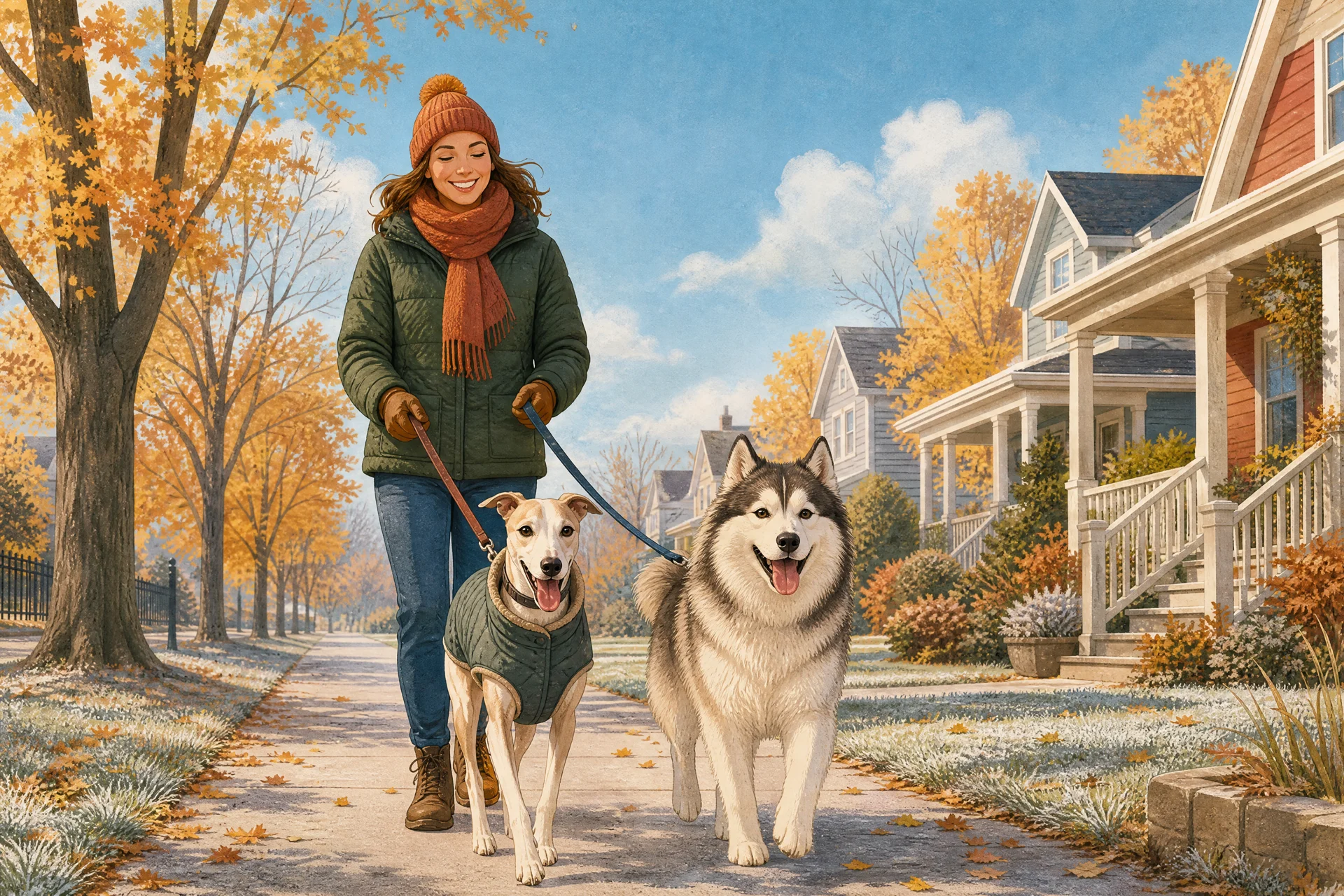
There is no single temperature. A veterinarian interviewed by the American Kennel Club says it plainly: there isn’t an exact temperature that’s too cold for all dogs. A Chihuahua and an Alaskan Malamute standing on the same sidewalk are in two different climates.
What the vets do give you is two lines worth remembering. Below freezing (32°F), the AKC’s guidance is to keep outings for small dogs to no more than 10 to 15 minutes, and that is also where frostbite becomes a risk. Once the wind chill drops below 20°F, play should come in short sessions for most dogs. Above freezing, the question isn’t the number on the thermometer. It’s which dog you have, whether it’s wet or windy, and how long you’ll be out. If your dog is small, short-coated, lean, low to the ground, very young or old, a coat is usually worth it well before the first frost.
Why the numbers you find online don’t agree
Search this question and you’ll get a different threshold from almost every page: 45°F, 40°F, 32°F, 20°F. Most of those pages are selling coats. The bands are not wrong as rough guides, but we could not find the popular 45°F line in the published guidance from the AKC, Cornell’s veterinary college or the ASPCA pages we checked. Treat it as a rule of thumb, not a standard.
The reason no vet body publishes one number is that cold tolerance isn’t a property of the weather. Cornell’s Riney Canine Health Center lists what it depends on: age, size, nutritional status, health and coat thickness. It adds one more factor people forget. A dog that hasn’t adjusted to cold, because it came from a warmer place or because a cold snap arrived overnight, copes worse than the same dog will in January.
So the useful version of the question is does this dog need a coat today. That has a fairly reliable answer.
The two lines vets actually draw
32°F, freezing. The AKC’s guide to time outdoors, quoting a veterinarian, says small dogs can spend a few hours out between 60°F and 90°F, but that outings below 32°F should be kept to short spans of 10 to 15 minutes. Big double-coated breeds such as Malamutes, Newfoundlands and Bernese Mountain Dogs can usually stay out 30 minutes to an hour below freezing. Frostbite also enters the picture here, mostly on the paws, ears and tail.
A wind chill of 20°F. In the AKC’s winter coat guide, the veterinarian’s general recommendation is that when the wind chill is below 20 degrees, playtime should be kept to 15 to 20 minute sessions, with time indoors to warm up in between. That applies to dogs in general, not just the small ones.
Between 32°F and the point where you take your own jacket off, there is no line. That’s the range where most people are actually asking the question, and the answer depends on the dog.
Which dogs need a coat, and which don’t
The AKC’s winter coat guide sorts dogs into groups, and they line up closely with Cornell’s risk list.
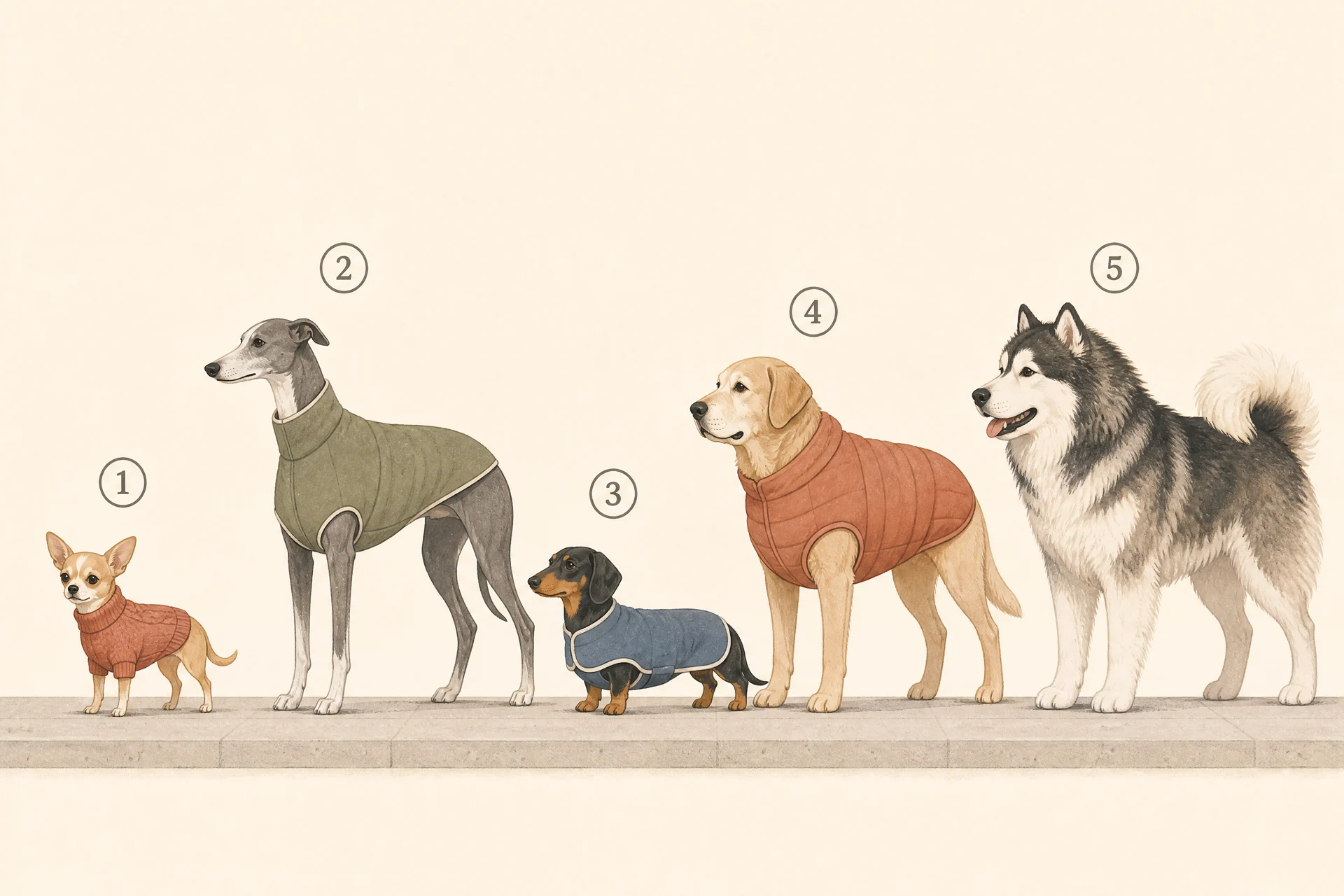
| Your dog | Why the cold gets to them | Coat? |
|---|---|---|
| Small and toy breeds (Chihuahua, Maltese, toy Poodle) | Small dogs have a harder time staying warm than large breeds | Usually yes, from the first properly cold days |
| Lean, short-coated dogs (Greyhound, Whippet) | Little body fat and little fur | Usually yes, even though they’re big |
| Short-coated, high-energy dogs (Vizsla, German Shorthaired Pointer) | Short coats chill fast during stops | Yes for snow and long, cold outings |
| Low to the ground (Dachshund, Basset, Corgi) | Their bellies get wet in snow and on icy ground | Often, mainly for belly coverage |
| Hairless dogs, or dogs clipped short (Poodles) | Nothing between skin and air | Yes |
| Puppies, seniors, underweight dogs, dogs with arthritis or other health conditions | They regulate body temperature less well | Often; ask your vet what fits your dog |
| Thick double coats (Malamute, Husky, Newfoundland, Bernese, Saint Bernard) | Bred to insulate against snow and cold | Rarely for warmth; a raincoat is a different question |
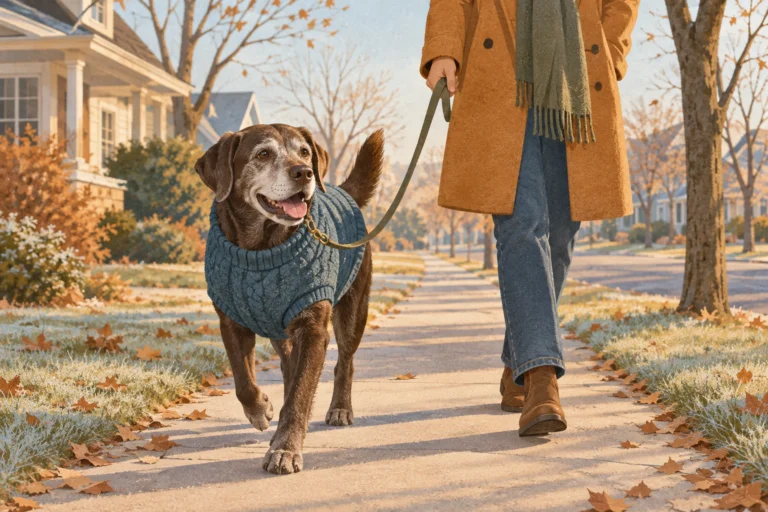
Two points in that table are easy to get backwards. Size alone doesn’t protect a dog. The AKC’s winter safety page makes a point of including short-haired dogs, even large ones like Greyhounds. And age overrides breed. The AKC notes that young puppies and senior dogs of all breeds and sizes feel the cold more than healthy adults, and so can dogs with chronic conditions like arthritis. A twelve-year-old Labrador can need a coat its younger self never did.
For the thick-coated breeds, the common objection is right: their own coat is the winter coat. Putting insulation on top of it risks making them too warm, which we cover in do dogs overheat in coats. Rain is a separate question, discussed in do double-coated dogs need raincoats.
Wind and wet move the line more than the temperature does
A calm, dry 38°F and a wet, windy 38°F are not the same walk. The National Weather Service defines wind chill as how cold people and animals feel when outside, based on how fast exposed skin loses heat to wind and cold. Its example: at 0°F with a 15 mph wind, the wind chill is −19°F. Two caveats apply. The NWS chart is built on a model of a human face, so for a dog it’s a direction rather than a reading. And the NWS points out that you can’t get frostbite unless the actual air temperature is below freezing, but you can still get hypothermia above it.
Wet matters for the same reason. A soaked coat stops trapping warm air. The AKC’s hypothermia guidance tells owners to make sure the dog is dry before going out, and the ASPCA recommends towel drying as soon as your dog comes inside. This is why low-slung dogs get cold in snow. Their bellies drag through it.
In practice: on a dry, still day, use the table above. Add a level of caution for wind, another for rain or wet snow, and another for a long outing with stops. A dog that’s fine for a ten-minute loop can be shivering forty minutes into a hike.
Your dog will tell you
A thermometer can’t see your dog. Cornell lists the signs that a dog isn’t tolerating the cold, and says to move the dog somewhere warm and dry if you see any of them: shivering, whining or barking, a tucked tail or hunched posture, lifting paws off the ground, reluctance to walk, or suddenly anxious behaviour.
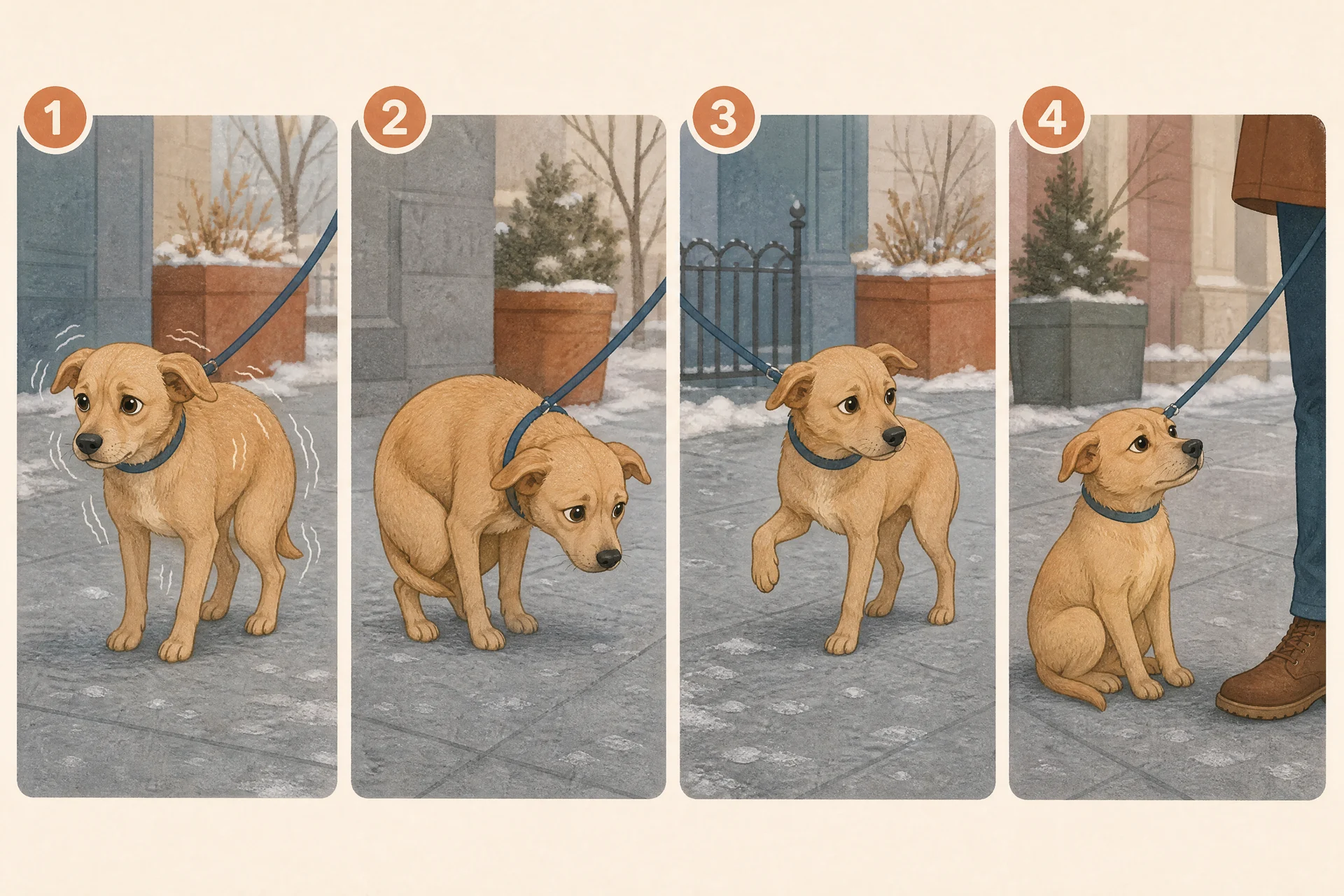
Shivering and curling up are also the AKC’s first signs of mild hypothermia. If your dog becomes sluggish, weak, confused or unresponsive after time in the cold, that’s beyond what a coat fixes. Get your dog warm and call your veterinarian. For the full set of signs, including the quieter ones indoors and at night, see how to tell if your dog is cold.
The simplest test is Cornell’s, which the ASPCA repeats: if it’s too cold for you, it’s likely too cold for your dog. If you’re zipping up and putting your gloves on, look at your dog and ask which group from the table it’s in.
Coat, sweater or snowsuit?
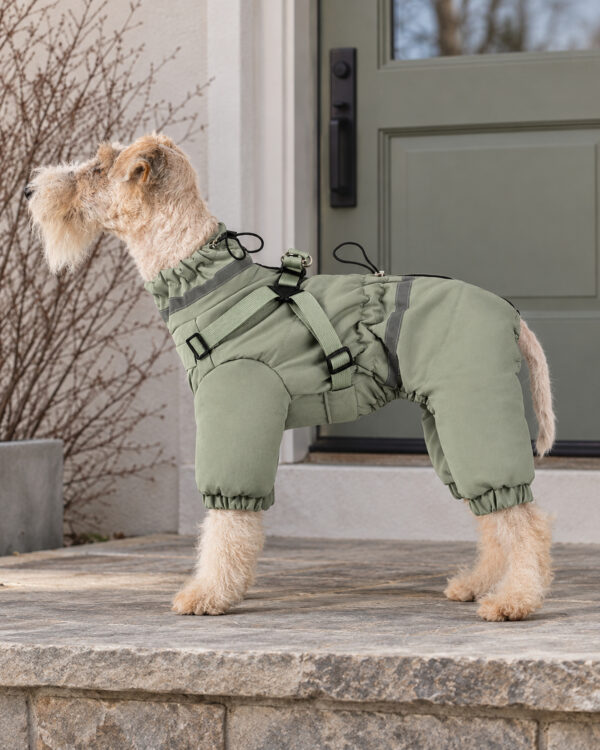
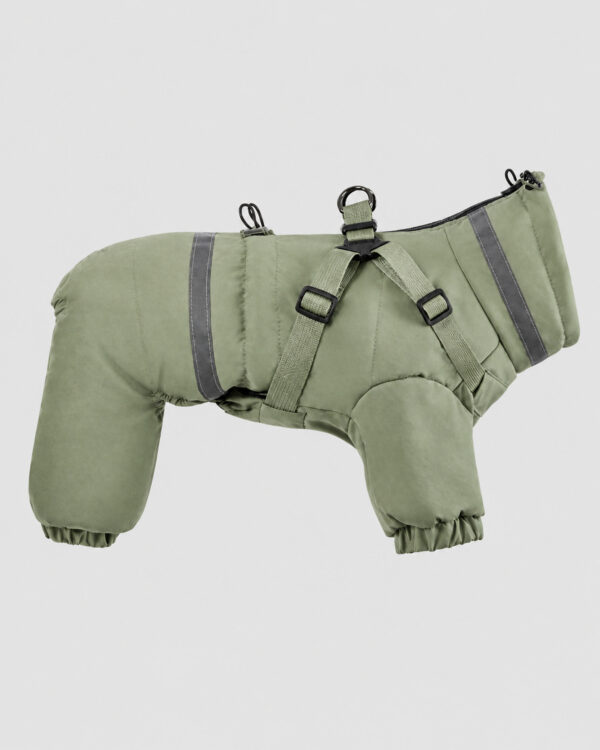
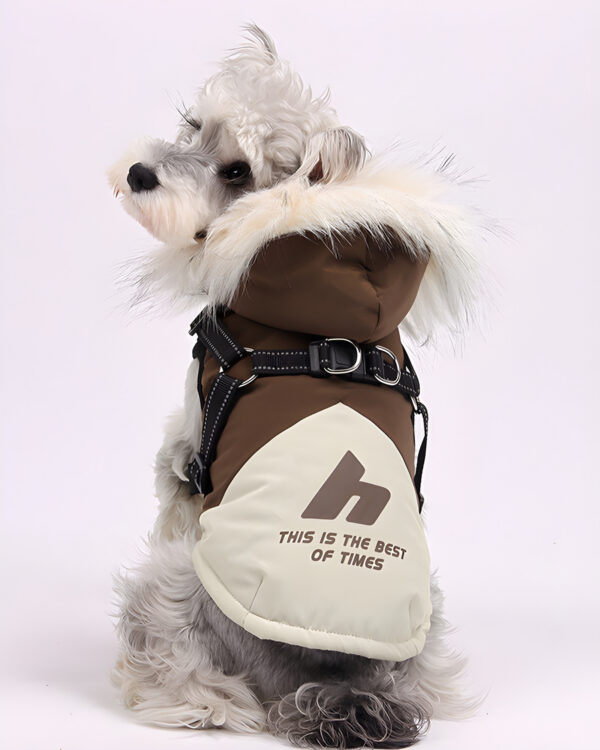
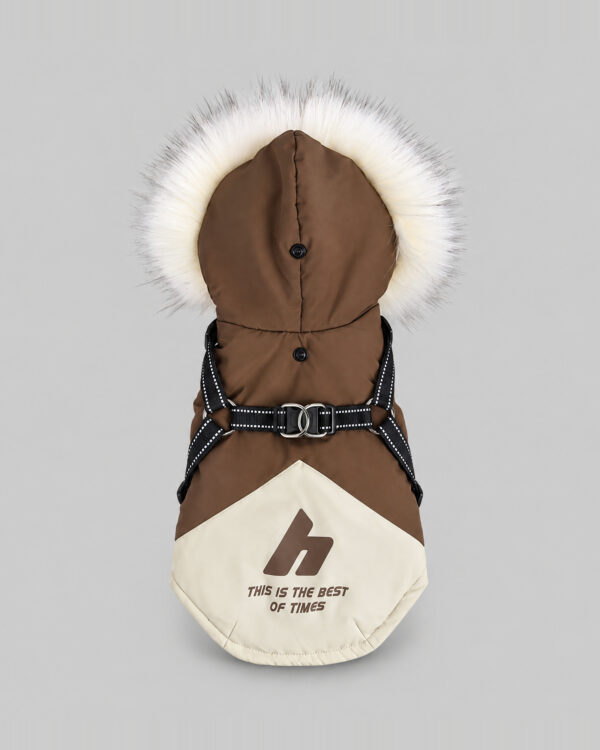
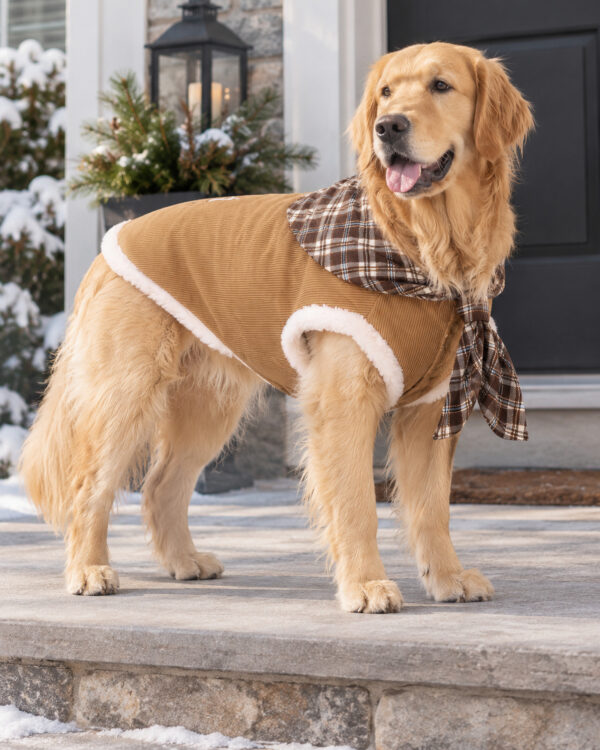
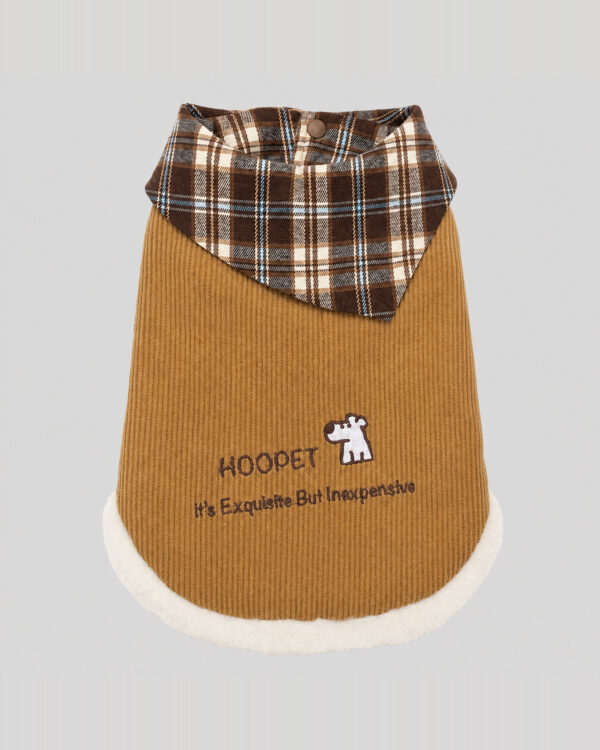
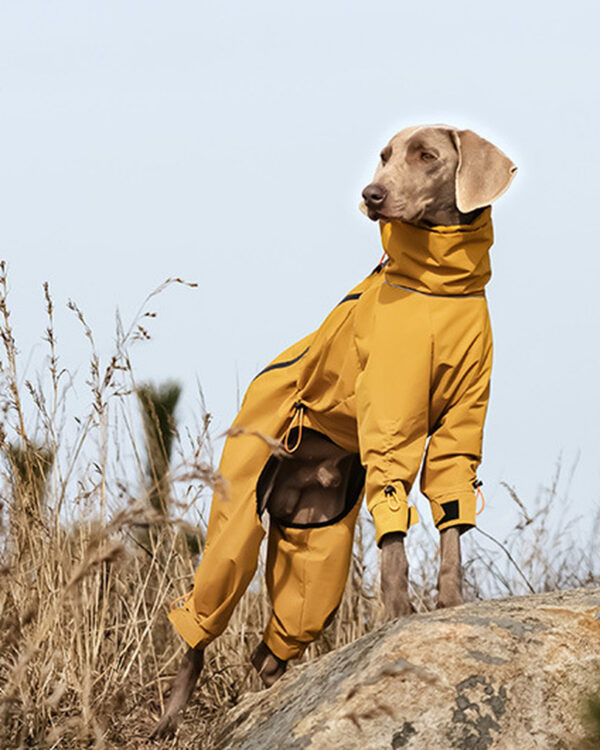
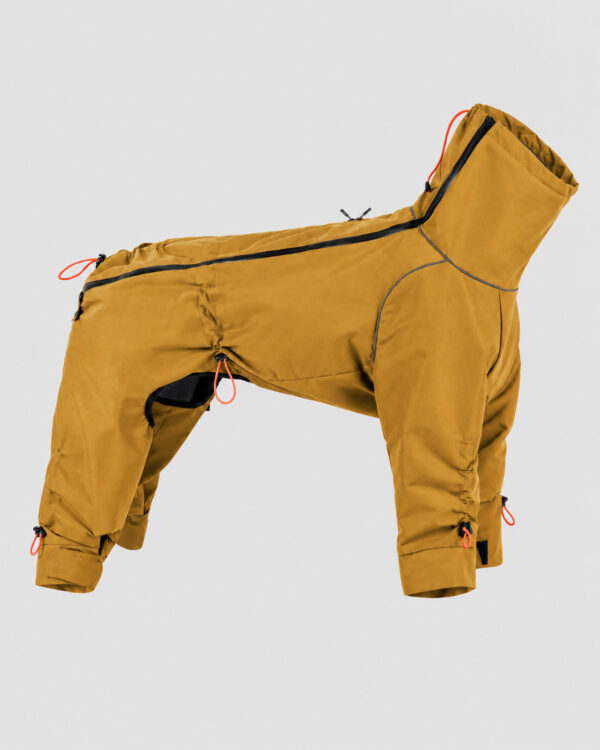
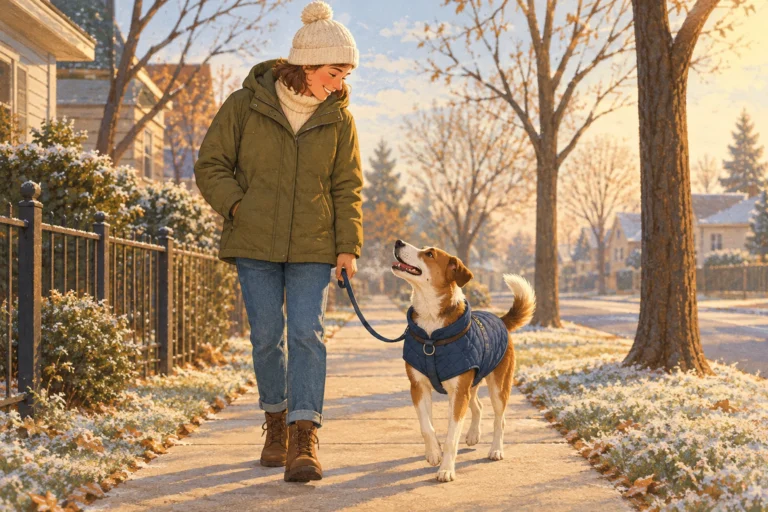
Dog sweater or coat? Pick by weather, not by looks: a sweater for dry cool days, a coat for wind, wet or real cold. The AKC separates three jobs. A lightweight jacket is for dogs who get cold easily, once the weather starts to cool. An insulated coat is for snow and properly cold weather. A snowsuit or bodysuit covers the legs too, and the AKC singles it out for lean-bodied and hairless dogs with long legs. A raincoat is a fourth thing. It’s about keeping the dog dry and clean, and even dogs who don’t feel the cold can benefit.
A knit sweater works as the lightweight layer for dry cold. It isn’t windproof or waterproof, so it’s the wrong choice for sleet or slush. Whatever you choose, the ASPCA’s advice for short-haired dogs is a coat or sweater with a high collar or turtleneck, covering from the base of the tail to the belly. Belly coverage is what low-slung dogs need most. For dogs with long coats, the ASPCA and Cornell both say not to shave short in winter. Trim instead, especially between the toes, which also helps with snowballs on the paws.
Fit matters as much as warmth. The AKC says your dog should be able to walk, run and play comfortably in the coat, and that it shouldn’t be loose enough to get tangled in. Measure back length and chest girth before you buy. Our guide on how to measure your dog for clothes walks through both.
Before the first cold walk
- Find your dog in the table. If it’s in one of the coat groups, plan on a coat for anything near freezing, and earlier if it’s wet or windy.
- Check the wind chill, not just the temperature. Below about 20°F, keep play in short sessions for every dog.
- Start dry. Dry your dog properly after a bath or a wet walk before going out again.
- Choose by weather. Sweater or light jacket for dry cool days, insulated coat for snow and real cold, raincoat for wet.
- Watch for the signs in Figure 3 for the first few walks of the season, while your dog is still adjusting.
- Take the coat off indoors. The AKC notes that clothing shouldn’t be used on an unattended dog or as a substitute for proper care.
- Introduce it before you need it. A dog meeting its first coat on the coldest morning of the year is unlikely to cooperate. Our guide to getting a dog used to wearing clothes covers how.
Dog coats and cold weather: FAQ
What temperature does a dog need a coat?
There’s no single temperature that applies to every dog. Small, short-coated, lean, low-slung, very young, old or unwell dogs often benefit from a coat before it reaches freezing, especially when it’s wet or windy. Thick double-coated breeds rarely need one for warmth. The firmest lines in AKC guidance are 32°F, below which small dogs’ outings should be kept to 10 to 15 minutes, and a wind chill of 20°F, below which play should come in short sessions.
Does my dog need a coat in 40 degree weather?
It depends on the dog and the conditions. A healthy Labrador or Husky on a dry, still 40°F day usually doesn’t. A Chihuahua, Whippet, Dachshund, senior dog or puppy may well be glad of a light coat, and more so if it’s raining or windy or you’ll be out for a long time. Watch for shivering or lifted paws.
Do dogs need coats in winter?
Some do and some don’t. The AKC lists toy breeds, hairless and closely clipped dogs, short-legged breeds, short-coated sporting dogs, lean sighthounds, young puppies, seniors and dogs with chronic conditions as dogs who may need one. Breeds such as Malamutes, Newfoundlands, Bernese Mountain Dogs, Saint Bernards and Huskies were bred with insulating coats and are generally protected.
Do short-haired dogs need coats in winter?
Many do, but not all short coats are equal. The AKC singles out lean, short-coated dogs such as Greyhounds, Whippets and Azawakhs, and high-energy short-coated sporting dogs such as Vizslas and German Shorthaired Pointers, which can quickly become cold while walking or playing in the snow. For short-haired dogs, the ASPCA suggests a coat or sweater with a high collar. A stocky short-coated dog on a short, dry walk often manages without one; our guide on whether pit bulls need coats works through that case.
Do puppies need coats in winter?
Often, yes. The AKC says young puppies and senior dogs of all breeds and sizes are more susceptible to the cold than healthy adult dogs, and that very young dogs have a hard time regulating body temperature. Keep cold-weather outings short, and ask your vet about a very young or small puppy.
Do old dogs need coats in winter?
Many benefit from one, even breeds that never needed a coat when younger. The AKC groups seniors with puppies as more susceptible to the cold, and Cornell lists older and underweight dogs and dogs with medical conditions among those that struggle. If an older dog starts lagging, shivering or lifting paws on walks it used to enjoy, try a light coat and shorter loops. More in do older dogs get cold more easily.
Do small dogs need coats more than big dogs?
Generally yes. Cornell notes that small dogs have a harder time staying warm than larger breeds, and the AKC recommends shorter outings for them below freezing. But size isn’t everything. A big Greyhound needs a coat more than a small, thick-coated Spitz-type dog.
Should my dog wear a sweater inside?
Usually not. Most dogs are comfortable indoors without one. A better fix for a chilly house is a warm bed off the floor and away from drafts, as the ASPCA suggests. We go through the exceptions, and why it should come off at bedtime, in should my dog wear a sweater indoors. If you have a hairless breed, or your dog is elderly or unwell and seems cold indoors, ask your vet.
Why is my dog shivering if it isn’t that cold?
Cold is one reason dogs shiver, but not the only one. The AKC’s guide to why dogs shake also lists excitement, anxiety, pain and nausea, and some toy and small terrier breeds shiver more than others. If your dog stops shivering once it’s warm and dry, the cold was probably the cause. If the shivering continues indoors, or comes with other changes such as lethargy, limping or not eating, talk to your veterinarian.
Sources
- American Kennel Club — Does My Dog Need a Winter Coat? (Sassafras Patterdale, updated Nov 14, 2025; checked 2026-10-01). A veterinarian quoted says there isn’t an exact temperature that’s too cold for all dogs, and that below a wind chill of 20 degrees playtime should be 15 to 20 minute sessions. Lists the dogs who may need coats, the breeds generally protected by thick coats, the difference between lightweight, insulated, rain and full-body coats, and fit guidance.
- American Kennel Club — How Long Can You Keep Your Dog Outside? (Susan Paretts, updated Mar 24, 2026; checked 2026-10-01). Small dogs: a few hours between 60°F and 90°F, no more than 10 to 15 minutes below 32°F. Large double-coated breeds: usually 30 minutes to an hour below 32°F.
- American Kennel Club — Can Dogs Get Frostbite? (checked 2026-10-01). Dogs are at risk of frostbite once the temperature falls below 32°F. Paws, ears and tail are most commonly affected.
- American Kennel Club — Hypothermia in Dogs (updated Jan 10, 2025; checked 2026-10-01). Shivering and curling up are early signs of mild hypothermia. A jacket or sweater and booties help reduce the risk, but clothing should not be used on an unattended dog. Make sure the dog is dry before going out.
- American Kennel Club — How to Keep Your Dog Warm and Safe This Winter (updated Jan 14, 2026; checked 2026-10-01). Small, delicate and short-haired dogs, even large ones like Greyhounds, need a sturdy winter coat and a fitted sweater.
- American Kennel Club — Why Is My Dog Shaking? (Harriet Meyers, published Apr 18, 2022; checked 2026-10-01). Shaking can be a sign of excitement, anxiety, pain or nausea; some toy and small terrier breeds shiver more than others; contact your veterinarian if you don’t know why.
- Cornell University College of Veterinary Medicine, Riney Canine Health Center — Winter safety tips (checked 2026-10-01). Cold tolerance depends on age, size, nutritional status, health and coat thickness. Dogs not conditioned to cold cope less well. Signs a dog isn’t tolerating the cold. A jacket or sweater helps smaller, older and thin-coated dogs. Don’t clip too short in winter.
- ASPCA — Cold Weather Safety Tips (checked 2026-10-01). If it’s too cold for you, it’s probably too cold for your pet. Towel dry after coming inside. Don’t shave down to the skin in winter. For short-haired dogs, a coat or sweater with a high collar and coverage from the base of the tail to the belly. A warm bed off the floor and away from drafts.
- National Weather Service — Understanding Wind Chill (checked 2026-10-01). Wind chill is how cold people and animals feel, based on heat loss from exposed skin. The chart is based on a human face model. Frostbite requires an actual air temperature below freezing, though hypothermia is possible above it.
This page is general care information, not veterinary advice. Every dog is different. If your dog is a puppy, a senior or has a health condition, ask your veterinarian about its limits in the cold.
Dress the dog, not the thermometer.
There’s no universal coat temperature. Treat freezing and a 20°F wind chill as the points where every dog’s time outside gets shorter. Above that, decide by dog: small, short-coated, lean, low-slung, young, old or unwell dogs usually want a coat sooner, especially when it’s wet or windy, and the thick-coated breeds usually don’t want one at all. Then watch for shivering and lifted paws, because your dog will tell you before the forecast does.