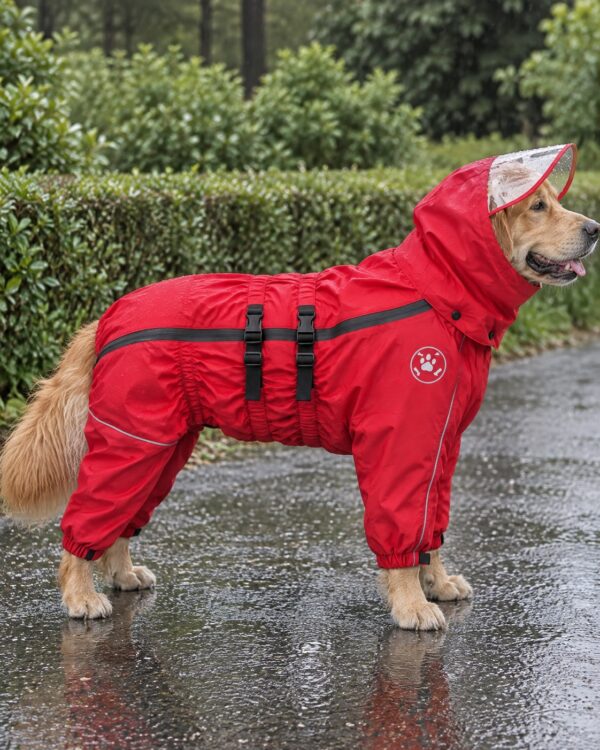
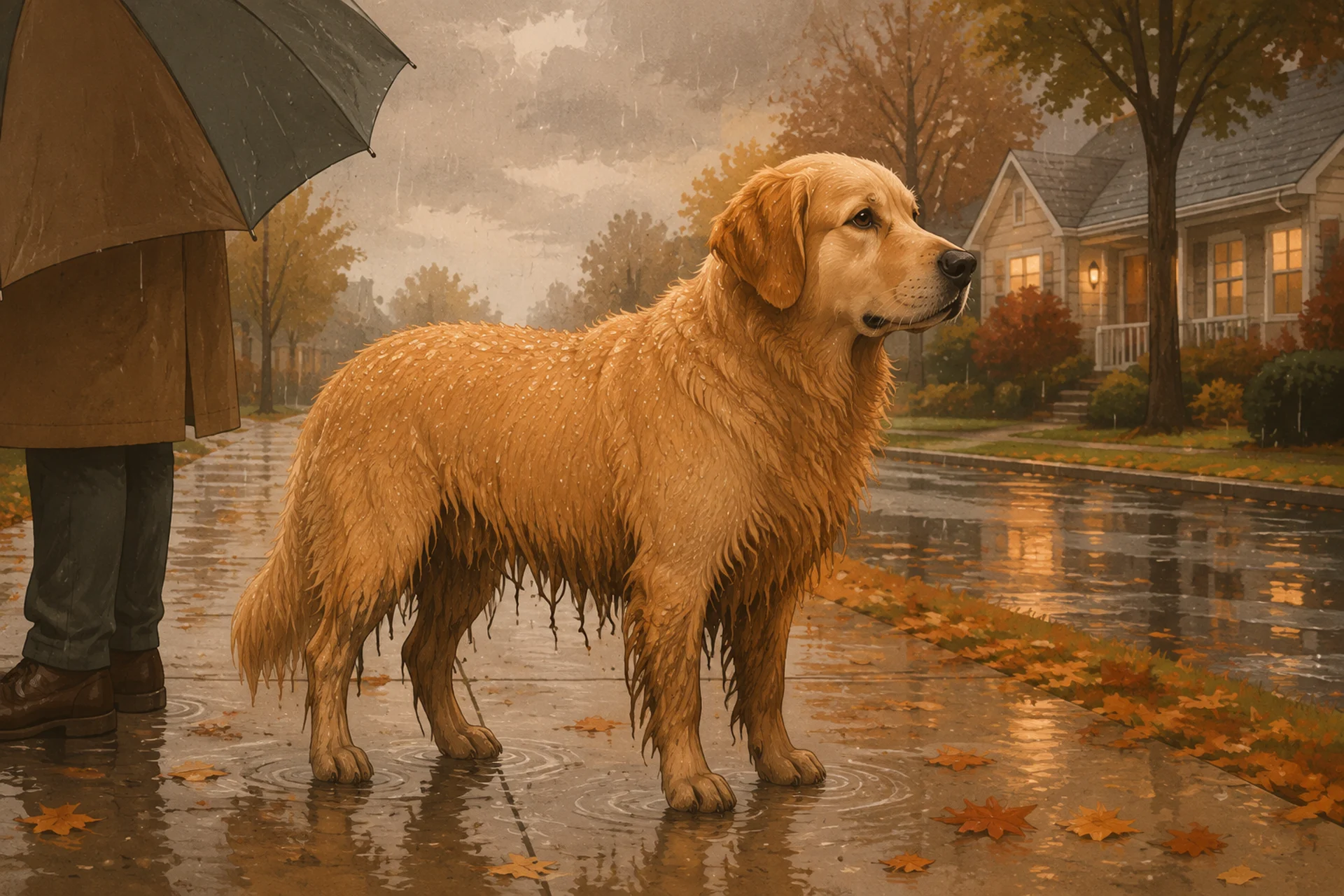
Most healthy adult dogs don’t need a raincoat, and double-coated dogs need one least of all. A healthy Husky, Malamute, Golden or Lab on a normal walk in mild rain does not need one, and the people who say so are right about the mechanism — Cornell’s veterinary school puts dogs with “thick, double-coats, such as Siberian Huskies and Malamutes” squarely in the group that tolerates cold best.
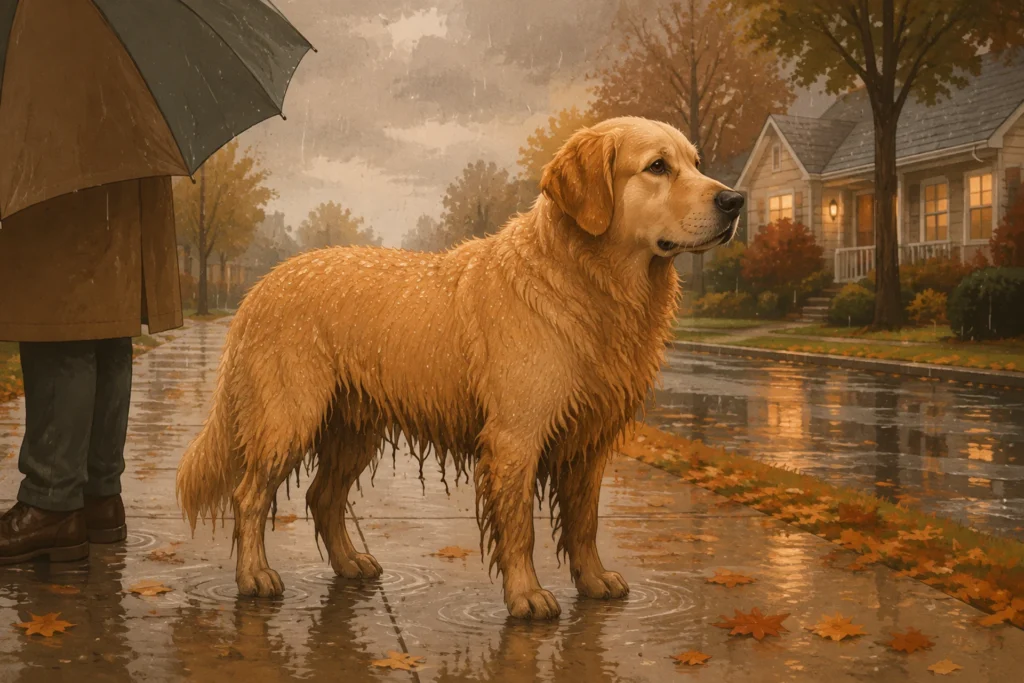
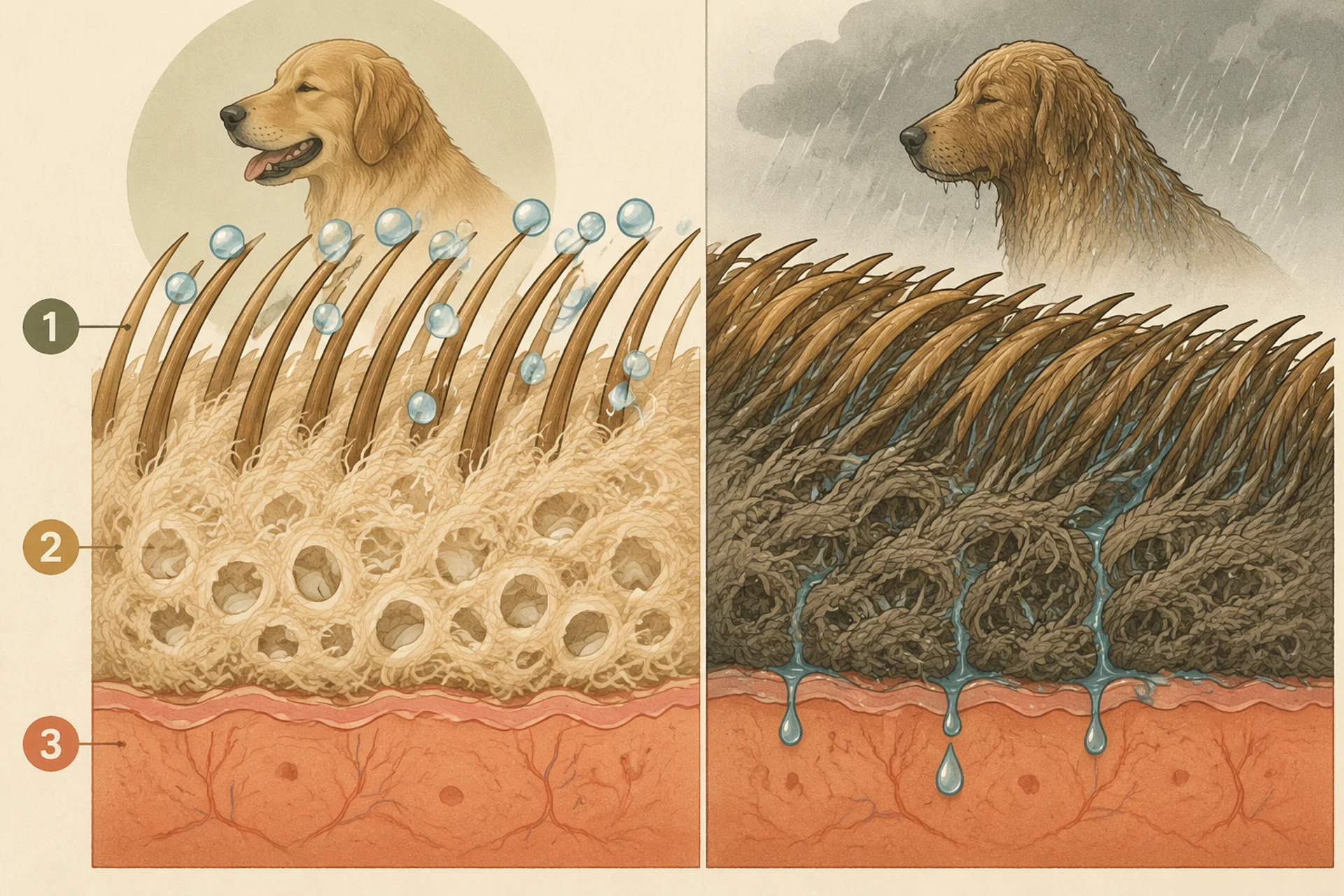
Where that argument stops working is the part nobody says out loud. The insulation is not built into the hair itself — it is built into the air the hair holds, and the Merck Veterinary Manual is explicit that “trapping air between secondary hairs conserves heat. This requires that the hairs be dry and waterproof.” Once rain gets past the guard hairs and floods the undercoat, a double coat is not a warm coat any more. It is a wet blanket.
So a raincoat is worth it for a smaller group than the ads suggest: small, short-haired, thin, very young or old dogs; long walks in cold, windy rain; and owners whose real problem is mud on the carpet. The rest of this page is how to tell which group your dog is in.
What a double coat is actually doing
A dog’s follicles are compound: Merck describes a “central hair surrounded by 3 to 15 smaller secondary hairs.” The central guard hairs are the coarse outer layer that sheds water. The secondary hairs are the soft undercoat, and they work the way a down jacket works — not by being warm themselves, but by holding still air against the skin.
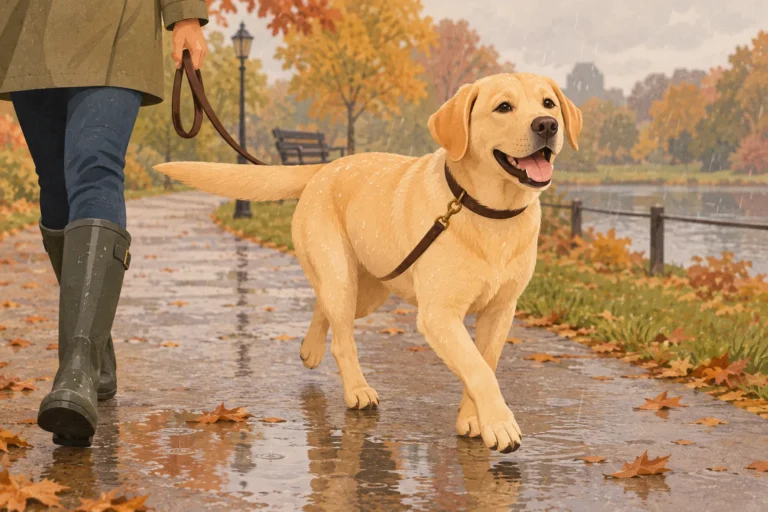
That is why the objection is half right. On a healthy dog with an intact coat, a short walk in drizzle barely reaches the undercoat. Water beads on the guard hairs, the dog shakes, and the insulating layer was never involved.
The three variables that decide it
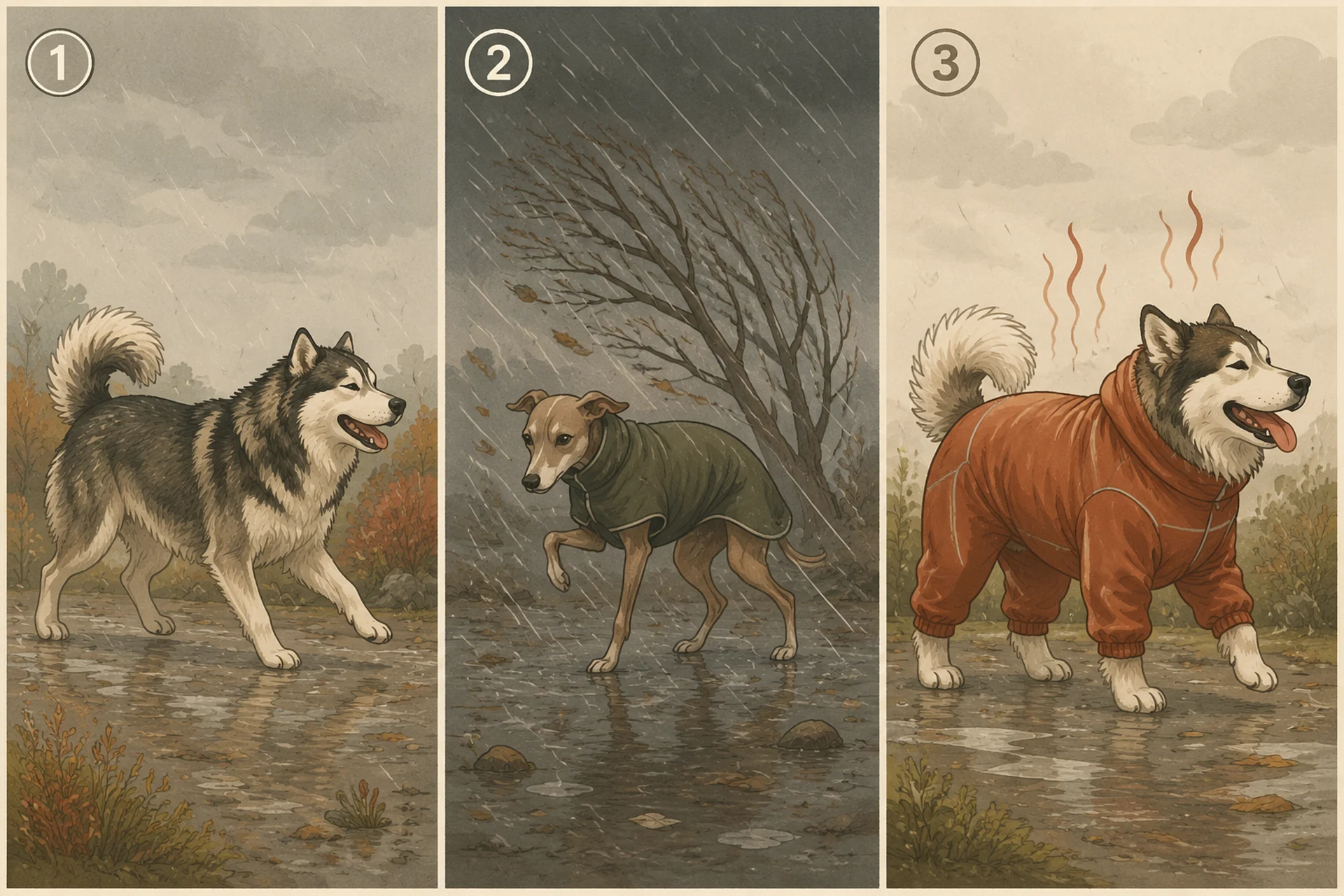
It is never just “is it raining.” Three things stack:
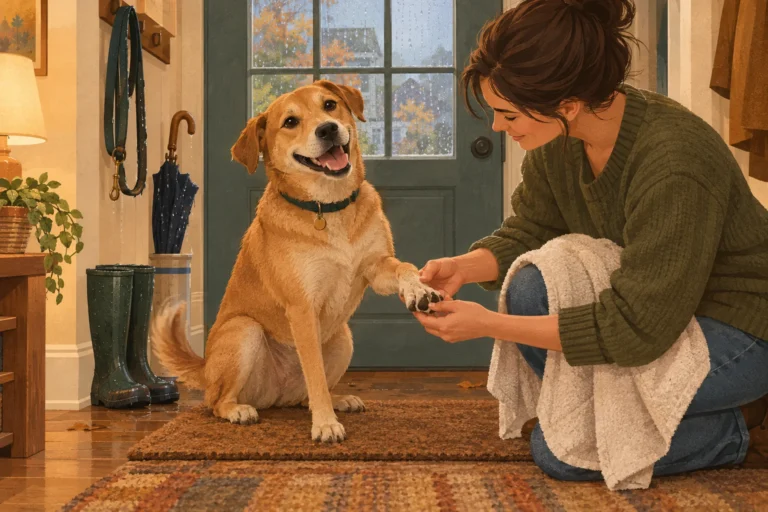
How soaked, and for how long. Fifteen minutes of drizzle is not two hours of steady rain. The short walk wets the guard hairs. The long one reaches the undercoat, and Merck’s point about trapped air needing dry hair is what decides whether the dog is still insulated. The ASPCA’s advice to towel dry your pet as soon as they come inside matters more the longer the walk was.
How cold, and how windy. A soaked coat at 55°F in still air is an inconvenience. The same coat near freezing in wind is a different problem — the AKC notes dogs are at risk of frostbite once the temperature falls below 32°F, and we go through where the lines sit for different dogs in what temperature a dog needs a coat. Merck’s emergency guidance makes the point from the other end: with a chilled animal, “if the animal is wet, dry it first” before you try to warm them.
Which dog. This is where the breed argument quietly collapses, because most of the dogs who genuinely need help are not double-coated at all. Cornell lists small dogs, who have “a harder time staying warm compared to larger breeds”; puppies, who “cannot properly regulate their body temperature and have very little body fat”; and older or underweight dogs, or those “with other medical conditions.” The ASPCA points the same way, suggesting a coat for short-haired dogs with “coverage from the base of the tail to the belly.” Notice who is missing from both lists: the healthy adult Husky. (If what you really want to know is whether a wet walk can make any dog ill, from a cough to a chill, that has its own answer in can dogs get sick from rain?)
| Situation | Does rain gear earn its place? | Why |
|---|---|---|
| Double-coated dog, mild drizzle, 20-minute walk | No | The undercoat never gets wet. Adding a layer solves nothing and adds heat. |
| Double-coated dog, hours in cold rain or sleet | Sometimes | Once the undercoat floods, the insulation is gone until it dries. |
| Short-haired, thin, small, senior, or puppy | Often | Less coat, less body fat, less margin — the group vets actually name. |
| Dog with a health condition affecting temperature or mobility | Ask your vet | Cornell flags medical conditions as their own risk factor. Not a website’s call. |
| Any dog, warm damp day, active walk | No — and it can hurt | See the overheating section below. |
Are dog raincoats worth it?
Put the table another way. A raincoat is worth buying when at least one of these is true, and usually not otherwise:
- The dog is in the group vets name. Small, short-haired, thin, a puppy, a senior, or a dog with a medical condition. Cornell says puppies “cannot properly regulate their body temperature,” and the AKC’s raincoat guide notes that senior dogs and many sighthounds have little fat to keep them warm.
- The rain is cold and the walk is long. Near freezing, in wind, for an hour or more.
- The dog won’t go out without it. If a layer is what gets a reluctant dog outside, it has done its job.
- The honest reason is cleanup. Long or feathered coats bring in a lot of water and mud. That’s a fine reason, as long as you don’t mistake it for a health need.
If none of those apply, you are buying an accessory, not protection. That’s allowed. Just don’t put it on a thick-coated dog on a warm, damp day, for the reason in the next section.
The risk of getting it wrong in the other direction
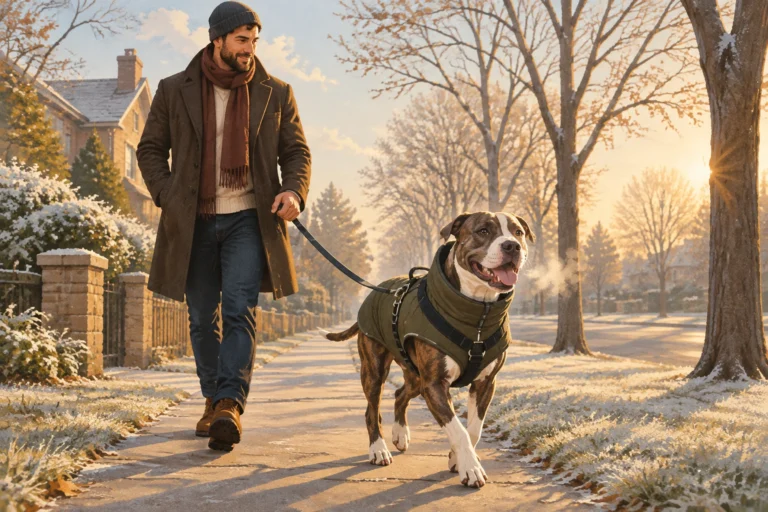
The usual objection to rain gear is that clothing on a dog is silly. The better one, raised less often, is that a full-coverage suit is a warm layer whether you meant it to be or not — and dogs cannot sweat their way out of it. Cornell is blunt: “Dogs only have sweat glands on their paws so their primary method of dissipating heat to cool themselves is through panting.” The same page puts thick or dark coats on the higher-risk list for overheating, alongside overweight and elderly dogs, dogs with heart or breathing conditions, and flat-faced breeds who “cannot pant as efficiently.”
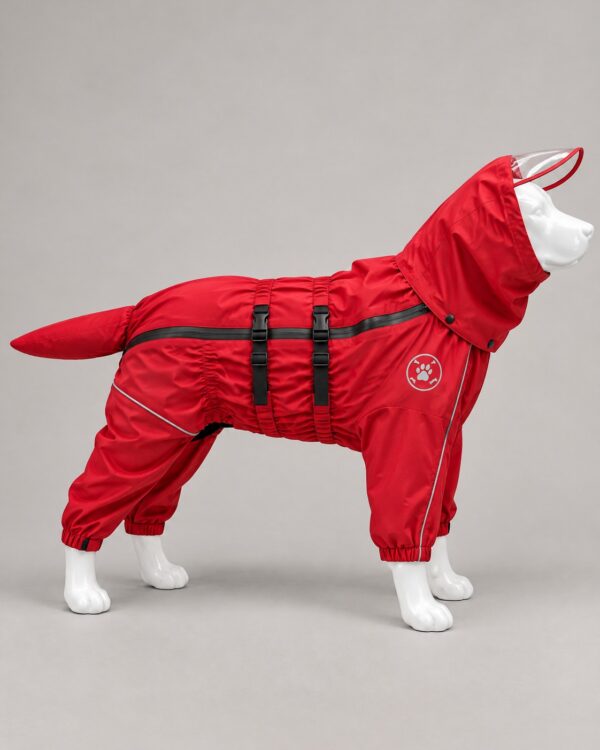
So a thick-coated, slightly heavy dog in a full body shell on a mild wet afternoon is carrying a real load. That is not an argument against rain gear — it is an argument for matching coverage to the day, which is the whole point of our guide to whether the legs need covering at all.
The reasons that have nothing to do with warmth
Plenty of people who use rain gear are not trying to keep a dog warm at all. Those reasons are worth naming honestly rather than dressing up as health claims — and if the objection you keep hearing is the blunter one, that dressing a dog is unkind full stop, we take that argument on directly in is it cruel to put clothes on a dog.
- Cleanup. A long-coated dog carries a startling amount of water and mud indoors. Covering the back and flanks is a laundry decision, not a medical one, and that is a perfectly good reason.
- Road chemicals in winter. Merck warns that “salt used to melt ice on walkways can poison dogs, who may lick it off their paws after a walk.” Gear does not replace the fix — the ASPCA’s instruction is to “wash and dry your pet’s feet and stomach” after every walk — but less grime on the belly is less grime to remove.
- The dog who refuses to go out. Some dogs plant themselves at the door in the rain. If a layer gets that dog outside for a proper walk, the layer did something real, whatever the coat underneath is capable of.
- Comfort, stated plainly. The AKC allows that even a Husky “who seemingly never gets soaked” may be more comfortable in water-resistant apparel. That is a comfort claim, not evidence the coat failed.
If you decide to use one
- Take it off indoors. ASPCA’s rule is to “towel dry your pet as soon as they come inside” — a damp layer left on works against you.
- Check underneath after the first few outings — armpits, chest, and anywhere a strap crosses.
- Watch the panting. Heavy panting, drooling and seeking shade are early signs on Cornell’s overheating list, and they arrive faster under a shell.
- Judge coverage by the day, not the product photo. Back-only on mild days, more on cold ones.
- Go by the size chart on the product page, not the breed name. Two Goldens can be twenty pounds apart.
- If your dog is old, arthritic, recovering, or on medication that affects temperature, ask your veterinarian first.
- Expect the first few attempts to go badly and plan for it — getting a dog used to wearing clothes is its own short project, and forcing it is the one approach that reliably makes it longer.
- If the actual problem is that your dog will not go outside at all once it is raining, the coat is the wrong lever — start with why a dog refuses to go potty in the rain, which is a documented barrier rather than stubbornness.
If the answer for your dog is yes
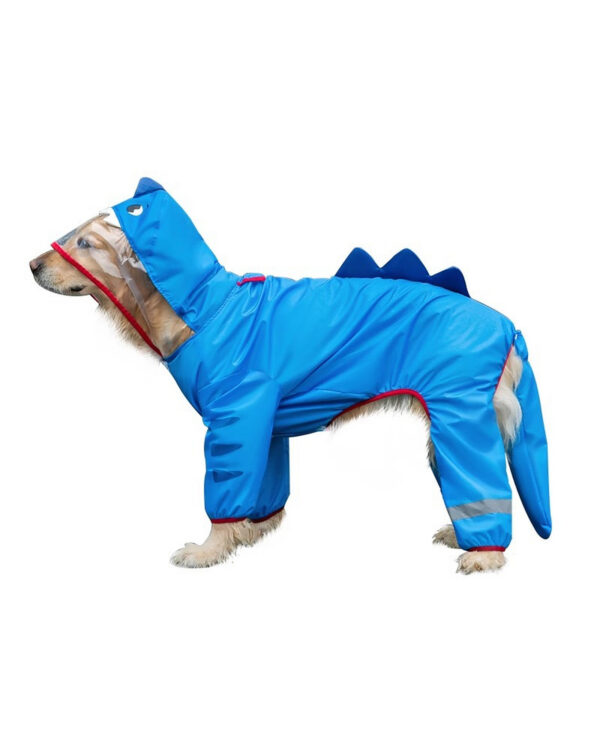
Our rain and protection shelf is sorted by coverage rather than by breed, which is the axis that actually matters here. For the sizing and opening questions that come up next, see the large-dog rain suit comparison and which harness opening works. If your dog is long rather than large, sizing is a different problem again — see why a standard coat stops halfway down a long back.
Double coats and rain: FAQ
Do Huskies need raincoats? Is the coat waterproof?
A healthy adult Husky on a normal walk doesn’t need one, and Cornell names Huskies and Malamutes among the dogs that tolerate cold best. The coat is water-resistant rather than waterproof. The outer guard hairs shed a lot of water, which is why a Husky can look dry after a short shower. But the insulating layer underneath depends on staying dry — Merck’s wording is that trapping air between the secondary hairs “requires that the hairs be dry and waterproof.” Long enough exposure gets through.
Do puppies need raincoats?
Puppies are the main exception to “most dogs don’t.” Cornell says puppies cannot properly regulate their body temperature and have very little body fat. A quick potty trip in the rain is fine. For longer walks in cold rain, keep them short or add a light layer, and dry the puppy as soon as you’re inside. If the problem is a puppy who won’t go out in the rain at all, see dog won’t go potty in the rain.
Golden Retrievers are water dogs. Doesn’t that settle it?
For swimming on a warm day, more or less — a healthy retriever going in and out of water in mild weather is doing what the coat is built for. Cold air, wind and hours of exposure are a different question, and so is an eleven-year-old retriever with stiff hips. The breed answers the average case, not your dog’s case. For a Golden, the wet part is usually the feathering on the legs and belly rather than the back; we go through that in what to look for in a Golden Retriever raincoat. A Labrador has no feathering, so the case for one is narrower still; see do Labradors need raincoats?
Can my dog get sick from being out in the rain?
Rain itself does not cause illness. Prolonged cold and wet is a genuine risk factor for hypothermia, and Merck notes that with a chilled animal you dry it first before warming it. If a dog is shivering, hunched, lifting paws or reluctant to keep walking — part of Cornell’s list of cold-stress signs — go home. Anything beyond that is a call to your vet, not a website.
Will a raincoat make my dog too hot?
It can, and this is the failure people underestimate. Dogs only sweat through their paws and cool mainly by panting, and Cornell already lists thick coats among the higher-risk factors for overheating. On a mild damp day with an active dog, less coverage is often the better call. We walked through the mechanism, the weather where it matters, and the check to run mid-walk in do dogs overheat in coats.
What about paws?
Paws are a separate decision from the body, and mostly a winter one. Cornell says you can train your dog to wear well-fitting booties, and either way to wipe or wash paws after a walk to remove salt, de-icers or snowballs. The ASPCA adds the stomach to that wash.
The coat objection is right about the mechanism and wrong about the edge cases.
A double coat insulates by trapping air, and that only works while it stays dry. Most walks never test it. Long exposure, cold, wind, a small or thin or old or unwell dog — those do. And the mistake in the other direction is just as real: a full shell on a mild day is a heat problem, not a rain solution.
Sources
- Merck Veterinary Manual — Structure of the Skin in Dogs (compound follicles, and why trapped air requires dry hairs) (checked 2026-10-24)
- Cornell University College of Veterinary Medicine, Riney Canine Health Center — Winter safety tips (checked 2026-10-24)
- Cornell University College of Veterinary Medicine, Riney Canine Health Center — Summer heat safety tips for dogs (checked 2026-10-24)
- Merck Veterinary Manual — Keeping Pets Safe During Cold Winter Months (checked 2026-10-24)
- Merck Veterinary Manual — What to Do in a Dog or Cat Emergency (hypothermia first aid) (checked 2026-10-24)
- ASPCA — Cold Weather Safety Tips (checked 2026-10-24)
- American Kennel Club — Can Dogs Get Frostbite? (checked 2026-10-24)
- American Kennel Club — Does Your Dog Need a Raincoat? (checked 2026-10-24)
Veterinary guidance is updated periodically. Confirm on the official pages, and talk to your own veterinarian about your own dog — nothing here is a diagnosis or a substitute for an exam.