No — and also sometimes yes. The garment is not what decides it. Two things do: whether the clothing is doing a job your dog cannot do without it, and whether your dog is telling you it is fine.
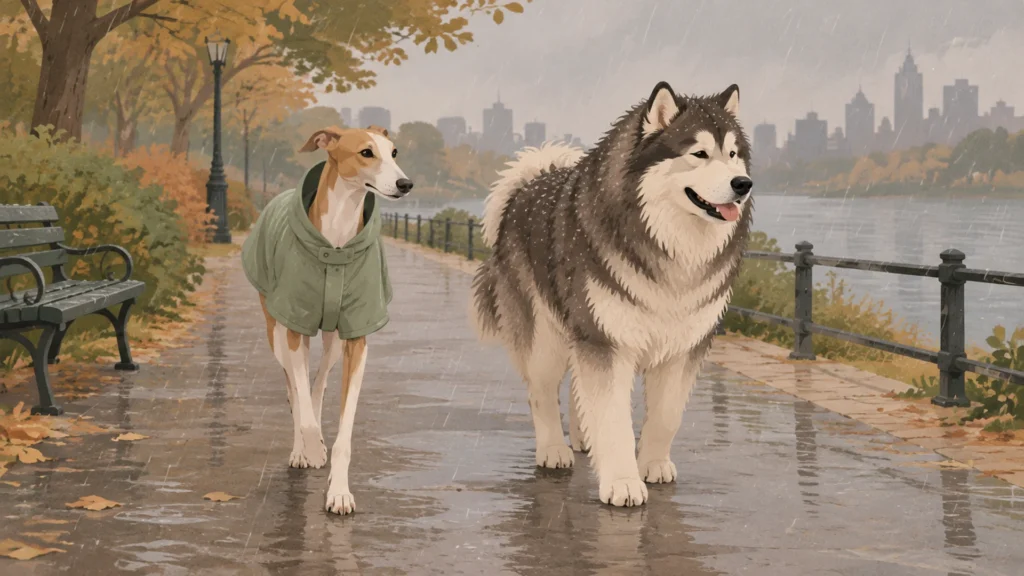
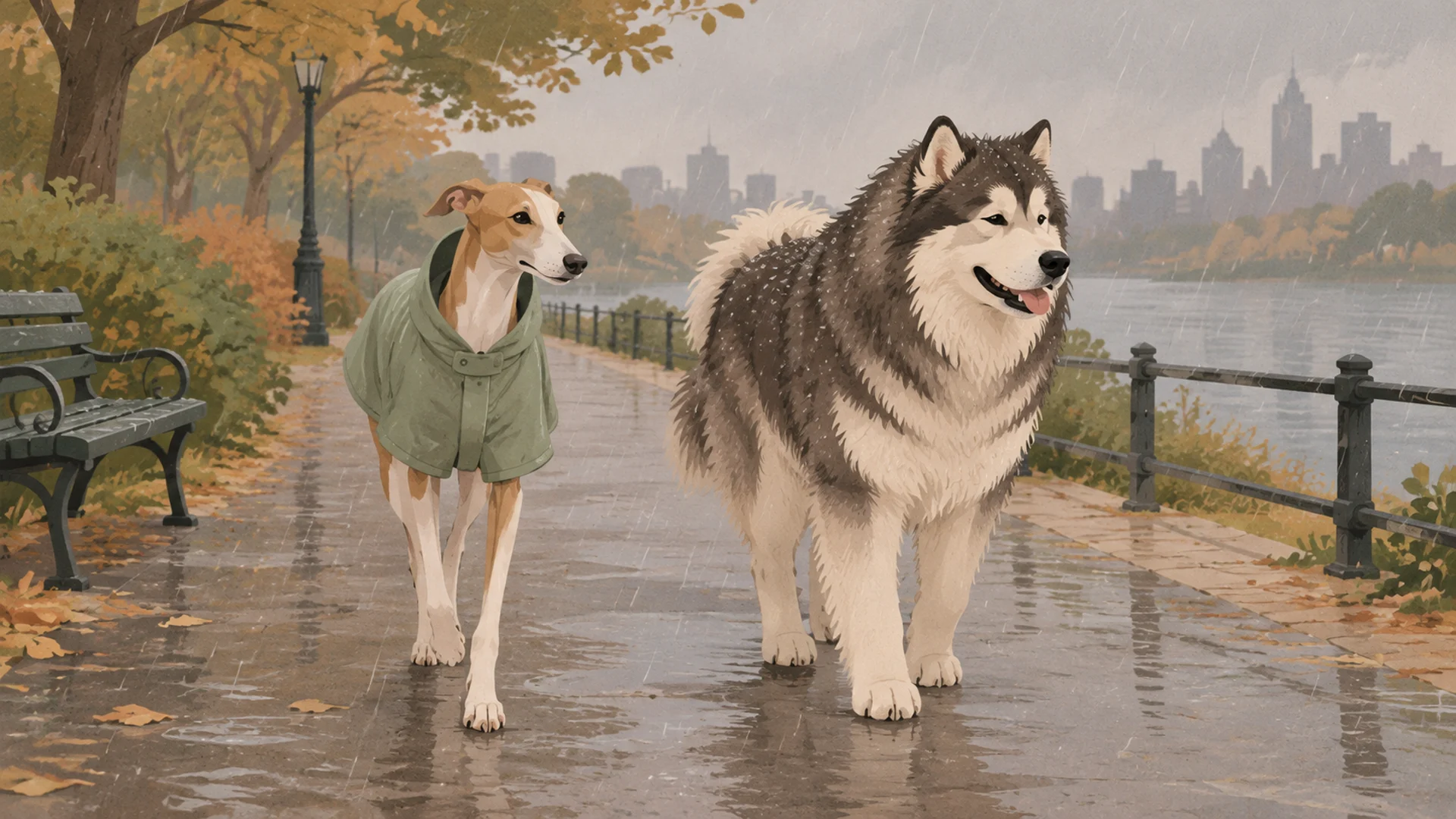
A coat on a whippet at freezing point is doing work. A costume on a malamute in a heated living room is doing none, and it costs the dog something. Between those two extremes sits almost every real decision, and the people who say “dogs already have coats” are right about a large share of them.
What follows is where the veterinary bodies land, which dogs they put on the list, and how to read the answer off your own dog rather than off the internet.
The half of the objection that is right
A dog’s coat is real insulation, and for a great many dogs on a great many days it is enough. Cornell’s Riney Canine Health Center puts cold tolerance down to age, size, nutritional status, health and coat thickness, and notes that thin-coated breeds simply will not handle cold as well as the thick double coats of huskies and malamutes. That is the same mechanism the objection is pointing at, and it is correct.
It follows that a healthy adult dog with a dense coat, in mild weather, on a short walk, gains nothing from a garment. Putting one on anyway is not neutral either — a coat is a layer between your dog and the only cooling system they have, which is a real cost with no matching benefit. We have written separately about what a coat actually costs a dog in warm weather, and it is the single most common way well-meant clothing goes wrong.
So: thick-coated, healthy, adult dog, unremarkable weather — they do not need it. That is not a grudging concession. It is most dogs, most days.
The half that is wrong: the dogs clothing is actually for
Where the blanket objection falls down is that the same veterinary bodies who explain how fur works also, in the same breath, tell you to put a coat on some dogs. The AVMA’s cold-weather guidance is explicit: if a dog has a short coat or seems bothered by the cold, consider a sweater or dog coat — and keep more than one, because a wet coat “can actually make your dog colder.” The same page dismantles the fur argument directly, calling the belief that dogs resist cold better than people because of their fur “untrue.”
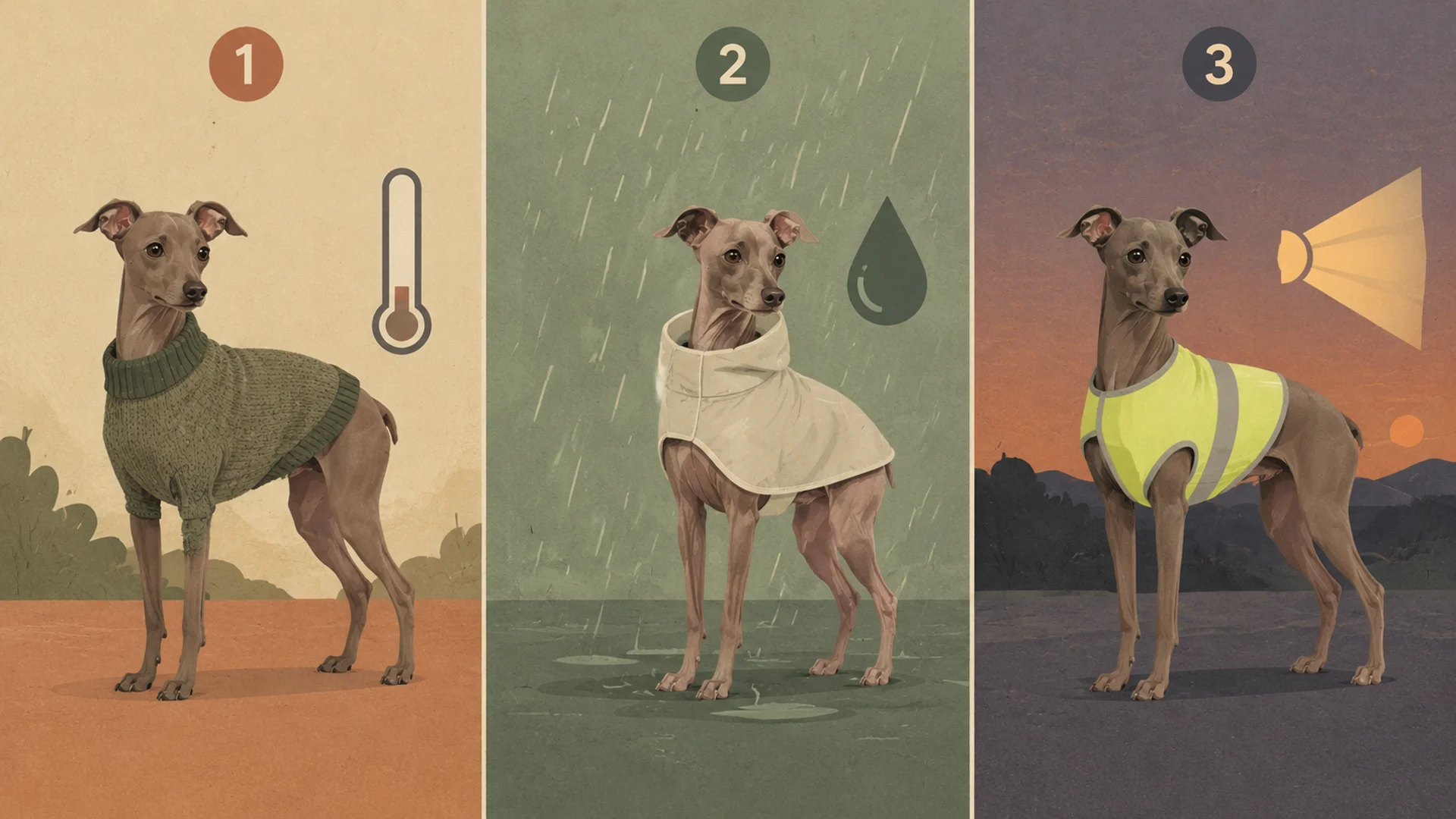
The list of dogs it names is specific rather than sentimental. Short-haired dogs feel cold sooner because there is less between them and the air. Short-legged dogs get cold faster because their bellies are closer to the ground they are walking on. Dogs with diabetes, heart disease, kidney disease or a hormonal imbalance such as Cushing’s may regulate temperature poorly, and so may the very young and the very old.
The ASPCA’s winter guidance lands in the same place from the grooming side: never shave a dog down to the skin in winter, and for a short-haired dog, consider a coat or sweater that covers from the base of the tail to the belly. Cornell adds a practical reason the fashion argument misses entirely — a coat covering most of the body helps stop snowballs building up on the belly and chest of dogs who ride low to the ground.
Warmth is not the only job. The AKC’s guidance on rain gear notes that hairless and nearly hairless dogs have a skin problem rather than a warmth one: trapped moisture encourages bacterial and fungal growth and the dermatitis that follows. Cornell also recommends something reflective plus a flashlight for the dark morning and evening walks that arrive with the shorter days — a high-visibility vest is clothing too, and its job is you not being hit by a car.
“My husky doesn’t need that” — why breed is the weakest argument here
The AVMA does say thick-coated breeds tend to be more cold-tolerant. It then says, in the same sentence, that they are still at risk. And the Merck Veterinary Manual makes the more uncomfortable point about arguing from breed at all: there is as much variation between individuals within a breed as between breeds, and reasoning from breed stereotype leads to inaccurate assessments of the individual animal in front of you. Your neighbour’s husky is not a specification sheet for yours.
There is a narrower version of the objection that deserves more respect: a water-repellent double coat genuinely does keep a dog dry in rain, which is why a rain suit on a retriever is usually pointless. We looked at exactly where that stops being true in what a husky’s coat actually does in the rain — the short version is that the mechanism depends on the outer hairs staying dry, and there are conditions where they do not.
Job or costume: a two-question test
| The situation | Is the garment doing work? | What matters most |
|---|---|---|
| Thin-coated, small, senior or underweight dog, near freezing | Yes — this is the case the veterinary guidance names | Coverage to the belly, and a dry one each time you go out |
| Thick double-coated adult dog, mild dry day | No | Leave it off; the coat is a cost with nothing on the other side |
| Hairless or nearly hairless dog in persistent rain | Yes — skin, not warmth, is the reason | Dry the dog properly afterwards regardless |
| Dark-morning and after-work walks on roads | Yes — visibility to drivers | Reflective on the dog, and a light in your hand |
| Salted or gritted pavement | Sometimes — boots, if they genuinely fit | Fit first; wipe paws and belly after the walk either way |
| Costume for a photo, indoors, comfortable room | No | Only your dog’s tolerance decides; keep it short and let them opt out |
| Post-surgery or a coat suggested for a medical reason | That is a veterinary decision, not an internet one | Follow the instructions you were given |
How to tell tolerating from distressed
This is the part that actually answers the cruelty question, and it is not answered by the garment at all. Dogs communicate continuously through body posture, facial expression, tail and ear position and vocalisation, and Merck notes that people can learn to read it with study. Nobody reads it by accident, though, which is why so many of these arguments happen.
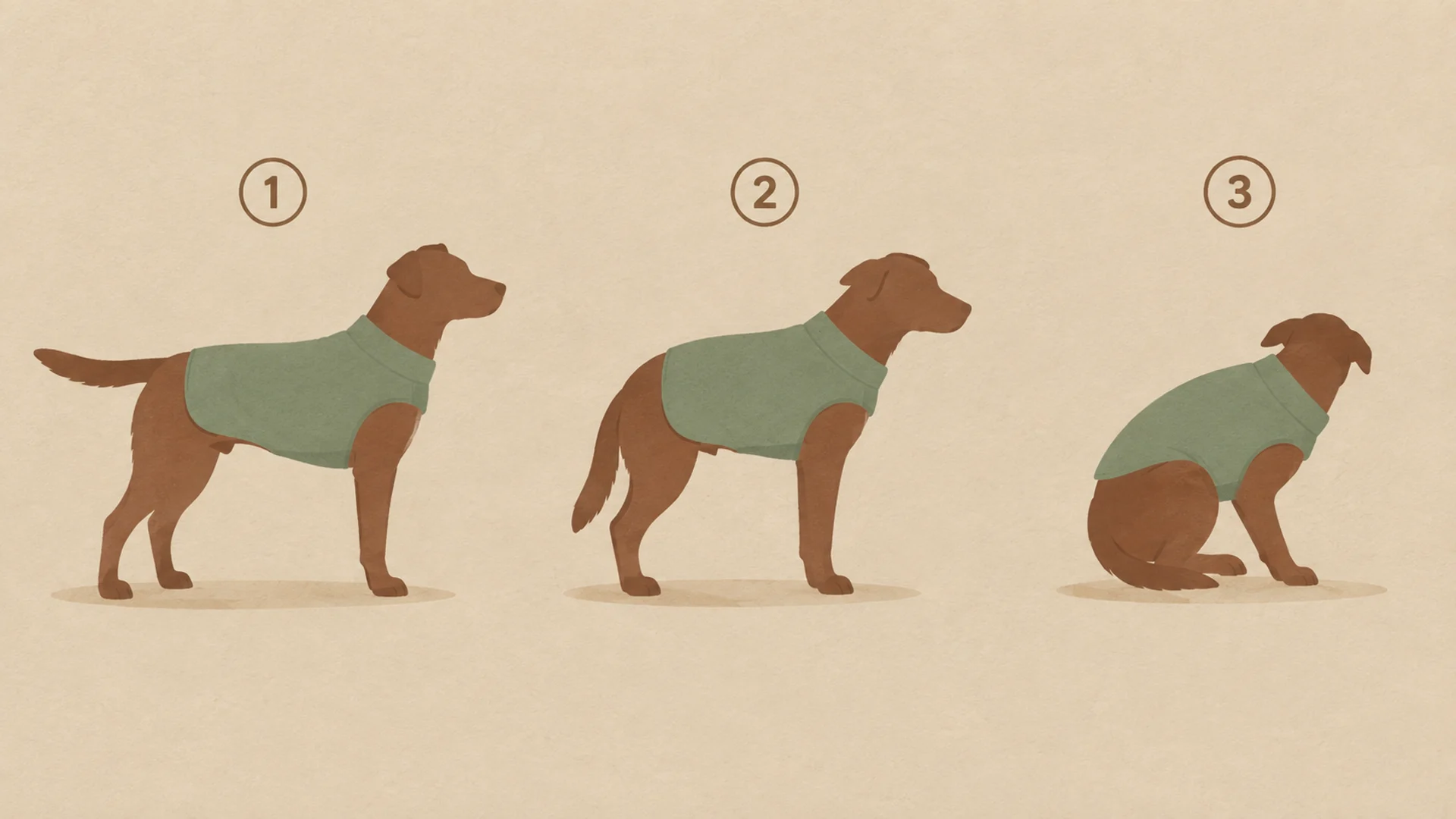
Cornell’s list of signs a dog is not coping with cold doubles as a general discomfort list, and it is a good one to hold in your head: shivering, whining, a tucked tail or hunched posture, lifting paws off the ground, reluctance to walk, and suddenly anxious behaviour. Any of those appearing after the coat goes on is information.
Stillness is the ambiguous one. A dog who freezes when dressed may be settled, or may have decided nothing they do changes anything, and for the first few seconds those look alike. The rest of the body separates them: a settled dog stays loose, moves off when you move, and takes food normally.
The four-minute check, every time
- Before it goes on: can you slide two fingers under the straps? The AKC’s two-finger test is the simplest fit rule there is — tighter than that restricts movement, and much looser lets weather straight in.
- The first thirty seconds: does your dog move off normally, or stop moving? Walking away in the coat is a yes. Standing rooted is not.
- Two minutes in: take food. A dog who will not eat a treat they would normally take is telling you something the coat is doing.
- Ten minutes in, outdoors: check for panting that is out of proportion to the effort and the weather. Warmth is the failure mode people notice last.
- Next time: bring the coat out and put it on the floor. A dog who walks towards it has answered the question better than any article can.
The three ways clothing genuinely does harm
Heat. Panting is most of how a dog sheds heat, and a garment adds a layer on a system with very little margin. This is the one that turns a harmless costume into a real problem, especially on active dogs and in humid weather.
Fit. Too tight restricts movement and, as the AKC notes, teaches the dog to refuse it next time; too loose lets weather through and catches on things. Weight is a poor guide — a 30 lb bulldog and a 30 lb hound are not the same shape, which is why we recommend measuring rather than trusting the size letter.
Force. This is the one the objectors are really reacting to, and they have a point. Merck is blunt that positive punishment and negative reinforcement do not teach a dog what to do instead — they break down trust and raise the risk of fear, anxiety and aggression. Holding a dog still and zipping something onto them is precisely that transaction. The alternative, introducing the thing gradually at a level that does not frighten and pairing it with something good, is the same method the manual recommends for any frightening stimulus, and we walk through it step by step in getting a dog used to a coat.
When the answer is genuinely no
Some dogs will not accept clothing, and a few of those are dogs who need it. There is no clever fix, but there are alternatives: shorten the walk, which the AVMA says you will probably need to do in very cold weather anyway; towel the dog dry the moment you are back in, as the ASPCA recommends whatever they were wearing; wipe feet, legs and belly to get de-icing chemicals off before they are licked; move exercise indoors on the worst days.
And if a dog who used to tolerate a coat has started refusing it, treat that as a change rather than an opinion. Pain is a common reason a dog stops accepting handling, and it is worth mentioning to your vet before you decide it is stubbornness.
Is it cruel to put clothes on a dog?
Not in itself. It becomes unkind in three specific ways: when the garment adds heat the dog cannot shed, when it fits badly enough to restrict movement or rub, and when it is forced onto a dog who is clearly saying no. A well-fitting coat with a job to do, on a dog who moves normally in it, is in the same category as a harness.
Do dogs actually hate wearing clothes?
Some do, some do not, and breed predicts it poorly — the Merck Veterinary Manual notes there is as much behavioural variation within a breed as between breeds. Judge the dog in front of you: loose movement, normal interest in food and willingly approaching the coat next time are the signals that matter.
Which dogs actually need a coat?
The AVMA names short-coated dogs, short-legged dogs whose bellies contact the cold ground, the very young and very old, and dogs with conditions such as diabetes, heart or kidney disease or Cushing’s that make temperature regulation harder. Cornell adds small dogs, thin coats and underweight dogs. If your dog is on that list and seems bothered by the cold, a coat is not a costume.
My double-coated dog gets soaked — should I use a raincoat?
Usually not, but not never. The repellency depends on the outer hairs staying dry, and prolonged heavy rain, a working-wet dog, or a dog who is already cold changes the picture. Warmth and dryness are separate questions, and thick-coated dogs rarely have a warmth problem in rain.
Are dog costumes bad?
They are the clearest case of clothing without a job, so the decision rests entirely on your dog’s tolerance and on heat. Indoors, briefly, with a dog who stays loose and keeps taking treats, there is no welfare problem. A dog who freezes, or one panting inside a full-body costume, is a different situation, and the answer is to take it off.
How long can a dog wear a coat?
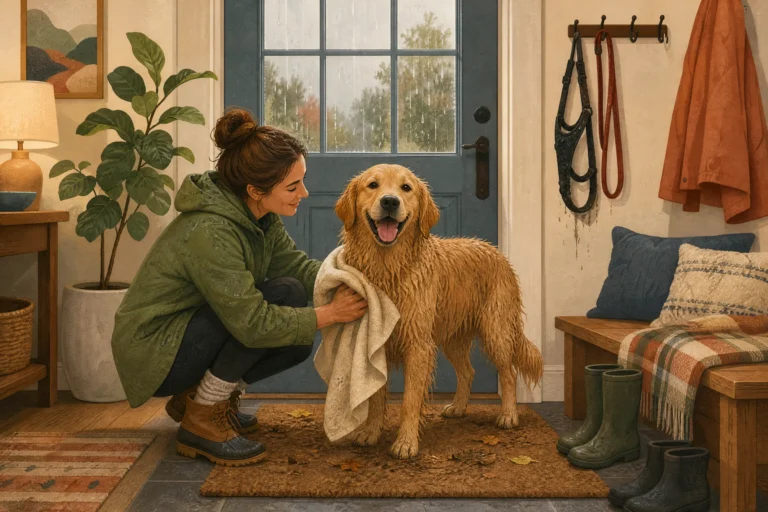
There is no published number, and be wary of anyone who gives you one — it depends on the dog, the garment and the weather. Practically: as long as the job lasts. Coats come off indoors, and a wet one comes off immediately, because the AVMA warns a wet coat can leave a dog colder than none at all.
Name the job, then let the dog vote.
If you cannot say what the garment is doing that the dog’s own coat is not, the objectors are right and it should come off. If you can — warmth for a thin-coated or elderly dog, dry skin for a hairless one, visibility on a dark road — then the only remaining question is whether this particular dog is comfortable in it, and that one your dog will answer within a minute if you watch.
Sources
- American Veterinary Medical Association — Cold weather animal safety (checked 2026-09-10)
- ASPCA — Cold Weather Safety Tips (checked 2026-09-10)
- Cornell Riney Canine Health Center — Winter safety tips (checked 2026-09-10)
- Merck Veterinary Manual — Social Behavior of Dogs (checked 2026-09-10)
- American Kennel Club — Raincoats for Dogs (checked 2026-09-10)
This guide is general information, not veterinary advice. If your dog is refusing handling they previously accepted, struggling with cold, or has a skin or breathing problem, that belongs with the veterinarian who can examine them.