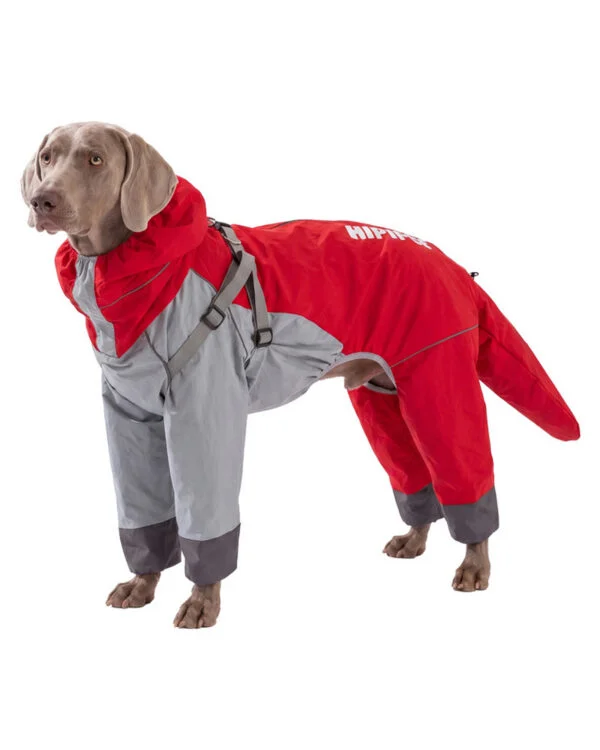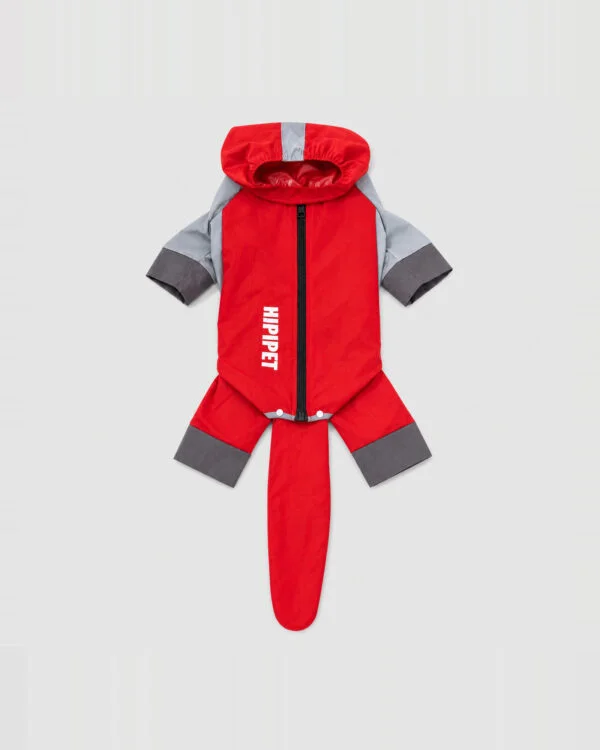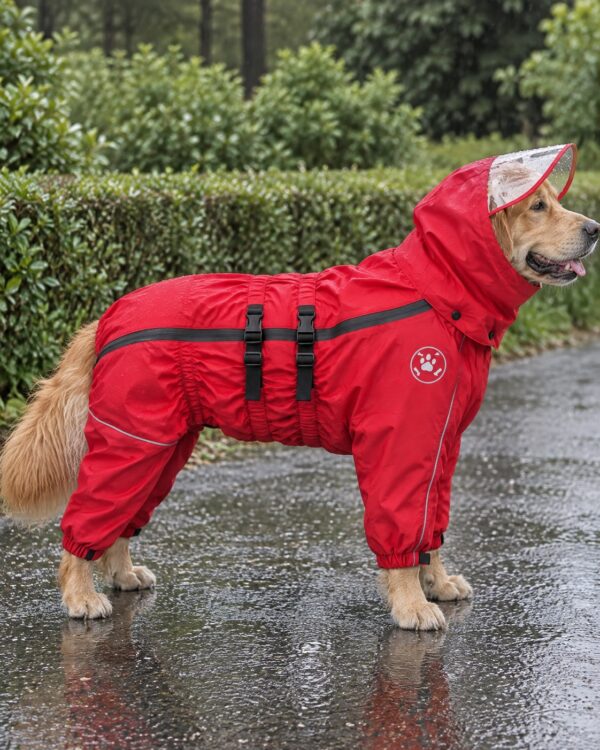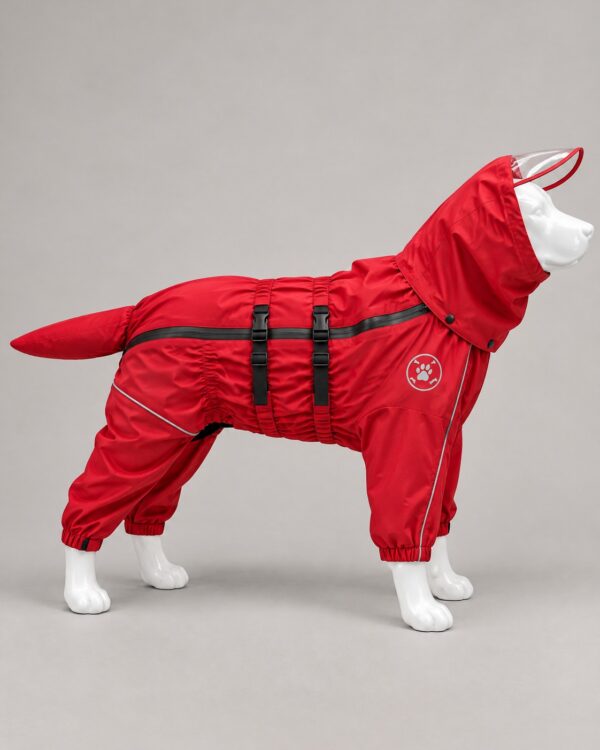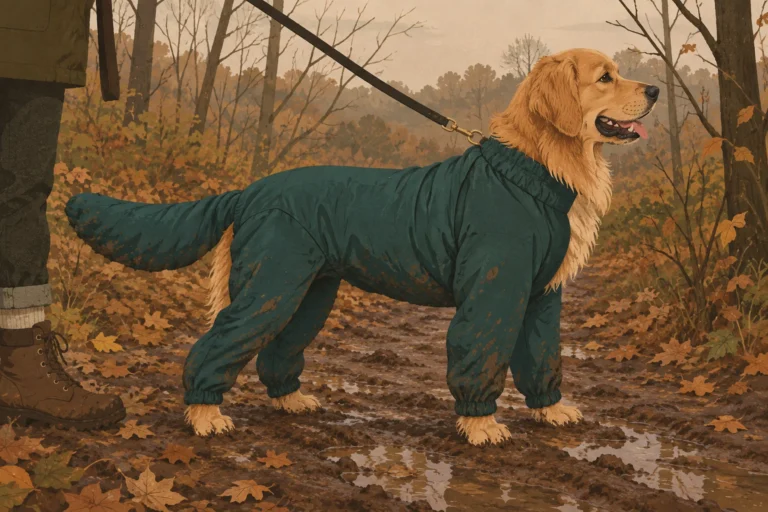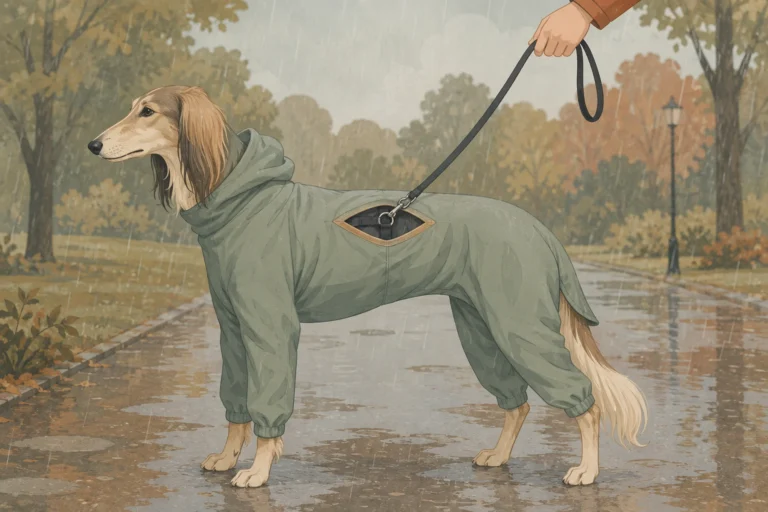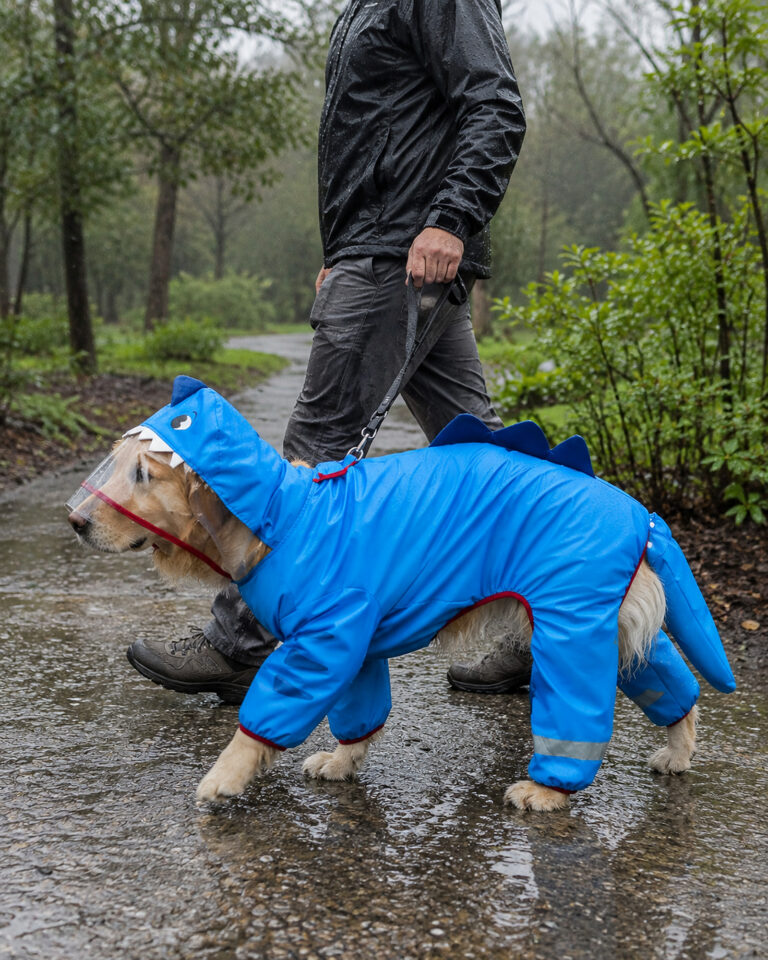
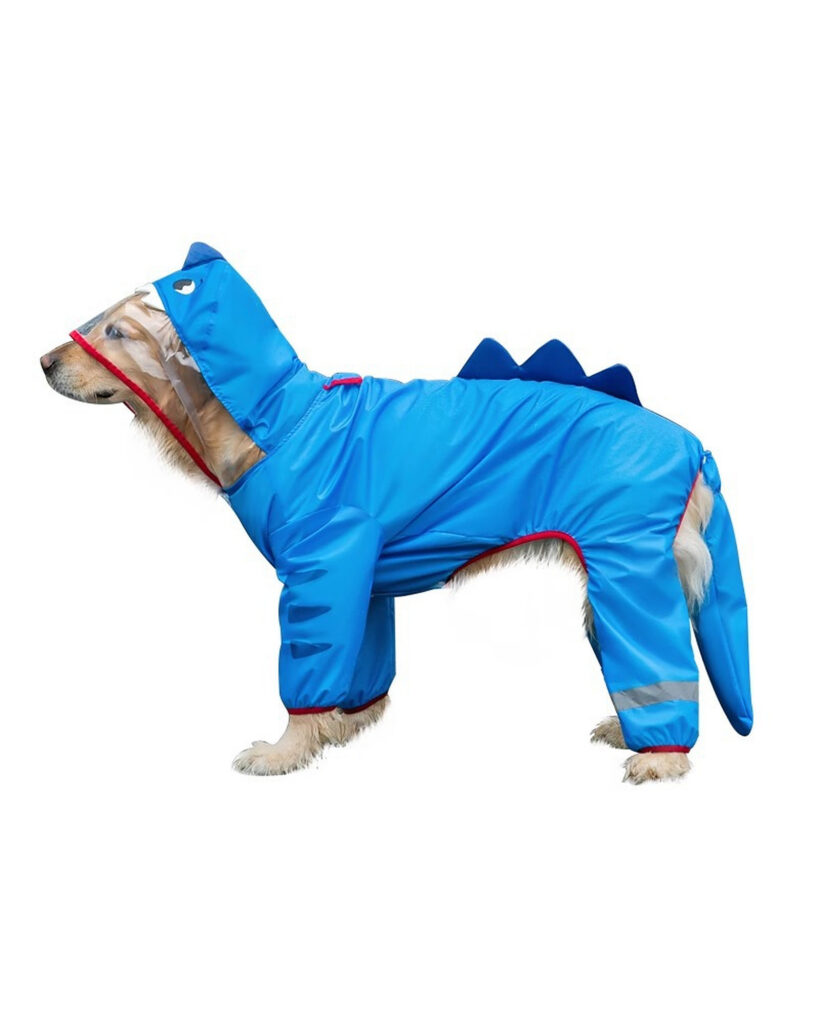
A rain suit for a big dog comes down to three things. How it goes on, because a 90 lb dog doesn’t politely step into anything. Where the leash clips. And whether the size chart reaches your dog by measurement, not by weight. Every suit on this page covers all four legs, so those three questions are what separate them.
Measure before you choose. The AKC’s raincoat guide says to measure the neck, chest and stomach, and the length from neck to the base of the tail, and warns that buying by weight “doesn’t always work”. A suit that’s too tight restricts movement. One that’s too loose lets rain seep in.
One thing up front: all the suits compared here are TuckTrail’s own. This is our lineup laid out by how each one actually works, so you can pick the right one or rule us out quickly. Details below come from each product page; sizes live in each product’s size chart, and the charts don’t interchange.
The five large-dog suits at a glance
| Suit | Getting it on | Leash | Tail | Hood |
|---|---|---|---|---|
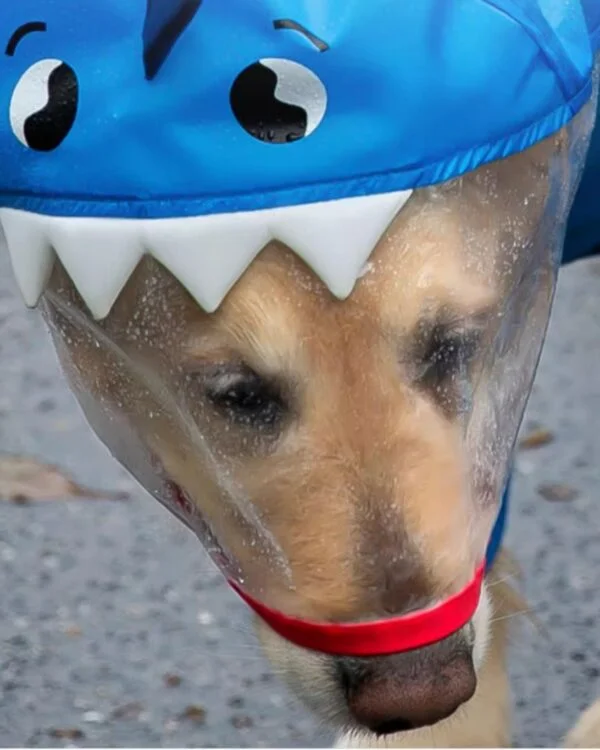
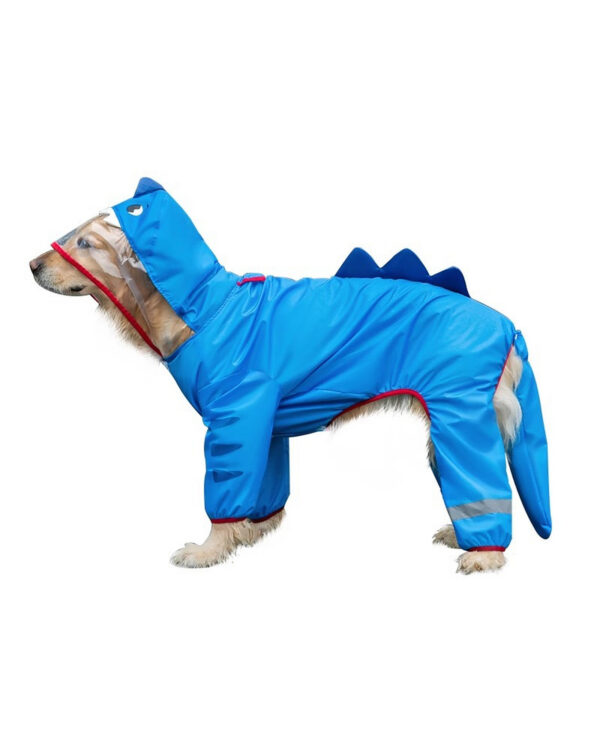
| Shark-Hood | Snap buttons along the side and belly | Opening through the back panel to the collar or harness underneath | Separate sleeve that snaps on | Shark-fin hood with a clear visor over the face |
| Zip-Front | Front placket zip, plus an adjustable neck strap | Opening under the back flap to the collar underneath | No tail sleeve listed | Collar that pulls up as a hood; face left open |
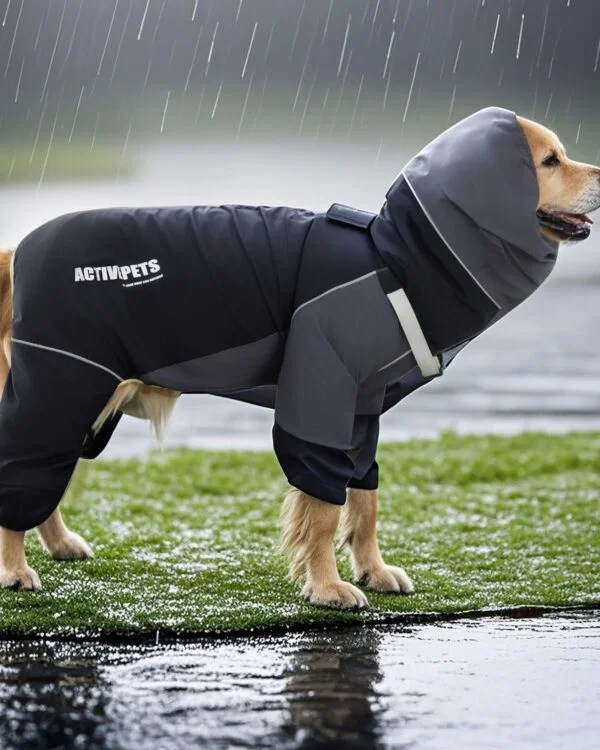
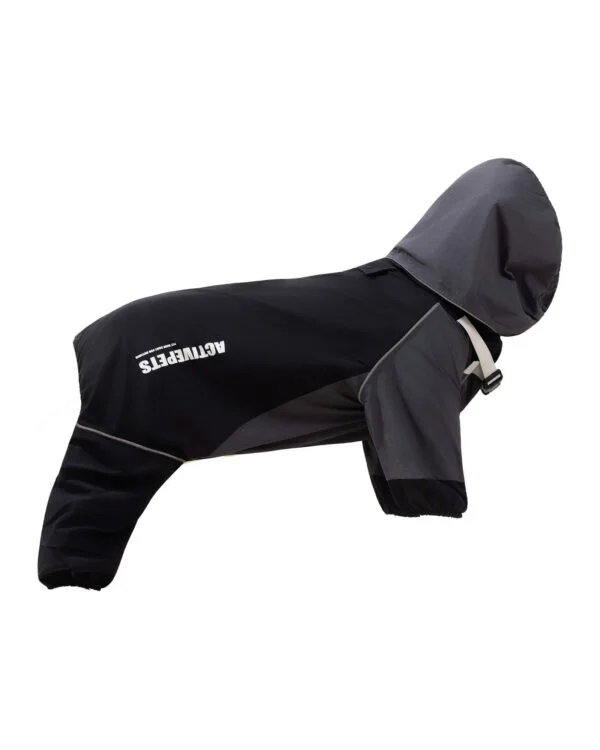
| Back-Zip | Full-length back zip, plus a chest strap with one buckle | Metal ring on the chest strap | Sleeve that snaps off | Pulls up over the head; face left open |
| Stretch-Fit Seam-Sealed | Side zip plus two buckles on the flank | Reinforced opening on the spine to the collar underneath | “+ tail” sizes add a snap-on sleeve; standard sizes leave the tail out | Hood and cape lift off at the snaps |
| Boy-or-Girl Cut | Full-length back zip with a snap-down shoulder cape | Port at the back of the collar to the collar underneath | Separate tail sleeve | Stiff clear brim held by a drawcord |
Does a big dog need a full rain suit at all?
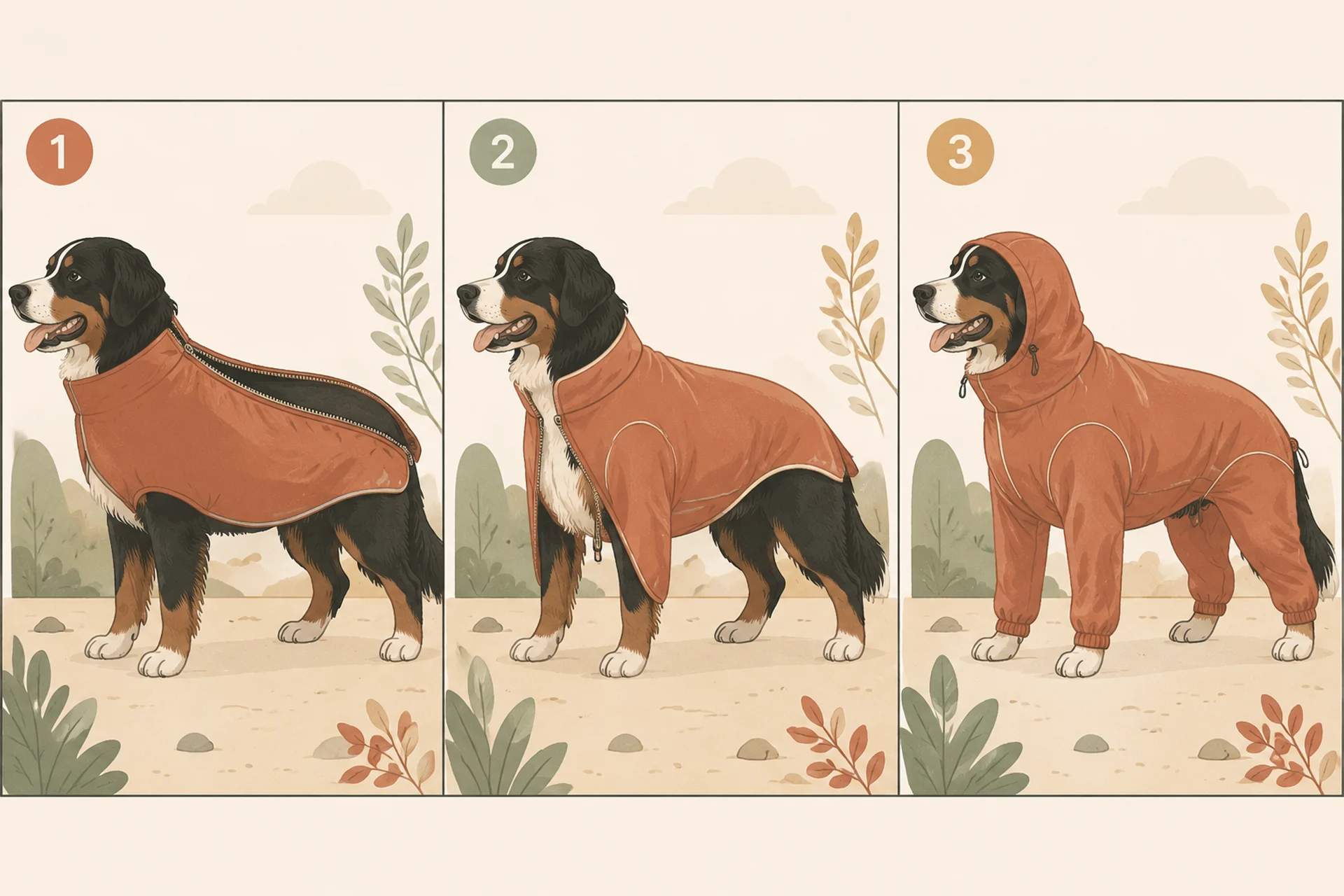
Not always, and it’s worth deciding before you compare closures. Most searches for a rain jacket for large dogs or raincoats for big dogs end up at one of two shapes: a back-only jacket or a four-leg suit. A back-only rain jacket keeps the spine dry and leaves the legs and belly in the splash zone. On a large dog that’s a lot of wet dog to towel off. The ASPCA’s winter guidance is to wash and dry your dog’s feet and stomach after each walk, which tells you where the dirt and road chemicals end up. A four-leg suit is how you shorten that routine. A jacket is the better pick if your dog mostly needs the rain off its back, objects to having its legs handled, or you want something that goes on in seconds; our belly-coverage guide shows exactly what each shape leaves wet.
Wet also matters more as it gets colder. The AKC’s chief veterinarian notes that when a dog is wet or damp, the extremities are more vulnerable to frostbite, and the Merck Veterinary Manual says frostbite is more likely in wet or windy conditions. In mild rain, a fit, thick-coated dog mostly needs a towel. In cold, wet, windy weather, staying dry underneath counts for more. If your dog is double-coated, start with whether double-coated dogs need a raincoat at all; for many of them the honest answer is no.
Pick by what actually matters to you
Your dog is genuinely huge
The Boy-or-Girl Cut has the biggest size run we make, and the Stretch-Fit Seam-Sealed suit is next. Compare your dog’s chest and back length to each chart rather than going by weight. If your dog runs past the top of every chart, that’s a known gap in the market rather than a fault of your dog. Our guide to dog coats for giant breeds covers what to do about it.
Your dog is between sizes
The Stretch-Fit Seam-Sealed suit has half-step “Plus” sizes in its run. Its chart also lists the length of each leg sleeve, so you can check that the cuffs will land above the paw rather than drag. If your dog’s measurements keep landing between two sizes on other charts, start there.
You dress the dog alone
A back zip means reaching over a large, damp, unimpressed dog. The Zip-Front moves the zip to the chest so you can work from the front, then set the fit with the neck strap. If your dog stands calmly, the Shark-Hood’s snap buttons are the gentlest option for a dog that hates the sound or tug of a zip.
You want to keep your own leash setup
Four of the five let the leash pass through the shell to what your dog already wears: the Shark-Hood (to a collar or harness), and the Zip-Front, Stretch-Fit Seam-Sealed and Boy-or-Girl Cut (to the collar). The Back-Zip instead puts a metal ring on its own chest strap. That’s simpler, but the pull lands on the suit, not your harness, and the product page itself says the ring is a convenience, not a harness replacement. On a strong dog the difference matters more than it sounds; our harness-hole guide breaks down the four things sellers call a “harness hole”.
The rain is serious, not decorative
These are water-repellent shells for real walks in steady rain, not dive suits. Every one of their product pages says the same thing: in prolonged downpours, some moisture can eventually work through seams and openings. The Stretch-Fit Seam-Sealed suit is the one with heat-taped seams rather than stitched ones, and seams are where water usually gets in on long wet outings. If sustained rain is your main problem, it’s the honest first pick. We don’t publish waterproof ratings for these suits.
The tail question
Covered tails split dogs: some tolerate a sleeve, many hate it. The Back-Zip and Shark-Hood both have tail sleeves that snap off, so you can try it and remove it. The Stretch-Fit Seam-Sealed suit makes it a choice at checkout: “+ tail” sizes come with a snap-on sleeve, and standard sizes leave the tail out.
Your dog fights the hood
The hood is the part most likely to be the reason a dog objects. It does have a purpose: the AKC says a detachable hood can help keep water out of a dog’s ears and prevent ear infections, and floppy ears trap moisture. But a hood your dog won’t wear protects nothing. On the Stretch-Fit Seam-Sealed suit the hood and shoulder cape come off at the snaps. On the Zip-Front and Back-Zip the hood can be worn down as a collar. We go further in hood or no hood.
Two more suits that reach large dogs
Not every “large” dog needs one of the big-dog suits above. The Full-Cover Four-Leg Dog Raincoat has a two-way back zip that leaves a port for a leash or harness clip, a tail panel, reflective piping and a machine-washable build. It suits dogs on the smaller side of large; check its size guide, and note that its page says to size up if your dog measures near the top of a size. The lighter All-Leg Rain Shield is an open-back suit with built-in paw covers, adjustable harness straps and a leash ring. It trades a heavier shell for a light, water-resistant layer on damp days.
Before you buy: measure, then check the fit
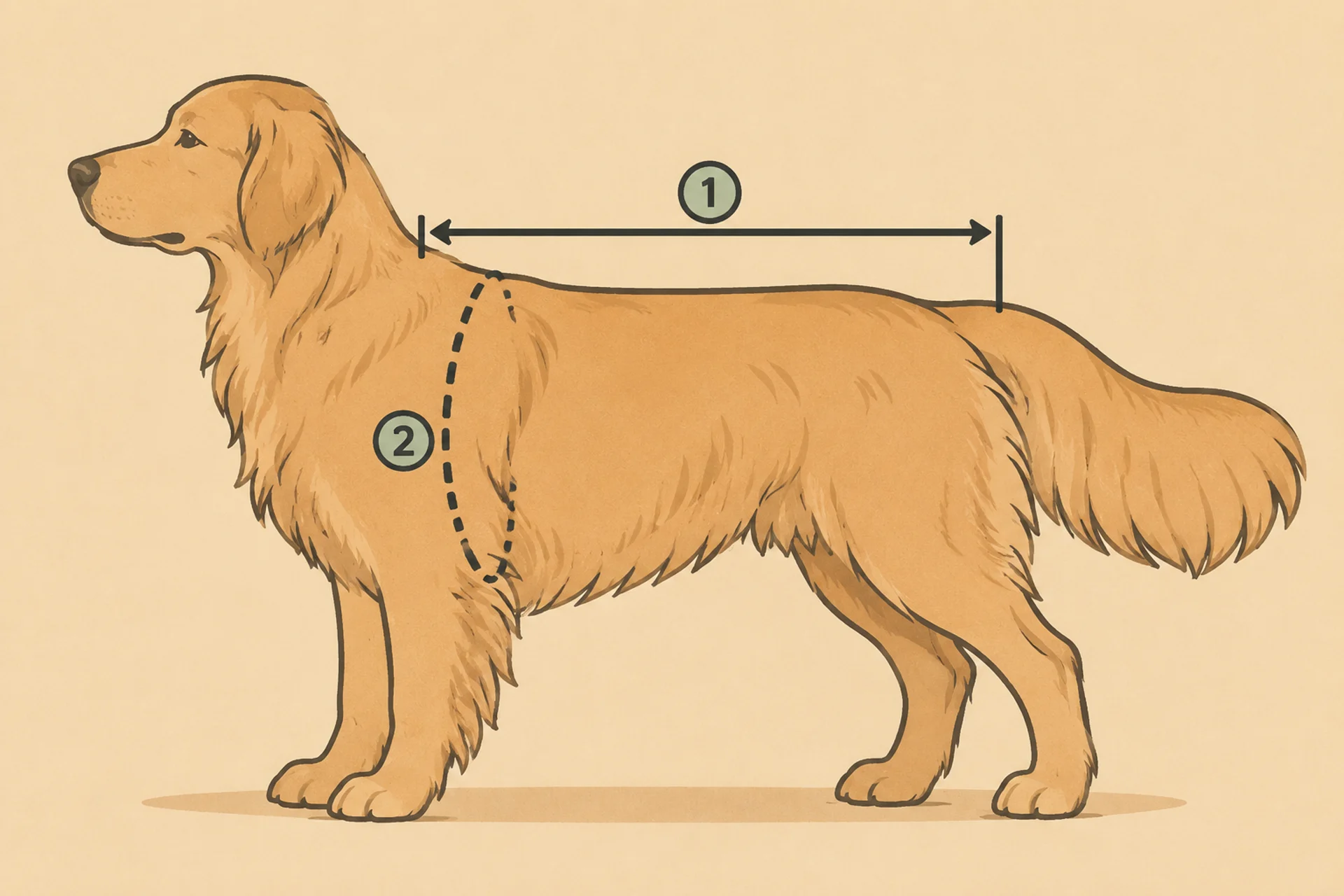
Measure back length (base of the neck to the base of the tail, with your dog standing) and chest girth (widest point behind the front legs). The AKC also suggests measuring the neck and stomach. Then read the size chart on the product page you’re considering. The rule: when the two main measurements point at different sizes, follow the chest. A suit that’s long in the back just looks baggy. A suit that’s tight in the chest restricts the front legs, and the walk ends early. The AKC’s point about weight applies twice over to big dogs: its own example is that a 30-pound French Bulldog and a 30-pound Basset Hound measure very differently.
When the suit arrives, do the AKC’s two-finger test: you should be able to slide two fingers under the straps, and if three or more fit, it’s too loose. Walk your dog around indoors and watch the front legs and the relief opening. If you’re not sure how to take either measurement, our guide to measuring your dog for clothes walks through both. If your dog wears a harness, decide the leash question before the size question. And if you’re still deciding whether the legs need covering at all, our legs-and-paws guide maps what each coverage shape leaves wet.
After the walk: the part a suit doesn’t cover
Most of these suits stop at a cuff just above the paw, so the feet still come home wet. That matters more than it seems. The AKC warns that moisture trapped between the toe pads can increase the likelihood of yeast infections, and the ASPCA recommends checking for cracks in paw pads or redness between the toes after winter walks. If you do find redness that doesn’t settle, see what red skin between the toes can mean. Towel the paws, dry between the toes, and hang the suit to dry away from direct heat. Once the sidewalks are being salted, the paws need their own plan; see whether your dog needs boots in winter.
Large-dog rain suit FAQ
What size rain suit does my large dog need?
Measure back length and chest girth (the AKC adds neck and stomach), then use the size chart on that specific product page. Each suit here has a different chart, and the same dog can be a different label in each. When the two main measurements disagree, size to the chest.
Should I get a rain jacket or a rain suit for a big dog?
A rain jacket covers the back and leaves the legs and belly to get wet; a rain suit adds leg sleeves and belly coverage. On a big dog that walks through puddles and mud, a suit saves the most towelling. A jacket is quicker to put on and easier for dogs that dislike having their legs handled. Either way, size it from your dog’s measurements and the product page’s chart.
Can I choose a large dog’s rain suit by weight?
Use weight only as a starting point. The AKC says buying dog clothes by weight doesn’t always work, because two dogs of the same weight can have very different chests and backs. A tape measure and the product’s size chart are more reliable.
Can my dog wear a harness under a rain suit?
Under the Shark-Hood, yes: its opening lets the clip reach a collar or harness underneath. The Zip-Front, Stretch-Fit Seam-Sealed and Boy-or-Girl Cut pass the leash through to the collar. The Back-Zip takes the opposite approach, with a leash ring on its own chest strap. Our harness-hole guide shows how to tell the constructions apart.
Are these rain suits fully waterproof?
No, and we won’t claim it. They’re water-repellent shells built for real walks in steady rain, not for submersion. In a long soaking downpour some moisture can work through seams and openings. The Stretch-Fit Seam-Sealed suit adds heat-taped seams, which is the feature that matters most in sustained rain.
What happens when my dog needs to pee in a rain suit?
It depends on the belly cut. The Boy-or-Girl Cut comes in two versions so the opening sits where your dog needs it. On other suits, check where the belly opening falls before you buy. Our guide to belly coverage on rain suits explains what to look for.
Why a full four-leg suit instead of a regular raincoat?
A back-only raincoat keeps the spine dry and leaves the legs, belly and everything the road throws upward soaked. Four-leg coverage turns a rainy walk from a towel event into a shake-and-done. The legs-and-paws guide shows what each shape leaves exposed.
Choose by how it goes on and where the leash clips. Size it with a tape.
All five suits cover four legs. What separates them is the closure, the leash setup, the tail and the hood. Decide those first, then measure your dog’s chest and back and read that product’s own chart. Keep the paw towel by the door either way.
Sources
- American Kennel Club — Does Your Dog Need a Raincoat? (checked 2026-10-25)
- American Kennel Club — Can Dogs Get Frostbite? (checked 2026-10-04)
- American Kennel Club — Choosing the Right Dog Boots or Shoes for Your Dog (checked 2026-10-25)
- ASPCA — Cold Weather Safety Tips (checked 2026-10-25)
- Merck Veterinary Manual — Keeping Pets Safe During Cold Winter Months (checked 2026-10-04)
Product details come from each product page and can change. Always check the current size chart and description before you buy.