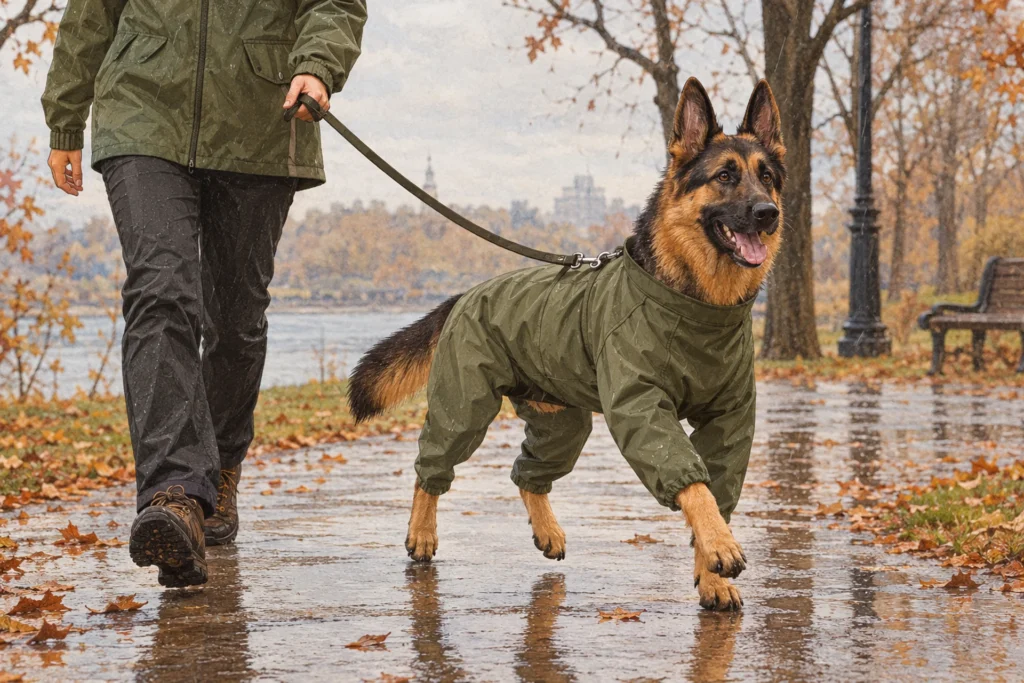
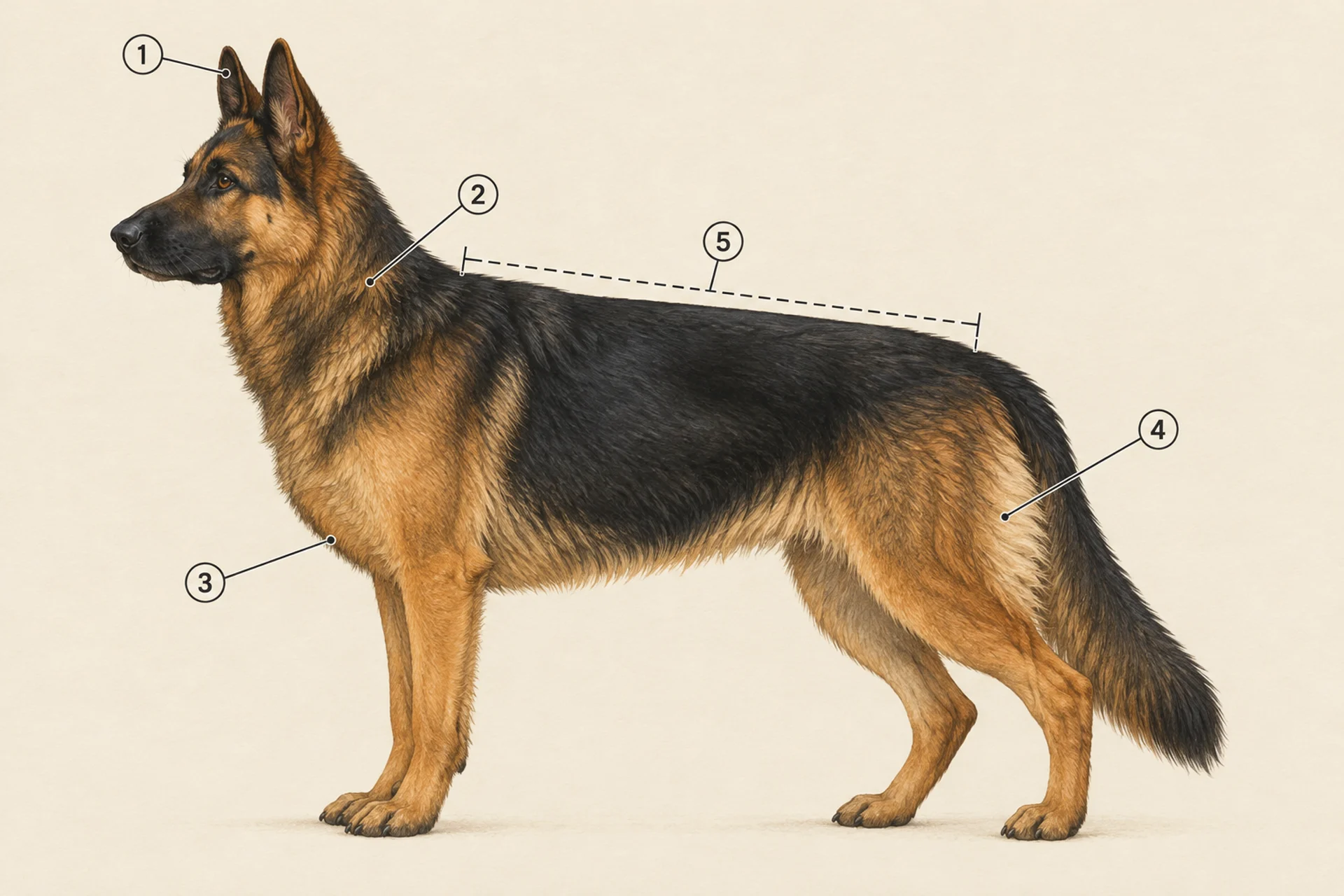
A German Shepherd’s coat handles a short shower well, but it is not a waterproof coat, and nothing official says it is. The AKC breed standard asks for a double coat of medium length with an outer coat “as dense as possible, hair straight, harsh and lying close to the body.” That is a good rain-shedding design. But the standard never calls it water repellent, and once a long, steady rain soaks through to the undercoat, the coat stops doing its main job. The Merck Veterinary Manual explains that a dog’s coat keeps heat in by trapping air between the secondary hairs, which “requires that the hairs be dry”.
So most healthy adult Shepherds don’t need a raincoat for a quick walk. A raincoat helps on long walks in steady rain, on muddy trails, for older Shepherds, and for anyone tired of drying a big double coat every evening. If you buy one, the Shepherd’s body shape matters more than the brand: it’s a long dog with a deep chest and ears that stand up, and many raincoats are cut for none of those.
Do German Shepherds have waterproof coats?
Not in the way people usually mean. It helps to compare the breed standards. The Golden Retriever standard actually uses the words “water repellent.” The German Shepherd standard doesn’t. It describes a coat built to be dense and close-lying, and it lists a “soft, silky, too long outer coat” and an “open coat” as faults. A tight, harsh outer coat sheds a passing shower well. That’s why a Shepherd can come in from a five-minute walk looking almost dry.
A long, steady rain is different. Water gets through the outer coat in the end, and the undercoat under it is thick. The AKC’s grooming article for the breed quotes a breeder who calls the double coat an insulator that keeps the dog cool in summer and warm in winter. That insulation depends on the coat staying dry, which brings us back to the Merck point above. A Shepherd that’s soaked through on a cold evening is losing more heat than a Shepherd in dry cold. And the thicker the undercoat, the more water there is to dry once you’re home.
Long-coated Shepherds are their own case. The standard counts a too-long outer coat as a fault, but plenty of pet Shepherds have one. A longer, softer coat traps more water and mud than the tight coat the standard describes. If your dog is one of them, assume it gets wetter than the standard suggests.
A common objection: “they’re working dogs, they don’t need clothes”
This one is mostly right. A fit adult Shepherd on an ordinary walk in light rain doesn’t need anything. Cornell’s veterinary college notes that short and thinly coated breeds will not tolerate the cold as well as thick, double-coats. A Shepherd has the thick double coat in that sentence. For the general version of this argument, read do double-coated dogs need raincoats.
What the objection misses is that “doesn’t need it to be safe” and “is better off with it” are two different questions. The same Cornell page says older animals, underweight animals and those with other medical conditions may have difficulty staying warm, and that dogs with arthritis often struggle in cold weather. A ten-year-old Shepherd with stiff hips on a cold, wet November evening isn’t the working dog in that argument. The AKC’s own raincoat guide goes further than we would. It says that even a dog with a thick coat is better kept protected in rainy weather. We’d call that optional for a healthy adult and a good idea for a senior.
When a raincoat earns its place on a Shepherd
| Situation | Does the coat cope? | Raincoat? |
|---|---|---|
| Short walk, light rain, healthy adult | Yes; the outer coat sheds it | Not needed |
| Long walk or hike in steady rain | Rain works through to the undercoat | Helpful, especially in cold weather |
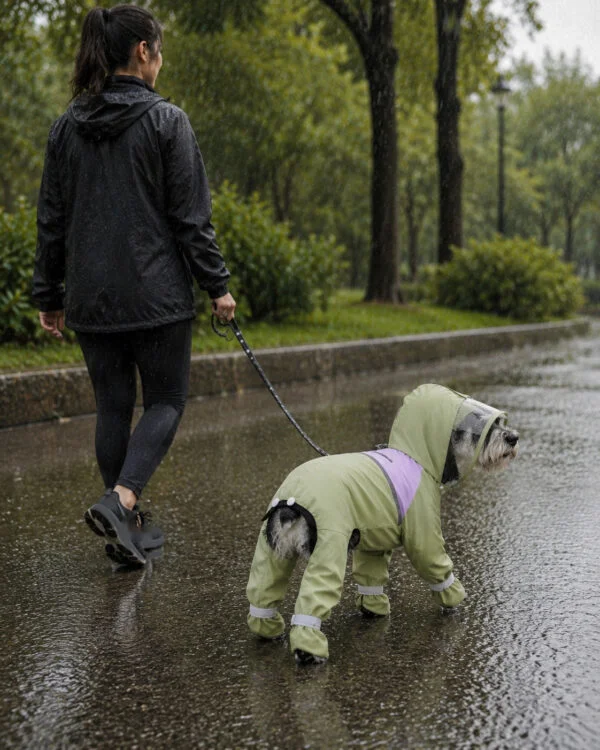
| Wet grass, mud, slush | Legs, belly and back of the thighs get filthy | Four-leg suit saves the cleanup |
| Senior, underweight, arthritic or unwell | Harder to stay warm, per Cornell | Yes, and dry the dog well afterwards |
| Long-coated Shepherd | Holds more water and mud than a standard coat | More often worth it |
| Swimming, playing in a lake | Gets soaked whatever it wears | No; dry the dog afterwards |
The bath argument
One reason Shepherd owners in particular end up buying a suit is bath day. In the AKC grooming article, a breeder says that for a dog that isn’t being shown, once or twice a year is sufficient, and that the more people bathe them, the more skin issues the dogs tend to have. The same article says a bath is called for when a dog rolls in mud or gets really dirty. In a wet fall that can be every week. A suit that keeps the mud off the belly and legs means you can rinse and towel the legs instead of washing the whole dog. Don’t shave the coat to make cleanup easier. The same breeders advise against it, and the ASPCA says never to shave a dog down to the skin in winter.
Shedding season is rain season
Merck notes that dogs normally shed in early spring and early fall. For a Shepherd, the fall shed often lands in the same weeks as the fall rain. Loose undercoat holds water and mats when it’s wet. Brush before a rainy walk during a heavy shed, not just after it. The AKC grooming article suggests brushing every other day, and daily during heavy shedding.
Why ordinary raincoats fit Shepherds badly
Most dog raincoats are sized by weight or back length, and a Shepherd’s shape catches both out. The standard says the breed is longer than tall, with an ideal proportion of 10 to 8½, measured from the breastbone to the back of the pelvis. It says the chest is deep, with the breastbone reaching down to the elbows. And it calls the Shepherd a trotting dog, built for a long stride with the elbows moving back freely. Each of those has a fitting consequence.
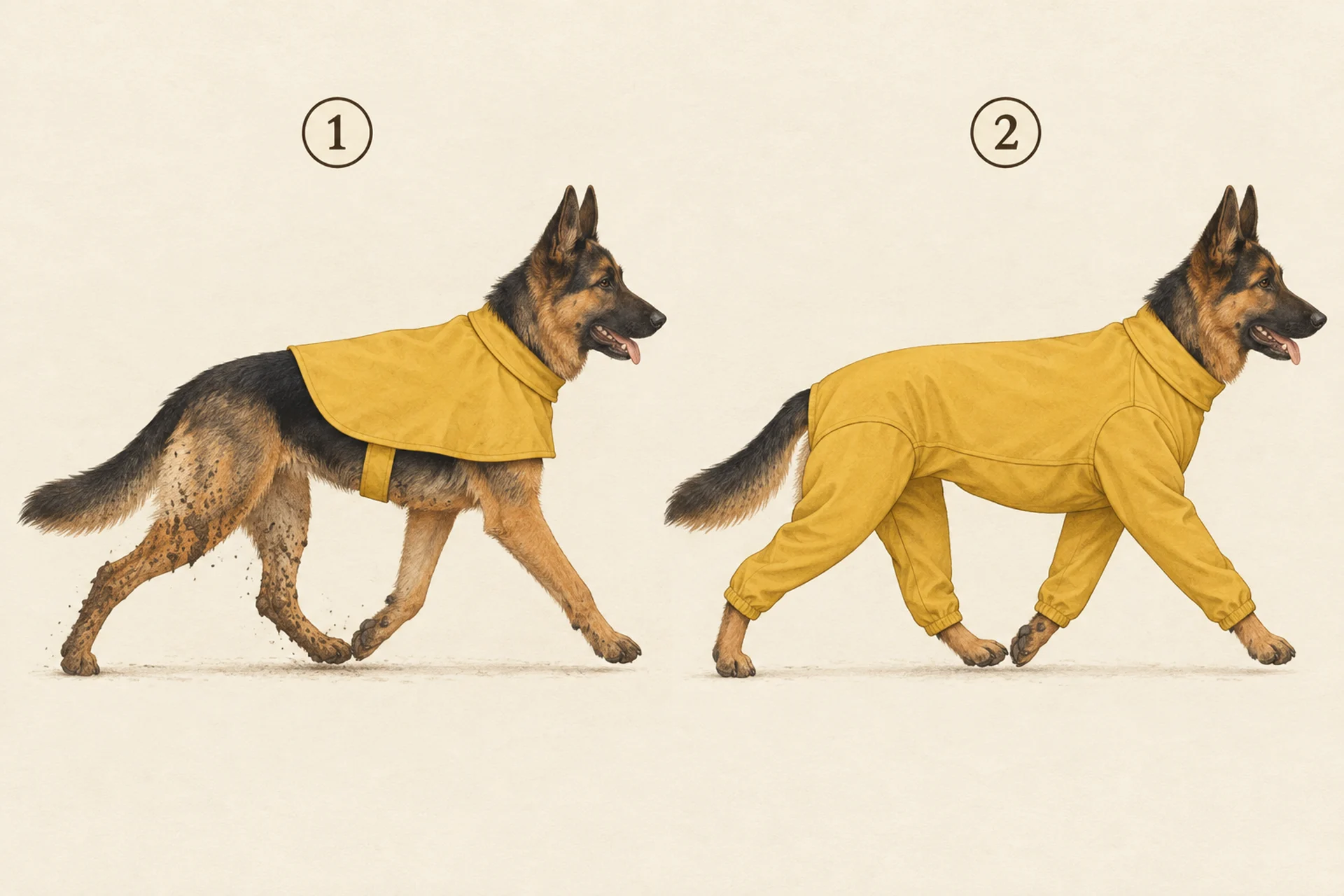
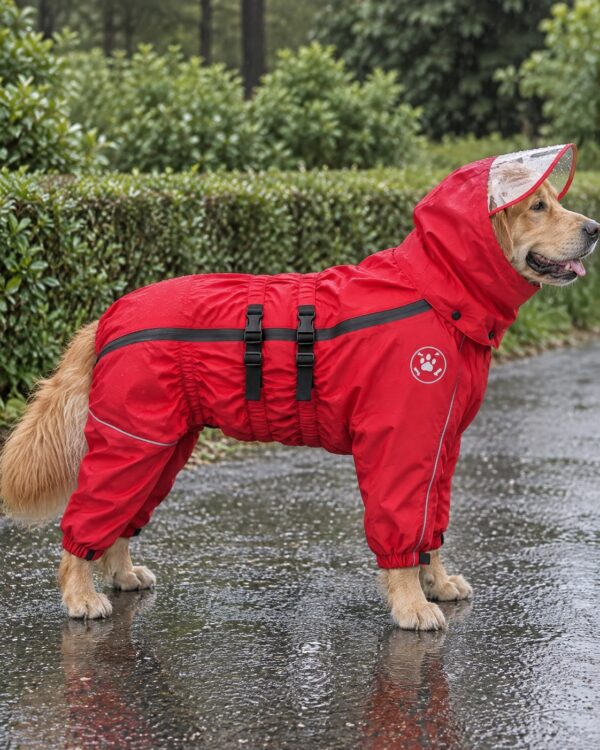
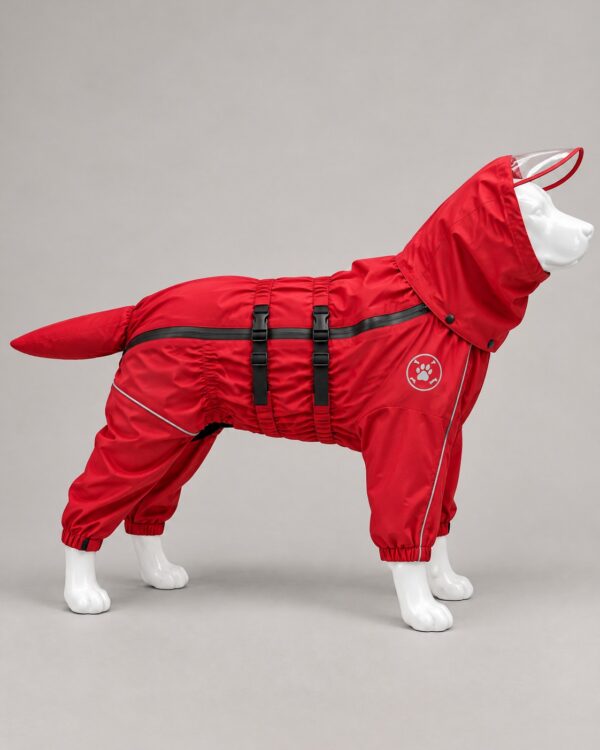
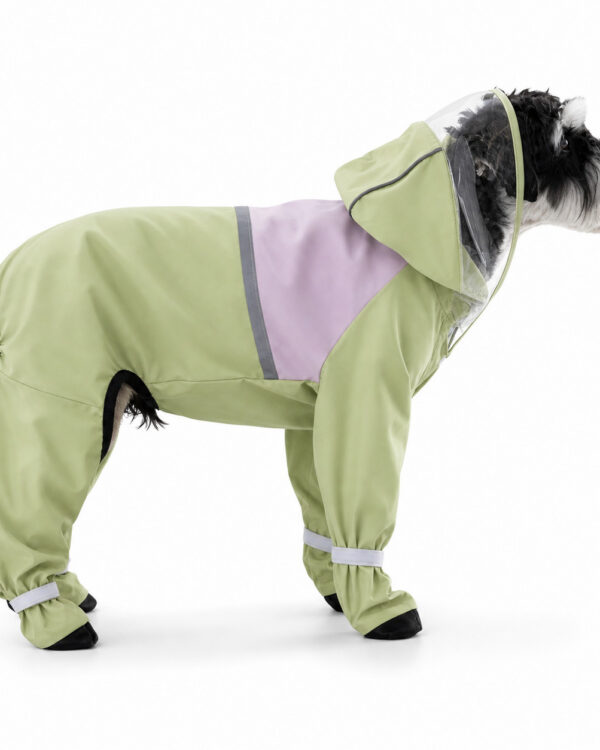
- Length to the base of the tail. A coat chosen by weight is often too short for a Shepherd and stops mid-back. This is the same problem long-bodied breeds have, and we cover it in raincoats for long-bodied dogs.
- Room for the chest, freedom for the elbows. The deep chest is the biggest measurement on the dog. A strap or panel that crosses right at the elbow will rub at a trot. Look for one that sits behind the elbows, and watch your dog trot in it before you go out.
- Leg sleeves that let the dog stride. A Shepherd’s trot is long. Sleeves that are too tight or too short in the shoulder will shorten it. If the dog starts to shuffle, the suit is wrong for it.
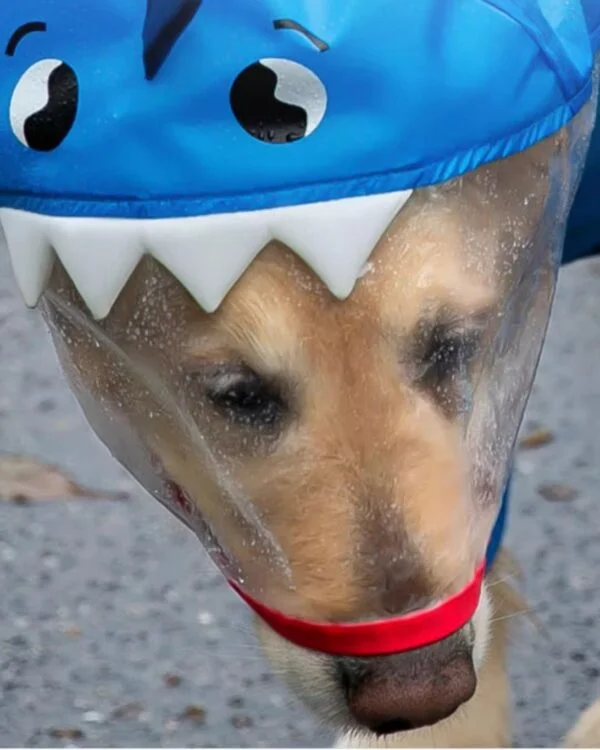
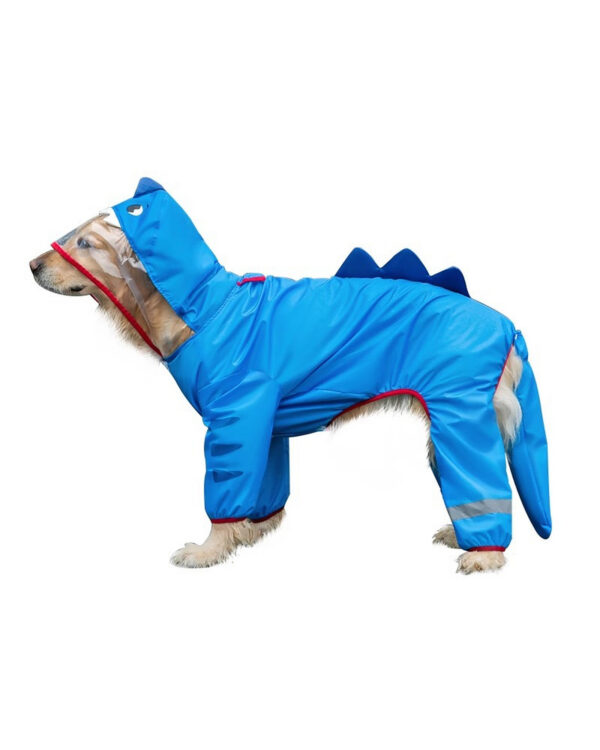
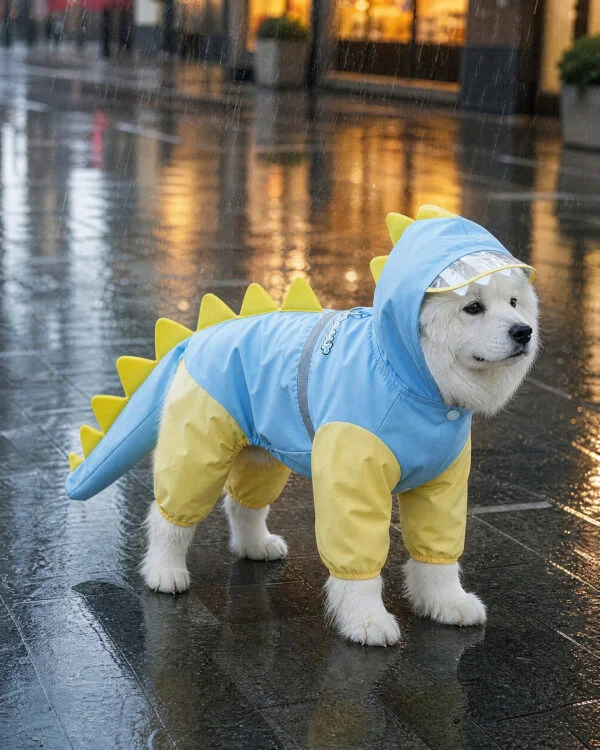
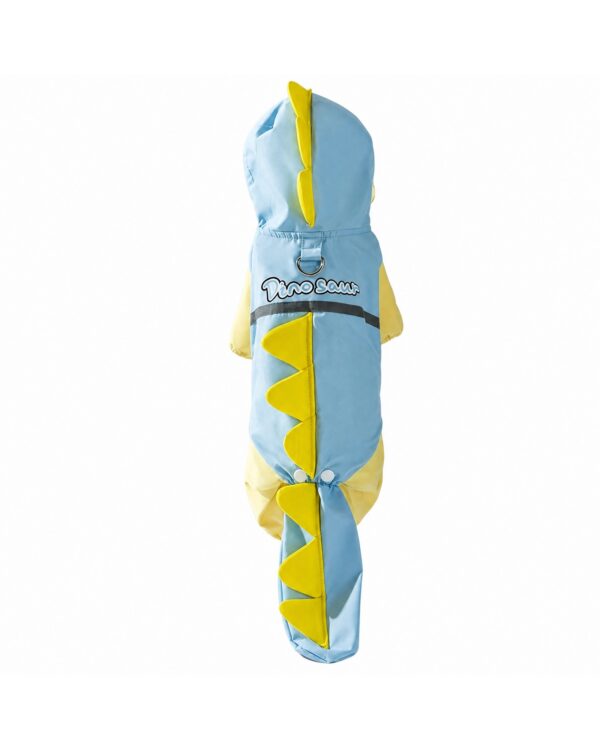
- No hood, or one that leaves the ears free. A Shepherd’s ears stand up. A closed hood either sits on top of them like a tent or folds them flat, and most Shepherds hate both. Our piece on whether a dog raincoat needs a hood goes through it.
- A harness port or leash ring. On a strong, big dog you want the leash on a harness underneath, not on a collar under the suit. See harness holes on large dog raincoats.
- A shell, not padding, for an active dog. A Shepherd working hard in mild rain can run warm in a lined suit. Save insulated suits for cold, wet days and older dogs. The signs to watch for are in do dogs overheat in coats.
Hoods and Shepherd ears
The usual reason for a hood is ear health. The AKC raincoat guide suggests a detachable hood to help keep water out of the ears. The AKC’s article on ear infections says the dogs most at risk are especially those with floppy ears, and that moisture trapped in the ear can become a breeding ground for bacteria and yeast. A Shepherd’s ears stand open and dry out quickly. That doesn’t mean Shepherds never get ear infections. It means the main argument for a hood is weaker for them than for a spaniel. Most Shepherd owners are better off with no hood and a quick towel over the head and ears at the door. If your dog shakes its head a lot, scratches at its ears, or its ears smell, ask your vet. Gear won’t fix that.
Sizing a German Shepherd for a raincoat
The standard gives an ideal height of 24 to 26 inches at the shoulder for males and 22 to 24 inches for females. That tells you where on a size chart to start looking. It doesn’t tell you the size. Two Shepherds of the same height can differ a lot in chest depth and coat, and the thick neck hair makes the neck look bigger than it is.
Measure instead. The AKC raincoat guide says to use a soft tape around the neck, chest and stomach, then measure from the neck to the base of the tail. It also warns that buying by weight doesn’t always work. With the coat on, you should be able to slide two fingers under the straps. If you can’t, it’s too tight. If more than three fingers fit, it’s too loose, and on a Shepherd that lets rain run straight into the undercoat. Compare your numbers with the chart on the product page, not the weight range. The full method, including where to hold the tape on a deep chest, is in how to measure your dog for clothes. If you’re choosing between styles, our Golden Retriever raincoat guide explains why legs matter more than the back on a big dog. A thin-coated big dog is a different case; see our Greyhound raincoat guide.
Puppies grow quickly. Buy for this season and measure again before the next one. A suit that’s far too long gets in the way of a young dog’s legs and lets water in at every opening.
After the walk
A suit doesn’t keep the paws dry, so the routine at the door stays the same. The ASPCA’s cold-weather advice is to wash and dry your dog’s feet and stomach after each walk and check for redness between the toes. Towel the neck and ears, where the hair is thickest and the suit doesn’t reach. The AKC’s hypothermia article lists shivering and curling up for warmth as early signs of mild hypothermia. If a soaked Shepherd is still shivering after you’ve dried it in a warm room, call your vet. For the full door routine, see how to clean dog paws after a walk, and for drying a thick coat, is it OK to let your dog air dry.
German Shepherd raincoat FAQ
Do German Shepherds need raincoats?
Most healthy adults don’t for short walks. The dense outer coat sheds light rain. A raincoat is worth having for long walks in steady rain, for mud and wet grass, and for senior, underweight or arthritic dogs, which Cornell notes have a harder time staying warm.
Do German Shepherds have waterproof coats?
Weather-resistant, not waterproof. The AKC breed standard asks for a dense, harsh, close-lying outer coat over an undercoat, but unlike the Golden Retriever standard it never calls the coat water repellent. In a long rain, water reaches the undercoat. Merck notes that a dog’s coat insulates only while the hairs stay dry.
Should a German Shepherd raincoat have a hood?
Usually not. Shepherds’ ears stand up, so a closed hood either sits on top of them or folds them flat. The AKC names floppy-eared dogs as most prone to ear infections, so the case for a hood is weaker for a Shepherd. A detachable hood is the safe choice if you want one.
What size raincoat does a German Shepherd wear?
There’s no single size. The breed standard puts males at 24 to 26 inches at the shoulder and females at 22 to 24, but chest depth and body length vary. Measure neck, chest, stomach and neck to the base of the tail, then check those against the product’s size chart, not its weight range.
Is a raincoat bad for a Shepherd’s coat?
Not if it fits and you use it for walks, not all day. Take it off at home and let the coat breathe. Brush out loose undercoat during shedding season so it doesn’t mat under the suit. Don’t shave the coat to manage mud; the AKC’s breed grooming advice and the ASPCA both advise against it.
Do German Shepherds get cold in the rain?
A healthy adult on a normal walk usually doesn’t. A soaked Shepherd on a long, cold, wet outing can, because a wet coat insulates poorly. Older and unwell dogs are more at risk. Dry the dog when you get home, and call your vet if it keeps shivering after it’s warm and dry.
The coat sheds a shower. Buy the suit for the long, wet walks.
A German Shepherd’s coat is built to shed weather, but it isn’t waterproof, and it only keeps a dog warm while it’s dry. Skip the raincoat for quick walks. Use one for long walks in steady rain, mud, and older dogs. Choose one long enough for the body, cut for the deep chest, with free elbows and no hood over the ears, and size it with a tape measure, not by weight.
Sources
- American Kennel Club — Official Standard of the German Shepherd Dog (checked 2026-10-16)
- Golden Retriever Club of America — AKC Breed Standard (checked 2026-10-16)
- Merck Veterinary Manual — Structure of the Skin in Dogs (checked 2026-10-16)
- American Kennel Club — Tips for Grooming a German Shepherd (checked 2026-10-16)
- American Kennel Club — Does Your Dog Need a Raincoat? (checked 2026-10-16)
- American Kennel Club — Dog Ear Infections (checked 2026-10-16)
- American Kennel Club — Hypothermia in Dogs (checked 2026-10-16)
- Cornell University College of Veterinary Medicine — Winter safety tips (checked 2026-10-16)
- ASPCA — Cold Weather Safety Tips (checked 2026-10-16)
Health questions about skin, ears, joints or shivering belong with your veterinarian. Product sizes vary by maker, so always check the size chart on the product page.