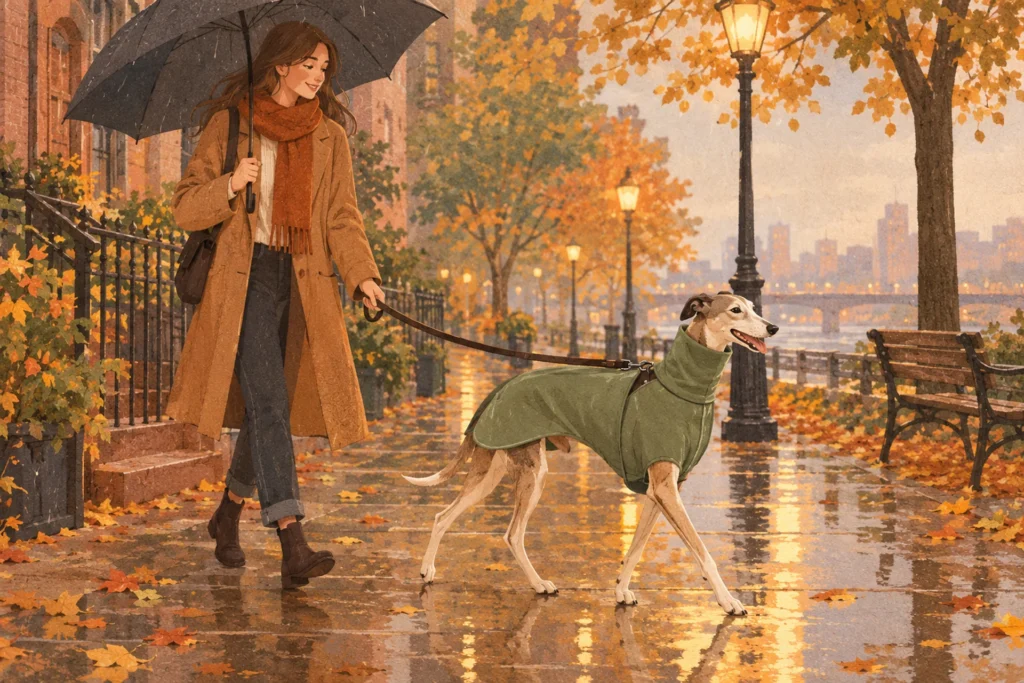
Yes, a Greyhound benefits from a raincoat more than most big dogs do, and the reason is not the rain itself. It’s what the breed has under the rain. The AKC breed standard describes the coat in four words: “Short, smooth and firm.” VCA Animal Hospitals says that its short hair provides little protection against cold weather, and the AKC notes that Greyhounds, like many sighthounds, are tall and sleek dogs with little body fat. There’s no undercoat to keep the rain off the skin and very little fat under the skin to hold heat in.
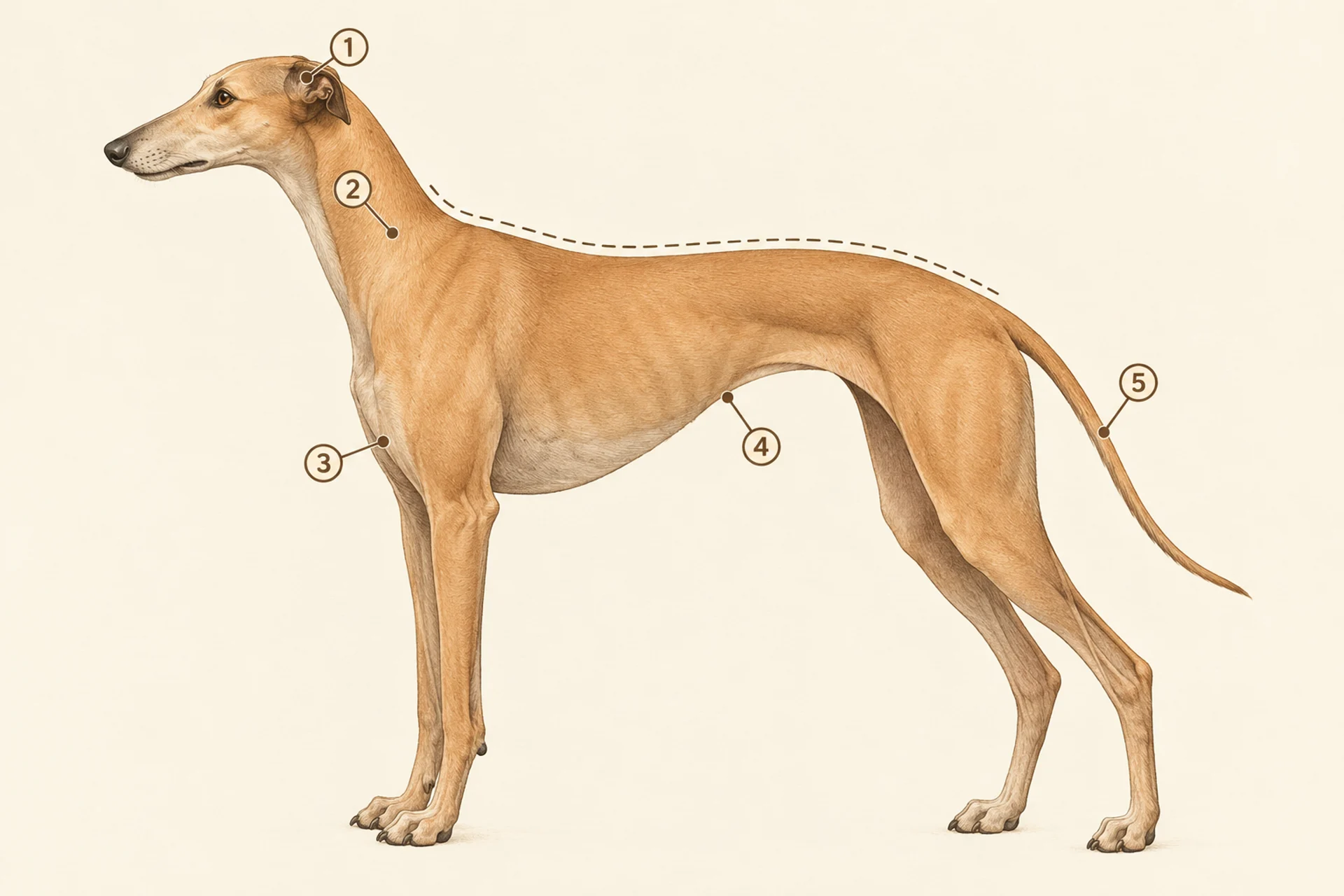
So for a quick dash outside in a warm shower, a Greyhound will be fine. On a cool, wet walk of any length, a light raincoat is a sensible default, not a fashion choice. The harder part is fit. A Greyhound is built like no other large dog: a deep chest, a narrow waist, a long neck and a head often smaller than the neck. Most raincoats are cut for a Labrador, and on a Greyhound they gape, slide and leak.
Do Greyhounds need raincoats?
Compare the Greyhound with the breeds people usually argue about. A German Shepherd or a Husky has a dense double coat; rain sits in the outer layer for a while before it reaches the skin. A Greyhound’s short, single coat lies flat on thin skin. It gets wet to the skin almost as soon as the rain starts.
That matters because a coat keeps heat in by holding a layer of air. The Merck Veterinary Manual explains that trapping air between the hairs conserves heat, and that this requires that the hairs be dry. A thick-coated dog has more coat to soak before it loses that layer. A Greyhound has very little to begin with.
The vets say the same thing about cold. Cornell’s College of Veterinary Medicine says that short and thinly-coated breeds will not tolerate the cold as well as thick, double-coats, and that a jacket or sweater will help keep them warm. The AKC’s winter coat guide puts it more directly: dogs that are both naturally lean and have a short coat can quickly become cold, and it names Greyhounds and Whippets as examples. Rain makes cold weather colder for these dogs, because it takes away the little insulation they had.
A common objection: “they’re big dogs, they’ll be fine”
This one is half right. A Greyhound is a big dog: the standard puts males at 65 to 70 pounds and females at 60 to 65. A healthy adult Greyhound on a short walk in mild rain won’t come to any harm. You don’t need a coat for every trip to the yard.
What the objection misses is that weight isn’t the same as insulation. The standard describes a muscular, athletic dog, and the AKC notes that Greyhounds have very little fat to protect them. The AKC’s raincoat guide makes the same point about the whole group: many sighthounds have little fat to keep them warm when temperatures drop. Cornell adds that older and underweight animals may have difficulty staying warm. Many Greyhounds come home as retired racers or senior rescues, so plenty of them fit both descriptions.
If you’ve noticed your Greyhound standing at the door and refusing to go out into the rain, that’s not stubbornness. Many dogs dislike rain, and a thin-coated dog has more reason than most. Our guide to a dog that won’t go potty in the rain covers the training side.
When a raincoat earns its place on a Greyhound
| Situation | What the coat does | Raincoat? |
|---|---|---|
| Quick trip outside, warm rain | Gets wet, dries fast indoors | Optional |
| Walk of 20 minutes or more, cool rain | Wet to the skin, losing heat | Yes, a light shell |
| Cold rain, sleet, wind | Little coat, little fat, wet skin | Yes, a lined or insulated coat |
| Senior, underweight or recovering dog | Harder to stay warm, per Cornell | Yes, even in mild rain |
| Muddy park, wet grass | Long legs and belly take the splash | A suit with legs saves the cleanup |
| Off-leash sprint in a fenced field | Coat may shift at full speed | Check fit first, or skip it |
Rain jacket or warm coat?
They solve two different problems. A thin waterproof shell keeps the rain off. A lined or fleece coat keeps the dog warm. In a cool autumn drizzle, a shell is usually enough, and an active Greyhound can run warm in padding. In a cold, wet winter rain, a thin dog needs both: an insulated coat with a waterproof outer layer. If you’re not sure where your dog sits, our guide to what temperature a dog needs a coat walks through the numbers, and how to tell if your dog is cold covers the signs.
Why ordinary raincoats fit Greyhounds badly
Most raincoats are sized by weight or by chest, and they assume a dog that’s roughly the same width from the chest to the hips. The Greyhound standard describes the opposite. It asks for a chest that is “deep, and as wide as consistent with speed,” loins “well cut up in the flanks,” and a neck that is “long, muscular” and widens gradually into the shoulder. In plain terms: the deepest chest you’ll see on a large dog, a waist that narrows sharply behind it, and a long neck on top.
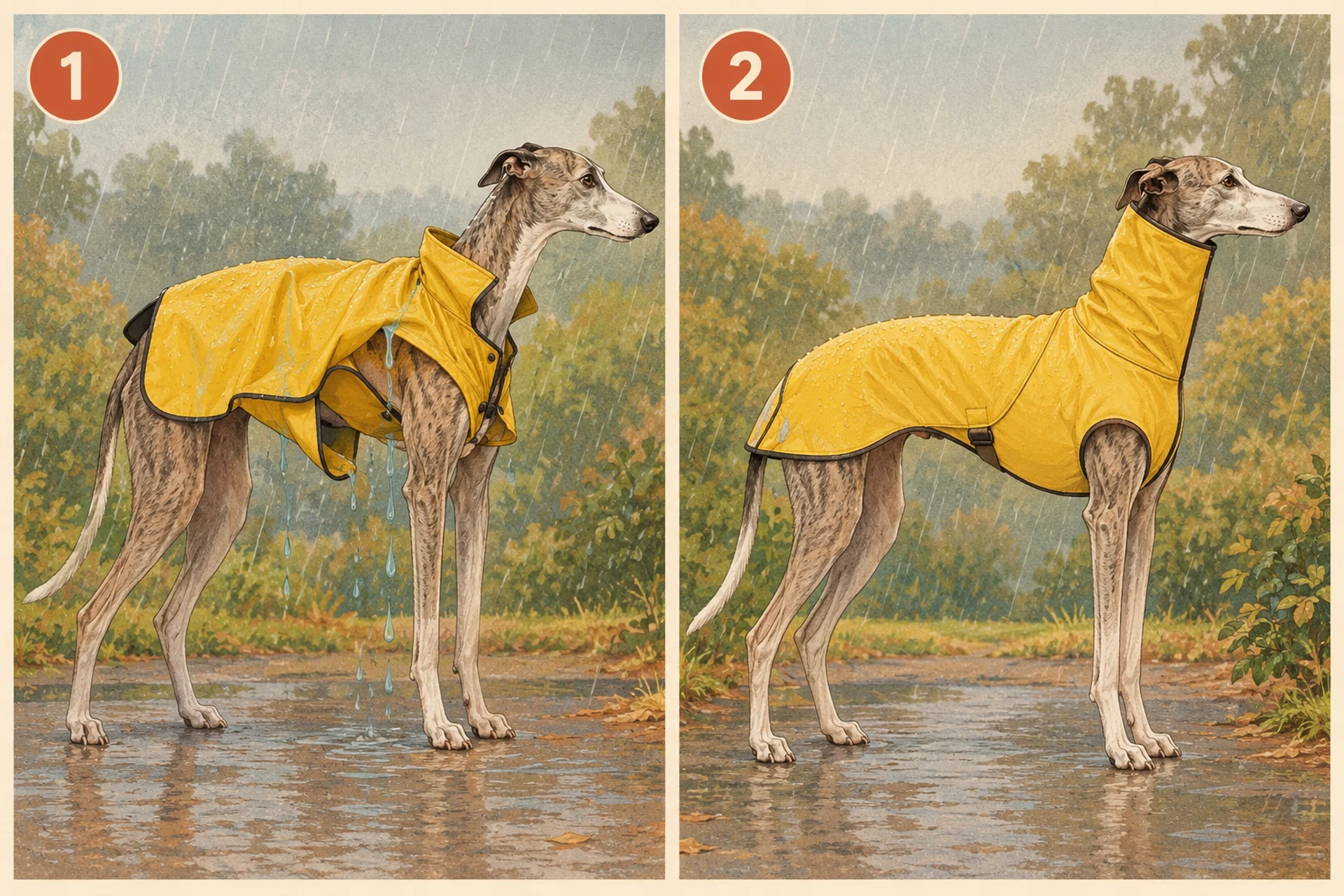
- Size by chest and length, not weight. The AKC’s raincoat guide says to measure the neck, chest and stomach, then from the neck to the base of the tail, and warns that using weight to buy clothes doesn’t always work. On a Greyhound it almost never does, because the chest is far bigger than the waist.
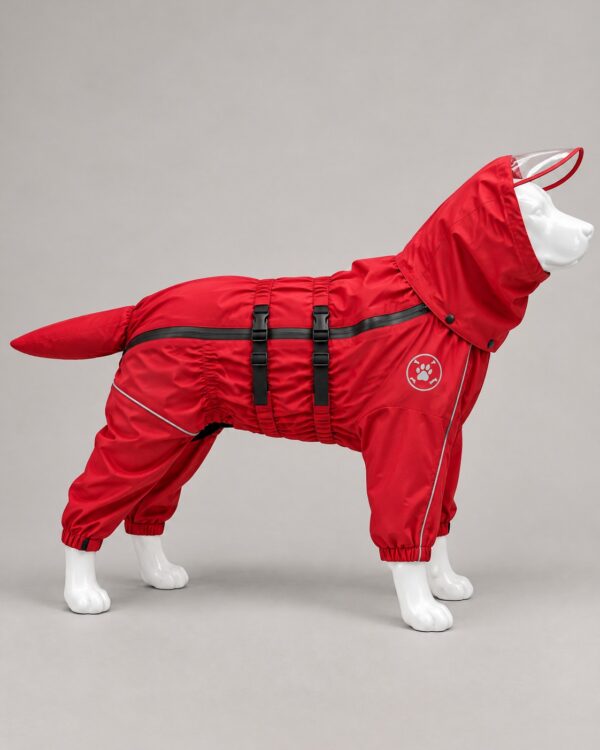
- A strap or panel that closes at the waist. If the belly fastening only sits behind the front legs, the coat hangs open over the tucked-up waist. Wind gets under it and lifts it, and rain runs in along the ribs. Look for an adjustable belly strap or a shaped panel that pulls in behind the ribs.
- A long, high neck. A standard collar opening sits low on a Greyhound’s long neck and leaves the top of the neck and shoulders exposed, which is exactly where the rain lands.
- Length to the base of the tail. A coat that ends mid-back leaves the hips and the top of the thighs wet. If your dog is long for its height, our guide to raincoats for long dogs covers the same problem on a Dachshund.
- Free shoulders. A coat that’s tight across the front of a deep chest can restrict the stride. Watch your dog walk and trot in it at home.
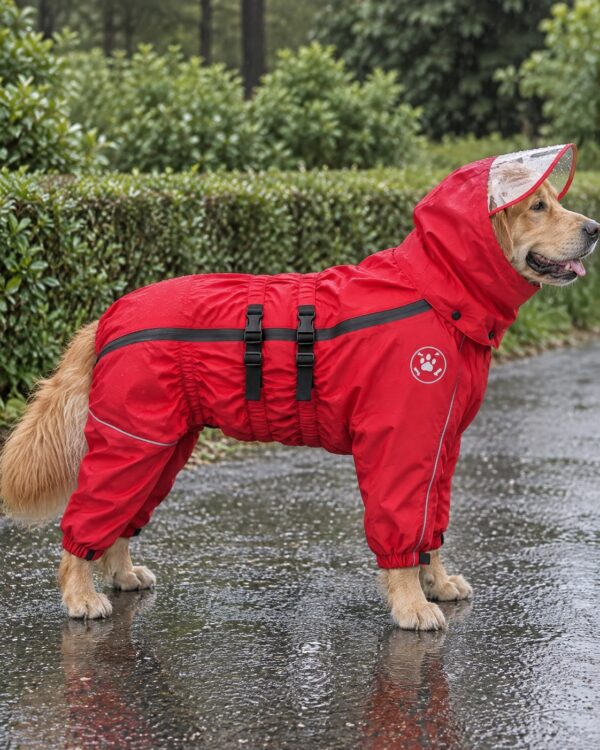
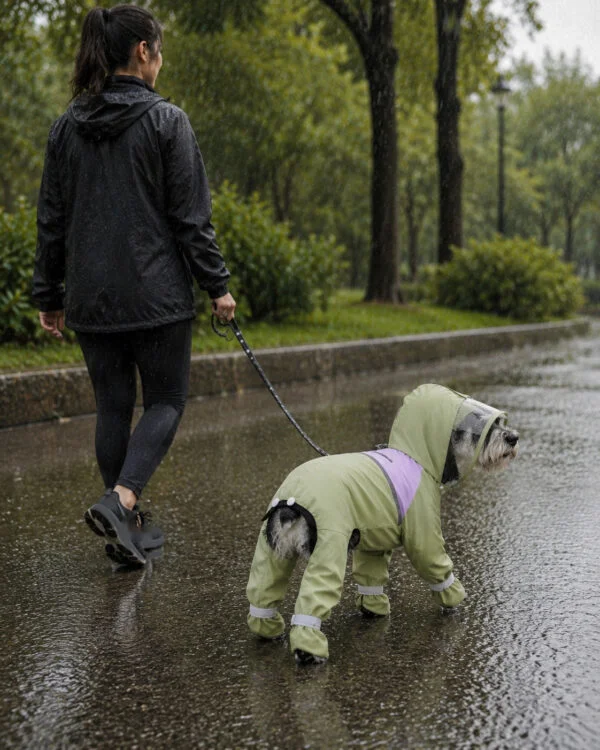
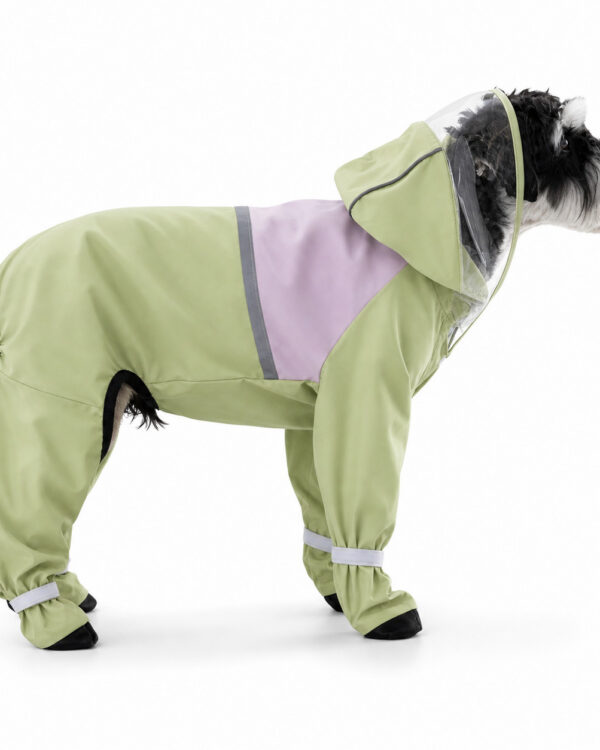
- Legs, if you walk in mud. The AKC’s winter coat guide says full bodysuits are especially beneficial for lean-bodied dogs with longer legs. A suit with legs keeps the splash off a long, thin-skinned leg. It’s also harder to fit, so measure carefully.
Harness, collar and the raincoat
One thing makes Greyhounds different from almost every other dog: the AKC points out that Greyhounds and Whippets have heads that are often smaller than their necks, so they can slip out of a flat collar. That’s why so many Greyhound owners use a martingale (limited-slip) collar or a harness.
A raincoat adds a problem. If the leash clips to a collar under the coat, the coat’s neck can push the collar around or make it hard to check how tight it is. If you use a harness, put it on first and look for a raincoat with an opening for the leash ring, so the leash pulls on the harness, not on the coat. We cover the options in harness holes on large dog raincoats. Whatever you use, check the fit again once the coat is on. A Greyhound that backs out of its collar on a wet road is the outcome you most want to avoid.
Does a Greyhound raincoat need a hood?
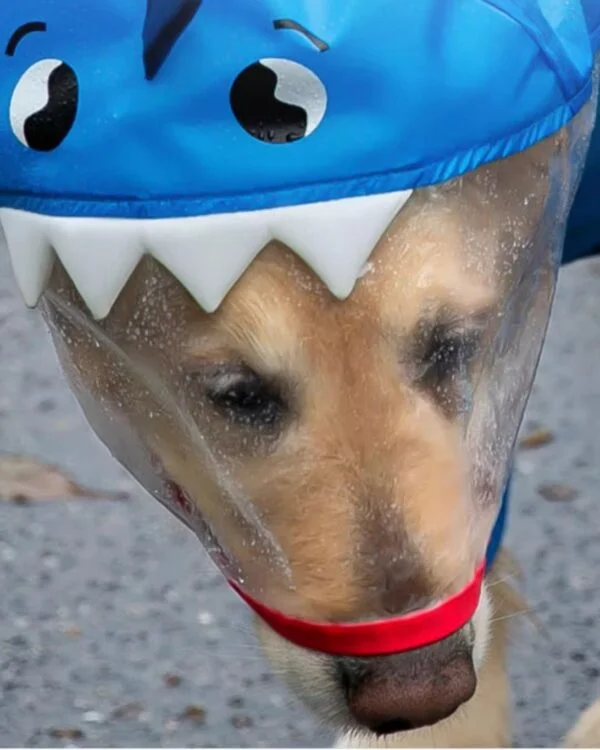
Usually not. The AKC’s raincoat guide suggests hoods can help keep water out of a dog’s ears, and its article on ear infections says the dogs most at risk are especially those with floppy ears. The Greyhound standard describes ears that are small and fine, “thrown back and folded.” They lie close to the head and don’t trap water the way a spaniel’s do.
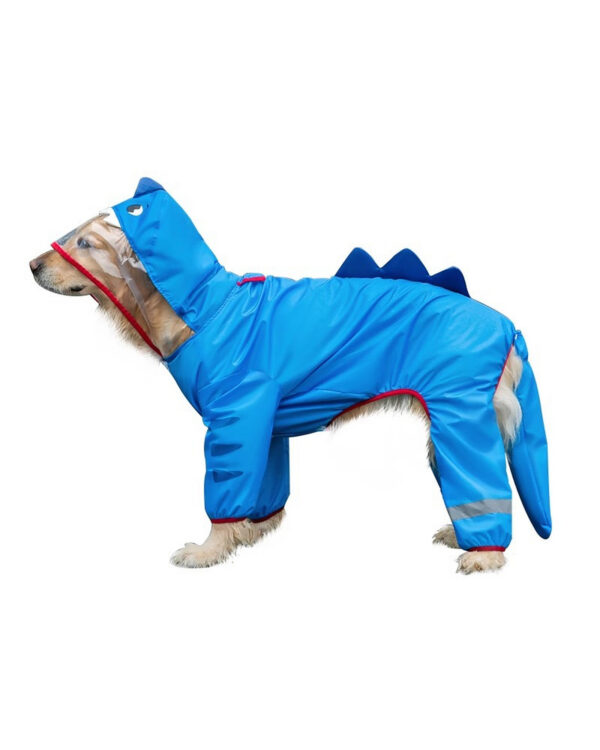
A hood is also hard to fit on a Greyhound’s long, narrow head. It tends to slip down over the eyes or blow off. A high collar on the coat is usually more useful than a hood. If your dog really hates rain on its head, a detachable hood is the safest choice. Our guide to whether a dog raincoat needs a hood covers how to tell. And if your dog shakes its head a lot or scratches at its ears after wet walks, ask your vet. A hood won’t fix that.
Sizing a Greyhound for a raincoat
VCA lists adult Greyhounds at 26 to 29 inches tall and 60 to 70 pounds. That puts them in the large or extra-large section of most charts, but it won’t tell you which size fits. Two Greyhounds of the same weight can have very different chests and backs, and a well-muscled retired racer is a different shape from a lighter pet-bred dog.
Measure instead. Take the chest at its deepest point, just behind the front legs; the waist, at the narrowest point in front of the hind legs; the neck, low where it meets the shoulders; and the back, from the base of the neck to the base of the tail. Size from the chest and the back length, then check that the waist can be adjusted to close. With the coat on, you should be able to slide two fingers under the straps. Our step-by-step guide on how to measure your dog for clothes shows where to hold the tape. Check the chart on the product page, not the weight range.
The same thinking applies to Whippets, Italian Greyhounds and lurchers. The proportions are similar and the coats are short, so look for a sighthound cut in a smaller size rather than a standard small-dog coat.
After the walk
A raincoat keeps the body dry, but the legs, paws and head still get wet. Towel them off at the door. The AKC’s hypothermia article says that shivering and curling up for warmth are some of the first signs of mild hypothermia, and that a wet or damp dog’s ears, paws and tail are more vulnerable to frostbite. Cornell names ears, paws and tail tips as the areas most commonly affected. A Greyhound’s thin tail and fine ears are worth a quick check after a cold, wet walk.
Most Greyhounds come in, get dried and curl up on a blanket, and that’s the end of it. If your dog is still shivering after it’s warm and dry, call your vet. For drying routines, see is it OK to let your dog air dry, and for the paws, how to clean dog paws after a walk.
Greyhound raincoat FAQ
Do Greyhounds need raincoats?
For short trips in warm rain, no. For longer walks in cool or cold rain, a raincoat is a good idea. Greyhounds have a short, thin coat and little body fat, and VCA says the coat gives little protection against cold weather. Rain soaks a thin coat quickly, and a wet coat holds very little heat.
Why do Greyhounds wear coats?
Because they get cold more easily than most large dogs. The AKC says Greyhounds have very little body fat, and its winter coat guide names Greyhounds and Whippets among the naturally lean, short-coated dogs that can quickly become cold. Cornell recommends a jacket or sweater for thinly coated breeds in winter.
What temperature does a Greyhound need a coat?
There’s no official number for the breed. Thin-coated dogs feel the cold sooner than double-coated ones, and wind and rain make it worse. Watch the dog: shivering, curling up or refusing to walk means it’s cold. Older and underweight Greyhounds need a coat sooner than fit young ones.
Should a Greyhound raincoat have a hood?
Usually not. Greyhound ears are small and folded back, so they don’t trap water the way floppy ears do, and hoods tend to slip on a long, narrow head. A high neck on the coat does more. Choose a detachable hood if you want one.
What size raincoat does a Greyhound wear?
There’s no single size. Greyhounds are usually 60 to 70 pounds, but the chest is much deeper than the waist, so weight-based sizing rarely fits. Measure the chest, waist, neck and back length, size from the chest and back, and make sure the waist strap can close.
Can a Greyhound wear a raincoat with a harness?
Yes, and it’s often the safer setup. The AKC notes Greyhounds’ heads are often smaller than their necks, so they can slip flat collars. Put the harness on first and choose a coat with an opening for the leash ring, so the leash pulls on the harness, not the coat.
Thin coat, little fat: a Greyhound feels wet weather more than its size suggests.
A Greyhound’s short coat soaks through fast and its lean body holds little heat, so a raincoat is worth using on longer or colder wet walks, and for seniors and thin dogs even in mild rain. The fit is the hard part. Choose a coat cut for a deep chest and narrow waist, with a long neck, a waist strap and a harness opening, and size it with a tape measure, not by weight.
Sources
- American Kennel Club — Official Standard of the Greyhound (checked 2026-10-20)
- VCA Animal Hospitals — Greyhound (checked 2026-10-20)
- American Kennel Club — Is the Greyhound the Right Breed for Your Lifestyle? (checked 2026-10-20)
- American Kennel Club — Does My Dog Need a Winter Coat? (checked 2026-10-20)
- American Kennel Club — Does Your Dog Need a Raincoat? (checked 2026-10-20)
- Merck Veterinary Manual — Structure of the Skin in Dogs (checked 2026-10-20)
- Cornell University College of Veterinary Medicine — Winter safety tips (checked 2026-10-20)
- American Kennel Club — Dog Harnesses and Dog Collars (checked 2026-10-20)
- American Kennel Club — Dog Ear Infections (checked 2026-10-20)
- American Kennel Club — Hypothermia in Dogs (checked 2026-10-20)
Health questions about shivering, skin or ears belong with your veterinarian. Product sizes vary by maker, so always check the size chart on the product page.