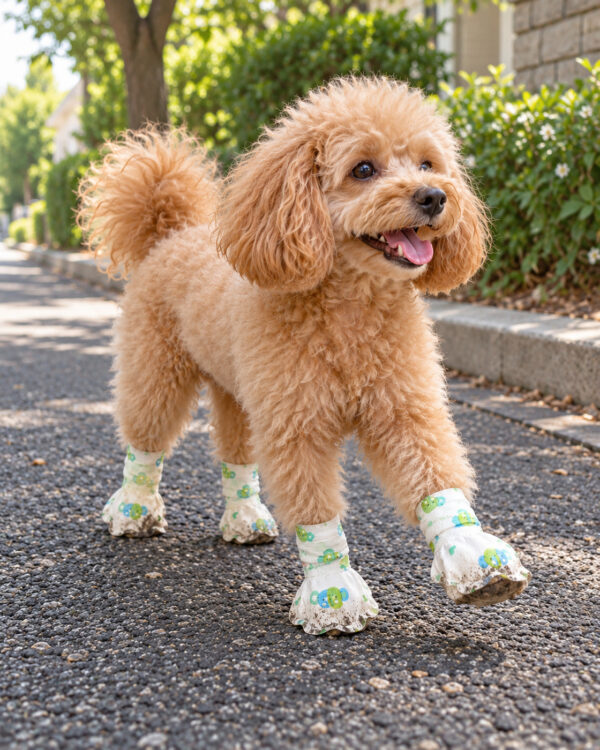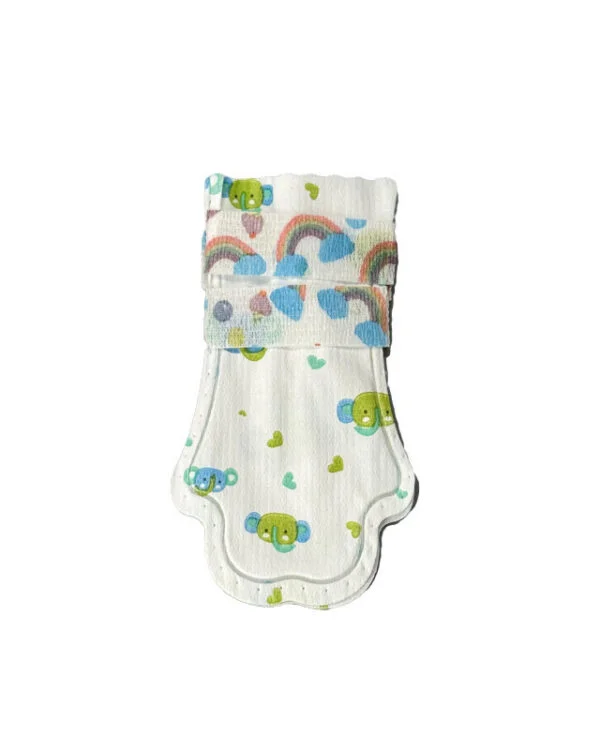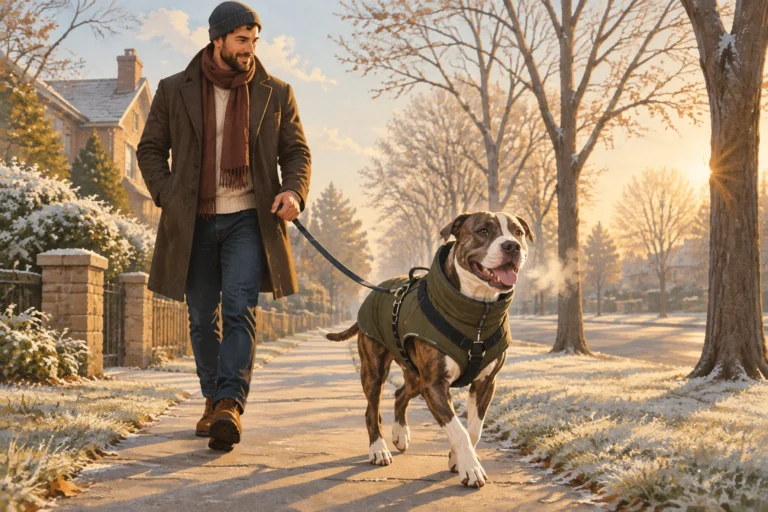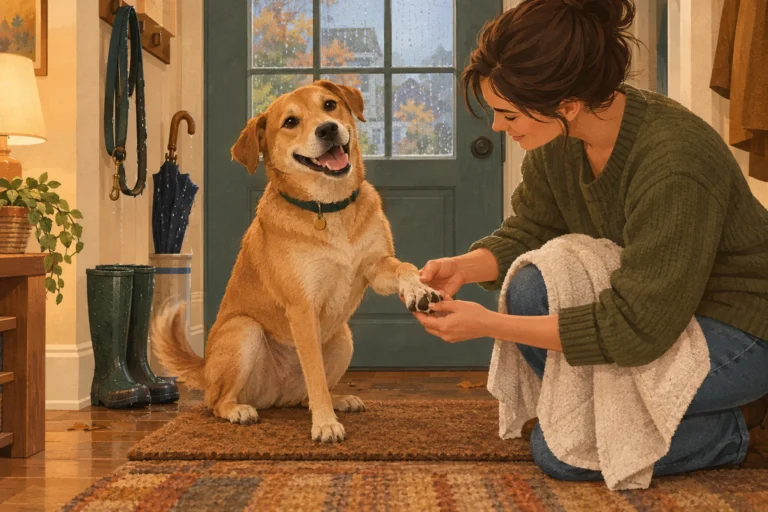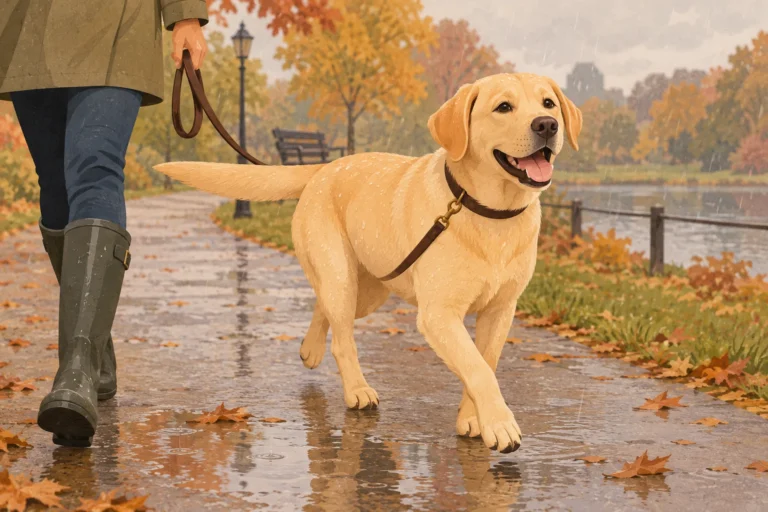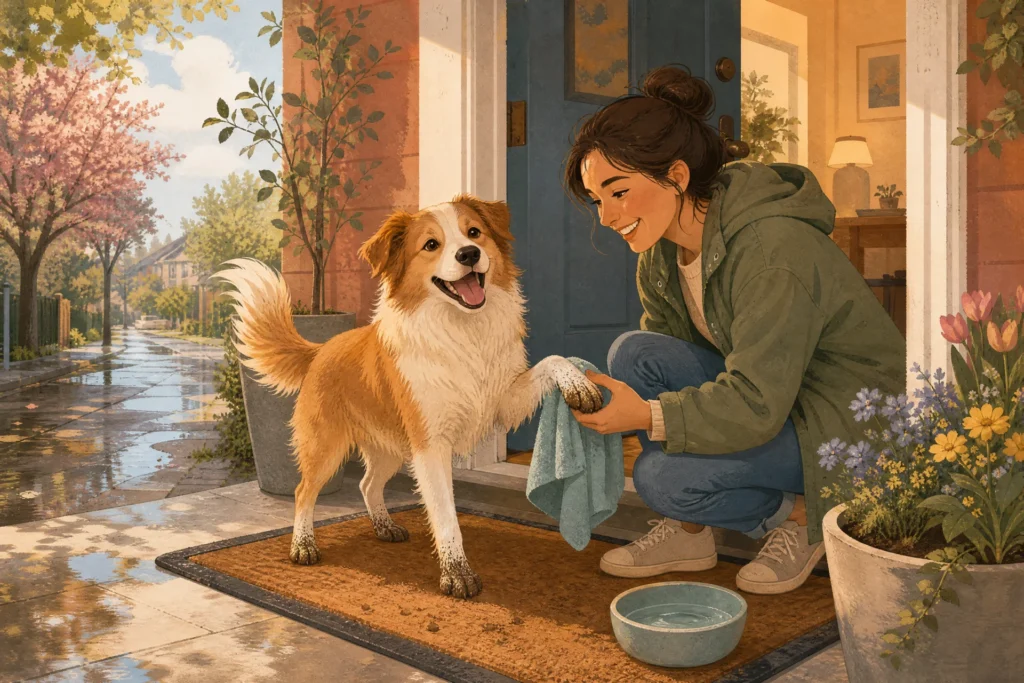
For everyday mud, a damp cloth or a wipe labeled safe for pets is enough. Use a warm, soapy washcloth or a quick rinse in a bowl or sink when the mess is serious, or when the ground had road salt on it. The step most people skip is the one that matters most: spread the toes, clean the gaps, then dry thoroughly. The AKC notes that salt and dirt build up between the toes, around the pads and under the nails, and that a quick rinse that misses those spots can lead to irritation.
Do you have to do it after every walk? Not always. On a dry day on clean pavement, a quick look is plenty. After rain and mud, a full wipe and dry is worth it. In winter, when sidewalks may have been salted, the ASPCA’s advice is to wash and dry your dog’s feet after each walk.
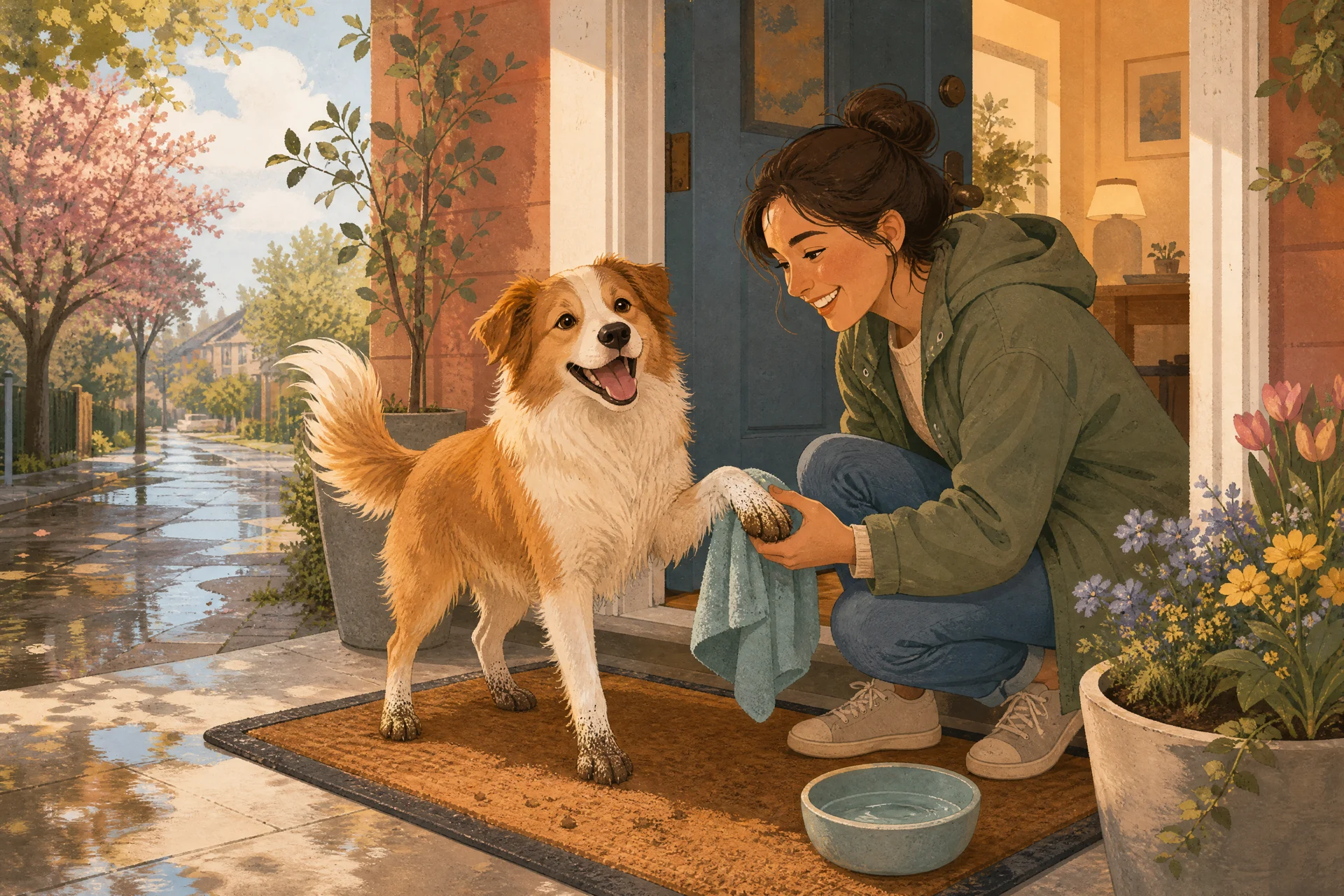
When a quick look is enough, and when it isn’t
None of the vet and welfare sources we checked say every walk needs a paw bath. What they do agree on is which walks call for one. The deciding question is what the ground had on it.
| What you walked through | Why it matters | What to do at the door |
|---|---|---|
| Dry pavement or a dry trail | Little gets stuck, and occasional paw licking after a walk is normal self-grooming | A quick look between the toes. A dry towel if there’s dust or sand. |
| Rain, wet grass, puddles | Dirt and moisture get trapped between the toes, which the AKC links to yeast problems | Wipe, then dry between the toes properly |
| Mud | Grit packs into the gaps around the pads and under the nails | Warm soapy washcloth or a rinse, then a thorough dry |
| Salted or de-iced sidewalks | Ice melts irritate pads, and dogs swallow them when they lick their feet | Wash and dry right away, every walk, before the dog can lick |
| Treated lawns, unfamiliar yards | The AKC lists yard chemicals as a cause of paw dermatitis | Wipe with plain water |
The first row isn’t us being lazy. The AKC’s guide to paw licking says occasional paw licking is normal self-grooming, especially after walking on dirty or sandy ground. A dog that gives its feet a once-over on a dry day doesn’t need a wash on top of that. What you’re watching for is licking that’s frequent and intense, which the AKC treats as a sign that something is wrong. There’s more on that below.
Where the dirt actually hides
Look at the top of a paw after a muddy walk and it may look fine. The trouble is underneath and in between. In its guide to paw care, the AKC names three spots where salt and dirt accumulate: between the toes, around and between the pads, and under the nail. Its advice is to part the toes gently as you clean, so you can see debris and irritation.
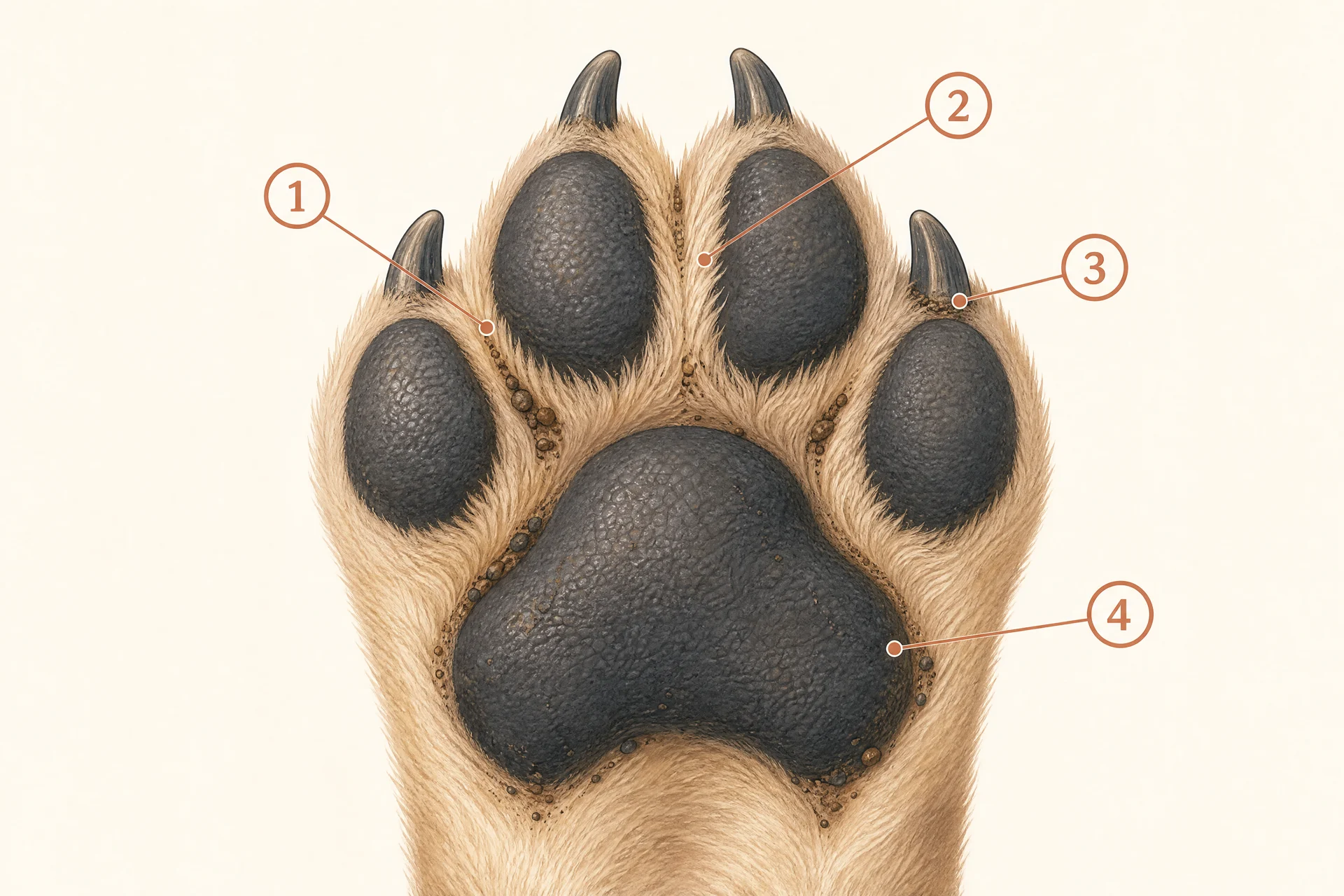
This matters more than it sounds. A board-certified veterinary dermatologist interviewed by the AKC said that owners may not think to separate the toes and look between them for early signs of inflammation, and that problems can get much worse before anyone notices. Cleaning the paws after a walk is the one time each day you’re already holding the foot. Use it to look.
The routine, step by step
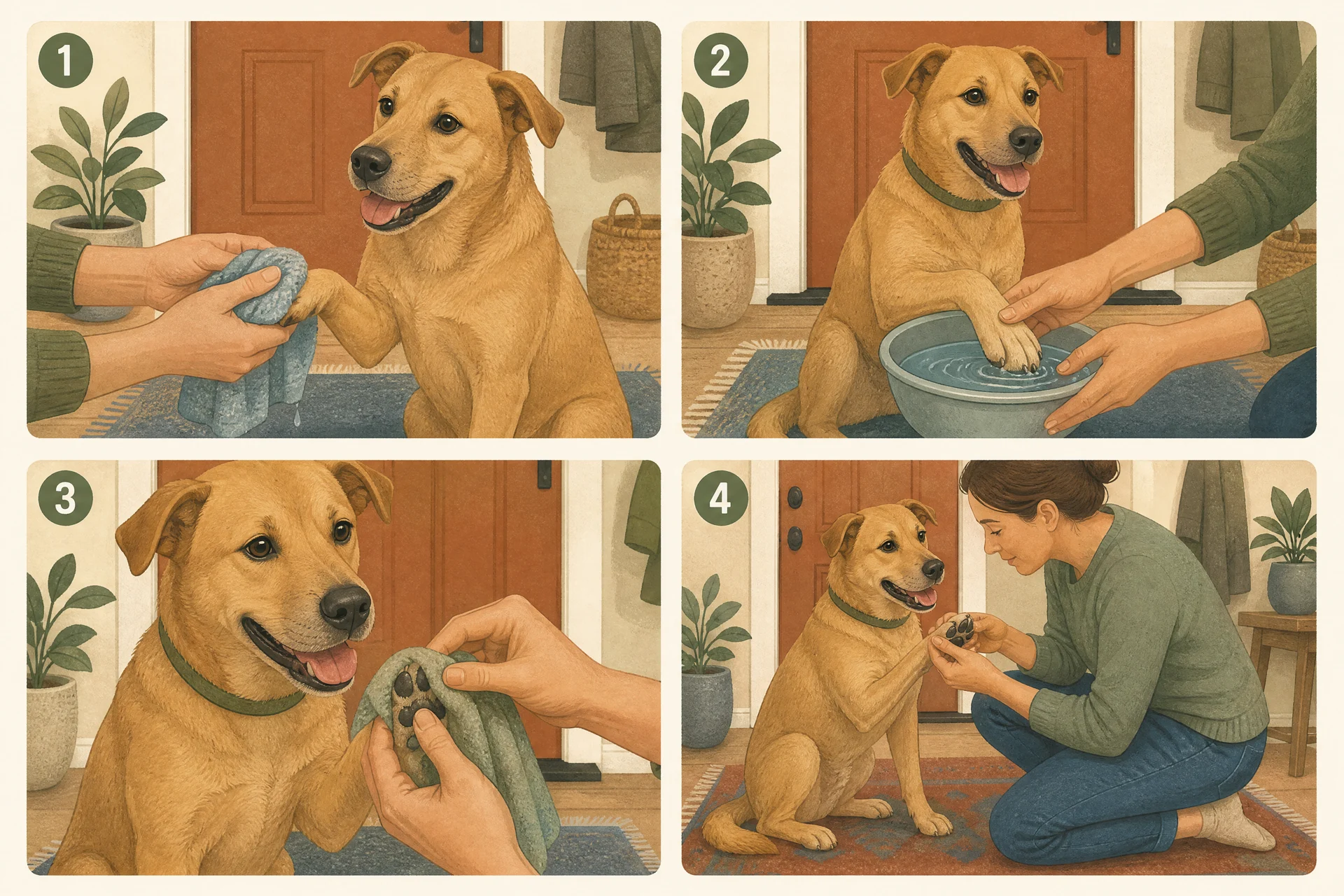
- Set up before you leave. A towel and a bowl of water by the door turns this into a 60-second job. The AKC suggests exactly that setup for dogs whose paws react to yard chemicals, de-icers or certain grasses.
- Stop at the door. Do it before the dog walks across the floor, and before it has a chance to lick. With salt and de-icers, licking is how the chemicals get swallowed.
- Wipe first. For light mud, sand or salt, the AKC says dog wipes or other moist wipes labeled safe for pet use can do the job quickly. The ASPCA suggests a damp cloth or baby wipes for ice melt. Plain water on a cloth works too.
- Rinse if it needs more. For serious mess, the AKC’s next step up is a warm, soapy washcloth, or washing the paws properly to get road salt off. A small dog can stand in the sink. A big dog can have its feet rinsed in the tub without a full bath.
- Spread the toes and clean the gaps. Gently part each toe and wipe between them and around the pads. This is the step that separates a clean paw from a paw that looks clean.
- Dry, properly. Press the towel between the toes rather than wiping across the bottom. Then let the dog finish drying somewhere warm before it goes back out.
- Look while you’re there. Check for cuts, scrapes, a torn nail, dry or cracked pads, redness between the toes, or something stuck there like a burr, a thorn or a small stone.
Long-haired dogs need one extra thing. The fur between the pads holds mud the way it holds snow. The ASPCA recommends trimming the hair between the toes for long-haired dogs in winter, and the AKC suggests having a professional do it carefully. The same trim makes muddy-season cleanups much faster. If your dog comes home with ice packed into that fur, our guide to snowballs on dog paws covers how to get it out safely.
What can I wipe my dog’s paws with?
Whatever goes on a paw ends up in the dog, because dogs lick their feet. That is the test for every product. The Pet Poison Helpline makes the same point about household cleaners: exposure on the skin often leads to ingestion because animals groom themselves and lick it off.
| What people reach for | Use it on paws? | Why |
|---|---|---|
| Plain water on a cloth | Yes | Nothing to swallow afterwards. Enough for everyday mud |
| Dog wipes, or moist wipes labeled safe for pets | Yes | The AKC’s suggestion for muddy, sandy or salty paws |
| Baby wipes | Occasionally | The ASPCA mentions them for wiping off ice melt. A pet-labeled wipe is the safer habit |
| Warm, soapy washcloth | Yes, for serious messes | The AKC’s step up from a wipe. Rinse the soap off afterwards |
| Rubbing alcohol, or alcohol-based sanitizer | No | The Pet Poison Helpline says swallowing isopropyl alcohol can poison pets and calls it twice as toxic to dogs as the alcohol in beer and wine |
| Hydrogen peroxide | No | The Pet Poison Helpline lists skin and eye irritation or damage from exposure |
| Vinegar, apple cider vinegar, witch hazel | Ask your vet first | These are popular home remedies for itchy paws. We did not find guidance from the veterinary sources below that supports them for routine cleaning, and an itchy paw needs a diagnosis more than a rinse |
One more caution. If the paw has a cut or a raw patch, the rules get stricter. VCA Animal Hospitals’ wound care advice is to clean a wound with saline or water only, and not to use soaps, shampoos, rubbing alcohol, hydrogen peroxide, herbal preparations or tea tree oil unless your veterinarian tells you to.
Why the drying step matters most after rain
Getting the mud off is the visible part of the job. Drying is the part that prevents problems. The AKC’s guide to yeast dermatitis says going for a walk on a rainy day can make a yeast infection more likely, because dirt and moisture get trapped between the toes and in skin folds. The vet quoted there calls yeast an organism that loves humidity. She singles out bulldogs, whose toes sit close together, and says to clean and dry their feet after walks in rain or mud.
Bacteria behave the same way. The Merck Veterinary Manual lists the feet among the warm, moist areas of skin that tend to carry higher bacterial counts and a higher risk of infection. A paw that’s been wiped but left damp between the toes is the environment both of those sources are describing.
That’s why a soaking-wet wipe followed by nothing is worse than it looks. If you only have time for one step after a rainy walk, dry the paws.
Salt and de-icers: the winter version
Winter changes the reason for cleaning. The worry stops being mud and becomes chemicals. The ASPCA explains that pets are usually exposed to ice melt by licking their feet after walking through a treated area, or by eating snow that has ice melt in it. Its advice is to wipe the paws as soon as you get inside and to keep the dog from licking until they’re clean.
Not every ice melt is equally harsh. The Pet Poison Helpline describes calcium salts as the most severe irritants of the common ingredients, causing local irritation on skin and paws. You can’t choose what your city puts on the sidewalk. You can choose a pet-friendly product for your own steps, as the ASPCA suggests.
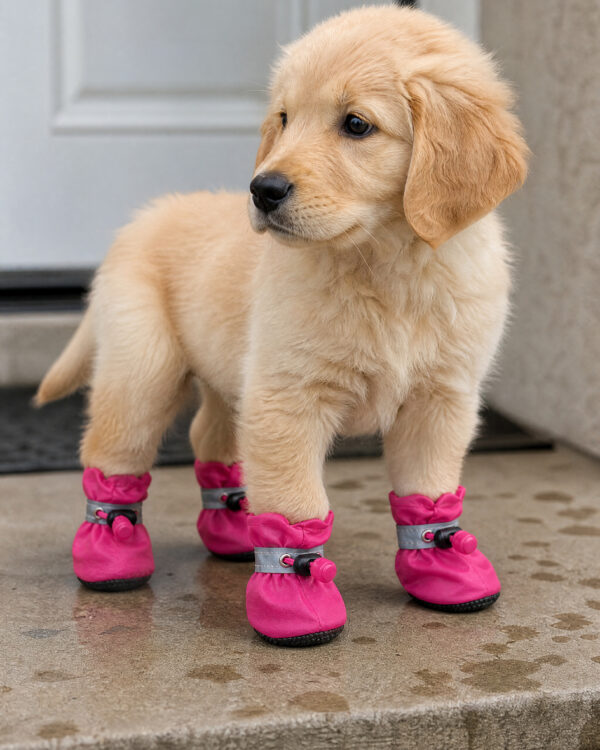
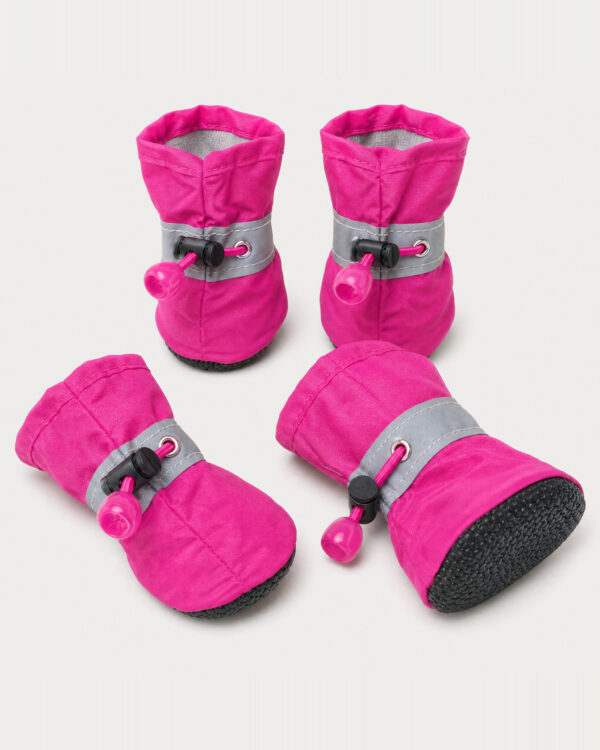
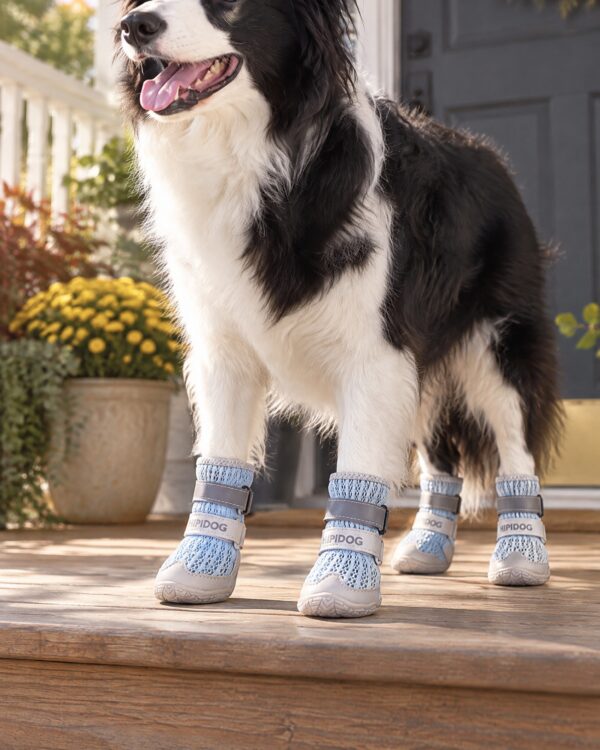
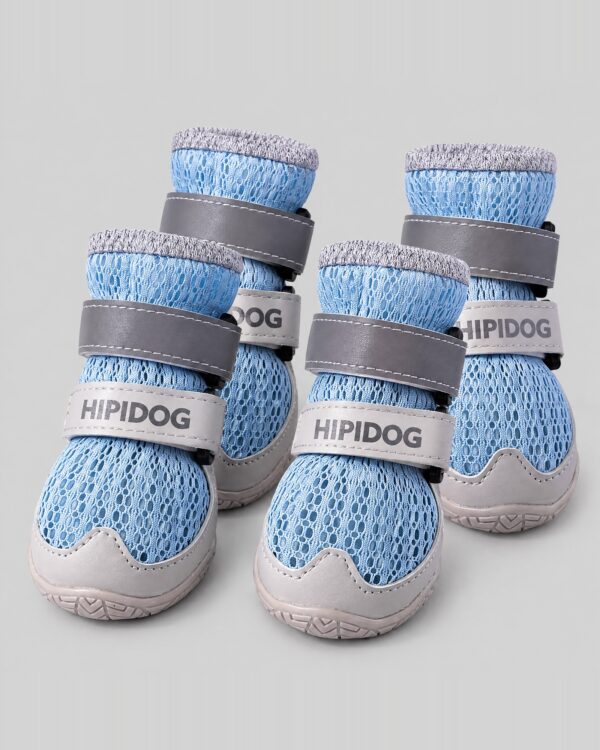
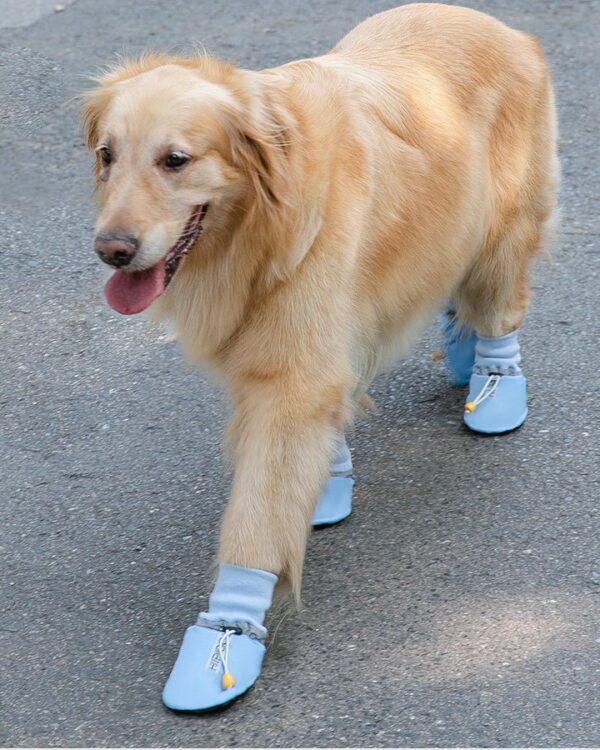
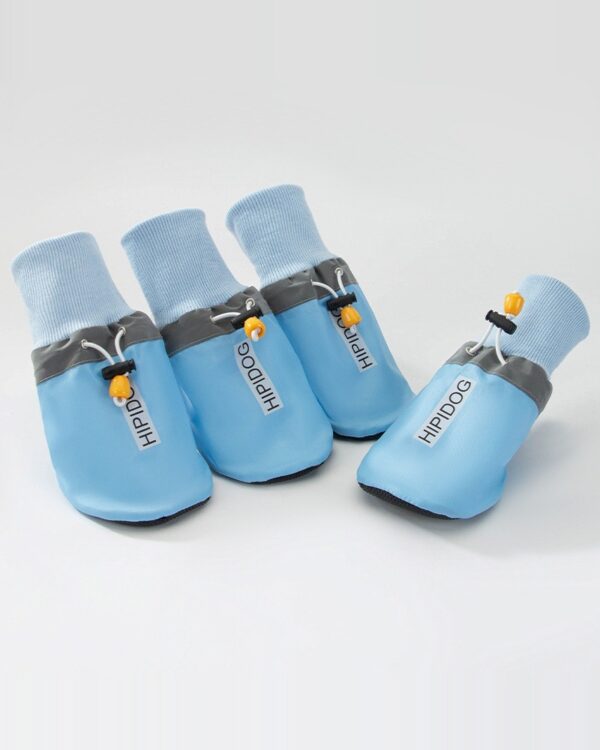
For dogs whose pads are getting red, cracked or sore from salt, the ASPCA suggests paw wax or boots as a barrier. Boots also keep salt and sand from getting lodged between the toes in the first place. If you’ve tried boots and they keep coming off, our guide to dog boots that keep falling off sorts out fit problems from a dog that’s still objecting.
If you think your dog has eaten ice melt, or it’s showing signs of being unwell after a walk, contact your veterinarian or the ASPCA Animal Poison Control Center.
When licking after a walk means something else
A dog that tidies its feet for a minute after a walk is grooming. A dog that keeps licking or chewing is telling you something. The AKC’s advice, especially when licking starts suddenly and is focused on one paw, is to examine the paw for a cut, a torn nail, a growth, or a stone, thorn or ice ball stuck between the pads. The dermatologist in the AKC’s pododermatitis guide adds that when only one paw is affected, vets are especially suspicious of a foreign body.
If the paw looks normal, the cause may be skin inflammation. The AKC lists allergies to yard chemicals, de-icers and certain grasses or weeds among the causes. Don’t wait it out. The moisture from constant licking can itself lead to a secondary bacterial or yeast infection, which makes the itch worse and keeps the cycle going.
Call your veterinarian if your dog suddenly starts licking or chewing its paws a lot, or if you see redness, swelling, limping, bleeding or signs of pain. These are things to notice and report, not to diagnose at home. What’s causing it, and what to treat it with, is your vet’s call. If the redness is between the toes, our guide to red skin between a dog’s toes covers what to note before the appointment.
Cleaning dog paws after a walk: FAQ
How do I clean my dog’s paws after a walk?
Stop at the door, wipe each paw with a damp cloth or a pet-safe wipe, gently spread the toes to clean between them and around the pads, then dry thoroughly with a towel pressed between the toes. For heavy mud or road salt, use a warm, soapy washcloth or rinse the paws in a bowl, sink or tub, then dry them. Check for cuts, cracks and anything stuck while you’re there.
Should I wipe my dog’s paws after every walk?
Not necessarily. After a dry walk on clean ground, a quick look is usually enough. Wipe and dry after rain, mud, sand or treated lawns. In winter, when sidewalks may be salted or de-iced, the ASPCA recommends washing and drying the feet after every walk, because dogs swallow those chemicals when they lick their paws.
Can I use baby wipes on my dog’s paws?
The ASPCA’s ice melt advice mentions a damp cloth or baby wipes. The AKC recommends dog wipes or moist wipes labeled safe for pet use. Since your dog is likely to lick its feet afterwards, a pet-labeled wipe or plain water is the simplest choice. If your dog’s skin reacts to a product, stop using it and ask your vet.
What is the best way to clean dog paws after a walk?
The simplest one you will do every time: a towel and a bowl of water by the door, a wipe of each paw with the toes spread, then a thorough dry between the toes. A pet-safe wipe is fine for light dirt. Save the sink or tub for heavy mud and road salt.
Can I wipe my dog’s paws with vinegar or rubbing alcohol?
Skip the alcohol. Dogs lick their paws, and the Pet Poison Helpline says swallowing isopropyl alcohol can poison pets. We found no veterinary guidance supporting vinegar for routine paw cleaning, so ask your vet before using it, especially on itchy or broken skin. Water or a pet-safe wipe does the job.
Is it OK to wash my dog’s paws every day?
Wiping with water as often as the paws are dirty is fine, and the ASPCA recommends washing and drying the feet after every winter walk. What matters is drying between the toes each time, because skin that stays damp there is where yeast and bacteria do well. If the pads look dry or cracked, ask your vet.
Do I need to dry my dog’s paws, or can they air dry?
Dry them, especially between the toes. The AKC links walks in the rain to yeast problems because moisture and dirt get trapped between the toes, and the Merck Veterinary Manual lists the feet among the warm, moist areas of skin at higher risk of infection. A towel pressed between the toes takes a few seconds.
Why does my dog lick its paws after a walk?
A little licking after walking on dirty or sandy ground is normal grooming. If the licking is frequent, intense or focused on one paw, check for a cut, a torn nail or something stuck between the pads. Skin irritation from yard chemicals, de-icers or plants is another possibility. If you can’t find a reason, or you see redness, swelling or limping, talk to your veterinarian.
Do dog boots mean I don’t have to clean the paws?
They mean a lot less cleaning. The ASPCA notes that boots keep sand and salt from getting lodged between the toes. You’ll still want to give the paws a quick look when the boots come off, since that daily check for cuts, cracks and redness is half the reason for the routine.
Sources
- American Kennel Club — How to Clean and Care for Your Dog’s Paws (updated Mar 18, 2026; checked 2026-10-02). Wipes labeled safe for pet use for muddy, sandy or salty paws; a warm, soapy washcloth for serious messes; washing paws to remove road salt; dry thoroughly; salt and dirt build up between the toes, around and between the pads and under the nails; part the toes to check; check for cuts, scrapes and cracked pads; professional trimming of hair between the pads.
- American Kennel Club — Yeast Dermatitis in Dogs (published Mar 7, 2024; checked 2026-10-02). Hot, humid weather and walks on rainy days can make yeast infections more likely because dirt and moisture get trapped between the toes. Bulldogs: clean and dry the feet after walks in rain or mud.
- American Kennel Club — Why Does My Dog Lick Their Paws? (updated Apr 1, 2026; checked 2026-10-02). Occasional licking after walking on dirty or sandy ground is normal; frequent, intense licking is not. Check sudden one-paw licking for injuries or foreign objects. Yard chemicals, de-icers and grasses can cause dermatitis; keep water and a towel by the door. Constant licking can lead to secondary infection.
- American Kennel Club — Pododermatitis in Dogs (updated Aug 20, 2026; checked 2026-10-02). A board-certified veterinary dermatologist notes that owners often don’t look between the toes; one affected paw raises suspicion of a foreign body; contact your vet for sudden excessive licking, redness, swelling, limping, bleeding or pain.
- ASPCA — Cold Weather Safety Tips (checked 2026-10-02). Wash and dry your pet’s feet and stomach after each winter walk; check for cracked pads and redness between the toes; trim hair between the toes on long-haired dogs; booties keep sand and salt from lodging between the toes; use pet-friendly ice melts.
- ASPCA — Keeping Pets Safe during Winter: The Dangers of Ice Melts (checked 2026-10-02). Pets are exposed by licking their feet after walking on treated areas; wipe paws with a damp cloth or baby wipes as soon as you’re inside and minimize licking until they’re clean; paw wax or booties for irritated pads.
- Pet Poison Helpline — Ice Melts Safe For Dogs (checked 2026-10-02). Calcium salts are the most severe irritants of the common ice melt ingredients and can irritate skin and paws on contact.
- Merck Veterinary Manual — Pyoderma in Dogs (last updated Sept 2024; checked 2026-10-02). Warm, moist areas of skin, including the feet, often have higher bacterial counts and are at increased risk of infection.
- Pet Poison Helpline — Cleaning Products and Pets (checked 2026-10-14). Swallowing isopropyl (rubbing) alcohol can poison pets and it is twice as toxic to dogs as ethanol; hydrogen peroxide exposure may cause skin and eye irritation or damage; skin exposure often leads to ingestion because animals groom themselves.
- VCA Animal Hospitals — Wound care dos and don’ts (checked 2026-10-14). Clean a wound with saline or water only; no soaps, shampoos, rubbing alcohol, hydrogen peroxide, herbal preparations or tea tree oil unless directed by a veterinarian.
This page is general care information, not veterinary advice. If your dog’s paws are red, swollen, bleeding or painful, or it may have swallowed a chemical, contact your veterinarian.
Clean between the toes, then dry between the toes.
The wipe across the bottom of the foot is the part everyone does and the part that matters least. Match the effort to the ground: a glance after a dry walk, a wipe and a proper dry after rain and mud, and a wash every time in salt season. Spread the toes, get the gaps, dry them, and take the few seconds to look. That’s how you catch the thorn, the crack or the red patch while it’s still small.