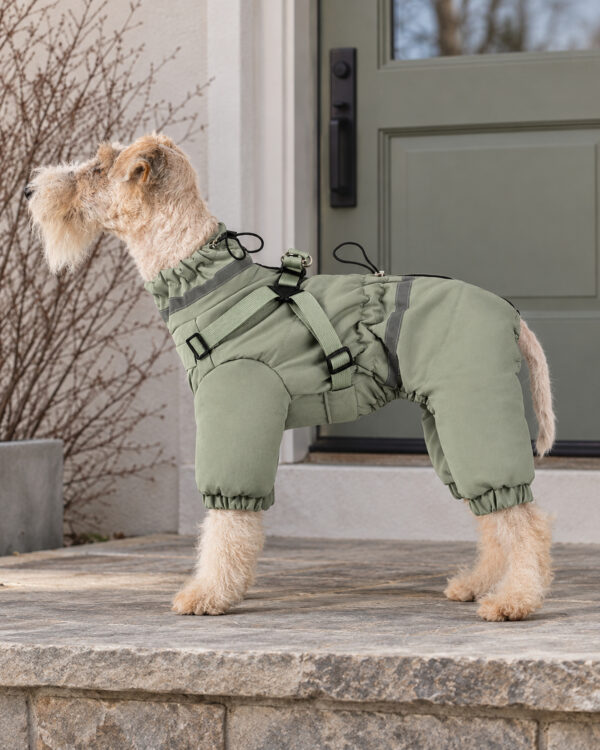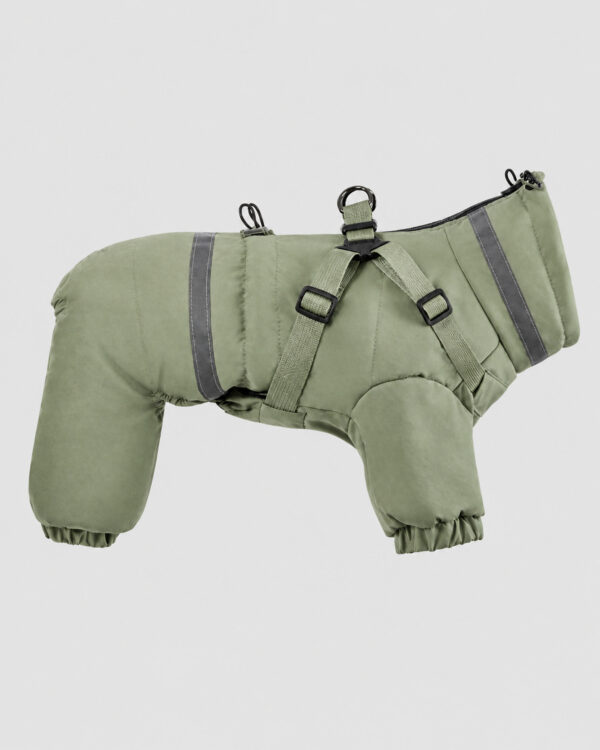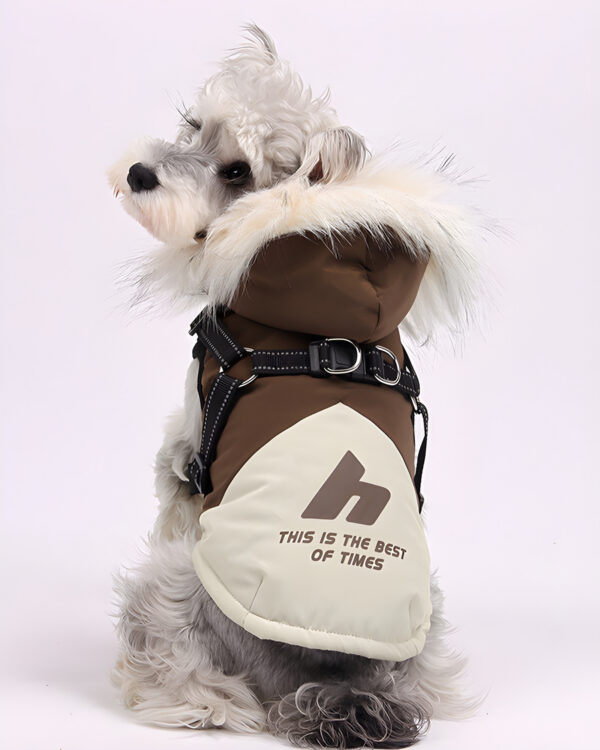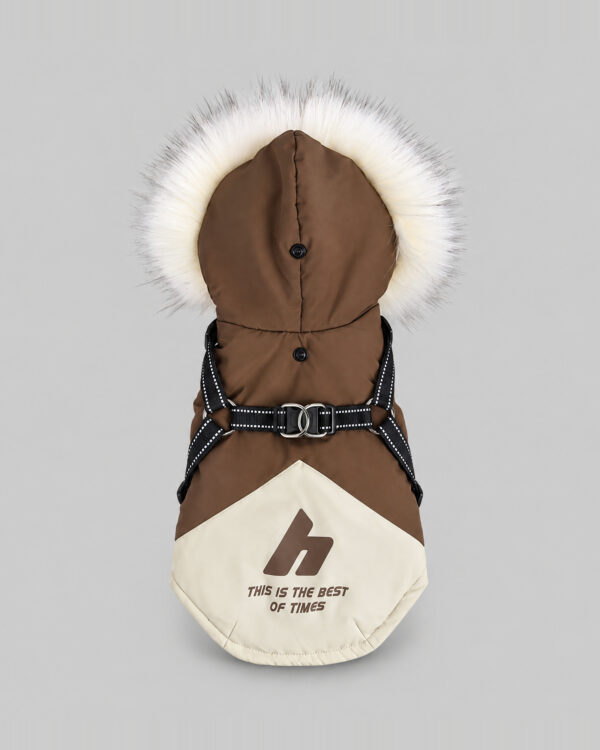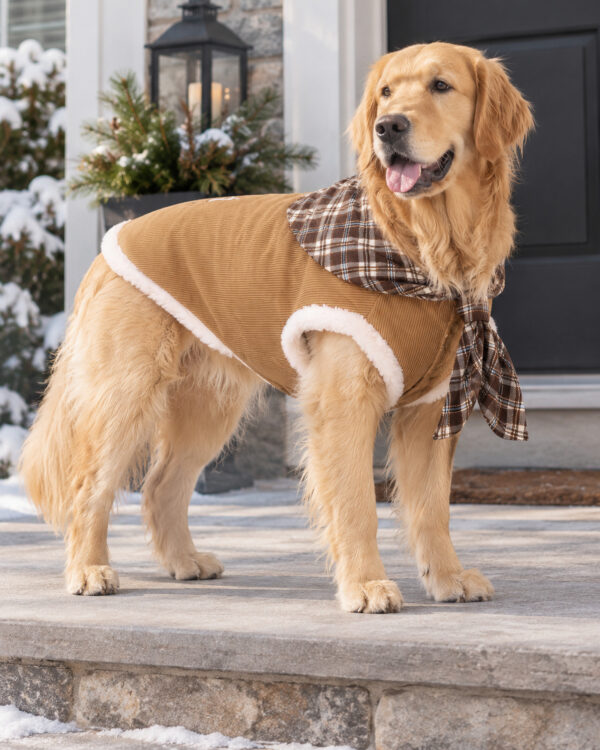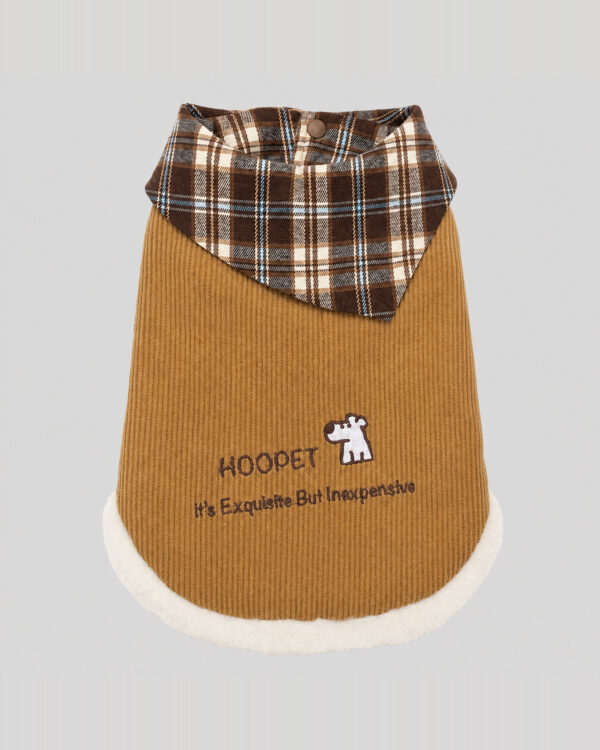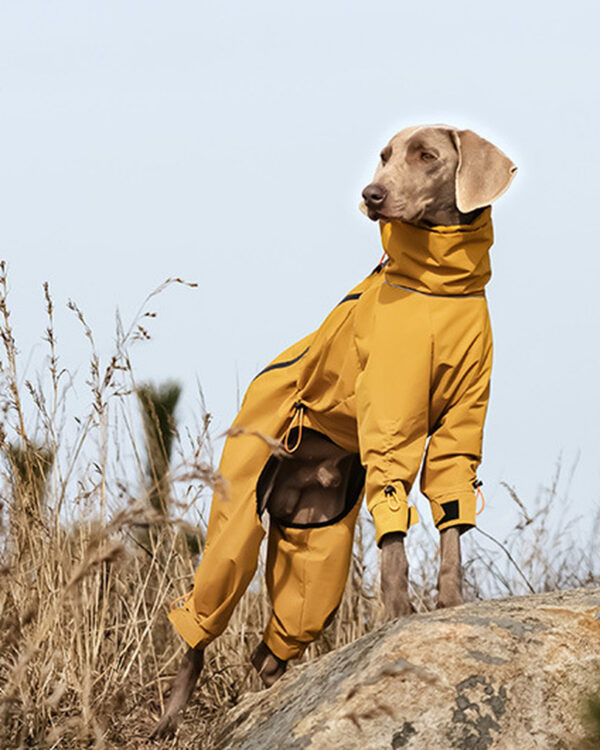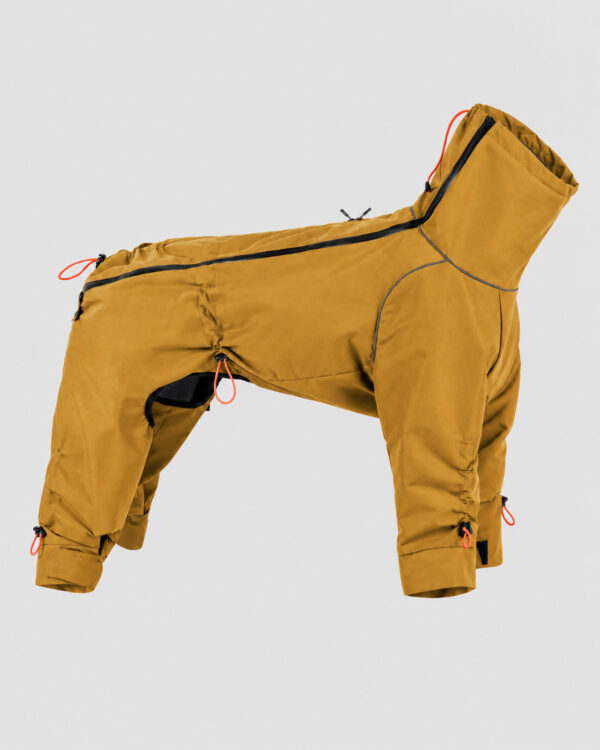
Most dogs don’t need a sweater indoors, and none should sleep in one unsupervised. The American Kennel Club is direct about it: clothing should never be used on an unattended dog or as a substitute for proper care. Overnight, when you’re asleep, is the most unattended your dog ever gets.
There are exceptions. A hairless dog, a very lean sighthound, a tiny puppy or a frail senior in a genuinely chilly house can be more comfortable in a light layer while you’re around to watch. For the night, the better fix is the one the ASPCA recommends: a warm place to sleep, off the floor and away from drafts, with a blanket the dog can burrow into. And a dog that seems cold indoors all the time is worth a vet visit, because sometimes the cold isn’t the house.
Why the answer changes when you come inside
A sweater makes sense on a walk because the walk is the cold part of the day. Your dog is out in moving air, often on wet ground, and can’t choose where to stand. Indoors almost all of that reverses. The house is warmer and still, and your dog can move toward warmth or away from it on its own.
That last part matters more than it sounds. The American Veterinary Medical Association points out that pets, like people, may change their sleeping place based on their need for more or less warmth, and recommends giving them safe options so they can adjust. A dog who is too warm on the sofa moves to the kitchen floor. A dog wearing a sweater can’t take it off. Indoors, clothing turns a choice your dog makes for itself into one you’ve already made, and you aren’t always there to notice when it’s the wrong one.
Heat is the other half. A sweater that’s right for a walk at freezing is a lot of insulation for a heated living room. We go through how dogs shed heat, and why a covered dog does it less well, in do dogs overheat in coats. The short version for indoors: if your dog is panting at rest, seeking out cool floors, or restless in the sweater, it’s too warm, and the sweater comes off.
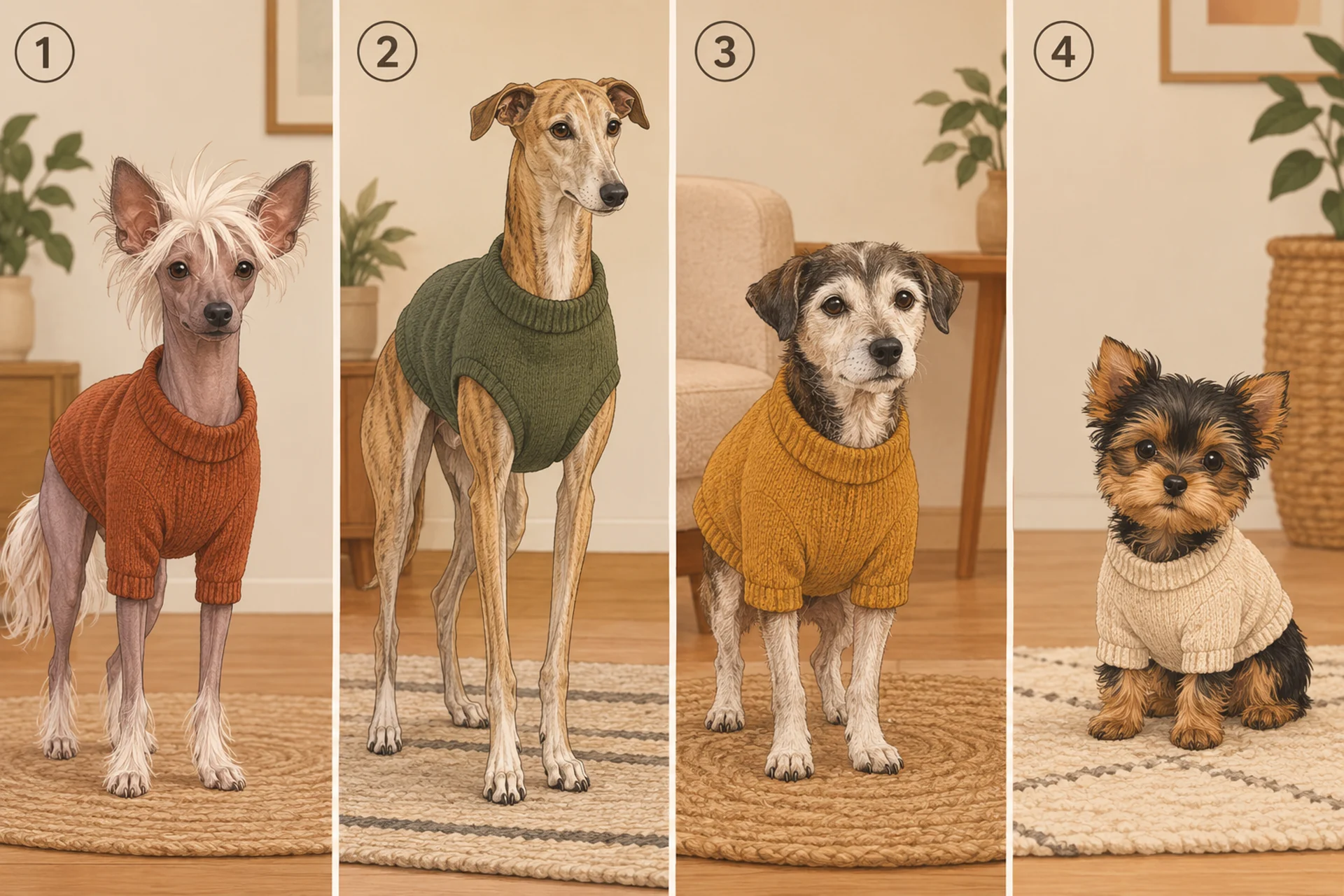
The dogs who might genuinely want a layer indoors
The groups that feel cold outside are the same ones that can feel it in a cool house, just less dramatically. The AKC lists small dogs, senior dogs, puppies and short-coated dogs as losing body heat faster. Its guide to winter coats adds hairless breeds, which can struggle to regulate their temperature, and naturally lean dogs. The AVMA puts health on the same list: pets with diabetes, heart disease, kidney disease or hormonal imbalances such as Cushing’s disease may have a harder time regulating their body temperature, as may very young and very old pets.
| Your dog | Sweater indoors? | What to do instead, or as well |
|---|---|---|
| Healthy adult with a normal or thick coat | No | Nothing. A bed out of drafts is plenty. Take the walking coat off at the door |
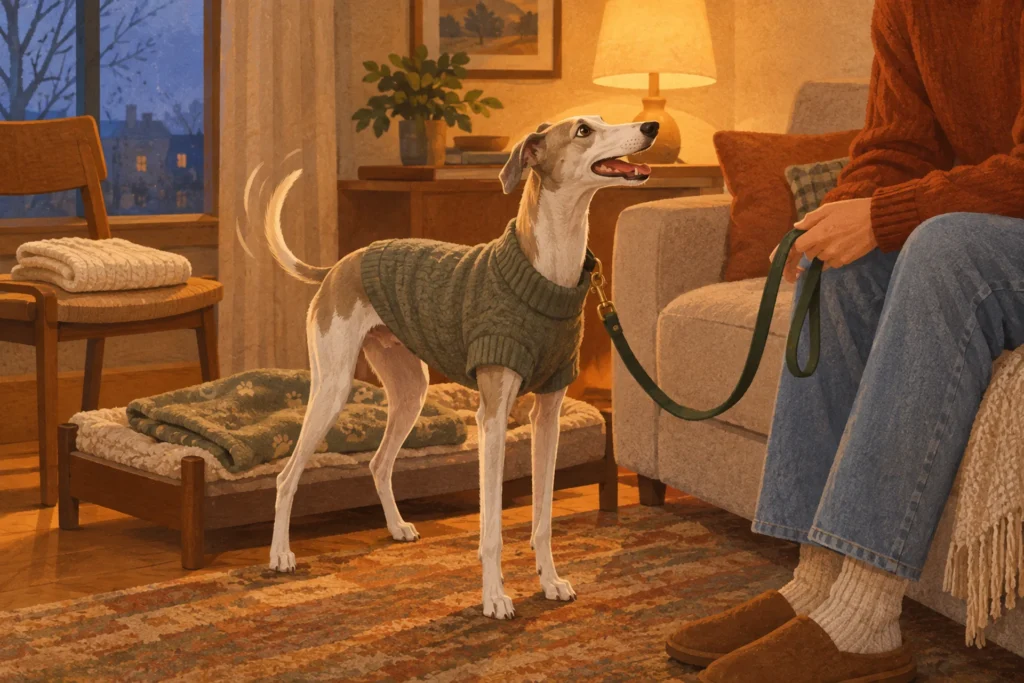
| Hairless breed, or a very lean, thin-coated dog (Whippet, Italian Greyhound and similar) | Sometimes, in a cool house, while you’re home | A light, breathable layer during the day if the dog is shivering or curled tight. Off at bedtime; a blanket it can get under instead |
| Tiny puppy | Rarely | Warm, draft-free sleeping spot first. Puppies chew, and clothing is a chewing hazard (see below) |
| Senior, or a dog with a chronic illness | Possibly, with your vet’s input | Ask your vet about your dog’s temperature limits, as the AVMA suggests. Watch for new cold-seeking behavior |
| Any dog that’s just come in wet | Never a wet one | Towel dry first. The AVMA warns that wet sweaters or coats can actually make your dog colder |
Notice what’s missing from that table: a temperature. There’s no published vet number for “turn the heating below X and put a sweater on.” House temperatures, dogs and drafts vary too much. The signs your dog gives you are more reliable than a thermostat, and they’re the same ones you’d watch for outside. The AKC describes shivering and curling up for warmth as early signs of a dog getting too cold. If you want the outdoor version of this question, our guide to what temperature a dog needs a coat goes through it.
Can my dog wear a sweater to bed?
This is where the answer gets firm. Taking the sweater off at night isn’t about comfort, it’s about supervision. Three things can go wrong while you’re asleep, and you won’t see any of them happening.
- Too warm, with no way out. A curled-up dog under a blanket, in a sweater, in a heated bedroom has stacked three layers of insulation and can only remove one of them.
- Twisted or caught. Dogs turn, dig and circle in their beds. A sweater that fits well standing up can ride up into the armpits or twist around the chest overnight. Fit matters here; our guide to how a dog coat should fit covers the lie-down test.
- Chewed and swallowed. A bored dog at 3 a.m. will work on whatever is in reach, and a sweater is in reach. VCA Animal Hospitals notes that dogs are notorious for swallowing articles of clothing, and that while some foreign objects pass, others cause blockages that need surgery.
None of these are common in a dog that’s relaxed in its clothes and sleeps through the night. But the AKC’s rule doesn’t have an exception for well-behaved dogs, and there’s no benefit on the other side that a good bed can’t provide.
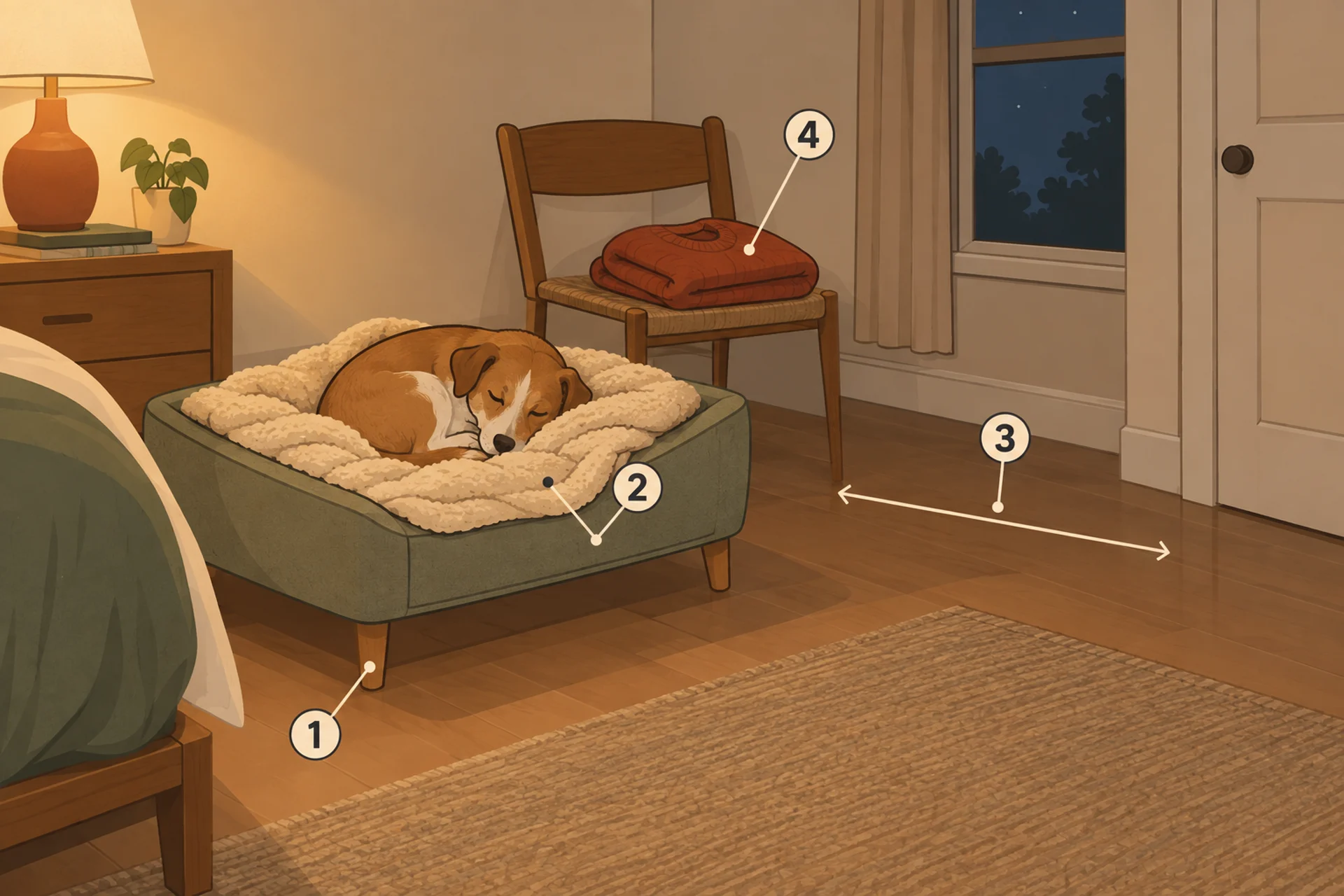
How to keep a cold dog warm at night instead
The ASPCA’s version is short: a warm place to sleep, off the floor and away from all drafts, with a cozy bed and a warm blanket or pillow. Each part of that does a job.
- Off the floor. Hard floors pull heat from a sleeping body. A raised bed, a thick cushion, or a bed on a rug all help. The AVMA gives the same reason for raising outdoor shelters: it minimizes heat loss into the ground.
- Out of drafts. Move the bed away from exterior doors, single-pane windows and the bottom of the stairs, where cold air pools.
- Something to get under. A blanket the dog can burrow into does what a sweater does, except your dog can come out when it’s warm enough. Many short-coated dogs will tunnel under covers on their own.
- More than one spot. The AVMA suggests giving pets some safe options so they can vary their sleeping place. A second bed in a warmer room is a good idea for a thin dog.
- Careful with heat sources. The AVMA says to use space heaters with caution around pets, because they can cause burns or be knocked over, and that heated pet mats can still cause burns. A blanket is the safer first step.
- Dry before bed. If the last walk was wet, towel your dog off properly. The ASPCA recommends toweling dry as soon as a pet comes inside.
“Can my dog wear a sweater all day?”
People usually ask this one in a cold house, or about a dog who looks miserable without one. There’s no vet-published number of hours, so be wary of anyone who gives you one. The rule that does exist is the AKC’s: clothing is an adjunct to care, used while someone is watching. That gives you a practical shape for the day.
- On while there’s a reason and you’re around. A cold morning, a draft-heavy room, a thin dog shivering after a walk.
- Off when you leave the house or go to bed. Same reason as overnight.
- Off for a few minutes when you check it. Look at the armpits and behind the front legs for rubbing or matted fur. Feel underneath: warm is fine, damp or hot is not.
- Washed regularly. The AKC recommends regularly washing a dog’s winter coat to prevent skin irritation. A sweater worn indoors every day needs it more often than one used for walks.
- Off at once if your dog pants at rest, scratches at it, chews it, or keeps trying to lie on a cold floor.
When “always cold” is a reason to see the vet
Some dogs are cold indoors because the house is cold. Others are cold because something has changed in the dog. Hypothyroidism is the classic example. VCA Animal Hospitals lists cold intolerance (gets cold easily) among its signs, alongside weight gain without more appetite, lethargy and a dull, thinning coat. The Merck Veterinary Manual notes that some dogs have trouble keeping warm and seek sources of heat, and that it is most common in dogs 4 to 10 years old. The AVMA’s list of conditions that make temperature regulation harder (diabetes, heart disease, kidney disease, Cushing’s) points the same way.
None of this means a dog that likes the radiator is ill. But if a dog that never cared before now shivers in a normal room, hunts for heat, or has slowed down and put on weight, a sweater treats the symptom and hides the change. Mention it to your vet before you buy the second sweater. This guide can tell you what to watch for; only your vet can tell you why it’s happening.
Before you put a sweater on indoors
- Is your dog actually showing cold, shivering or curling tight, or do you just feel cold?
- Is the dog dry?
- Will you be home and awake for as long as it’s on?
- Does it fit when the dog lies down, not just when it stands?
- Is there a warm, draft-free bed it could use instead?
- If your dog is a senior or has a health condition, has your vet weighed in?
Dog sweaters indoors: FAQ
Should dogs wear sweaters indoors?
Most don’t need to. A healthy dog with a normal coat is comfortable in a heated home and can move to a warmer or cooler spot itself. Hairless, very lean, tiny or frail dogs in a chilly house may benefit from a light layer while you’re home to watch them.
Should I take my dog’s sweater off at night?
Yes. The AKC says clothing should never be used on an unattended dog, and a sleeping household is unattended. A warm bed off the floor, away from drafts, with a blanket to burrow into keeps a dog warm without the risks.
How long can a dog wear a sweater?
There’s no published vet limit in hours. Keep it on while there’s a reason for it and someone is watching, check underneath for rubbing and dampness, and take it off when you go out or go to bed, or if your dog pants, scratches or chews at it.
How do I know if my dog is cold inside the house?
Shivering and curling up tightly are the early signs the AKC describes. Hunting for heat sources, burrowing under blankets and reluctance to leave a warm spot are others. If it’s new and the house hasn’t changed, mention it to your vet.
Is it OK for my dog to sleep in a sweater if it’s very cold?
A warmer bed is the better answer. Add a blanket, raise the bed off the floor and move it away from windows and doors. If your house is cold enough that your dog still shivers in a good bed, talk to your vet about what’s safe for your dog.
Can a wet sweater make my dog colder?
Yes. The AVMA warns that wet sweaters or coats can make a dog colder and suggests having several, so there’s always a dry one. Take a wet sweater off as soon as you’re inside and towel your dog dry.
Dress for the walk. Warm the bed for the night.
Indoors, your dog can usually manage its own temperature if you give it somewhere warm to go. A sweater is for the cold part of the day and the moments you’re there to watch. When the lights go off, it goes on the chair.
Sources
- American Kennel Club — Hypothermia in Dogs: How Cold Is Too Cold? (checked 2026-10-07)
- American Kennel Club — Does My Dog Need a Winter Coat? (checked 2026-10-07)
- American Veterinary Medical Association — Cold Weather Animal Safety (checked 2026-10-07)
- ASPCA — Cold Weather Safety Tips (checked 2026-10-07)
- VCA Animal Hospitals — Ingestion of Foreign Bodies in Dogs (checked 2026-10-07)
- VCA Animal Hospitals — Hypothyroidism in Dogs (checked 2026-10-07)
- Merck Veterinary Manual — Disorders of the Thyroid Gland in Dogs (checked 2026-10-07)
This guide is general information, not veterinary advice. If your dog is a senior, has a health condition, or seems cold indoors when it didn’t before, ask your veterinarian.