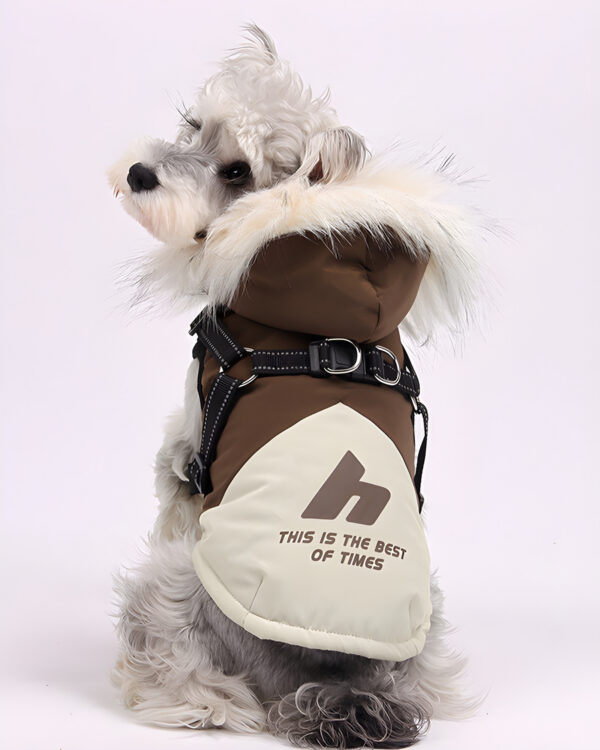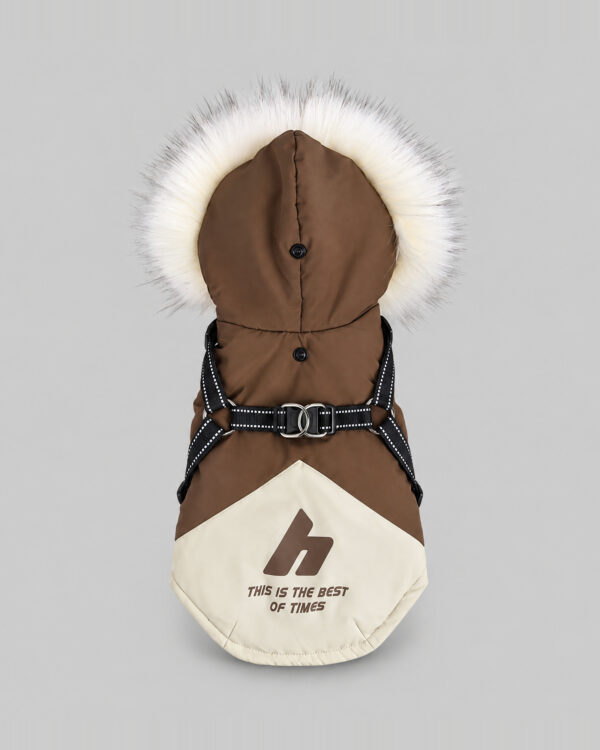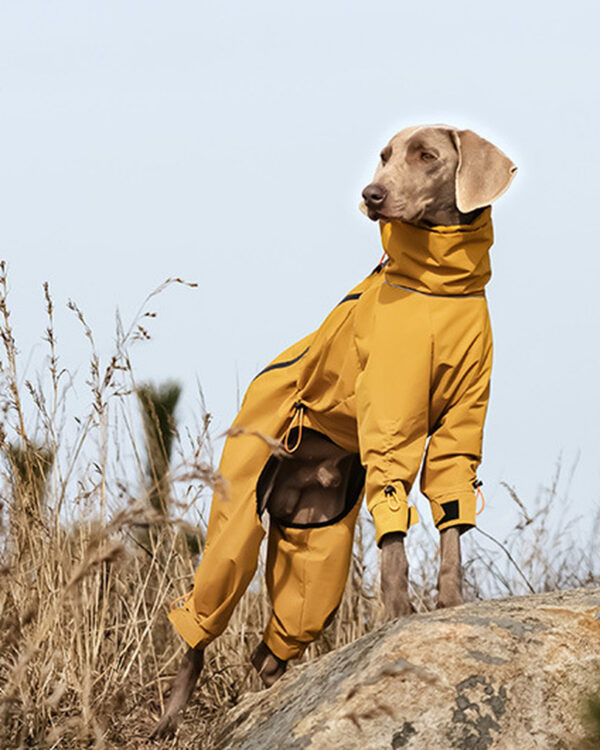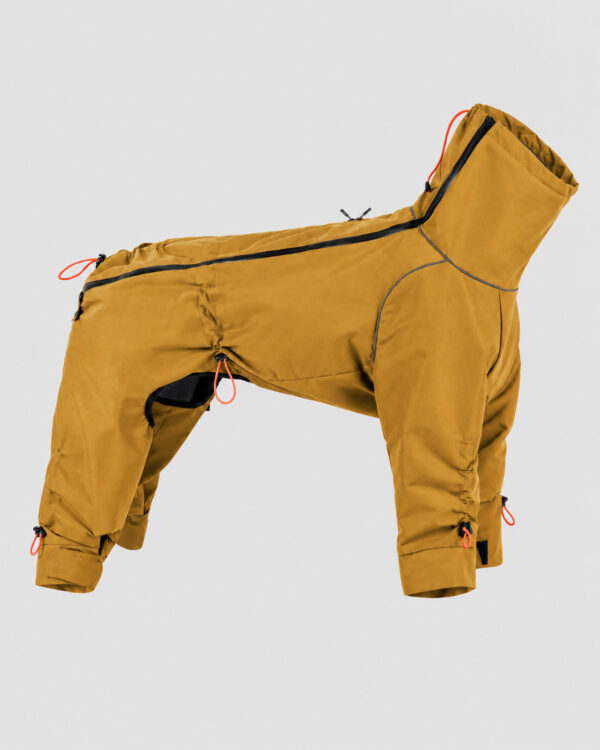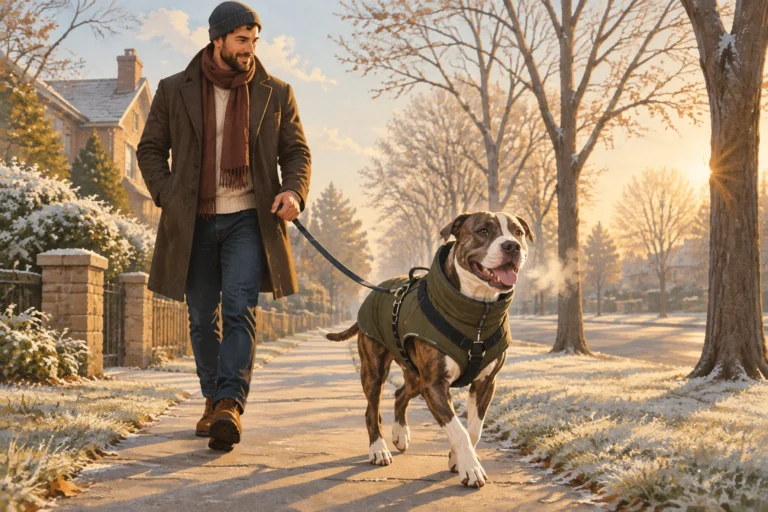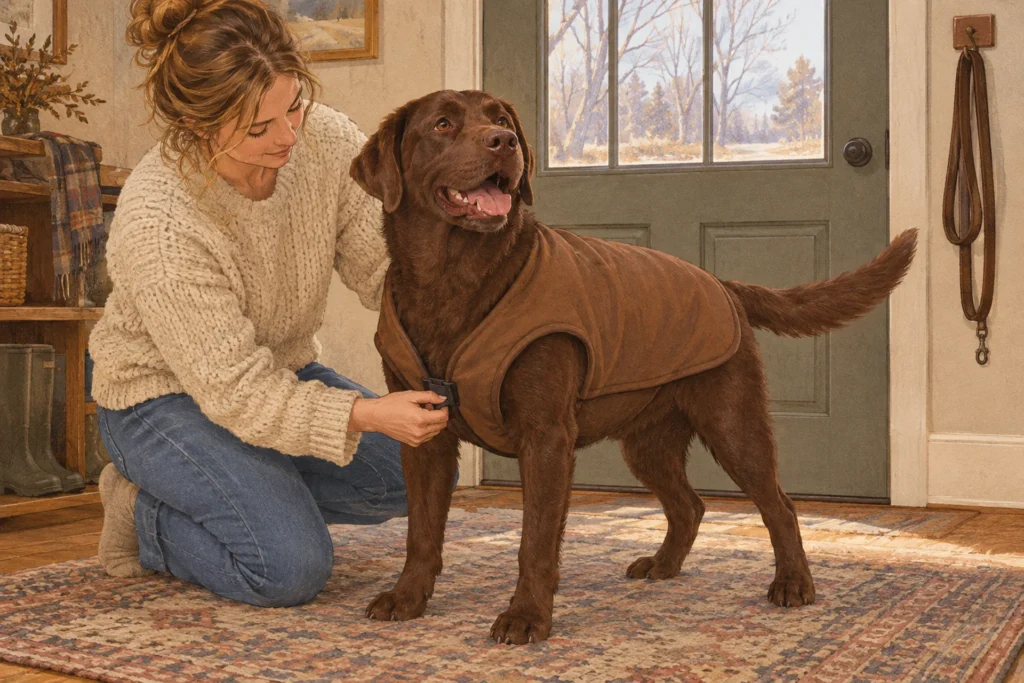
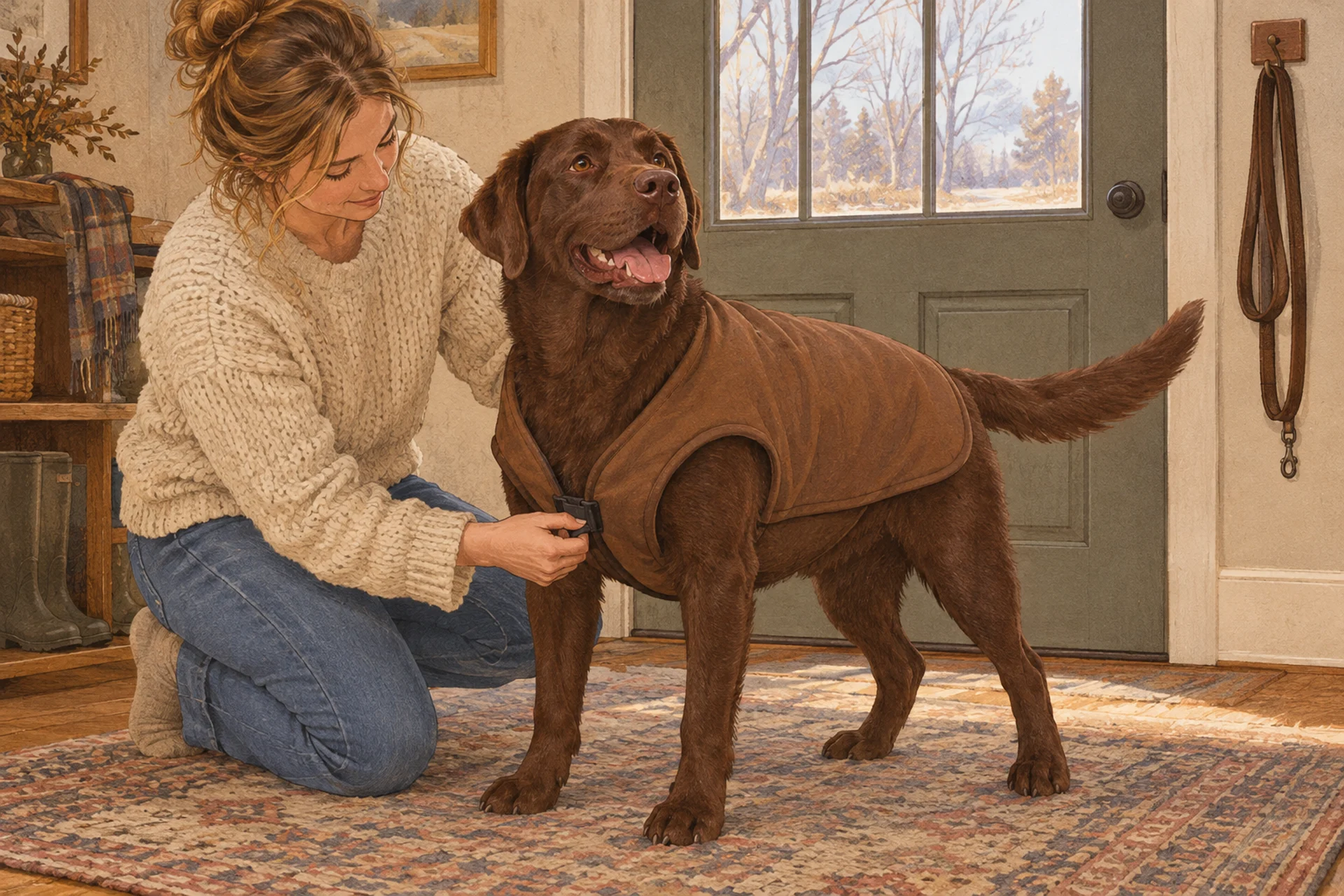
If your dog hates things going over the head, buy a coat that opens flat and closes around the body, and skip the pullover. That is the trainer’s advice too. In its guide to winter gear, the American Kennel Club says to “select a coat that is easy to put on and doesn’t have to be pulled over their head.”
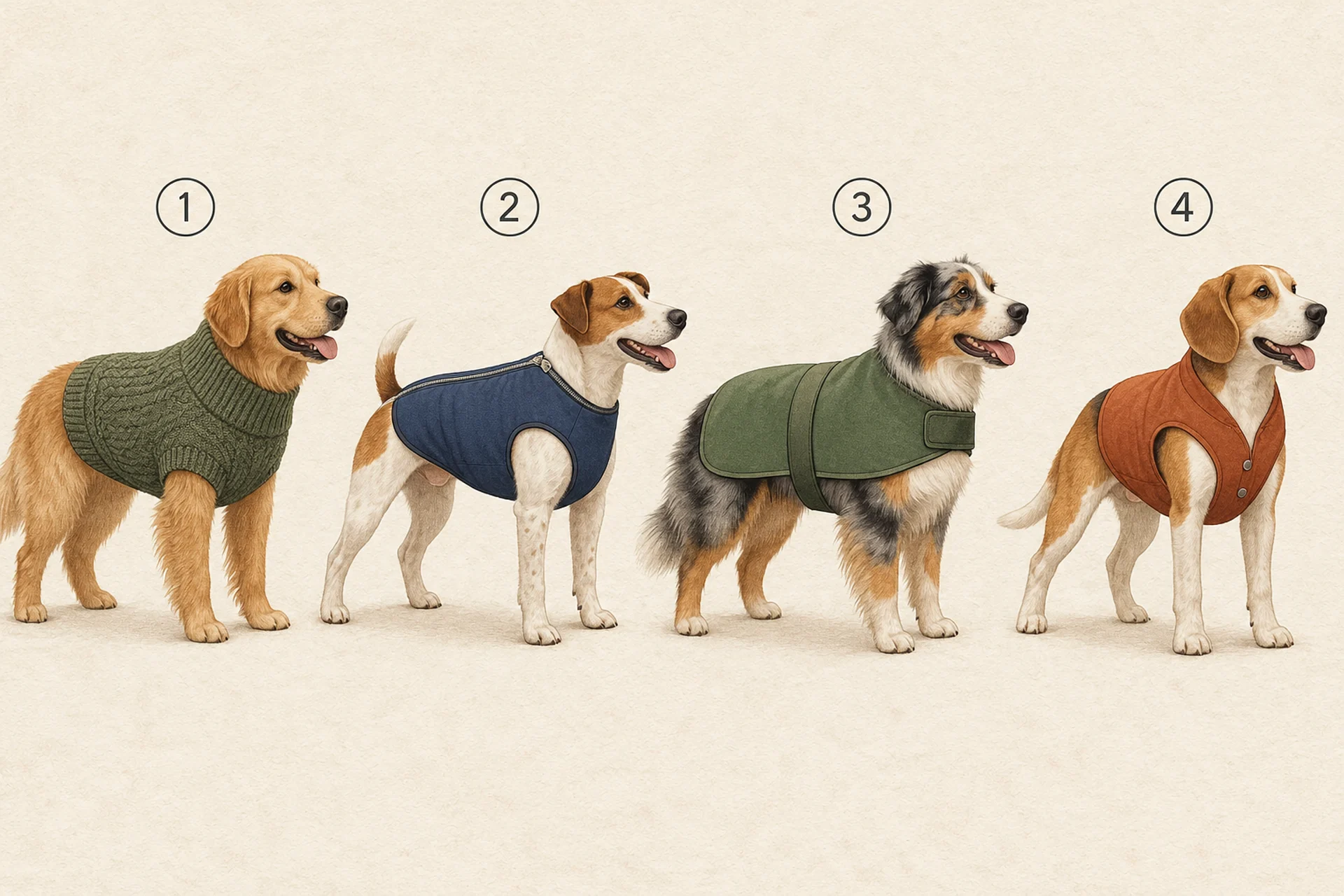
Three designs do that: a wrap that lies over the back and straps under the belly, a step-in that closes along the spine, and a vest that opens down the chest. Which one suits your dog depends on what else bothers them (feet being handled, a strap under the belly, the sound of Velcro). And if the head-shyness is new, it is worth a vet visit before a shopping trip.
Why so many dogs object to the over-the-head part
It is rarely the coat. It is the moment a dark opening comes down over the eyes and ears while a person leans in from above. The AKC’s piece on why dogs duck from a pat on the head explains the instinct: most dogs “instinctively feel uncomfortable when a hand reaches down from above their head,” and in dog language looming over another dog reads as a threat. A pullover asks a dog to hold still for exactly that, with the view blocked for a second as well.
That is why the familiar pattern is a dog who runs and hides when the sweater comes out and is perfectly content once it is on. The garment is fine. The route it takes to get there is not.
The same logic already shapes harness advice. In the AKC’s guide to choosing a harness, veterinarian Dr. Amy Attas points to the step-in style because you don’t have to slip it over the head, which suits dogs with pain in their ears or neck and dogs with a sensitivity to anything touching their head. Coats work the same way.
Rule out pain first if this is new
A dog who has always ducked away from pullovers is telling you a preference. A dog who used to tolerate them and now flinches, yelps or snaps is telling you something else. The AKC notes that a sudden shift in behavior can indicate a health issue, and that a dog who is sick or in pain may be unable to put up with a situation it used to accept.
Ears are a common culprit, because a neckline drags straight across them. The Merck Veterinary Manual lists head shaking, foul odor, skin redness, swelling, scratching and ear discharge as signs of outer ear inflammation, and says plainly that the ear can be painful or itchy. If you see any of those, or stiffness in the neck, or the change simply came out of nowhere, see your veterinarian before you try a different coat. No closure style fixes a sore ear.
Four ways a coat goes on, compared
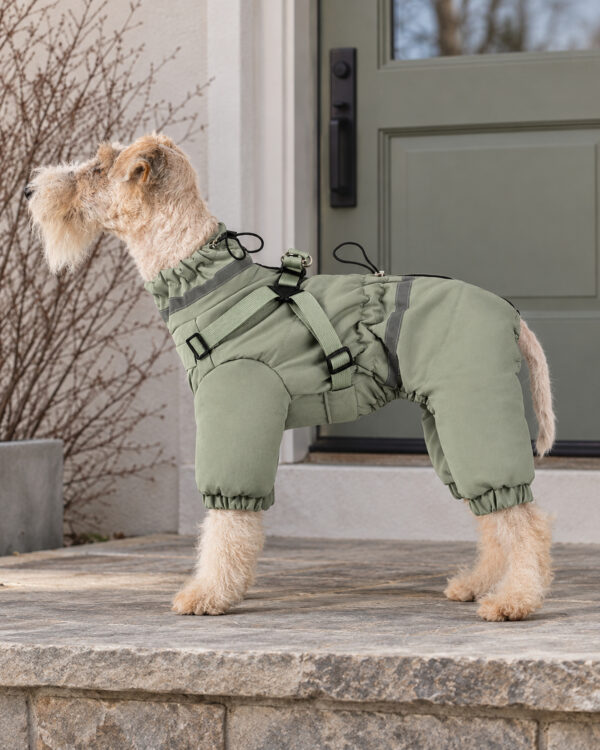
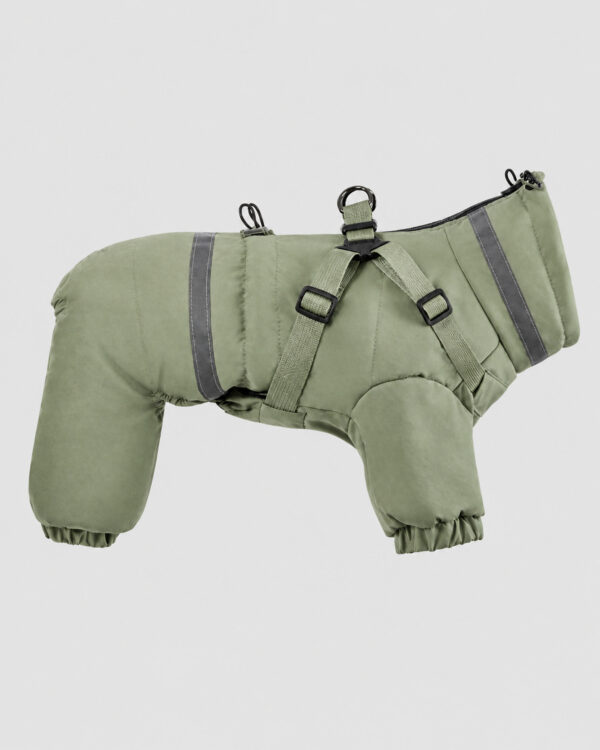
Product names are unreliable here. “Step-in,” “wrap” and “easy-on” get used loosely, so look at the photos and work out where the garment opens. The pros and cons below are practical observations about the designs, not veterinary findings.
| How it goes on | Over the head? | Good for | Watch out for |
|---|---|---|---|
| Pullover (sweaters, hoodies, fleece tubes) | Yes | Dogs who don’t mind; snug warmth with no hardware | The one style to avoid for a head-shy dog. Some coats sold as jackets also have a closed neck, so check |
| Wrap or blanket coat (lies over the back, tab at the chest, strap under the belly) | No | Head-shy dogs and dogs who dislike having their feet lifted; quickest to put on | Often closes with Velcro, and the AKC notes the sound of Velcro can be startling. Usually less chest and belly coverage |
| Step-in (front feet go in, closes along the back) | No | Head-shy dogs who are fine with paw handling; good chest coverage | You have to place both front feet, which is awkward with a wriggly, heavy or arthritic dog |
| Front-opening vest (opens down the chest, legs through armholes) | No | Head-shy dogs; goes on one leg at a time while the dog stands | You fasten it underneath, so you are reaching under the chest. Sleeveless styles leave the belly open |
What to check on the product page
- Find the opening in the photos. You want to see the garment lying completely flat, or a photo of it being fastened. If the neck is a closed ring in every picture, it is a pullover whatever the title says.
- Look at what the hood does. A hood attached to a closed neck still means pulling fabric past the ears. A hood on a coat that opens fully can simply stay down.
- Note the fastener. Snaps and zips are quiet. Velcro is fast and adjustable but loud. If your dog startles at sounds, open and close it away from the dog a few times first, or choose a quieter closure.
- Count the feet you’ll have to lift. None for a wrap, two for a step-in or a vest. A dog who hates paw handling as much as head handling wants a wrap.
- Check where the leash attaches. If your dog walks on a harness, the coat needs an opening for the leash ring or has to fit under the harness. Putting an over-the-head harness on top of a no-overhead coat rather defeats the purpose, and the AKC harness guide covers step-in harnesses for the same reason.
- Use the size chart, not the size name. VCA Animal Hospitals advises checking the manufacturer’s sizing guide because fit varies between brands, and says a jacket should cover the back, chest and belly while letting the dog move freely. Our guides to measuring a dog for clothes and how a coat should fit go through the measurements.
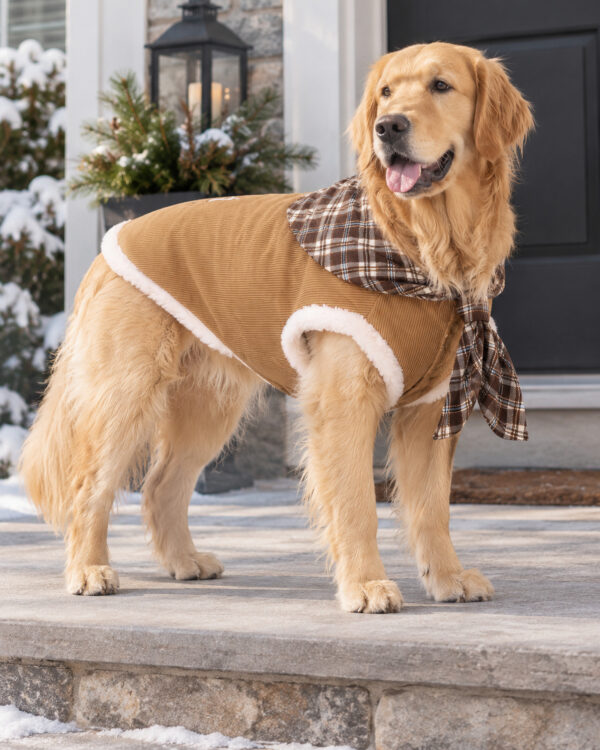
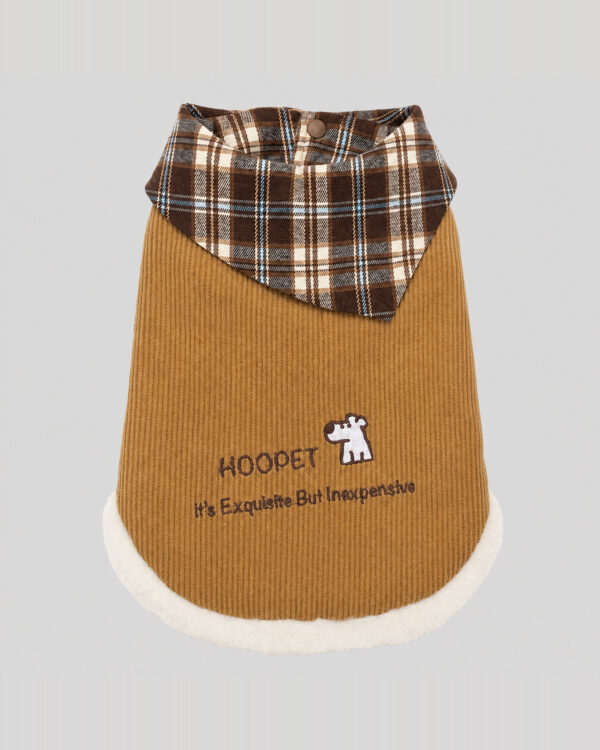
For what it’s worth, the one sleeveless vest we sell is the fourth type in the table: the Everyday Plaid-Collar Large-Dog Corduroy Vest opens down the chest with snaps, so each front leg goes through an armhole and nothing passes over the head. It is made for large dogs only and leaves the belly open, so it is not the answer for a small dog or for wet, slushy days.
Putting it on without a chase
The right design removes the worst moment. It does not make a wary dog love coats overnight, especially one who has learned that the sweater coming out means being cornered. The AKC’s steps for a new coat are short:
- Let the dog look first. Hold the coat out to sniff, or lay it on the floor to investigate, and reward the interest.
- On, reward, straight off. Put the coat on, reward the dog for wearing it, then take it off again immediately.
- Stretch the time. Repeat, rewarding while the coat is on, and leave it on a little longer each session.
- Then take it outside. Move to a more distracting place only once the dog is comfortable wearing it at home.
If the dog pulls away or tries to get the coat off, the AKC’s instruction is to remove it gently and go back to the earlier steps. It also suggests doing this before the cold weather starts, which in practice means now.
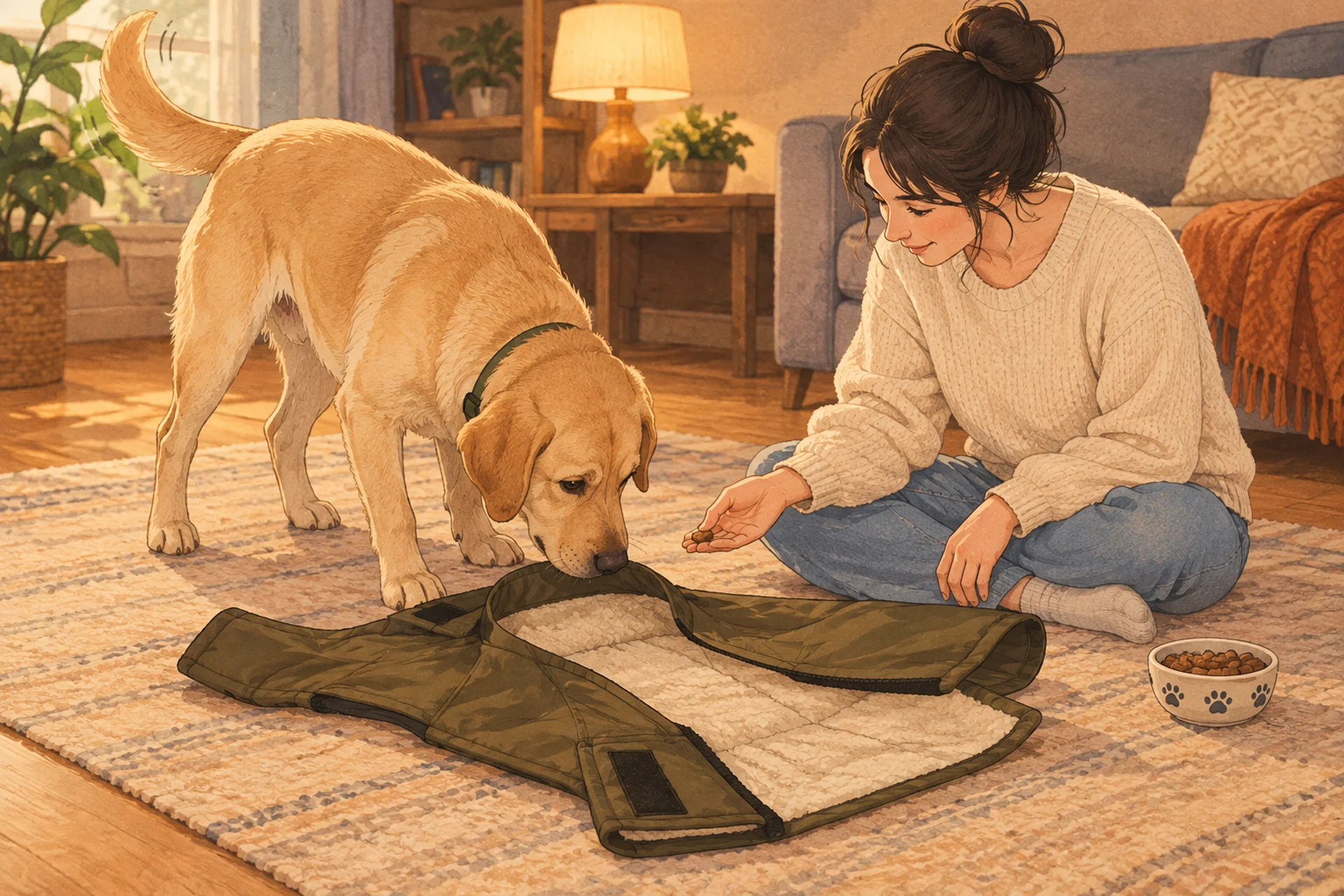
This is ordinary desensitization and counterconditioning. VCA describes the first as gradually exposing a pet to the thing that triggers fear, and the second as pairing it with something that creates a positive response, while keeping the trigger below the pet’s threshold of fear or stress. The full routine, including body language to watch, is in how to get your dog used to wearing clothes.
Two practical points for big dogs. Approach from the side at shoulder level instead of standing over the dog from the front. And lay the coat on from the back forward, so the first contact is on the shoulders, where most dogs are happy to be touched, and not near the face.
When to stop and ask for help
If your dog growls, freezes hard, or snaps when clothing comes near, stop. Don’t hold the dog still to get it done. Talk to your veterinarian, who can check for pain and refer you to a qualified trainer or veterinary behaviorist if it is fear.
It is also fair to ask whether this dog needs a coat. VCA notes that the very young and very old don’t regulate body temperature as well and get chilly easily, and Cornell’s Riney Canine Health Center says a jacket or sweater helps smaller breeds, older dogs and those with a thin coat. A healthy, thick-coated dog on a short dry walk may be better off without the argument. Our guide to what temperature a dog needs a coat covers that decision.
Dog coats that don’t go over the head: FAQ
What kind of dog coat doesn’t go over the head?
Wrap or blanket coats that lie over the back, step-in coats that close along the spine, and vests that open down the chest. All three close around the body. Check the photos for the garment lying flat, because product titles are not consistent.
Is there a dog sweater that doesn’t go over the head?
Most knitted sweaters are pullovers. Look for a cardigan-style sweater with snaps or buttons down the chest or back, or use a fleece vest or wrap instead. The AKC’s advice for dogs new to clothing is to pick a coat that doesn’t have to be pulled over the head.
Why does my dog hate things going over his head?
Many dogs are instinctively uncomfortable with something coming down from above their head, as the AKC explains about head pats, and a neck opening also covers the eyes and drags over the ears. If the reaction is new, pain is possible, so have your vet check the ears and neck.
Is a step-in coat or a wrap coat easier to put on?
A wrap is usually fastest because no feet are lifted. A step-in or front-opening vest covers the chest better but means placing both front legs. Choose by what your dog tolerates: feet being handled, or a strap under the belly.
Can I train my dog to accept a pullover instead?
Often, yes, with slow reward-based practice: reward for sniffing it, then for a moment of wearing, and build up, staying below the point where the dog shows fear. But if a design that avoids the head exists, using it is kinder and quicker than winning the argument.
My dog suddenly won’t let me put his coat on. What changed?
A sudden change in what a dog tolerates can point to pain or illness. Look for head shaking, ear scratching, odor, redness or discharge, which Merck lists as signs of ear inflammation, and book a vet visit before you assume it is stubbornness.
Sources
- American Kennel Club — How to Teach Your Dog to Wear Winter Clothes (checked 2026-10-14)
- American Kennel Club — How to Find the Right Dog Harness for Your Dog (checked 2026-10-14)
- American Kennel Club — Why Do Dogs Duck When You Pat Them on the Head? (checked 2026-10-14)
- Merck Veterinary Manual — Ear Infections and Otitis Externa in Dogs (checked 2026-10-14)
- VCA Animal Hospitals — Overcoming Fears with Desensitization and Counterconditioning (checked 2026-10-14)
- VCA Animal Hospitals — What to Consider When Choosing a Dog Jacket (checked 2026-10-14)
- Cornell Riney Canine Health Center — Winter Safety Tips (checked 2026-10-14)
This guide is general information, not veterinary advice. For a dog in pain or a dog showing fear or aggression, ask your veterinarian.