Dogs slip on hardwood because their feet aren’t built for it. An owner handout from the American Animal Hospital Association explains that dogs have very smooth pads, can’t sweat through them for grip the way we do through our hands, and so rely on their nails, which don’t help on smooth surfaces. Long nails and fur growing over the pads make it worse.
Most of the fix is cheap and boring: non-slip rugs or runners where your dog actually walks, short nails, and the fur between the toes trimmed back. VCA Animal Hospitals recommends keeping nails short and trimming any fur that extends between the toes to improve traction at home. Grippy socks, boots and toe grips come after that. And if your dog has only recently started slipping or avoiding the floor, AAHA’s advice is that pain needs to be considered as a possible reason, so that one is worth a vet visit.
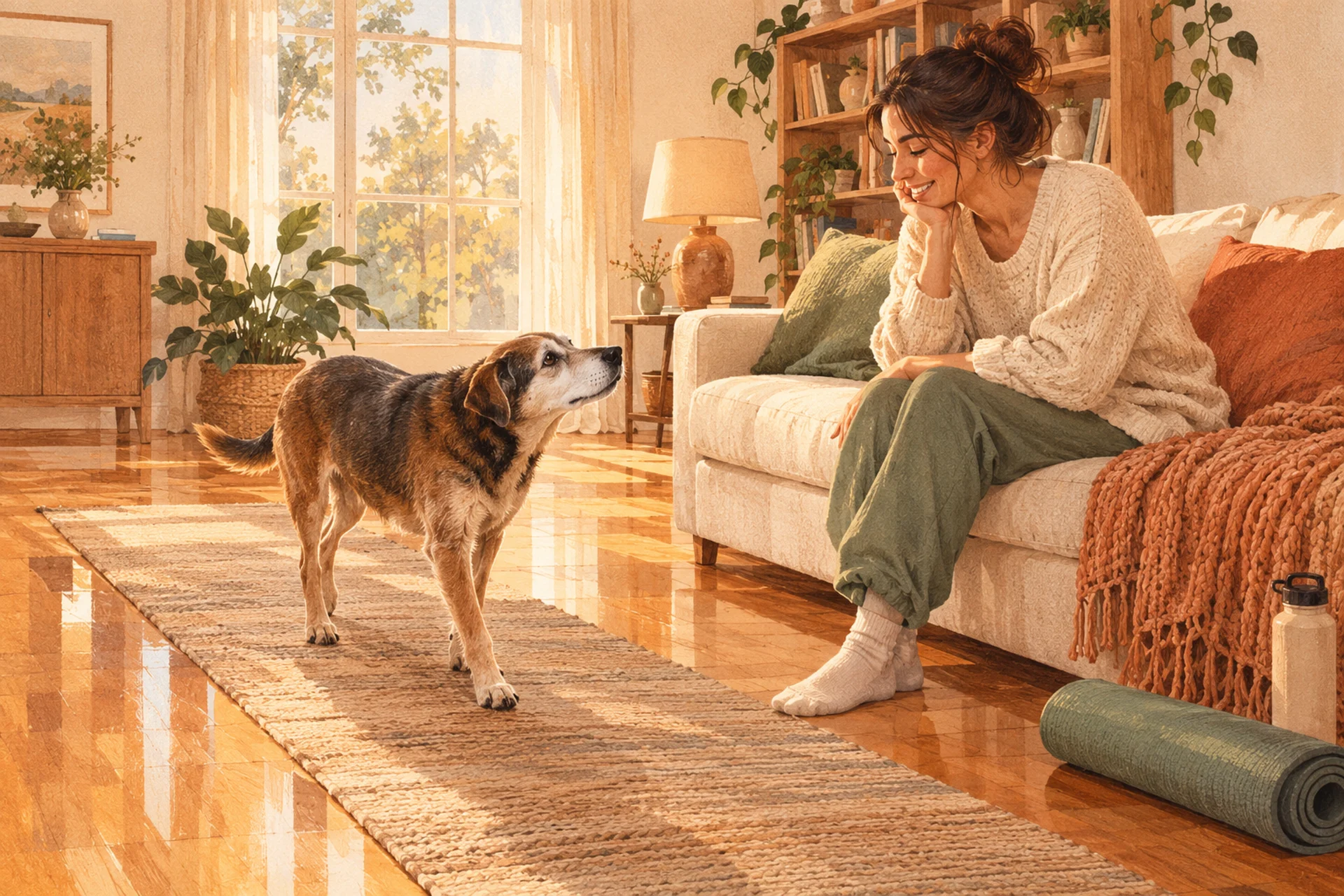
Why dogs slip on hardwood, laminate and tile
A dog on grass or dirt grips with its nails and pads together. On a sealed wood floor, neither works well. The AAHA handout puts it plainly: smooth pads, no sweat for grip, and nails that can’t dig into a smooth surface. VCA’s take on hard flooring is blunt too. Hardwood, laminate and tile are beautiful and durable, but much more difficult for dogs to walk and run on securely.
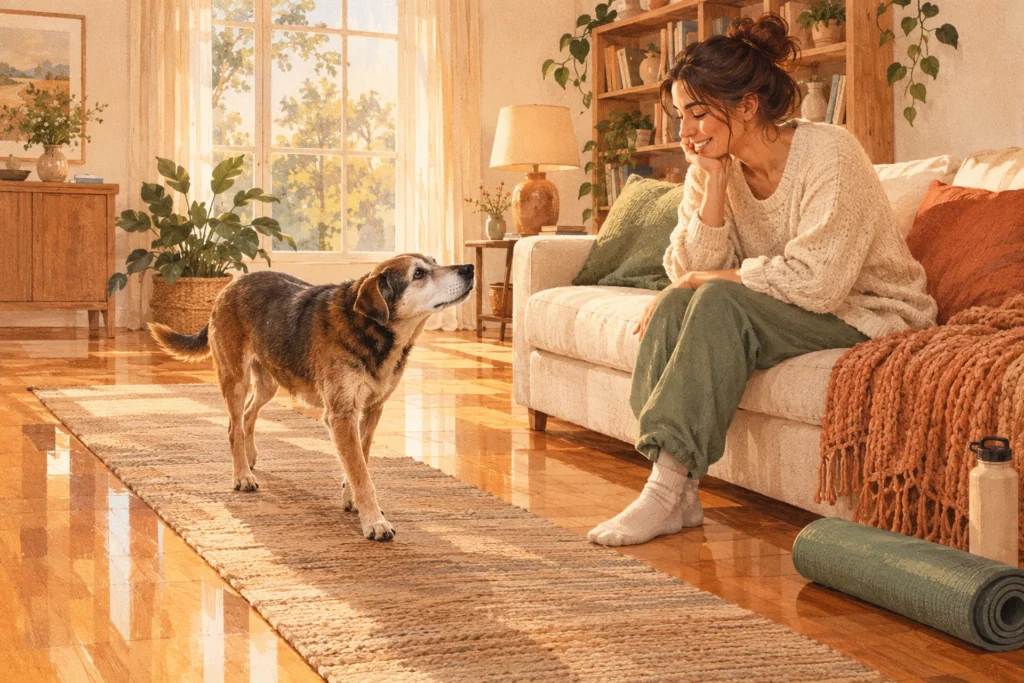
A healthy young dog mostly gets away with it. AAHA explains why: with strength and balance on all four legs, if one foot slides the dog simply catches itself with another. The trouble starts when a leg is weak or sore. The leg slides out and the dog can’t pull it back, and if a second leg is also weak, the dog goes down. AAHA notes that it only takes a few falls or near-falls for a dog to become fearful of that floor.
That is why the same floor can be fine for years and then suddenly become a problem.
Three things on the paw that make slipping worse
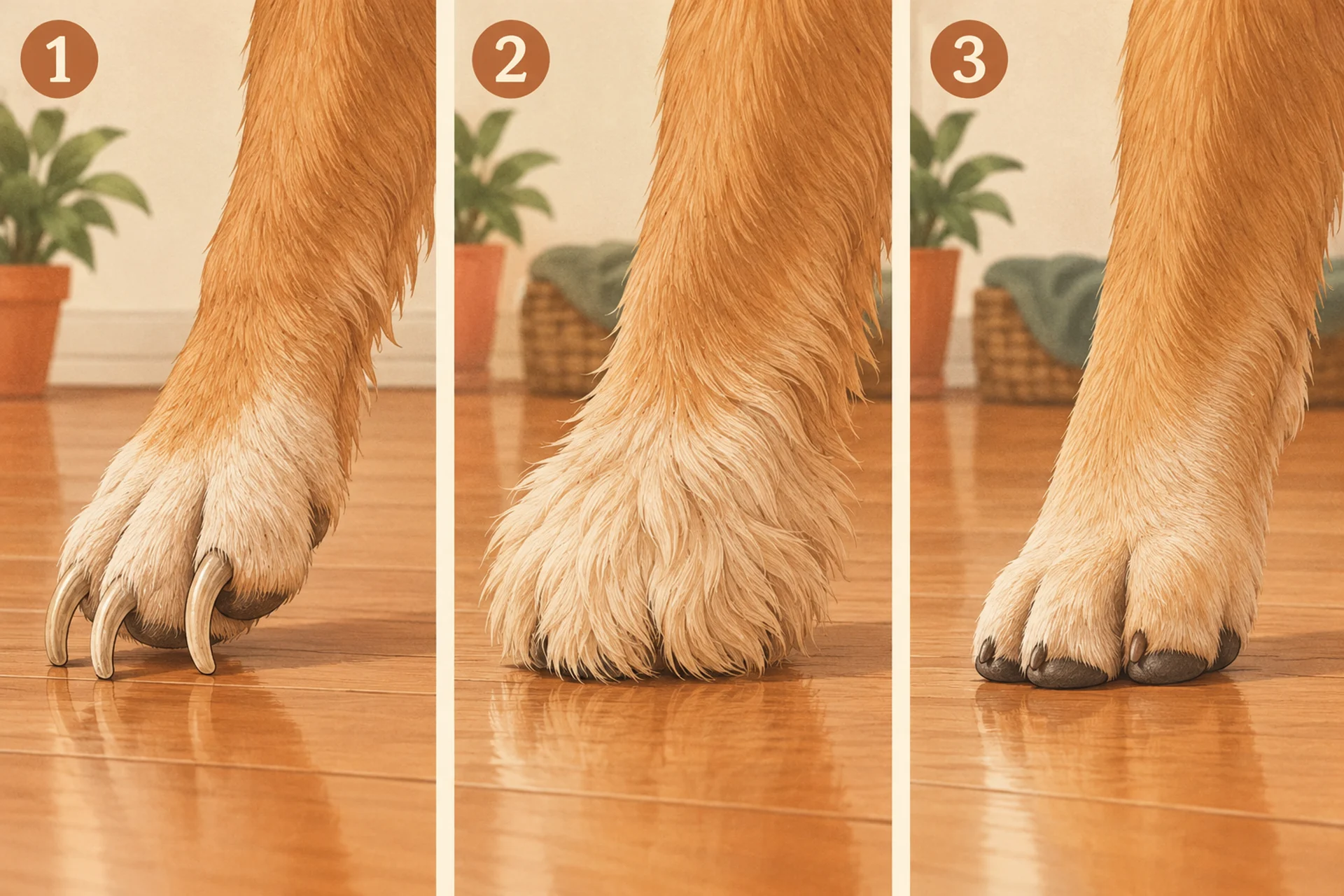
- Long nails. VCA’s comparison is hard to forget: leaving long nails on a dog is like putting a grandparent in high heels and asking them to walk on an ice rink. It says most dogs need their nails trimmed at least once a month. The VCA arthritis guidance adds that short nails also reduce strain on joints.
- Fur over the pads. Long-haired and doodle-type dogs often grow fur that covers the pads completely. That turns the bottom of the foot into a fabric slipper. VCA’s advice is to trim fur that extends between the toes. If you’re not comfortable doing it, a groomer or your vet clinic can.
- Dry, slick pads. The AKC mentions paw balm as a way to help dogs gain traction and be less slippery on flooring. Use one made for dogs.
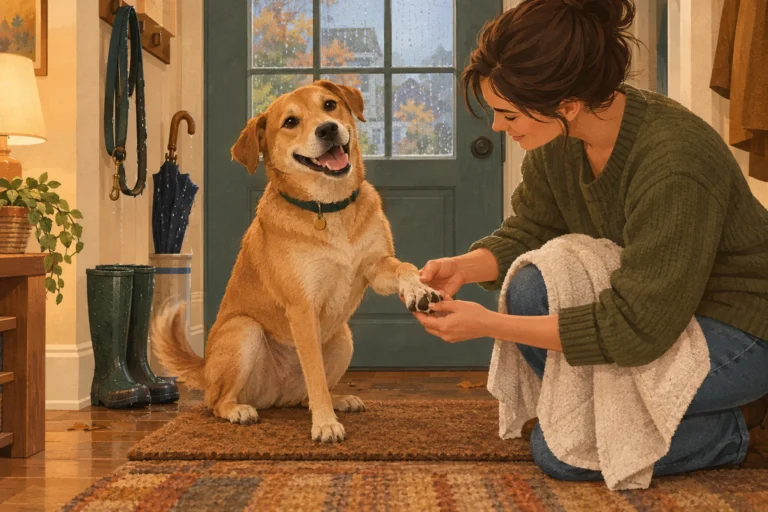
If nail trims are a battle in your house, VCA suggests asking your vet about training tips, or medication for dogs that are very stressed by trims. Don’t let long nails slide because the trim is hard.
Is it the floor, or is it the dog?
This is the question most people searching “why is my dog suddenly slipping” actually need answered. The floor hasn’t changed. Something about the dog has.
| What you see | More likely | What to do |
|---|---|---|
| A young, healthy dog that skids when it runs or turns fast | Just physics: speed plus a smooth floor | Rugs on the racetrack routes, short nails, trimmed paw fur |
| A dog that has always disliked the hardwood | Preference, or an old bad experience | Give it rugs to walk on. AAHA notes some dogs never liked these floors |
| An older dog that has started slipping, or now avoids rooms with hard floors | AAHA says pain needs to be considered | Book a vet visit. Add traction at home in the meantime |
| Struggling to get up, standing up front legs first, hesitating at stairs | On AAHA’s list of pain signs, often hips or other joints | Vet visit |
| Back legs sliding out, crossing or knuckling, wobbliness | Could be weakness or a nerve problem. AAHA notes neurological issues add to the instability | Vet visit soon. Sooner if it came on fast |
The pattern in that table comes from AAHA’s handout of 15 signs of pain in dogs, where “reluctance to walk on slippery surfaces” is the first item, followed by trouble with stairs, becoming selective about jumping, and standing up front legs first. VCA notes that slippery flooring can make it difficult for dogs with osteoarthritis to walk, turn, rise and move comfortably. Rugs and socks will help a sore dog get around. They won’t tell you why it’s sore.
We’re not going to guess at a cause from here. A new slip, especially with any of the other signs above, is a reason to have your vet look at the dog, not just the floor.
How to stop a dog slipping on the floor
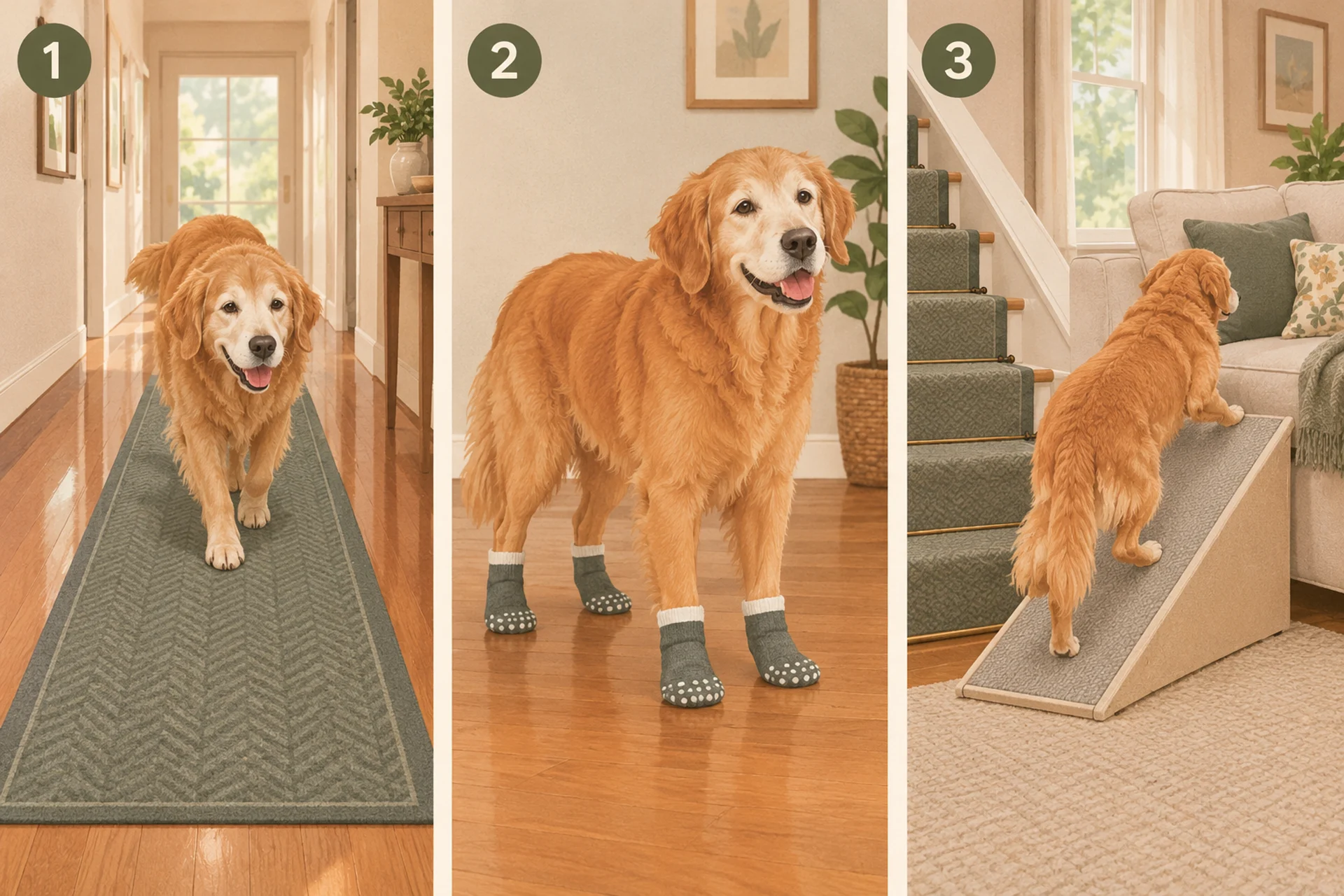
Start at the top of this list. Most dogs don’t need to go past the first three.
- Put grip where the dog walks. VCA suggests area rugs and runners where your dog spends the most time, non-slip, with no raised corners or edges to trip on. The AKC suggests non-slip area rugs or inexpensive yoga mats along regular routes. Think water bowl, bed, back door, and where the dog lands off the couch.
- Trim nails and paw fur. Monthly nails at minimum, per VCA, and fur trimmed so the pads touch the floor.
- Fix the stairs. VCA says stairs need a non-slip surface, such as a carpet runner or stick-down grip tape. The AKC suggests textured stair treads.
- Add grip to the dog. The AKC lists all-season dog boots, grippy dog socks or toenail grips as ways to give seniors extra traction. Toe grips are rubber or silicone loops that go on the nails. VCA’s version of this advice comes with a condition worth following: talk to your dog’s vet or rehabilitation therapist before trying these options.
- Replace jumps with ramps. If your dog still jumps off furniture, VCA says to put non-slip rugs where it lands. A sturdy ramp with good traction is better, built so the dog can’t fall off the side.
- Block stairs when nobody’s around. For dogs with arthritis, VCA suggests preventing access to stairs when no one can supervise.
Dog socks for hardwood floors: do they work?
They can, for the right dog. Grippy socks are on the AKC’s list for seniors, and VCA includes boots and pad coverings among ways to give a dog extra grip at home. Here’s the honest trade-off. A sock only helps if it stays put, and a sock that twists so the grip dots end up on top is worse than none. Many dogs also walk strangely in anything on their feet for the first few days.
A few practical points:
- Measure the paw while the dog is standing with weight on it, not with the foot lifted. Our guide to why dog boots keep falling off explains why this matters and how to measure.
- Check under the socks every day for rubbing, damp skin or red spots, and give the feet time bare.
- Indoor socks aren’t outdoor boots. For snow, salt and wet pavement, see do dogs need boots in winter.
- If your dog keeps pulling them off, rugs and grooming may simply be the better answer for that dog.
Socks treat the floor problem. They don’t change whatever made an older dog start slipping. If that’s the situation, see the vet first and use the socks alongside whatever the vet suggests.
When to call the vet
Call your vet if:
- The slipping is new, or your dog has started avoiding rooms or floors it used to cross
- Your dog struggles to stand, stands up front end first, or hesitates at stairs or jumps
- The back legs slide out, cross, drag or knuckle, or your dog seems wobbly
- Your dog has fallen and is now limping or reluctant to move
- It came on suddenly over a day or two
This is general information to help you decide what to do next. It isn’t a diagnosis. Your vet is the one to say what’s behind the slipping and what will help.
Dog slipping on floors: FAQ
Why is my dog suddenly slipping on the floor?
If the floor hasn’t changed, something about the dog probably has. AAHA’s handout says that if reluctance on slippery floors is a recent issue, pain needs to be considered as a possible reason. Long nails or overgrown paw fur can also creep up. Check those, and have your vet look at the dog, especially if you see other signs like trouble standing or hesitating at stairs.
Why is my older dog slipping on hardwood floors?
Older dogs often have less strength and more joint pain, and AAHA explains that a dog with one or more weak legs can’t recover when a foot slides. VCA notes slippery floors make it hard for dogs with osteoarthritis to walk, turn and rise. Rugs, short nails and trimmed paw fur help at home. A vet visit tells you what’s going on underneath.
Do toe grips work for dogs?
The AKC describes toe grips as rubber or silicone loops that attach to the nails and give traction when walking or getting up. VCA lists nail caps, pad coverings and boots, and recommends talking to your vet or a rehabilitation therapist before trying them.
Should I trim the fur between my dog’s paw pads?
If it covers the pads, yes. VCA’s advice for better traction at home is to keep nails short and trim any fur that extends between the toes. If you’re not comfortable doing it yourself, a groomer or your vet clinic can.
Is hardwood flooring bad for dogs?
It isn’t dangerous for most healthy dogs, but VCA says hard floors are much harder for dogs to walk and run on securely. For dogs that have fallen before or have mobility problems, it recommends non-slip rugs and runners where they spend the most time.
How do I keep my dog from slipping on tile or laminate?
The same way as hardwood. Use non-slip rugs or yoga mats along the dog’s routes, keep nails short, trim paw fur, grip the stairs, and add socks or toe grips if your vet agrees.
Sources
- American Animal Hospital Association — 15 Signs of Pain in Dogs (pain management guidelines resource) (checked 2026-10-19)
- VCA Animal Hospitals — Creating a Comfortable Home for Your Mobility Compromised Dog (checked 2026-10-19)
- VCA Animal Hospitals — Helping Your Dog with Osteoarthritis (checked 2026-10-19)
- American Kennel Club — Senior Dog Comfort: Tips for Making Your Home More Accessible (checked 2026-10-19)
- American Kennel Club — Mobility Devices for Dogs (checked 2026-10-19)
This is general information, not veterinary advice. If your dog has started slipping, falling or struggling to stand, contact your veterinarian.
Fix the floor, fix the feet, then ask why.
Rugs where the dog walks, short nails and trimmed paw fur solve most slipping. Socks and toe grips come after that. But if a dog that used to cross the floor fine now slides, hesitates or avoids it, the floor is just where the problem shows up. Have your vet look at the dog.