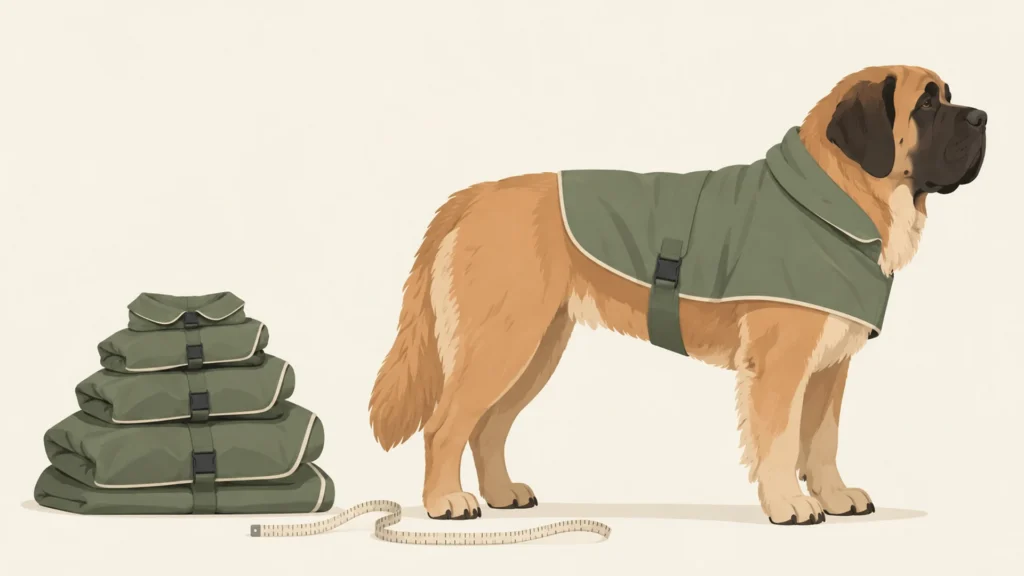
If your dog is over about 100 pounds, or built long-and-low, or deep through the chest, most size charts simply do not have a row for them. That is not because your dog is strange. It is because nearly every dog-clothing chart sorts by weight, and weight tells you almost nothing about shape.
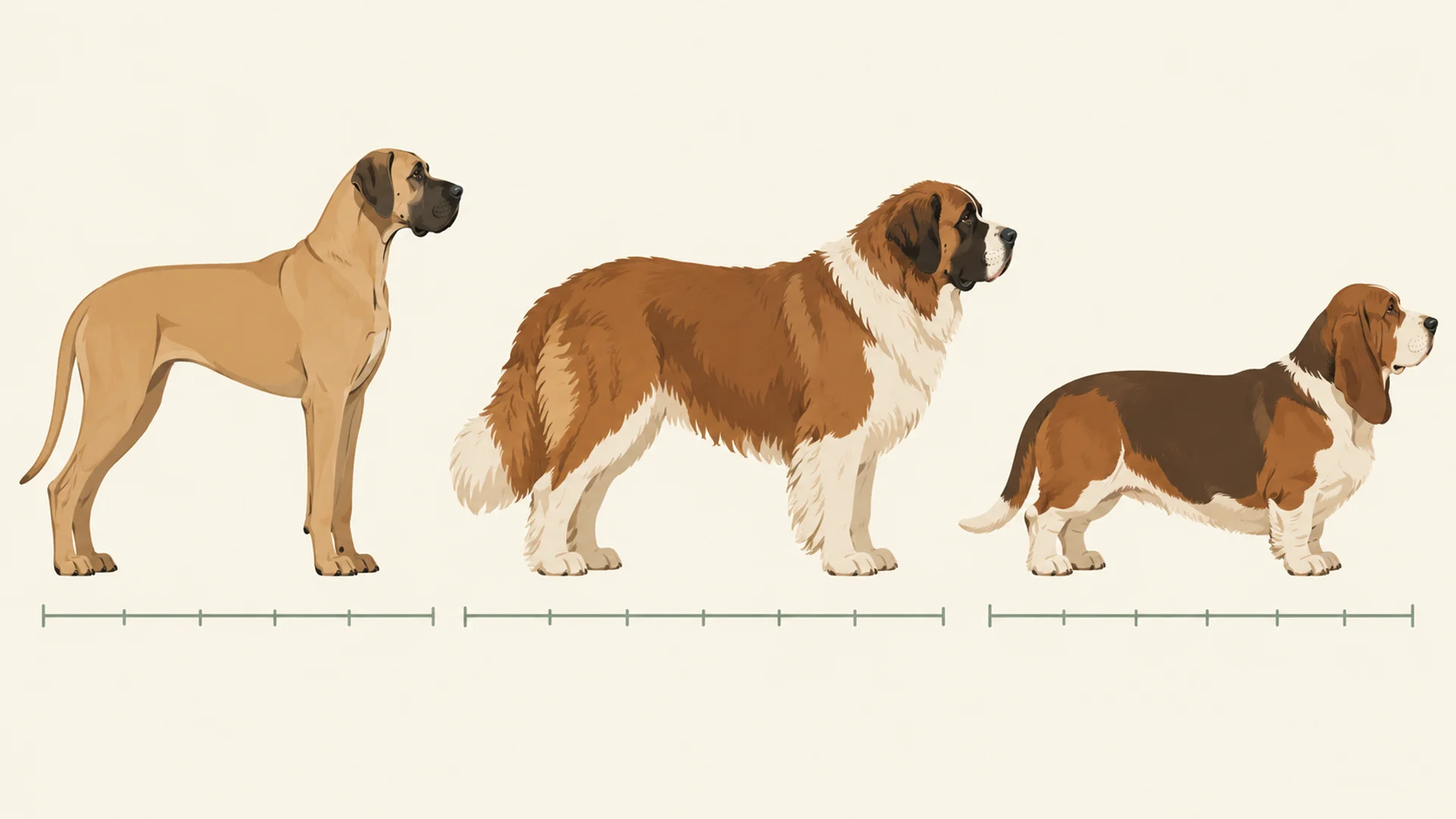
The American Kennel Club’s own breed standards make the point better than any brand could. The Newfoundland standard describes a dog that is “slightly longer than tall.” The Great Dane standard says that “in the ratio between length and height, the Great Dane should be square.” Both breeds run well past 100 pounds. They need different back lengths. A chart with one row labelled “XL — up to 100 lbs” cannot serve them both, and it does not try to.
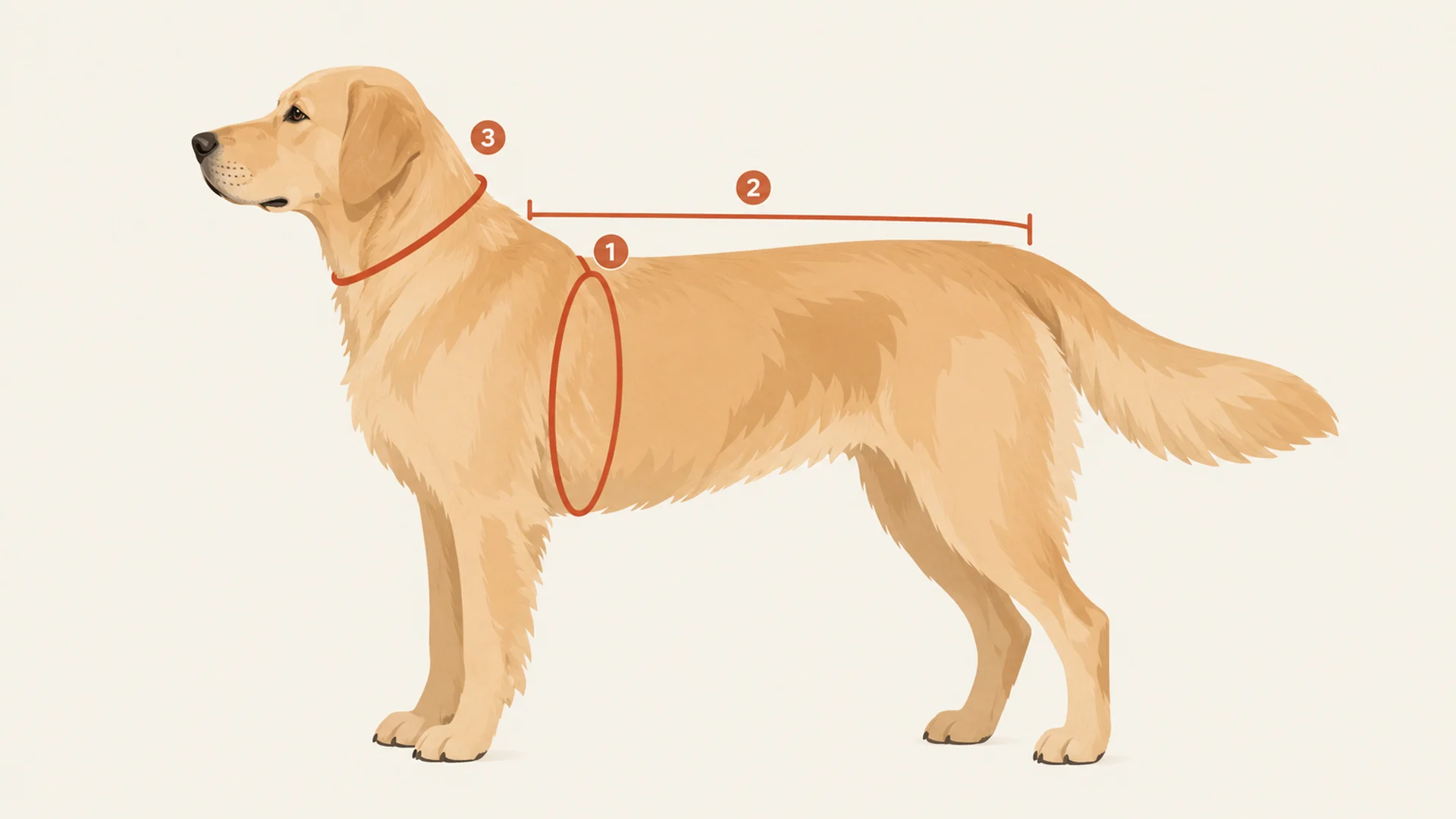
So stop shopping by weight. Measure chest girth, back length and neck, then buy against those three numbers — or accept that for some dogs the answer is a tailor rather than a size chart.
Why charts stop at XL
Pet apparel grew up around small dogs. When brands wanted bigger sizes, the cheapest move was to scale the same pattern up, and a scaled-up pattern keeps the proportions of the dog it was drawn for. That works reasonably well from a Chihuahua to a Beagle. It falls apart above about 70 pounds, because past that point breeds stop being bigger versions of each other and start being different shapes.
Grading a new pattern for a 130-pound dog costs the same as grading one for a 15-pound dog, but the market for it is a fraction of the size. So most brands stop where the volume stops, call the last row XL or 8XL, and leave everyone above it to work it out themselves. That is a business decision, not a statement about your dog.
Same weight, different animal
It helps to see how far apart the official standards actually are. These are the AKC’s own words, not a brand’s interpretation.
| Breed | What the AKC standard says | What it means for a coat |
|---|---|---|
| Newfoundland | Average height 28 in. for adult dogs, 26 in. for bitches; “slightly longer than tall”; a dog of “considerable substance” determined by spring of rib | Long back relative to height, and a wide rib cage. Girth runs large for the back length. |
| Great Dane | Males “shall not be less than 30 inches at the shoulders,” preferably 32 or more; body “should be square” | Tall and short-backed. A coat cut for a Newfoundland will hang past the tail. |
| Basset Hound | “A short-legged dog, heavier in bone, size considered, than any other breed of dog” | Low ground clearance with a heavy frame. Leg openings and hem length are the failure points, not girth. |
Read those three rows together and the problem is obvious. A single number on a scale cannot separate them. This is why the most common complaint about big-dog apparel is not “it was too small” but “it fit according to the chart and still did not fit” — the chest binds, the back is short, or the whole garment rotates once the dog moves.
Measure three things, in this order
Chest girth first, because it is the measurement that fails hardest. A coat that is short in the back rides up and looks silly; a coat that is tight in the chest restricts the shoulder and the dog will refuse to walk in it. Then back length, from the base of the neck to the base of the tail. Then neck girth, which matters most on hooded or high-collared designs.
Take all three with the dog standing square, not sitting, and keep the tape snug but flat. If you want the full method with the common mistakes, we wrote it up separately in how to measure your dog for clothes.
What “fits” means on a big dog
Coverage is the part people guess at. The ASPCA’s cold weather safety guidance is unusually specific about it: for short-haired dogs, consider “a coat or sweater with a high collar or turtleneck with coverage from the base of the tail to the belly.” That is a useful benchmark even in the rain rather than the cold, because it describes the surface that actually needs covering rather than a size letter.
Two more checks that only matter at this size. The dog should be able to squat fully without the hem pulling — big dogs have a long way to go down. And you should be able to slide a flat hand under the chest panel; if you cannot, the garment is loading the shoulder joint every time the leg swings forward.
If you have a giant puppy, wait
This is the most expensive mistake in the category. Giant breeds are not finished growing when they look finished. The AKC’s guidance on when puppies stop growing puts giant-breed puppies at 12 to 18 months, notes that very large breeds such as Mastiffs “may not even reach their fully grown size until 24 months of age,” and places the 100-pound-plus category at around 18 months to maturity.
A coat bought at eight months will not fit at eighteen. And it is worth saying plainly that you should not try to close the gap by feeding your way there: Cornell’s Riney Canine Health Center notes in its canine hip dysplasia overview that “overfeeding and rapid growth in puppies can worsen the condition in dogs already predisposed,” and advises keeping large-breed puppies trim as they grow. Buy for the dog in front of you, plan on replacing it, and talk to your vet about growth targets rather than to a size chart.
The heat trade-off is real at this size
A common objection under any big-dog coat post is that the dog will overheat, and it deserves a straight answer rather than a defensive one: yes, a full-coverage garment on a heavy-coated dog reduces how well that dog sheds heat, and on a mild wet day that can matter more than staying dry. The honest rule is that coverage should match the weather and the length of the outing, not the other way round. We went through the actual trade-off in do dogs overheat in coats, and the related question of whether double-coated breeds need one at all in do double-coated dogs need raincoats.
When nothing on the chart works
- Shop brands that label by girth, not by letter. If a listing gives you a chest range in inches or centimetres, you can decide for yourself. If it only gives you “XL,” you are guessing.
- Size to the largest measurement, then alter down. Taking in a back seam is a twenty-minute job for a tailor. Adding girth is not.
- Check the leg openings separately on long-and-low dogs. On short-legged breeds the hem and the leg holes fail before the girth does.
- Look outside the pet-apparel aisle. Working and sporting-dog suppliers grade for bigger frames more often than fashion-led brands do.
- Consider a custom maker. For dogs past 130 pounds, or for a Basset-type build, made-to-measure is frequently cheaper than three returns.
- Buy a size chart, not a size. Save your dog’s three numbers in your phone. You will use them for harnesses and crates too.
Giant-breed coat questions
What size coat does a 140-pound dog wear?
There is no reliable answer to that question, and any brand that gives you one from the weight alone is guessing. Two 140-pound dogs can differ by several inches in back length. Measure chest girth, back length and neck, and match those against the specific brand’s chart in inches — every brand’s “XXL” means something different.
Why do so many dog coats stop at XL?
Because grading a pattern for a giant breed costs the same as grading one for a small dog while serving a far smaller market, and because the shapes stop being consistent above roughly 70 pounds. Brands cut the range where the volume ends.
My dog is between two sizes. Which do I take?
Take the size that fits the chest girth, then have the length taken in if it is long. Girth is the measurement that stops a dog moving; length is the one that just looks wrong.
What about short-legged, long-bodied dogs like Bassets or Dachshunds?
They need the length of a much larger dog with the leg openings of a much smaller one, which is why standard grading fails them. Prioritise back length and hem clearance, and expect to alter the legs. We covered the long-body case in more detail in raincoats for long-bodied dogs.
Should I buy a bigger size so my giant puppy can grow into it?
No. A garment that is loose enough to grow into will rotate, snag and trip a puppy now, and giant breeds keep changing shape for 12 to 24 months. Buy to fit today and replace it.
Is a coat even necessary for a big dog with a thick coat?
Often not. Heavy double coats handle cold and rain well on their own, and the case for a garment is usually about the dog being wet indoors afterwards, about skin conditions, or about short-coated giants like Great Danes and Mastiffs that genuinely do get cold. If there is a medical reason in play, ask your veterinarian rather than a size chart.
Weight sells sizes. Girth decides fit.
The chart runs out at XL because the industry stopped grading, not because your dog is out of bounds. Take three measurements, buy against inches instead of letters, treat alterations as normal rather than as failure, and wait until a giant puppy is done growing before you spend real money.
Sources
- American Kennel Club — Official Standard of the Newfoundland (checked 2026-09-08)
- American Kennel Club — Official Standard of the Great Dane (checked 2026-09-08)
- American Kennel Club — Official Standard for the Basset Hound (checked 2026-09-08)
- American Kennel Club — When do dogs stop growing? (checked 2026-09-08)
- ASPCA — Cold weather safety tips (checked 2026-09-08)
- Cornell University Riney Canine Health Center — Canine hip dysplasia (CHD) (checked 2026-09-08)
Breed standards and health guidance are revised over time. Confirm on the official page, and take any question about your own dog’s growth or skin to your veterinarian.