The smell does not come from the dog itself. It comes from the yeasts and bacteria that normally live in its coat. As the American Kennel Club explains, those microorganisms give off volatile compounds, and the wet-dog smell comes from moisture evaporating and carrying some of those compounds with it. Rain doesn’t create the smell. It releases it, so the smell is strongest while the coat is drying and fades once it is dry.
That gives you the whole plan. Get the coat, and especially the parts that stay wet longest, dry quickly, before the dog lies down on something soft. And learn the difference between ordinary wet-dog smell, which goes away, and a smell that doesn’t. A sour, yeasty or foul smell from the ears, paws or skin folds after the coat is dry is not a rain problem. The Merck Veterinary Manual lists foul odor among the signs of an ear canal infection, and that is a job for your vet.
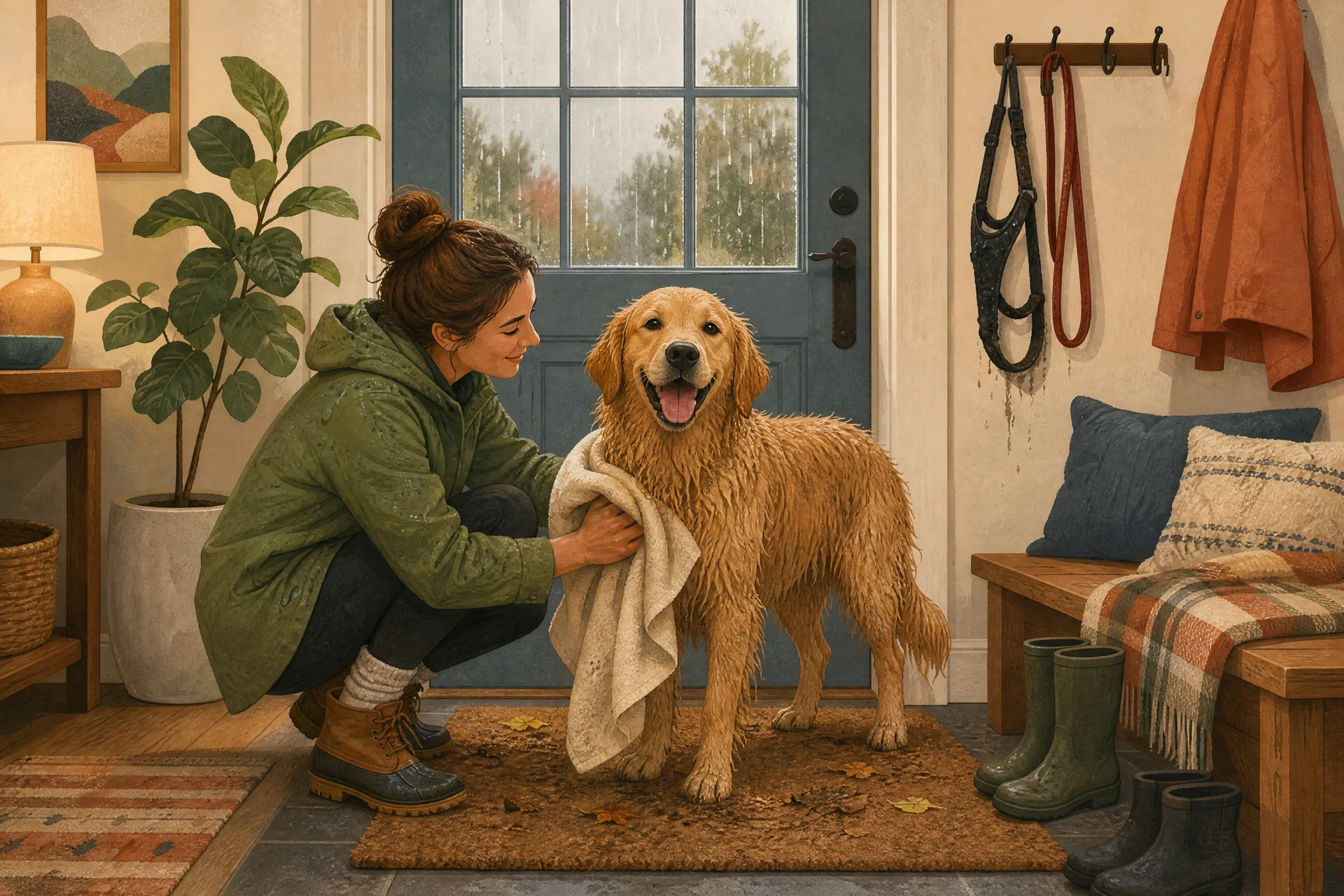
Why the smell comes back every time it rains
Every dog has a population of yeasts and bacteria in its coat. While the coat is dry, their by-products mostly stay there. Water loosens them, and as it evaporates it carries them into the air, which is why the smell reaches its peak about the time your dog shakes itself off in the kitchen. The AKC notes that science still has a lot to learn about the exact chemistry, but the basic point is well established: you are smelling what lives on the dog, not the dog.
Some dogs are worse than others, and for physical reasons rather than cleanliness. The same AKC page points to breeds with deep skin folds (Shar-Peis, Pugs, Bulldogs and French Bulldogs), because the folds hold moisture. It also mentions Basset Hounds, which naturally have oilier skin, and heavy droolers such as Mastiffs and Newfoundlands, whose mouths are constantly damp. A thick double coat also takes longer to dry to the skin, so it smells for longer.
The part that matters most for rainy walks is where the water ends up. The AKC’s page on yeast skin infections makes the link explicitly: walking on a rainy day can make yeast infections more likely, because dirt and moisture get trapped between the toes and in skin folds. These are the same spots a quick rub-down of the back misses.
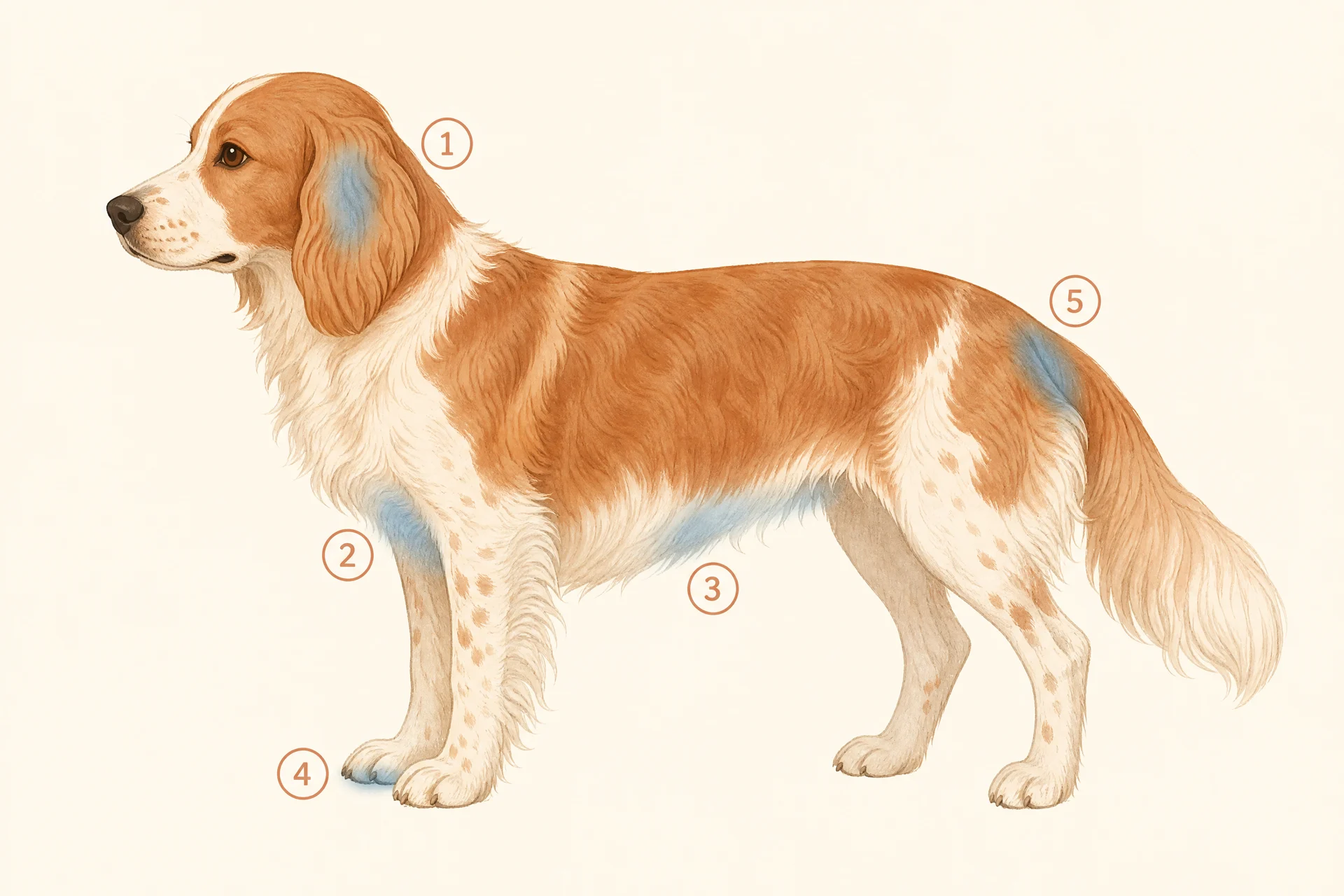
Normal wet-dog smell, or something to check?
A common objection runs like this: “My dog is dry, and it still smells.” That is worth taking seriously, because at that point the smell is no longer about the rain. Use this table to sort it out:
| What you notice | What it usually means | What to do |
|---|---|---|
| Musty, doggy smell while the coat is damp, fading as it dries | Ordinary wet-dog smell from the normal microbes in the coat | Dry faster, dry the hidden spots, and wash bedding and gear |
| The smell is still strong once the coat is fully dry | Something is holding moisture or grime: a thick undercoat, a dirty harness or collar, or the dog’s bed | Wash the gear and the bed, and check the undercoat is actually dry at the skin |
| Foul smell from one or both ears, with head shaking, scratching, redness or discharge | Merck lists these together as signs of an ear canal infection | See your vet; don’t start cleaning a sore ear yourself |
| Sour-milk or yeasty smell, greasy-feeling coat, itchy or red skin in folds, paws or armpits | The signs the AKC describes for yeast dermatitis | See your vet, who can confirm it with a skin sample |
| Smell plus licking or chewing at the paws after walks on treated roads | Possibly irritation, or chemicals being licked off the feet | Wipe feet, legs and belly as soon as you get in (see below) and ask your vet if it continues |
The AKC’s own advice ends in the same place: if your dog’s smell seems abnormal or won’t go away, talk to your veterinarian and a professional groomer. The table above is for deciding when to make that call. It is not a way to diagnose your dog at home.
The routine at the door
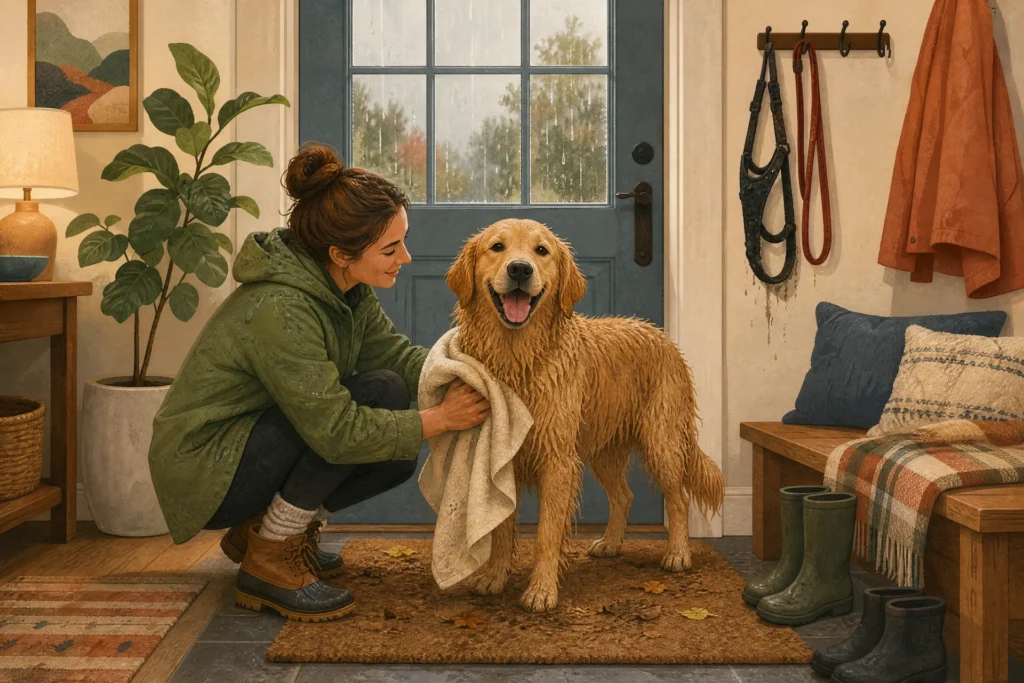
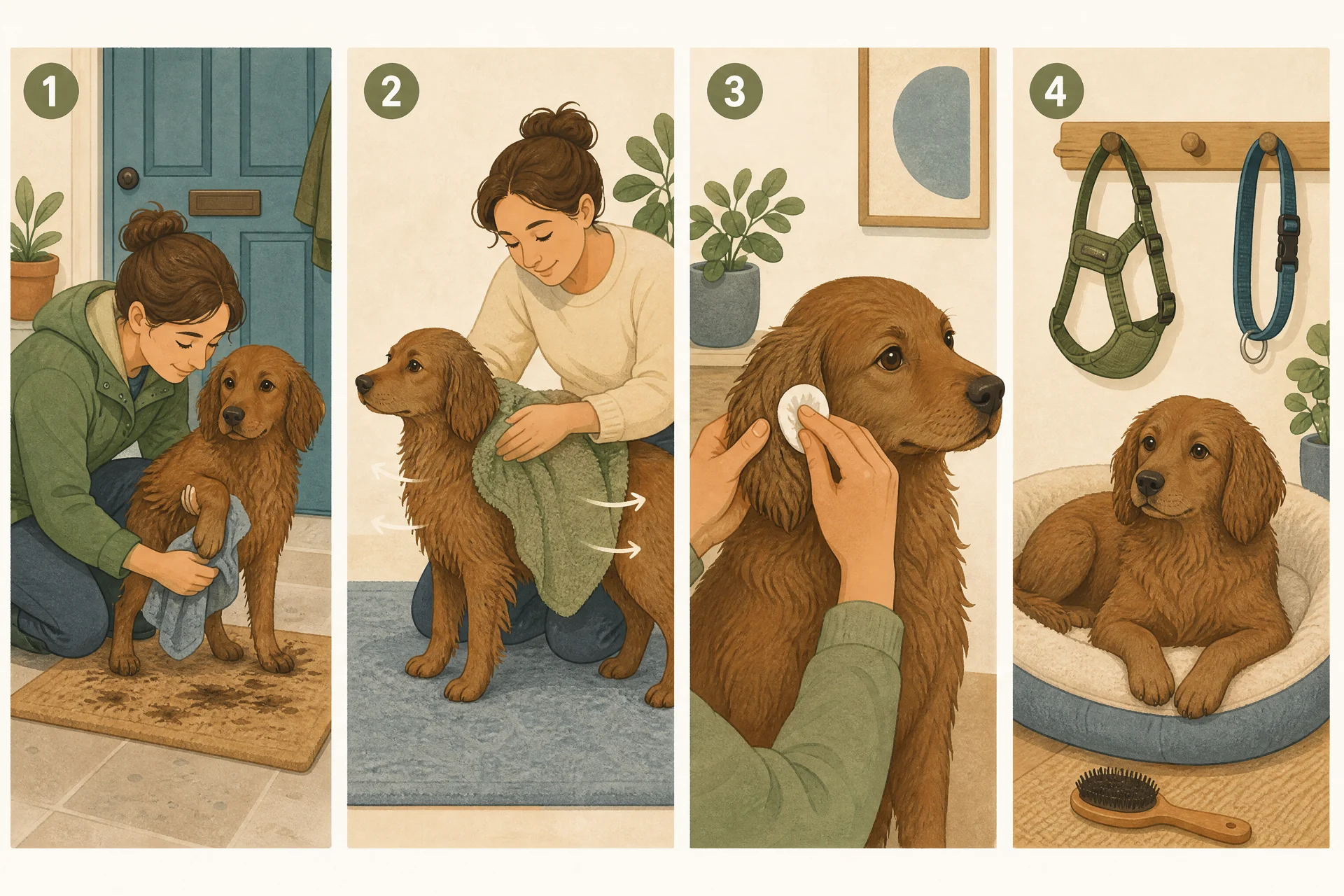
None of this takes long, and doing it in the same order every time is what makes it stick. The AKC’s most useful line on the subject is also the simplest: if your dog comes home wet, dry it before it gets a chance to move around the house. Once a wet dog has rolled on the rug or rubbed along the sofa, you have more than one thing to clean.
- Feet, legs and belly first. These are the dirtiest parts and the parts that pick things up from the road. The AVMA’s cold-weather advice is to wipe down or wash your dog’s feet, legs and belly when you get back inside, because de-icing products, antifreeze and other chemicals can be toxic when the dog licks them off later. On winter roads, this matters more than the smell does.
- Then a thick towel, pressed in rather than just skimmed over the top. Rub against the lie of the coat as well as with it, so the towel reaches the undercoat. The AKC suggests a heavy-duty dog towel, or a dog blow dryer if you have one.
- Go back for the hidden spots. Do the armpits, between the toes, the tail base and any skin folds. On wrinkly breeds, the AKC advises giving the folds extra attention and a proper clean.
- Dry the outer ears, but leave the canal alone. The AKC’s yeast page suggests drying the ears after a bath or a swim, for example with a cotton ball, and notes that floppy ears create a warm, moist space that yeast likes. Merck’s advice is to keep ear canals dry and well ventilated, and to use ear-drying products only as your veterinarian recommends for dogs that swim a lot. Don’t push anything into the canal.
- Let the dog finish drying somewhere warm, on something washable. An old towel on the dog’s usual spot is easier to wash than the sofa.
- Hang up the harness and collar. The AKC notes that collars and harnesses hold on to smells and should be washed regularly. Nylon usually goes in the wash, while leather needs its own cleaner. A damp harness put straight back on a clean dog will bring the smell right back.
The grit that falls out after you have already towelled
Many owners of long-coated dogs know this one well. The dog was towel-dried, but an hour later there is a small pile of grit and sand where it lay. That doesn’t mean the towelling failed. A towel takes water out, and wet grit sticks to wet hair. As the coat dries, the grit comes loose and drops out.
So give up on getting it out at the door. Let the dog dry, then brush the coat out, outside or somewhere easy to sweep, before it settles on the furniture. For a dog that comes home muddy up to the elbows every time, the easier answer is to stop the mud reaching the coat in the first place. That is the actual argument for leg coverage, and we cover it in mud suit vs raincoat.
Do you need to bathe a dog after every rainy walk?
Usually not, and it won’t fix the smell anyway. A wet dog smells because it is wet, so another soaking followed by slow drying just gives you another round of the same smell. For routine bathing, the AKC’s guidance is that once or twice a month is plenty for most dogs, with drying treated as part of the job rather than an afterthought. After a rainy walk, wiping the dirty parts and drying the whole dog does more than a full bath would.
There are exceptions. A dog that has rolled in something needs a bath, and a dog that has been treated for a skin condition may be on a medicated bathing schedule. The AKC’s yeast page describes vets prescribing baths as often as one to three times a week during treatment. That is a treatment plan from your vet, not a routine to copy. If your dog has sensitive skin and you are washing it a lot because of the weather, ask your vet what the skin can cope with.
Wet dog smell in the car and the house
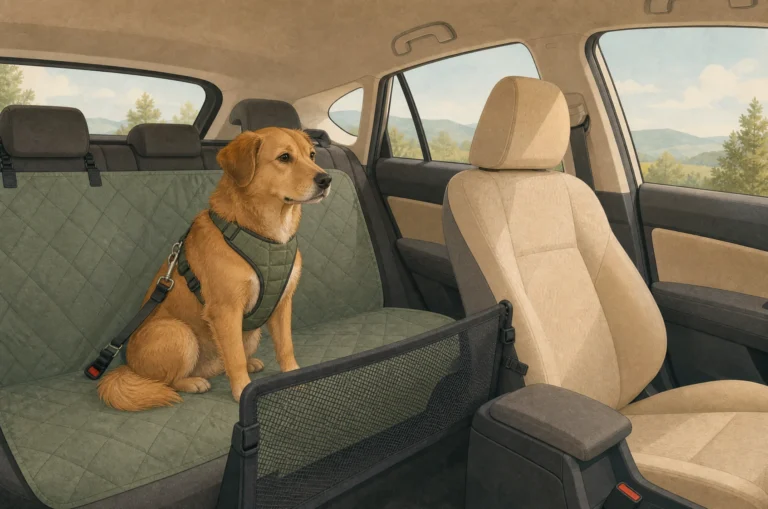
A car keeps the smell in, because the air is warm and damp and there is little of it. If the car ride is the part you dread, bring a towel on the walk and do the first rub-down before the dog gets in. Put a washable cover on the seat and wash it as often as you would the dog’s bed. The AKC’s list of things to keep clean includes the bed and toys as well as the collar and harness, and each of these holds smell long after the dog is dry. The back seat is the right place for a dog on the way home anyway, and here is how to keep it there.
Indoors, the same rule applies: whatever the wet dog lies on becomes what smells. One washable blanket on its usual spot is far easier than trying to deodorise a sofa.
Does a raincoat help with the smell?
Partly. A coat keeps part of the dog dry, which means less to dry and less smell. How much it helps depends on its shape. A back-only raincoat leaves the legs and belly, which pick up the most road spray, as wet as before. Our legs-and-paws guide shows what each shape leaves exposed. The coat itself gets wet and dirty too, and the AVMA’s cold-weather advice is to keep more than one so the dog goes out in a dry one each time, since a wet coat can make a dog colder. If your dog has a thick double coat, it may not need a raincoat at all. We went through that argument honestly here.
And if what you really want to know is whether the walk itself was a bad idea, it almost never is. Can dogs get sick from rain? covers when to shorten the walk and when to skip it.
Wet dog smell: FAQ
Why does my dog smell so bad after rain?
Yeasts and bacteria normally live in every dog’s coat, and they produce volatile compounds. When the coat gets wet and the water evaporates, it carries those compounds into the air. The AKC describes this as the source of wet-dog smell. The smell is strongest while the coat is drying and fades once it is dry.
How do I get rid of wet dog smell on my dog?
Dry the dog quickly and thoroughly, including the belly, armpits, between the toes, the tail base and any skin folds, before it lies down on anything soft. Wash the collar, harness and bed regularly, since the AKC notes they hold on to smells. For most dogs, a routine bath once or twice a month is enough.
Why does my dog still smell after it has dried?
Check whether it is really dry at the skin, especially in a thick undercoat, and whether the smell is coming from a damp harness, collar or bed. If the smell comes from the ears, paws or skin folds and is sour, yeasty or foul, particularly with scratching, head shaking or redness, see your vet. Merck lists foul odor among the signs of ear infection, and the AKC describes a sour-milk smell with yeast dermatitis.
Should I bathe my dog after every walk in the rain?
Usually no. Wiping the feet, legs and belly and then drying the whole dog does more than a full bath, which only makes the dog wet again. The exceptions are a dog that has rolled in something, or one on a medicated bathing plan from your vet.
Do I need to wipe my dog’s paws after a walk?
Yes, and after a winter walk it matters more than the smell. The AVMA advises wiping down or washing a dog’s feet, legs and belly after walks, because de-icing products, antifreeze and other chemicals picked up outside can be toxic when licked off later.
How do I dry my dog’s ears after rain?
Dry only the outer ear, for example with a cotton ball or a soft towel, and never push anything into the canal. Merck advises keeping ear canals dry and well ventilated, and using drying products only as your vet recommends. If an ear smells bad, is red, or your dog keeps shaking its head, have your vet look at it before you clean it.
Sources
- American Kennel Club — Why Do Wet Dogs Smell So Bad? (checked 2026-09-29) — the smell comes from yeasts and bacteria whose volatile compounds are carried off as moisture evaporates; wrinkly, oily-skinned and drooling breeds; bathing once to twice a month is plenty and drying matters; wash collars, harnesses, beds and toys; dry a wet dog before it moves around the house; see a vet and groomer if the smell seems abnormal.
- American Kennel Club — Yeast Dermatitis (Malassezia) in Dogs (checked 2026-09-29) — walking on a rainy day can increase the likelihood of yeast infection, because dirt and moisture are trapped between toes and in skin folds; sour-milk odor and greasy coat as signs; vets confirm the diagnosis with a sample; dry ears after baths and swims; medicated bathing schedules during treatment.
- Merck Veterinary Manual — Ear Infections and Otitis Externa in Dogs (checked 2026-09-29) — head shaking, foul odor, redness, swelling, scratching and discharge as signs; keep ear canals dry and well ventilated; avoid water in the ears during bathing; drying agents as recommended by your vet for dogs that swim.
- American Veterinary Medical Association — Cold weather animal safety (checked 2026-09-29) — wipe down or wash feet, legs and belly after walks to remove de-icers, antifreeze and other chemicals before they are licked off; keep several coats so the dog goes out in a dry one, since wet coats can make a dog colder.
This page is general care information, not a diagnosis. If a smell persists or comes with itching, redness, discharge or head shaking, ask your veterinarian.
You can’t wash the smell off a wet dog. You can dry it off.
Wipe the feet, legs and belly at the door, press a thick towel in to the undercoat, go back for the armpits, toes, folds and outer ears, and keep the damp dog off the sofa until it is dry. Wash the harness and bed as often as you would the dog. If the smell is still there when everything is dry, and it comes from the ears, paws or folds, take it to your vet.