Rain itself is not an infectious organism. The Merck Veterinary Manual describes kennel cough as a viral or bacterial illness, but a cough can have other causes too. A wet walk does not tell you why a dog is coughing.
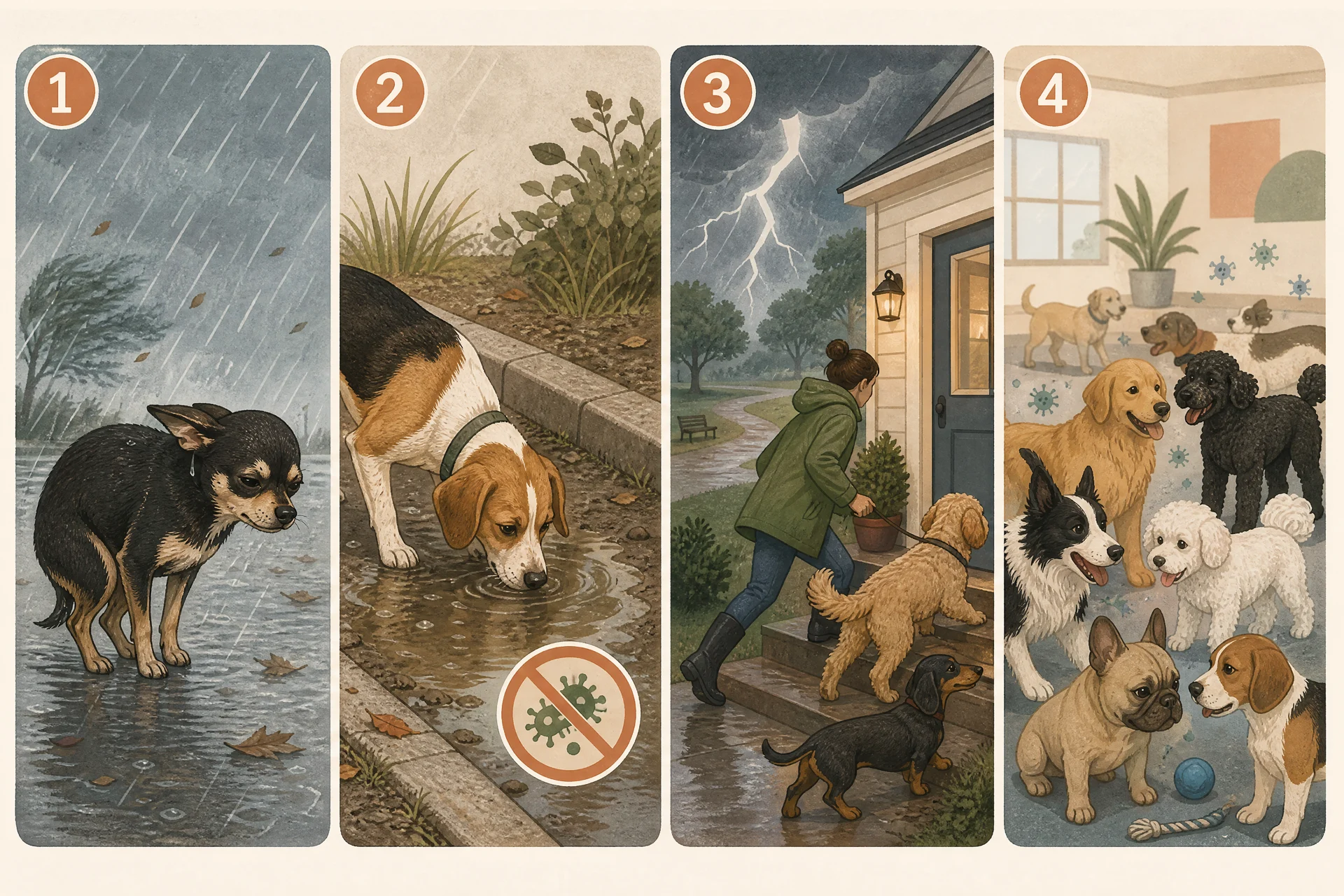
But “rain can’t make them sick” is not quite right either, and that is why the question keeps getting asked. Three things that travel with rain can: cold on a wet coat in small, short-coated, very young or old dogs; what’s in the standing water afterwards; and lightning. For a healthy adult dog on an ordinary rainy day, the walk is fine. The decision changes with temperature and wind, with your particular dog, and with whether you can hear thunder.
So: walk in the rain, keep it shorter when it is cold, steer around puddles, dry your dog properly when you get home, and go inside when it thunders. The rest of this page is about when each of those matters.
A cough or fever needs assessment, not a weather diagnosis
Rain is not an infectious organism. The Merck Veterinary Manual describes kennel cough as an illness caused by viruses and bacteria, with spread among dogs housed close together. It also lists noninfectious causes of airway inflammation. A cough after a walk therefore does not establish either the rain or an infection as the cause.
Merck notes that environmental stress can affect susceptibility to respiratory disease, and that fever or other additional signs can indicate a more serious problem. Contact your veterinarian about a persistent cough, low energy, poor appetite or suspected fever; trouble breathing requires urgent care. Feeling warm to your hand is not a diagnosis. Tell the vet when the signs started and what the dog was exposed to.
Can being wet make a dog cold?
Cold exposure is a separate concern from an infectious cough. The dog’s condition and the weather matter; do not treat the absence of coughing or shivering as proof that a soaked dog is comfortable.
The real risk: cold on a wet coat
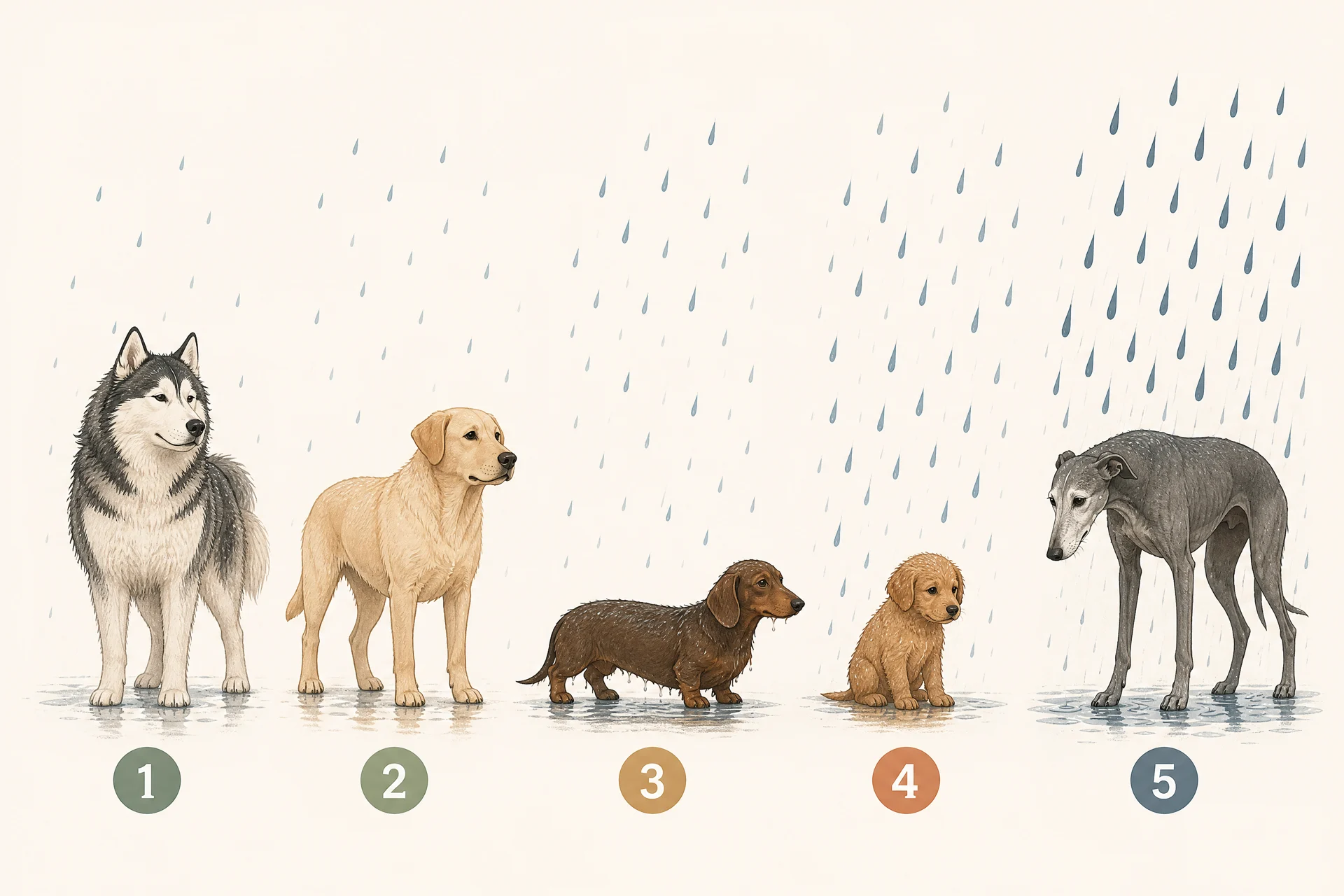
Cold, wet conditions deserve more caution than a mild shower. Cornell’s winter safety guidance recommends warm, dry shelter and notes that smaller, older and thin-coated dogs may benefit from a jacket or sweater. The ASPCA recommends towel drying pets when they come indoors.
Ask your veterinarian about weather limits for a puppy, senior or dog with a health condition. A raincoat can reduce wetting; it is not treatment, disease prevention or permission to stay out despite discomfort.
| Your dog | Warm rain, light wind | Cold rain or wind |
|---|---|---|
| Healthy adult, thick or double coat | Normal walk | Normal walk for most; dry them well afterwards |
| Healthy adult, medium coat | Normal walk | Walk, but keep moving and head home if they slow down |
| Small, short-coated, or short-legged | Usually fine | Shorter outings; a dry layer helps; watch closely |
| Puppy, senior, or a dog with a chronic illness | Short and sensible | Brief toilet trips; ask your vet where their limits are |
There is no universal rain-temperature cutoff established by these sources. Ask your veterinarian about your own dog rather than borrowing a walking limit meant for another animal.
What getting too cold looks like
Cornell lists paw lifting, shivering, reluctance to walk and hunched posture as signs to move into a warm, dry area. Merck’s cold-weather guidance warns that weakness, disorientation, shallow breathing or collapse need immediate veterinary attention. Do not wait for shivering to decide whether to call.
What’s in the water after the rain
The CDC explains that leptospirosis bacteria spread through infected animals’ urine and can persist in contaminated water or soil. Flooding and heavy rain can increase exposure risk. This is a reason to avoid potentially contaminated standing water, not to assume every rainy walk causes illness.
Avoid contact with potentially contaminated standing water, not only drinking it. A puddle cannot be judged safe by its appearance. Carry water so your dog is not thirsty enough to go for the gutter, and steer around puddles on trails and verges where wildlife moves. Kerbside puddles near parked cars carry a separate chemical risk. We cover both, with what to do if your dog already drank, in what to do if your dog drank puddle water. Ask your veterinarian about appropriate vaccination and exposure precautions for your dog.
Rain also brings things up out of the ground. A wet week can fill a lawn or park verge with wild mushrooms overnight, and a few kinds are seriously toxic to dogs with signs that can take hours to appear. See are yard mushrooms poisonous to dogs for what to do if your dog eats one. Slugs come out on the same damp evenings, and slug bait goes down in the same season; if your dog ate a slug, the bait is the part to rule out first.
Thunder changes the answer
Rain is a comfort question. Lightning is a safety one, for you and the dog alike. The National Weather Service is unambiguous: “There is no safe place outside when thunderstorms are in the area,” and its rule of thumb is “When Thunder Roars, Go Indoors.” Its lightning safety guidance also reminds owners not to forget pets during storms and to give them proper shelter.
If you can hear thunder, go indoors and postpone the outing; a quick toilet trip close to the door is still outdoors. A dog that is already frightened of storms will not get much from a walk in one anyway — and a frightened dog on a lead in the dark, next to traffic, is its own hazard. If you do have to be out as the light fades, our notes on walking your dog in the dark cover being seen by drivers.
Drying off is a useful part of rain care
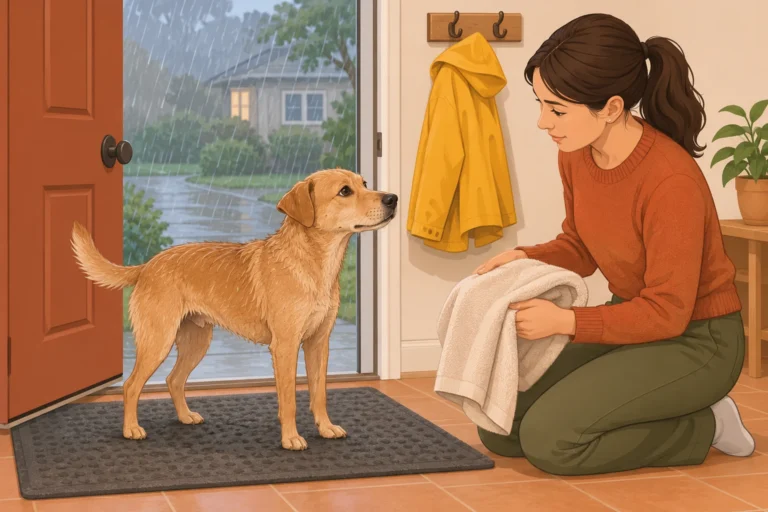
Most of the good a sensible rainy walk does can be undone by putting a soaked dog in a cool room. Towel the coat properly — against the grain as well as with it, down to the skin on thick coats — and pay attention to the parts that stay wet longest: the belly, the armpits, between the toes, and the ears on floppy-eared dogs. The National Weather Service’s pet safety tips say to thoroughly wipe off your dog’s legs and stomach when they come in from sleet, snow or ice, and the ASPCA recommends washing and drying feet and the stomach to remove ice, salt and chemicals.
Then give your dog a warm, dry, draught-free place to settle. A dog that goes straight from a wet walk to a dry bed rarely has anything to show for it the next day. Thick, long or matted coats are the ones that need this most, because they can stay damp at the skin long after the surface feels dry; whether it is OK to let a dog air dry explains which coats can be left alone and which can’t. If the part you actually dread is the smell, why wet dogs smell and how to stop it goes through the drying routine spot by spot.
Does a raincoat help?
For some dogs, yes, and for others it is mostly about keeping your sofa dry. A waterproof layer’s real job is to keep the insulating coat underneath dry, which matters for exactly the dogs in the bottom rows of the table above: small, short-coated, low to the ground, very young or old. For a healthy dog with a dense double coat on a mild day, it is a convenience rather than a health measure. We went through that argument in detail, including the downside of overheating, in do double-coated dogs need raincoats? If a coat makes sense for your dog, follow its care instructions and let it dry between outings. Our weather protection shelf has the rain suits we carry.
Before the next rainy walk
- Check for thunderstorms, not just rain. If you hear thunder, stay indoors and postpone the outing.
- Decide the length of the walk by the temperature and wind and by your dog, not by habit.
- Bring water so your dog isn’t tempted by puddles, and steer around standing water, especially on trails and after flooding.
- Keep a towel by the door and dry the belly, armpits, paws and ears as well as the back.
- If your dog wears a coat, have a dry one ready for each outing.
- Watch for slowing down, whining, trying to burrow or seeming weak, and head home when you see them.
- For a puppy, a senior, or a dog with a heart, kidney, hormonal or other chronic condition, ask your vet what their weather limits should be.
Dogs and rain FAQ
Related: can rain cause ear infections in dogs.
Can dogs get sick from walking in the rain?
Not from the rain itself. Respiratory illness like kennel cough is caused by viruses and bacteria spread between dogs. What rainy weather can do is chill a wet dog, which matters most for small, short-coated, very young, old or unwell dogs, and leave behind puddles that can carry bacteria such as leptospira. A healthy adult dog walked in ordinary rain and dried afterwards is very unlikely to have any problem.
Can dogs catch a cold from being wet?
Wet fur is not an infectious organism. Viral and bacterial respiratory illnesses exist, but coughing also has noninfectious causes; your veterinarian should assess persistent or concerning signs. Merck notes that stress and extremes of temperature and humidity can make a dog more susceptible to an infection it has already met, so a long cold soaking is still worth avoiding for puppies, seniors and unwell dogs.
Can a dog get a fever from the rain?
A wet walk does not establish the cause of a fever. Listlessness, poor appetite or suspected fever should be discussed with your veterinarian; do not assume an infection or diagnose by touch. Seek urgent care for breathing difficulty, collapse or severe weakness.
Should I still walk my dog in the rain?
Usually yes, adjusted for the conditions. Most dogs still need the exercise and the toilet break. Shorten the walk when it is cold or windy or your dog is in a vulnerable group, postpone it and stay indoors when there is thunder, and dry your dog properly afterwards. A dog with a bandage or fresh stitches is a different case: see how to keep a dog’s bandage or stitches dry in the rain.
Can puppies get sick from rain?
Puppies lose body heat faster than adult dogs, and Merck notes that respiratory infections can be more serious in them, so the same caution applies more strongly: short outings, a quick dry-off, and a warm place to rest. Puppies who are not fully vaccinated also have their own limits on where they can walk, which your vet will give you.
Should I dry my dog after rain?
Yes. A wet coat insulates poorly, and the belly, armpits and paws stay damp longest. Towel them down to the skin, wipe the legs and stomach to remove anything picked up from the road, and give them a warm, dry spot to settle. Short coats can finish drying on their own; thick or long coats need more help, as explained in is it OK to let your dog air dry?
Can a dog get hypothermia from rain?
It can happen when a wet dog stays out in cold, windy weather, especially a small, short-coated, young, old or unwell dog. Signs include whining, shivering, slowing down, seeming weak and looking for somewhere warm, and in serious cases confusion or collapse. Get the dog inside and dry, and contact your vet if they seem weak, confused or unusually quiet.
If the immediate question is new trembling after a wet walk, see what to observe when a dog shivers after rain and when to call a vet.
Is it cruel not to walk my dog when it’s pouring?
No. Skipping or shortening a walk in a storm is sensible, especially with thunder about. Wait indoors while there is thunder. Use an indoor toilet option if needed, and resume outdoor activity when conditions are safe. If your dog refuses to go out at all in the wet, our guide to a dog that won’t potty in the rain can help.
Rain is rarely the problem. Cold, puddles and thunder are.
Walk your dog, pay attention to the temperature and to your particular dog, keep them out of the standing water, go indoors when it thunders, and dry them properly at the door. Do those things and a rainy day is just a wetter version of a normal one. For anything that looks like illness afterwards, your vet is the right call, not the forecast.
Sources
- Merck Veterinary Manual — Tracheobronchitis (Bronchitis) in Dogs (checked 2026-11-03)
- Merck Veterinary Manual — Keeping Pets Safe During Cold Winter Months (checked 2026-11-03)
- Cornell University College of Veterinary Medicine — Winter safety tips (checked 2026-11-03)
- ASPCA — Cold weather safety tips (checked 2026-11-03)
- American Kennel Club — Hypothermia in dogs: how cold is too cold? (checked 2026-11-03)
- Centers for Disease Control and Prevention — About leptospirosis (checked 2026-11-03)
- National Weather Service — Lightning safety (checked 2026-11-03)
- National Weather Service Paducah — Lightning Safety Awareness Week (checked 2026-11-03)
- National Weather Service Marquette — Pet safety (checked 2026-11-03)
This page is general information, not veterinary advice. If your dog seems unwell after being out in the weather, contact your veterinarian.