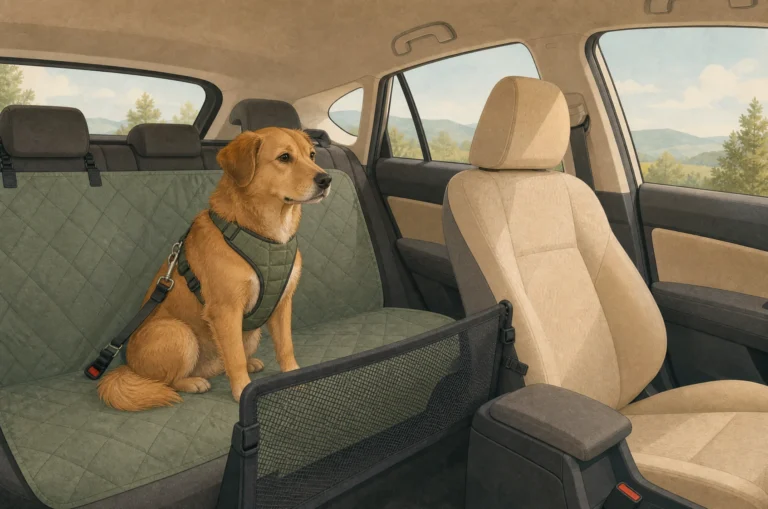
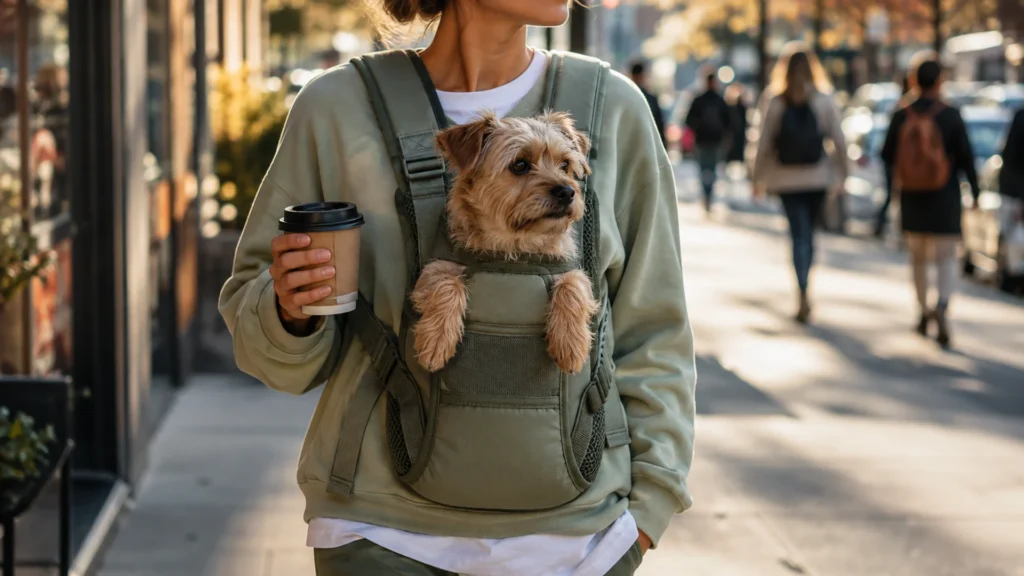
A chest carrier keeps your dog on the front of your body — where you can see them, steady them with one hand, and walk through a crowd without checking over your shoulder. It is the right carry for dogs who get anxious out of sight, for short errands with lots of in-and-out, and for any dog you would rather watch than wonder about.
The trade-off is honest and physical: weight on your chest pulls your posture forward sooner than the same weight on your back. Front carriers earn their keep under roughly the weight of a house cat; above that, a backpack or a wheeled carrier carries the same dog better.
Are front carriers bad for dogs? Not for a small, healthy dog on a short outing, if the carrier fits and the tether is clipped to a harness. Three kinds of dog need more care: long-backed breeds such as dachshunds, which are prone to disc disease and need their back and rear supported (Cornell’s Riney Canine Health Center lists them first among predisposed breeds); flat-faced dogs, which Cornell says cannot pant as efficiently and so overheat faster against your body; and very young puppies, which a front carrier can actually help, as we explain below.
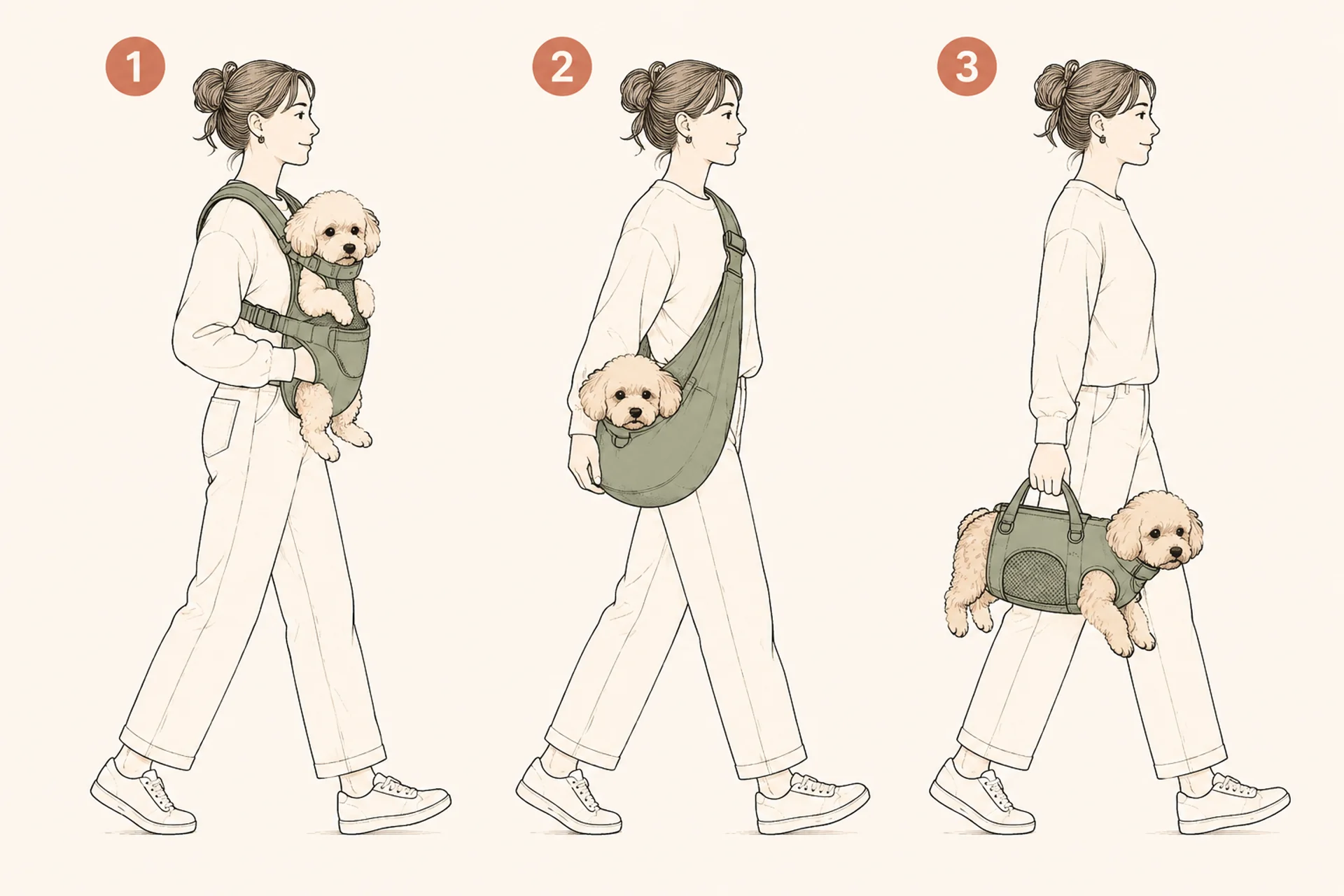
What people mean by “chest carrier” — three shapes, not one
Listings use chest carrier, front carrier, puppy front carrier and hands-free carrier almost interchangeably. The products behind those words sort into three shapes, and they behave differently enough that the name matters less than the shape.
| Shape | How the dog rides | Hands-free? | Best for |
|---|---|---|---|
| Legs-out chest vest | Upright against your chest, legs through openings, buckled to you | Fully | Commutes, crowds, dogs who want to see everything |
| Sling | Seated in a pouch at your hip or across your front | Mostly — one steadying hand at first | Errands, cafe runs, older dogs who prefer to curl |
| Lift vest with handle | Wears the vest all day; you lift by the handle or clip a shoulder strap | No — it is a carry aid, not a container | Stairs, curbs, vet tables, mixed walk-and-carry outings |
The case for carrying on your front
- You can read your dog’s face. A trembling dog on your back is invisible; on your chest they are a glance away.
- One hand can steady, scratch, or hold a treat without stopping — which is most of what calms a nervous rider.
- Boarding and doorways are simpler when the dog is in front of you, not swinging behind your shoulder line.
- Small dogs who bark at passing dogs usually do it less when they ride higher than the thing they were barking at.
The case against — and where a backpack wins
Front weight rounds your shoulders. On a short errand you will not notice; on a long walk you will. A backpack puts the same load on the frame of your body instead of the front of it, which is why our backpack carrier guide is the better read for hikes and airports. If the walk is long and the dog is heavy, the honest answer is a backpack, a wheeled carrier, or letting them walk more of it.
Heat is the second limit. A dog pressed against your chest shares your warmth in both directions. On a hot afternoon a mesh-bodied sling or a carrier with real airflow matters more than any strap feature.
Fit: the two measurements that decide comfort
For a legs-out vest, what matters is the girth of the chest behind the front legs and the openings the legs pass through. A vest that fits the chest but rubs the legs will be refused within a week. For a sling, what matters is depth — your dog should sit hip-deep in the pouch, not perch on top of it. Weight ranges on listings are a filter, not a fit: measure, then check the size chart on the product page, and size for the dog you have, not the breed average.
Two fit mistakes repeat across every brand. First, buying room to grow for a puppy — a loose front carrier swings, and swinging is what makes dogs distrust them. Second, treating the carrier as restraint: a chest vest positions a dog, it does not contain a determined one, so clip the built-in tether to their harness every time.
Are front carriers bad for dogs? Four cases that need more care
A front carrier is not risky in itself, but it holds a dog in a posture it didn’t choose, pressed against a warm body, sometimes for longer than you planned. Four kinds of dog need a closer look.
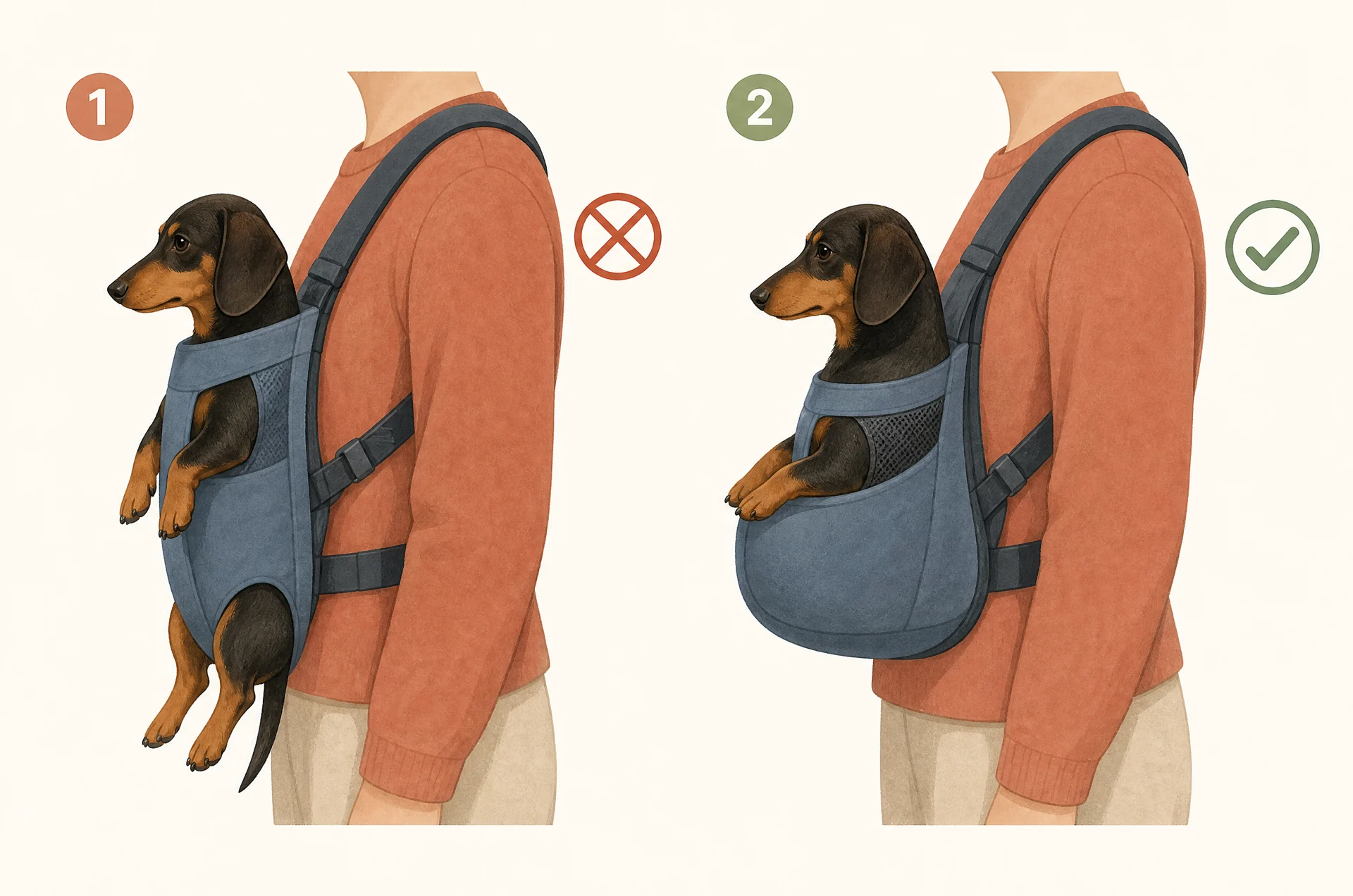
- Long-backed dogs (dachshunds, corgis, bassets). Cornell’s Riney Canine Health Center lists dachshunds first among the breeds predisposed to intervertebral disc disease. It advises keeping these dogs trim and minimizing stairs and jumping on and off furniture. A front carrier can help with the stairs part, but only if it supports the back and rear. A legs-out vest that leaves a long dog hanging upright from its front legs is the wrong shape. For a dachshund, a sling or pouch that seats the dog with its hindquarters supported is the better front carry. If your dog has had back trouble before, ask your vet which carry is safe, and see your vet at the first sign of back pain.
- Flat-faced dogs (pugs, French bulldogs, Boston terriers). Cornell’s heat page says brachycephalic breeds “cannot pant as efficiently,” and lists heavy panting, drooling and reluctance to play as early signs of heat stress. A dog pressed to your chest has less airflow than one walking beside you. Use mesh, keep outings short when it’s warm, and take the dog out the moment it starts panting hard.
- Puppies. This is where a front carrier is at its best. The American Veterinary Society of Animal Behavior says the first three months are the most important socialization period in a puppy’s life. It also says to avoid areas heavily trafficked by dogs of unknown vaccination status, such as dog parks. Carrying lets a puppy see, hear and smell the street without putting its paws on it. Size the carrier for the puppy you have now, so it doesn’t swing.
- Any dog on a long day. Most front-carry problems come from time, not the carrier. Take the dog out, let it walk or rest, and put it back in rather than carrying for hours without a break.
20 lb, 25 lb, large dogs: how heavy is too heavy on the front?
Front carriers are sold for dogs up to 20 or 25 lb, and a few are marketed for large dogs. Two different limits apply here. One is the carrier’s rated maximum, which you’ll find on the product’s size chart. That’s about the straps and seams, not about you. The other is your own back. We couldn’t find any veterinary or ergonomics body that publishes a safe front-carry weight for people, so we won’t make one up. What we can tell you from fitting these carriers is that weight on your chest pulls you forward much sooner than the same weight on your back.
A practical approach: around cat-weight, a chest carry is comfortable for most people on an errand. At 20 to 25 lb, it works for short stretches (stairs, a crowded platform, a tired dog on the way home) but not for a whole outing. Above that, a front carrier isn’t the right tool. A backpack carrier, a wheeled carrier, or a lift vest used only for curbs and stairs will do the job better. For large dogs that genuinely need to be lifted because of injury, our guide to carrying an injured dog covers two-person carries.
Hiking, bikes and motorcycles
Hiking: a chest carrier is a good backup for the last mile with a small dog that’s tired out, but it’s not how the whole hike should go. On the trail, the heat and the forward lean both get worse, which is why a backpack is the usual hiking carrier. Our guide on how far a puppy can walk helps you plan the walking part so the carrier stays a backup.
Bikes and motorcycles: we don’t recommend riding with a dog in a chest carrier. The AKC’s biking guide addresses baskets, not chest carriers, and even there it says to use only baskets designed for dogs, with safety straps that stop them falling or jumping out. A chest carrier isn’t made for that. If you fall, the dog is between you and the road.
Getting a dog to accept a front carrier
Most dogs accept a front carry faster than a closed carrier, because they can see you the whole time. Put the vest or sling on the floor, feed in it for a few days, then do one short indoor carry before the first real outing. Keep the first street session under ten minutes and end it before your dog asks to. The pattern is the same one we recommend in our guide to carrying a small dog — the carrier is just the equipment half of it.
Which front carry for which outing
Riding chest-height through a busy street. The Road Legs-Out Front & Back Dog Carrier is the legs-out vest in our line: padded air-mesh straps, two one-handed buckles, and it turns around to ride on your back when the return trip is longer. Check the size chart against chest girth before choosing a size.
A dog who would rather curl than stand. The Everyday Mesh-Comfort Sling Pet Carrier is an all-mesh pouch with a padded strap and a harness clip — the airflow choice for warm days. The Everyday Open-Top Sling Pet Carrier adds structured walls and a drawcord head-out port for dogs who like a den with a view.
Mostly walking, occasionally lifting. The Everyday Four-Leg Lift-and-Go Dog Carrier Vest stays on the dog: a padded handle for stairs and curbs, a clip-on shoulder strap for longer stretches, and a leash point for the parts they walk. It is the pick when the carry is a moment, not the whole trip. Browse everything front-carry in Carriers.
Dog chest carrier FAQ
Are chest carriers safe for dogs?
For a small, healthy dog on a short outing, yes, with two conditions. The leg openings must not press into the leg joints, and the tether must be clipped to a harness so a startled dog can’t jump free. Take extra care with long-backed breeds, which need their rear supported, and with flat-faced breeds, which Cornell notes cannot pant as efficiently and overheat faster.
Is a chest carrier OK for a dachshund?
Choose the shape carefully. Dachshunds are the breed Cornell lists first for disc disease, and the aim is to support the back and hindquarters rather than let the dog hang upright from its front legs. A pouch or sling that seats the dog is usually a better front carry for a dachshund than a legs-out vest. If your dog has had back problems, ask your vet first.
Can I use a front carrier for a 25 lb dog?
For short stretches, if the carrier is rated for that weight (check the size chart). For a whole outing, most people find 20 to 25 lb on the chest tiring quickly. A backpack or a wheeled carrier carries the same dog more comfortably.
How heavy a dog can I carry on my chest?
Product ranges vary, so check the chart on the specific carrier — but your back has an opinion too. Most people are comfortable carrying up to roughly cat-weight on the front for an errand-length outing. Beyond that, the same dog rides better in a backpack or on wheels.
What is the difference between a front carrier and a sling?
A front carrier holds the dog upright against your chest with their legs through openings; a sling seats them curled in a pouch at your hip. Upright suits dogs who want to watch the street; curled suits dogs who ride to rest.
Can a puppy ride in a front carrier?
Yes. It’s one of the better ways to socialize a puppy before its vaccinations are complete. The AVSAB calls the first three months the most important socialization period, and advises avoiding places heavily used by dogs of unknown vaccination status. Carried, a puppy can see the world without touching the pavement. Fit is the catch: a puppy loose in an adult-sized vest swings with every step, so size for the puppy it is now, not the dog it will be.
Are hands-free dog carriers actually hands-free?
A buckled chest vest is, once your dog settles. A sling is nearly so — most dogs need a steadying hand for the first few outings, then ride on the strap alone. A handle-carry vest is not hands-free at all, and is not trying to be.
Chest carrier or backpack for a small dog?
Chest for short outings, visibility, and anxious riders; backpack for distance and weight. If you are choosing one for travel days specifically, start with our small-dog carrier guide, which covers both alongside soft carriers.
Sources
- Cornell Riney Canine Health Center — Intervertebral disc disease (predisposed breeds, dachshunds listed first; signs from back pain and wobbly gait to hind-limb paralysis; keep dogs trim, minimize stairs and jumping on and off furniture; contact your vet at the first sign of back discomfort) (checked 2026-09-27)
- Cornell Riney Canine Health Center — Summer heat safety tips for dogs (brachycephalic breeds cannot pant as efficiently; overweight, elderly and thick- or dark-coated dogs at higher risk; early signs of heat stress) (checked 2026-09-27)
- American Veterinary Society of Animal Behavior — Position statement on puppy socialization (first three months the most important socialization period; classes from 7–8 weeks after a first set of vaccines; avoid dog parks and areas trafficked by dogs of unknown vaccination status) (checked 2026-09-27)
- American Kennel Club — Biking with dogs (only use baskets designed for dogs, with safety straps to stop them falling or jumping out) (checked 2026-09-27)
This article is general information, not veterinary advice. If your dog has a back, breathing or heart condition, ask your vet before carrying it this way.
Front for watching, back for distance.
A chest carrier is the carry you choose when seeing your dog matters more than forgetting the weight: crowds, commutes, nervous riders, short hops. Fit it to chest girth and leg openings, clip the tether to a harness, and when the outing turns into a hike, hand the job to a backpack.