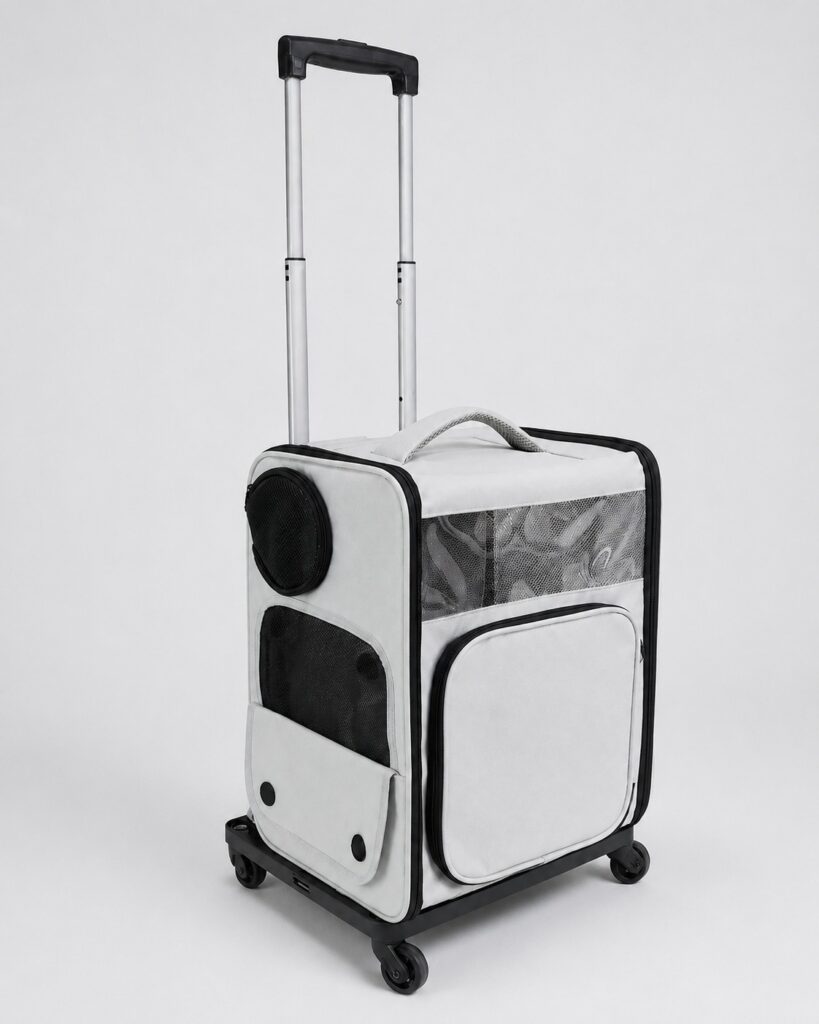
Wheels are a ground-game tool. They are excellent for a heavier pet and a long walk — a mile of terminal, a hospital campus, a station concourse — and they do nothing at all for the problem most shoppers are actually trying to solve, which is fitting under an airplane seat.
Two facts settle most of the confusion, and both come from the agencies rather than from product pages. There is no federal “airline approved” certification for a cabin carrier — the FAA leaves that decision to each airline. And at the security checkpoint your pet comes out of the carrier and the carrier goes through the X-ray on its own, which is a very different choreography with a rolling bag than with a shoulder one.
So the honest way to shop is to ask which stretch of your trip is actually hard, and buy for that stretch.
The under-seat asterisk, first
Any listing that calls a wheeled carrier “airline approved” is describing a thing that does not exist as a certification. The FAA’s own guidance on flying with pets says the agency “allows each airline to decide” whether pets travel in the cabin at all. Where an airline does allow it, your pet’s container counts as carry-on baggage under the same federal rule as any other bag, and it must be small enough to fit under the seat without blocking anyone’s path to the aisle, be stowed before the last door closes, and stay stowed the whole time the aircraft is moving on the ground and for takeoff and landing.
Read that last clause again, because it is the one wheels cannot help with. From boarding to arrival gate, the carrier is a fixed object in a fixed hole. The Department of Transportation’s consumer guidance puts the same point plainly: some carriers allow the kennel in the cabin as carry-on if it fits under the seat. Fits, not rolls.
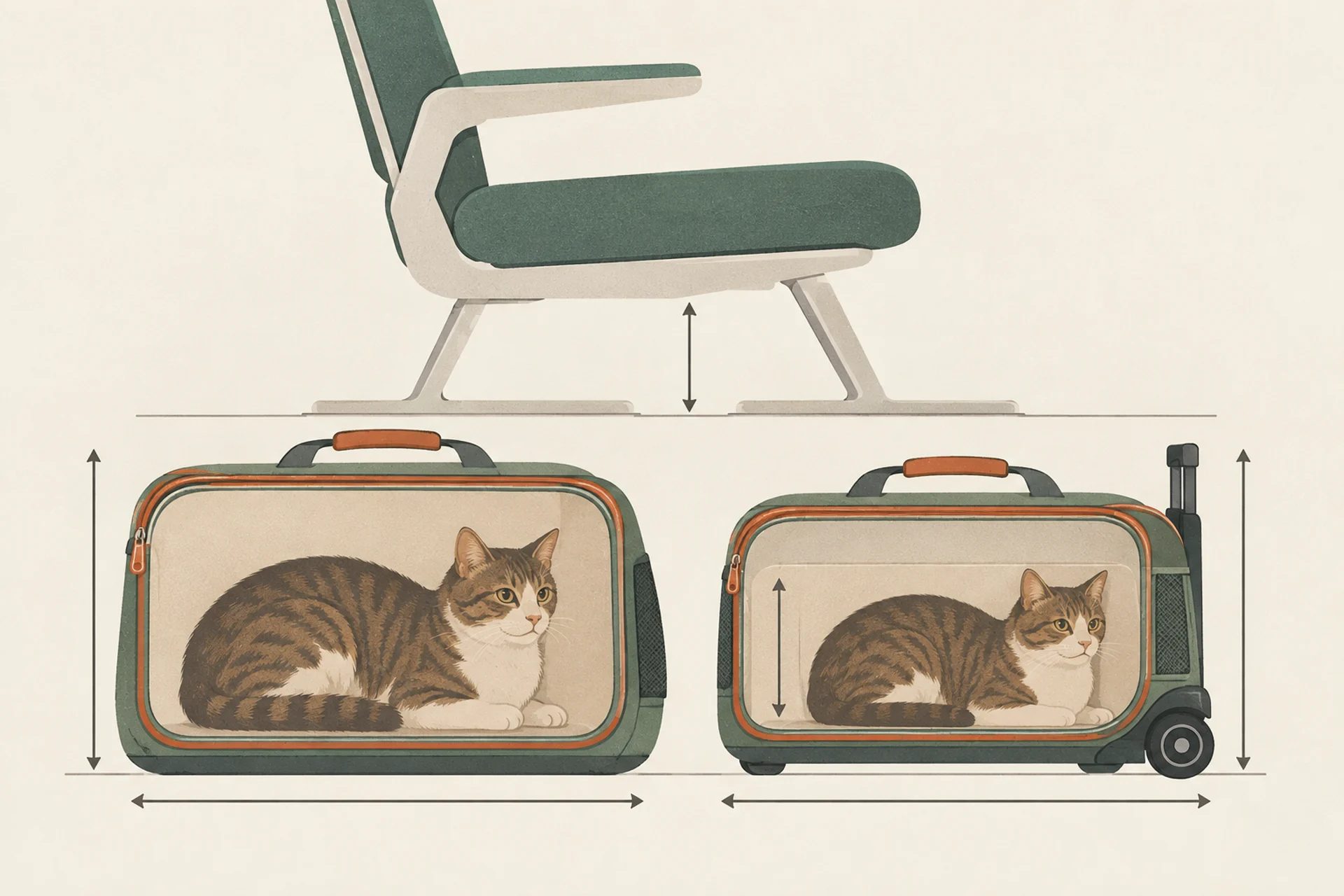
And wheels are not free. The wheel housing and the telescoping handle channel sit inside the same outer envelope the airline measures, so they come out of the space your pet stands up in. Our under-seat size guide has the published limits airline by airline; check them against a carrier’s zipped dimensions, not its collapsed ones.
The checkpoint is the part nobody plans for
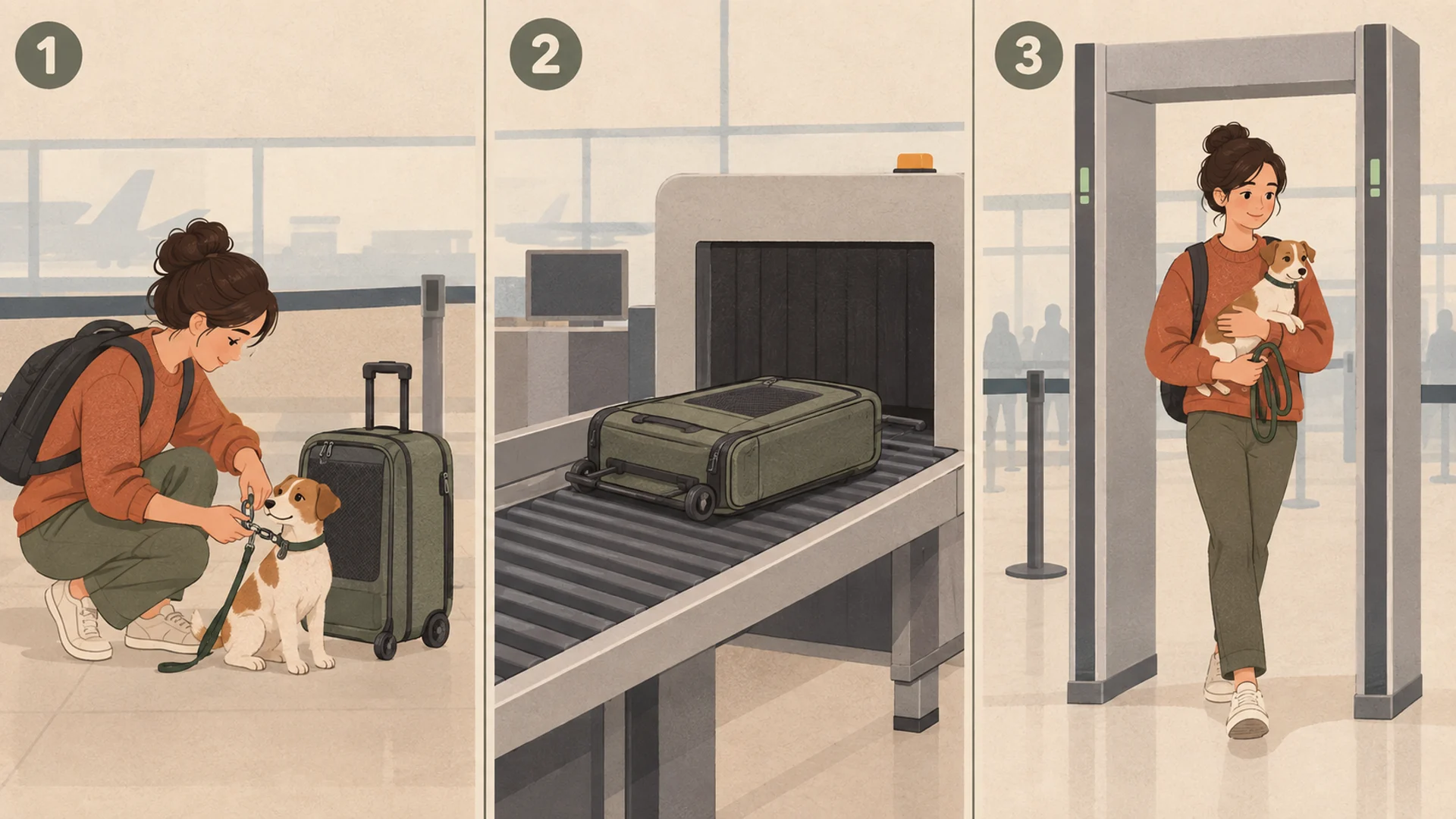
This is the single most useful thing to know before you buy, and almost no product page mentions it. TSA’s published answer to whether you can take a pet through the checkpoint is yes, with conditions: remove the pet from the carrying case, send the case through the X-ray machine, keep control of the pet with a leash, and take the leash off while you carry the pet through the metal detector. The empty carrier gets a visual or physical inspection.
Translate that into a rolling carrier and three practical requirements fall out. The harness or collar goes on before you join the line, not in it. You need both arms free for thirty seconds, which means the leash, your boarding pass and your phone all have to be somewhere. And your pet is loose in your arms, in a loud room, at exactly the moment their den is out of reach on a conveyor belt — which is an argument for a pet who has practised being handled, rather than for any particular bag.
Where wheeled carriers genuinely win
Weight. A shoulder bag stops being reasonable somewhere around 15 lb of pet, and no carry style fixes that — arms give out, straps dig in, and the trip becomes about your endurance instead of your pet’s comfort. Wheels take the pet’s weight off your body entirely, which changes what trips are possible with a bigger cat or a mid-size dog, and which is why they matter most to people with back, shoulder or wrist limits of their own.
They also win on duration. A carrier you can roll is a carrier you will use for the whole distance rather than putting down every hundred metres, and fewer set-downs means less jostling for the animal inside.
| Situation | Wheeled carrier fit |
|---|---|
| Pet over ~15 lb, long walking distances | Strong — this is the core use case |
| Airport terminals, stations, big hospital or campus vet clinics | Strong up to the checkpoint; cabin rules still decide what happens on board |
| Senior or recovering pets who tire quickly | Strong — ride when tired, walk when able |
| A handler with back, shoulder or wrist limits | Strong — often the difference between a trip happening and not |
| Rough trails, sand, gravel, stairs, escalators | Weak — wheels want pavement; plan a carry mode instead |
| Quick car-to-vet trips | Overkill — a simple soft carrier is easier to seat-belt |
| Under an airplane seat | Neutral at best — the wheels cost interior space and earn nothing on board |
The pet’s side of the trade
Rolling moves the load off you and onto the animal’s floor. Small hard casters on brick, expansion joints and kerb lips transmit a steady buzz at exactly ear height, which is the main reason big smooth wheels are worth paying for and small rigid ones are not.
Enclosure time is the other half. A wheeled carrier tends to be used for longer continuous stretches than a shoulder bag, which raises the stakes on ventilation and on heat. The AVMA’s travel guidance singles out brachycephalic pets such as Pugs and Persians as more at risk than others of overheating or breathing trouble in transit, especially by air — if that is your pet, mesh on several sides and shorter enclosed stretches matter more than the wheels do. The same page is worth reading before any trip that crosses a state line, because health-certificate timing catches people out.
What to look for
- An honest weight rating. The frame, wheels and floor should be rated well above your pet’s weight, not exactly at it.
- A wide, stable wheelbase. A pet shifting to one side is the load case that tips a narrow trolley.
- Big, smooth wheels. They roll over kerb lips and cobbles instead of hammering through them.
- A carry mode. Stairs, escalators, kerbs and the boarding door all happen. A carrier that lifts off its frame or has real handles covers them; one that only rolls does not.
- Ventilation on more than one side. Mesh matters more in a carrier your pet may be inside for an hour.
- A latch you trust. DOT’s advice for any travel container is to make sure the door latches securely — the checkpoint, a kerb drop and a crowded lift are all places a zip can be tested.
TuckTrail pick
The Camp Detachable Rolling Pet Carrier is rated to 77.2 lb and lifts off its wheel frame when the pavement ends, which covers the stairs-and-escalators gap that catches most rolling carriers out. Mesh on the front, sides and canopy keeps the air moving on the longer rides.
Getting a pet used to rolling
Vibration and motion are new sensations, and the carrier itself may already carry baggage. The Merck Veterinary Manual’s advice for car travel applies directly here: take short trips in the carrier first, and if your pet associates it only with the vet, use it to go somewhere good to build a different association. The AVMA and DOT both say the same thing about the container specifically — get the animal used to it before the trip, and put a familiar blanket or toy inside.
For the wheels, add one rung. Start on smooth indoor floors with the pet inside and treats flowing, keep the first sessions to a few minutes, and save kerbs and brick pavements for later weeks. A slow first fortnight buys a calm rider for years, and it is the same gradual approach we recommend in our car travel guide.
Are pet carriers with wheels airline approved?
There is no such approval to hold. The FAA leaves the decision to each airline, and where pets are allowed in the cabin the carrier is treated as carry-on baggage that must fit under the seat and stay stowed while the aircraft is moving. Check the airline’s own published limits against the carrier’s zipped dimensions, and treat any listing that claims a blanket approval with suspicion.
Can I roll my pet through airport security?
Not through the checkpoint itself. TSA’s published procedure is to take the pet out of the case, put the case through the X-ray machine, keep the pet on a leash, and remove the leash to carry them through the metal detector. Have the harness on before you get in line.
Do the wheels count toward the under-seat size?
They are part of the carrier, so whatever the airline measures includes them. The subtler cost is on the inside: the wheel housing and handle channel eat interior height and depth within the same outer envelope, so two carriers with identical published dimensions can give your pet noticeably different room.
Wheels or a backpack for a 20 lb cat?
Pavement and distance: wheels, without question. Twenty pounds on your shoulders for an hour is a chiropractor appointment. Stairs, transit crushes or anything unpaved: a backpack rated for the weight, with breaks.
Are wheeled carriers good for big dogs?
For moving a mid-size dog across a distance they cannot comfortably walk — a terminal, a long pavement day, a recovery period — yes, within the carrier’s stated weight rating. They are a mobility tool, not a substitute for the exercise a healthy dog should be getting.
Is rolling stressful for a cat?
It can be at first, mostly because of the buzz coming up through the floor. Big wheels, smooth surfaces and short practice runs handle most of it. If your cat only ever sees the carrier before a vet visit, fix that association first — Merck’s suggestion of using the carrier for pleasant trips is aimed at exactly this problem.
Buy wheels for the ground game, not for the seat.
Heavier pets, longer distances, tired seniors, a handler whose shoulders have had enough — that is where rolling changes what is possible. It does not solve the under-seat problem, which is still won by zipped dimensions and a light soft-sided bag, and it does not survive the security checkpoint, which you will do on foot with your pet in your arms. Match the tool to the terrain and the heavier half of the pet world gets a lot more travel days.
Sources
- Federal Aviation Administration — Flying with Pets (checked 2026-09-10)
- Transportation Security Administration — Can I take my pet through the security checkpoint? (checked 2026-09-10)
- U.S. Department of Transportation — Plane Talk: Traveling with Animals (checked 2026-09-10)
- American Veterinary Medical Association — Traveling with your dog or cat (checked 2026-09-10)
- Merck Veterinary Manual — Traveling by Car With Pets (checked 2026-09-10)
Airline pet policies and screening procedures change. Confirm the current rules on the airline’s own page and with TSA before you book or travel.