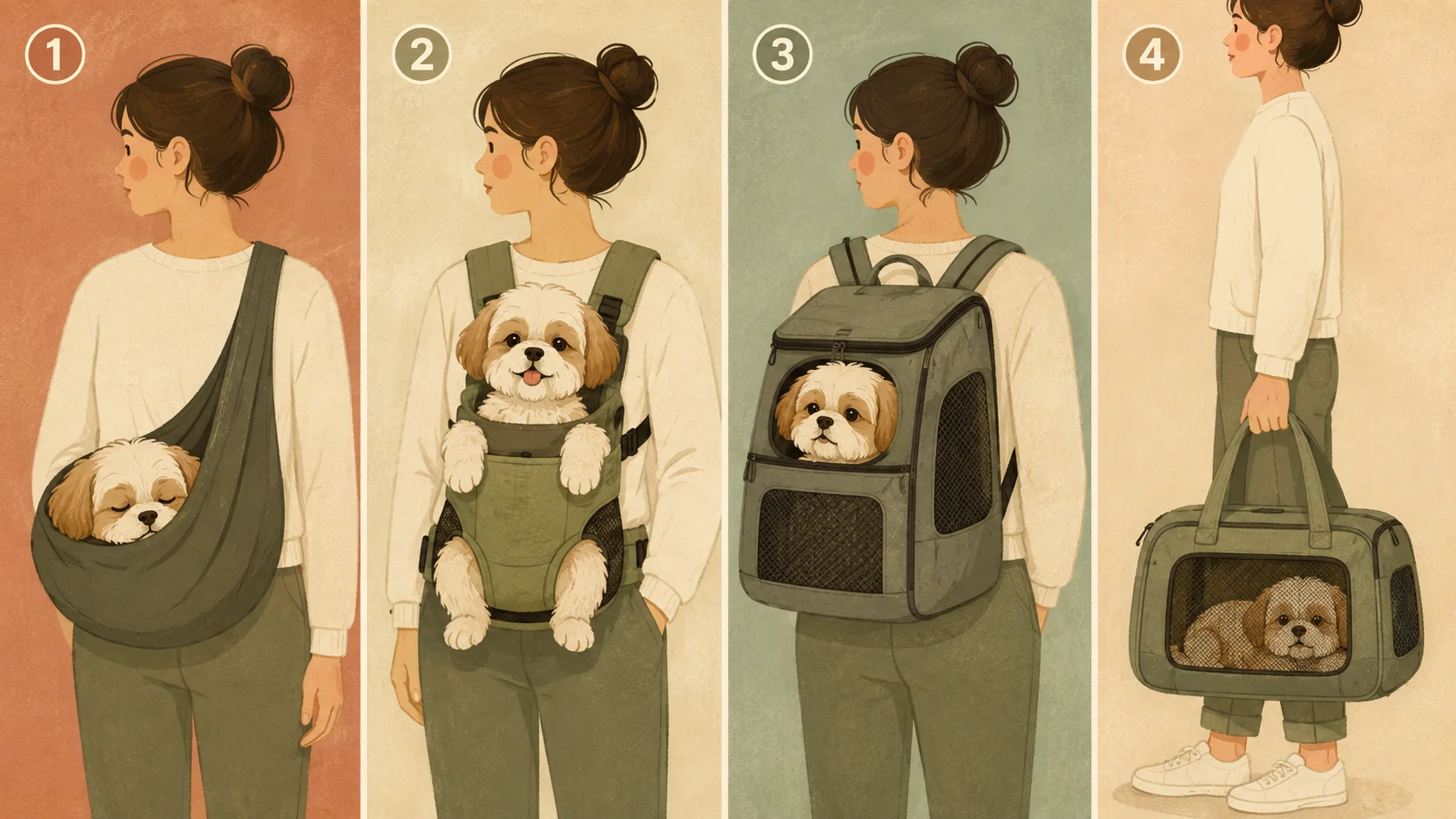
There is no single best carrier for a small dog, and the round-ups that rank one are answering the wrong question. The choice that actually decides everything is how the dog travels: on your body, on your back, on a bike, or under an airline seat. Those four are different products with different failure modes, and a bag that is excellent at one is usually poor at another.
So: sling or chest carrier for short errands on foot, backpack for longer walks where you need both hands, a purpose-built bike basket with restraint straps if the trip is on two wheels — the AKC is specific that it must be a basket designed for a dog to ride in, with straps to stop them jumping out — and a soft-sided carrier that meets the ASPCA’s containment standard of enough room to “stand, sit, lie down and turn around in” for travel days.
Within whichever style you land on, size to your dog’s measurements rather than the breed on the label, and judge it on three things: a base that does not fold under your dog’s weight, airflow on more than one side, and a door your dog will actually walk through. Padding, windows and colours are the easy part.
“Small dog” is a weight band, not a breed list
Listings use small, XS, and teacup loosely, so start from the number that actually constrains the choice: your dog’s current weight on a home scale. The bands below are how carrier shopping really divides.
| Weight | Typical dogs | What changes |
|---|---|---|
| Under 5 lb | Teacup Chihuahuas, tiny Yorkies, toy-breed puppies | Almost everything is too big inside; snug beats roomy |
| 5–12 lb | Chihuahuas, Yorkies, Pomeranians, Maltese | The widest choice — every carry style works, so pick by trip |
| 12–18 lb | Shih Tzus, Miniature Dachshunds, small mixes | Base stiffness and strap comfort start to matter more than looks |
| 18 lb and up | Corgis, French Bulldogs, larger mixes | Past most small-carrier territory — carrying comfort, not fit, becomes the limit |
That last band deserves the honest footnote: an 18–25 lb dog can ride in a carrier for short stretches, but few people enjoy carrying one for long, and cabin travel gets hard — our 15 lb / 20 lb weight guide walks through what is realistic before you spend anything.
Start with fit, not the product photo
Measure your dog while they are standing naturally, then judge carriers by their interior dimensions — the exterior number on the box includes walls, padding, and frame.
- Body length: chest to base of tail. The carrier’s interior length should give a few inches beyond this so your dog can curl and turn.
- Shoulder height: floor to the top of the shoulder. Your dog should be able to sit without their head pressing the ceiling in a closed carrier.
- Weight: current weight on a scale, not the breed average — and not what they weighed last year.
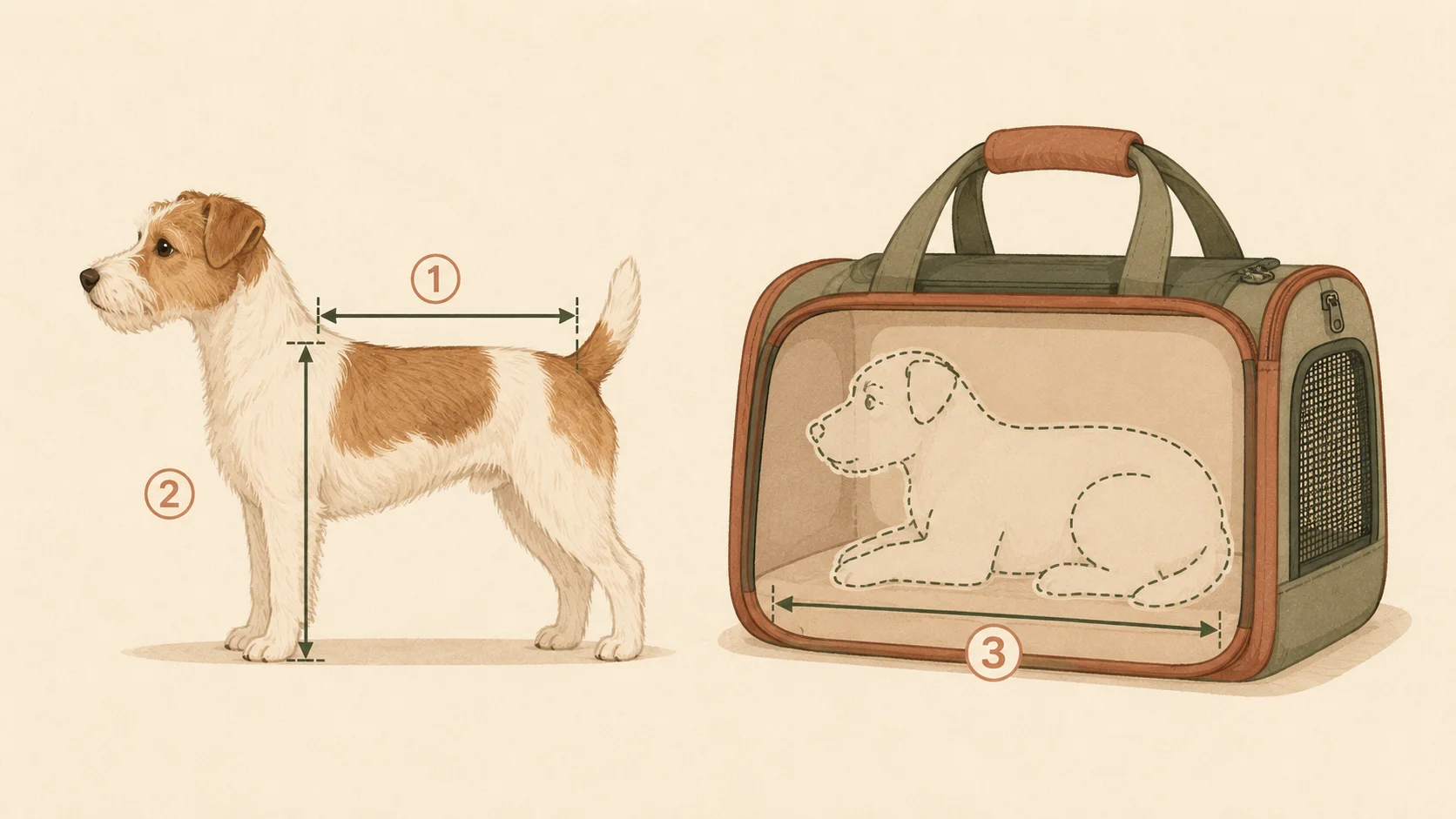
A small dog carrier should let your dog turn around and settle, but a carrier that is clearly oversized works against you: a light dog slides across a big floor with every step, and that sliding is exactly what makes many small dogs distrust carriers. If your dog lands between sizes, choose by trip — roomier for everyday errands, lower-profile when under-seat travel is the goal.
Pick the style by trip type
| Trip | Best carrier style | Why it works |
|---|---|---|
| Vet visits and short errands | Soft open-top carrier or tote | Easy loading, calm handling, quick access at the counter |
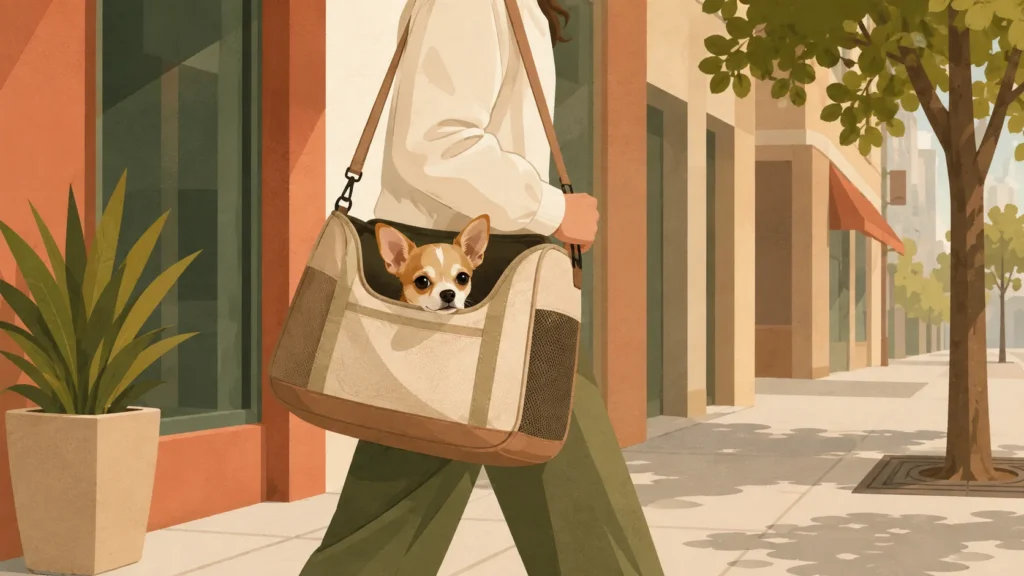
| Cafe runs with a dog who rides to rest | Sling | The pouch is self-sizing and keeps the dog against your body |
| Crowds, commutes, anxious dogs | Chest carrier | Your dog stays where you can see and steady them |
| City walks and longer carries | Backpack carrier | Weight rides close to your spine and leaves both hands free |
| Flight days | Soft-sided under-seat carrier | Low profile and flexible sides; the airline’s current policy decides the rest |
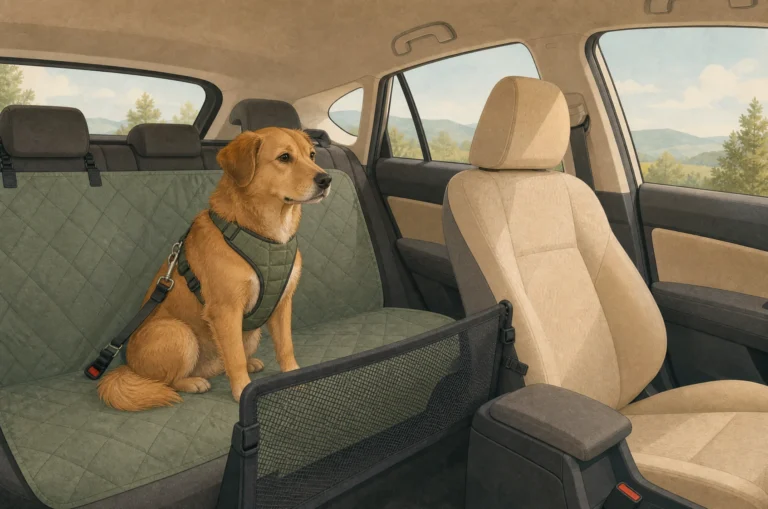
| Car trips | Secured carrier or car seat | Attachment to the seat matters more than the bag itself — see the car travel guide |
If you are torn between the hand-carried styles, the sling vs backpack vs purse comparison breaks down how each one actually feels after twenty minutes — the point where looks stop mattering.
Long backs, deep chests, flat faces: when weight lies
Weight is where carrier shopping starts, but it is not where fit is decided. Two dogs on the same line of the scale can need two different bags, because a carrier has to hold a shape, not a number.
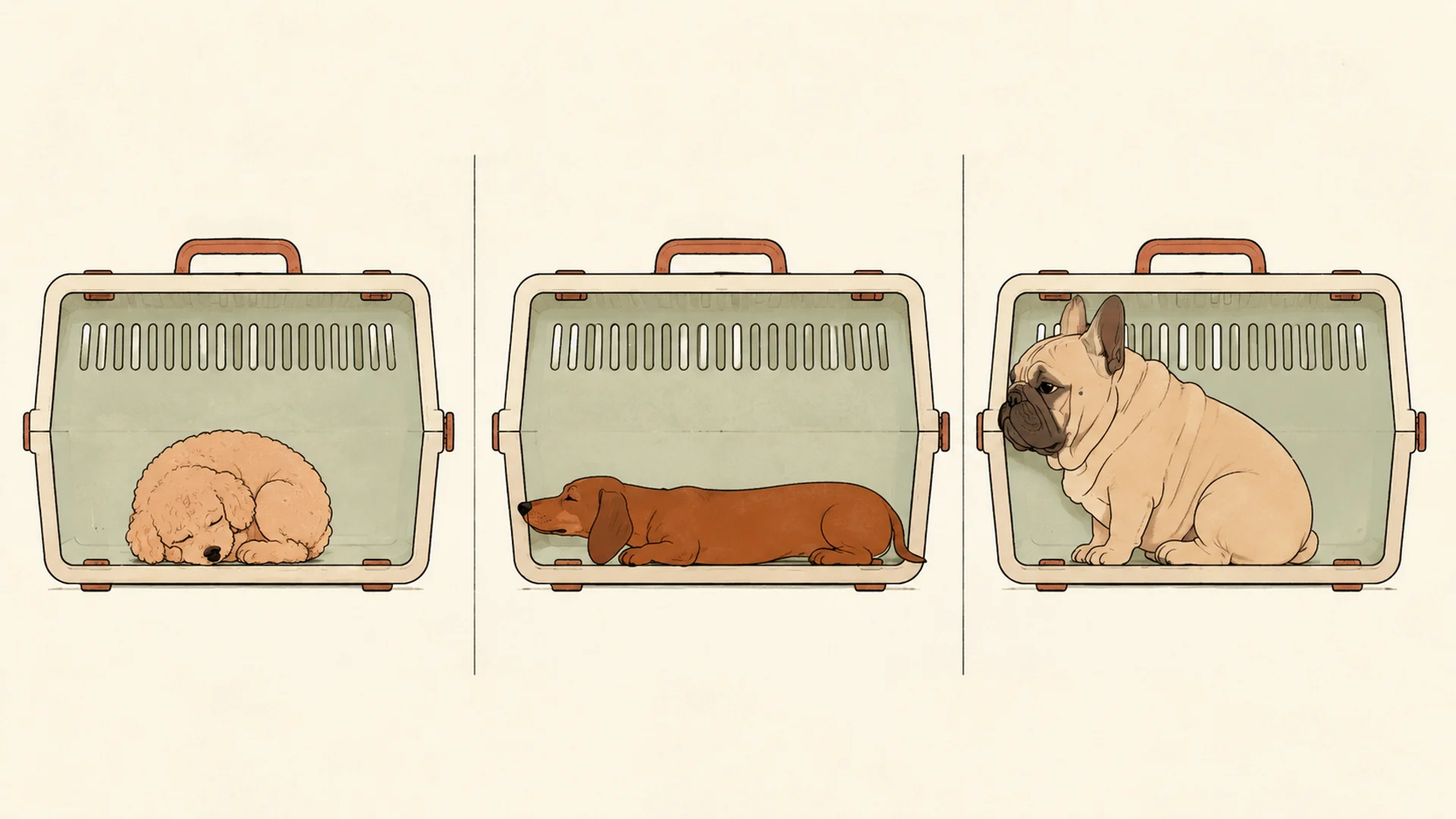
Long-backed dogs — Dachshunds, Corgis, long-bodied mixes — hit the length wall first. A carrier rated for their weight is frequently three or four inches too short inside, which forces the dog to lie with their spine against a curve rather than straight. The fix is counterintuitive: buy for length and accept the extra height and width that comes with it, rather than buying a bag that is proportionally right and dimensionally short. Open-top totes and slings suit these dogs better than fixed cubes, because the dog can stretch out along the opening instead of folding into a box.
Deep-chested and broad dogs — French Bulldogs, Boston Terriers, stocky small mixes — do the opposite. They fill the width and leave the length unused, and the pinch point is usually the entry rather than the interior: a door cut for a slim dog will not take a barrel chest without a shove. Check the opening dimensions, not just the floor.
Flat-faced dogs — Pugs, Frenchies, Shih Tzus, Boston Terriers — turn ventilation from a comfort feature into a safety one. Short muzzles cool inefficiently, so a stuffy carrier stresses these dogs faster and harder than it stresses a Yorkie of the same weight. For them, treat maximum open mesh as the requirement, keep the closed carrier out of warm afternoons entirely, and prefer a design where the top can be opened for air while you are stationary.
What makes a dog carrier comfortable?
Comfort is mostly structure, not padding. Look for a stable base that does not hammock under weight, mesh on at least two sides, zippers that do not sag into your dog’s face, and a door position your dog will use without a wrestling match. Nervous dogs often do better with a top opening, because being lowered in gently beats being pushed in face-first. Curious dogs tend to prefer a backpack or a windowed design — visibility shrinks the boxed-in feeling.
Airflow deserves more weight than it usually gets. A single small mesh window looks fine in photos but turns stuffy during a slow walk, a long wait, or a crowded transit ride. For warm days, treat two-sided ventilation as the floor, not a bonus.
When a backpack carrier makes sense
A backpack-style carrier suits small dogs who are comfortable riding upright and do not need to lie flat for long stretches. Check the strap padding, the base stiffness, and the compartment height: an alert dog likes headroom, but the load should still ride close to your back rather than pulling you off balance. If your dog prefers watching the street from your front instead, that is the chest carrier’s territory.
On a bike, and the motorcycle question
This is the part of the search that almost no small-dog carrier round-up answers, and it comes up constantly: people who own a small dog want to take it on the bike. A carrier you wear and a carrier that rides on a bike are not interchangeable, and the difference is not comfort — it is what happens when the dog decides to leave.
For bikes, the AKC’s guidance, written with trainer Sassafras Patterdale, is narrow on purpose: “Make sure you only put your dog into baskets that are designed for them to ride in. It must have appropriate safety straps to prevent them from falling or jumping out while you’re riding.” That rules out the obvious improvisation — a sling or a tote worn on your body while you cycle, or a shopping basket with a dog in it. Baskets can mount at the handlebars or on the rear frame, and the dog’s harness is secured to the basket per the manufacturer’s instructions, not clipped to a collar.
The acclimation advice is the same shape as getting a dog used to any carrier, and worth doing before the first ride rather than during it: lift the dog in, secure them, treat and praise, then take them straight back out. AKC’s framing is explicit that this is not an endurance test — “The goal isn’t to make your dog wait to see how long they’re comfortable in the basket.” For dogs too big for a basket, the same page moves to trailers, with the warning that matters most: make sure they are securely attached before you start “so that they don’t jump out in traffic.”
Motorcycles are a different question, and the honest answer is that no veterinary or safety body publishes guidance for it — which is itself informative. The nearest thing in the published record is the AVMA’s policy on safe non-commercial transport of pets in motor vehicles, and its line on the closest analogue is unambiguous: “Transport of pets, loose or tethered, in open cargo areas of motor vehicles is not safe and puts the animal’s health and welfare at risk.” Where an open cargo area is used at all, the policy requires a “properly secured, size-appropriate” enclosure with ventilation appropriate to the animal.
The same policy explains why nobody can hand you a tested product either: “There is limited scientific information available to determine the safety of individual animal transport products,” which is why the AVMA “encourages development of evidence-based crash testing of animal enclosures and safety harnesses.” Nothing marketed as a motorcycle pet carrier has been through such testing, because the testing does not exist yet. We get into what that vacuum looks like in practice in are dog car seats actually crash tested. None of that is a lecture — it is just the state of the evidence, and it is worth knowing before you buy something that promises otherwise.
The bag your dog rides in is not the bag they travel in
One more distinction that the “best carrier” lists flatten. A purse-style or sling carrier is designed around a short errand: minutes, one shoulder, a dog who mostly sits. An under-seat travel carrier is designed around hours of confinement with no chance to get the dog out. The ASPCA’s travel safety guidance gives the containment standard for the second case — a carrier large enough for your pet to “stand, sit, lie down and turn around in” — and a lot of stylish small-dog bags simply do not meet it, which is fine for a twenty-minute errand and not fine for a travel day.
If you only buy one, buy the one that meets the harder standard and accept that it is bulkier than the pretty one. If you buy two, be honest with yourself about which trips each is for.
TuckTrail picks
For calm short trips, the Everyday Calm-View Pet Backpack is a soft-sided backpack carrier with mesh visibility, side entry, and a removable pad. For dogs who ride curled, the Everyday Mesh-Comfort Sling Pet Carrier keeps a light dog against your body with airflow through the mesh panel. For flight-day sizing, compare the Sky Double-Expand Mesh Pet Travel Carrier against your airline’s current pet policy before booking.
Under 5 lb: extra small and teacup dogs
Below roughly 5 lb — teacup Chihuahuas, tiny Yorkies, young toy-breed puppies — the sizing problem flips. Almost every carrier is big enough; very few are small enough inside. A dog this size slides across the floor of a standard small carrier with every step you take, and that sliding, more than the space itself, is what makes tiny dogs distrust carriers.
Three adjustments help. First, judge the interior, not the label: an “XS” tag tells you less than the internal length and width against your dog’s curled-up footprint, so use the size chart’s interior measurements and expect the right answer to look surprisingly snug. Second, prefer carry styles that hold the dog against your body — a chest carrier or sling moves with you instead of letting a featherweight passenger rattle around a box; the pouch of a sling is effectively self-sizing. Third, mind the gaps: mesh openings, head-out ports and zipper corners that safely contain a 10 lb dog can be an exit for a determined 3 lb one, so clip the interior tether to a harness — never a collar at this size — every single time. The carrying guide covers the in-arms half of tiny-dog transport, which at this weight is a bigger share of daily life than any bag. If yours is a puppy rather than a small adult, how far a puppy can walk covers how much of the outing should be on its own legs at all.
When the dog is a big-breed puppy, not a small dog
A large share of the people shopping for a “small dog carrier” do not own a small dog. They own a Golden Retriever, a Lab, a Shepherd or a Doodle who is currently eight weeks old and currently twelve pounds, and who needs to get to the vet, the car and the sidewalk before the vaccination course finishes. This is a genuinely different purchase, and the round-ups almost never separate it out.
The trap is arithmetic. A small-breed dog will spend years in whatever carrier you buy: the AKC’s puppy growth guidance puts small breeds as finishing growth “by the time they reach 6 to 8 months of age.” Giant breeds, by contrast, “grow until they are 12 to 18 months old,” and very large breeds such as Mastiffs may not reach full size until 24 months. A big-breed puppy does not stay in the small-carrier weight band for years — it crosses it, on its way through, in a matter of weeks.
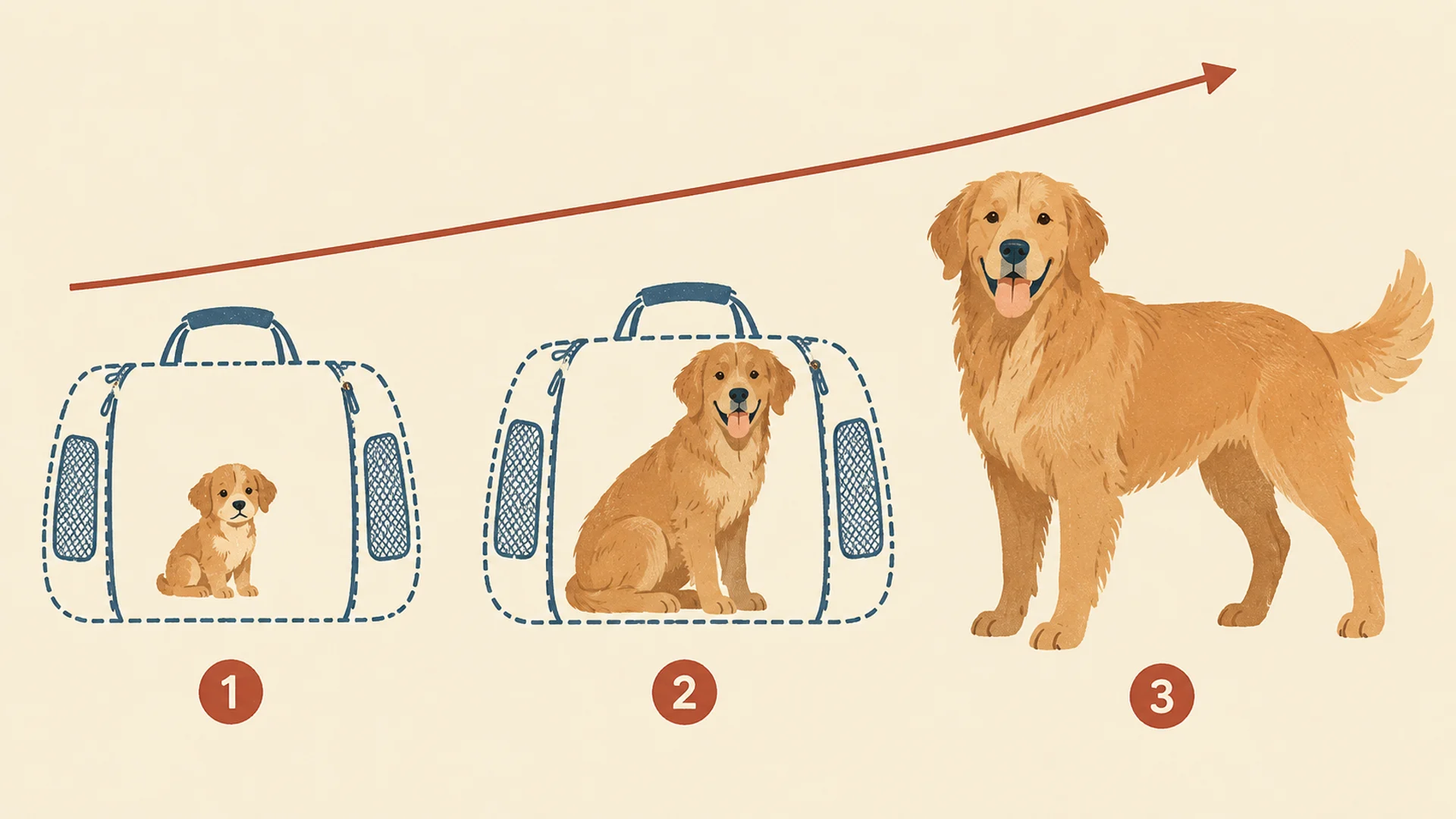
So decide which purchase you are making, and be honest about it:
- If this is a short window you need covered now — vet visits before full vaccination, stairs, a walk-up apartment — buy for the dog you have today and accept it is temporary. A sling or chest carrier is usually the better money here than a structured backpack, because it holds a growing puppy against your body and stops being useful gracefully rather than suddenly.
- Do not “size up so they grow into it.” It is the single most common mistake in this situation, and it fails twice: too much interior room now means a puppy sliding around on every step, which is exactly how dogs learn to hate carriers — and by the time the dog grows into the size, they are usually past it.
- Plan for what replaces it. For most large breeds the answer is not a bigger carrier at all. It is a car restraint for the drive and the dog’s own four legs for everything else. Weigh the carrier spend against that.
Growth also runs faster than the vet’s recorded weight in your head. Re-weigh a big-breed puppy before you order anything, not from memory of the last appointment.
What the “best carrier” round-ups get wrong
Lists of best carriers for small dogs mostly rank on the things that photograph and the things that are easy to compare across products: price, colourways, pocket count, star ratings. Those are real, and they are also the variables that matter least once the bag is on your shoulder.
The three that decide whether you keep using a carrier do not sort into a comparison table: whether the interior matches your dog’s actual curled-up footprint, whether the base stays rigid under your dog’s weight after a hundred trips, and whether your dog will walk in voluntarily. The first is a measurement you take at home, the second only shows up with use, and the third is about your dog rather than the product — which is why no round-up can rank it for you, and why the sections above are organised the way they are.
One corollary worth stating plainly: the “best” carrier for a 4 lb Chihuahua and the “best” one for an 18 lb Frenchie are rarely the same object, and neither is likely to be the one at the top of a general list. Start from your weight band and your trip type, and treat any round-up — including ours — as a shortlist to check against those two numbers, not as a ranking to obey.
Getting a small dog to actually use the carrier
The most common reason a well-chosen carrier ends up in a closet is not the bag. It is that the dog’s first experience of it was being lifted, posted through an opening, zipped in, and driven somewhere unpleasant. A small dog learns that sequence in one trip and argues with it for years.
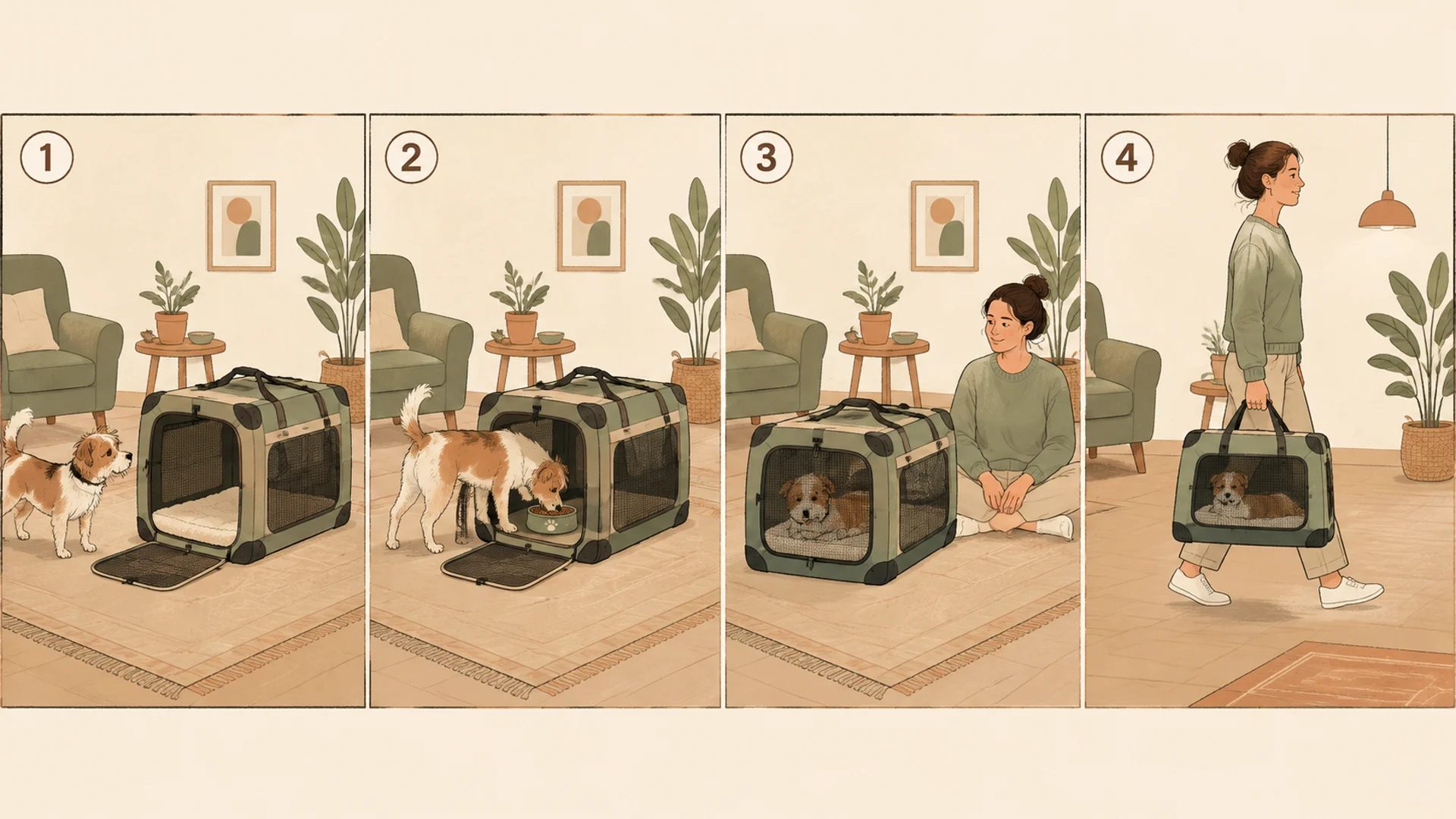
- Leave it open and ignore it. Put the carrier on the floor with the door open and the pad already inside, and let it become furniture for a few days. Drop a treat in occasionally without asking for anything.
- Move meals to it. Feed next to the carrier, then just inside the opening, then fully inside. The dog should be walking in on their own before anything closes.
- Close it for seconds, not minutes. Shut the door while the dog is settled, open it again before they ask. Build up in short sessions at home, where nothing else is happening.
- Then lift. Pick the carrier up, walk a few steps indoors, set it down. Being carried is a separate skill from being contained, and it deserves its own practice.
Two details speed this up more than patience alone. A top opening lets you lower a hesitant dog in gently instead of pushing them in face-first, which is why nervous dogs so often prefer that design. And the first real outing should be somewhere good — a walk, a friend’s house, anywhere that is not the vet — so the carrier does not become a reliable predictor of a bad afternoon.
How long can a small dog stay in a carrier?
There is no honest universal number, and anyone quoting one is guessing on your dog’s behalf. What actually sets the limit is whether your dog can change position, how warm it is, and how settled they are. A dog who is asleep with room to shift is fine for far longer than one who is standing rigid with their head against the ceiling.
Practically: on a long travel day, plan a stop every couple of hours to offer water and let your dog stretch and relieve themselves, and read the dog rather than the clock — persistent panting, drooling, scrabbling, or an inability to settle means the break happens now. Never leave a dog in a closed carrier in a parked car, and never stack anything on top of a soft-sided one.
What fails first, and what to check in the shop
Small dog carriers rarely fail dramatically. They sag, they fray, and one day they are simply not something you want to put your dog into. The failure points are predictable enough to check before you buy.
| Part | How it fails | The check |
|---|---|---|
| Base board | A thin foam insert hammocks under weight, so the dog rides in a bowl | Press the centre of the floor hard; if it folds under your hand, it will fold under your dog |
| Zipper sliders | Sliders separate from the teeth long before the teeth wear out | Look for chunky sliders, two per opening, and a way to clip or lock the pulls together |
| Mesh seams | Mesh abrades where it meets webbing at the corners, then runs | Check that mesh panels are bound with tape, not stitched raw to the panel edge |
| Strap anchors | Stitching at the shoulder-strap attachment pulls loose under repeated load | Box-stitched or bar-tacked anchor points, not a single line of stitching |
| Interior pad | Non-removable padding absorbs one accident and never recovers | The pad should lift out and go in a washing machine |
Two of these — the base and the washable pad — decide whether the carrier stays in weekly rotation or becomes a thing you own. They are also the two most people never test in the shop.
Three things a carrier does not do for you
Buying guides tend to stop at the product. These three come up afterwards, and all three change what you should look for while you are still choosing.
It is not a car restraint
A carrier resting on a seat is cargo. The ASPCA’s travel guidance is to keep a pet “safe and secure in a well-ventilated crate or carrier” that is large enough to stand, sit, lie down and turn around in — and then to secure the crate itself so it cannot slide or shift in an abrupt stop. That second half is the part people skip. If the same bag will do car duty, look for anchor points or belt pass-throughs before you buy, not after. What “crash-tested” does and doesn’t mean on pet products is a longer story, and we went through it in are dog car seats crash tested.
It does not get you through the door
A dog in a carrier has no general right of entry to shops, cafés or restaurants. Under the ADA, a service animal is “a dog that has been individually trained to do work or perform tasks” for a person with a disability; comfort and emotional support animals are explicitly outside that definition, and a pet in a bag is simply a pet. Businesses may allow one anyway, and many do — but it is a courtesy, not an obligation, so the useful habit is calling ahead rather than arguing at the counter. Practically, this favours a carrier that looks tidy, zips closed and can sit under a chair without becoming everyone’s business.
It is not a place to leave a dog
A zipped carrier is a smaller, stiller volume of air than the room around it, which makes it a worse place to wait, not a better one. The ASPCA’s line is blunt: never leave an animal alone in a parked vehicle. Cornell’s Riney Canine Health Center gives the number behind that — even at 70°F outside, a car interior can rise about 40 degrees in an hour. The same page notes that short-muzzled dogs cannot pant as efficiently as others, which is worth knowing if your small dog is a Pug or a French Bulldog: airflow on more than one panel stops being a nice-to-have and becomes the reason you pick one bag over another.
Quick buying checklist
- Does your dog fit by measurement, not breed label?
- Is the base firm enough to support your dog’s full weight without folding?
- Are there at least two useful ventilation panels?
- Can your dog enter without a stressful struggle?
- Does the carry style match the length of your usual trip?
- Is there an interior tether you can clip to a harness?
Small dog carrier FAQ
How big should a small dog carrier be?
Big enough for your dog to turn around and settle naturally — judged by the carrier’s interior dimensions against your dog’s body length and shoulder height. If the carrier is for flying, also compare its exterior dimensions with your airline’s current under-seat guidance.
What size carrier does a 10 lb dog need?
Work from measurements, not weight alone: a long-backed 10 lb Dachshund needs more interior length than a compact 10 lb Pomeranian. Measure chest-to-tail and shoulder height, then choose a carrier whose interior gives a few inches of slack on each — most 10 lb dogs land in a small or medium soft carrier.
Is a backpack carrier good for a small dog?
Yes, if the dog is within the carrier’s weight guidance and the backpack has a firm base, padded straps, and real ventilation. For nervous dogs, start with short sessions at home before the first long walk.
Should I choose a soft or hard carrier?
Soft carriers are usually the answer for small dogs: lighter to carry, easier to store, and friendlier in tight spaces. Hard-shell carriers add structure and protection for car travel or dogs who chew mesh, at the cost of bulk.
What is the best carrier for a Chihuahua or teacup dog?
For dogs under about 5 lb, fit beats features: choose by interior measurements against your dog’s curled footprint, favour a sling or chest carrier that holds them against your body, and always clip the tether to a harness rather than a collar. A snug carrier that moves with you calms a tiny dog faster than extra room does.
What carrier suits a Dachshund or a Corgi?
Buy for body length rather than weight. Long-backed dogs commonly need a carrier two sizes up from what their weight suggests, purely to get the interior length that lets them lie straight. Open-top totes and slings work better than fixed cubes here, because the dog can stretch along the opening instead of folding into a corner.
Does my dog need an airline-approved carrier if we are not flying?
No — and it is worth knowing that no carrier is universally approved anyway. Each airline publishes its own under-seat dimensions and pet rules, and they change, so the check is always against your specific airline on the day you book. For ground travel, ventilation, base stiffness and interior fit matter far more than any travel label on the box.
How do I get a nervous small dog into a carrier?
Stop making the carrier the event. Leave it open at home for several days, feed meals inside it, then close the door for seconds at a time before working up to being lifted and carried. A top-opening design helps a great deal, because you can lower a hesitant dog in gently rather than pushing them through a front door face-first.
Can a small dog carrier work for a cat?
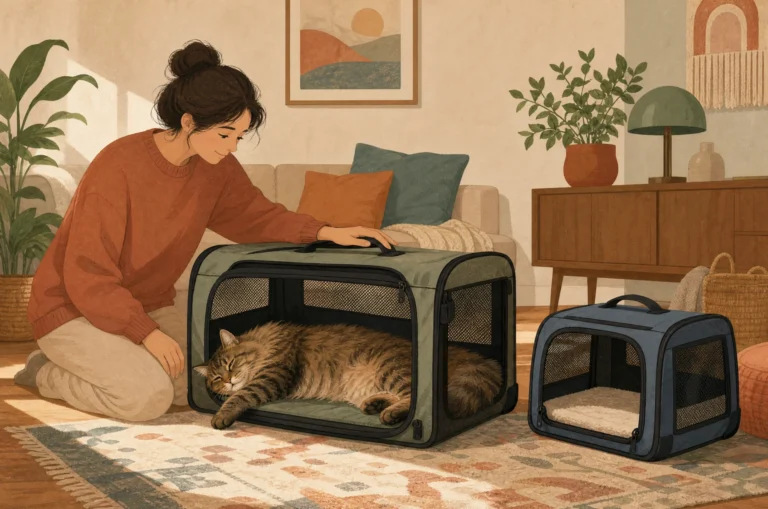
Often, yes — the structure is similar. Cats are more likely to insist on a top opening and somewhere to hide, so if the same bag will serve both, a top-loading design is the safer overlap.
Bottom line
The best dog carrier for a small dog is the one that makes the whole trip calmer: correct interior size, a steady base, breathable panels, and a carry style that fits your routine. Start from your dog’s weight band and measurements, then choose the style around the trip you take most often — and let the product photo be the last thing you look at, not the first.
Sources
- ASPCA — Travel safety tips (a carrier large enough for the pet to stand, sit, lie down and turn around in for car travel, and to stand, sit and turn around in comfortably for air travel; keeping pets restrained in the back seat and not letting them ride with their head outside the window) (checked 2026-09-22)
- U.S. Department of Justice, ADA.gov — Frequently asked questions about service animals and the ADA (checked 2026-09-01)
- Cornell University College of Veterinary Medicine, Riney Canine Health Center — Summer heat safety tips for dogs (checked 2026-09-01)
- American Kennel Club — Puppy Growth Chart: When Does My Puppy Finish Growing? (checked 2026-09-11)
- American Kennel Club — Safety Tips for Biking With Dogs, with Sassafras Patterdale, CPDT-KA, CTDI (only using baskets designed for a dog to ride in, with safety straps to prevent falling or jumping out; handlebar and rear-frame mounting; securing the dog’s harness per the manufacturer’s instructions; step-by-step acclimation with the explicit note that the goal is not to test how long the dog will wait; trailers for larger dogs and the warning to secure the dog before riding so they do not jump out in traffic; biking leashes that attach to the bike to keep dogs away from the wheel) (checked 2026-09-22)
- American Veterinary Medical Association — Safe non-commercial transport of pets in motor vehicles (limited scientific information available to determine the safety of individual animal transport products, and AVMA’s encouragement of evidence-based crash testing of animal enclosures and safety harnesses; transport of pets loose or tethered in open cargo areas described as not safe and a risk to the animal’s health and welfare; properly secured, size-appropriate, ventilated enclosures required where open cargo areas are used; pets loose inside vehicles described as unsafe) (checked 2026-09-22)
Access rules, airline carrier limits and venue pet policies change, and they are set by each operator rather than by any single standard. Confirm on the official page before you travel, and take any question about your own dog’s health or breathing to your veterinarian.