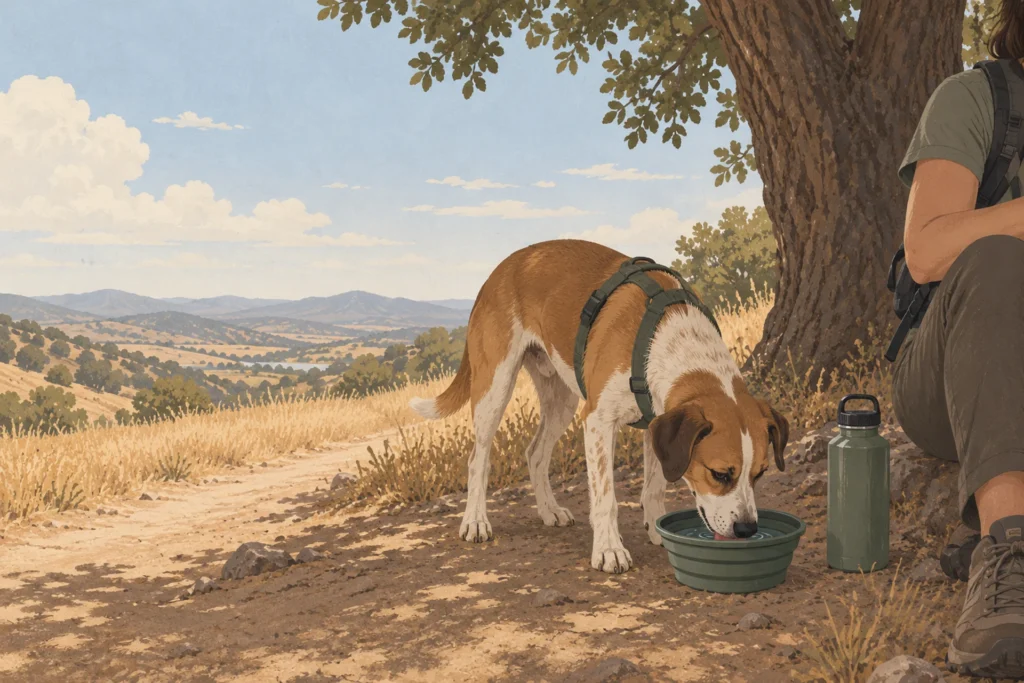
Veterinary sources do not publish a per-hour drinking figure for dogs. What they publish is a daily baseline: the Merck Veterinary Manual puts most mammals at roughly 44–66 mL per kg of body weight in a thermoneutral environment — about 0.7 to 1.0 fluid ounces per pound, per day, from all sources including food.
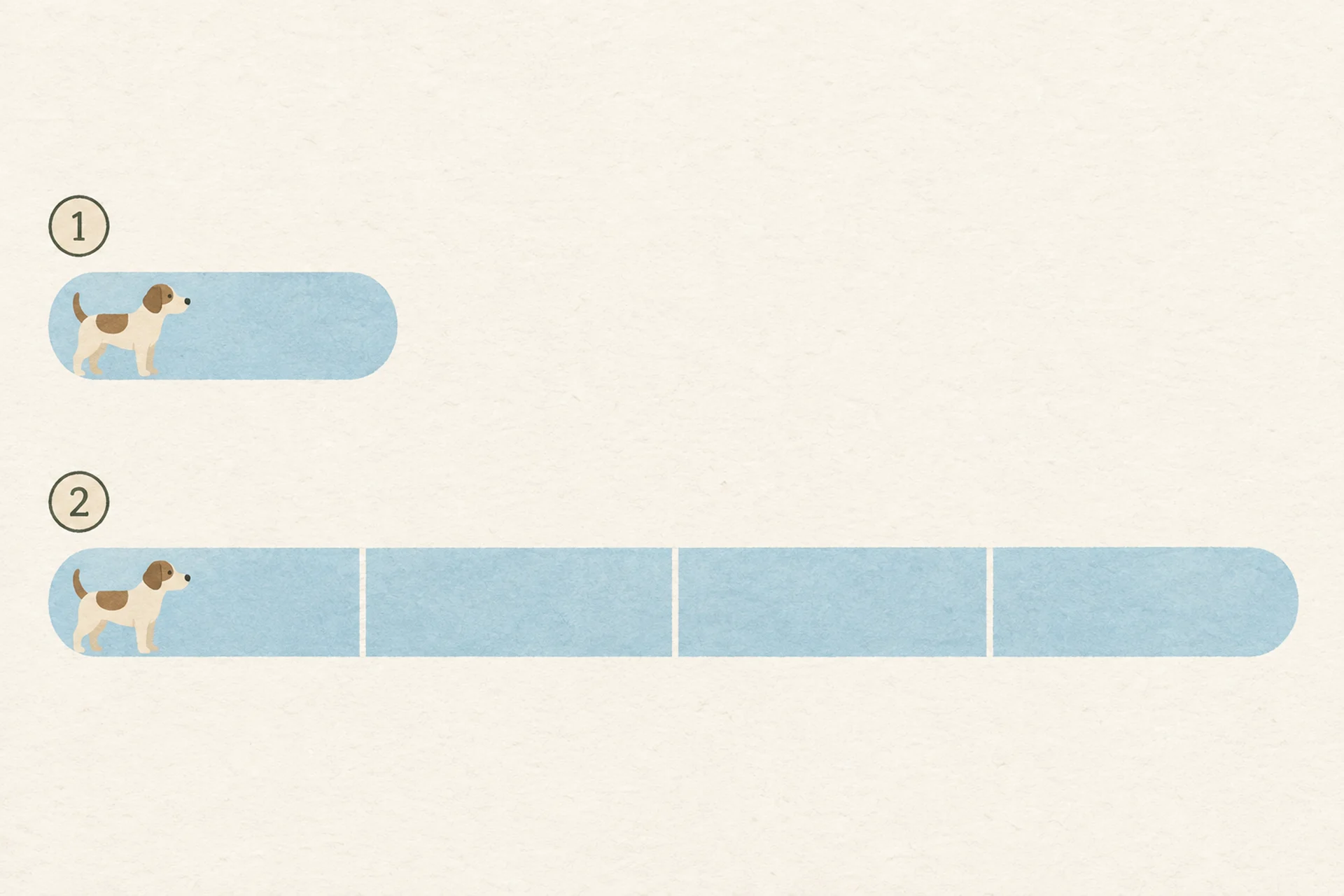
So for a 50-pound dog, a whole day sits somewhere near one to one and a half litres. Pack that much for a half-day in the heat and you are carrying plenty. The widely repeated trail figure — half an ounce to an ounce per pound per hour — would have that same dog drinking an entire day’s baseline every hour, and we could not find a veterinary source behind it.
Where the real number comes from
Merck’s line on this is blunter than most: “Water is the most important nutrient; a lack of water can lead to death in a matter of days.” Then it gets careful. There is no tidy formula converting calories to millilitres. What the manual gives is that 44–66 mL/kg range in a thermoneutral environment, and a list of what moves it: diet, environment, activity level and health status.
Diet moves it more than people expect. Canned food runs 60% or more moisture; dry food runs 3–11%. A dog on wet food arrives at the trailhead with a meaningful share of the day’s water already inside it, and drinks visibly less from the bowl. That is not a problem to fix.
The other half of Merck’s position matters just as much on a trail: “When provided ample amounts of water, healthy animals can effectively self-regulate their intake.” The job is not to hit a number. The job is to make water available often enough that the dog’s own regulation has something to work with.
| Dog’s weight | Whole-day baseline (Merck range) | In ounces | Reasonable to pack for a half day out |
|---|---|---|---|
| 10 lb / 4.5 kg | 200–300 mL | 7–10 fl oz | A small bottle covers it twice over |
| 25 lb / 11 kg | 0.5–0.75 L | 17–25 fl oz | 500 mL, more if it is hot |
| 50 lb / 23 kg | 1.0–1.5 L | 34–51 fl oz | 1 L, plus your own bottle as reserve |
| 75 lb / 34 kg | 1.5–2.2 L | 51–76 fl oz | 1.5 L |
| 100 lb / 45 kg | 2.0–3.0 L | 68–101 fl oz | 2 L |
The first three columns are Merck’s range converted; the last is our arithmetic, not a study result. It assumes you are covering the outing and the possibility that there is nothing to refill from.
A common objection: “but a hiking dog needs far more than a resting one”
That is true, and it is the strongest thing you can say for the bigger numbers. A dog working in heat loses water through panting at a rate a couch dog never approaches, and Merck lists activity level and environment among the factors that move the requirement.
What does not follow is the specific multiplier. We could not find a veterinary or peer-reviewed source that publishes an hourly intake figure for pet dogs on trails; the figure that dominates search results appears on retailer blogs, each citing the one before it. Run it through: at one ounce per pound per hour, a 50-pound dog on a four-hour hike would need six litres. That is four days of baseline in an afternoon.
And there is a reason to care about overshooting rather than just shrugging at it. The AKC’s write-up on water intoxication describes exactly this failure mode: too much water, too fast. It notes that “excessive water intake often occurs when swimming, diving, or water-retrieving,” and that even “play-biting the stream of water from a garden hose or sprinkler can overload a dog’s system.” Toy and small dogs are at greater risk than larger ones. So the safer instruction is not a bigger bottle poured out at once — it is smaller amounts, offered more often.
Heat changes the question more than distance does
Two miles at 60°F and two miles at 90°F are not the same outing, and the water is only part of what differs. The ASPCA’s hot weather guidance pairs water with everything around it: “Give pets plenty of fresh, clean water when it’s hot or humid outdoors as pets can get dehydrated quickly,” alongside “make sure your pets have a shady place to get out of the sun” and a warning to “be careful not to over-exercise them.”
It also flags the surface, which people forget because their own feet are in shoes: “Don’t let dogs linger on hot asphalt when the temperature is very high…sensitive paw pads can burn.” A shaded twenty-minute stop is doing as much thermal work as the water is. If the air itself is the problem — smoke season, an inversion, a bad-air day — the decision moves upstream, and what AQI is safe to walk your dog covers where that line sits.
How to actually carry and offer it
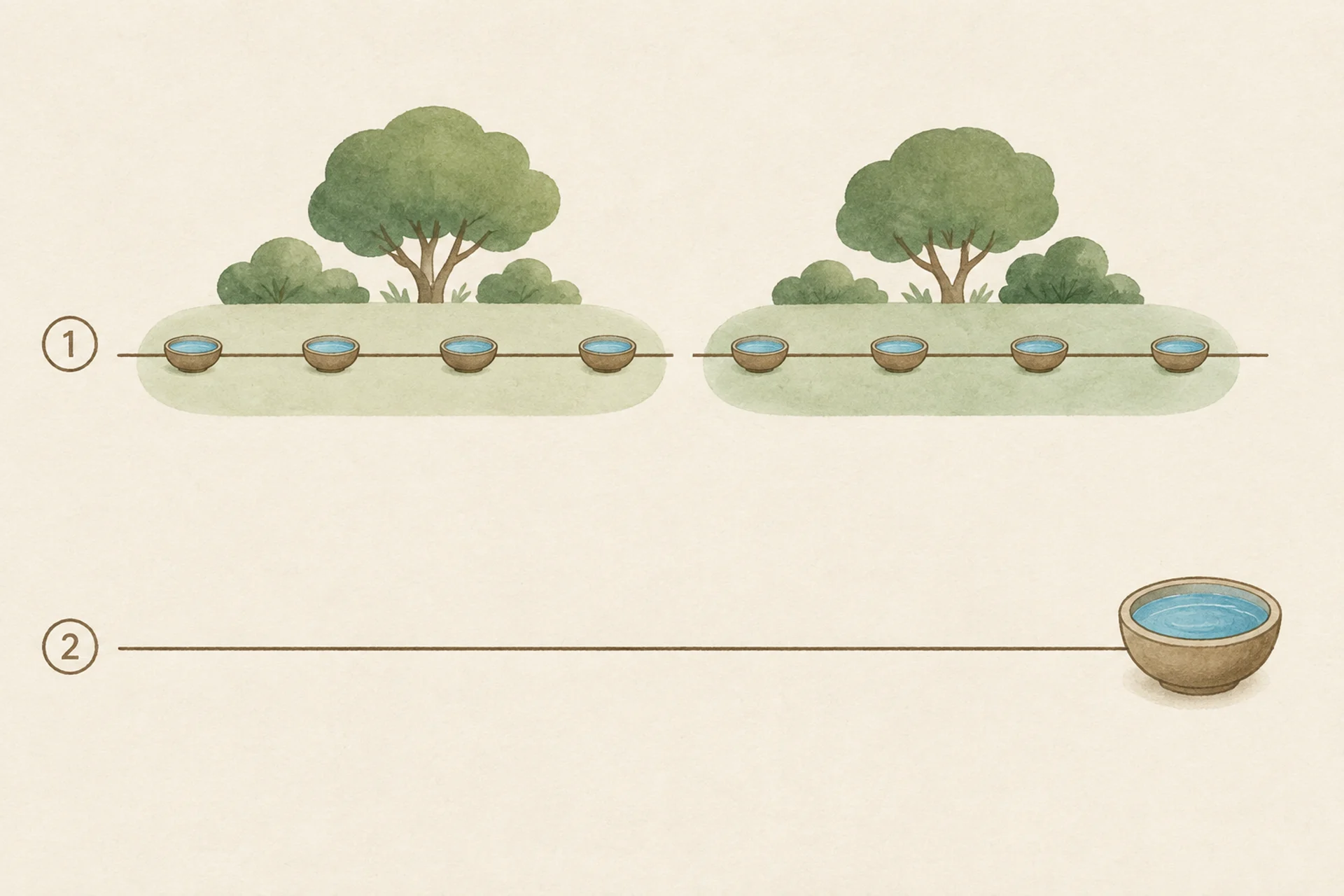
- Carry your own. Plan the outing as though there is no water on the route, and treat anything you find as a bonus rather than the plan.
- Offer small amounts, often. Every twenty to thirty minutes in heat beats one large bowl at the turnaround — and it is the pattern that keeps you away from the AKC’s too-much-too-fast scenario.
- Bring a vessel the dog will use. A dog that will not drink from a cupped hand or a slippery lid is effectively carrying no water. A fold-flat bowl or a bottle that pours into its own cap — the Trail Fold-Around Pet Water Bottle is ours — removes the argument at the moment it matters.
- Use half-and-turn. When the water is half gone, you are at the turnaround, regardless of what the map says.
- Count shade as hydration. A rest in shade lowers the rate of loss; more water at a higher rate is a worse trade.
- Don’t ask a small dog to carry it. If a pack is in play at all, water is heavy — a litre is a kilogram. How much weight a dog should carry sets the ceiling first.
Know where you are going before you plan the water
Where dogs may walk at all decides how long you will be out and whether you can get back to the car quickly. The National Park Service frames its pet rules with B.A.R.K. — “Bag your pet’s waste, Always leash your pet, Respect wildlife, Know where you can go.” That last one is the planning item. Pet access varies park by park and trail by trail, it changes, and the park’s own page is the only current answer. Check it before you go rather than at the trailhead.
Dog hydration on a hike: FAQ
How much water should I bring for my dog on a hike?
A practical starting point is the whole-day baseline from the table above — about 1 to 1.5 litres for a 50-pound dog — carried for a half-day outing. That is deliberate over-provision: it covers the walk and the chance that nothing on the route is refillable. In cool weather on a short loop you will bring most of it home, which is the correct outcome.
Is “one ounce per pound per day” correct?
It is close, but it is the ceiling rather than the average. Merck’s 44–66 mL/kg works out to roughly 0.7–1.0 fl oz per pound per day, so the familiar rule sits at the top of the published range. It also counts water from food, which is why a dog on canned food seems to drink so little.
Can a dog drink too much water?
Yes. The AKC describes water intoxication as a real emergency, most often after swimming, diving, water-retrieving or biting at a hose stream, and notes that toy and small dogs are at greater risk than larger ones. The signs it lists include lethargy, bloating, vomiting, loss of coordination, drooling and pale gums. Its instruction is unambiguous: “If you even suspect that your dog has water intoxication, get to a vet or emergency clinic immediately.”
My dog won’t drink on the trail. Is that a problem?
Often it is just novelty — strange bowl, strange place, too interested in everything else. Merck’s point about self-regulation assumes water is genuinely available, so the first fix is offering it more often in a familiar container rather than pushing volume. A dog that refuses water across a whole outing, or seems off in any other way, is a conversation with your veterinarian, not something to solve from a web page.
Should I let my dog drink from streams and ponds?
Treat found water as a supplement to what you carried, not the plan — conditions differ by region, season and specific water body, and the people who actually know are the park or land manager. That is the practical reading of the NPS’s “know where you can go”: the same page that tells you whether dogs are allowed usually tells you what the current conditions are. If your dog has already helped itself, what to do after a dog drinks puddle water covers which standing water needs a call straight away and which needs a date in the calendar.
How much water after the walk?
Offer it, then leave it available. Merck’s framing is that healthy animals self-regulate when given ample water, so the useful move is access rather than a measured pour. Keep the same small-amounts-often rhythm for the first stretch after a hot outing rather than setting down a full bowl for a dog that just worked hard.
Pack a day’s worth, offer it in sips, and let the dog do the arithmetic.
The number circulating on hiking blogs is not just unsourced — it points at a behaviour the AKC specifically warns about. The published baseline is a daily one, it already includes water from food, and every veterinary source agrees the dog is better at regulating intake than any formula is. Carry generously, offer often, watch the dog, and keep the shade breaks.
Water is the variable you can plan. The one you cannot is a dog who stops being able to walk out — if that is a scenario your route makes possible, read how to carry an injured dog before you need it. And if the route ends at the coast, the bowl does a second job — what happens when a dog drinks ocean water turns on whether fresh water was actually available.
Sources
- Merck Veterinary Manual — Nutritional Requirements of Small Animals (water as the most important nutrient; ~44–66 mL/kg in a thermoneutral environment; moisture content of canned versus dry food; self-regulation) (checked 2026-09-06)
- American Kennel Club — Can Dogs Drink Too Much Water? The Dangers of Water Intoxication (causes, higher-risk dogs, signs, what to do) (checked 2026-09-06)
- ASPCA — Hot Weather Safety Tips (water, shade, over-exercise, hot asphalt and paw pads) (checked 2026-09-06)
- U.S. National Park Service — Be a B.A.R.K. Ranger (bag waste, always leash, respect wildlife, know where you can go) (checked 2026-09-06)
Veterinary guidance and park rules are updated periodically. Confirm on the official pages before you travel, and talk to your own veterinarian about your own dog — nothing here is a diagnosis or a substitute for an exam.