There is no such thing as a TSA approved pet carrier. TSA does not test, certify or approve carriers — the phrase is a marketing label, not a credential. Read TSA’s own page on the subject and the entire rule is two sentences: “Small pets are allowed through the checkpoint. Please check with your airline for their policy.” No dimensions. No materials. No approved list.
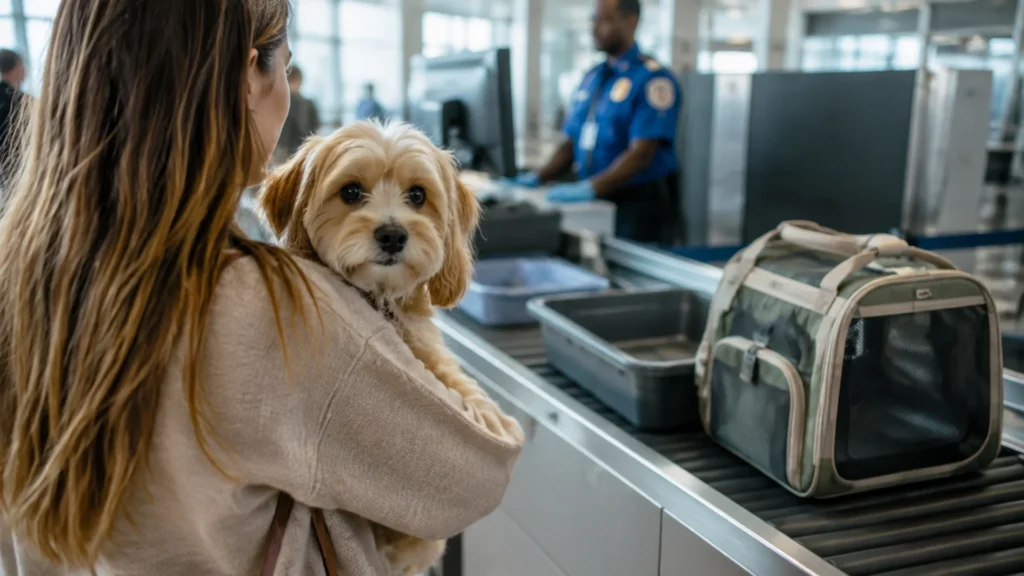
What TSA does is screen. At the checkpoint you take your pet out of the carrier, the empty bag goes through the X-ray, and you carry your pet through the walk-through metal detector — with the lead off, which is the instruction almost nobody arrives knowing.
The rules people are actually shopping for — how big the carrier can be, whether it must be soft-sided, whether your pet can fly at all — come from your airline. This guide covers what really happens at security, in order, and who to ask about everything else.
What TSA actually publishes
It is worth quoting, because the published procedure is short enough to memorise and most of the anxiety around it comes from never having read it. From the same TSA page: “Please remove your pet from the carrying case and place the case through the X-ray machine. You should maintain control of your pet with a leash and remember to remove the leash when carrying your pet through the metal detector. Animal carriers will undergo a visual and/or physical inspection.”
Three things fall out of that. The lead is for the walk from the queue to the belt, not for the walk through the detector — metal hardware and a moving animal are exactly what the detector is built to notice. The carrier gets inspected by hand or eye on top of the X-ray, which is a reason not to have it stuffed to the zips. And nothing in there is a product standard. TSA’s instruction about what to buy is a single line pointing you at your airline.
The sequence, in the order it happens
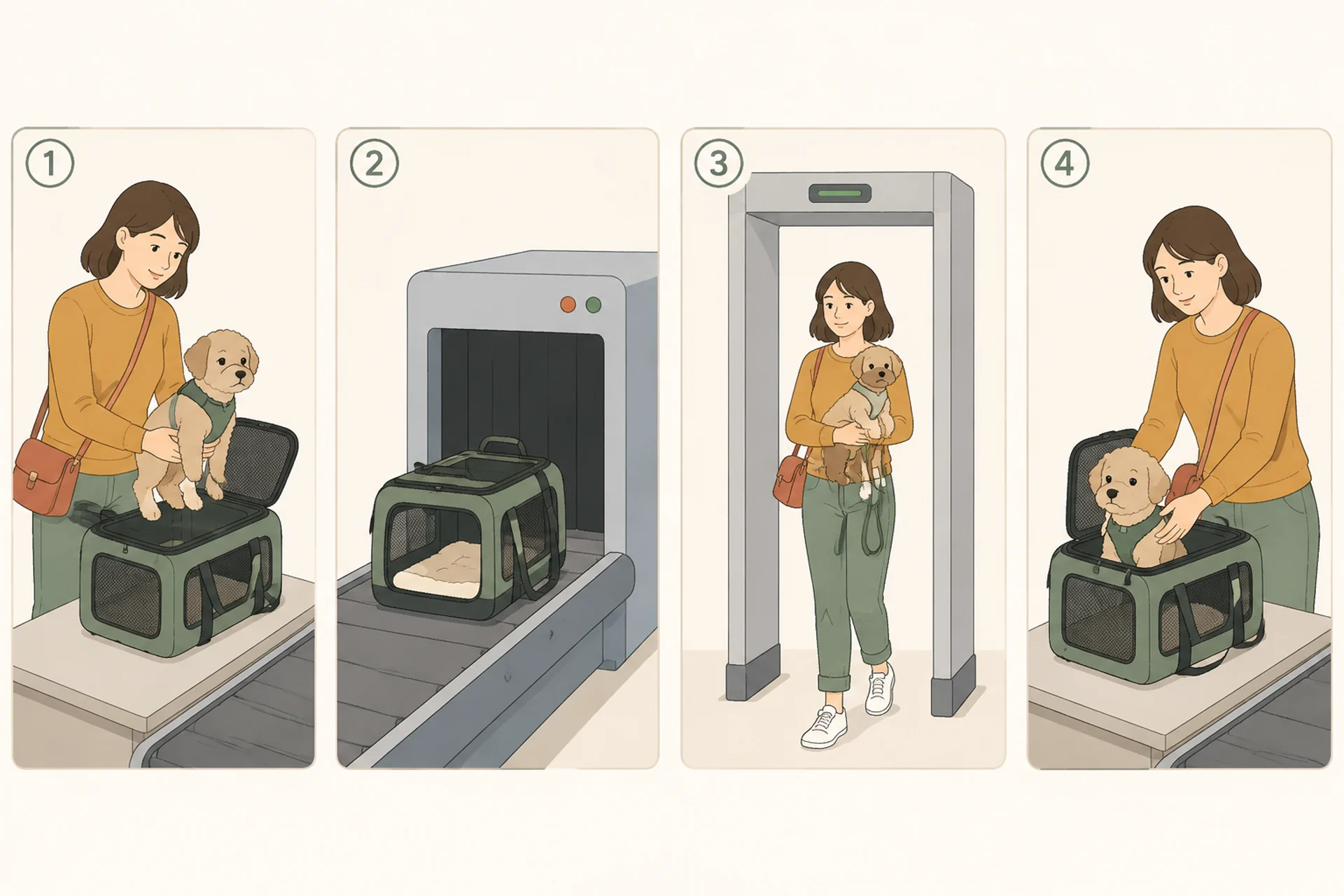
TSA publishes the same walkthrough in its airport press briefings ahead of busy travel periods, and those fill in the steps the short FAQ leaves out. Taken together:
- Arrive with the pet already in a hand-held carrier. “All pets should be brought to a security checkpoint in a hand-held travel carrier,” and you “remove the pet from the carrier just prior to the beginning of the screening process” — not in the queue, not in the car park.
- The empty carrier goes on the belt. “Place the empty travel carrier on the checkpoint conveyor belt so it can be X-rayed.” Bedding, toys and all — the bag is screened as luggage.
- Never the animal. “Never place a pet in the X-ray tunnel. The X-ray at the security checkpoint is used to screen passengers’ personal property and carry-on luggage only.”
- Carry the pet through, lead off. “If possible, carry the pet through the walk-through metal detector during the screening process. Alternately, a pet can walk through the screening process if the owner has the pet on a leash.” If you are carrying, the lead comes off first.
- Expect a swab of your hands. “A TSA officer will give the pet owner’s hands an explosive trace detection swab to ensure there is no explosive residue on the owner’s hands.” It is routine and it is fast, and knowing it is coming is the difference between a calm handover and a fumble.
- Reload past the checkpoint, not at the belt. “After the screening process is complete, owners should return their pet to the travel carrier at the re-composure area away from the security checkpoint.” This is the correction most guides get wrong. The re-composure area is the bench past the belt where people put their shoes back on — it exists so that a rattled animal is not being wrestled into a bag in a crowd with a queue backing up behind it.
- If your pet is likely to panic, ask first. Travellers “who have pets that may be skittish when removed from a pet carrier… should request that a TSA officer screen the pet in a private screening room.” You go to the room with the animal still in its carrier — the request is made before anything is opened, not after something goes wrong.
Who governs what on a flight with a pet
| Decision | Who makes it | Where it is written |
|---|---|---|
| Carrier dimensions and under-seat fit | Your airline | The airline’s pet policy page, per aircraft |
| Soft-sided vs hard-sided in cabin | Your airline | Same policy page — most cabins favour soft |
| Pet fees, headcount limits, breed rules | Your airline | Booking terms; pet space sells out |
| How you and the carrier are screened | TSA | Pet out, carrier through the X-ray, hands swabbed |
| Health certificates and export paperwork | USDA APHIS | Endorsed by a USDA-accredited vet, per destination |
| Whether a dog may enter or return to the US | CDC | Rules by rabies risk of countries visited |
The bottom two rows are the ones that ruin trips, because they have lead times. USDA APHIS tells you to “contact a USDA-accredited veterinarian as soon as you decide to travel” for a destination’s entry requirements and an endorsed health certificate, and adds the line that is really the whole point: “meeting these requirements takes time, so don’t delay.” On the way back in, CDC’s dog import rules turn on “whether it has been to a high-risk country for dog rabies in the last six months and where it was vaccinated” — a framework that changed on 1 August 2024, so anything you remember from an older trip is worth re-reading.
So when a listing says “TSA approved”, read it as “probably fine to carry through a checkpoint” — which is true of nearly any carrier — and go back to checking the dimensions against your airline. Our under-seat size guide does exactly that, and our airline cabin limits page keeps the per-airline numbers in one place.
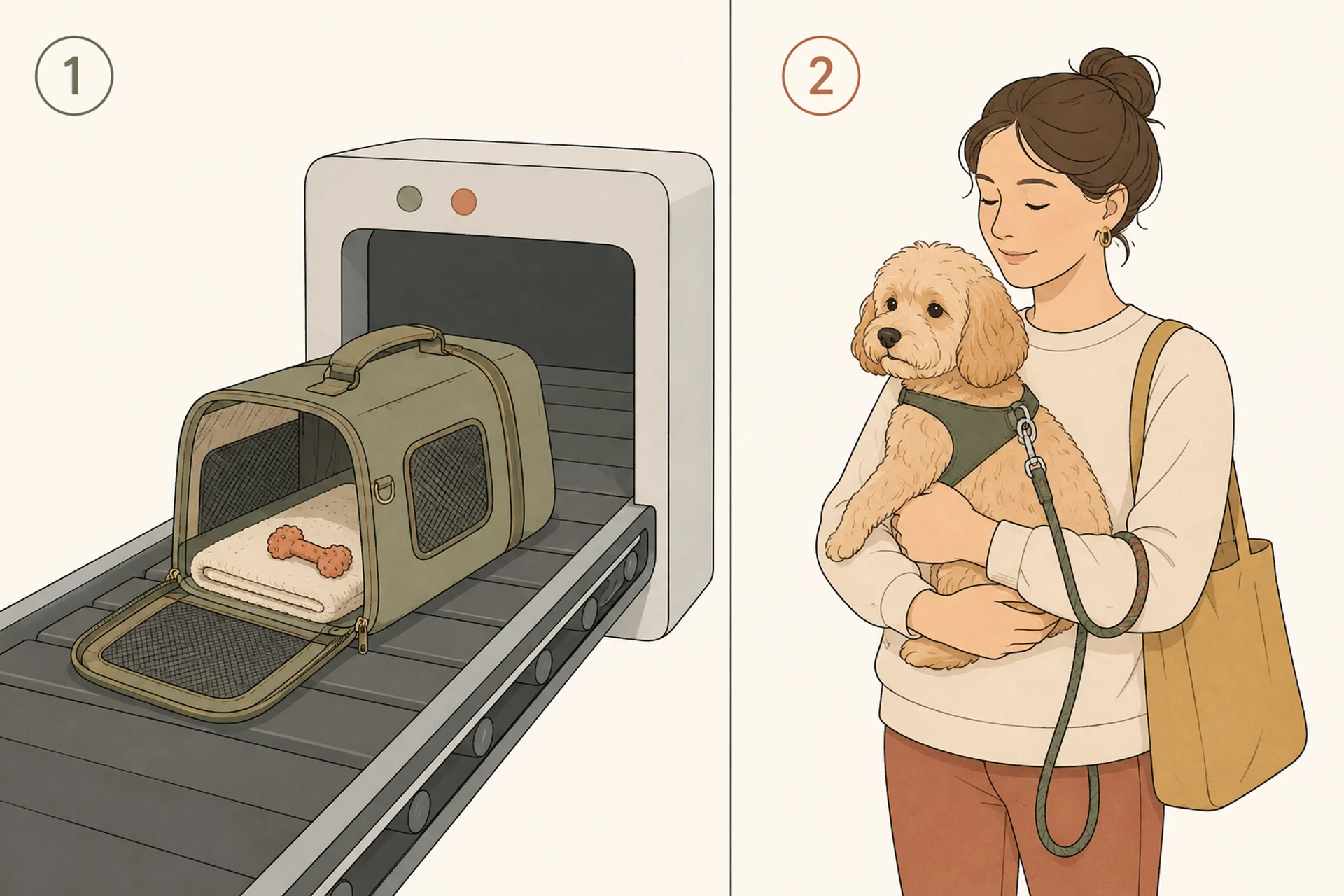
What to prepare for the checkpoint, specifically
Security adds four requirements the airline pages never mention, and none of them is a certification.
A harness under the travel outfit, because a frightened pet loose in a bare terminal is the checkpoint’s real risk and a collar alone is not enough to hold one. A lead you can unclip one-handed, because TSA’s instruction is to maintain control with it right up to the detector and then remove it — a clip you have to fight is a clip you will still be fighting when the officer is waiting. A top or wide opening, because the reload happens at the re-composure area with a pet who has just been carried through a noisy hall, and lowering an animal in beats shoving one through a narrow front gate; that is the whole argument of our top loading carrier guide. And nothing loose in the carrier, since it is getting a visual or physical inspection on top of the X-ray — one pad, zipped pockets for the rest.
None of that is TSA certification. It is just the difference between a smooth ninety seconds and a story you tell for years.
The carrier that fits the rest of the trip
Once screening is behind you, the constraints go back to being the airline’s: under-seat dimensions, soft sides that compress an inch without compressing the pet, ventilation on multiple faces, and a weight your shoulder accepts across a terminal. Those are covered in depth in the size guide and, for dogs near the cabin weight cut-off, the 15–20 lb weight guide. If your travel day includes long gate waits, an expandable section your pet can stretch into — zipped shut for boarding — is the one comfort feature that earns its bulk; see the expandable carrier guide for when the pods help.
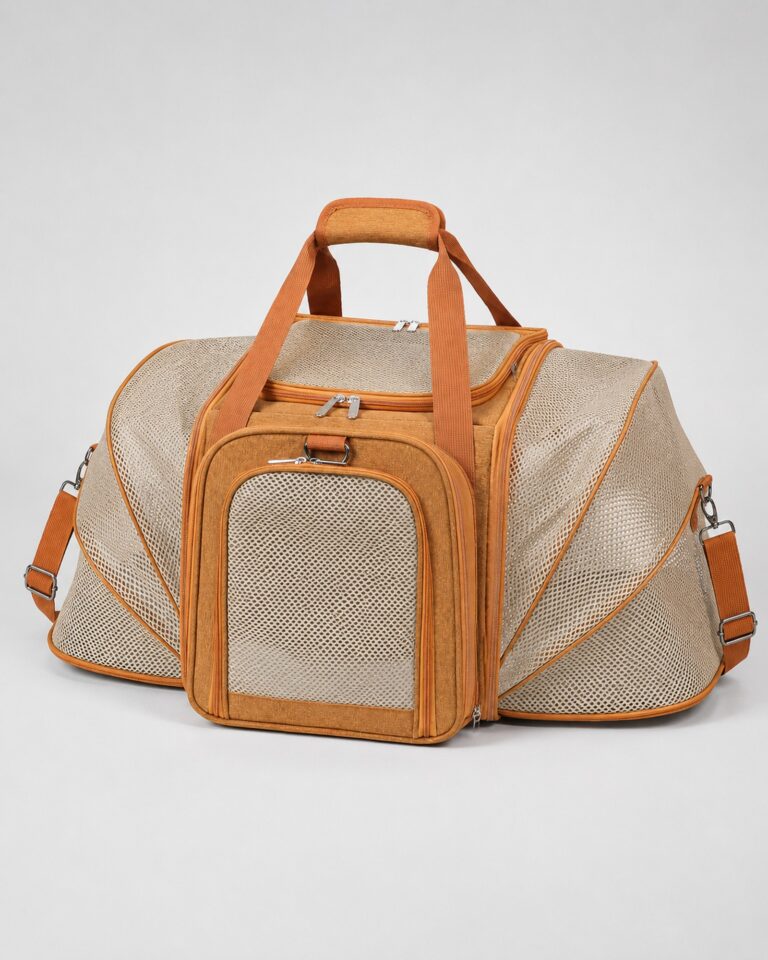
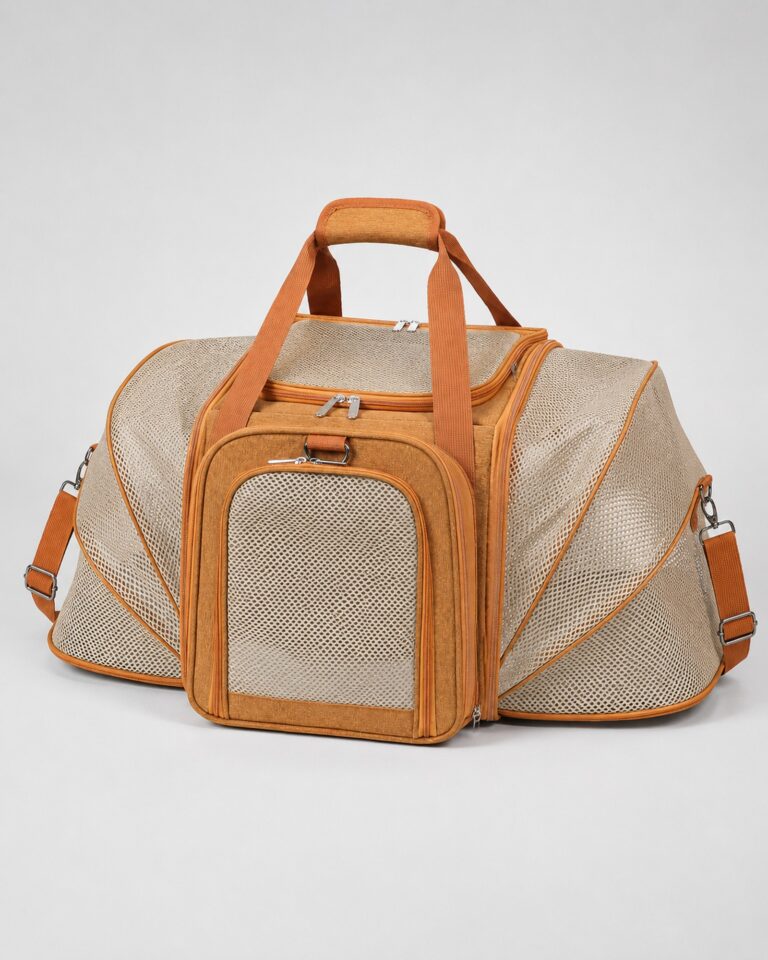
The one feature the checkpoint actually rewards is a roof you can load through. The Sky Soft-Sided Mesh Pet Carrier runs mesh across the whole top with a front porthole, which is what you want at the re-composure area with a pet who has just been carried through a metal detector. Whatever you choose, measure it against the under-seat dimensions for your specific aircraft on our airline limits page, and book the pet spot early — cabins cap the headcount.
TSA and pet carriers FAQ
Is there an official TSA approval for pet carriers?
No. TSA publishes screening procedures for travelling with pets, and its own guidance on the subject says only that small pets are allowed through the checkpoint and to check with your airline. There is no product standard, no approved list and no certificate. Any carrier marked “TSA approved” is using the phrase as marketing shorthand.
Does my pet go through the X-ray machine?
Never. TSA’s wording is explicit — never place a pet in the X-ray tunnel, which is for personal property and carry-on luggage only. The empty carrier goes through; your pet goes through the walk-through metal detector.
Do I have to take my cat out of the carrier at security?
Yes, and TSA says to do it “just prior to the beginning of the screening process” rather than while you queue. If your cat is likely to struggle or bolt, ask an officer for a private screening room before you open anything — you are escorted there with the animal still inside the carrier.
What size pet carrier does TSA allow?
TSA has no size rule for carriers. The size that matters is your airline’s under-seat limit, which varies by carrier and aircraft. Measure against the airline’s published numbers, not a “TSA size” a listing invented.
Can my dog wear its lead through the metal detector?
Not if you are carrying the dog. TSA’s instruction is to maintain control with a leash and then “remove the leash when carrying your pet through the metal detector.” If instead your dog walks through, it stays on the lead. Either way, decide which one you are doing before you reach the front.
Where do I put my pet back in the carrier?
At the re-composure area past the checkpoint, not at the belt. TSA asks owners to return the pet to the carrier away from the checkpoint, which keeps a stressed animal out of a crowd and out of everyone else’s way.
Does TSA PreCheck change anything with a pet?
The lane moves faster, but the pet procedure is the same: animal out, carrier on the belt, pet carried through, hands swabbed. Budget the same ninety calm seconds either way.
Sources
- TSA — What Can I Bring? Small Pets (checked 2026-09-16) — that small pets are allowed through the checkpoint, the instruction to check with your airline, and the absence of any size or product standard.
- TSA — Can I take my pet through the security checkpoint? (checked 2026-09-16) — remove the pet and X-ray the case, maintain control with a leash and remove the leash when carrying the pet through the metal detector, and that animal carriers undergo visual and/or physical inspection.
- TSA — Tips on travelling with pets through a security checkpoint (checked 2026-09-16) — the ordered sequence: hand-held carrier, remove the pet just prior to screening, empty carrier on the conveyor, never in the X-ray tunnel, carry through the walk-through metal detector or walk the pet on a leash, the explosive trace detection swab of the owner’s hands, the re-composure area away from the checkpoint, and the private screening room for skittish pets.
- USDA APHIS — Pet Travel (checked 2026-09-16) — that a USDA-accredited veterinarian determines destination entry requirements and issues the USDA-endorsed health certificate, and that meeting them takes time.
- CDC — Bringing a Dog into the U.S. (checked 2026-09-16) — that requirements depend on whether the dog has been in a high-risk rabies country in the last six months and where it was vaccinated, under rules effective 1 August 2024.
Checkpoint procedures, airline policies and import rules all change independently of each other. Confirm on the official page for each before you fly.
TSA screens; airlines approve; you prepare.
Stop shopping for a TSA certificate that does not exist and prepare for the checkpoint that does: harness on, lead you can unclip one-handed and take off at the detector, nothing loose in the bag, and the reload saved for the re-composure area. Then give the sizing decision to the only party with actual rules — your airline — and measure before you buy.