There is no such thing as a carrier that every airline has approved. Airlines do not certify carriers — each one publishes its own under-seat size limit, pet policy, and fees, and the limits genuinely differ: among the eleven North American airlines we track, published lengths run from 16 to 21.5 inches. So the working question is never “is this carrier airline approved?” but “does this carrier fit inside my airline’s published numbers, with my pet comfortable inside it?”
This guide gives you those numbers in one place, shows how to run the comparison, and walks through the checks that matter before you buy. For the full chart with centimeters and a detail page per airline, see our airline pet carrier size limits reference.
What “airline approved” usually means
In practice, the phrase points to a soft-sided carrier intended for in-cabin travel: low enough for under-seat space, flexible enough to fit real aircraft conditions, and ventilated enough for a long travel day. It is a shopping phrase, not a certification.
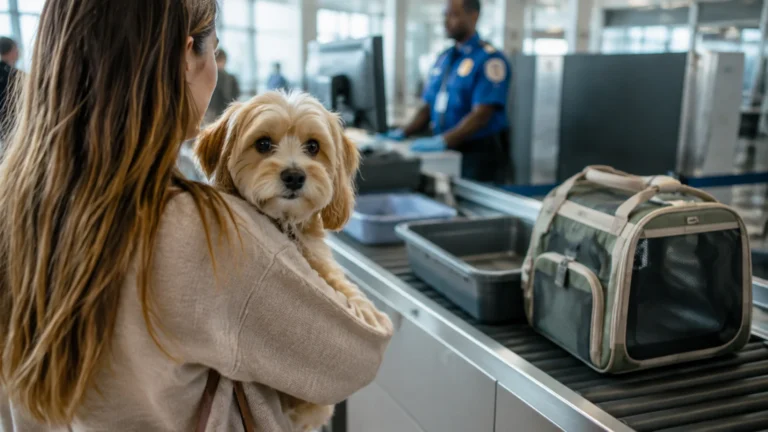
It also does not mean an airline will automatically accept it. Gate and cabin staff can still make judgment calls based on the aircraft, the seat type, and — most often — whether your pet visibly fits and settles inside the carrier.
Published under-seat limits, airline by airline
These are the soft-sided carrier dimensions each airline publishes for in-cabin pets, as shown on our per-airline reference pages (length × width × height, in inches). Airlines revise these numbers, so treat this as a comparison table and reconfirm on your airline’s policy page before you book.
| Airline | Published soft-carrier limit (in) |
|---|---|
| Delta | 18 × 11 × 11 |
| United | 18 × 11 × 11 |
| American | 18 × 11 × 11 |
| Southwest | 18.5 × 13.5 × 8.5 |
| Alaska | 17 × 11 × 9.5 |
| JetBlue | 17 × 12.5 × 8.5 |
| Frontier | 18 × 14 × 11 |
| Spirit | 18 × 14 × 9 |
| Hawaiian | 17 × 11 × 9.5 |
| Air Canada | 21.5 × 15.5 × 10.5 |
| WestJet | 16 × 10 × 8.5 |
Three patterns worth noticing. First, the three biggest US carriers — Delta, United, and American — publish the same 18 × 11 × 11 window, so a carrier sized against one usually works for all three. Second, the ultra-low-cost carriers allow more width but Spirit trims the height to 9 inches. Third, the strictest number on the board is WestJet’s 16 × 10 × 8.5 — if your itinerary includes WestJet, size against that limit first, not last.
Will an 18.1 × 11 × 11 in carrier fit?
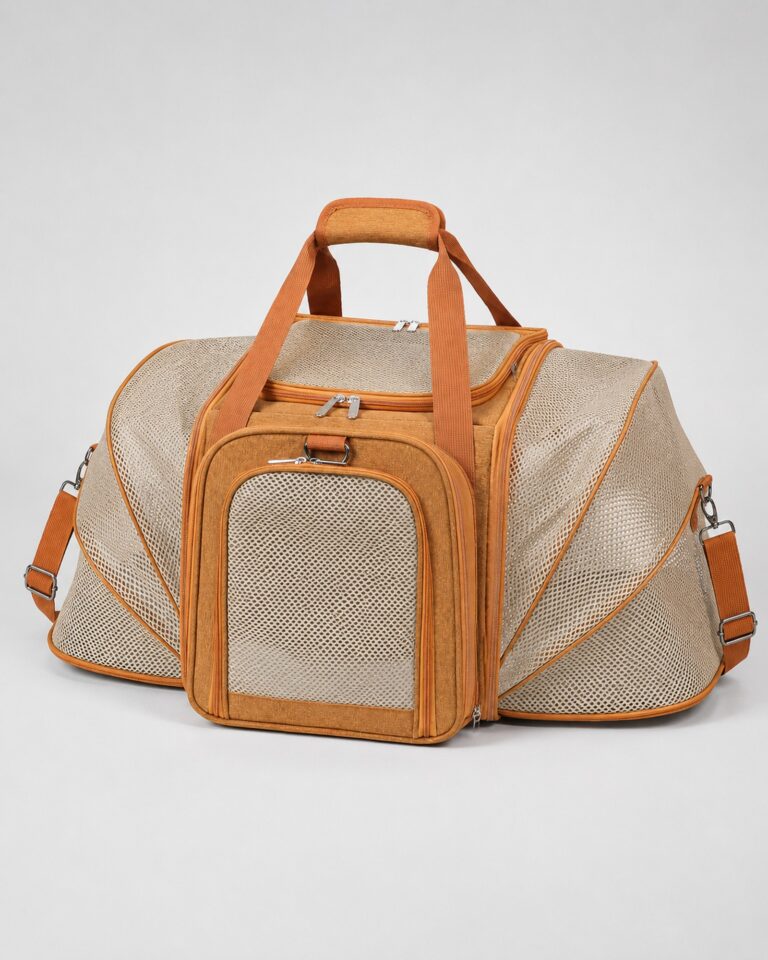
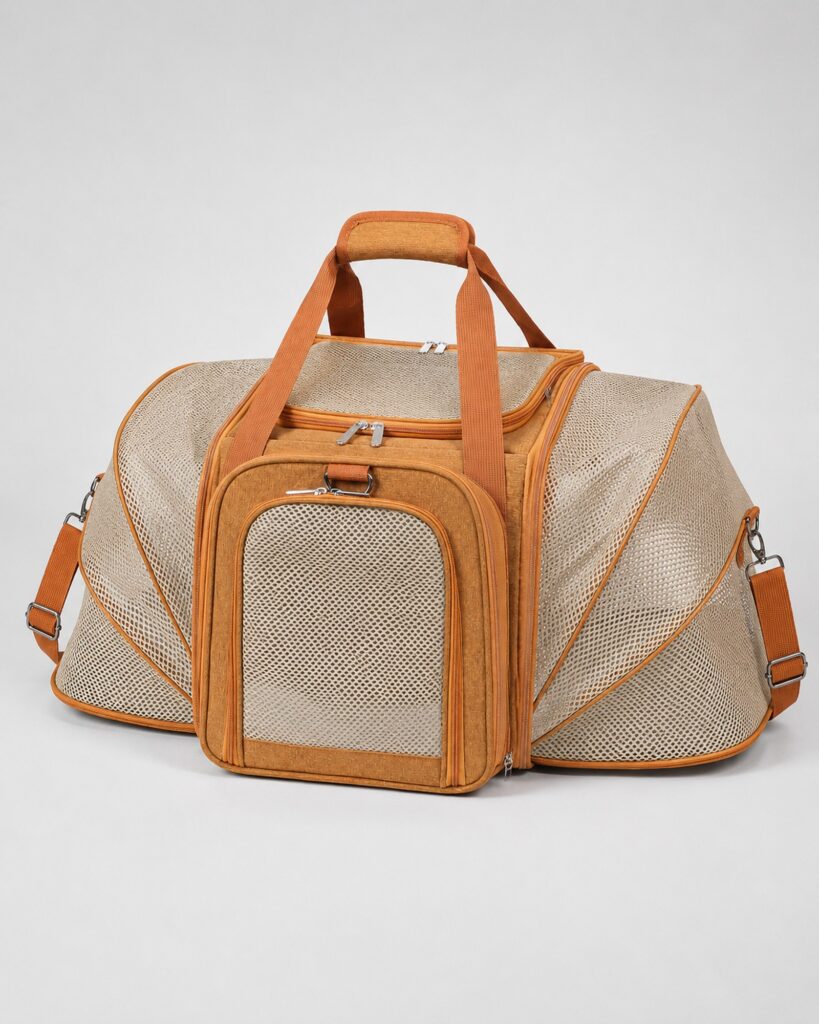
Here is the comparison in action, using our own Sky Double-Expand Mesh Pet Travel Carrier (18.1 × 11 × 11 in when zipped for boarding) as the worked example:
- Frontier (18 × 14 × 11): within the height and width windows; the 0.1 in of extra length is inside what a soft frame gives up when you slide it under the seat.
- Delta, United, American (18 × 11 × 11): a tenth of an inch over on paper. In practice this is exactly why soft-sided carriers exist — the frame compresses that tenth without the pet feeling it. We still label this “close” rather than “within” on our airline pages, because honesty beats optimism at the gate.
- Alaska, Hawaiian (17 × 11 × 9.5) and JetBlue (17 × 12.5 × 8.5): the height gap is real — 1.5 to 2.5 inches — and height is the dimension a soft carrier compresses least comfortably for the animal inside. Pick a lower-profile bag for these airlines.
- WestJet (16 × 10 × 8.5): over in every dimension — this carrier is the wrong choice for that airline.
That is the whole method: line up the carrier’s three numbers against the airline’s three numbers, treat length overlaps of a fraction of an inch as gate-dependent rather than guaranteed, and never plan on compressing height.
Measure the carrier and your pet
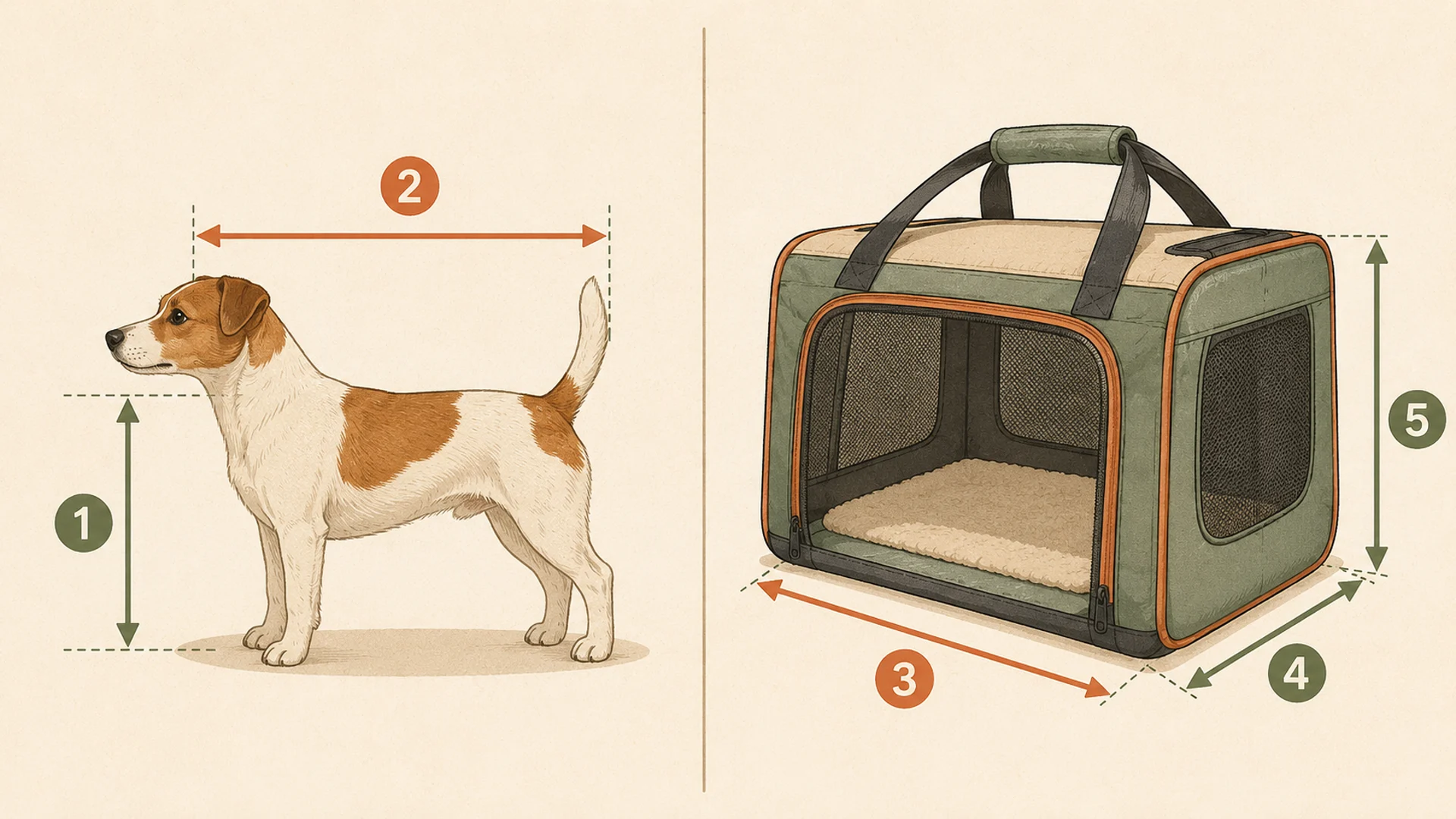
- Carrier length, width, and height: compare all three, not just length.
- Pet length and height: your pet should fit naturally without being compressed.
- Pet weight: stay within the carrier’s stated weight guidance — but note that most US airlines publish no pet weight limit at all — our guide to the supposed 20 lb cabin limit shows what the five biggest carriers actually put in writing.
- Ventilation: look for mesh on multiple sides.
Not sure how to take the measurements? The sizing charts show how to measure a dog or cat before you buy.
Soft-sided carriers are usually the practical choice
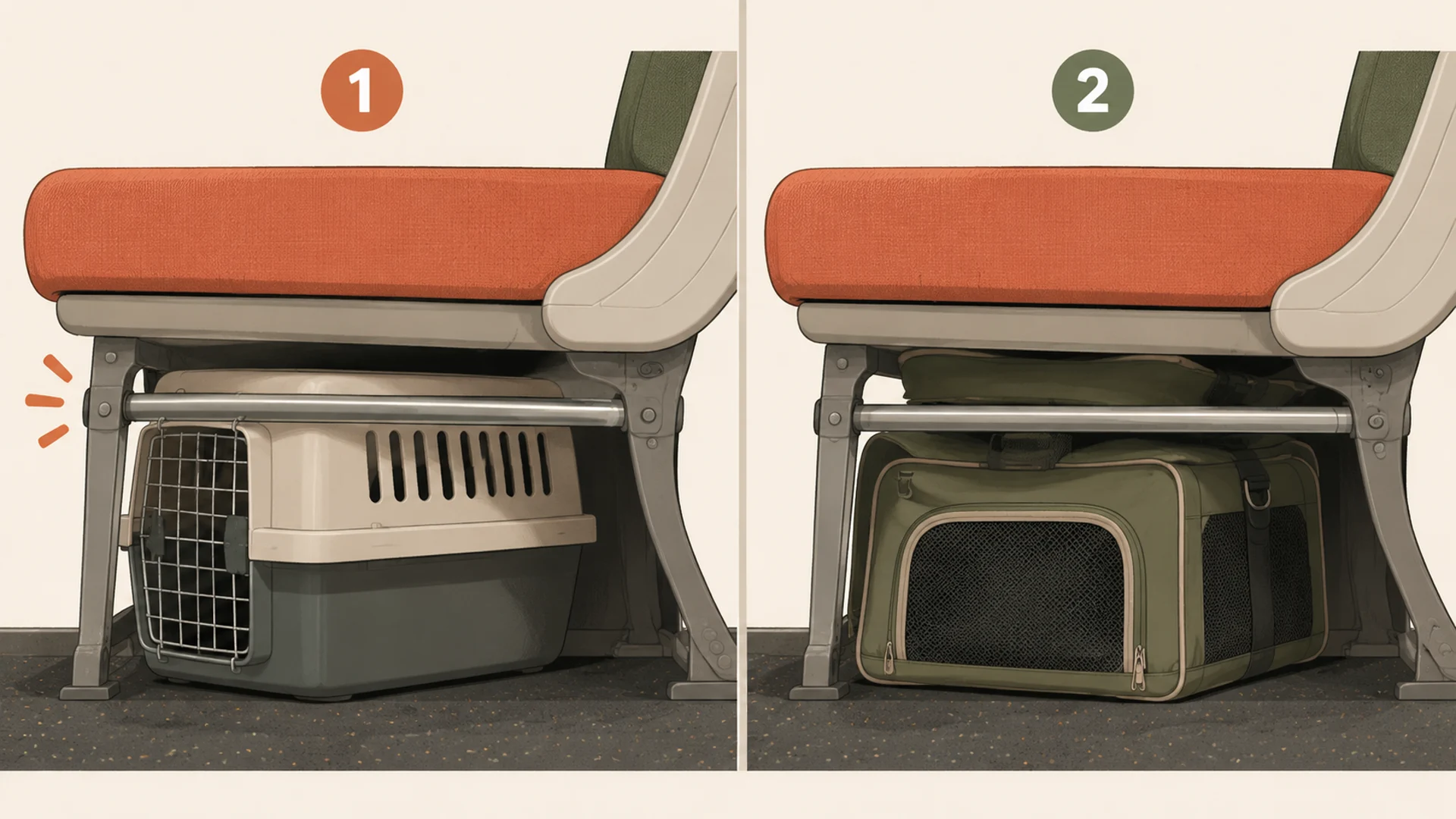
For cabin travel, soft-sided carriers are popular because they give a little when placed under a seat. They are also easier to carry through airport lines and security. A rigid carrier protects its shape better, but it is less forgiving when under-seat space varies by aircraft — and it cannot give back that fraction of an inch when a gate agent is watching it slide under the test seat. Wheels sit at the same end of that trade — the housing and handle channel take their space from the inside, which is why we treat wheeled carriers as a terminal tool rather than a cabin one.
| Feature | Why it matters for flight days |
|---|---|
| Low profile | Helps with under-seat placement. |
| Mesh visibility | Keeps air moving and lets you monitor your pet. |
| Secure zippers | Reduces escape risk during stressful moments. |
| Removable pad | Makes cleanup easier after a long travel day. |
TuckTrail picks for cabin travel
The Sky Double-Expand Mesh Pet Travel Carrier (18.1 × 11 × 11 in zipped) is the worked example above: sized against the big-three US window, with mesh on every side and zip-out expansion panels for airport waits. The Sky Compact Expandable Mesh Pet Carrier runs smaller for the stricter height limits. Every Sky product page repeats the airline table above next to that carrier’s own dimensions, so the comparison is done for you — and the full lineup is on the carriers shelf.
Flight-day checklist
- Check the airline’s current pet policy before you buy — the links in the table above go straight to each airline’s page.
- Confirm the pet fee, reservation requirements, and paperwork; most airlines cap pets per cabin, so reserve early.
- Compare the carrier’s full dimensions with the published under-seat limits.
- Know what security actually checks — our TSA guide explains why the checkpoint is about your pet, not the bag.
- Let your pet rest in the carrier at home before travel day.
- Pack an absorbent liner and a backup pad.
Airline pet carrier FAQ
Can a carrier be approved by every airline?
No. Airlines publish different size limits, fees, and pet rules — the published lengths alone run from 16 inches (WestJet) to 21.5 inches (Air Canada) among the airlines we track. Treat “airline approved” as a shopping phrase, then verify the exact airline policy before travel.
What size pet carrier fits under most airline seats?
Among the eleven North American airlines we track, published soft-carrier limits cluster around 17–18.5 inches long, 11–14 inches wide, and 8.5–11 inches tall. A soft-sided carrier around 17 × 11 × 9 in clears the most policies; the big-three US carriers (Delta, United, American) all publish 18 × 11 × 11.
What if my carrier is slightly over the airline’s published size?
Length and width overlaps of a fraction of an inch usually disappear when a soft-sided frame slides under the seat, which is why airlines specify soft carriers in the first place. Height is different — compressing it squeezes your pet — so never count on making up a height gap. The final call always belongs to airline staff on the day.
Do soft-sided pet carriers need to fit completely under the seat?
For in-cabin pet travel, the carrier is generally expected to fit under the seat in front of you for taxi, takeoff, and landing. Under-seat space varies by aircraft and seat, so check the airline’s current published limits and your seat assignment when possible.
Should my pet be able to stand in an airline carrier?
Your pet should fit comfortably and settle without being forced into an unnatural posture. Airline staff may also evaluate whether your pet appears comfortable inside the carrier — a visibly cramped pet is the most common reason a carrier gets refused at the gate.
Bottom line
Skip the search for a universal “airline approved” badge — it does not exist. Instead: pull your airline’s row from the table above, compare all three of the carrier’s dimensions against it, treat height as non-negotiable, and make sure your pet settles inside. Do that, and the carrier conversation at the gate becomes a non-event.
Travelling overland instead? The limits are published as fixed numbers rather than airline guidelines — our guide to taking a dog on a train or bus covers the rail and transit side.