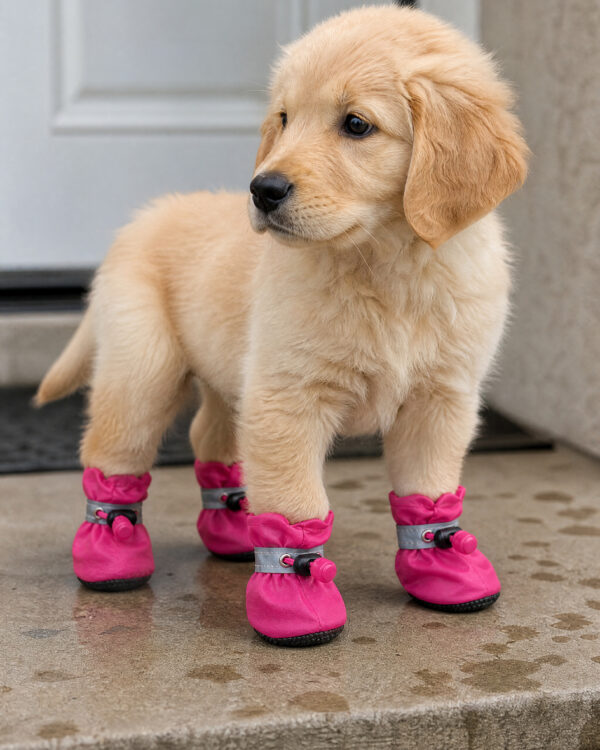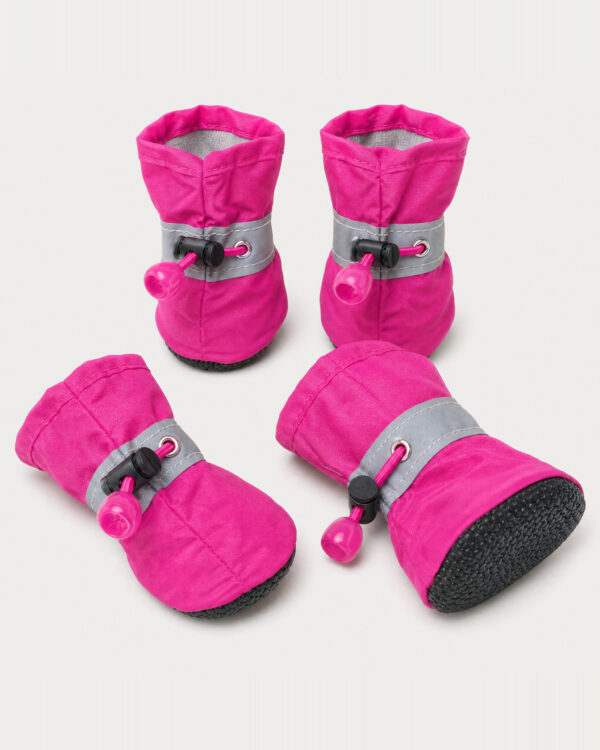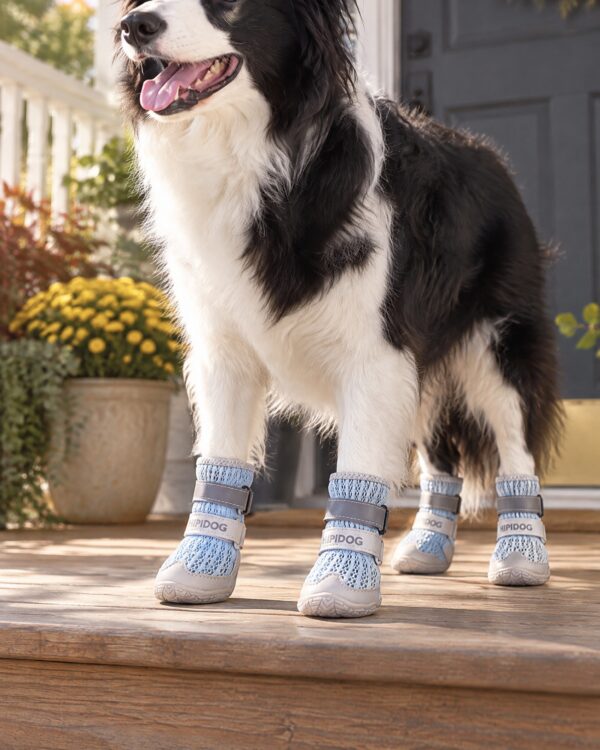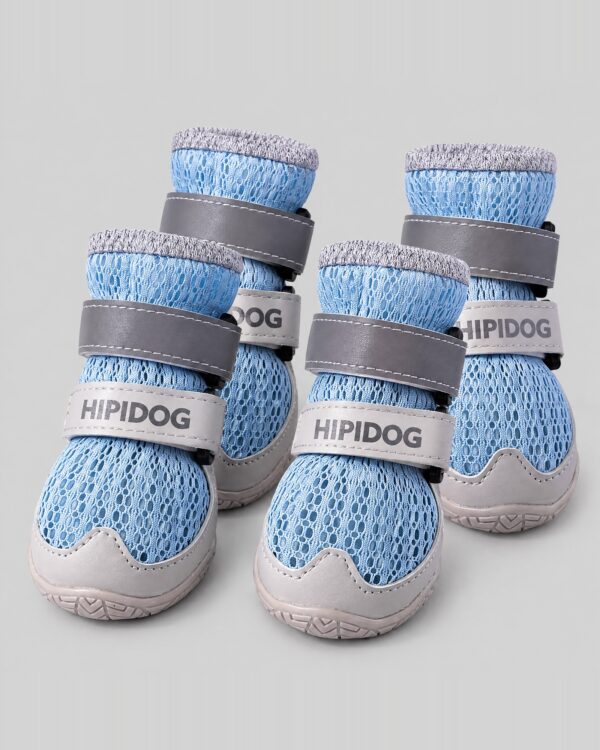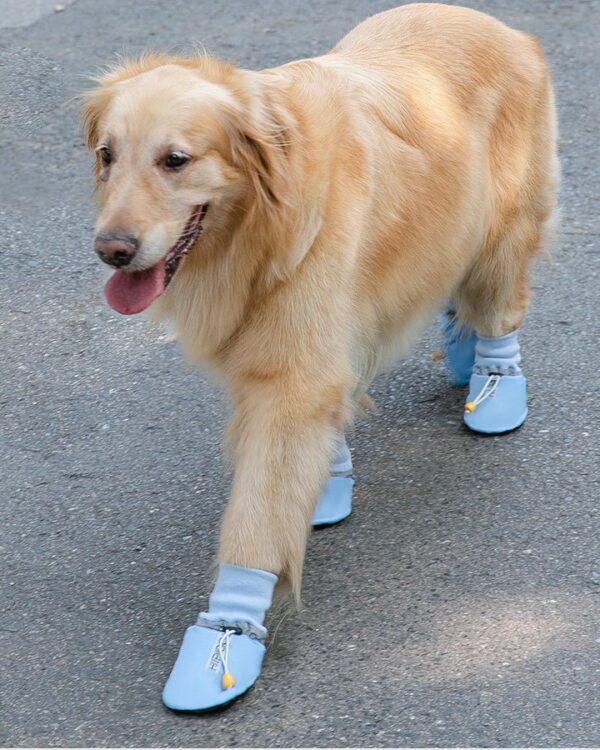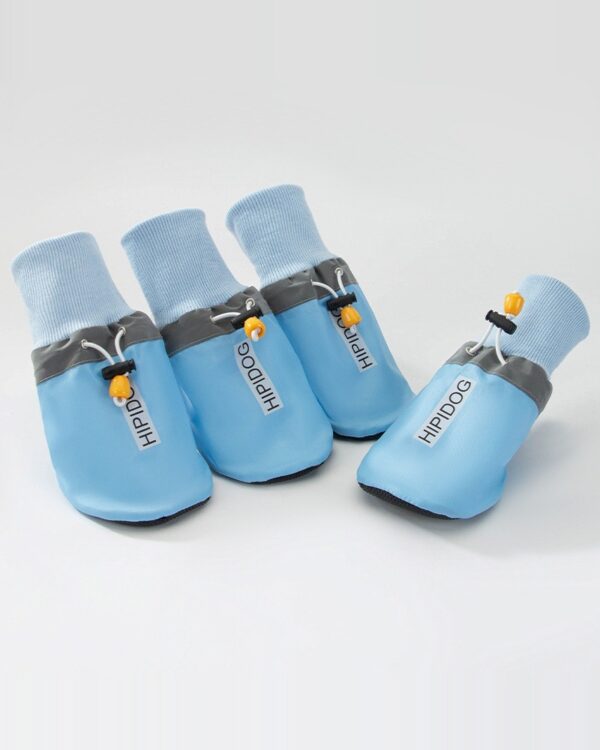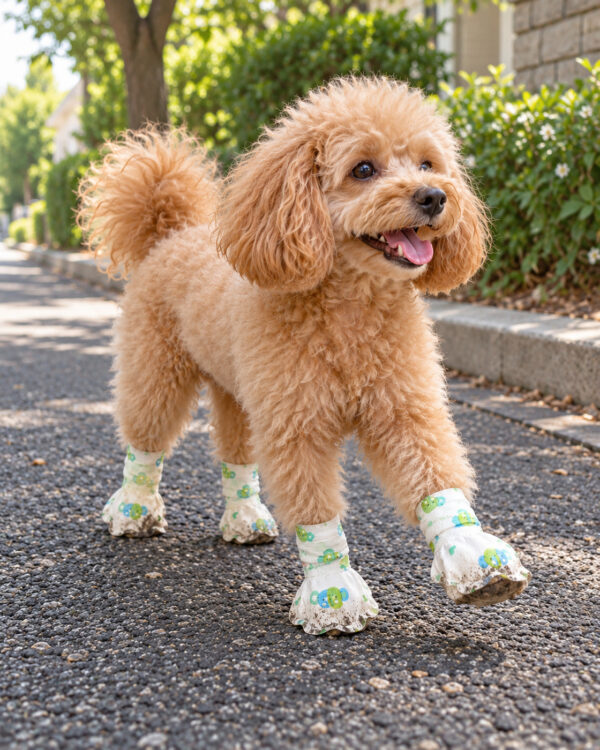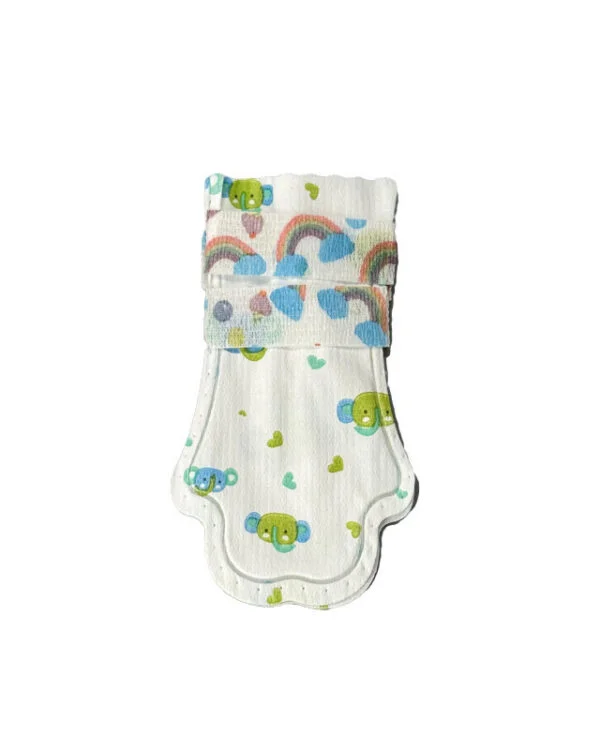
Most dogs do not need rain boots for an ordinary wet walk. A towel, a paw check and dry feet when you get home are usually the useful answer. Boots earn their place when the ground is slick, muddy or rough; when there is road treatment to keep off the paws; or when a dog dislikes wet ground enough that the walk or bathroom break turns into a standoff.
They are not a substitute for checking paws afterwards. The American Kennel Club notes that some waterproof, wear-resistant boots can work as rain boots, and that grooved soles can help on uneven or rain-slick pavement. But the same page warns against material that traps water around the toes. The useful question is not “are rain boots good?” It is what are they solving on this walk?
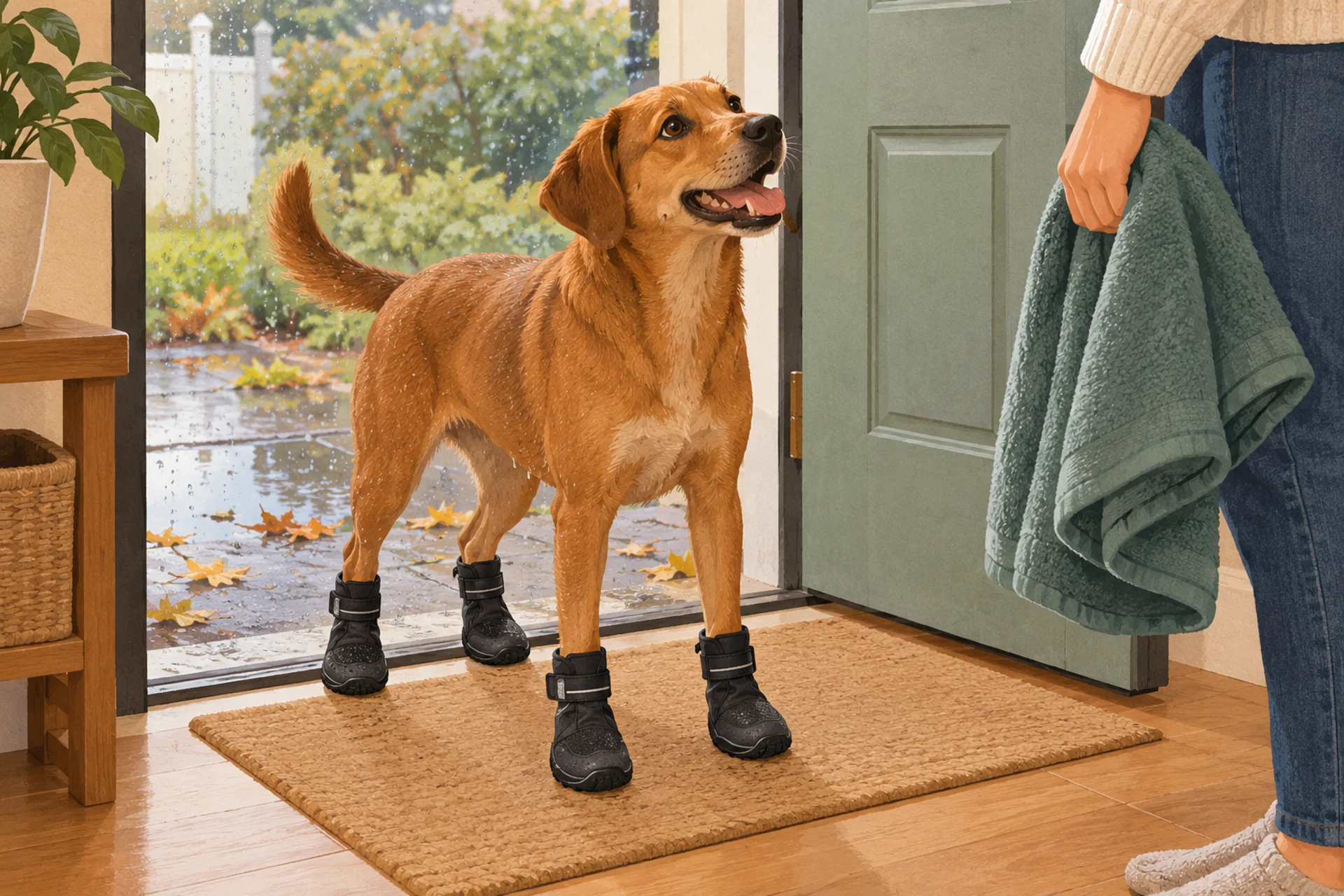
When rain boots are worth putting on
Rain itself is not an emergency for healthy paws. A short stroll on clean, wet pavement ends with damp feet, not a special gear requirement. In that setting, boots can add more fuss than benefit—especially for a dog that has never learned to tolerate them.
There are four situations where the trade changes:
| What the walk is like | What boots can solve | What still happens at home |
|---|---|---|
| Clean, paved route in ordinary rain | Usually nothing essential; they may help a dog that dislikes wet ground | Towel and inspect the paws |
| Slippery pavement, smooth stone or wet boardwalk | A treaded sole can add grip | Check that grit has not worked into the cuff or between toes |
| Mud, trail grit or sharp wet gravel | Creates a barrier between the paw and the surface; a sturdy sole matters more than “rain” in the product name | Remove boots, rinse or wipe paws, then dry them |
| Salted or chemically treated winter sidewalk | Keeps residue off the pads and reduces what can be licked later | Still wipe the legs and paws; do not assume the boot stayed sealed |
The traction point is real, but modest. The AKC says deep grooves are useful on rocks and uneven terrain, and that anti-slip soles help dogs keep their balance when sidewalks become slick after rain. That makes a boot a reasonable tool for a particular route. It does not mean a smooth rubber cover turns every dog into a sure-footed hiker.
There is another valid use that has nothing to do with traction: sensory comfort. The AKC’s rainy-weather training guidance says a properly fitted boot can help some dogs that object to wet ground feel comfortable enough to toilet outside. That is especially useful for the dog who will happily walk in a drizzle but plants both front feet at the edge of a wet lawn. Start there, not with a claim that every dog needs footwear.
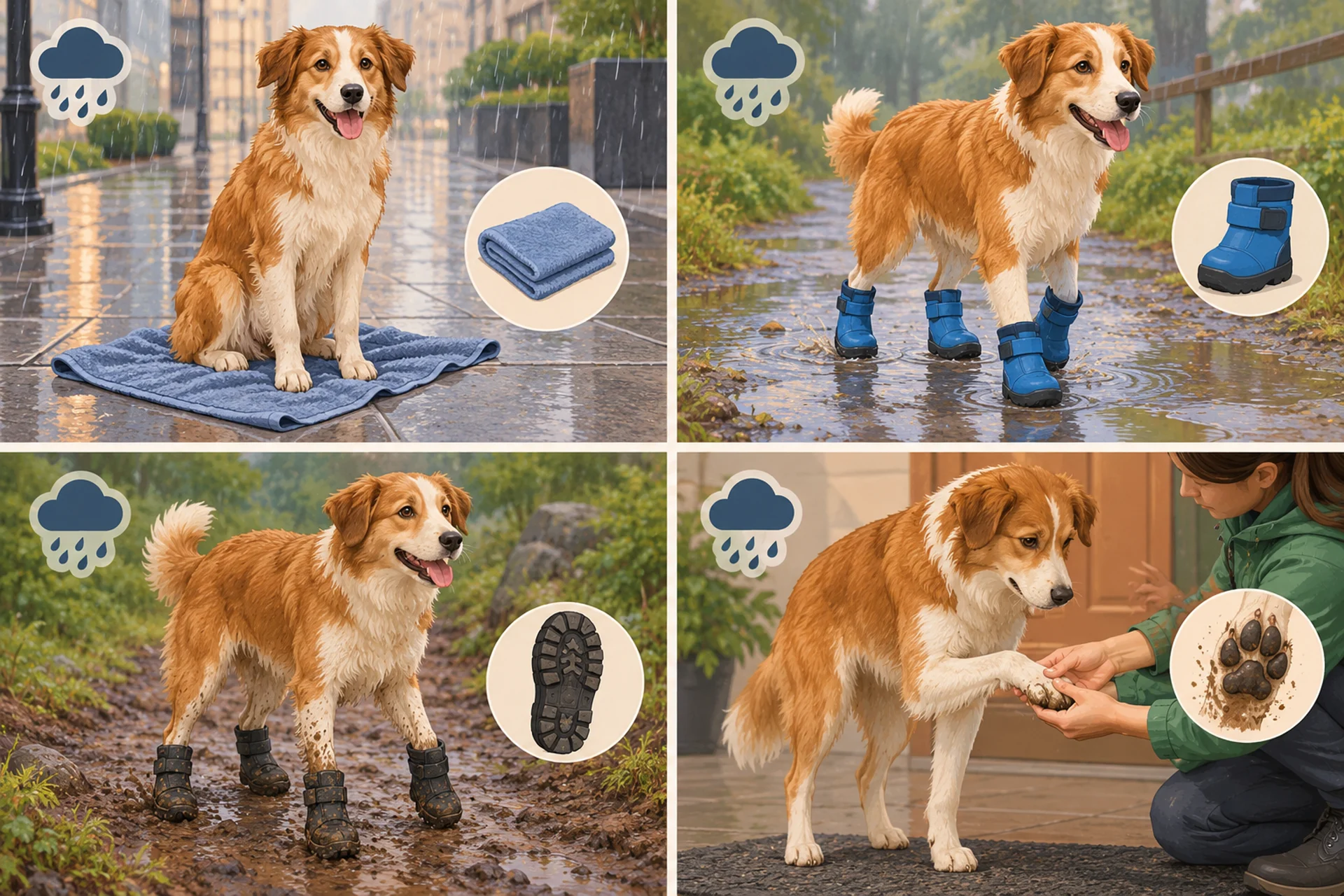
When a towel is the better answer
Do not buy boots to avoid every trace of a wet paw. On a short, familiar paved route, the simpler routine is often more reliable: come in, wipe feet and lower legs, dry between the toes, and wash the towel. That routine is also the fallback when your dog cannot comfortably wear boots.
Boots are a poor answer when they fill with water, slide around, or cause the dog to walk stiffly for the whole outing. A boot that rotates under the paw is not adding dependable traction. A tall waterproof shaft that holds water at the toes is working against the reason you chose it. The AKC advises looking for water-resistant material that does not trap water, because excess moisture between the toe pads can increase the likelihood of yeast problems.
That does not mean a wet paw diagnoses anything. The Merck Veterinary Manual explains that warm, moist skin areas, including the spaces between toes, can carry more bacteria and are at greater risk of infection; it also stresses that skin infection usually has an underlying trigger. The practical takeaway is simply to get the paw dry and to ask your veterinarian about persistent redness, odor, licking, discharge, pain, or a suddenly boot-intolerant foot. Do not use a boot to cover up a problem you have not checked.
What a rain boot needs to do
“Waterproof” is only one part of the brief. Read the construction in this order:
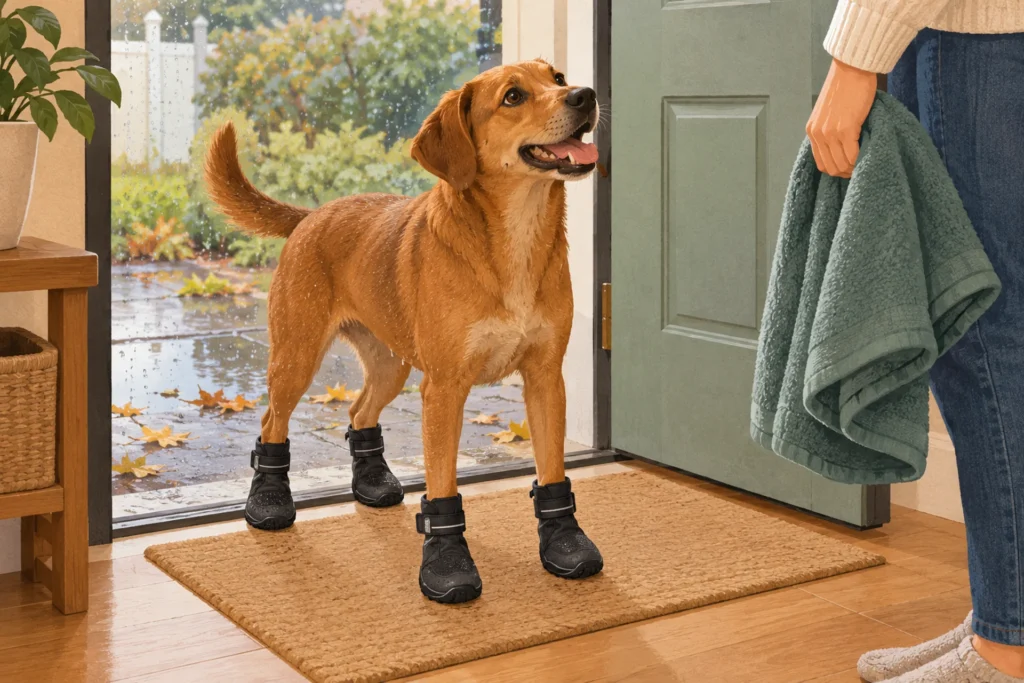
- It stays on without being squeezed on. Follow the maker’s measuring instructions and test the fit indoors before rain is involved. VCA Animal Hospitals makes the same practical point for waterproof sock boots and rain boots: they should be easy to put on and take off, but not so easy that the dog kicks them straight off.
- The sole matches the ground. For slick pavement or a trail, look for actual tread. A thin rain cover can keep dirt off a paw but is not automatically a traction boot.
- The cuff keeps out debris without trapping water. A soft, adjustable closure is useful only if it sits securely above the paw and does not rub. Check it after the first few minutes outside.
- The material can be cleaned and dried fully. A boot that is still damp at the next walk belongs on the drying rack, not back on the dog.
- Your dog can move naturally in it. High-stepping for a few seconds during a new introduction is common. Repeated shaking, limping, chewing at one foot, or refusing to put weight down is a stop signal, not a training challenge.
How to introduce boots without making rain worse
Do this on a dry day, indoors, when there is no hurry to get outside. Put one boot on, offer something pleasant, and remove it before the dog has a reason to object. Repeat over several short sessions, adding boots only when the previous step is boring. Then do a two-minute test on dry, familiar ground. Watch whether the sole stays centered, whether the dog is putting normal weight through each foot, and whether the cuff has moved. Only after that should the boots become rain gear.
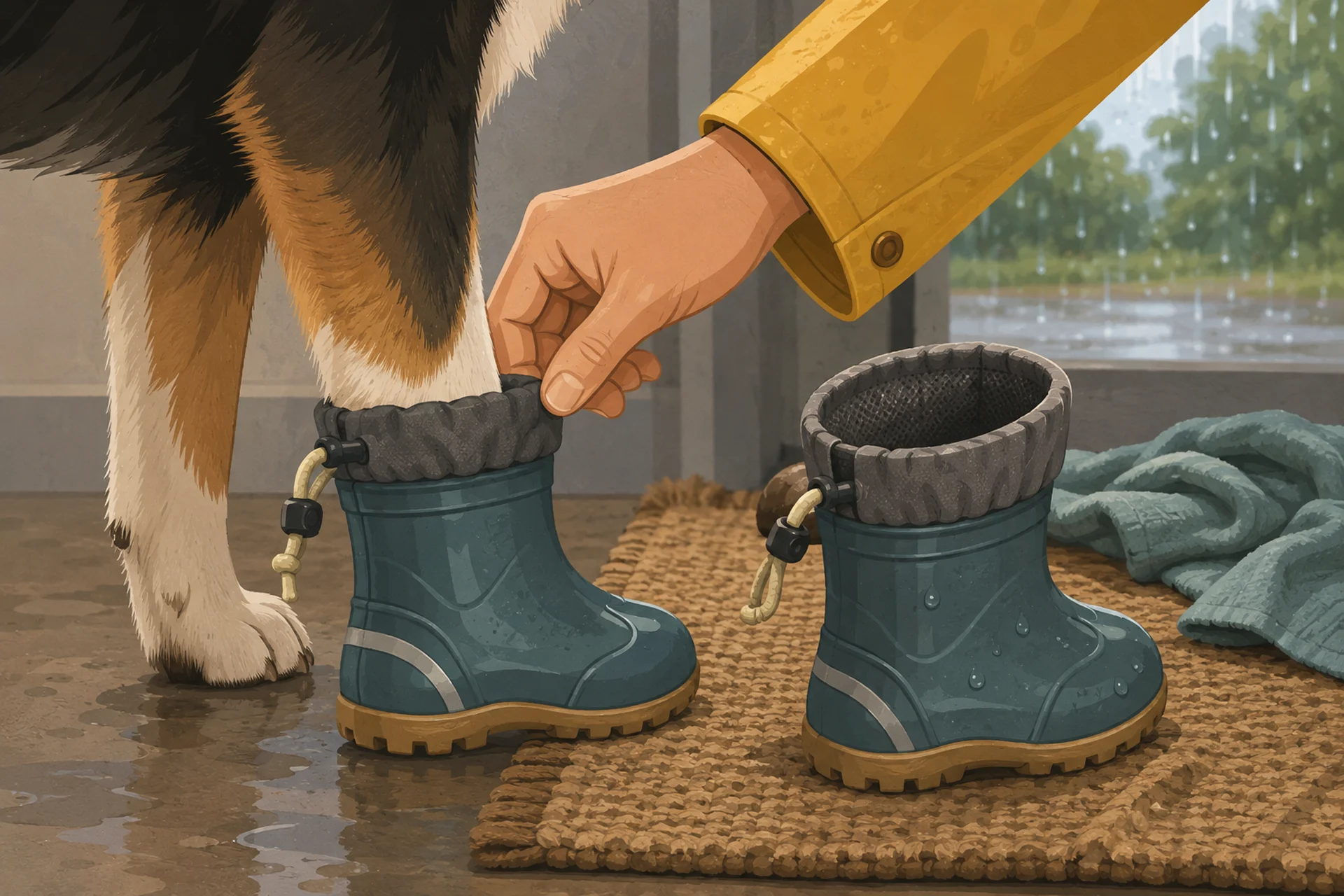
The five-minute routine when you get home
- Take the boots off at the door. A boot is for the route, not for keeping a damp paw enclosed indoors.
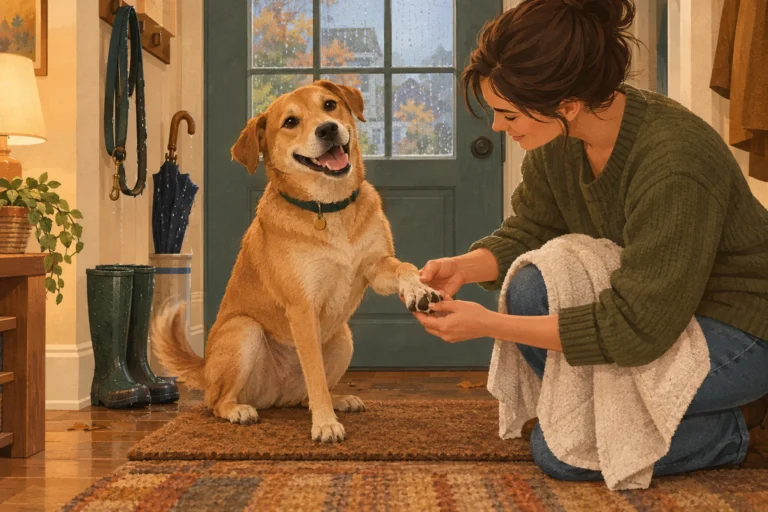
- Look at each paw. Check the pads, between the toes and around the dewclaw for grit, mud, redness or a rubbed spot.
- Wipe or rinse, then dry. Pay attention to the spaces between the toes and the hair around the paw.
- Empty and dry the boots separately. Turn the cuff open; do not leave damp boots piled together in a bag.
- Decide whether to use them next time. If the route was clean pavement and the boots came back wet inside, the towel may be the more effective plan. If they kept mud and chemical residue off a sensitive paw, they earned their drawer space.
If the real problem is muddy legs and belly rather than the paws, boots are the wrong first purchase. A dog rain suit with leg coverage can reduce the amount of coat you need to dry, while still leaving you to clean the feet. For the actual paw-cleaning sequence, see how to clean dog paws after a walk.
Dog rain boots: FAQ
Do dogs need boots in the rain?
Usually not for a short walk on clean pavement. They help when wet ground is slippery, muddy, rough, salted, or uncomfortable enough that your dog avoids going outside. Dry and check the paws either way.
Are dog rain boots good for slippery pavement?
They can be, if the sole has real tread and the boot stays centered on the paw. The AKC notes that grooved soles can improve traction on wet, uneven surfaces. A loose boot that rotates is not reliable traction.
Can dog boots trap moisture?
Yes. The AKC specifically warns against water-trapping material because moisture between toe pads can raise the chance of yeast problems. Take boots off after the walk, dry paws, and dry the boots before their next use.
Should my dog wear boots for mud?
They can be useful on a muddy route, especially with a sturdy sole, but they do not make after-walk care disappear. Remove them at the door, check the toes and pads, and rinse or wipe away any remaining grit.
What if my dog hates rain boots?
Do not force them through a long wet walk. Introduce one boot at a time indoors, then test for a few minutes on dry ground. If your dog still cannot move comfortably, use a shorter route and dry the paws afterwards. Sudden pain, limping, redness or persistent licking should go to your veterinarian.
Sources
- American Kennel Club — Best Dog Boots for Any Weather (checked 2026-10-12) — waterproof, wear-resistant boots can serve as rain boots; grooved soles can help on slick surfaces; avoid water-trapping materials and use the activity to choose the boot.
- American Kennel Club — Training Dogs to Potty Outside, Rain, Snow, or Shine (checked 2026-10-12) — properly fitted boots can make wet ground less uncomfortable for some dogs that resist toileting in bad weather.
- VCA Animal Hospitals — How to Keep Your Dog’s Paws Safe in Winter (checked 2026-10-12) — rain boots and waterproof sock boots are options; use the maker’s sizing guidance and aim for boots that are secure without being hard to remove.
- Merck Veterinary Manual — Pyoderma in Dogs and Cats (checked 2026-10-12) — moisture can raise bacterial counts in warm skin areas, including between toes; infection has underlying causes and needs veterinary assessment.
This is general paw-care information, not a diagnosis. Ask your veterinarian about a painful, swollen, red, foul-smelling or persistently licked paw.
Use boots for the ground, not just for the weather.
Rain boots are worth it for slick ground, mud, rough surfaces, winter residue, or a dog that cannot stand wet grass. For a regular paved walk, a careful towel routine is usually the better tool. Whichever you choose, dry the paws when you get home.