Most cracked paw pads in winter are dry, worn skin, and they get better with less salt, more drying and a paw balm. The American Kennel Club’s paw-care guide puts it plainly: the dry air in your home and the cold air outside can cause dogs’ paws to crack. Cornell’s Riney Canine Health Center adds that ice and road salt can crack or cut paws, and that certain balms or petroleum jelly may help prevent and ease cracking.
The other half matters just as much. A crack that bleeds, gapes open, makes your dog limp, swells, smells, or keeps coming back is not a dryness problem anymore. VCA’s veterinarians say even minor foot pad injuries can be stubborn and recommend a vet visit, and pads that thicken and split without an obvious reason can point to a skin condition your vet has to identify. This page helps you tell the two apart. It is general information, and your veterinarian makes the call for your dog.
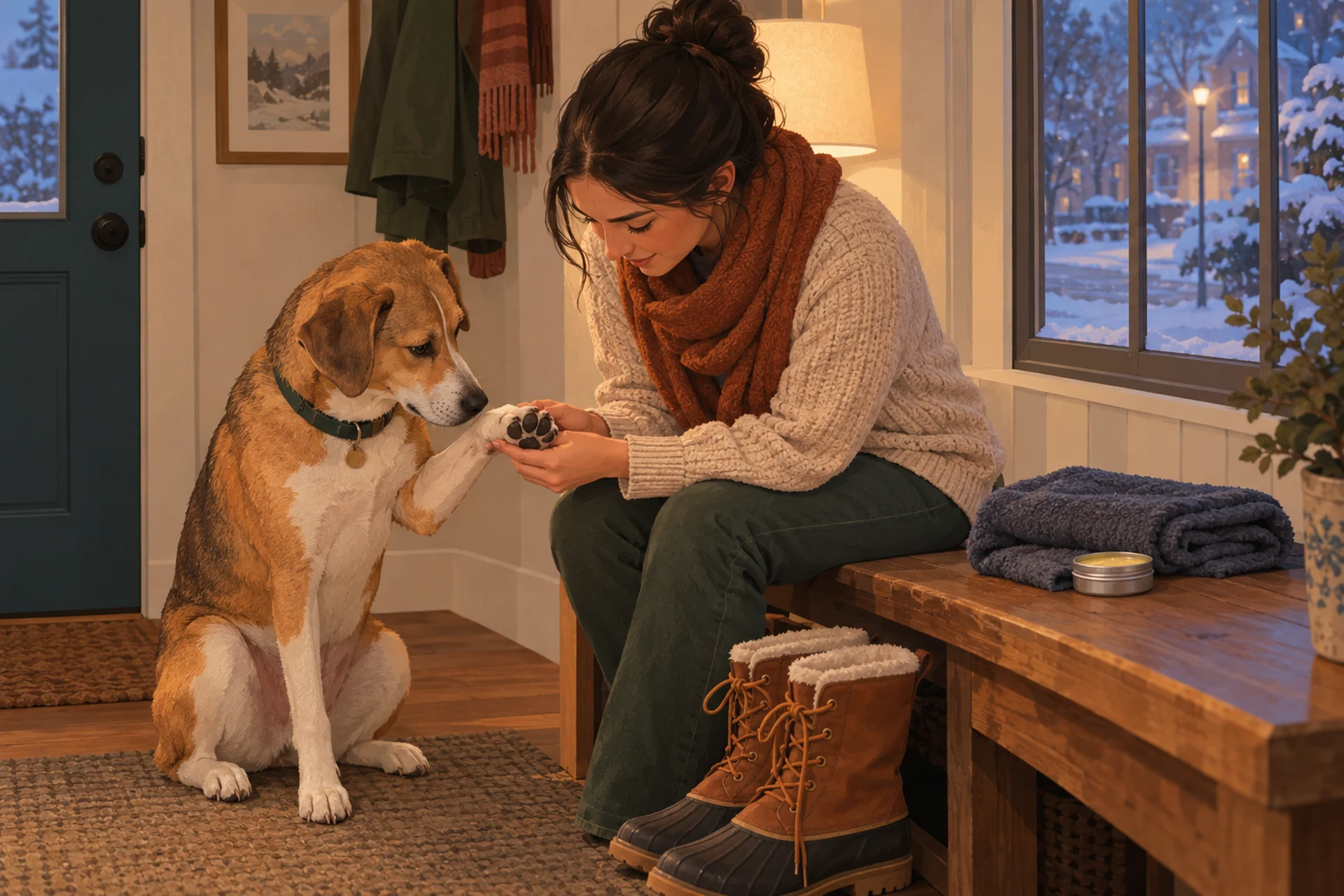
Why paw pads crack in the cold months
A paw pad is thick, tough skin, but it is still skin. It dries out, wears down and splits the same way the skin on your heels does, and winter stacks several causes together.
- Dry air, inside and out. The AKC names both the dry air in your home and the cold air outside. Heated rooms in January are part of the problem, not just the walk.
- Salt, de-icers and ice. Cornell says paws can get cracks or cuts from ice and salt on the roads, and that road salt and de-icers can irritate paws. The ASPCA’s cold-weather tips say cold, dry winter air can cause chapped paws and itchy, flaking skin, and that clinging ice balls, salt crystals and de-icing chemicals can dry the skin further.
- Hard, rough ground. Long walks on pavement wear pads down in any season. The AKC’s article on hyperkeratosis mentions cracked, hardened pads in dogs that walk a lot on pavement or hot surfaces, and VCA’s first-aid page warns against hot sidewalks in summer and icy or salt-covered sidewalks in winter.
- Wet, then dry, then wet again. Slush on the walk, a warm floor at home, then the next walk. Our guide to what ice melt does to paws covers the chemical side of this in more detail.
If your dog’s pads started cracking in late fall and the dog walks city sidewalks, this list probably explains it. If the cracking started in summer, affects a dog who mostly walks on grass, or keeps getting worse despite care, read the next section.
When cracking is a sign of something else
Some pads crack because the skin is making too much keratin, the protein in skin, hair and nails. The AKC’s hyperkeratosis article, which quotes a veterinarian, describes it as overproduction of keratin that most often shows on the paw pads or the nose, and calls it a clue about a dog’s health rather than a diagnosis in itself. It links it to aging, to zinc problems (it notes Siberian Huskies and Alaskan Malamutes are predisposed to zinc deficiencies) and to various autoimmune diseases.
The Merck Veterinary Manual adds the veterinary view. It describes an inherited form, familial footpad hyperkeratosis, reported in Irish Terriers and Dogues de Bordeaux, where all the pads are involved from a young age. When it is severe, it says, horn-like growths, fissures and secondary infection cause pain and lameness. It also lists the conditions a vet would want to rule out when pads thicken, including a liver-related skin syndrome and pemphigus, an autoimmune skin disease.
You don’t need to remember those names. What matters is the pattern that should send you to the vet instead of the balm tin.
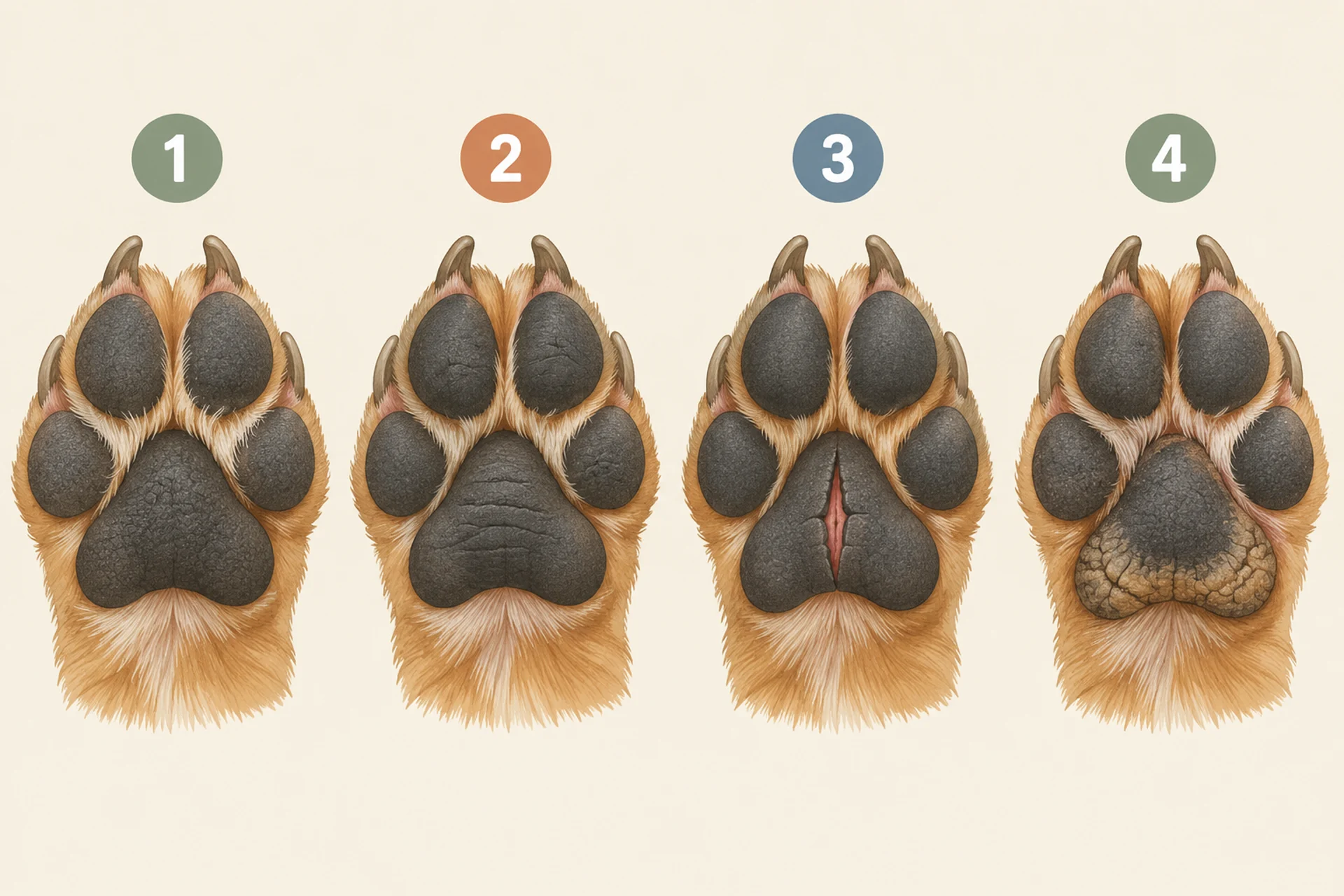
| What you see | Most likely bucket | What to do |
|---|---|---|
| Pads feel rough and dry, small surface lines, no bleeding, dog walks normally | Winter dryness and wear | Salt off, dry well, balm, protect on salted routes. Watch for a week or two |
| A crack that opens when the toes spread, or a pink line inside it | A deeper split that is close to an injury | Keep it clean and dry and call your vet, especially if it doesn’t close in a few days |
| Bleeding, limping, licking that won’t stop, swelling, smell or discharge | An injury or infection | See your vet. VCA treats bleeding that won’t stop in 10–15 minutes as an emergency |
| Thick, hard, crusty or horn-like pad edges, often on all four feet, sometimes with a crusty nose | Possible hyperkeratosis or another skin condition | Vet visit to find the cause. Don’t trim or peel it at home |
| Cracking that keeps coming back in every season, or in a young dog | Possible underlying condition | Mention breed, diet and when it started at the appointment |
What helps with ordinary dry, cracked pads
This is the routine for the first row of the table: dry pads, no bleeding, a dog that walks normally. It is care, not treatment, and if anything on the paw looks like a wound, skip straight to your vet.
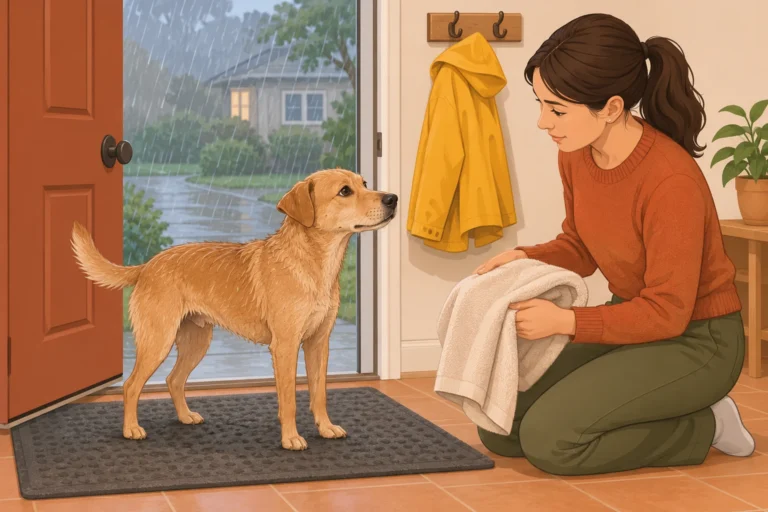
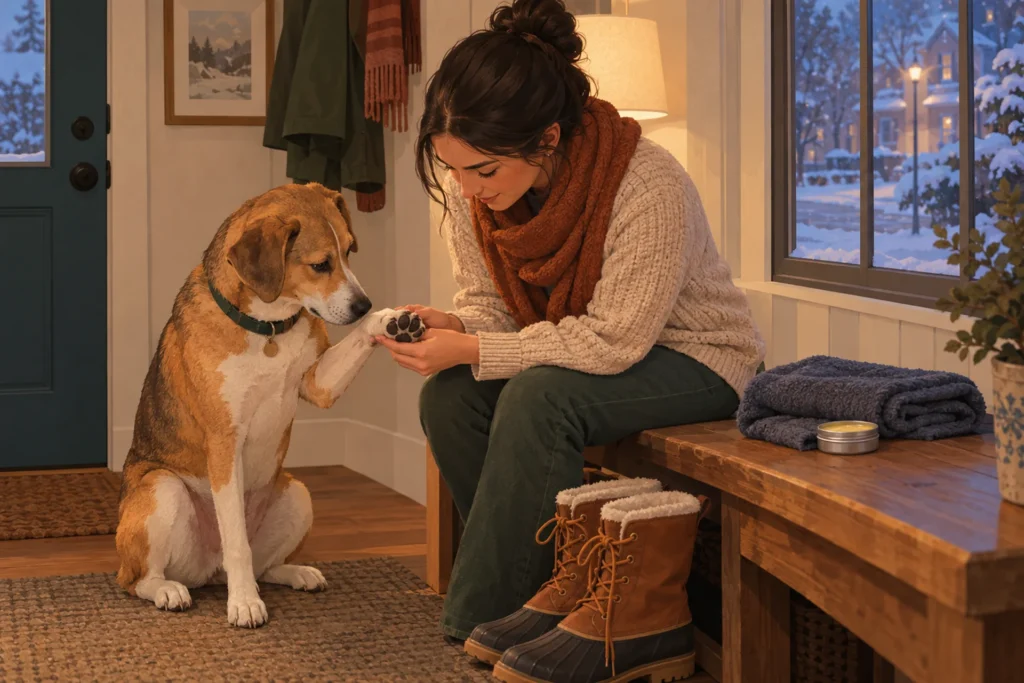
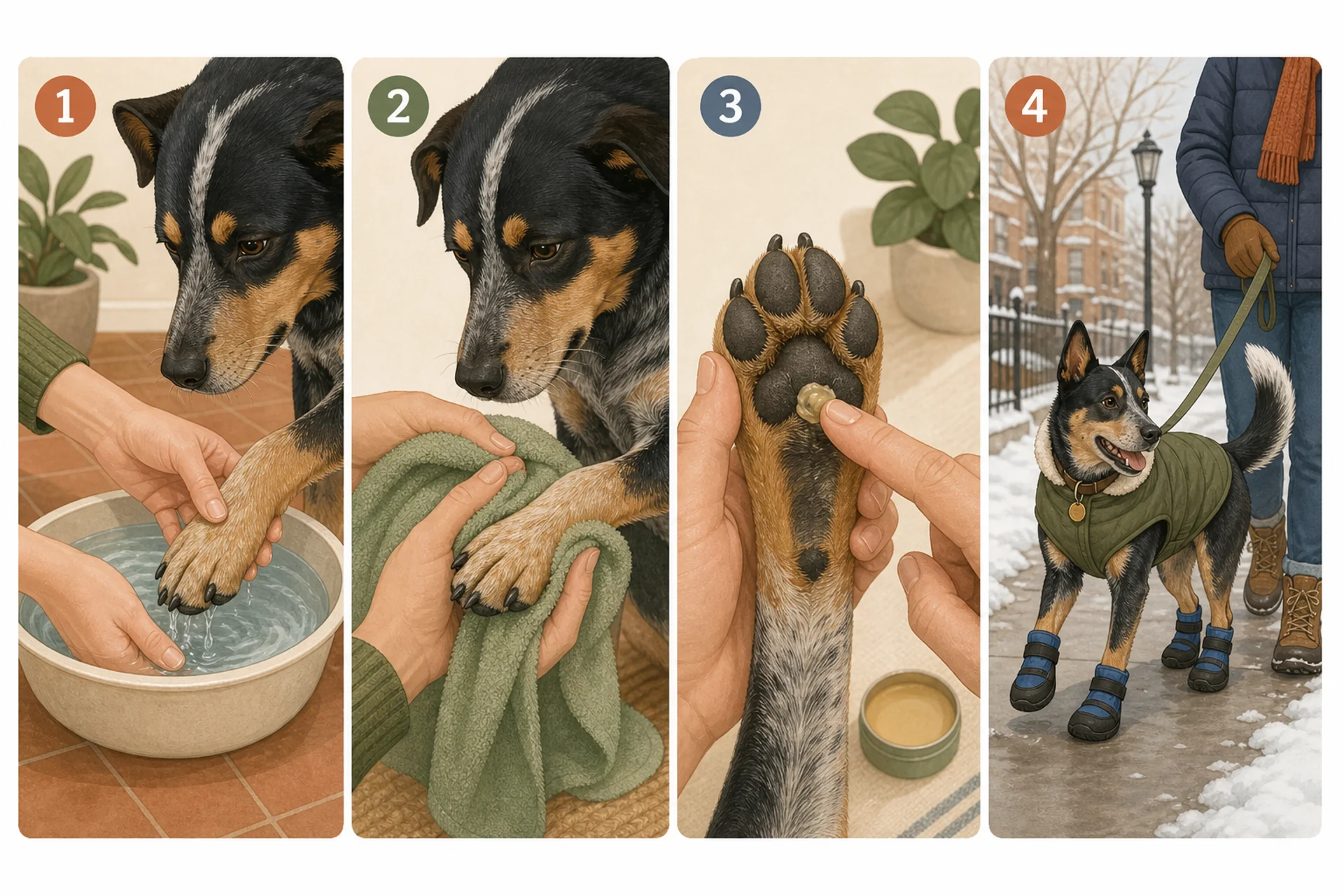
- Get the salt off every time. The ASPCA says to wash and dry your dog’s feet and stomach after each walk to remove ice, salt and chemicals, and Cornell says to wipe or wash paws after returning inside. A bowl of lukewarm water by the door is enough.
- Dry between the toes, not just the top. Damp skin between the pads is where small cracks turn sore. The AKC suggests gently parting the toes as you clean to check for debris and irritation.
- Use a balm made for paws. The AKC suggests a soothing paw balm or protective paw wax, and the ASPCA says to massage petroleum jelly or other vet-approved paw protectants into the pads before going outside. If you’re unsure what to use, ask your vet. Dogs lick their feet, so whatever goes on will partly end up in the mouth.
- Don’t cut or peel rough skin. The AKC’s hyperkeratosis article is direct: don’t aggressively peel or cut thickened tissue at home, because over-trimming can cause pain, bleeding and infection.
- Change the route before you change the gear. Grass and packed snow are easier on pads than salted sidewalks. Shorter walks on the worst days help too.
- Look at the pads once a week in good light. The ASPCA says to check for cracks in the paw pads or redness between the toes. A phone photo makes it easy to compare.
If the cracks don’t settle within a couple of weeks of this, or they get deeper, treat that as a reason to see the vet, not a reason to try a stronger product.
Do boots help cracked paw pads?
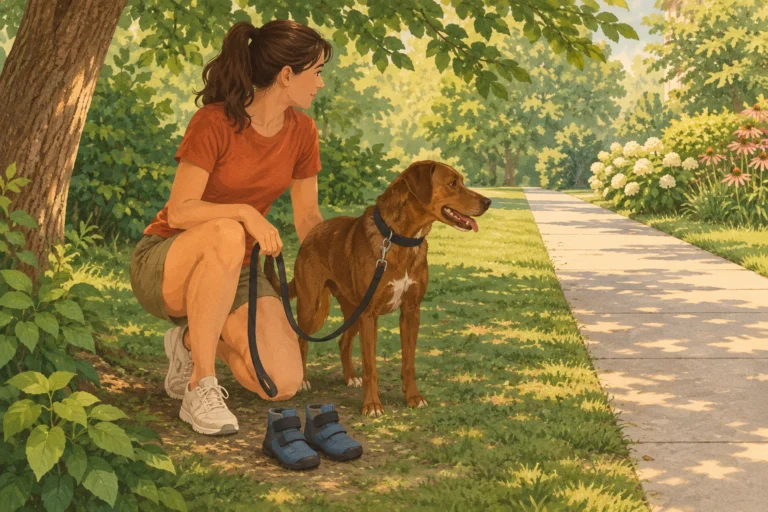
For prevention, often yes. The AKC calls dog booties one of the easiest ways to protect paws from the elements, the ASPCA says booties give more coverage and keep sand and salt from getting lodged between bare toes, and Cornell suggests training your dog to wear well-fitting booties. On a salted city route, a boot keeps the main cause of winter cracking off the pad entirely.
Two honest caveats. A boot that doesn’t fit rubs, and a rub on an already cracked pad makes things worse, so fit matters more here than usual. Our guide on why dog boots keep falling off covers sizing from a standing paw. And boots are not a treatment for a crack that is open or bleeding. If your vet has looked at it and wants it covered, follow their instructions on how and for how long.
Not every dog needs boots for this. A dog that walks on grass and gets a thorough wipe at the door may do fine with balm alone. Our page on whether dogs need boots in winter goes through which dogs benefit most.
When to call the vet
The VCA first-aid page sets the clearest lines. It recommends a vet visit even for minor foot pad injuries because they can be stubborn, and notes that pads don’t hold stitches well, so cuts heal slowly. Call your vet, or go to an emergency clinic where VCA says to, if you see any of these:
- Bleeding that won’t stop after 10–15 minutes of pressure. VCA calls that an emergency.
- A crack or wound that keeps bleeding or gapes open after three days.
- Swollen toes, a foul smell or moist discharge, which VCA says can mean infection or poor circulation.
- Limping, or your dog refusing to put weight on the foot.
- Licking or chewing the paw that won’t stop.
- Thick, crusty, horn-like pads, especially with changes on the nose or elsewhere on the skin.
Bring the details a vet will ask about: when it started, which feet, where you walk, any de-icer you use at home, diet changes, and anything you’ve already put on the paw.
Cracked paw pads: FAQ
Why are my dog’s paw pads cracked?
In winter, the usual causes are dry indoor air, cold outdoor air, road salt, de-icers and ice, according to the AKC and Cornell. Rough pavement wears pads in any season. Cracking that comes with thick, crusty pads or keeps coming back can be a sign of an underlying condition, which your vet has to identify.
Are cracked paw pads painful for dogs?
Shallow dryness often isn’t. Deep splits can be, and Merck says severe fissures with secondary infection cause pain and lameness. Limping, licking or pulling the foot away are signs it hurts. Any of those is a reason to call your vet.
My dog’s paw pad is cracked and bleeding. What should I do?
Apply gentle pressure with a clean cloth and contact your vet. VCA says bleeding that doesn’t stop within 10–15 minutes is an emergency, and recommends a vet visit even for minor pad injuries because they heal slowly.
Can I put Vaseline on my dog’s cracked paws?
Cornell says certain balms or petroleum jelly may help prevent and ease cracking, and the ASPCA mentions petroleum jelly or vet-approved paw protectants before walks. That applies to dry pads, not open wounds. For anything bleeding or raw, ask your vet first.
Should I trim my dog’s rough, peeling pads?
No. The AKC says not to aggressively peel or cut thickened tissue at home, because over-trimming can cause pain, bleeding and infection. If the pads are thick or horn-like, your vet can confirm the cause and handle it.
How do I stop my dog’s paws from cracking in winter?
Wash and dry the feet after each walk, check the pads regularly, use a paw balm or wax, avoid heavily salted routes when you can, and consider well-fitting boots. All of these come from the AKC, ASPCA and Cornell winter guidance.
Sources
- American Kennel Club — How to clean and care for your dog’s paws (checked 2026-10-27) — dry indoor air and cold outdoor air can crack paws; paw balm or wax; check for dry, cracking pads while cleaning; part the toes; booties protect paws from the elements.
- American Kennel Club — Hyperkeratosis in dogs (checked 2026-10-27) — overproduction of keratin, usually on pads or nose; links to aging, zinc problems in Huskies and Malamutes, and autoimmune disease; don’t peel or cut thickened tissue at home.
- Merck Veterinary Manual — Hyperplastic and seborrheic syndromes in animals (checked 2026-10-27) — familial footpad hyperkeratosis in Irish Terriers and Dogues de Bordeaux; fissures and secondary infection cause pain and lameness; differential diagnoses include hepatocutaneous syndrome and pemphigus.
- VCA Animal Hospitals — First aid for torn or injured foot pads in dogs (checked 2026-10-27) — even minor pad injuries warrant a vet visit; bleeding not stopped in 10–15 minutes is an emergency; swelling, odor or discharge; pads heal slowly; avoid hot and salted sidewalks.
- Cornell Riney Canine Health Center — Winter safety tips (checked 2026-10-27) — ice and salt can crack or cut paws; balms or petroleum jelly may help; wipe or wash paws after walks; well-fitting booties.
- ASPCA — Cold weather safety tips (checked 2026-10-27) — chapped paws; salt and de-icers dry the skin; petroleum jelly or vet-approved protectants; booties; wash and dry feet after each walk; check for cracks in paw pads.
This article is general information, not veterinary advice. Your veterinarian is the right person to diagnose and treat your dog.