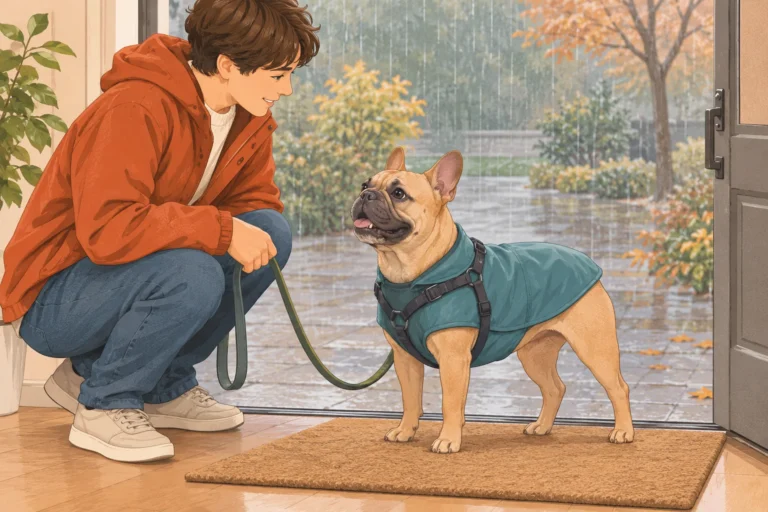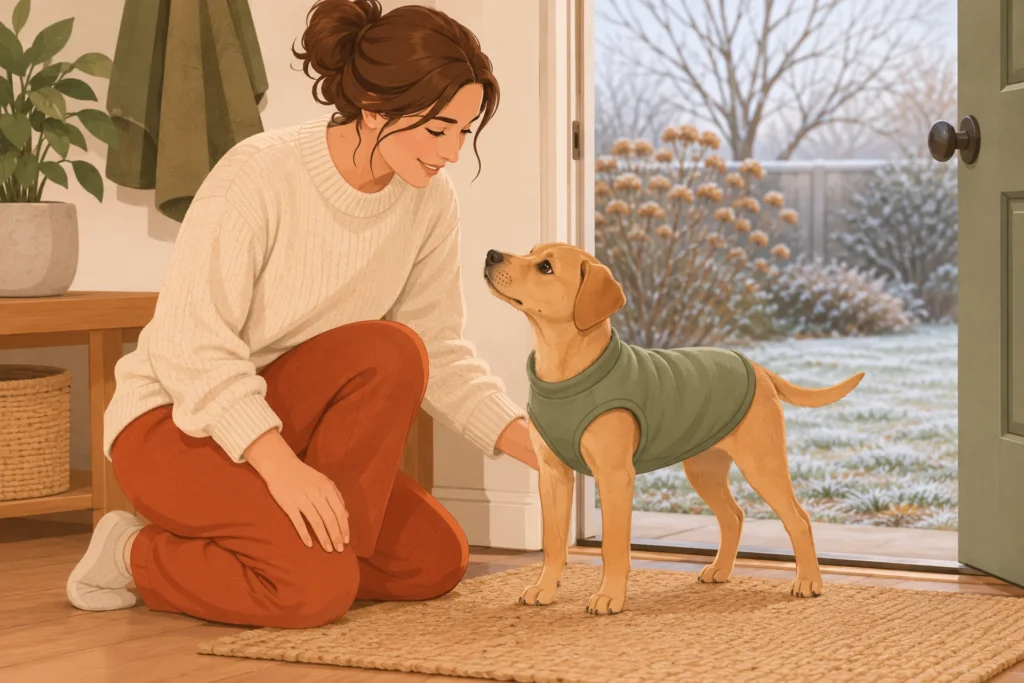
Some puppies benefit from a coat for cold outdoor trips, including puppies of breeds whose adults usually manage without one. The AKC’s winter-coat guidance identifies young puppies as more vulnerable to cold than healthy adults. A jacket is one option alongside shorter outings and access to a warm, dry home; it does not make a cold outing safe indefinitely.
For a first purchase, choose for the puppy you have today: current measurements, comfortable movement and the weather you actually encounter. Skip the oversized coat bought for a future adult. Ask your veterinarian about your puppy’s individual limits, especially if very young, unusually small, underweight or unwell.
Start with three decisions, not a breed label
| Question | What to check | Useful decision |
|---|---|---|
| Is this puppy coping with today’s conditions? | Weather, time outdoors and behavior | Shorten or end the trip rather than relying on extra clothing |
| Does this particular coat fit now? | The maker’s measurements and a supervised movement check | Reject both restriction and excess fabric that catches or shifts |
| Can the puppy wear it comfortably? | A quiet introduction indoors, followed by removal and inspection | Practise before a cold outing; stop for distress or discomfort |
A fluffy appearance is only one piece of information. Cornell’s winter safety advice explains that age, size, condition, health and coat thickness all affect cold tolerance. Puppies have less reliable temperature regulation than mature dogs. An adult breed’s reputation for enjoying snow is therefore a poor shopping rule for a young individual.
This does not mean every puppy needs a padded suit. A brief trip on a mild, dry day is a different decision from standing in cold wind. Make the first question whether to shorten the exposure; make the second whether a comfortable layer would help. For the broader weather decision, see our dog-coat temperature guide.
Once you decide to buy, separate warmth from fit. A sweater, light jacket and insulated coat are options for different conditions, not successive levels every puppy must graduate through. Read the garment’s description and care instructions instead of assuming that a thick-looking fabric will suit a wet day. Choose a simple garment you can put on, remove and check easily.
Buy the current fit, not growing room
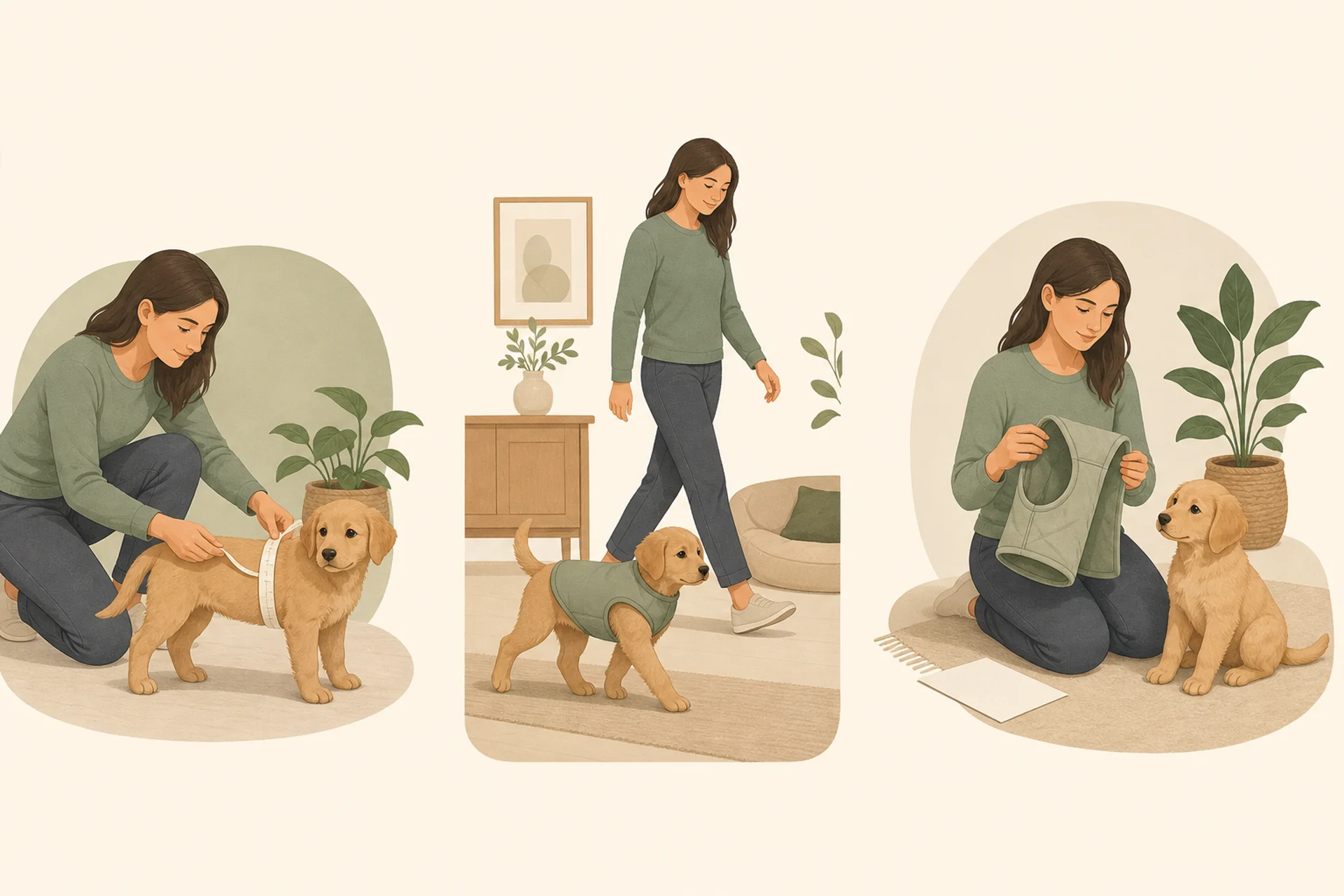
Have the puppy standing comfortably and follow the chosen manufacturer’s measuring instructions. VCA’s jacket-fitting guide uses back length and the widest chest circumference, with neck measurements where required. Brands differ. A size name or the puppy’s weight cannot replace that product’s chart.
Write the measurements and date down before comparing sizes. If the chest fits one size and the back another, send both measurements to the seller and ask about that exact cut. Buying the larger one without checking may simply exchange a tight chest for a loose neckline or dangling belly panel. It is reasonable to leave a model off the shortlist.
The AKC cautions against both restricted movement and clothing loose enough to entangle a dog. Apply that principle to a growing puppy: adjustable closures are useful only while the whole garment fits. They do not make an adult-sized body safe to wear now. There is no universal number of extra inches to add for growth.
A first-coat shopping checklist
- Chart: can you match all the dimensions the maker requests, without guessing from the breed?
- Closure: can you dress and undress the puppy calmly, following the instructions?
- Movement: can the puppy walk, turn and sit without fabric pulling, shifting or catching?
- Toilet clearance: does the actual garment leave the puppy’s usual toileting posture unobstructed?
- Lead connection: can you reach the proper collar or harness attachment? Do not assume a decorative clothing ring is a lead attachment.
- Care: can you wash and dry the garment as its label requires, and check its fit again before use?
This checklist is an editorial way to apply the sources’ fitting advice, not a safety certification. Try the coat with the walking equipment you actually use. If the coat and harness cannot both fit properly, choose another garment rather than improvising a connection.
Practise before the cold morning
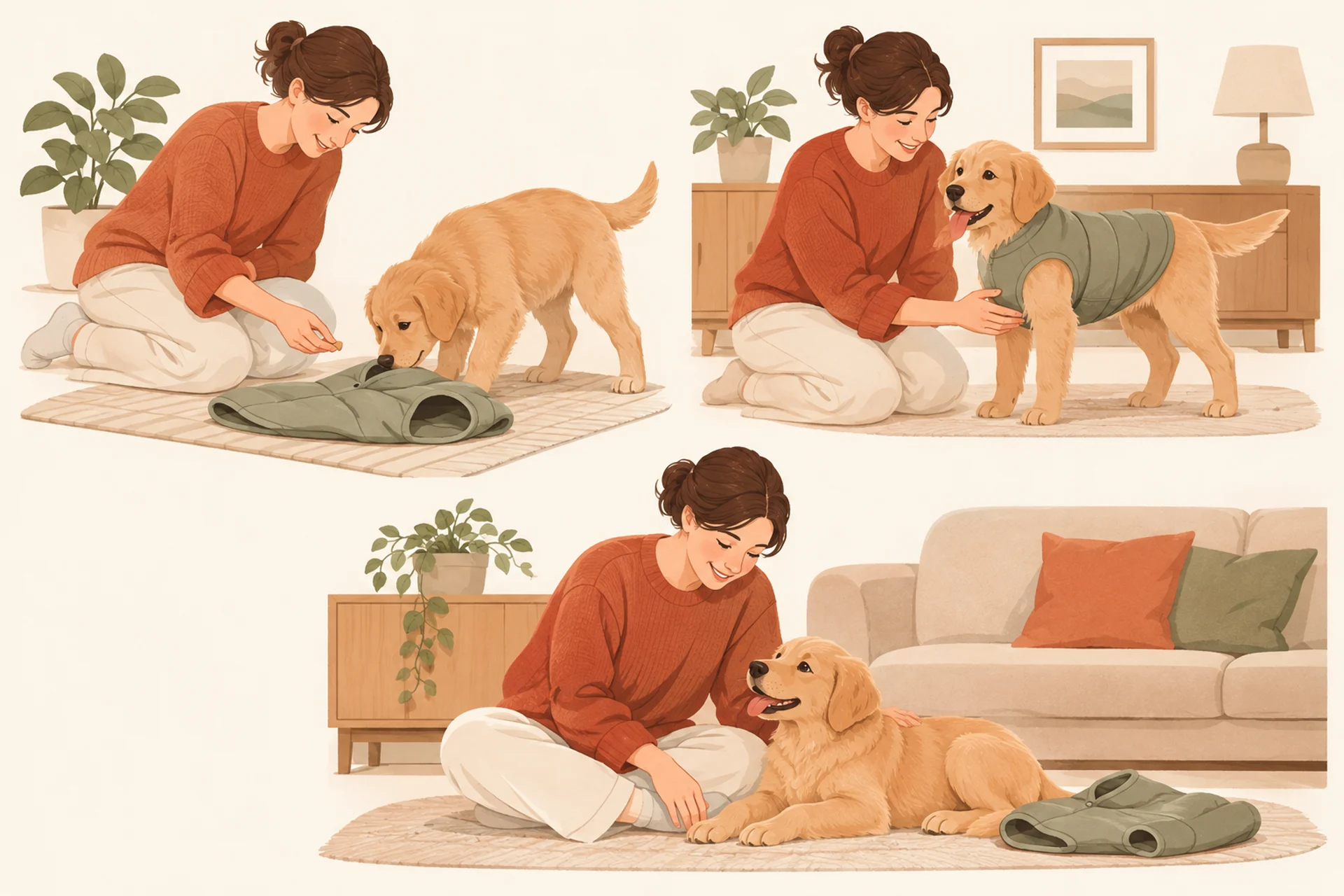
Do the first introduction in a quiet indoor space. The AKC’s positive introduction method starts with investigating the coat, then brief rewarded wear followed by removal. Build duration gradually. If the puppy pulls away or tries to remove it, return to an easier stage instead of holding them in place.
Keep the fitting and training questions separate. A puppy standing still might be uncertain, uncomfortable or simply pausing; stillness alone is not proof of a good fit. Remove the coat and inspect it before asking for more practice. Once comfortable, watch a few ordinary steps and a turn, then check that the garment stayed in position. Our coat try-on guide covers that check in more detail.
Recheck instead of buying a wardrobe
Keep a small note with the coat: measurement date, model, size, closure setting and anything that shifted during the trial. Before the next outing, check how it fits rather than trusting last time’s result. Remeasure when the fit changes, after a gap in use or before ordering another size. This is a practical shopping routine, not a prescribed growth timetable.
A hand-me-down deserves the same check as a new coat. Look at its condition and care label as well as its dimensions. If the garment no longer closes as intended, restricts movement or hangs loose, put it aside. Do not keep using it merely because the next size has not arrived.
Know when clothing stops being the answer
Cornell advises moving a dog into warmth and dryness for shivering, a hunched posture, lifted paws or reluctance to walk. These are reasons to end exposure, not instructions to add another layer and continue. Suspected hypothermia or frostbite needs immediate veterinary attention. A coat cannot tell you why a puppy is trembling or whether they are well.
VCA also warns that panting or drooling can accompany overheating in a jacketed dog. Remove an unnecessary layer and reassess the conditions; distress or ongoing abnormal behavior warrants veterinary advice. Specific decisions about an individual puppy belong with your veterinarian. This guide does not provide a diagnosis, treatment or a safe outdoor time limit.
Do puppies need coats in winter?
Some benefit from a coat, but the choice depends on the individual and conditions. Young age increases vulnerability even within breeds known for cold tolerance. Keep trips appropriate to the puppy and ask your veterinarian about individual limits.
Should I buy a puppy coat one size bigger?
Choose a coat that fits now. Do not buy excess length or loose openings as growing room. Use the maker’s current measurements and check movement; choose another cut if no size fits.
At what age should a puppy start wearing a coat?
The sources do not give a universal starting age. Weather, health, size, natural coat and the garment’s fit all matter. Ask your veterinarian about a very young puppy rather than treating an age label as permission for cold exposure.
How often should I replace a growing puppy’s coat?
Replace it when it no longer fits or functions properly, not on a fixed calendar. Check before use, keep dated measurements and reassess any pulling, shifting or awkward movement.
What if my puppy freezes when I put the jacket on?
Remove it and check comfort and fit first. If those are suitable, restart with brief, rewarded introductions. Do not drag the puppy along to make them get used to it.
Can a coat let my puppy stay outside longer?
Do not use clothing as a promise of extra outdoor time. Watch the puppy and conditions, retain access to warmth and end the outing when they are not coping. A veterinarian can help plan appropriate limits.
Sources
- American Kennel Club — Choosing a winter coat (checked 2026-11-13)
- Cornell University College of Veterinary Medicine — Winter safety tips (checked 2026-11-13)
- VCA Animal Hospitals — Choosing and fitting a dog jacket (checked 2026-11-13)
- American Kennel Club — Introducing winter clothes (checked 2026-11-13)
Check the current guidance and garment instructions. Discuss your puppy’s individual cold-weather needs with your veterinarian.