If your dog is shivering during or after a rainy walk, end the outing and move into a warm, dry place. Cornell lists shivering among signs that a dog is not tolerating the cold. It does not tell you the cause or severity by itself.
Weakness, disorientation, shallow breathing or collapse need immediate veterinary attention, according to Merck’s cold-weather guidance. Do not wait for shaking to start, stop or reach a particular duration before calling about those signs.
Most dogs that get rained on are fine once dried. Persistent trembling or a change in how your dog moves, breathes or responds deserves a veterinary call. A raincoat is optional equipment for a future wet walk; it cannot explain or treat today’s shaking. Specific decisions about your dog belong with your veterinarian.
First, describe what you mean by “shaking”
Was it a brief twisting movement that scattered water, repeated trembling while standing still, or repeated head shaking? Those descriptions are more useful than the single word “shaking.” If it is safe and does not delay care, record a short video for your vet. You do not need to label the movement yourself.
Notice when it began: outdoors in the rain, when thunder started, or after coming inside. Then describe what else changed. Could your dog walk normally? Were they responding to you as usual? Describe breathing in plain language rather than guessing a diagnosis.
A dog can be wet and frightened at the same time. Being indoors does not prove the problem was only cold, and hearing thunder does not prove the problem was only fear. Tell your vet both parts of the story instead of choosing one explanation before the call.
| What you notice after rain | What to do |
|---|---|
| Shivering or reluctance to continue a cold, wet walk | End the outing; move to a warm, dry area and reassess the whole dog. |
| Weakness, confusion, shallow breathing or collapse | Contact an emergency veterinarian immediately. Do not wait for a home drying routine. |
| Trembling with hiding, pacing or escape attempts during thunder | Provide a familiar safe indoor space; discuss recurrent or difficult storm distress with your vet. |
| Trembling continues, returns, or accompanies another change | Call your veterinarian and describe the timing and other observations. |
What to change before the next wet walk
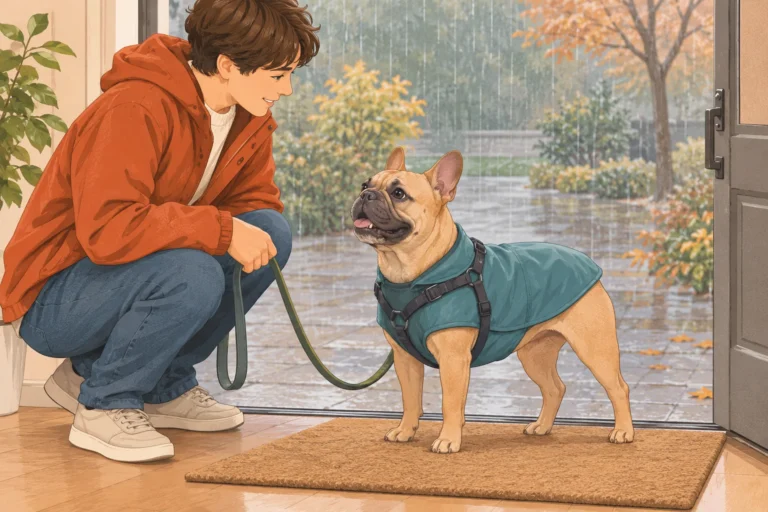
Once the current episode has been addressed, review the outing: how wet the dog became, how exposed the route was, and whether the dog was already reluctant to continue. An accepted rain jacket may reduce wetting on another walk. It does not make a longer outing safe or remove the need to turn home. Keep the equipment decision separate from the veterinary decision.
This is an action guide, not a way to diagnose hypothermia or anxiety. The emergency signs come from Merck; the storm-related observations come from Cornell’s guidance on noise fear.
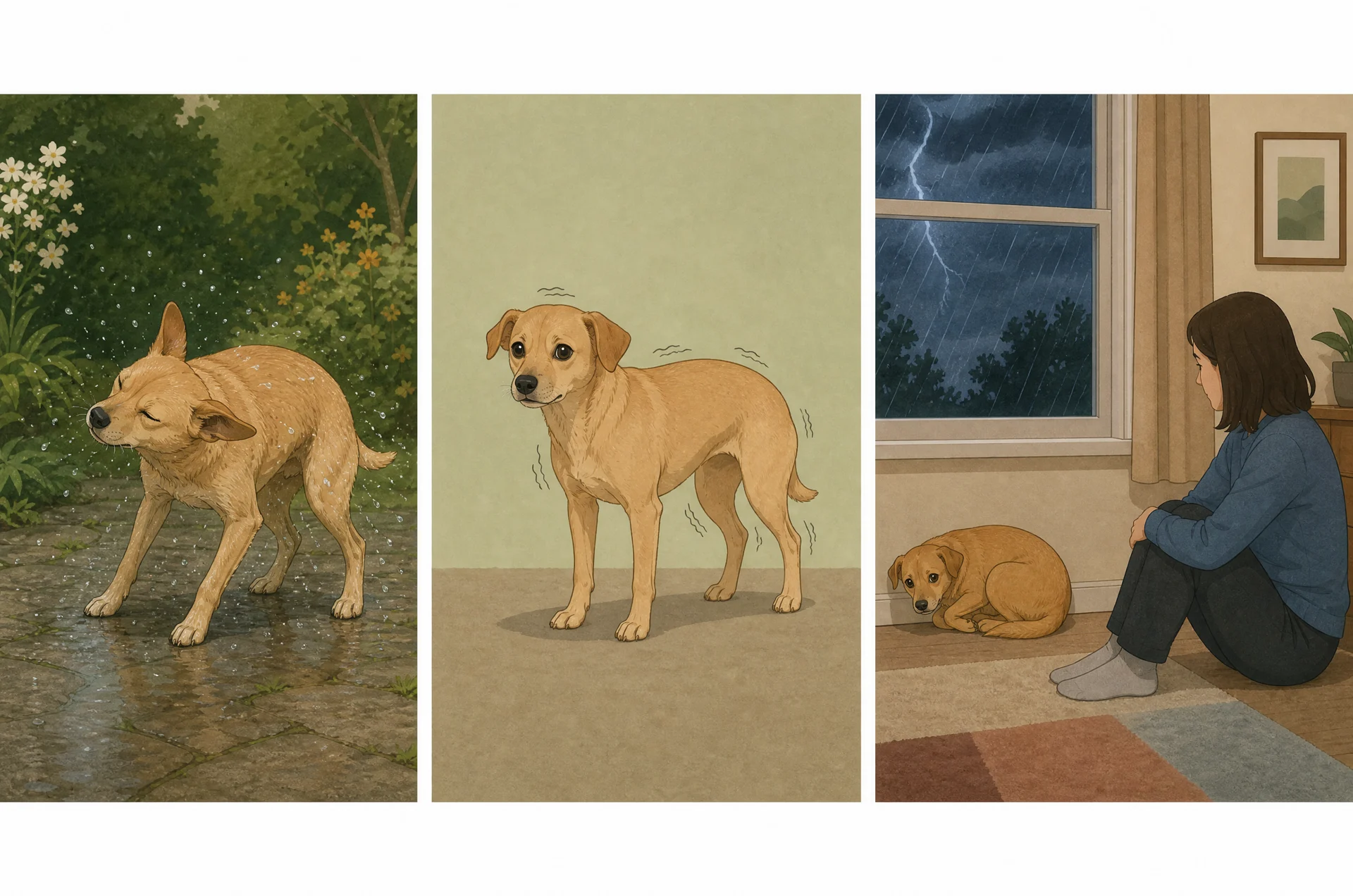
Do not use shivering as a home hypothermia test
Cold discomfort and an emergency are different decisions. Cornell advises getting a dog showing cold discomfort into a warm, dry area. Merck emphasizes weakness, disorientation, shallow breathing and collapse when discussing hypothermia. Neither source gives owners permission to rule out illness because a dog is or is not shaking.
Do not keep the dog outside to see whether they “get used to it.” If you suspect hypothermia, contact a veterinarian immediately and follow their instructions. This page does not provide a rewarming procedure, a body-temperature test or a wait-at-home interval.
Could the rainstorm itself be frightening?
Yes. Trembling, panting, pacing, hiding and attempts to escape can occur with noise fear. Cornell recommends a familiar quiet space and planning toilet breaks before storms. Keep a dog leashed if an outing is unavoidable, even in a fenced yard. Do not punish a frightened dog.
VCA notes that pelting rain, darkening skies, lightning and pressure changes can contribute to storm fear. That is a reason to discuss the pattern with your veterinarian, not proof that trembling is harmless. Training plans are best arranged before storm season; a downpour is not the time to force a practice session.
Drying is ordinary care; persistent symptoms need a call
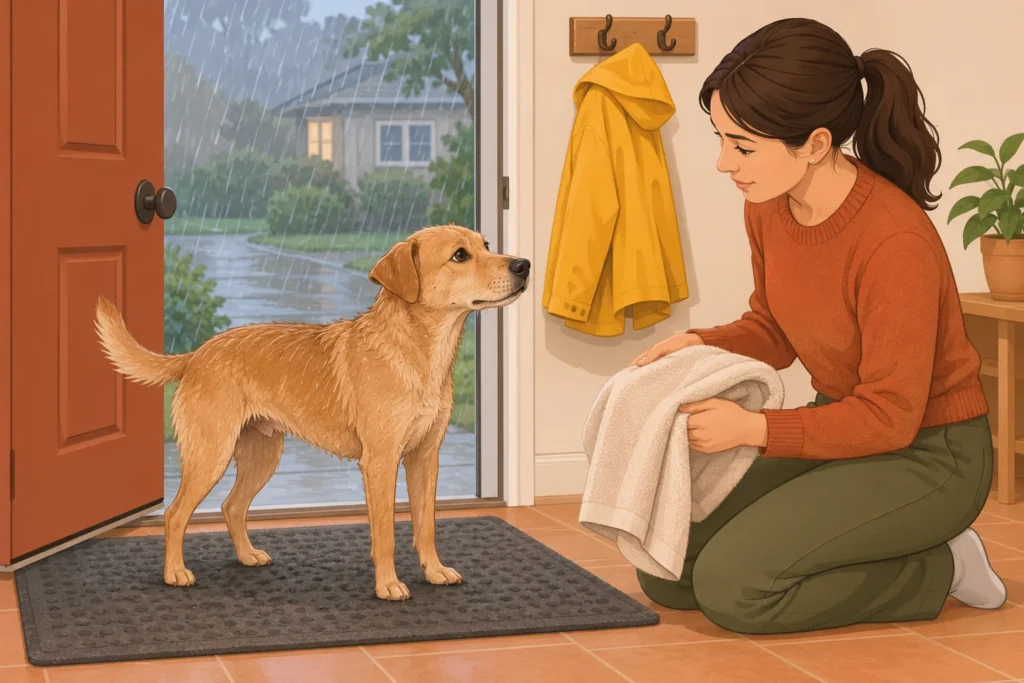
The ASPCA recommends toweling pets dry as soon as they come inside, paying attention to feet and between toes. For a comfortable dog after an ordinary wet walk, have a dry towel ready at the door. Do not let completing a grooming routine delay an urgent call.
For routine coat drying, see air drying after rain. For the wider questions about wet skin and contaminated water, see whether dogs can get sick from rain. Here, the concern is the new movement or behavior you are seeing now.
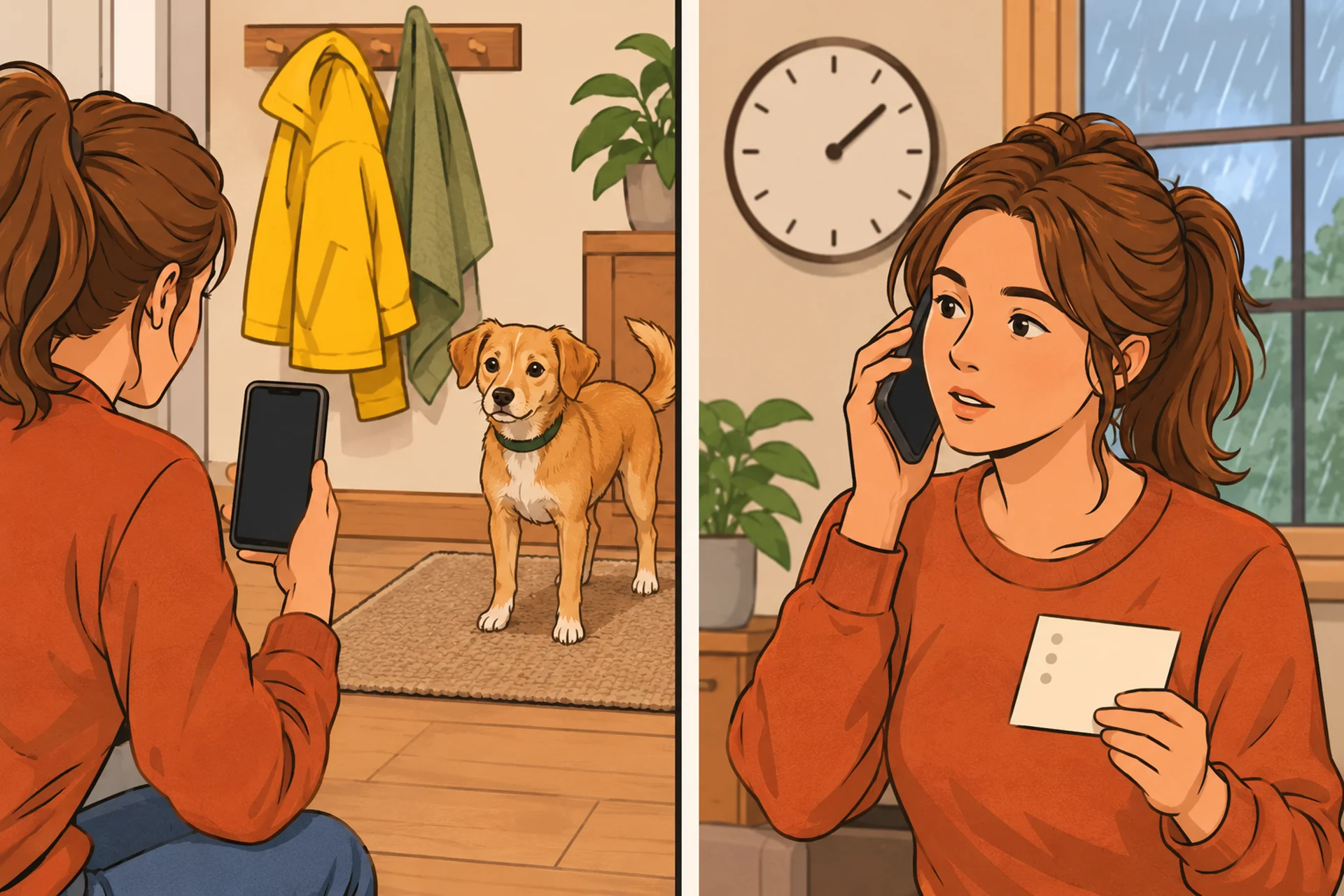
What to tell the veterinary team
- The exposure: when the walk began and ended, rain and wind, and whether the dog became soaked.
- The movement: continuous or intermittent, whole body or head, and whether it continues indoors.
- Other changes: walking, responsiveness and breathing; report what you actually observed.
- The background: age, known conditions and medications, plus anything the dog may have swallowed.
- The next step: ask whether the dog needs to be seen now and what to do while arranging care.
There is no universal number of minutes to wait after rain. If you are unsure whether a change is serious, make the call rather than trying to settle the diagnosis online.
Shivering after rain: FAQ
Is a wet-body shake the same as shivering?
Describe them separately: a brief twisting movement that throws off water is a different observation from ongoing trembling at rest. A video can help your vet understand what you mean, but it does not replace assessment when other warning signs are present.
Can my dog be cold even while wearing a raincoat?
A garment does not certify comfort or make an exposed outing safe. End a walk when your dog is struggling, and seek veterinary advice for persistent trembling or other concerning changes.
What if my dog stops shivering?
Look at the whole dog. Stopping alone does not establish recovery. Weakness, disorientation, shallow breathing or collapse still require immediate veterinary attention.
Should I wait until my dog is fully dry before calling?
No, not when there are warning signs or you suspect hypothermia. Call immediately; routine drying should not postpone care. Ask the veterinary team for instructions appropriate to the situation.
Could trembling during rain be fear?
Storm fear is one possibility, particularly with hiding, pacing or escape attempts. It is not a diagnosis you can make from rain alone. Tell your veterinarian about the pattern and any physical changes.
Does shivering mean my dog caught an infection from rain?
That sign alone does not identify a cause. Give your vet the exposure history and other changes rather than assuming either an infection or simple cold discomfort.
Written by Codex (OpenAI). General information for observing your dog and preparing a veterinary conversation; specific medical decisions require your own veterinarian.
Sources
- Cornell University College of Veterinary Medicine — Winter safety tips (checked 2026-11-12)
- Merck Veterinary Manual — Keeping Pets Safe During Cold Winter Months (checked 2026-11-12)
- Cornell University College of Veterinary Medicine — Fear of fireworks and thunderstorms (checked 2026-11-12)
- VCA Animal Hospitals — Treating Fear of Storms and Fireworks in Dogs (checked 2026-11-12)
- ASPCA — Cold Weather Safety Tips (checked 2026-11-12)