No — and the reason is not the weather outside, it is the rate inside. The American Veterinary Medical Association publishes the numbers: a parked car gains about 19°F in ten minutes, 29°F in twenty, 34°F in thirty and 43°F in an hour. The line that matters most is the footnote under the table — the rise is “basically the same, whether 70 or 110 degrees outside.”
That is why a mild autumn afternoon is more dangerous than it feels. Park on a 70°F day and after twenty minutes the cabin is near 99°F; after an hour it is over 110°F. AVMA also disposes of the thing most people are counting on: “cracking the windows makes no difference.”
Ten minutes is not a safe window. It is simply a shorter one.
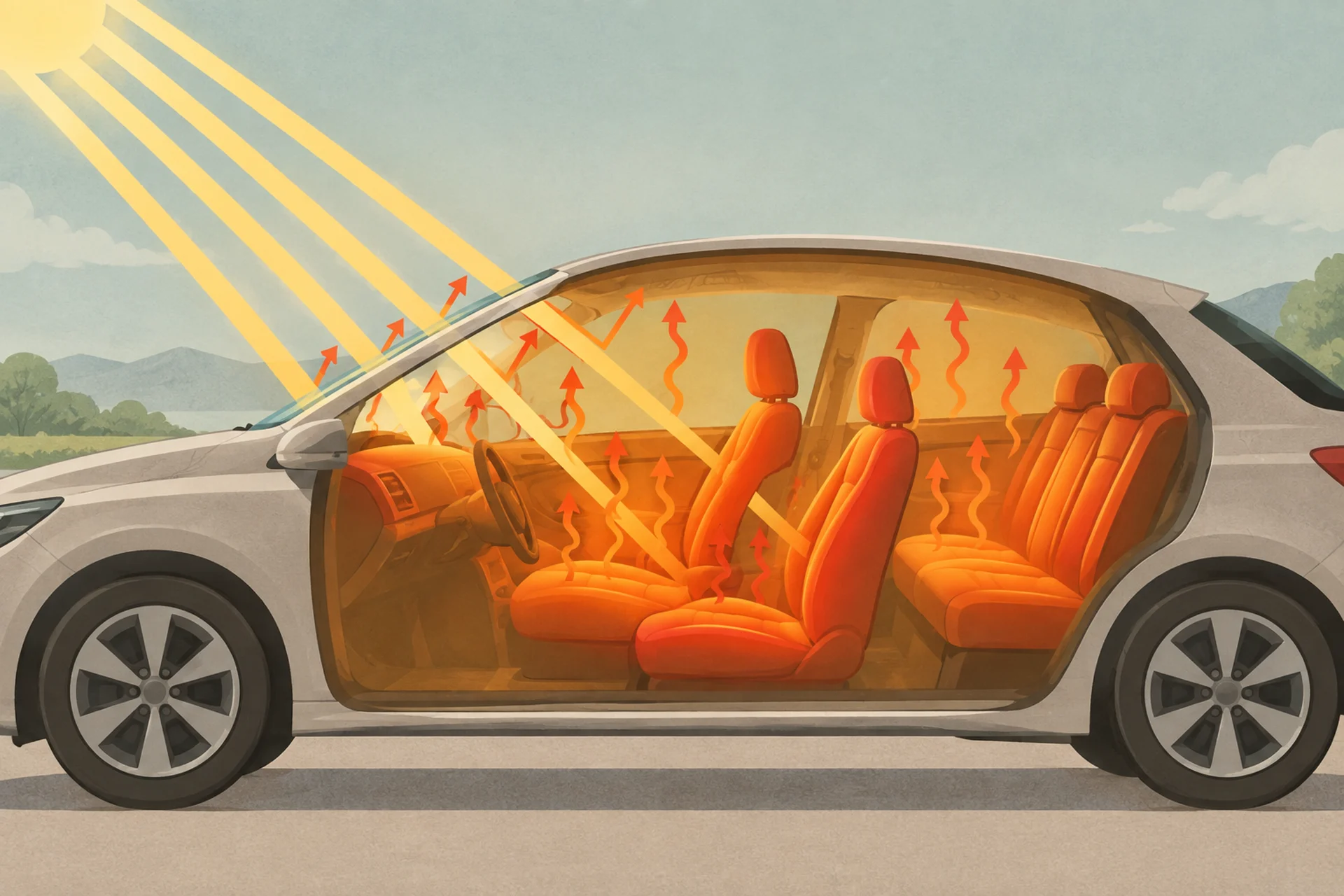
What is actually happening in there
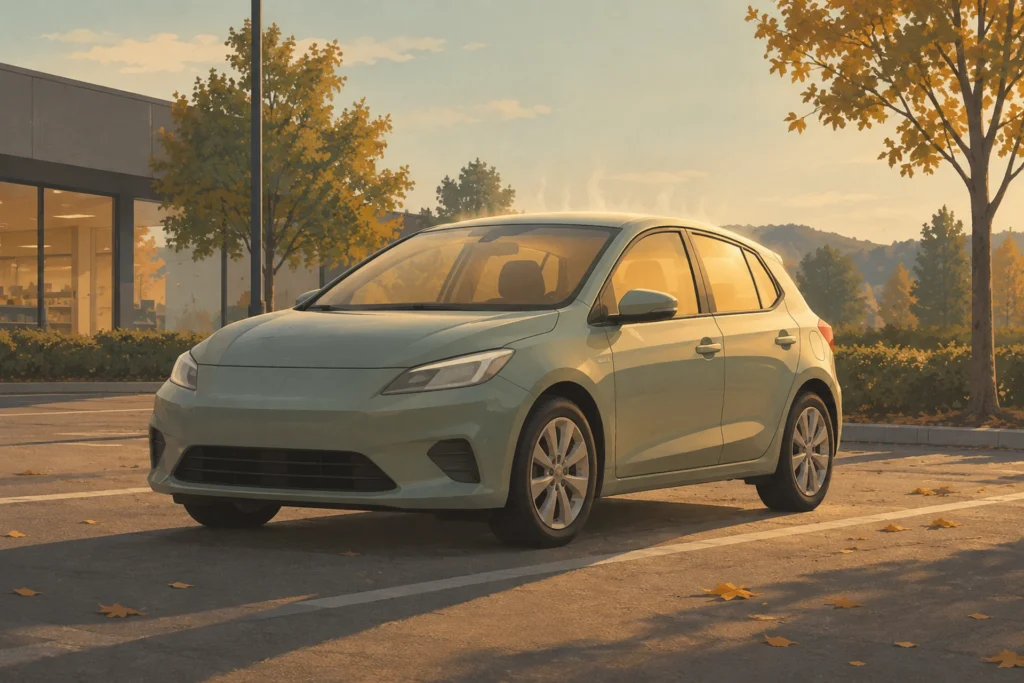
The National Weather Service explains the mechanism rather than just the warning. Short-wave radiation from the sun passes through the windows and strikes the interior. A dark dashboard or seat “can easily reach temperatures in the range of 180 to over 200°F.” Those surfaces then warm the trapped air by conduction and by long-wave radiation, which the glass does not let back out. In an NWS time-lapse demonstration, a car went from a safe temperature to an unsafe 94.3°F “in just over 2 minutes.”
This is why shade helps less than it looks like it should, and why a cracked window barely registers. Neither one removes the heat that is already being generated inside the cabin by objects the sun has been cooking.
The table people should actually be looking at
The first column is AVMA’s measured rise. The other two are that rise added to a starting temperature — arithmetic, not a separate study, and valid precisely because AVMA says the rise does not depend much on the outdoor temperature.
| Time parked | Rise inside (AVMA) | Cabin on a 70°F day | Cabin on a 85°F day |
|---|---|---|---|
| 10 minutes | +19°F | 89°F | 104°F |
| 20 minutes | +29°F | 99°F | 114°F |
| 30 minutes | +34°F | 104°F | 119°F |
| 60 minutes | +43°F | 113°F | 128°F |
| 1–2 hours | +45 to +50°F | 115–120°F | 130–135°F |
Read the 70°F column twice. That is a pleasant day in September, the kind of day nobody thinks of as hot, and half an hour in the supermarket puts the car above 100°F.
Three beliefs the numbers do not support
- “I cracked the windows.” AVMA is unambiguous that this makes no difference. NWS says leaving windows slightly open “does not significantly decrease the heating rate.”
- “It’s parked in the shade.” AVMA’s warning explicitly covers a car left in the shade. Shade moves; a car parked in it at 1pm is often in full sun by 1:40.
- “It’s only 70 degrees.” NWS lists fatalities on days when the outside temperature was 81°F, and notes that vehicle heatstroke deaths are not confined to summer.
The air conditioning question deserves an honest answer rather than a confident one. Neither source tests a running vehicle, so nobody should quote a number at you. What can be said is that an idling engine is a single point of failure — engines stall, compressors quit, a dog steps on a control — and AVMA’s own instruction carries no conditions at all: never leave a pet alone in a parked vehicle, “no matter what the outdoor temperature or how long you think you’ll be gone.”
What early trouble looks like
A dog’s normal rectal temperature is about 101.5–102°F, per the Merck Veterinary Manual. The signs it lists for heat stroke are hot skin, vomiting, drooling, rapid panting, distress, uncoordinated movement, collapse or unconsciousness. Merck also makes a point worth carrying around: some breeds, short-nosed ones especially, “can overheat from stress or excitement even on cool days” — so the dog who panics at being left is running a higher starting temperature than the dog who sleeps.
Heat stroke is an emergency, not a wait-and-see. If you see those signs, get to a veterinarian or emergency clinic immediately and call them on the way so they are ready. What to do en route is a decision for the vet on the phone, not for an article — and afterwards, whether your dog can travel the way you had planned is a conversation with your own vet.
Cold counts too
The same AVMA page is just as direct in the other direction: leaving a pet in a vehicle on a chilly day “isn’t much better than leaving them outdoors,” and pets that are young, old, ill or thin are particularly susceptible and should never be left in cold cars. A car is not insulated. It holds cold as faithfully as it traps heat, and it does it overnight in a motel car park while you sleep.
Someone may legally break your window
This surprises people, so it is worth reading the actual statute rather than the rumour. California’s Penal Code § 597.7 makes it an offence to leave an animal in an unattended vehicle in conditions that endanger it through heat, cold or lack of ventilation — and then shields a bystander from criminal liability for forcing entry, provided they do all six of the following:
- Determine the vehicle is locked and there is no other reasonable way to get the animal out.
- Hold a reasonable, good-faith belief the animal is in imminent danger.
- Contact law enforcement, the fire department, animal control or 911 before breaking in.
- Stay with the animal nearby, out of the elements, until a responder arrives.
- Use no more force than necessary.
- Hand the animal over to the responder on scene.
A first offence in California carries a fine of up to $100 per animal, rising to $500 and up to six months in county jail if the animal suffers great bodily injury. Other states have their own versions and some have none; the details differ enough that “is it illegal here?” is a question for your own state’s code. But the practical point transfers everywhere: a stranger in a car park may not owe you the benefit of the doubt.
What to do instead
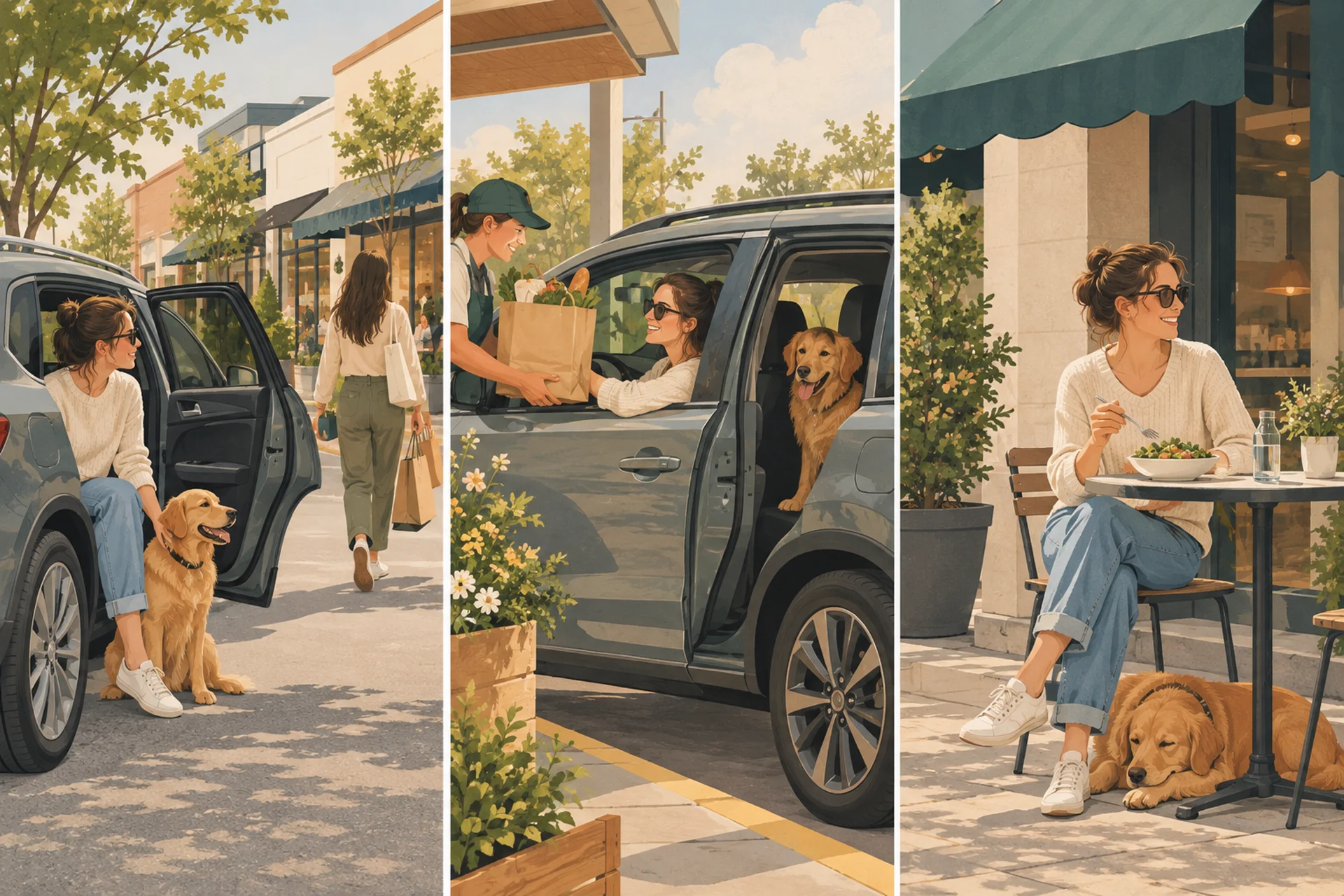
- Tag-team. Two adults, one stays with the dog, and the stop takes the same time it always did.
- Curbside and drive-through. Pickup-to-car exists for exactly this errand, and it is the single highest-value habit for anyone who travels with a dog.
- Eat outside. Patios are a genuine option in many states now, with conditions — we went through which ones and why the patio entrance matters in can I bring my dog into stores.
- Plan the stops, not the mileage. A route built around places you can both get out of the car beats a route built around distance; how often to stop on a road trip covers the rhythm.
- Leave them home. Not every errand is an outing. This is the answer more often than the internet likes to admit.
And if the reason the dog is in the car is that they are dressed for weather you have since driven out of, take the layer off before you park — a coat is insulation working in whichever direction the cabin is going, which is the trade-off we mapped in do dogs overheat in coats.
Is 10 minutes safe to leave a dog in the car?
No. AVMA’s figure for ten minutes is a rise of about 19°F, which on a 70°F day puts the cabin near 89°F and on an 85°F day above 100°F. Their instruction carries no time exception at all.
What temperature is safe to leave a dog in the car?
There isn’t a published safe outdoor temperature, because the rise inside is roughly the same whether it is 70°F or 110°F outside. Deaths have occurred on days in the low 80s.
Do cracked windows help?
Not meaningfully. AVMA says cracking the windows makes no difference; the National Weather Service says slightly open windows do not significantly decrease the heating rate.
Is it OK with the air conditioning running?
No authority tests that case, so treat anyone quoting a number with suspicion. The honest objection is that it depends on an engine and a compressor continuing to run unattended, and AVMA’s guidance is unconditional.
What about winter — is a cold car safer?
No. AVMA says leaving a pet in a vehicle on a chilly day isn’t much better than leaving them outdoors, and that young, old, ill or thin pets are especially at risk.
Can someone legally smash my window to get my dog out?
In California, yes — a bystander is protected from criminal liability if they call authorities first and meet five other conditions in Penal Code § 597.7. Other states vary, so check your own.
Sources
- American Veterinary Medical Association — Pet safety in vehicles (checked 2026-09-15) — the temperature-rise table (19°F at 10 minutes through 45–50°F at 1–2 hours), the footnote that the rise is basically the same at 70°F or 110°F outside, “cracking the windows makes no difference,” the shade warning, the cold-weather warning and the vulnerable groups, and the unconditional instruction never to leave a pet alone in a parked vehicle.
- National Weather Service — Children, Pets and Vehicles (checked 2026-09-15) — the short-wave/long-wave mechanism, dashboards reaching 180 to over 200°F, the time-lapse demonstration reaching 94.3°F in just over two minutes, slightly open windows not significantly reducing the heating rate, and fatalities on days as mild as 81°F.
- Merck Veterinary Manual — What to Do in a Dog or Cat Emergency (checked 2026-09-15) — normal rectal temperature of 101.5–102°F, the list of heat stroke signs, the note that short-nosed breeds can overheat from stress or excitement even on cool days, and that heat stroke is an emergency requiring a veterinarian.
- California Penal Code § 597.7 (checked 2026-09-15) — the prohibition on leaving an animal in an unattended vehicle in endangering conditions, the six conditions under which a bystander who forces entry is not criminally liable, and the fine and jail provisions.
Veterinary guidance and state law change, and nothing here replaces advice from your own veterinarian. Confirm on the official page, and call a vet about your specific dog.
The car doesn’t care what the forecast says.
It gains about twenty degrees in ten minutes and forty in an hour, on a mild day the same as a hot one, with the windows cracked the same as shut. So the plan is never “I’ll be quick” — it is a second person, a curbside slot, a patio, or the dog stays home.