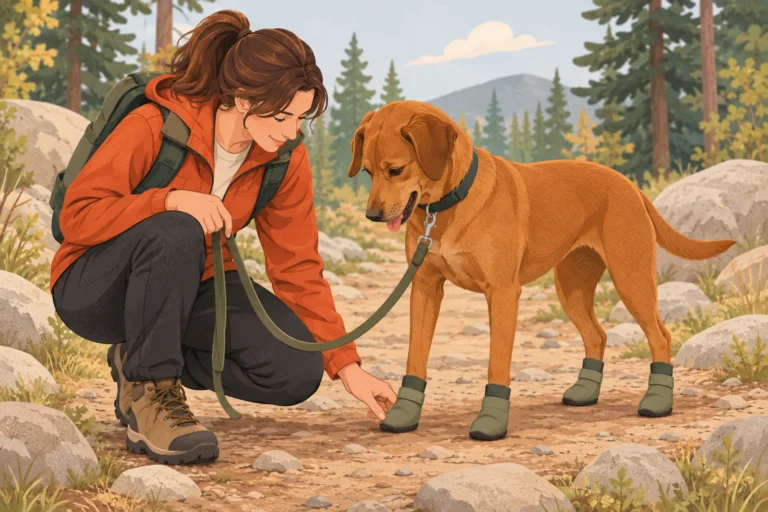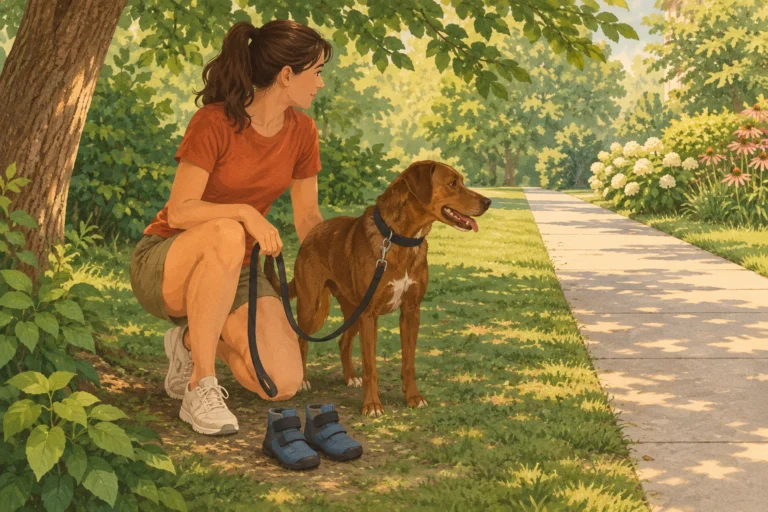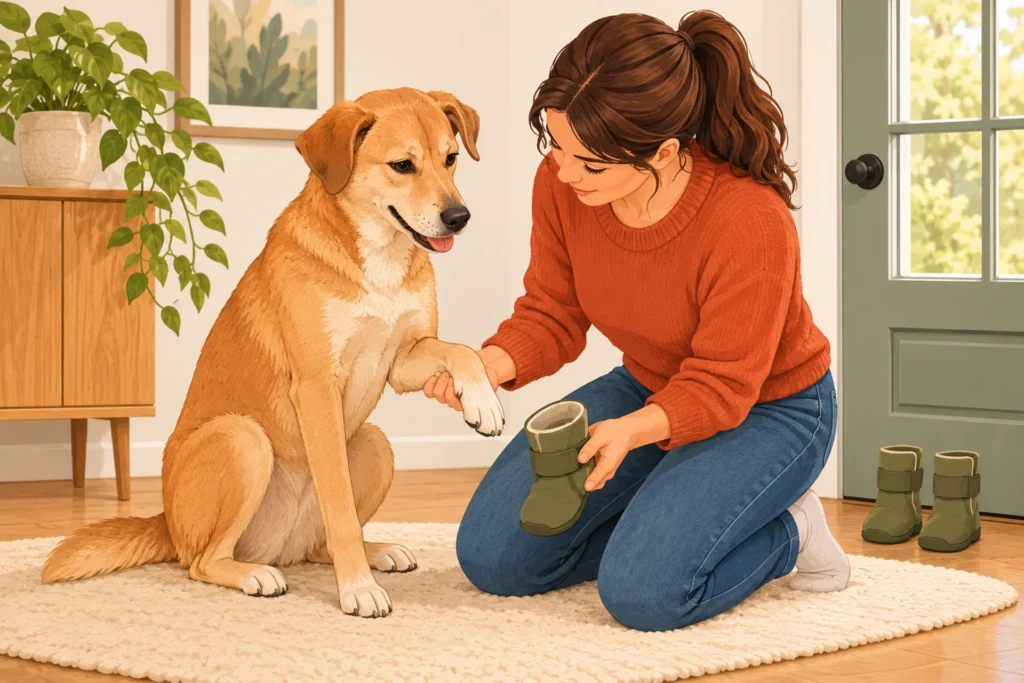
When choosing dog boots for dew claws, check where the cuff and fastening sit, as well as the paw measurement. A size chart cannot show how a particular boot will sit on your dog’s leg. The AKC recommends an indoor trial that checks fit, slipping and discomfort; apply that check to the dewclaw area too.
There is no universal cuff height or strap position prescribed by the sources below. This is a practical shopping checklist, not a medical test or a claim that one boot design suits every dewclaw. If a nail is injured or the area is sore, ask your veterinarian before trying another boot.
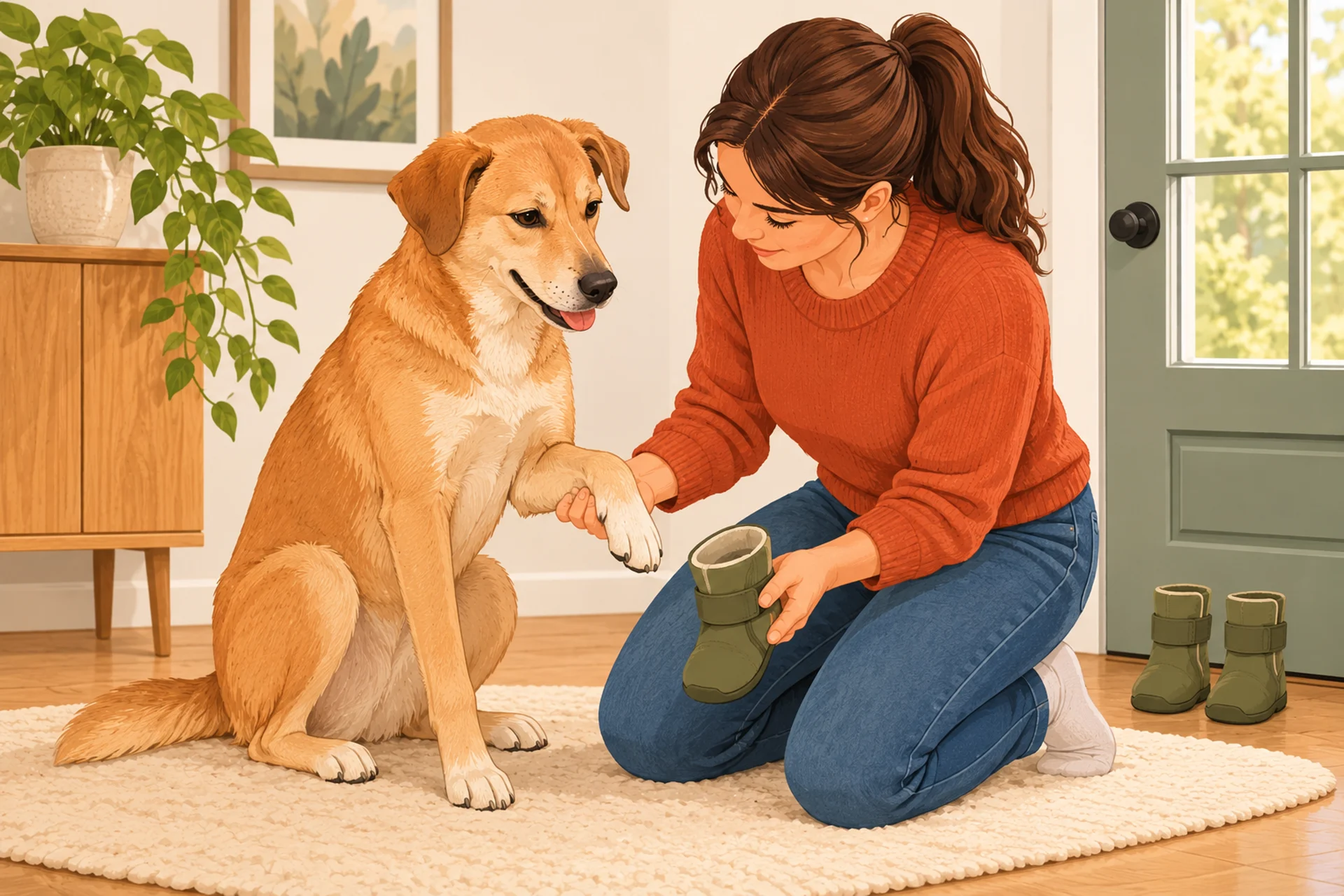
The part a paw-width chart leaves out
The AKC describes dewclaws as extra nails usually found on the front legs, and sometimes the hind legs. They may be hidden by fur. Find yours before shopping rather than assuming the front and back legs have the same arrangement.
It helps to separate two questions: does the foot fit the sole, and does the upper fit the leg? A seller may provide detailed paw measurements but no view of the inside seam or closed cuff. That does not establish a problem with the boot; it means you still have a question to ask. A photograph showing only the sole cannot answer both questions.
| Before buying | What to request | What remains to check on your dog |
|---|---|---|
| Paw sizing | The model’s measuring method and size chart | How each paw sits inside the boot |
| Cuff and fastening | A side view with the boot closed | Where the closure lands relative to the dewclaw |
| Interior | A clear photograph of the lining and seams | Whether anything catches or feels uncomfortable |
| Extra layers | Whether the maker specifies a liner | Fit with that exact combination, rather than an improvised one |
| Return conditions | Whether a clean indoor trial is allowed | That you can assess fit before an outdoor commitment |
Start with a healthy, comfortable foot
Dewclaws need attention even when the other nails appear short. They usually do not contact the ground, so walking does not wear them down in the same way, according to the AKC’s dewclaw guidance. Arrange routine nail care with someone competent if you are unsure; do not make an overdue trim part of a rushed boot fitting.
A broken nail is a different situation. VCA explains that a nail contains sensitive living tissue and that a break can be painful and bleed. A boot is not permission to continue a walk on an injured nail. This guide does not cover trimming a damaged claw, dressing a wound or treating an infection.
Measure the foot, then ask about the upper
Use the particular maker’s instructions. For its general measuring example, the AKC traces a paw pressed onto paper and measures the widest part. A boot chart may request additional measurements, so do not substitute a breed name or body weight for what that chart actually asks.
Then send a separate fit question: “My dog has dewclaws on these legs. Can you show where this model’s cuff and closed strap sit, and its interior?” A side photograph of your dog’s unbooted leg may help the maker understand the question. You need an explanation of this model, not simply reassurance that it is popular with your breed.
Ask about any liner at the same time. Do not assume a sock, wrap or added padding will solve an uncomfortable fit. If the boot only seems usable after an improvised alteration, pause and get advice about another size, another design or whether footwear is appropriate at all.
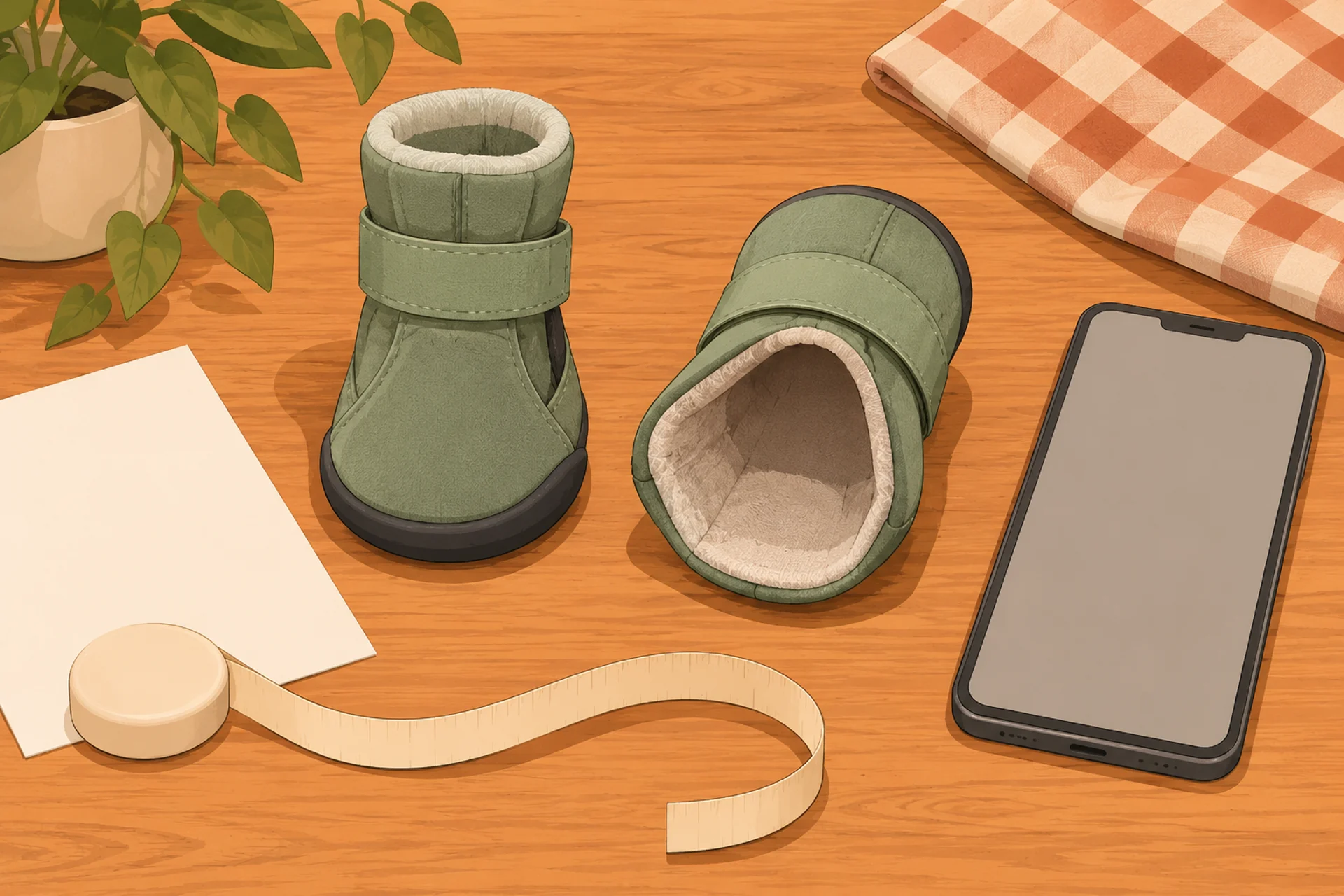
Make the first trial an observation, not a walk
Do the clean indoor trial before planning a long outing. The aim is to answer the unanswered fit questions while stopping is easy. Our general guide to boots that slip or fall off covers the broader sizing problem; here, pay particular attention to the leg around each dewclaw.
- Look before fitting. Note which legs have dewclaws and whether the dog is comfortable with gentle handling. Pain or a damaged nail belongs with your vet.
- Follow the model’s fitting directions. Avoid deciding from a photograph that a strap should sit above or below every dog’s dewclaw.
- Observe a short indoor trial. Look at the whole dog: movement, willingness to continue and whether the boots stay positioned.
- Remove the boots and look again. Note any new redness, tenderness or repeated attention to the same spot. Stop rather than declaring it normal “breaking in.”
- Record what you saw. Tell the maker which foot and which part of the boot were involved. Persistent soreness needs veterinary advice.
Familiarization and fit are separate questions. A dog may need time to get used to footwear, but that is not a reason to continue through discomfort. Change one thing at a time so you can tell whether a different size or model actually addresses what you observed.
Keep the job of the boots in view
There should be a reason for wearing them. The ASPCA describes booties as a way to reduce contact with salt and winter chemicals, and advises washing and drying feet after walks and checking for redness or cracks. It does not certify a particular closure as suitable for dewclaws.
For a recreational outing, a shorter or different route is an option while you work out fit. If footwear was prescribed to protect an injury, ask the treating clinic what to use instead; do not replace its instructions with this shopping checklist. For the broader trade-off, see what we know about dog boots and gait.
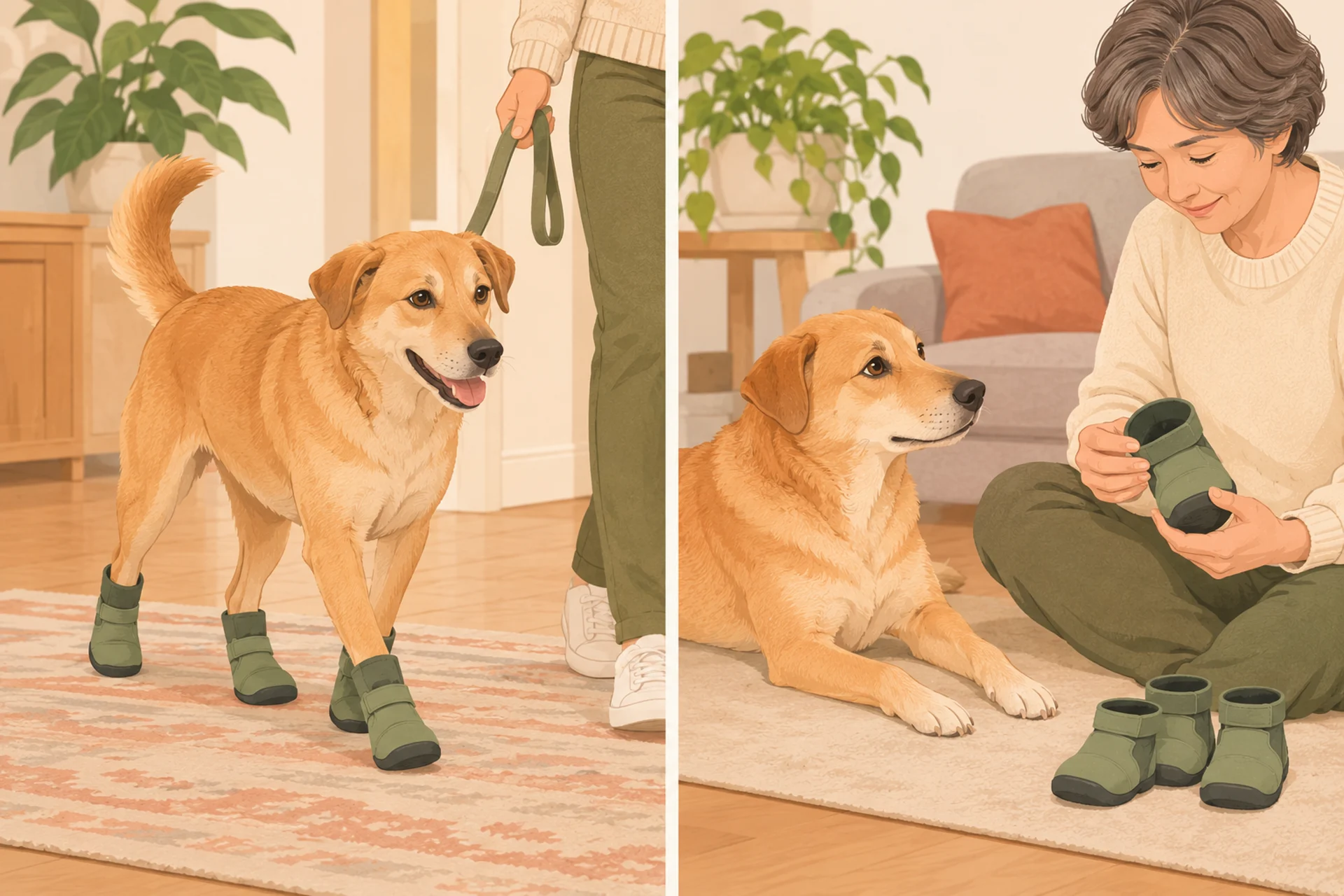
Dog boots and dewclaws: FAQ
Which dog boots are best for dew claws?
No single model is established here as best. Request cuff, closure and interior details, then assess the actual fit on your dog. A “dewclaw friendly” label does not replace that trial.
Should the boot strap go above or below the dewclaw?
Follow the specific model’s instructions and ask the maker if its position is unclear. The sources cited here do not prescribe one position for every boot and dog.
What if dog boots rub the dewclaw area?
Remove them and stop the trial. Note the location and ask about fit or a different model. Contact your vet for soreness, bleeding, a damaged nail or continuing lameness.
Will socks or tape fix the problem?
Do not assume so. Ask about a manufacturer-specified liner and its sizing requirements. Do not tape a claw into position or improvise a dressing to keep walking; ask your vet about an injured foot.
Do rear dewclaws need checking too?
Yes. Check every leg rather than assuming a front-paw fitting answers the rear-paw question. Some dogs have rear dewclaws, including double dewclaws.
When should a vet check the foot?
Contact your veterinarian for a broken or bleeding nail, pain, swelling, persistent licking or limping. Specific decisions about your dog’s foot and protective footwear belong with your vet.
Sources
- American Kennel Club — Choosing the Right Dog Boots or Shoes for Your Dog (checked 2026-11-08). General measurement, indoor fit trial and monitoring for discomfort.
- American Kennel Club — What Are Dog Dewclaws? (checked 2026-11-08). Location, variation and routine nail care.
- VCA Animal Hospitals — First Aid for Broken Nails in Dogs (checked 2026-11-08). Why nail damage is painful and needs attention; treatment instructions are not reproduced here.
- ASPCA — Winter Paw Protection (checked 2026-11-08). Reduced contact with winter contaminants and post-walk checks.
This is general shopping and observation guidance, not diagnosis or treatment. Ask your veterinarian about an injured, painful or persistently irritated foot.