If your dog ate a slug and there was no slug bait anywhere nearby, it is usually not an emergency in most of North America, but it is worth a call to your vet. The parasite most articles warn about, the “French heartworm” Angiostrongylus vasorum, is mainly found in continental Europe, Africa and South America. In North America, the Companion Animal Parasite Council says it has been found in the Atlantic provinces of Canada. Two other slug-borne worms are worth knowing about: the fox lungworm, and rat lungworm in Hawaii.
Slug bait is a different story, and it is an emergency. Metaldehyde, the active ingredient in many slug and snail baits, can cause signs within a few minutes and up to three hours after a dog eats it. If there is any chance your dog got into bait, call your vet or a poison line now. Don’t wait for symptoms.
This is general information for the walk home, not a diagnosis. Your veterinarian knows what is circulating where you live, and that is the call that matters.
Why this comes up after rain
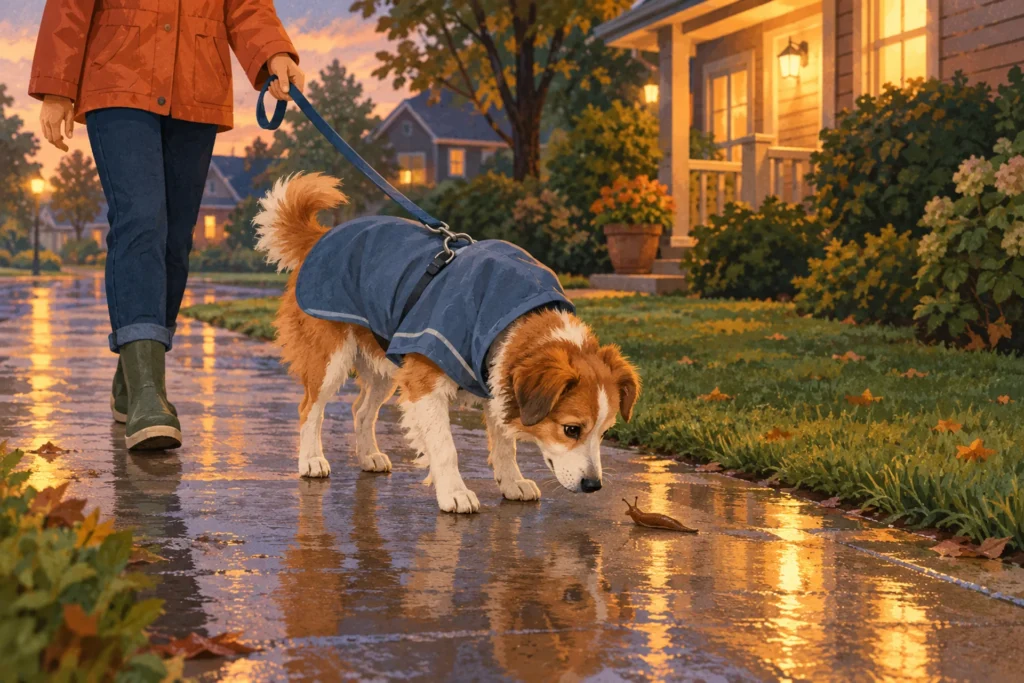
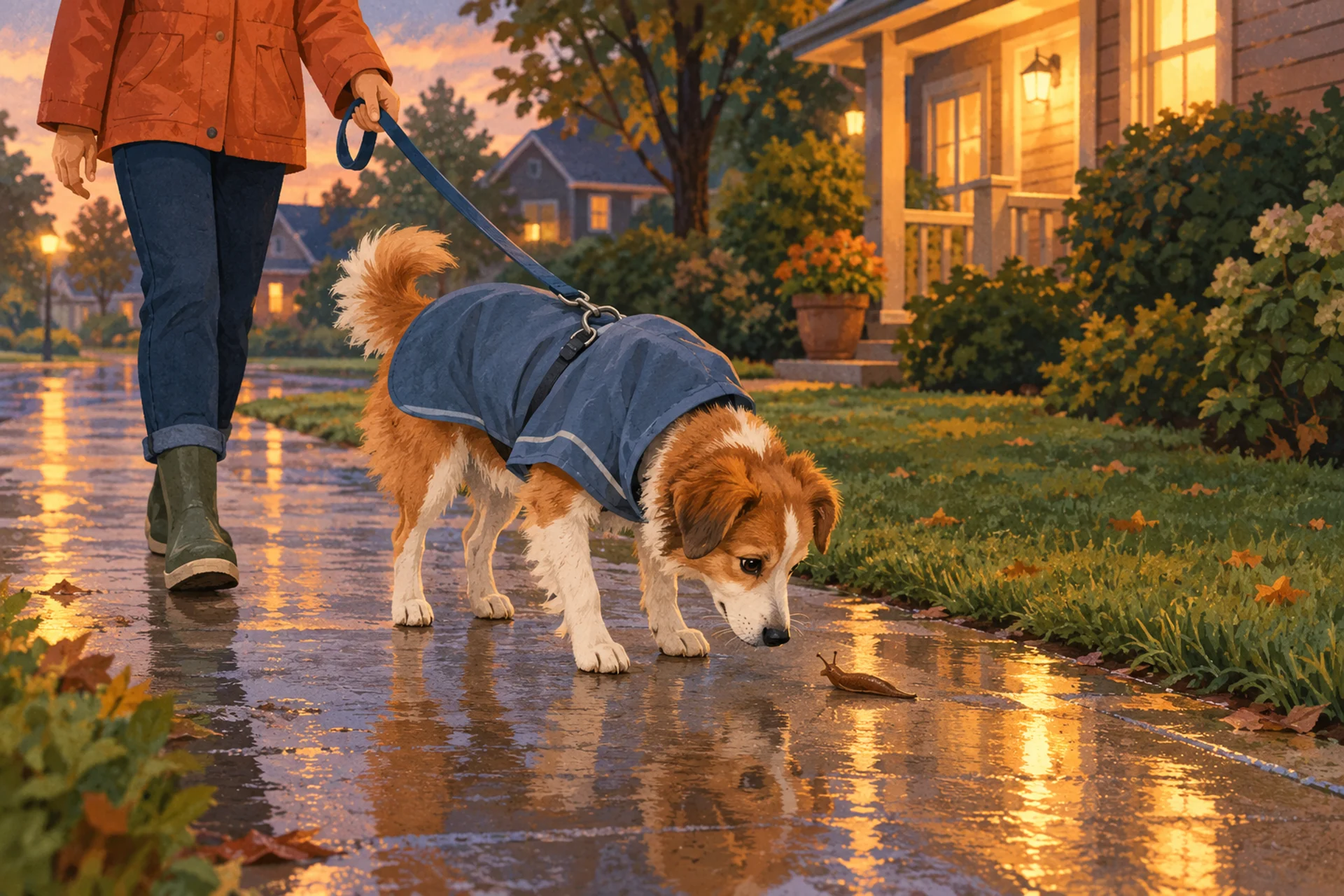
Most people only notice slugs on damp evenings, and that is not their imagination. University of California pest specialists note that snails and slugs are most active at night and on cloudy or foggy days, and hide during the day. A wet autumn walk after dark puts a curious nose right where they are.
The same rainy season is when gardeners put bait down. That overlap is why the question “my dog ate a slug” really contains two questions: did the dog eat a slug, and did it eat anything a slug was supposed to eat?
Two different risks, two different clocks
| The slug itself | Slug and snail bait | |
|---|---|---|
| What the concern is | Parasites the slug may carry (lungworms) | Poisoning, most often from metaldehyde |
| How fast it shows | Not in hours. Watch for a new cough or weight loss later on | Fast. VCA says signs generally appear within minutes to three hours |
| How likely in North America | Depends heavily on where you live (see below) | Anywhere bait is used, in gardens, along walkways, in a neighbor’s flower bed |
| What to do | Tell your vet, ask whether testing or prevention makes sense where you live, and watch for coughing | Call your vet or a poison line immediately |
Slug bait: the part that can’t wait
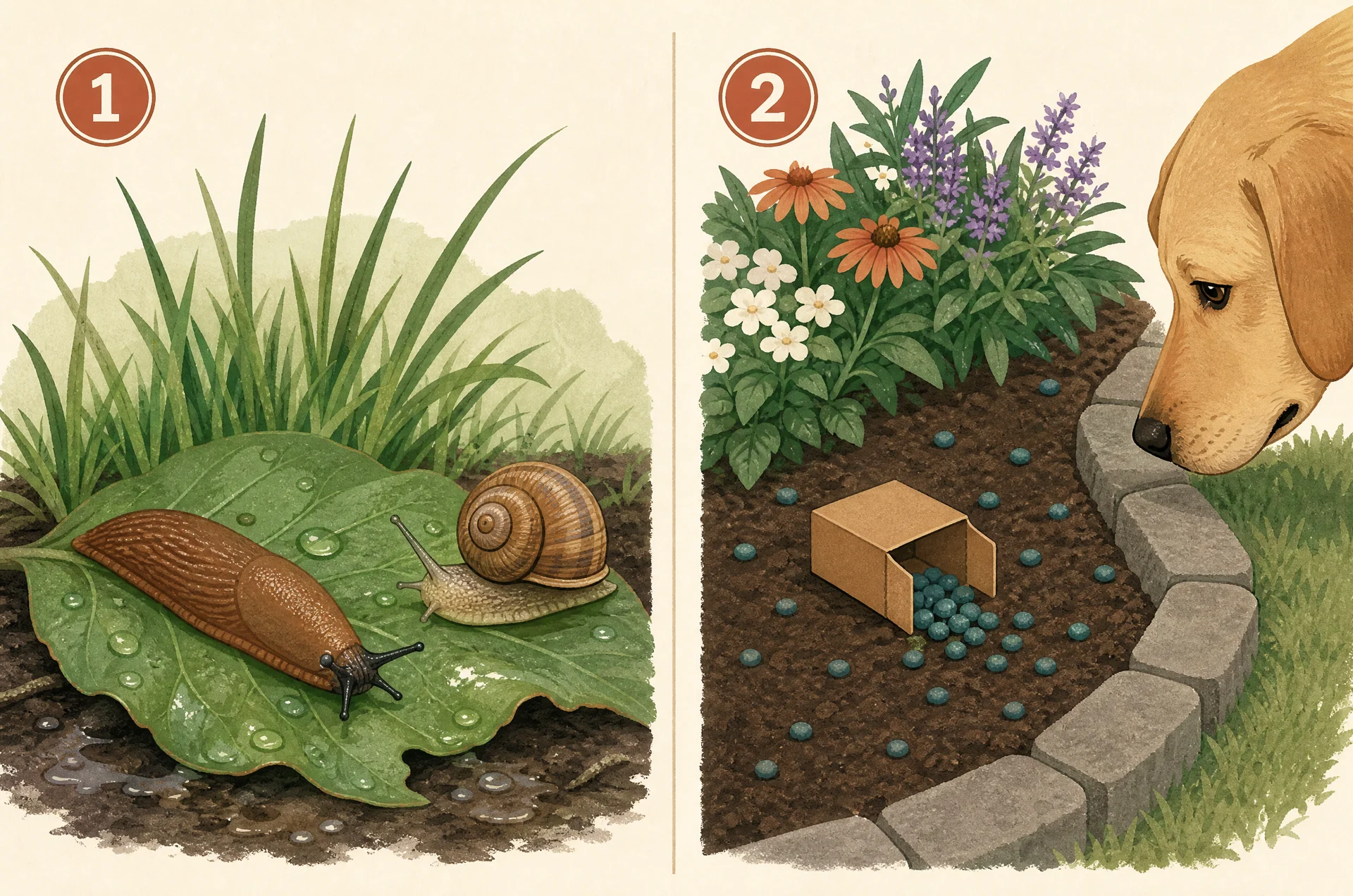
Bait is made to be eaten. VCA notes that many slug and snail baits contain bran or molasses to attract slugs, which makes them tasty to other animals, and that they come in pellets, granules, liquids, gels and more. The UC pest guide puts it bluntly: metaldehyde baits are particularly poisonous to dogs and cats, and the pelleted form can be attractive to dogs.
According to VCA, early signs can include drooling, vomiting, panting and anxiety, and can progress to unsteady walking, tremors, seizures and a dangerously high body temperature. Its advice is to call your veterinarian or Pet Poison Helpline immediately, because “there is no time to delay.” The same page is also clear that many pets recover within two to three days when treatment starts early, which is the whole reason to move quickly.
- Look before you leave the spot. Pellets or granules on the soil, an open box or bag, a garden bed that looks freshly treated.
- Call while you head in. Your vet, or a 24/7 animal poison line: ASPCA Animal Poison Control at (888) 426-4435, or Pet Poison Helpline at 1-800-213-6680 as listed by VCA. Both charge a consultation fee.
- Bring the package if it’s yours, or a photo of the label. The active ingredient changes the advice.
- Don’t try home remedies. Follow what the vet or poison line tells you, and nothing else.
If you use bait yourself, VCA advises against metaldehyde baits anywhere pets can reach, and notes the product may stay active in soil for several weeks. UC lists iron phosphate baits as safer around dogs, children and wildlife. Safer is not the same as harmless, so if your dog eats any bait, call anyway.
The slug itself: lungworm, and where it actually lives
Search results for this question are dominated by UK pages, and the UK has a real lungworm problem. North America mostly does not, but there are three worms worth knowing about.
| Parasite | Where it matters in North America | What it does |
|---|---|---|
| Angiostrongylus vasorum (“French heartworm”) | The CAPC says it has been found in the Atlantic provinces of Canada; it is mainly a European, African and South American parasite | Lives in the heart and lung blood vessels. CAPC lists gagging and weight loss as the most common signs, plus coughing, trouble breathing, tiring easily and poor appetite |
| Crenosoma vulpis (fox lungworm) | Ask your vet about your area; Merck does not give a range | The Merck Veterinary Manual says dogs get it by eating an infected land snail or slug, and that it causes coughing and difficult breathing |
| Angiostrongylus cantonensis (rat lungworm) | Hawaii, where the state health department says infected snails and slugs have been identified on all of the islands; the CDC notes infections have also been identified in the United States | Affects the brain and spinal cord. Hawaii’s health department lists published reports of documented canine cases on the islands |
The CAPC’s summary of A. vasorum is that dogs pick it up by eating the slug or snail that carries the larvae, and that frogs can carry it too. It also says something many owners don’t expect: routine preventives are probably not protective against these parasites, and early diagnosis matters because untreated infections can be fatal. So if you live in Atlantic Canada, or in Hawaii, mention a slug-eating dog to your vet rather than assuming the monthly pill has it covered.
What about licking a slug, or the slime trail? It is one of the most common versions of this question, and we did not find a North American veterinary source that puts a number on that risk. The sources we checked describe infection from eating the slug or snail. If your dog only licked one and you live outside the areas above, that is a reasonable thing to mention at the next visit rather than a reason to panic. If a dog that mouthed a slug starts drooling heavily, vomiting, shaking or wobbling, treat it as a possible bait exposure and call.
What to do next, in order
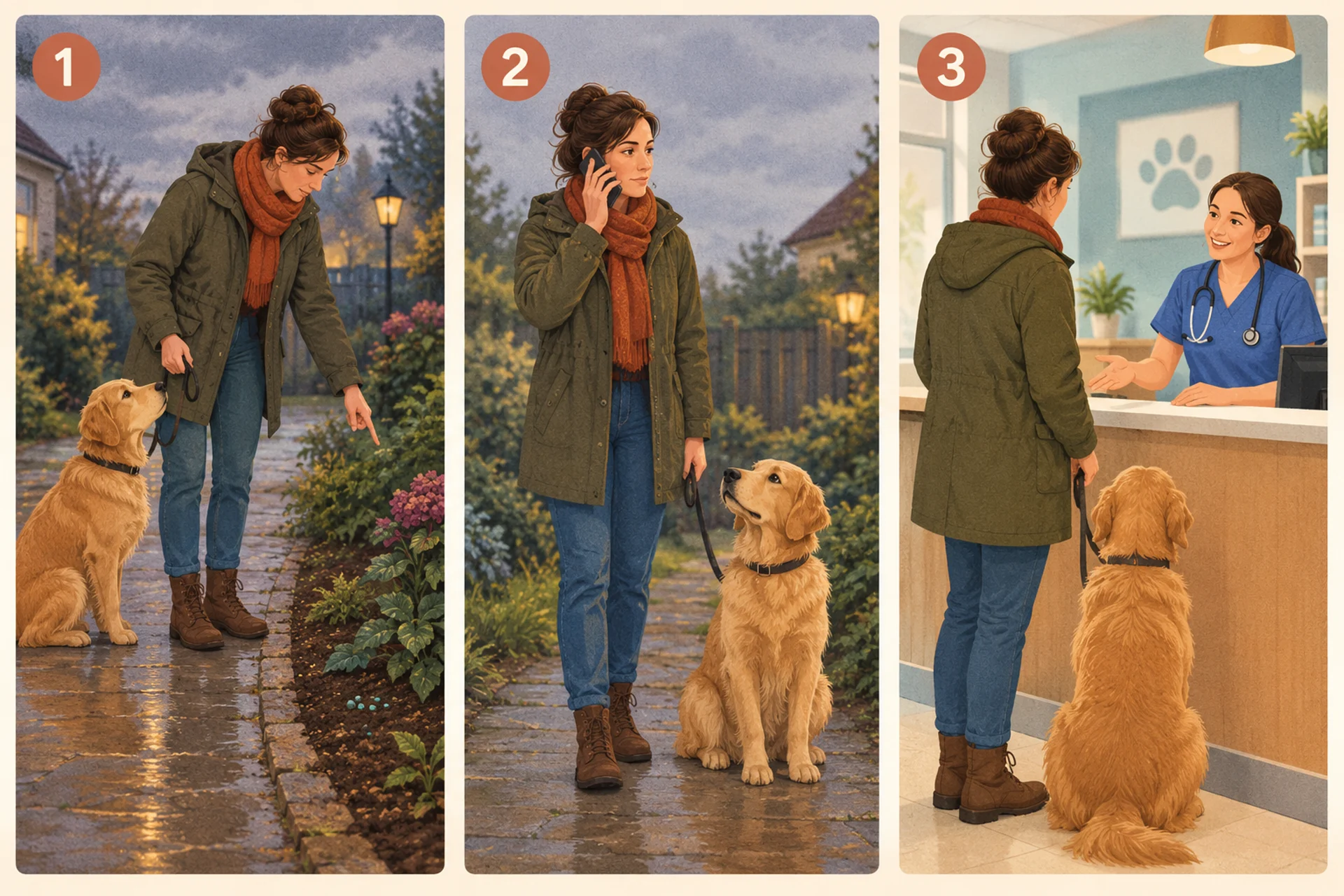
- Rule bait in or out. Any sign of pellets, granules or a treated bed means call now.
- If it was just a slug, call your vet during normal hours and tell them where you live, how many slugs, and whether your dog does this often. They can tell you whether lungworm testing or a particular preventive is worth it locally. Merck notes that larvae are shed in feces only sporadically, so a single negative test can miss an infection; that is a conversation for your vet, not something to decide from a home kit.
- Watch over the following weeks for a new cough, gagging, getting tired faster on walks, weight loss or poor appetite, and book a visit if you see them.
- Go in the same day for drooling with vomiting, shaking, wobbliness, seizures, collapse or trouble breathing.
Making wet-weather walks less snacky
The CAPC’s prevention advice for slug-borne lungworm is mostly about exposure: less contact with snails and slugs, and with foxes, which carry it in the wild. In practice, for a dog that hoovers things up on wet evenings:
- Shorten the leash near lawn edges and flower beds after dark, where both slugs and bait collect.
- Bring outdoor water bowls and toys in at night. Hawaii’s health department advises covering drink containers outdoors because slugs and snails crawl into them; the same applies to a dog’s water bowl.
- Teach a solid “leave it” and reward it on rainy walks, when there is the most to leave.
- Ask neighbors what they use if your route passes gardens. A friendly question beats a poison call.
- Know your local risk. If you live in Atlantic Canada or Hawaii, ask your vet specifically about slugs at your next visit.
Rain brings a handful of other things up from the ground too. We cover mushrooms that pop up in the yard after rain, what to do when a dog drinks puddle water, and the bigger picture in can dogs get sick from rain.
Slug questions
My dog ate a slug. Should I go to the emergency vet?
Not for a slug alone, in most of North America. Call your regular vet for advice. Go in right away if there is any chance your dog ate slug bait, or if your dog is drooling heavily, vomiting, shaking, wobbly or having trouble breathing.
Can dogs get lungworm from slugs in the US or Canada?
It is possible but the risk depends on where you live. The CAPC reports Angiostrongylus vasorum in the Atlantic provinces of Canada, rat lungworm is established in Hawaii, and the fox lungworm also uses snails and slugs. Your vet will know what is found in your area.
Can a dog get lungworm from licking a slug or its slime?
The veterinary sources we checked describe infection from eating the slug or snail, and none of them puts a number on the risk from slime. If you live where lungworm is found and your dog regularly licks or mouths slugs, ask your vet whether testing or prevention makes sense.
What are the symptoms of slug bait poisoning in dogs?
VCA lists drooling, vomiting, panting and anxiety early on, which can progress to unsteady walking, tremors, seizures and overheating, usually within minutes to a few hours. It is an emergency. Call your vet or a 24/7 animal poison line immediately.
Does my dog’s monthly preventive protect against slug lungworm?
Don’t assume so. The CAPC says routine preventives are probably not protective against these parasites. Whether your dog needs anything different is a decision for your veterinarian.
Are slugs and snails worse after rain?
They are easier to run into. UC pest specialists say snails and slugs are most active at night and on cloudy or foggy days, which matches the damp evening walk.
Check for bait first. Then make a calm call.
One slug is usually a phone call, not a crisis, in most of North America; where lungworm is found, it is a conversation with your vet about testing and prevention. Slug bait is the real emergency: if there is any chance your dog ate some, call your vet or a poison line now.
Sources
- Companion Animal Parasite Council — Angiostrongylus vasorum (checked 2026-10-29)
- Merck Veterinary Manual — Lungworm Infection in Animals (checked 2026-10-29)
- VCA Animal Hospitals — Metaldehyde (Slug and Snail Bait) Poisoning (checked 2026-10-29)
- UC Statewide IPM Program — Pest Notes: Snails and Slugs (checked 2026-10-29)
- ASPCA — Animal Poison Control (checked 2026-10-29)
- Hawaii State Department of Health — Rat Lungworm (Angiostrongyliasis) (checked 2026-10-29)
- CDC — About Angiostrongylus (checked 2026-10-29)
Parasite ranges and poison-line details change. Confirm on the official pages, and ask your veterinarian about the risk where you live.