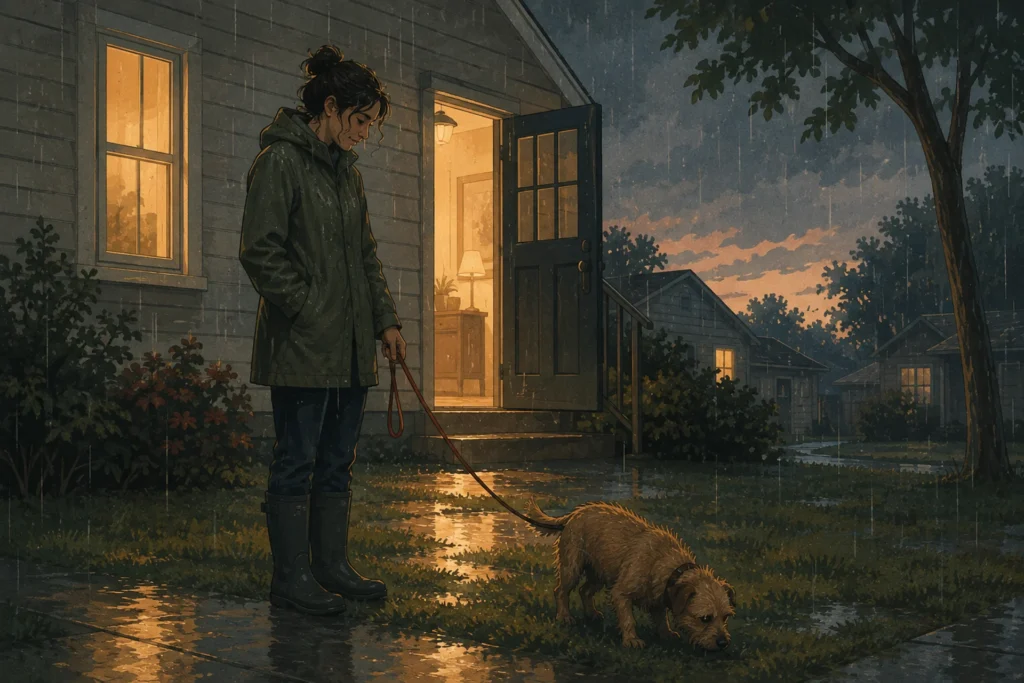
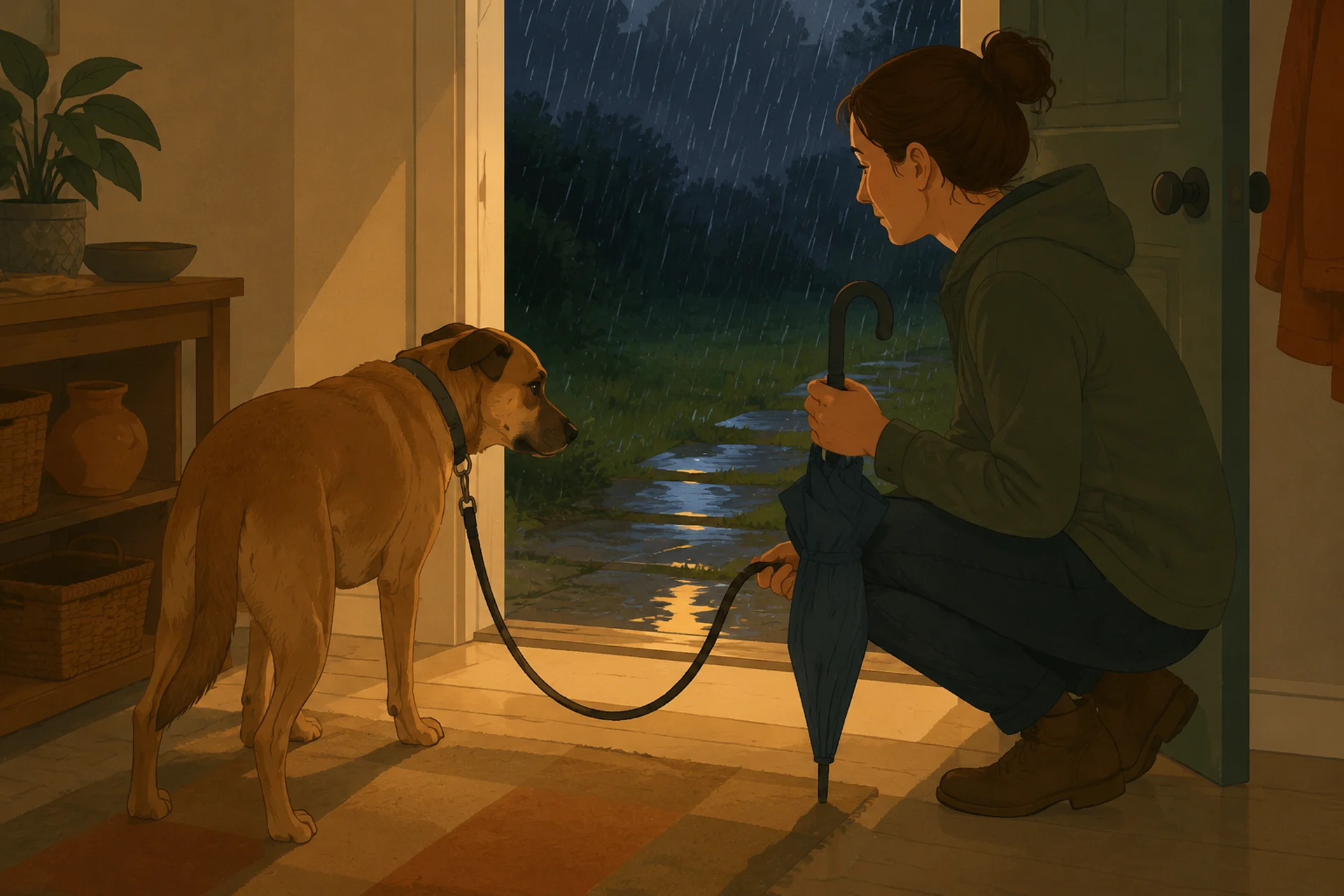
If your dog won’t pee or poop in the rain but toilets normally in dry weather, go along to a sheltered spot, reward the moment they finish, and supervise indoors if you need to try again. Merck explicitly recognizes rain as a barrier to outdoor toileting; refusal is not enough to label a dog stubborn.
Trying but unable to urinate is different from refusing to go outside. VCA describes inability to pass urine as an emergency. Contact a veterinarian immediately rather than waiting for the rain to stop. New accidents, painful toileting or blood also deserve veterinary advice.
What to do on this trip
- Check what is happening. Is your dog declining the doorway, or repeatedly trying to eliminate without success? Tell your vet which one you see.
- Choose shelter close to home. Take a leash, a reward and familiar rain gear if your dog already accepts it. Avoid a long negotiation on an exposed lawn.
- Stay with the dog. Allow a quiet opportunity to go, then reward outdoors if they finish.
- If nothing happens, supervise and offer another opportunity. Do not turn the return indoors into unsupervised access behind the sofa.
This routine combines AKC’s bad-weather guidance with VCA’s housetraining instructions. It is for a dog well enough to take a normal toilet break. It is not a test of how long a dog can hold urine or stool.
Refusal, fear, or a change that needs a vet?
| What you observe | Next step |
|---|---|
| Reluctant to step onto wet ground; otherwise comfortable and normal on dry days | Try a sheltered spot and the supervised routine below. |
| Goes outside, does nothing, then toilets indoors | Stay nearby outdoors; supervise after an unsuccessful trip and reward at the toileting spot. |
| Pacing, panting, trembling or hiding during a storm | Plan around the storm; discuss difficult fear with your veterinarian. |
| New accidents or changed toileting in dry weather too | Arrange a veterinary assessment before treating it as a rain-training problem. |
| Repeated attempts to urinate with little or nothing produced | Call a veterinarian now. Inability to urinate requires emergency care. |
The table sorts observations, not diagnoses. VCA explains that illness, incomplete training and fear can all contribute to house soiling. Pain during elimination may interrupt the process. Write down the last normal pee and poop, whether anything came out on this trip, and whether appetite or behavior has changed. That is useful information for the vet; guessing the cause from the weather is not.
Why wet weather can upset an established routine
The AKC bad-weather guide distinguishes discomfort from rain landing on the body, wet ground underfoot, and getting cold. You do not need to prove which sensation bothers your dog before making the route more comfortable. Start with an easy, nearby location rather than introducing a whole new walking route and unfamiliar equipment on the same night.
Notice where the hesitation starts. The back step, wet grass and an exposed part of the yard are different places to troubleshoot. Check the route for slippery surfaces and other obvious obstacles. If movement looks painful, stop treating the episode as disobedience and ask your vet. A raincoat cannot resolve a painful step or painful toileting.
Make the next attempt easier
Use a consistent location. VCA recommends an established toileting area and accompanying the puppy or dog there. For a puppy that has not eliminated after about five minutes, its guidance is to return indoors, supervise closely and go back out at signs of restlessness. That is an observation-based retry, not a fixed ten-minutes-in, ten-minutes-out endurance schedule.
Reward in the right place. Give quiet praise and a small treat after the dog finishes, while still near the outdoor toilet spot. Keep the reward ready before leaving home. Rewarding only after you reach the kitchen makes the timing less clear.
Keep supervision practical. If you are cooking or answering a call, arrange an appropriate supervised or safe confined area instead of assuming the failed trip emptied the dog. Do not use confinement to make the dog hold on indefinitely. Ask your vet about a suitable schedule if repeated attempts are failing.
Teach the cue in easier conditions. Introduce your chosen phrase as the dog begins toileting, then reward afterward. Practice on ordinary days; a downpour is an awkward time to introduce a cue the dog has never heard. The point is a familiar signal, not repeating an instruction more loudly.
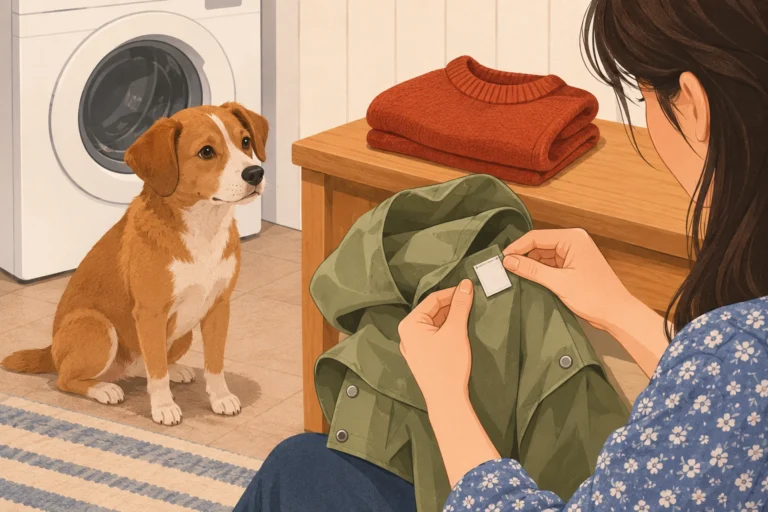
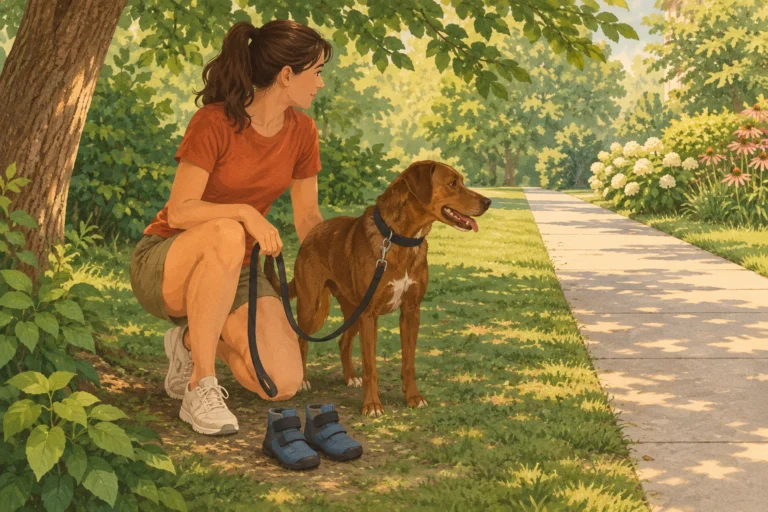
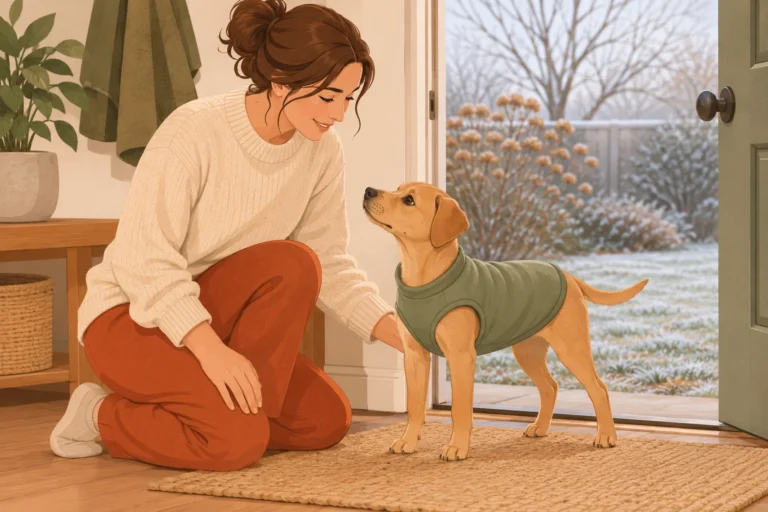
Make equipment familiar separately. A coat or boots may help with the sensations of rain and wet ground, but they are optional. If putting them on causes a second standoff, practice with them another day. See introducing dog clothes gradually. Check the garment allows normal squatting and clear toilet openings; more coverage is not automatically more useful.
Puppies and an indoor fallback
A puppy needs opportunities after waking, meals, drinking and active play, as well as overnight breaks when needed. Do not use a month-of-age calculation as permission to delay a trip. Watch the puppy, and arrange help if you cannot provide the breaks they need.
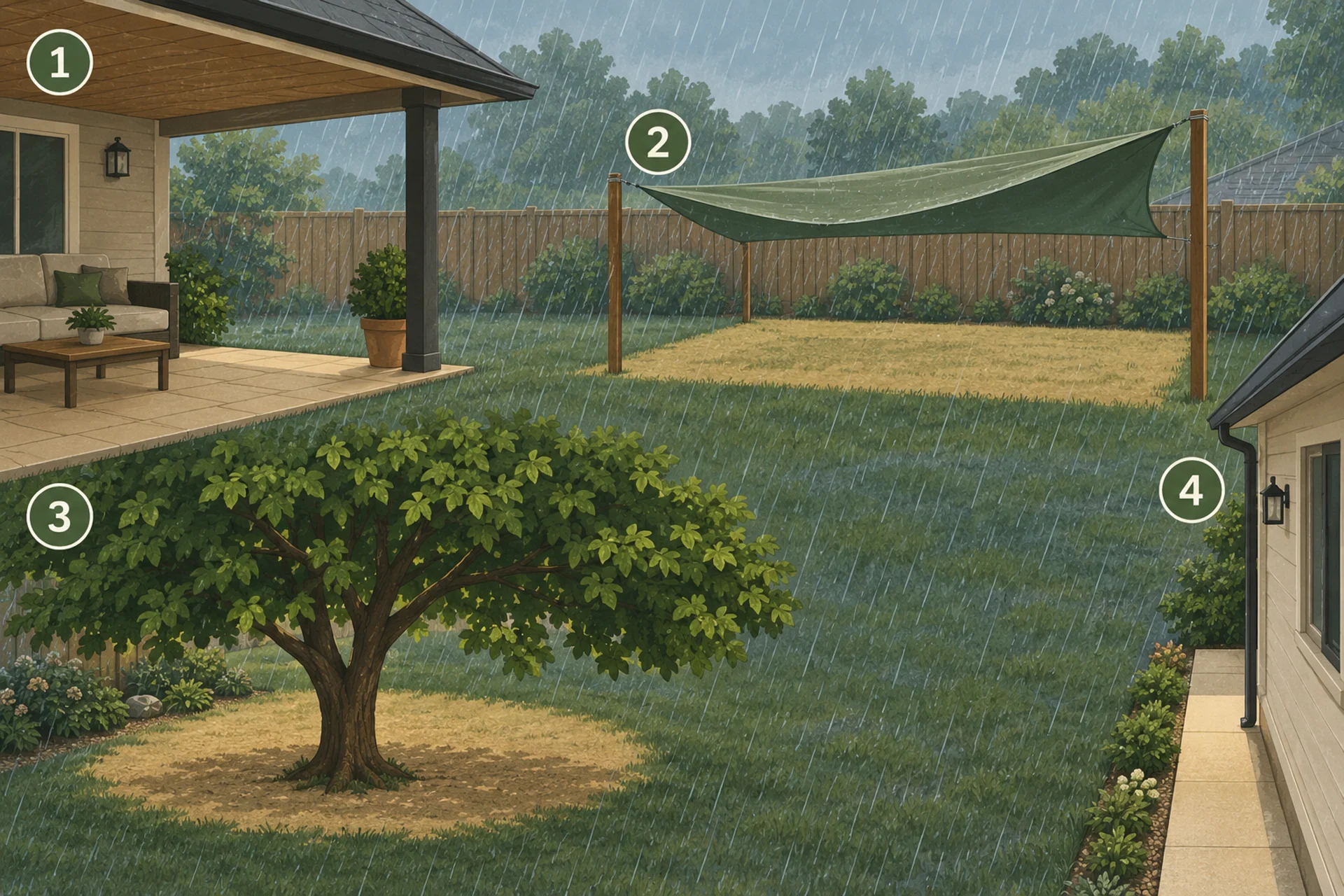
An indoor toilet area is a legitimate management option. VCA includes pads, artificial turf and other designated indoor locations in its housetraining advice. AKC also suggests a temporary sheltered potty area using sod or soil. Pick a deliberate location and suitable surface, and keep the rest of the routine consistent. An indoor fallback does not automatically erase training or mean you have failed.
For accidents, clean thoroughly with an appropriate enzymatic product and follow its directions. Avoid punishment. The AKC puppy guide favors rewarding the desired behavior and cleaning accidents without a fuss. If accidents persist despite a consistent routine, involve your veterinarian.
Rain refusal during thunderstorms
Cornell lists trembling, panting, pacing, hiding and escape attempts among signs of noise fear. Arrange bathroom breaks before a forecast storm when possible. If an outing is unavoidable, keep the dog leashed even in a fenced yard. Provide a familiar quiet indoor space, and seek veterinary help when fear is difficult to manage.
Do not turn positive rain practice into storm exposure. The National Weather Service advises going indoors when thunder is heard; a tree or open-sided shelter is not a safe lightning refuge. Use a suitable indoor toilet fallback while conditions are unsafe. Practice comfortable wet-weather outings on a different day.
Rainy-day toileting: FAQ
My dog will pee but will not poop in the rain. What now?
Do not assume the dog is fully finished because they peed. Keep track of the last normal stool, offer the familiar sheltered spot and supervise between attempts. Persistent unsuccessful straining, pain or a new change in bowel habits warrants a vet call; do not diagnose constipation from the weather.
How long can I wait for my dog to pee?
There is no universal safe waiting period for this situation. Tell your vet when the last normal urination happened if opportunities keep failing. Repeated efforts that produce little or no urine need prompt care; inability to urinate is an emergency.
My puppy refuses wet grass. Should I use a pad?
A designated indoor toilet can be part of a consistent plan. Alternatively, try a sheltered outdoor area with a familiar surface. Keep offering appropriate breaks and reward in the location you want used; do not simply wait for the weather to improve.
Will a raincoat solve the problem?
It may make rain more comfortable for a dog that already accepts clothing. It does not replace supervision, a familiar toilet location or medical assessment. Check that the coat does not obstruct toileting before taking the dog outside.
Why does my dog come back inside and then have an accident?
An unsuccessful outdoor trip does not mean the bladder or bowels are empty. Resume close supervision and offer another chance. Sudden house soiling also needs a vet assessment rather than being assumed to be a training lapse.
Should I pull my scared dog into the rain?
Avoid forcing a storm-frightened dog outside for practice. Plan breaks before storms, provide a quiet safe space and discuss severe fear with your veterinarian. Rain training can wait for safe weather; toilet access still needs a workable fallback.
Sources
- Merck Veterinary Manual — Behavior Problems of Dogs (checked 2026-11-05)
- American Kennel Club — Training Dogs to Potty in Bad Weather (checked 2026-11-05)
- VCA Animal Hospitals — House Training for Puppies and Dogs (checked 2026-11-05)
- VCA Animal Hospitals — Dog Behavior Problems: House Soiling (checked 2026-11-05)
- VCA Animal Hospitals — Struvite Bladder Stones in Dogs (checked 2026-11-05)
- Cornell Riney Canine Health Center — Fear of Fireworks and Thunderstorms (checked 2026-11-05)
- American Kennel Club — How to Potty Train Your Puppy (checked 2026-11-05)
- National Weather Service — Lightning Safety (checked 2026-11-05)
Veterinary guidance can change. Ask your own veterinarian about decisions for your dog. This page does not diagnose illness or describe treatment.