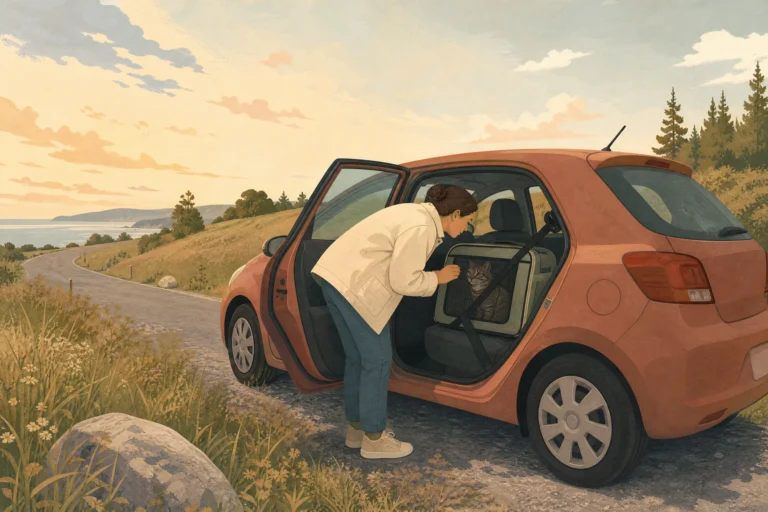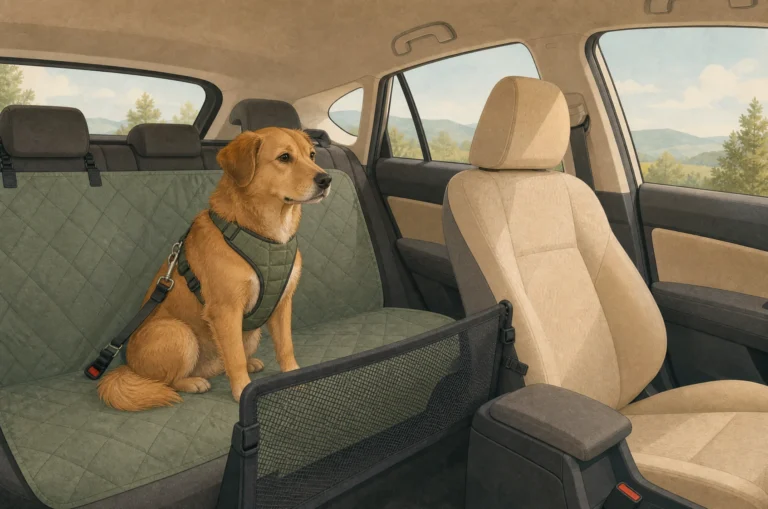
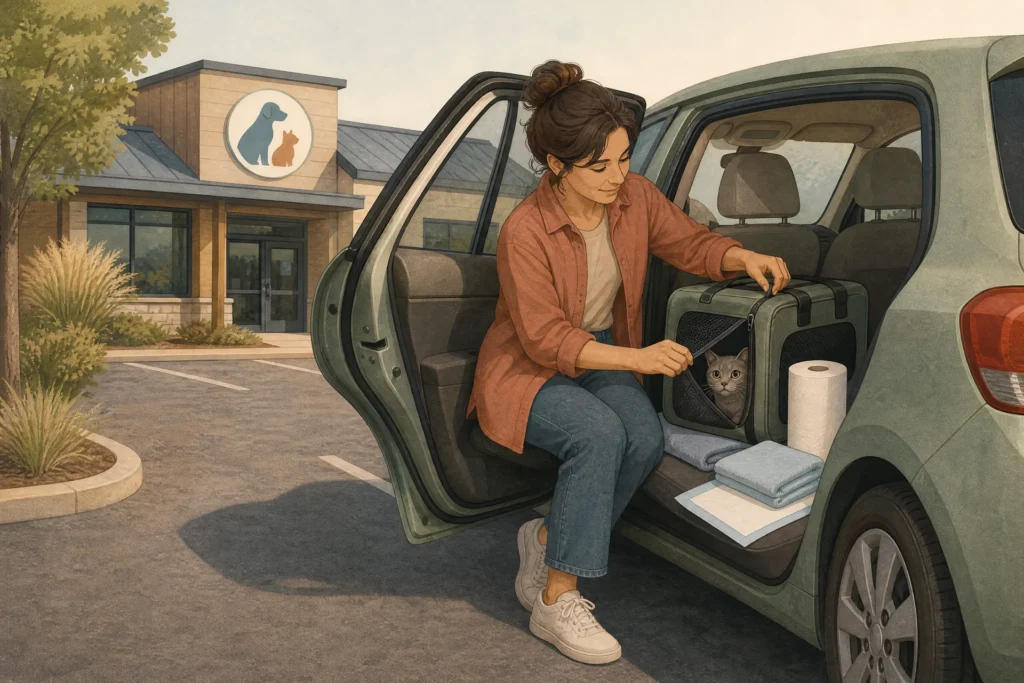
A cat that pees in its carrier on the way to the vet is almost always a frightened cat, not a badly behaved one. The American Animal Hospital Association describes the carrier itself as “often a powerful trigger for fear,” with the stress starting long before the cat reaches the clinic, and the ASPCA notes that stress alone can cause cats to eliminate outside the litter box. A locked box in a moving car is about as stressful as a cat’s week gets.
So: blot it, keep going, and tell the clinic when you arrive. Clean the carrier with an enzymatic cleaner — never ammonia — so it does not smell like a toilet next time. And watch for the one version that is not about fear: a cat that strains, goes often in tiny amounts, cries while peeing, or passes blood needs a vet the same day. Cornell’s Feline Health Center calls a blocked urethra “a true medical emergency.”
Why it happens in the carrier and nowhere else
If your cat has never had an accident in the house, a wet carrier can feel like a betrayal. It is the opposite. The AAHA page on helping cats cope with vet visits explains that cats rely on “choice and environmental control to feel safe,” and that being shut in a carrier removes exactly that. When a cat feels it has no control over what is happening, its fear “naturally escalates.” A veterinary behaviourist quoted there puts it plainly: leaving the place where it feels safe “is not a normal thing for a cat.”
Add a car. The Merck Veterinary Manual’s page on motion sickness in cats lists drooling, vomiting, uneasiness or apprehension, and sometimes diarrhoea, and notes that “fear of the vehicle may be a contributing factor in cats” — signs can appear in a car that has not even started moving. Merck does not list urination, and we will not pretend it does. But fear, confinement and nowhere else to go explain most carrier accidents without needing a medical cause.
One honest caveat. You will read on forums that half of all cats arrive at the vet with a mess in the carrier. We could not find that figure in any veterinary source, so we are not repeating it as fact. What the sources do agree on is that this is a fear response, and fear is something you can work on.
When it is not about fear
Before you file this under “nervous traveller,” rule out the version that is a medical problem. The ASPCA’s first step for any cat peeing where it should not is to “rule out urine marking and medical problems” with a vet. Cornell lists the signs of lower urinary tract disease as “difficult or painful urination, increased frequency of urination, crying out while urinating, blood in the urine,” along with peeing outside the box.
| What you see | What it most likely means | What to do |
|---|---|---|
| One normal-sized puddle during or right after the drive; the cat uses its litter box normally at home | Fear. The trip, not the bladder | Clean up, mention it at the appointment, work on the carrier before the next trip |
| Small wet spots, repeated; straining; crying; pink or red urine; peeing outside the box at home as well | Possible urinary tract disease. The ASPCA calls interstitial cystitis “very serious” and says it “must be treated immediately” | Book a vet visit today, not next week, and tell them exactly what you saw |
| A cat, especially a male cat, trying to pee and producing little or nothing | Possible urethral obstruction. Cornell: “a true medical emergency” | Emergency vet now. Cornell notes the time from complete blockage to death “may be less than twenty-four to forty-eight hours” |
| An accident on the way home after surgery or sedation | Often expected; depends on what was done | Call the clinic that treated your cat. They know what was given and what is normal afterwards |
Cornell explains why male cats come up so often: their urethra “is longer and narrower.” It also notes that stress plays a real role in feline idiopathic cystitis, the most common diagnosis in these cats. So a trip that scares your cat does not only cause an accident in the box. In some cats it can set off a bladder flare-up days later. If the accidents keep happening at home after a trip, that is worth a phone call.
What to do right now, in the car
- Pull over only if you need to. On a short trip to the clinic, the kindest thing is usually to keep driving calmly. The clinic has towels, and staff have seen this many times.
- Do not open the carrier on the roadside. A frightened, wet cat is the cat most likely to bolt. Clean up somewhere enclosed, like the car with the doors shut or an exam room.
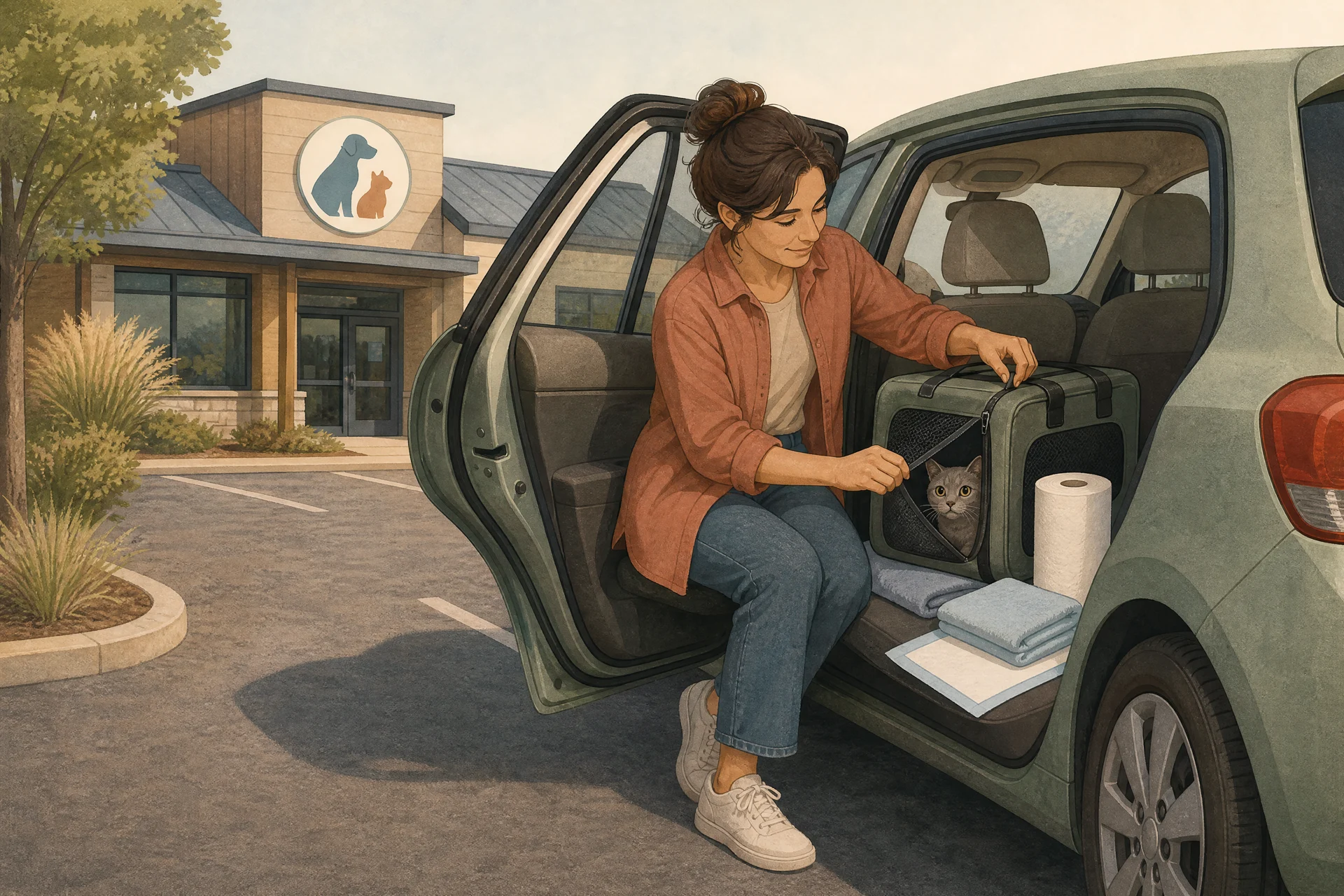
- Blot, do not rub. Slide paper towels in through the door to soak up what you can. If you have a spare towel, swap the wet one out.
- Tell the vet team. It helps them understand how your cat handles travel. The AAHA recommends talking to the clinic about a cat’s fear before the appointment, so they can plan around it next time.
- Wait in the car if you can. The AAHA advises waiting in the car until the appointment and leaving the cat in the carrier until the vet is ready, instead of sitting in a waiting room full of dogs.
How to get the smell out of a carrier
This is the part that matters for the next trip. Cats have a far better sense of smell than we do, and a carrier that still smells of urine to the cat tells it that this is a place to pee. Most advice online reaches for vinegar or ammonia first. The animal-welfare sources say not to.
The ASPCA is specific: do not clean accidents with an ammonia-based cleanser, because “urine contains ammonia, and therefore cleaning with ammonia could attract your cat to the same spot to urinate again.” It recommends an enzymatic cleaner designed to neutralise pet odours. Humane World for Animals (formerly the Humane Society of the United States) goes further and says to avoid both ammonia and vinegar, because “strong chemical odors may encourage your pet to reinforce the urine scent mark in that area.” The ASPCA also warns that a cat can take against a scented cleaner.
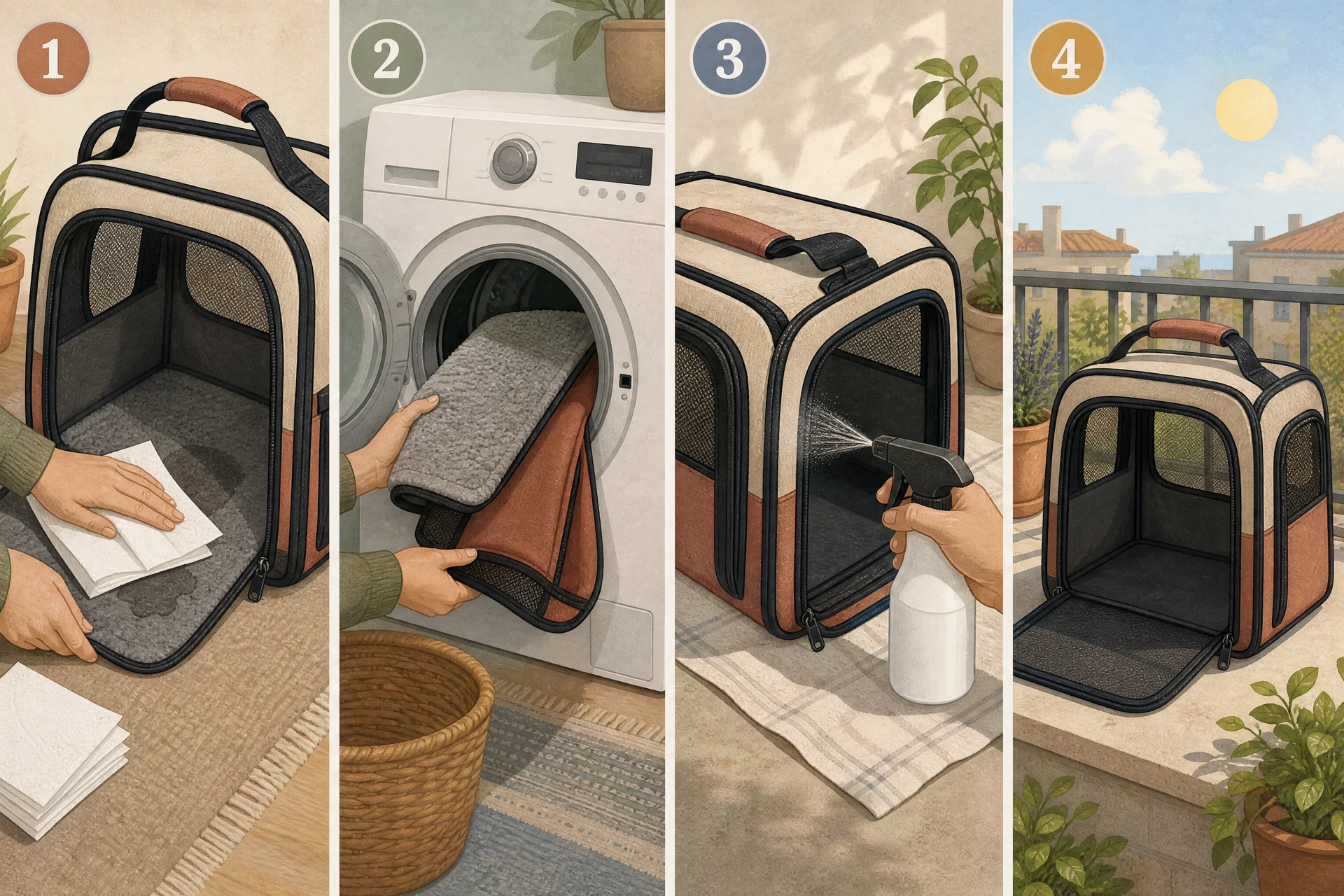
Here is the order we would follow, built from those two sources:
- Blot first. Humane World’s method for fresh urine is to soak up as much as you can with a thick layer of paper towels before anything else, then rinse with clean, cool water and blot dry.
- Machine-wash what comes out. Pads, towels and removable covers go in the wash. Humane World suggests adding baking soda to your usual detergent and air-drying if you can. If the smell survives, wash again with an enzymatic cleaner.
- Enzymatic cleaner on the shell and seams. For fabric that cannot come off, soak the area with an enzymatic cleaner and follow the label for how long to leave it. Seams, zip tapes and the corners of the floor hold the most. The cleaner needs contact time to work; a quick spritz and wipe will not do it.
- No heat. Humane World warns against steam cleaners on urine because the heat “will permanently set the stain.” That applies to a hot tumble-dry of the carrier fabric too.
- Dry it completely, ideally outside. A damp carrier holds odour. Let it dry fully before your cat uses it again, and let any cleaner smell fade.
A hard plastic carrier is easier: take it apart, wash both halves with warm water and unscented soap, then treat the corners with an enzymatic cleaner. It is one reason the AAHA lists “easy to clean” as a basic thing to look for in a cat carrier, along with good ventilation and a top that opens or comes off. If your soft carrier has a floor pad that cannot be removed or washed, you will fight this smell every time. That is worth fixing before anything else.
How to make the next trip drier
Cleaning deals with the last accident. Preventing the next one means making the carrier less frightening, and the AAHA’s advice here is the most useful we found anywhere. We have linked to the page above; these are the parts that matter most for a cat that pees in the carrier:
- Leave the carrier out all the time. “When carriers only appear just before a veterinary visit, cats learn to associate them with scary things.” Put it somewhere your cat already likes, with soft bedding, and let it become furniture.
- Go at the cat’s pace, never by force. The AAHA suggests tossing treats near the carrier, then just inside the entrance, then further in. It warns that forcing a cat in “even one time can undo weeks or months of careful training.” Do not start by feeding full meals inside it if your cat is already anxious.
- Carry it like it matters. Not by the handle. The AAHA’s advice is to hold it close with both arms so it does not swing, cover it while leaving room for air, and set it on the floor or secure it in the car. Our cat carrier for car trips guide covers where it goes and how to belt it in.
- Pheromone spray, used properly. The AAHA’s experts recommend a synthetic feline pheromone spray on the bedding and inside the carrier, and in the car before the trip. Give the alcohol smell time to fade before the cat goes in.
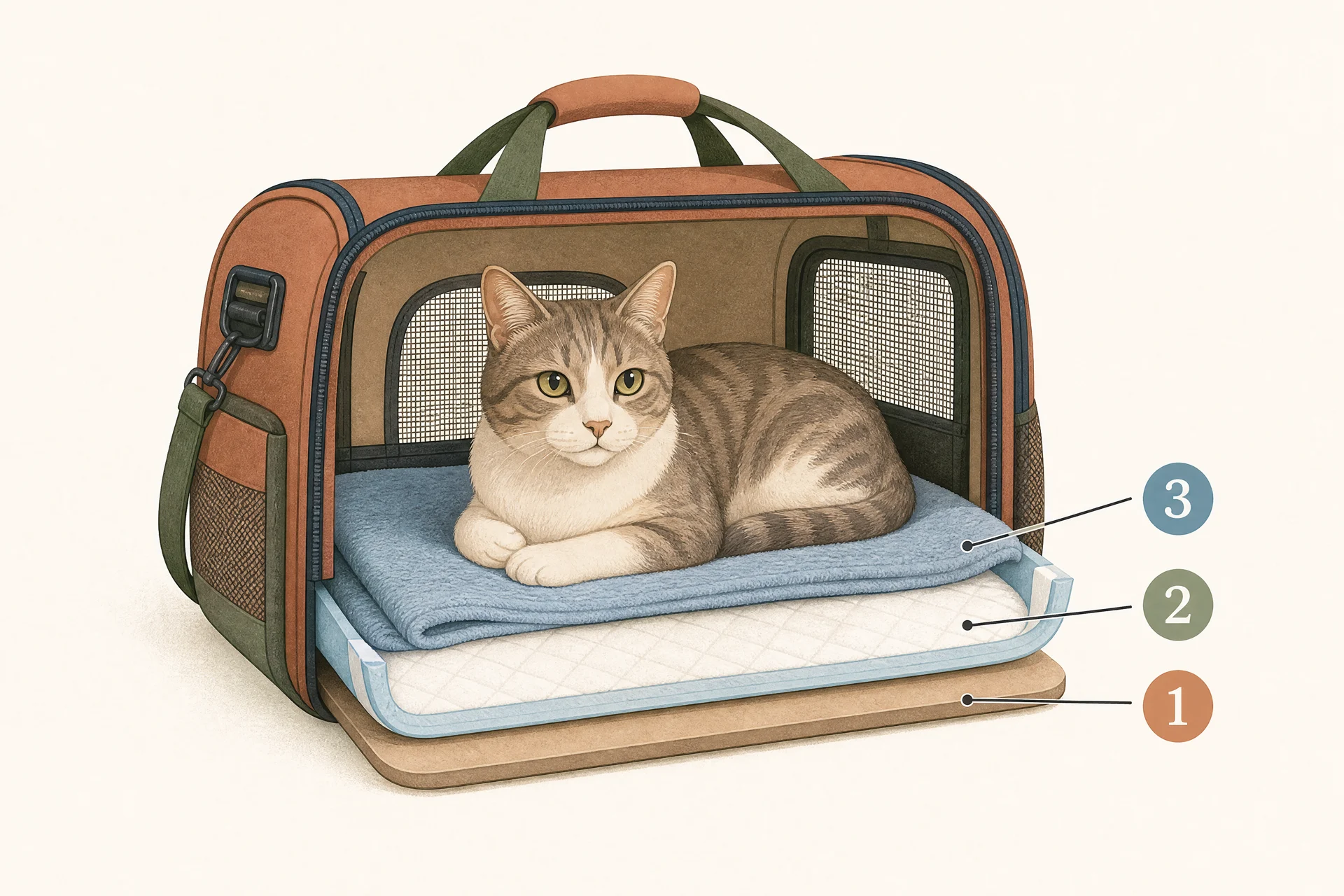
- Pack for it anyway. An absorbent pad under a thin towel (Figure 2), a spare of each, paper towels and a bag for wet things. It costs nothing and turns an accident into a two-minute job.
- Ask about medication if nothing is working. Some cats need more than training. The AAHA suggests asking your vet in advance whether a short-acting anti-anxiety medication would help. That is a decision for your vet, not for us. If your cat also drools or vomits in the car, tell them that too, because it can be motion sickness as well as fear.
If your cat also breathes hard or pants on the drive, read what to do when a cat pants in the car. A frightened cat in a warm carrier can have both problems on the same trip, and panting is the more urgent one.
Cat peed in the carrier: FAQ
Why did my cat pee in the carrier on the way to the vet?
Almost always fear. The AAHA describes the carrier as a powerful fear trigger for many cats, and the ASPCA notes that stress can cause cats to eliminate outside the litter box. If your cat pees normally at home and it was one normal puddle, fear is the likely explanation. If there is straining, frequent small amounts, crying or blood, see a vet the same day.
Should I be worried if my cat peed in the carrier?
Usually not, on its own. Be worried if your cat strains to pee, goes often with little coming out, cries while peeing, or has blood in its urine. Those are signs of urinary tract disease, and in a male cat, a blocked urethra is an emergency. Cornell says it needs immediate veterinary attention.
How do I get cat pee smell out of a soft carrier?
Blot up as much as you can, machine-wash any removable pad or cover, and treat the fabric and seams with an enzymatic pet-odour cleaner, leaving it time to work. Do not use ammonia or vinegar. The ASPCA and Humane World both warn that strong or ammonia smells can draw a cat back to the same spot. Avoid heat and let it air-dry completely.
Can I use vinegar to clean the carrier?
Humane World for Animals advises against it for urine. It groups vinegar with ammonia as strong chemical smells that may encourage a pet to mark the same spot again. An enzymatic cleaner works on the urine itself instead of trying to cover up the smell.
Should I put a pee pad in my cat’s carrier?
For a cat with a history of accidents, yes. Use an absorbent pad a little larger than the carrier floor so the edges curl up the sides, with a thin towel on top so it feels like bedding rather than plastic. It will not stop your cat peeing, but it keeps the carrier itself dry and makes cleaning up quick.
My cat peed in the carrier after surgery. Is that normal?
It can be, depending on what was done and what medication was used. We cannot tell you which, and neither can any general article. Call the clinic that treated your cat. They have the notes and can tell you what to expect.
Sources
- American Animal Hospital Association — Helping your cat cope with veterinary visits (the carrier as a fear trigger and stress beginning before the clinic; loss of control escalating fear; carrier checklist including “easy to clean”; keeping the carrier out as furniture; treat-based, never-forced training; pheromone spray with time for the alcohol to dissipate; carrying with both arms, covering, securing; waiting in the car; asking the clinic about anti-anxiety medication) (checked 2026-09-25)
- ASPCA — Litter Box Problems (stress can cause litter-box problems; rule out medical causes first; interstitial cystitis signs and that it must be treated immediately; enzymatic cleanser for accidents; do not use ammonia-based cleansers because urine contains ammonia; scented cleaners can create aversion) (checked 2026-09-25)
- Cornell Feline Health Center — Feline Lower Urinary Tract Disease (signs of urinary tract disease; stress and idiopathic cystitis; urethral obstruction is a true medical emergency; male cats’ longer, narrower urethra; time from complete obstruction to death may be under 24–48 hours) (checked 2026-09-25)
- Humane World for Animals — How to remove pet stains and odors (blot fresh urine, rinse with cool water; baking soda in the wash and air-dry; rewash with an enzymatic cleaner for lingering odours; no steam cleaners because heat sets the stain; avoid ammonia and vinegar) (checked 2026-09-25)
- Merck Veterinary Manual — Motion Sickness in Cats (salivation, vomiting, apprehension, occasionally diarrhoea; fear of the vehicle may contribute; conditioning to travel can help; talk to a vet about medication) (checked 2026-09-25)
This article is general information, not a diagnosis. If your cat is straining to pee or producing little or no urine, contact a veterinarian immediately.
Clean it properly, watch for straining, then fix the fear.
One accident in the carrier on the way to the vet is a frightened cat telling you how the trip felt. Blot it, tell the clinic, and clean the carrier with an enzymatic cleaner instead of ammonia or vinegar so it does not smell like a toilet next time. Watch for straining, frequent tiny amounts, crying or blood, because those need a vet, and a male cat that cannot pee needs one now. Then leave the carrier out as furniture, stop forcing it, and let the next trip start somewhere the cat already feels safe.