Some yard mushrooms are poisonous to dogs, and appearance alone is not a safe way for an owner to decide which. VCA advises treating an unfamiliar wild mushroom as potentially poisonous. That does not mean every mushroom is toxic; it means an unidentified one is not cleared for eating.
If your dog ate, or may have eaten, a wild mushroom, call your veterinarian or a pet poison service now. Pet Poison Helpline says not to wait for identification or clinical signs. A dog looking well immediately afterward is not an all-clear.
Most dogs that merely get rained on need drying, not an emergency visit. This guide concerns a different event: mushrooms appearing after wet weather and a dog possibly eating one. A raincoat or boots cannot stop mushroom ingestion or replace veterinary advice.
Found mushrooms, saw a bite, or found a sick dog?
| What happened | Your next step |
|---|---|
| Mushrooms appeared after rain; no suspected ingestion | Keep the dog away while you check and remove accessible mushrooms. |
| You saw a bite, or cannot rule out eating one | Call your veterinarian or a pet poison service promptly, even if the dog looks normal. |
| Suspected ingestion plus vomiting, unsteadiness, tremors or other illness | Seek veterinary care immediately; tell the clinic about the mushroom exposure. |
| You have a photo or sample but no identification | Share it with the veterinary team. Do not postpone the call to get an online name. |
The ASPCA separates suspected ingestion from a pet already showing symptoms: both call for prompt professional advice, and a symptomatic pet should go to a veterinarian immediately. Finding a mushroom in the yard without evidence of a bite is a yard-management problem; possible ingestion changes the decision.
Why the rain matters
Rainy periods can bring mushrooms up quickly, including overnight, according to the ASPCA. A yard you checked yesterday may need another look before today’s toilet break. Wet weather is the reason to check the ground, not evidence that every mushroom you find is poisonous.
Merck explains that mushrooms are the fruiting bodies of fungi and that exposure to their toxins occurs through ingestion. Keep these two ideas separate: the fungus growing in a lawn is not a diagnosis in your dog, and a dog that eats an unknown mushroom needs an exposure assessment.
Do the check before letting a scavenging dog explore alone. Look along the route from the door to the usual toilet spot, then the grassy edges and other places the dog can reach. A useful routine is one you can repeat after the next wet spell; it is not a promise to make the whole neighborhood mushroom-free.
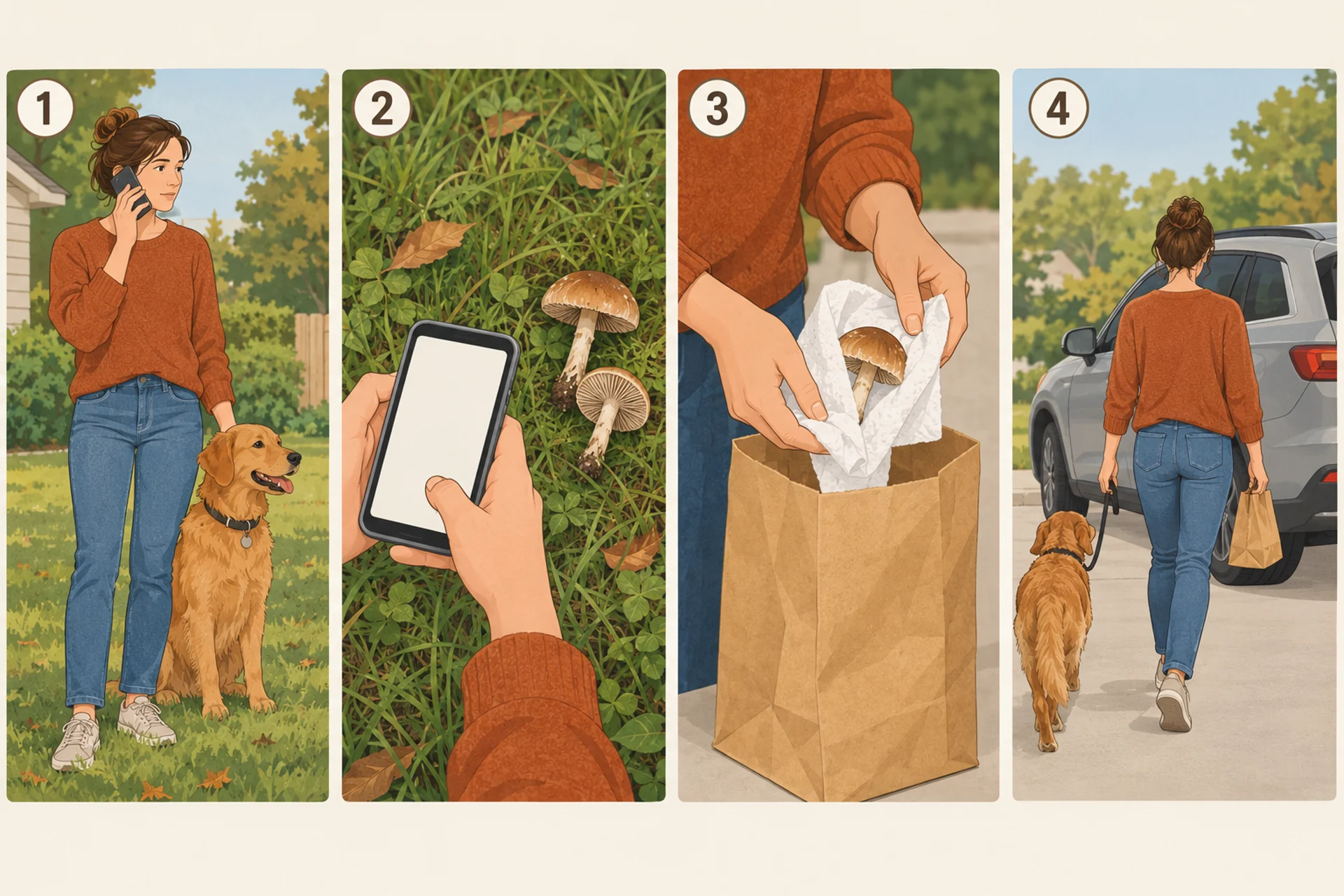
If a mushroom may have been swallowed
- Call first. Say that a dog may have eaten a wild mushroom, when it happened, and whether there are symptoms.
- Keep further mushrooms out of reach. Move the dog away from the patch while you arrange advice.
- Offer evidence if readily available. Photos of the whole mushroom and where it grew can help. Ask the clinic whether and how to bring a sample.
- Report observations. Tell the veterinary team what you saw, not just the name suggested by a photo app.
- Follow the professional plan. Ask whether to go directly to an emergency clinic and what information to bring.
For the call, have your dog’s approximate weight, known conditions and medications available. Be clear about uncertainty: “I saw chewing next to this patch” is useful even if you did not see a swallow. Do not invent a quantity because the clinician asks; explain what is known and what is not.
Do not induce vomiting or give a home remedy unless the treating veterinary team specifically directs you. Pet Poison Helpline warns that inducing vomiting yourself can cause harm. This is not a home decontamination guide, and there is no dose or treatment recipe here.
Why looking normal is not enough
The ASPCA describes delayed illness with liver-toxic mushrooms, with signs sometimes beginning eight to 24 hours after ingestion. Other mushroom toxins cause different problems. Do not turn one published timing range into a countdown after which an unidentified mushroom becomes safe.
VCA also describes temporarily improved appearance while underlying illness progresses. Tell the vet if symptoms seem to have eased; do not cancel a recommended assessment on that basis. The useful question is “What should we do given this possible exposure?”, not “How long until we can prove nothing happened?”
Signs worth reporting include vomiting, diarrhea, unusual drooling, unsteadiness, tremors or changes in alertness. These are observations, not a way to identify a mushroom or diagnose poisoning. If the dog is already unwell after suspected ingestion, seek care immediately.
Photos help; they do not clear a mushroom as safe
A white cap, small size or familiar-looking lawn patch is not a reliable owner identification. Merck’s North American reference includes poisonous mushrooms with varied colors, habitats and seasons. This article deliberately provides no color-based “safe mushroom” chart.
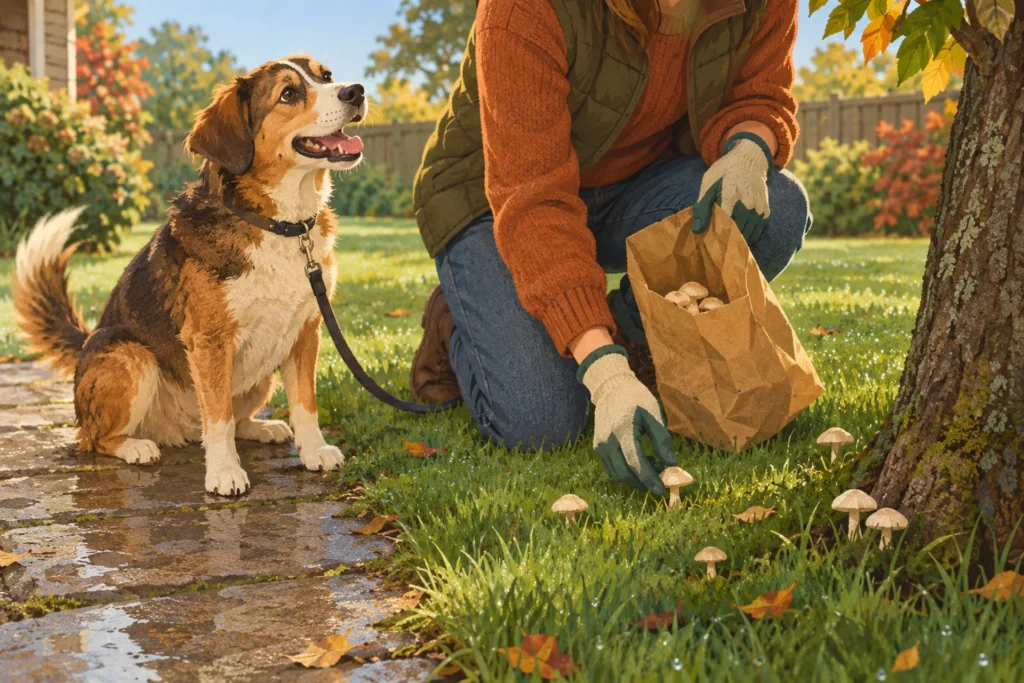
VCA suggests photographing the cap, underside, stem and surrounding area. Ask your veterinary team how they want any specimen transported, and keep it away from pets and children. The collection illustration below is not a prerequisite for making that first call.
A sharp photo and the location may help an expert; a blurry photo plus a confident app result is still uncertain. Identification can support the veterinary assessment. It should not become a task you finish before asking for care.
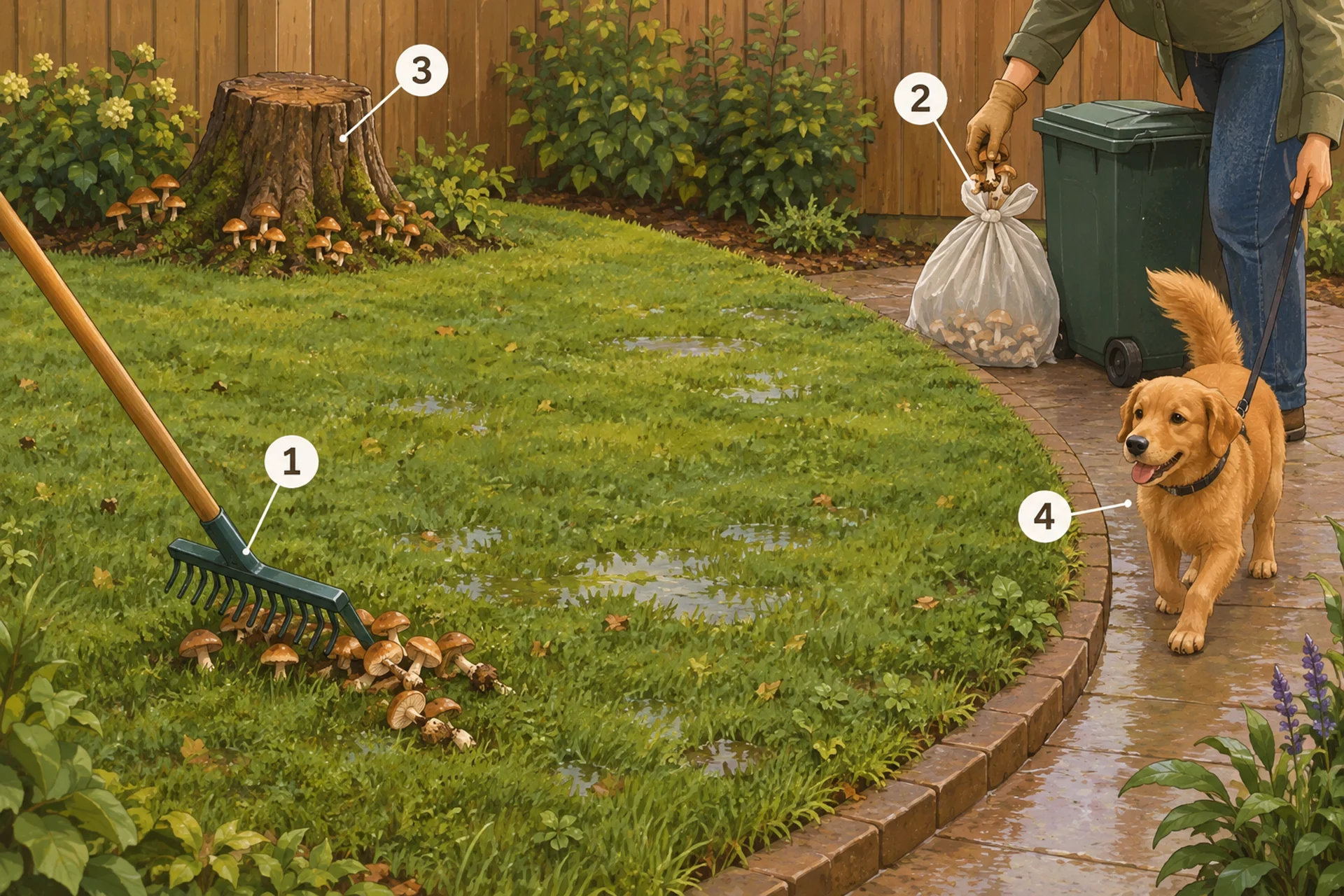
The next rainy-day yard check
VCA recommends regular yard patrols and removing mushrooms from places pets can access. Keep the dog separated while you collect them, and dispose of them where the dog cannot retrieve them. Do another check when new mushrooms appear rather than treating a single sweep as permanent protection.
On a walk, choose a route where you can see what the dog is investigating and move away from mushroom patches. Do not depend on a coat, boots or an obedience cue to make an accessible mushroom safe. Equipment that reduces wetting has a different job.
For the rest of an ordinary wet walk, see rain-related health concerns and cleaning paws afterward. Neither routine substitutes for a poisoning assessment when something may have been swallowed.
Yard mushrooms and dogs: FAQ
Are all mushrooms in the yard poisonous?
No. Some are harmless, but you should not clear an unidentified wild mushroom for eating based on appearance. Keep your dog away and seek expert identification if needed.
My dog ate a little mushroom and seems fine. Should I call?
Yes. Contact your veterinarian or a pet poison service promptly. Do not wait for symptoms or online identification before asking what to do.
How long do symptoms take?
Timing varies with the mushroom and toxin. Some illness is delayed, so there is no single at-home waiting period that clears an unknown exposure. Follow the veterinary team’s plan.
Should I make my dog vomit?
Do not attempt it yourself. Call for veterinary advice; this page does not provide home poisoning treatments.
Should I bring the mushroom?
Ask the clinic. A readily available sample and photos can help, but collecting them must not delay care. Keep any sample out of reach of pets and children.
Does rain make a harmless mushroom poisonous?
Rain can encourage mushrooms to appear. It does not identify the mushroom or tell you whether it contains toxins. Manage access to new growth and act promptly on suspected ingestion.
Written and updated by Codex (OpenAI). For a possible ingestion, specific decisions must come from your veterinarian or a veterinary poison service.
Sources
- VCA Animal Hospitals — Mushroom Toxicity (checked 2026-11-12)
- ASPCA — Not-So-Magic-Mushrooms: Tips to Keep Your Pets Safe (checked 2026-11-12)
- Merck Veterinary Manual — Overview of Mushrooms Toxic to Animals (checked 2026-11-12)
- Pet Poison Helpline — Wild Mushrooms and Dogs (checked 2026-11-12)
This page is general information, not a diagnosis or treatment plan. Use the linked official services for current contact details and professional help.