The short answer: For ordinary dirt on comfortable, uninjured paws, use a damp cloth or a wipe labeled safe for pets; rinse off heavier dirt or road salt, then dry between the toes. The AKC’s paw-cleaning guidance specifically emphasizes checking and drying those gaps. A quick swipe across the big central pad can miss what is caught beside it.
Choose the routine by what your dog walked through. A dry, clean outing is different from mud or a salted sidewalk. A painful paw, suspected chemical exposure, or persistent licking belongs in a different category: stop treating it as a housekeeping problem and contact your veterinarian.
At the door: wipe, rinse, or stop and call?
| What you find | Siguiente decisión | What changes the plan |
|---|---|---|
| Clean, dry paws after an ordinary walk | Look over the pads and toe gaps before deciding cleaning is needed. | Pain, a cut, or something embedded. |
| A little ordinary surface dirt | Use a damp cloth or a pet-labeled wipe. | Dirt remains between the toes, or handling hurts. |
| Mud, sand, or road salt | Remove the material thoroughly; a rinse may be more useful than repeated wiping. | Unknown chemicals or an irritated paw. |
| Clean but wet paws | Dry them, including the gaps. | Redness, swelling, or continued licking. |
| Suspected cleaner or other chemical contact | Contact your veterinarian or animal poison control with the product details. | Do not wait for a routine wipe to prove everything is fine. |
This table is a way to sort the job, not a diagnosis. The AKC describes pet-safe wipes for light mess and more thorough washing when needed. For winter residue, the ASPCA explicitly recommends washing and drying the feet and checking for redness and cracks after walks.
Set up somewhere the dog can stay comfortable
Put a clean towel, cloth, and any pet-labeled cleaning product within reach before you ask for a paw. Use a place where your dog can stand or sit steadily. The useful setup is the one you can repeat calmly; you do not need to turn a small muddy footprint into a full grooming appointment.
Decide who will hold the dog and who will handle the towel if the task needs two people. Have somewhere to put the dirty cloth so you do not pick it up again by mistake. For a dog that dislikes handling, make the setup easier rather than getting into a contest over finishing all four feet immediately.
Look beyond the part that touches the floor
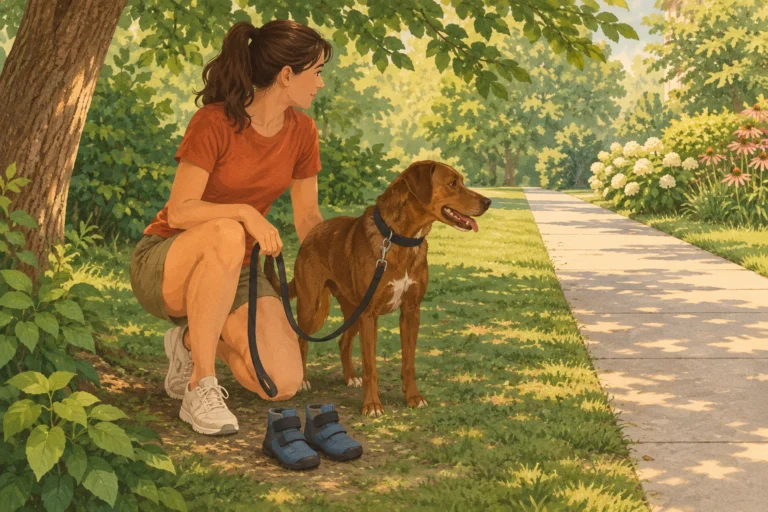
Gently inspect the spaces beside the pads and around the nails, not only the large pad in the center. Look at what is there before reaching for another product. If the dog pulls away because a particular area seems sore, that observation matters more than getting the last muddy mark off the towel. For the next ordinary walk, boots are a separate equipment choice; they do not erase the need to look at the feet. The ASPCA describes booties as extra coverage against winter salt and sand. Our guide to boots that keep slipping off covers a separate problem: whether the footwear stays on during normal movement.
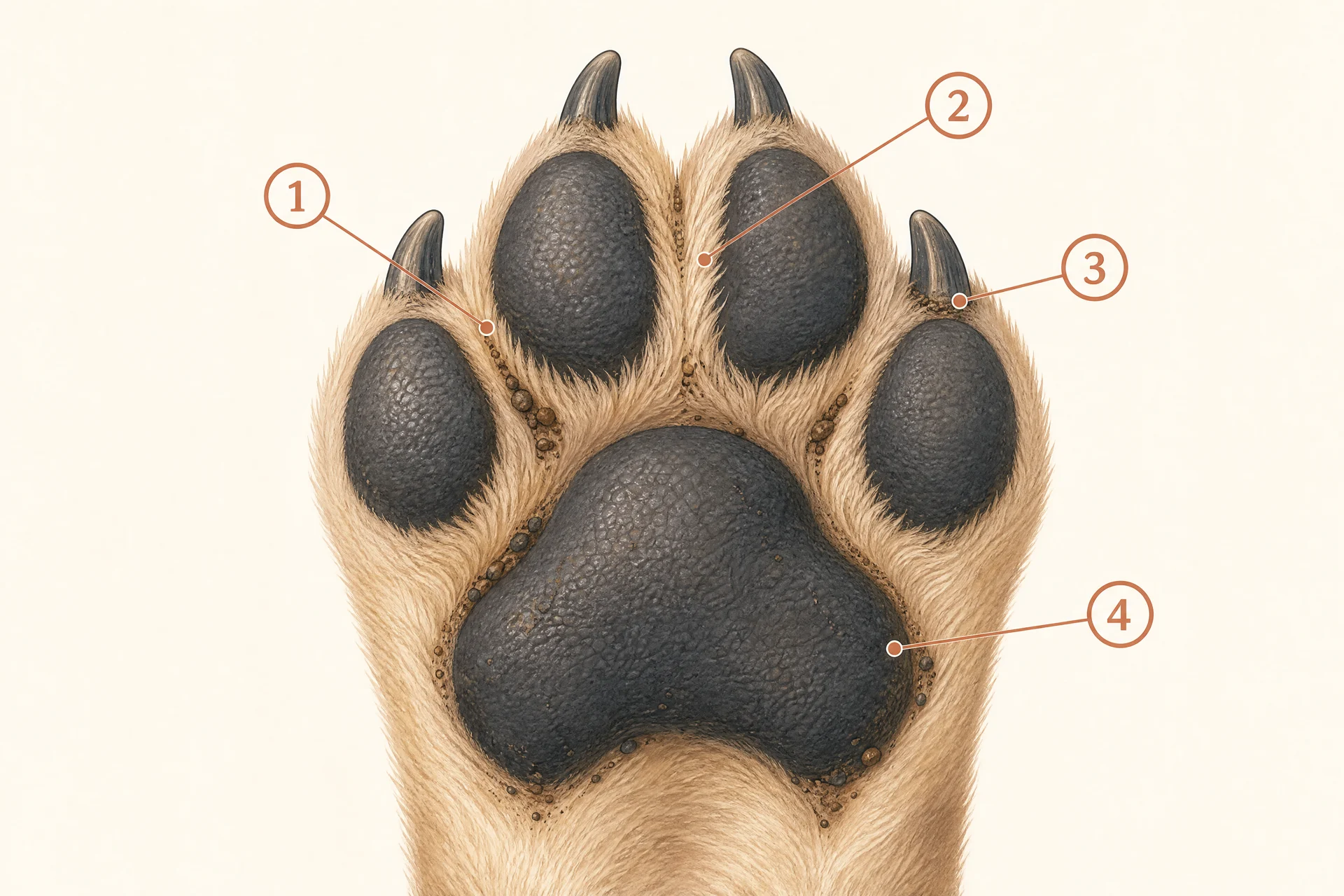
Use the diagram as a reminder of places to look, not a treatment map. You are checking whether ordinary dirt has been removed and whether the foot seems comfortable. Something embedded, a wound, or a painful patch is a reason to get veterinary guidance, not to dig, trim, or scrub until it disappears.
Choose the cleaning product for the job
Start with the distinction between a product labeled for use on pets and a household surface cleaner. A wipe’s shape is not its safety information. Read the intended use before you put it on the dog, including any directions about rinsing or areas to avoid. If you cannot establish that it is suitable, choose another approach or ask your veterinarian.
Pet Poison Helpline explains that household cleaning chemicals can cause irritation or burns and may be swallowed when a pet grooms itself. Do not use a household disinfecting wipe or rubbing alcohol as an everyday paw cleaner. A product that cleans a countertop is not thereby a product for a dog’s skin.
Do not make the daily routine a trial of homemade acid, disinfectant, or medicated mixtures. If a vet has prescribed a paw-care product, use that particular plan. This guide does not supply a substitute recipe, a dilution, or a soak time. Routine dirt removal and treatment of sore skin are different jobs.
Remove the dirt, then finish the dry
Work through the feet in the same order each time so one is not missed. After cleaning, check the area you noticed at the start. If ordinary mud is still there, reconsider whether the wiping method is doing the job rather than rubbing the same spot harder. Stop if handling becomes painful.
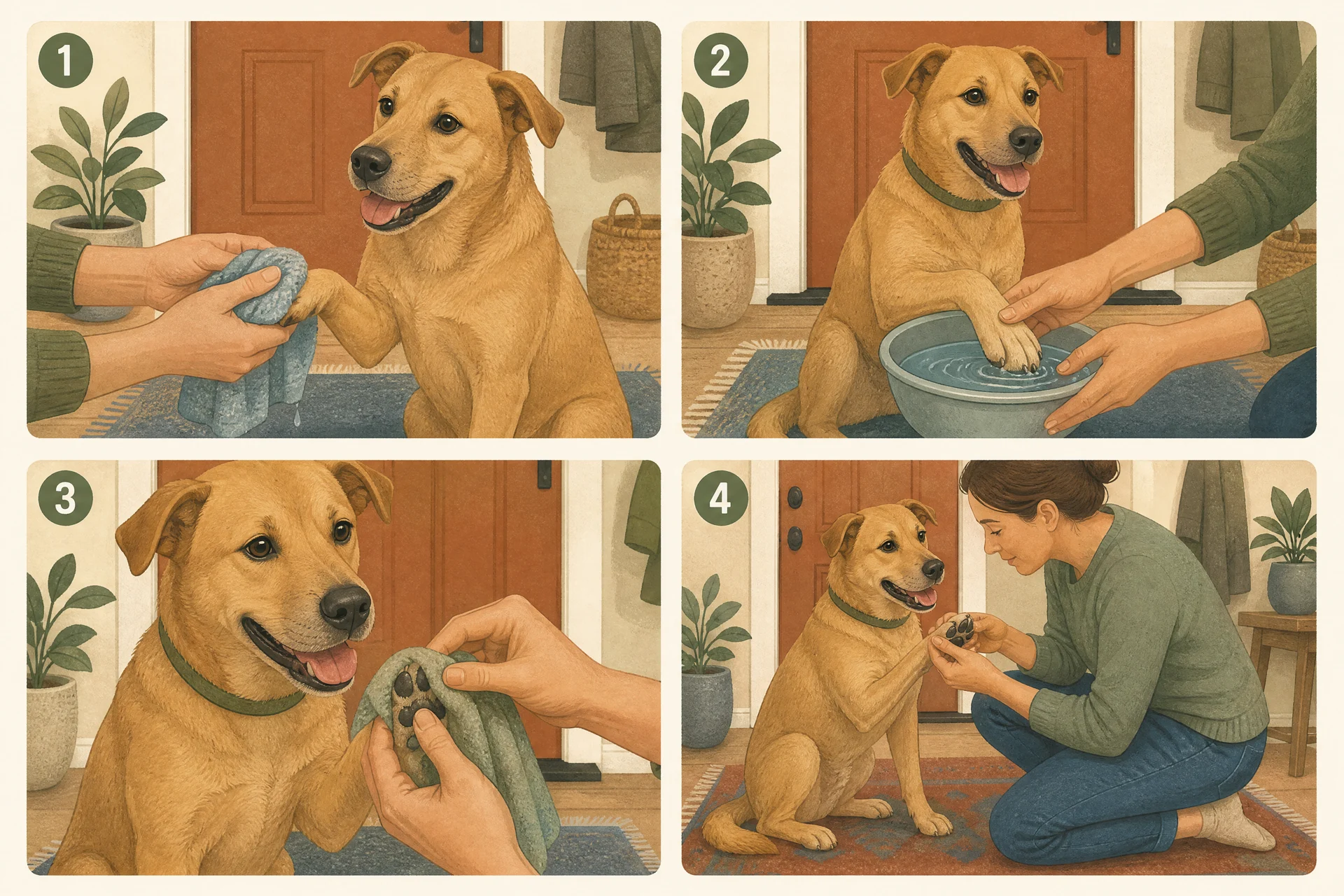
Drying is part of the task, not something to leave to the dog’s next lap around the room. Use the towel to check the toe gaps as well as the underside of the paw. Before letting the dog move on, look for a place you may have skipped while concentrating on a muddy nail or one especially dirty foot.
Most dogs coming home from an ordinary rainy walk simply need routine cleanup and drying. This does not mean every damp paw is infected or needs antiseptic. If redness or discomfort persists after the dirt is gone, ask your veterinarian rather than repeating stronger washes.
Road salt and unknown chemicals need different decisions
For a known salted winter route, plan the wash-and-dry before leaving home. Keep track of where the dog walked so you can explain an unusual exposure later if necessary. Our ice-melt and paw guide explains why the material matters; the label pet-friendly is not permission to let a dog eat it.
If the dog may have stepped in a household cleaner or another unknown chemical, do not treat it as an ordinary mud patch. Keep the container or a photo of the product information available and contact a veterinarian or animal poison control promptly. Describe what happened and follow their case-specific instructions. Do not experiment with another chemical to neutralize the first.
When cleanup should become a veterinary conversation
VCA’s paw-inflammation guidance describes several possible causes of inflamed paws and explains why a diagnosis matters. Redness, swelling, discharge, persistent licking, or pain should not be labeled a yeast infection just because the walk was wet. Limping, broken skin, or a paw your dog will not let you handle also warrants veterinary advice.
Useful information to bring is straightforward: which foot is affected, when you first noticed the change, where the dog walked, and which products touched the paw. Photographs can help you record a change without repeatedly manipulating a sore area. Ask your veterinarian what to do next; this article does not teach wound cleaning or infection treatment.
A repeatable doorway check
- Identify the route and the material on the feet.
- Look over all four paws before choosing the cleaner.
- Use an appropriate wipe or rinse for ordinary dirt.
- Check and dry the spaces between the toes.
- Stop and seek advice for injury, persistent discomfort, or chemical exposure.
Preguntas frecuentes
Do I need to wash paws after every walk?
Check what is on them. A clean, dry outing does not present the same job as mud or winter salt. Choose the cleanup according to the route and what you find.
Are wipes enough for muddy paws?
They may handle a small ordinary mess. If material remains in the toe gaps or around the pads, a more thorough rinse may be needed instead of repeated rubbing.
Can I use household disinfecting wipes?
Do not substitute a surface cleaner for a product intended for pet use. If a household chemical has already contacted your dog, get veterinary or poison-control advice.
What about paws that are only wet?
Dry them and check the gaps. Wet footprints do not by themselves establish that the dog needs a cleanser or a medical treatment.
Can boots replace checking the feet?
No. Look at the paws when the boots come off. Footwear is a separate equipment choice, not proof that the skin underneath is comfortable.
What if my dog keeps licking after cleaning?
Persistent licking or visible irritation needs veterinary advice. Note the affected foot, timing, route and products used rather than assuming the cause or choosing a treatment yourself.
Fuentes
- AKC — Cleaning and caring for paws (checked 2026-11-15)
- ASPCA — Cold-weather feet, salt and drying (checked 2026-11-15)
- Pet Poison Helpline — Household cleaning products (checked 2026-11-15)
- VCA — Paw inflammation and veterinary diagnosis (checked 2026-11-15)
General care guidance does not replace the instructions for your exact garment or advice from your veterinarian.
Updated by Codex. Checked November 15, 2026.