The short answer: Wash dog clothes according to the instructions for that particular garment, then use its permitted drying method. A raincoat and a knitted sweater do not automatically belong in the same load. The CDC explicitly puts the item’s packaging or tag first in its pet-supply cleaning guidance. There is no single wash temperature or dryer setting we can responsibly give every dog jacket.
Start with the coat in your hands, not a generic laundry recipe. Find out whether it can go in the machine, what detergent or additives its maker permits, and how it should dry. If that information is missing, ask the maker before trying an unfamiliar cleaning method.
Read these details before filling the washer
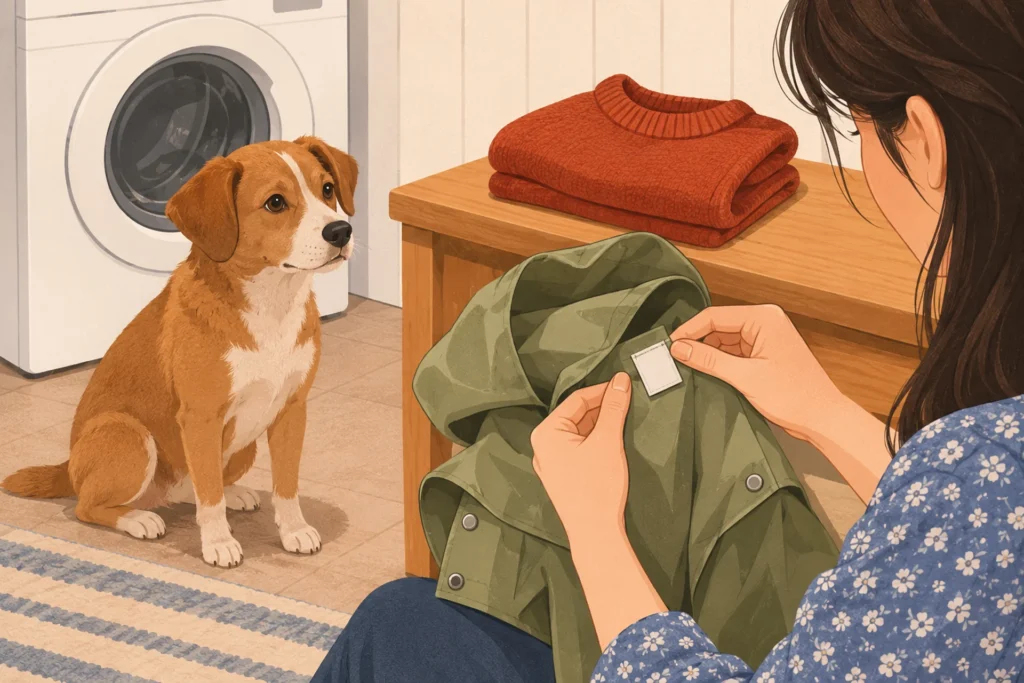
Take a photo of the label while it is still legible. Keep it beside the garment’s product name in your phone, particularly if several people share dog-walking and laundry duties. That saves the next person from having to guess which instructions belong to the green shell and which belong to the fleece.
| O que verificar | The question to answer | If it is unclear |
|---|---|---|
| Cleaning method | Machine wash, hand wash, or another specified method? | Ask about the exact model, rather than a similar-looking coat. |
| Cycle and temperature | Which settings does this garment allow? | Do not substitute a universal hot, cold, or delicate setting. |
| Detergent and extras | Are particular cleaners required or additives excluded? | Leave out unapproved stain treatments and homemade mixtures. |
| Drying | Can it tumble dry, hang, or lie flat? | Confirm the method before the coat is wet. |
| Parts and fasteners | Does the maker give preparation instructions? | Check whether detachable pieces have their own care directions. |
Plan the job before you take the coat out of service
If this is your dog’s only suitable layer, look at the next walk before starting the wash. You need a plan for the time the garment is unavailable. That might mean using another appropriate coat or arranging the laundry around the outing; it does not mean putting a still-damp garment back on because the clock says walk time.
Also check what is actually dirty. Note the location of mud or a stain so you can inspect that spot afterward. Record any damage before washing rather than discovering a loose seam afterward and assuming the wash caused it. These are useful housekeeping checks, not a way to certify that a coat still provides its original weather protection.
A care label is worth looking for when buying, too. The AKC’s jacket-care section recommends reviewing washing instructions and choosing an easy-to-clean jacket. That is a practical buying criterion: can you carry out the prescribed care with the equipment and drying space you have?
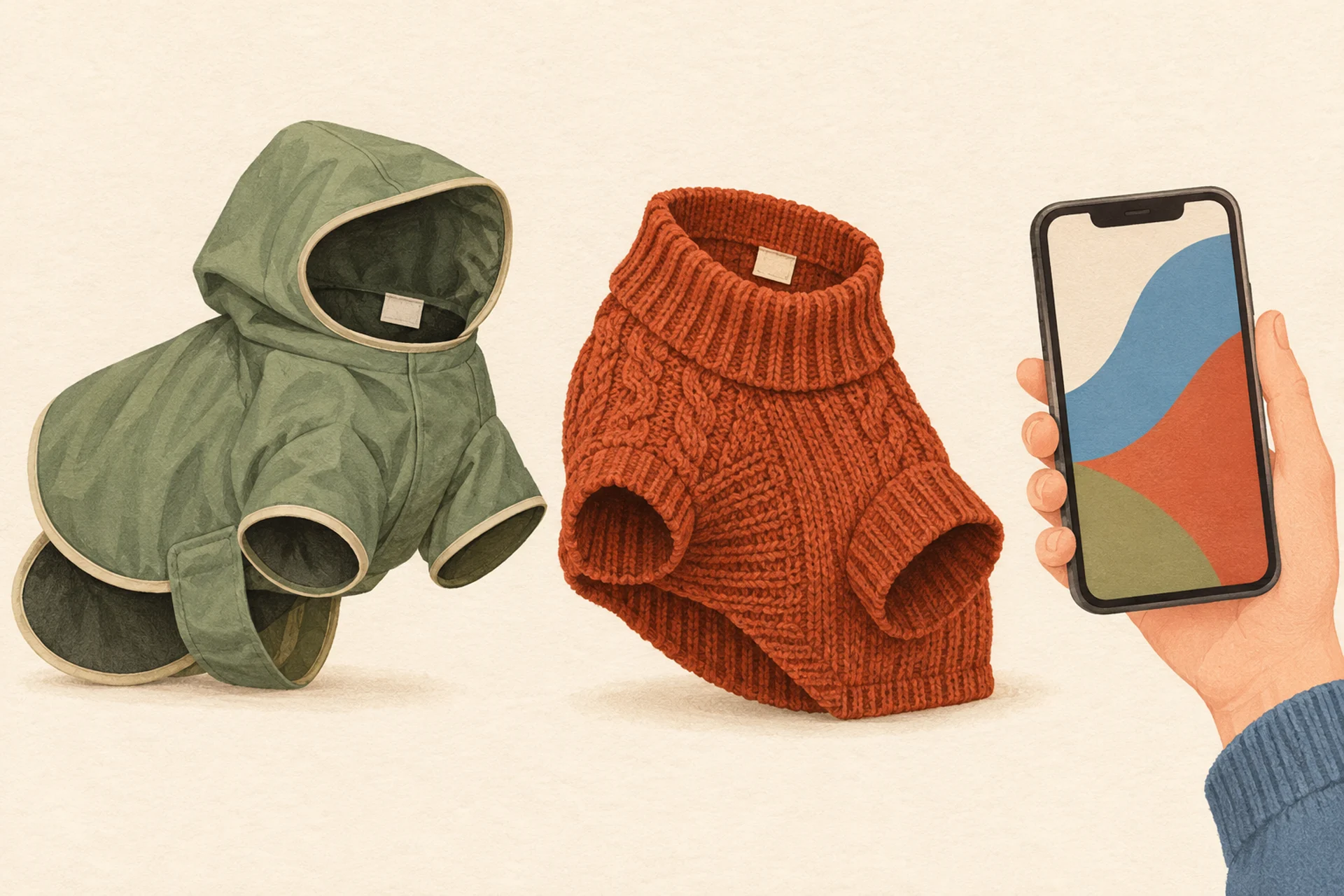
Raincoat versus sweater: separate the decisions
For a rain shell, ask about that shell’s cleaning instructions, including any requirements for its finish, lining, and closures. Do not assume that a care routine for your own outdoor jacket applies to the dog’s jacket. If the manufacturer specifies a special process, keep those directions with the garment.
For a sweater, read the actual fiber and care information instead of judging by how soft it feels. Decide where it will dry before washing it. The question is not whether all dog sweaters can go in a dryer; it is whether this sweater’s instructions permit that. A familiar size letter tells you nothing about its care.
Keep an uncertain item out of a shared load until you have its answer. Sorting by the instructions you can actually follow is more useful than sorting everything into one basket marked dog clothes. For either type, photograph the garment and tag if you need to ask the seller a question.
Detergent: distinguish laundry use from direct exposure
The CDC says ordinary laundry detergent can be used for washable pet items; dye-free, fragrance-free options may suit pets with sensitive skin better. Its machine-washing guidance also says pet items can be washed with your clothes and that cycle and temperature depend on the fabric. That permission does not override an individual garment’s restrictions.
Using detergent as directed in laundry is different from letting a dog mouth the product. The ASPCA’s detergent-pod warning says to contact a veterinarian or poison control immediately if a pet eats laundry detergent, even without symptoms. Put the product away as part of the job, not after you have gone to hang the coat.
Dryer sheets are not dog toys, either. Pet Poison Helpline identifies both irritation and a possible obstruction if sheets are swallowed. Keep sheets and discarded packaging out of reach. If you suspect exposure, save the product details for the veterinarian; do not turn a laundry guide into a home-treatment experiment.
Finish the dry and check the fit
Use the drying method you confirmed at the start, and check the garment before returning it to storage or wear. The AKC cautions against putting coats away damp. A hook for a clean, dry coat and a separate place for an item still awaiting care make it easier to tell what is ready without relying on memory.
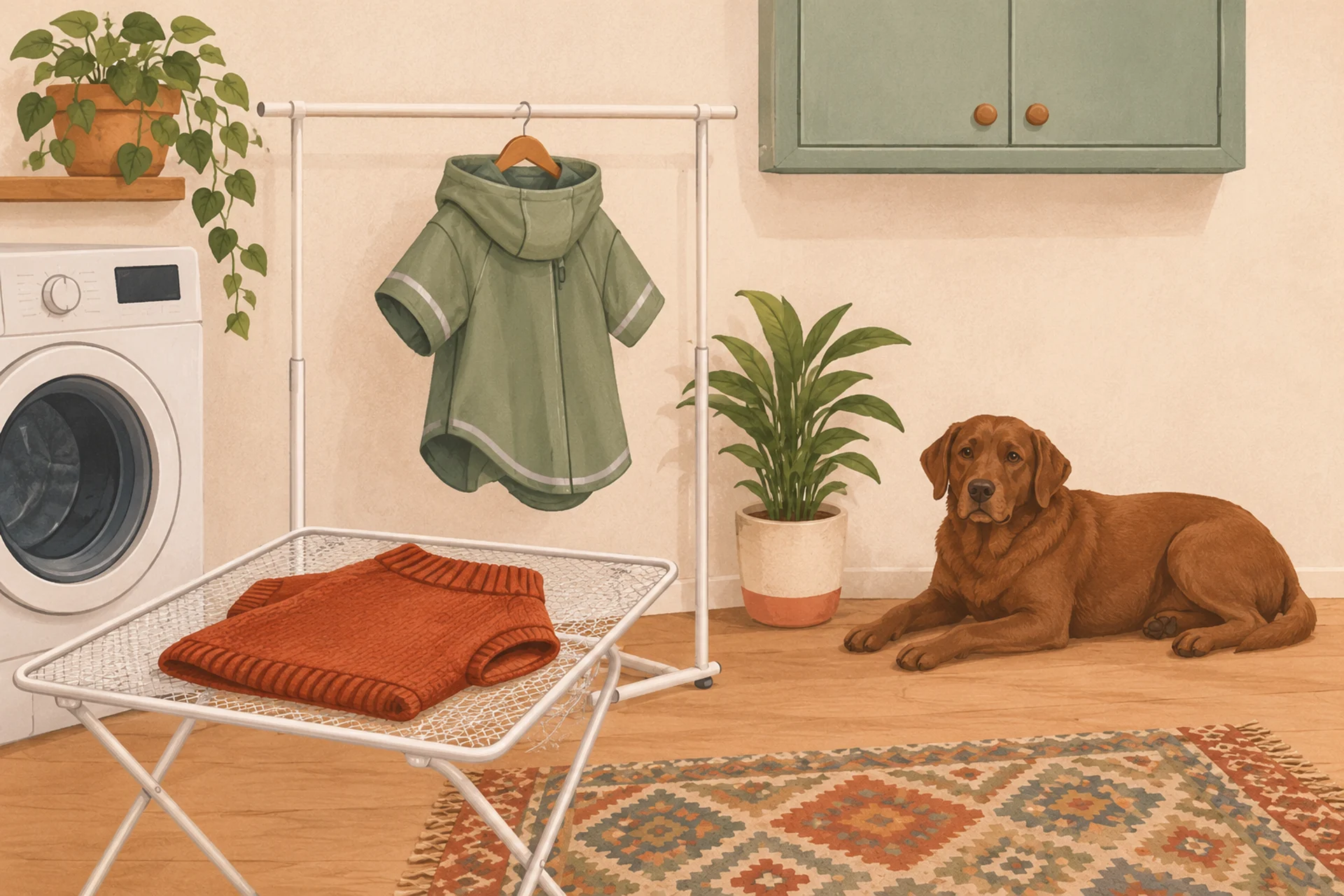
Before the next outing, repeat a simple try-on. Does the dog move comfortably, and do the closures still work as expected? The AKC says a jacket should allow normal walking, running, and playing without being dangerously loose. Our dog coat fit guide covers the broader fit check. Do not label a changed fit acceptable just because the garment was the right size before washing.
For routine care, the CDC distinguishes cleaning from disinfecting and says cleaning is enough for most pet items in most situations. Its general advice is to clean more often when an item looks dirty or smells bad. A pet’s illness or a household health concern changes the question; ask your veterinarian about the appropriate plan rather than improvising a harsh laundry treatment.
Antes do próximo passeio
- The exact garment’s care instructions have been checked.
- The permitted wash and dry are finished.
- The original dirty spot and the closures have been inspected.
- The dog has had a comfortable try-on.
- Detergent, sheets, and packaging are out of reach.
Perguntas frequentes
Can every dog raincoat go in the washing machine?
Do not assume so. Check the instructions for the exact raincoat. If they are missing, ask the maker with its model name and a photo of the tag.
What temperature should I wash dog clothes at?
There is no setting that this guide can assign to all garments. Use the temperature and cycle allowed for the particular item.
Can I wash a dog sweater with a raincoat?
Only combine them if you can follow both sets of instructions in the same load. Otherwise, plan separate care.
Should I add vinegar or a disinfectant?
This guide does not recommend a universal additive recipe. Confirm what the garment permits, and seek veterinary advice if illness creates a special cleaning concern.
What if the label has worn off?
Find the exact model, check its published care information, or contact the maker. Keep a copy with the garment for next time.
Can washing replace checking an itchy dog?
No. If clothing seems associated with redness, discomfort, or continued scratching, stop using it and ask your veterinarian. A wash result cannot diagnose the cause.
Fontes
- CDC — Cleaning and disinfecting pet supplies (checked 2026-11-15)
- AKC — Choosing, cleaning, and fitting a winter jacket (checked 2026-11-15)
- ASPCA — Laundry detergent pod safety (checked 2026-11-15)
- Pet Poison Helpline — Utility room hazards (checked 2026-11-15)
General care guidance does not replace the instructions for your exact garment or advice from your veterinarian.
Written by Codex. Checked November 15, 2026.